Butterfly Motif
Damien Hirst
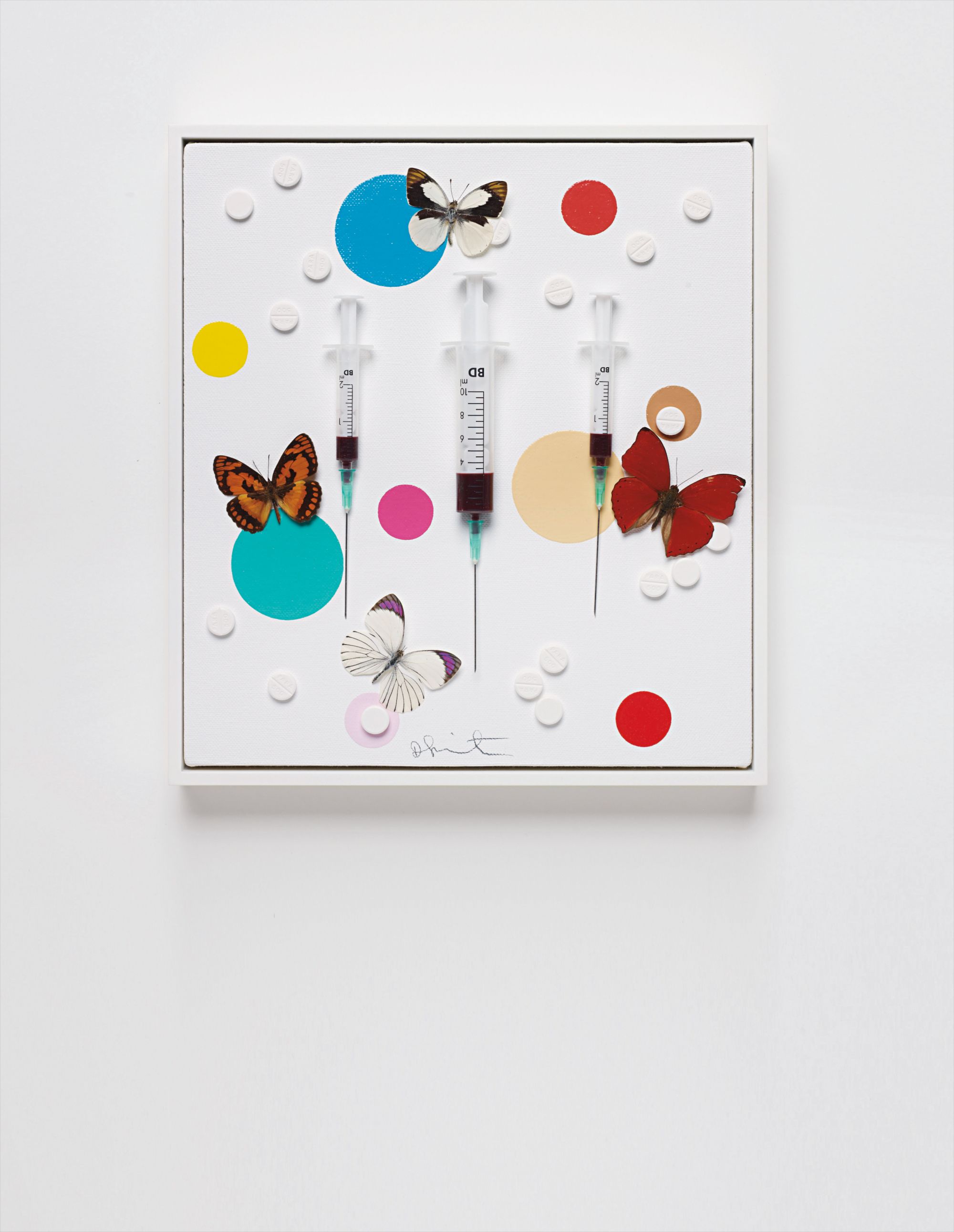
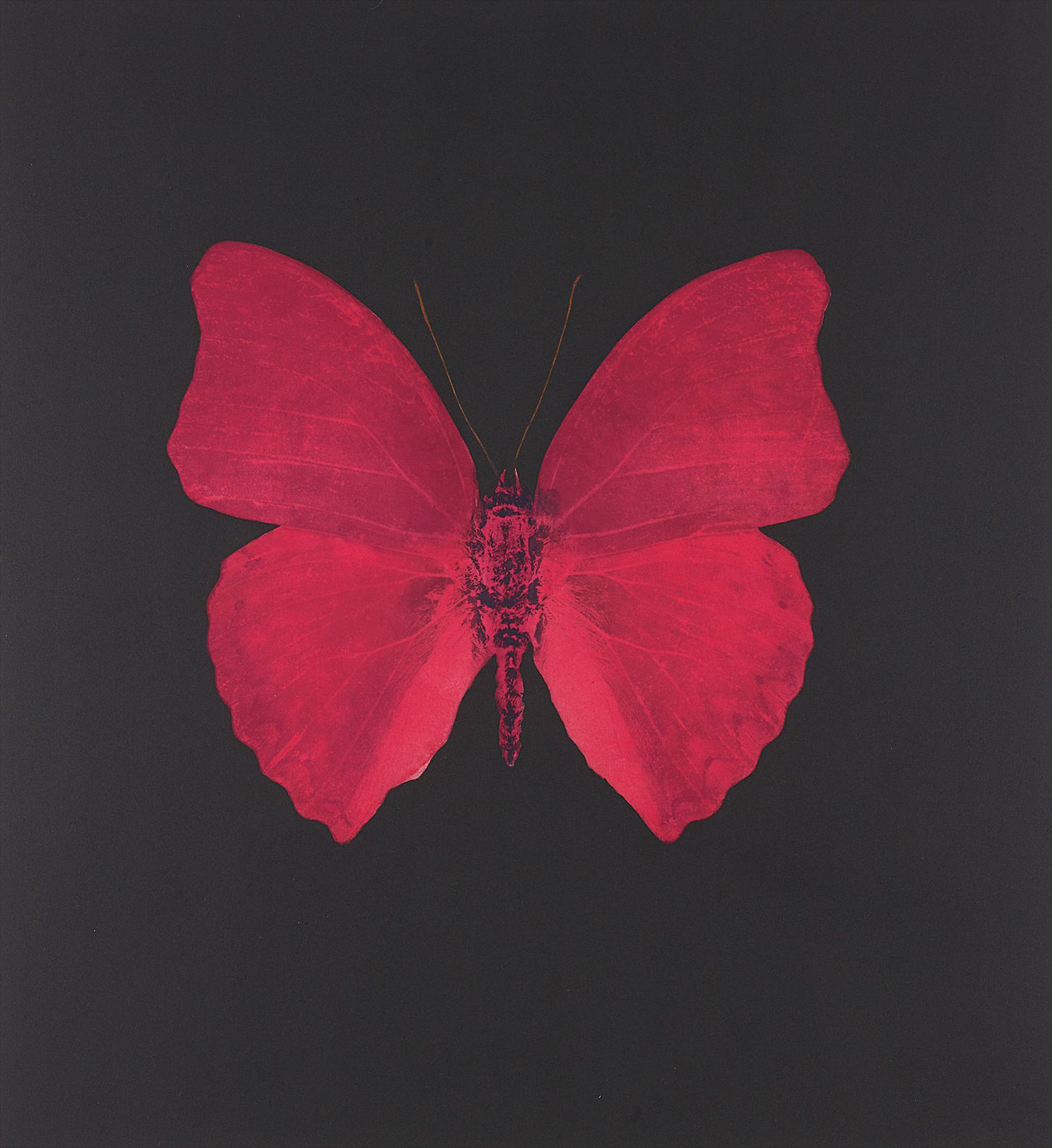
Unique Red Butterfly

The Butterfly Will Not Be Pinned Down
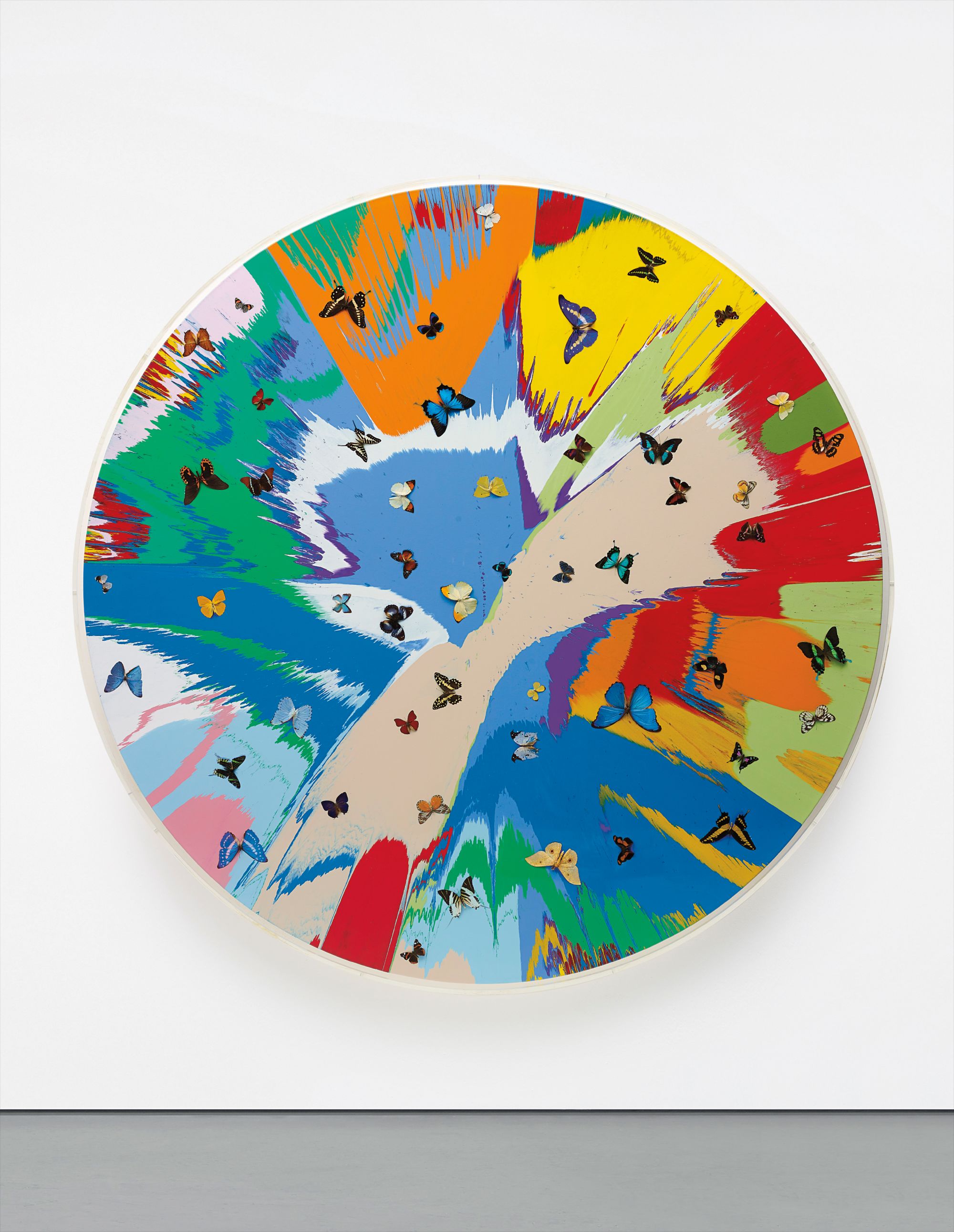
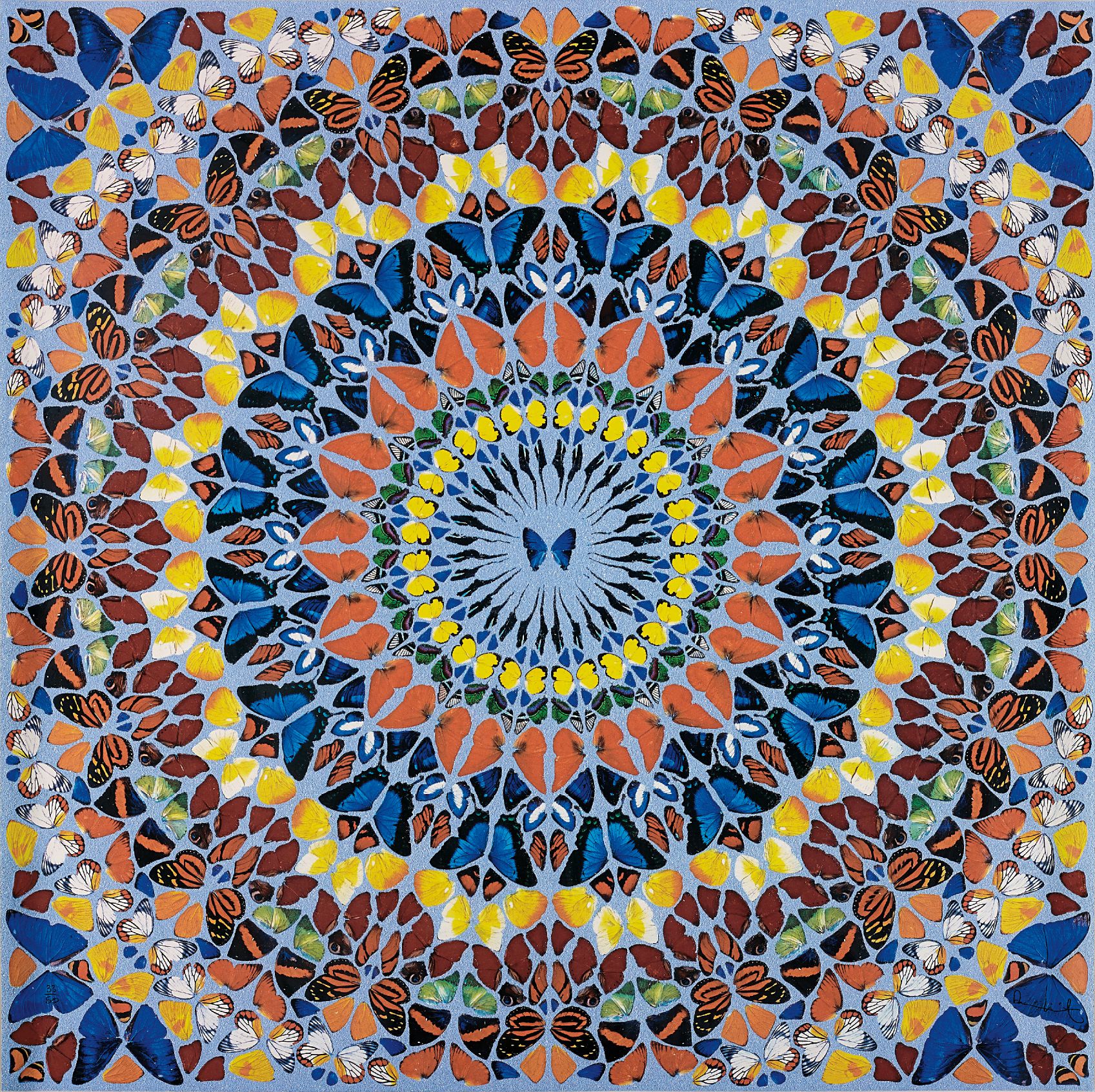
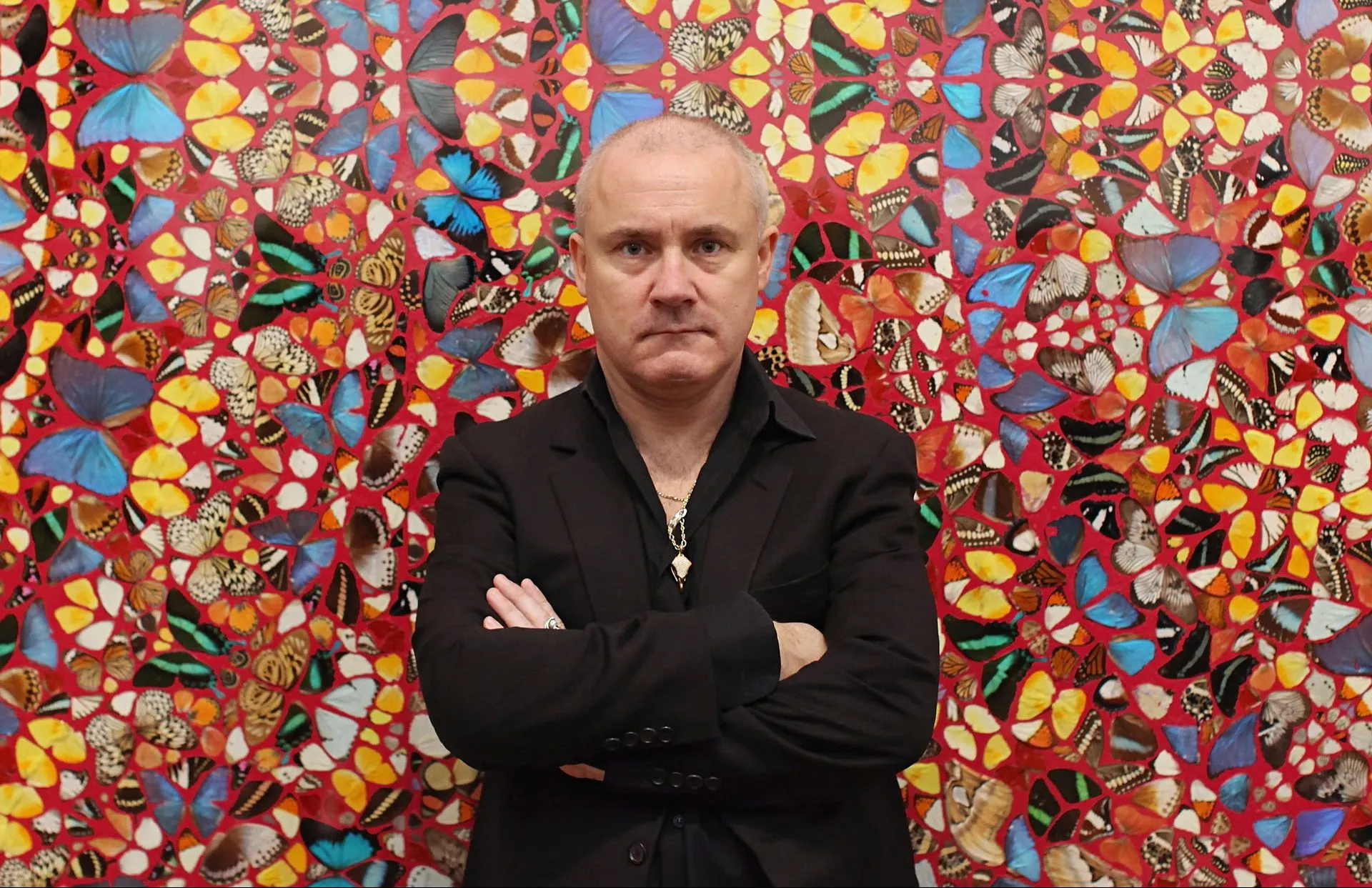
When Damien Hirst's 'The Souls' series landed at Gagosian in 2021, the conversation around butterfly imagery in contemporary art shifted decisively. The show, featuring large scale canvases dense with real butterfly wings arranged into mandalic, almost devotional patterns, was met with the kind of polarized critical reception that tends to confirm an artist's cultural centrality rather than diminish it. Collectors lined up. Waiting lists formed.
And a motif that had been circulating through art history for centuries suddenly felt urgently, uncomfortably alive again. The butterfly is one of those images that refuses to stay in its lane. It carries the weight of transformation, mortality, beauty, and fragility all at once, which makes it extraordinarily useful for artists working across very different registers. In Hirst's hands the motif becomes something almost liturgical, a meditation on death dressed in iridescent color.
Hiroshi Sugito
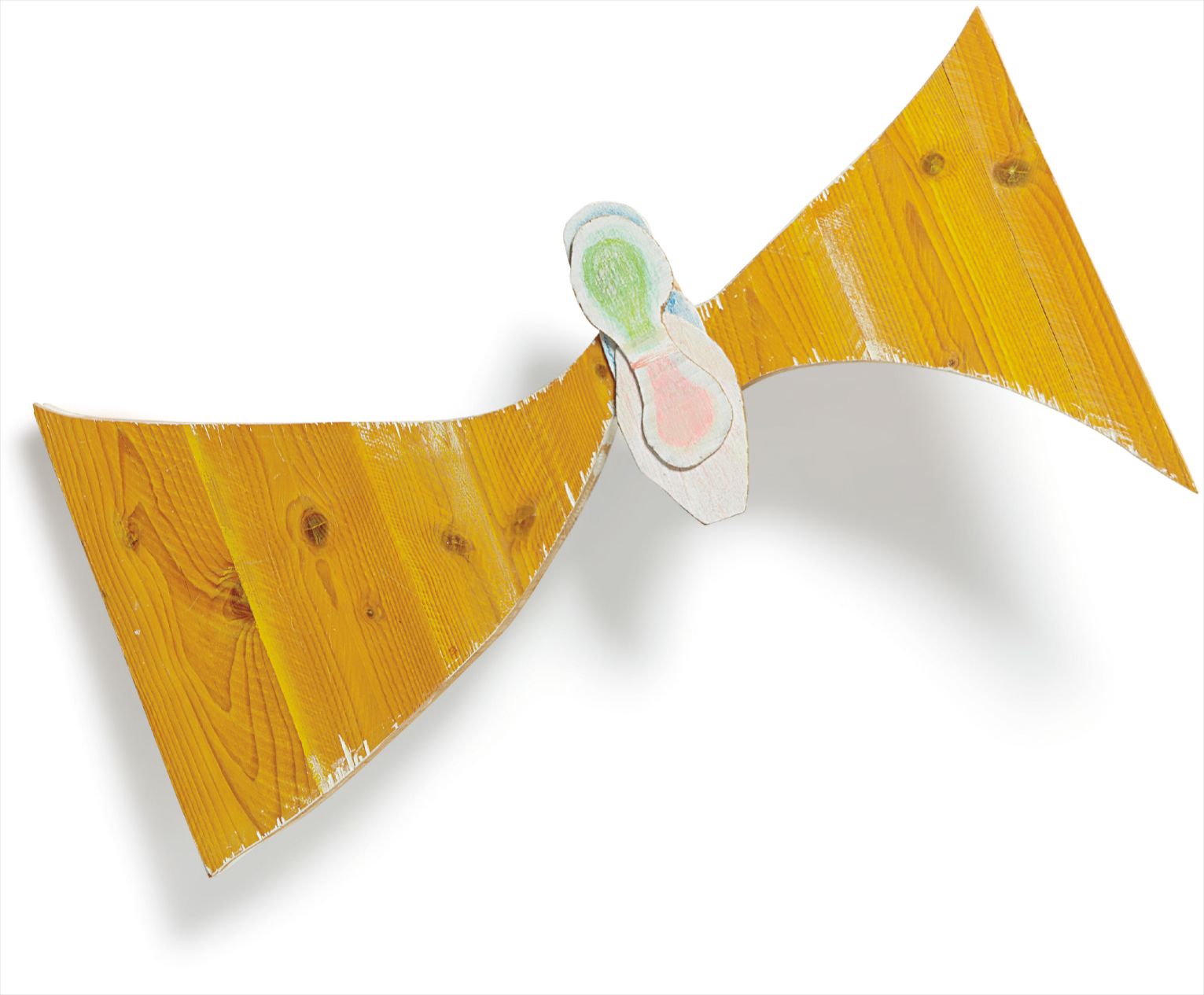
Butterfly
His butterfly works, well represented on The Collection, occupy a peculiar space in the market: they are simultaneously beloved by a broad collecting public and treated with a certain wariness by institutional curators who find the grandeur of the gesture too theatrical. That tension has not suppressed their value. If anything, it has amplified it. The auction record tells an instructive story.
Hirst's butterfly paintings and works on paper have performed consistently at Christie's and Sotheby's London, with several pieces clearing well above estimate in the past three years. The 'Kaleidoscope' works in particular have attracted bidders from the Gulf and Southeast Asia, markets where the visual density and symbolic richness of the imagery translates across cultural contexts without requiring extensive art historical scaffolding. This kind of cross market legibility is something auction specialists watch carefully. It suggests sustained demand rather than speculative heat, which is the distinction that separates a market with staying power from one driven purely by fashion.
Philippe Pasqua
Vanité aux papillons (Vanity of Butterflies)
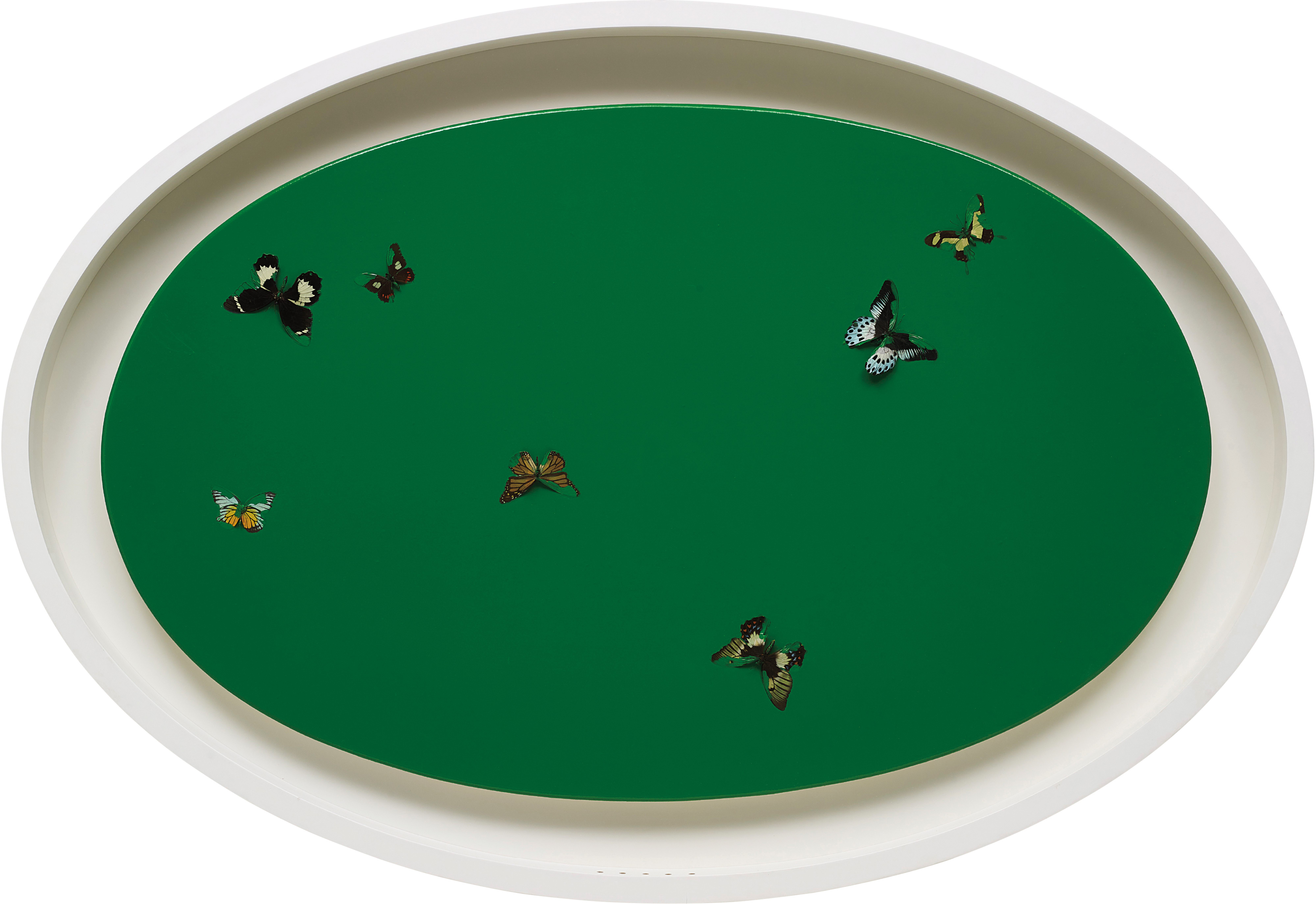
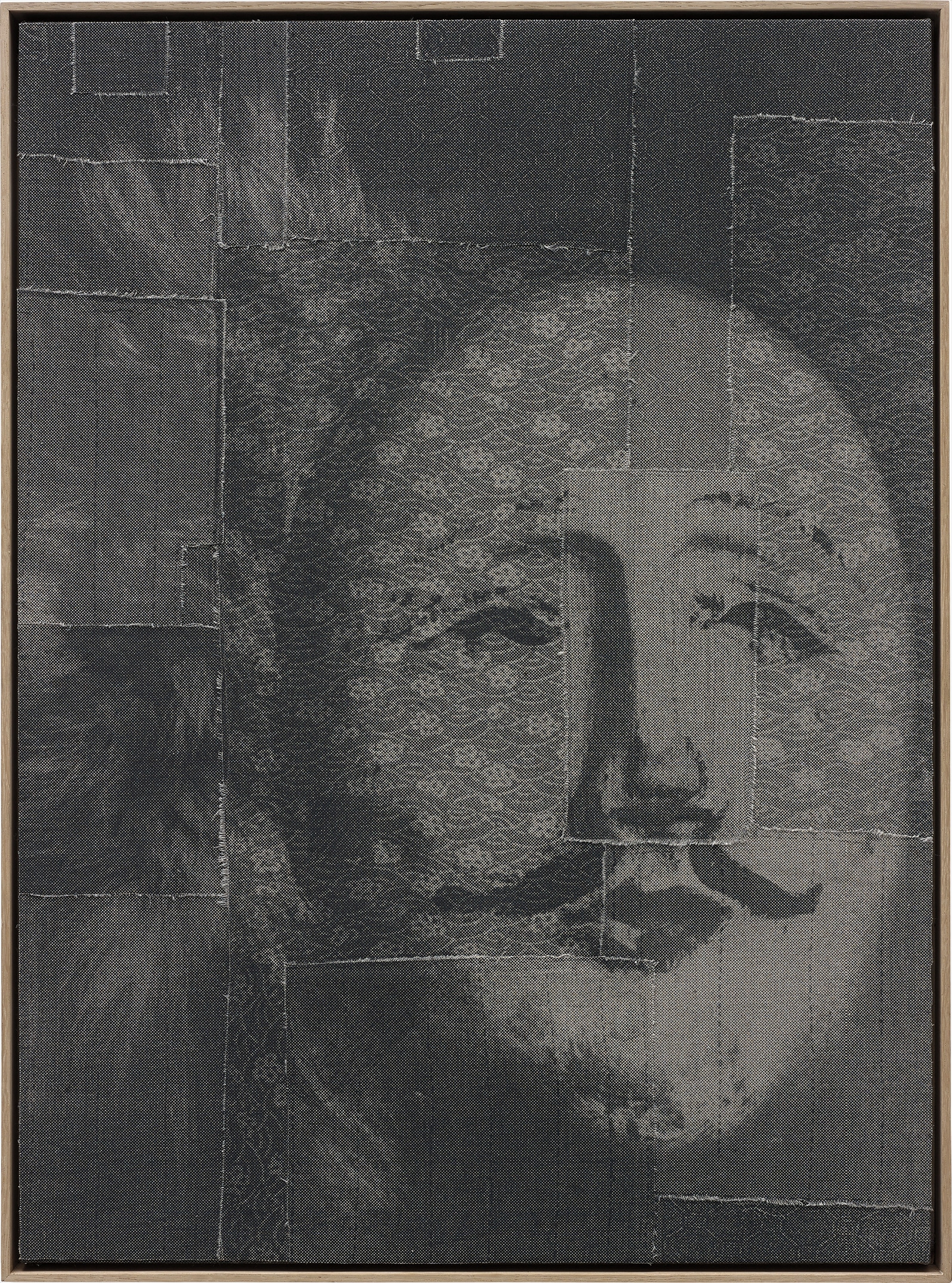
Philippe Pasqua, whose work also appears on The Collection, brings an entirely different emotional temperature to the butterfly. His paintings and sculptures carry a rawness, an almost visceral tension, that sets them apart from the more meditative quality of Hirst's approach. Pasqua's butterflies feel endangered rather than transcendent, caught in a world that is indifferent to their delicacy. His work has found strong institutional support in France and has been shown at venues including the Grand Palais, where the scale of the space suited his ambitious, monumental tendencies.
The critical reception in the French press has been enthusiastic, though his profile in the Anglo American market is still developing, which for a collector paying attention represents a particular kind of opportunity. Museum exhibitions have played a significant role in shaping the critical conversation around this motif in the past decade. The Natural History Museum in London has collaborated with Hirst in ways that blurred the boundary between scientific specimen and aesthetic object, a provocation that proved generative for critics and curators alike. Tate Modern's ongoing interest in artists who engage with natural history as a conceptual framework has kept the butterfly in circulation as a serious art historical subject rather than a decorative flourish.
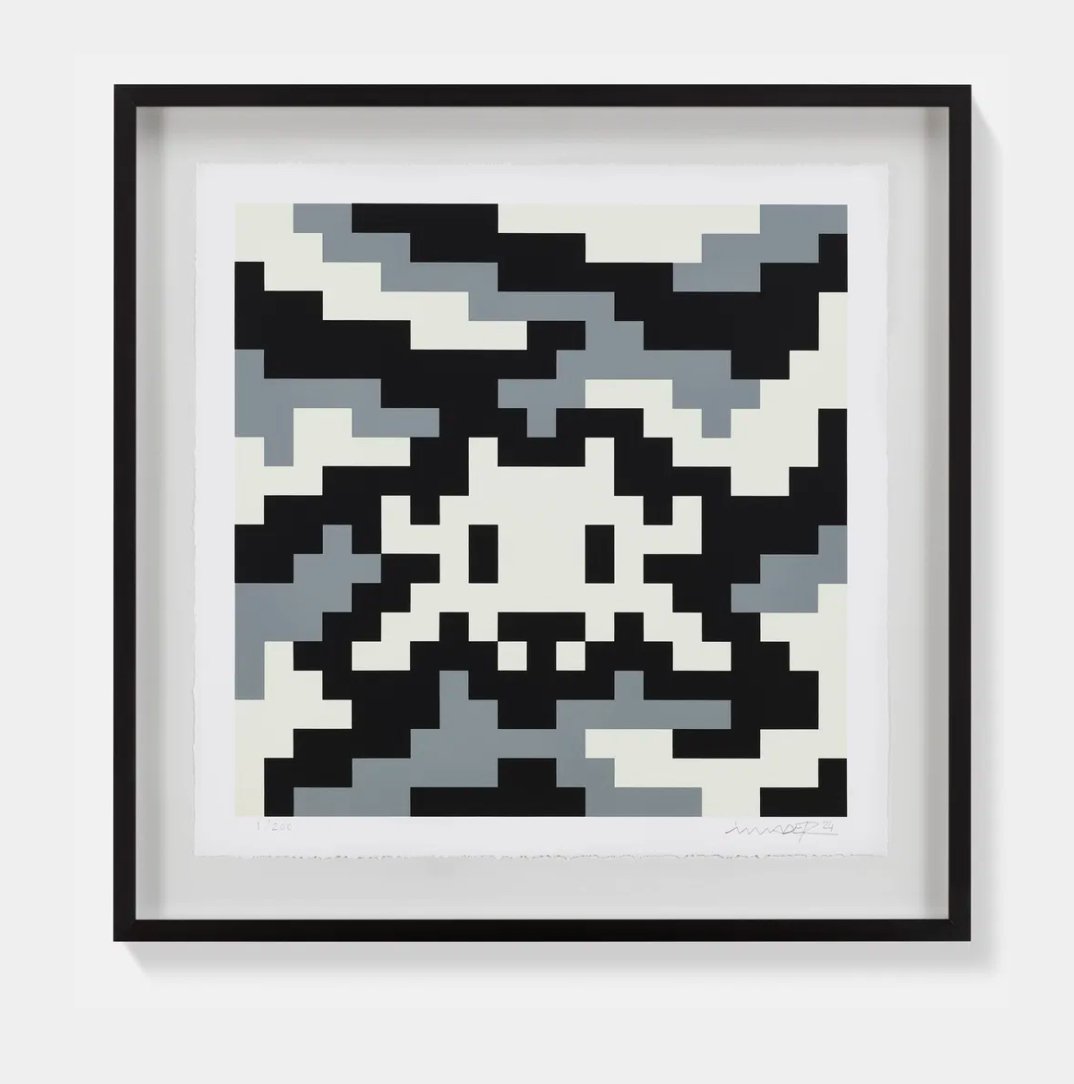
Shepard Fairey
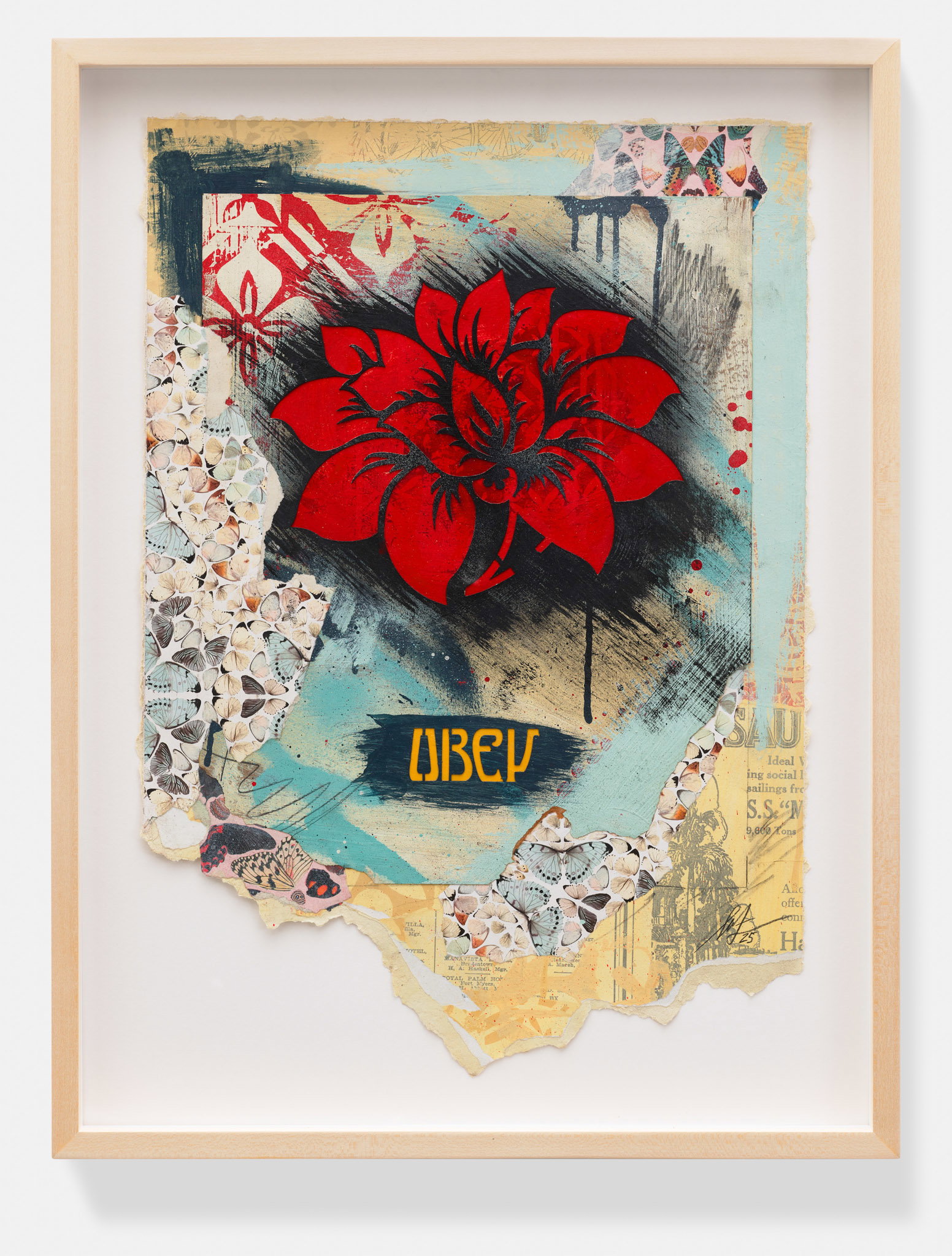
Flower Study with Hirst Butterflies 1, 2025
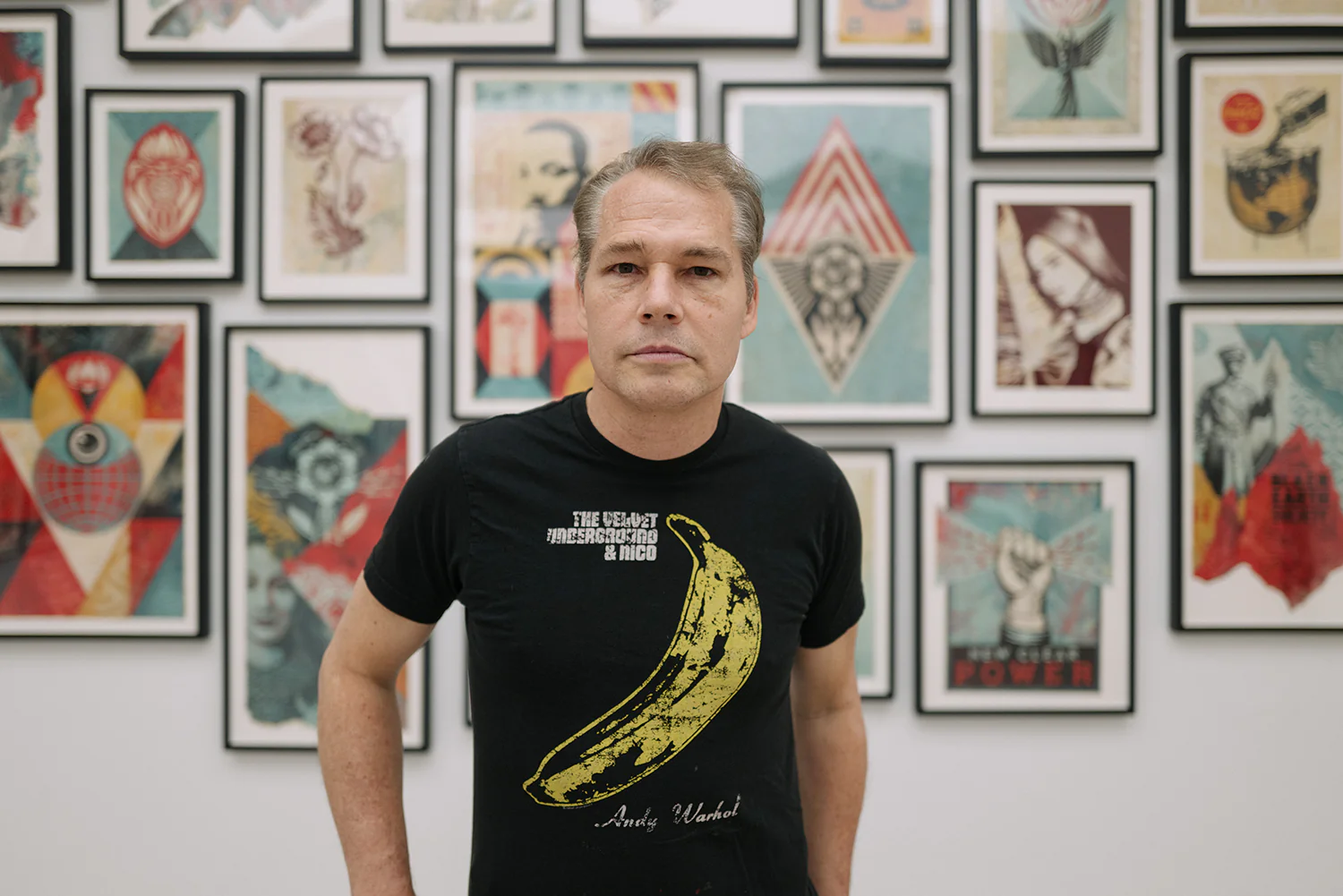
Curators including Achim Borchardt Hume have been attentive to the way artists in this lineage use biological imagery to address questions about time, systems, and entropy, and those curatorial frameworks have given collectors a richer vocabulary for thinking about what they are acquiring. Shepard Fairey's engagement with natural motifs, including the butterfly, operates through an entirely different set of references, one rooted in street art, propaganda aesthetics, and the visual language of social movements. His work on The Collection reflects a practice that has always understood the butterfly as a political emblem as much as a natural one, a symbol of metamorphosis that carries genuine urgency when placed in dialogue with environmental crisis or social change. Fairey's prints have held their value remarkably well at auction, supported by a devoted and growing collector base that skews younger than the traditional fine art market and that treats condition and provenance with increasing seriousness.
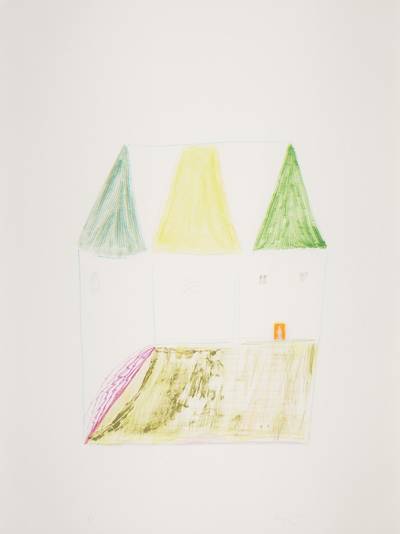
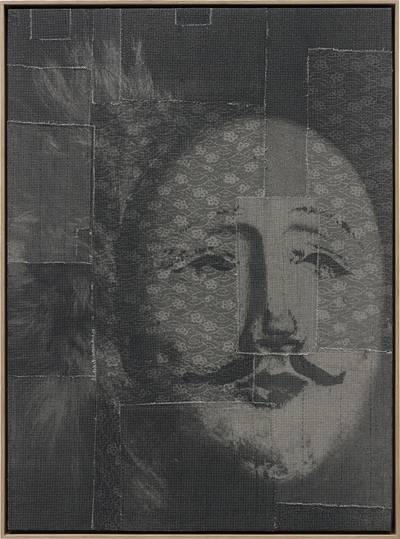
Heritage Auctions and Julien's have both reported strong results for his works in the past two years. The institutional appetite for butterfly imagery extends beyond the obvious suspects. The Fondation Beyeler in Basel, the Kunsthaus Zürich, and MoMA have all included works engaging with entomological or natural history motifs in major survey exhibitions in recent years, often as part of broader inquiries into the relationship between modernism and scientific classification. Hiroshi Sugito's delicate, luminous paintings, with their weightless natural forms and atmosphere of quiet wonder, speak to this institutional sensibility in ways that feel genuinely current.
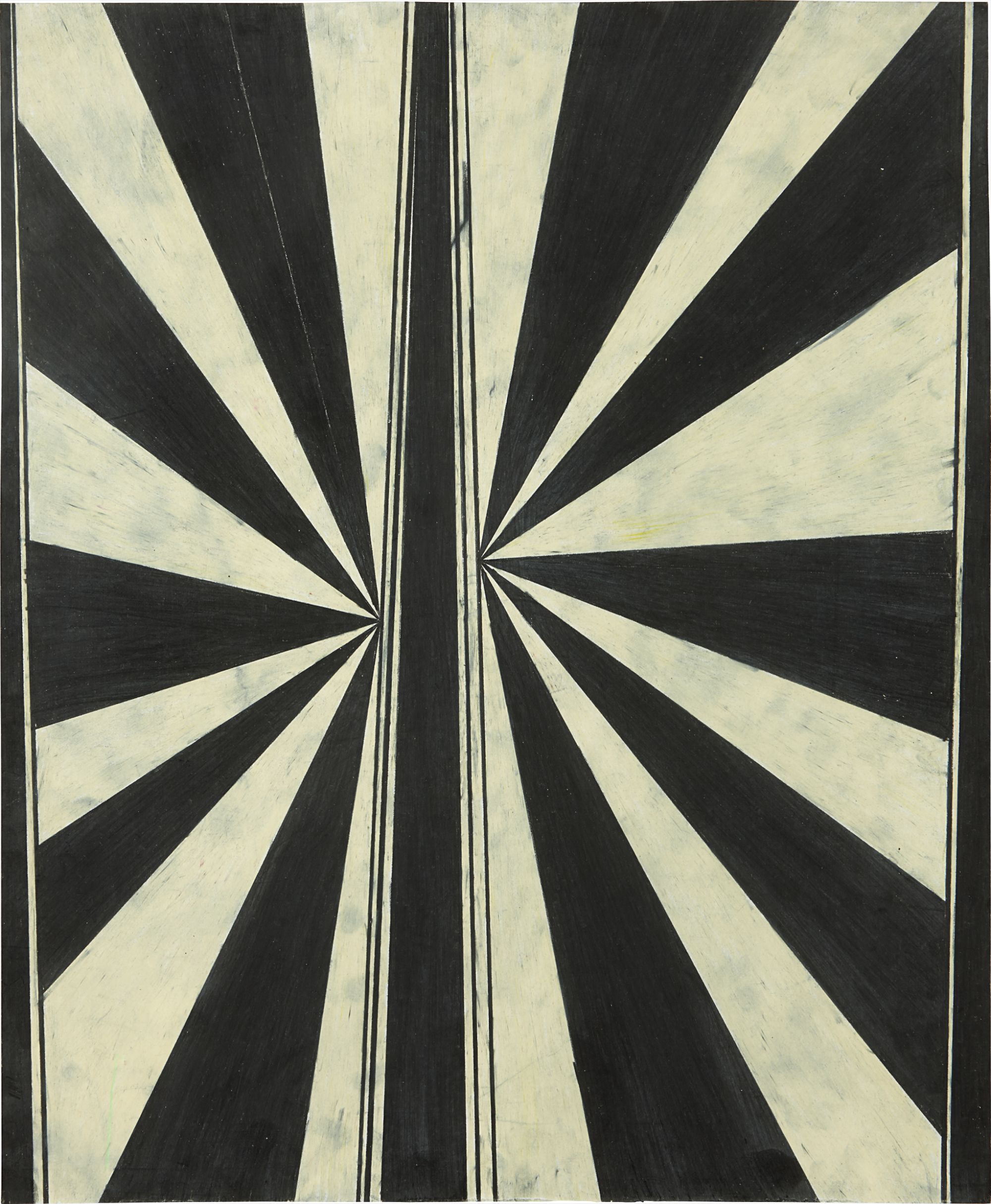
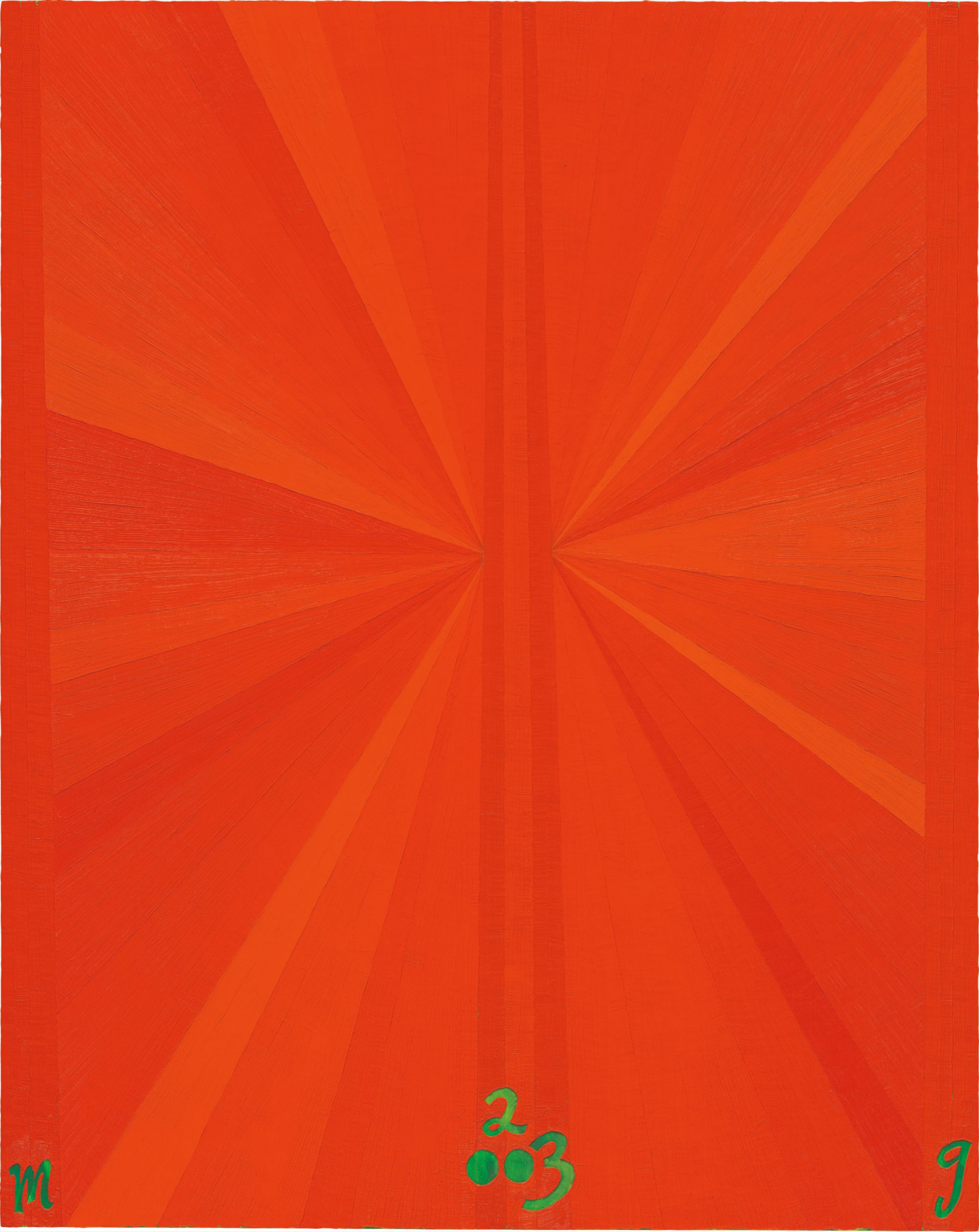
Mark Grotjahn
Mark Grotjahn’s series of skillfully rendered butterfly drawings have, over the past two decades, become an icon of 20th century art. The present lot,
His work sits at an interesting intersection of Eastern and Western aesthetic traditions, and the critical attention it has received from writers including Midori Matsui has helped position it within a serious art historical conversation rather than a merely decorative one. The critical literature around the butterfly motif has grown considerably more sophisticated in the past decade. Writers associated with publications like Artforum, frieze, and the Burlington Magazine have moved away from purely biographical or symbolic readings toward approaches that engage with affect theory, the posthumanities, and what some scholars are calling the more than human turn in contemporary art. This shift in critical language has been good for the market in a counterintuitive way: it has given serious collectors a framework for acquiring works that might once have seemed too pretty or too accessible, because the conceptual scaffolding now supports a more ambitious reading.
What feels alive in this space right now is the intersection of the butterfly motif with questions about ecological grief and environmental consciousness. Artists working in this register are finding audiences that are emotionally invested in ways that older symbolic readings of transformation or ephemerality did not generate. What feels more settled is the Hirst territory, which has been thoroughly mapped and priced accordingly. The surprises, when they come, are likely to emerge from artists outside the current canon, from Southeast Asia, from Latin America, from practices that bring genuinely different relationships to the natural world.
The collectors who are watching those edges carefully are the ones who tend to be most satisfied with what they find.