Ashcan School
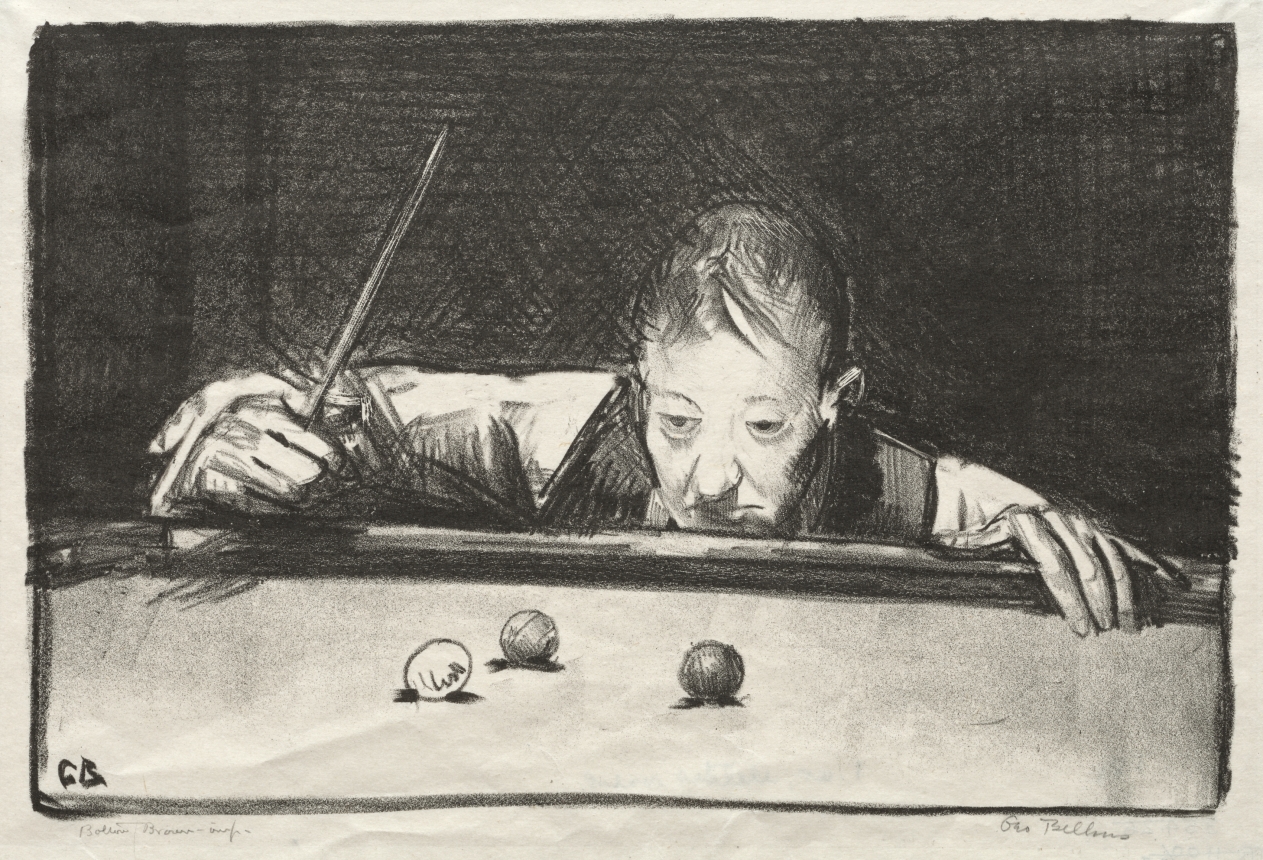
George Bellows
Indoor Athlete, 1921
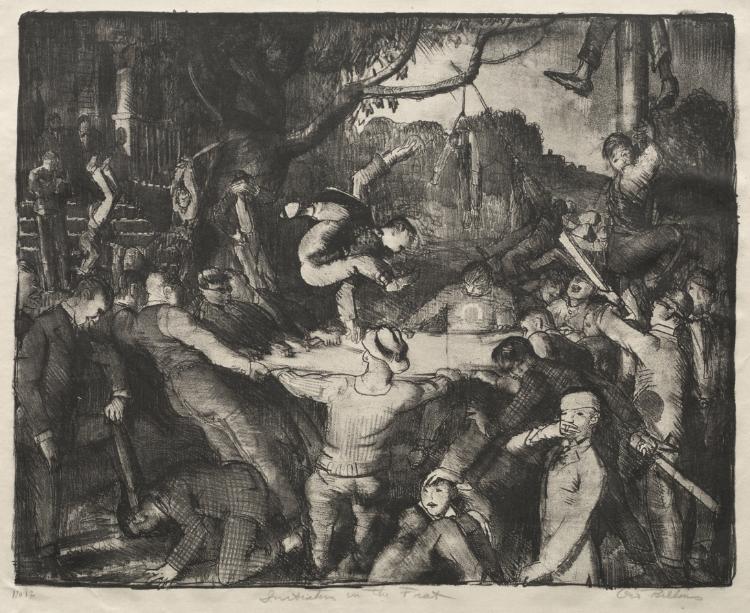
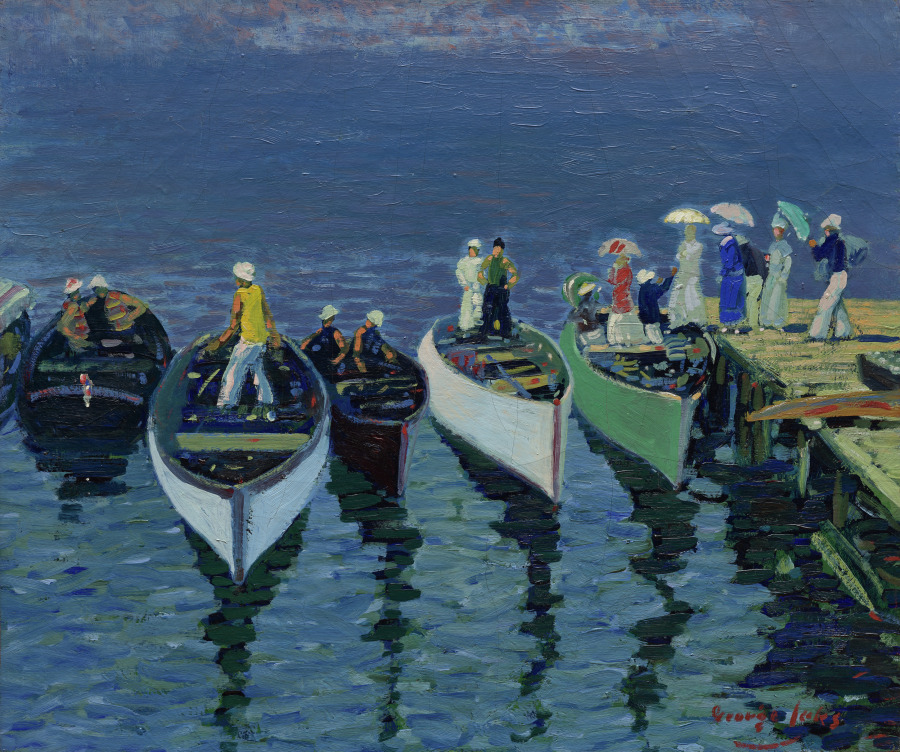
The Streets Are Still Watching Us
When Christie's brought a major George Bellows oil to auction a few years back and it cleared well above its high estimate, the room took notice in that particular way rooms do when a work confirms something people had been feeling but not yet saying aloud. Bellows has long been the anchor of the Ashcan School's market, but that result felt like a recalibration. It wasn't nostalgia driving the bidding. It was recognition.
Collectors were looking at his bruising, luminous depictions of New York tenement life and seeing something that felt disturbingly contemporary, a city sorting itself by wealth and spectacle while the people who actually animated it struggled at its edges. The Ashcan School, that loose collective of painters who gathered around Robert Henri in the early twentieth century and declared that American art had to stop decorating parlors and start telling the truth, has rarely felt more relevant to the present cultural moment. Their core conviction was simple and radical: the city as it actually was, the immigrant neighborhoods, the boxing rings, the laundry lines and the blizzard swept avenues, was worthy of serious pictorial attention. This was not a gentle proposition in 1908 when the group mounted their famous exhibition at the Macbeth Gallery in New York, the show that effectively announced a new American realism to a public still accustomed to academic prettiness.
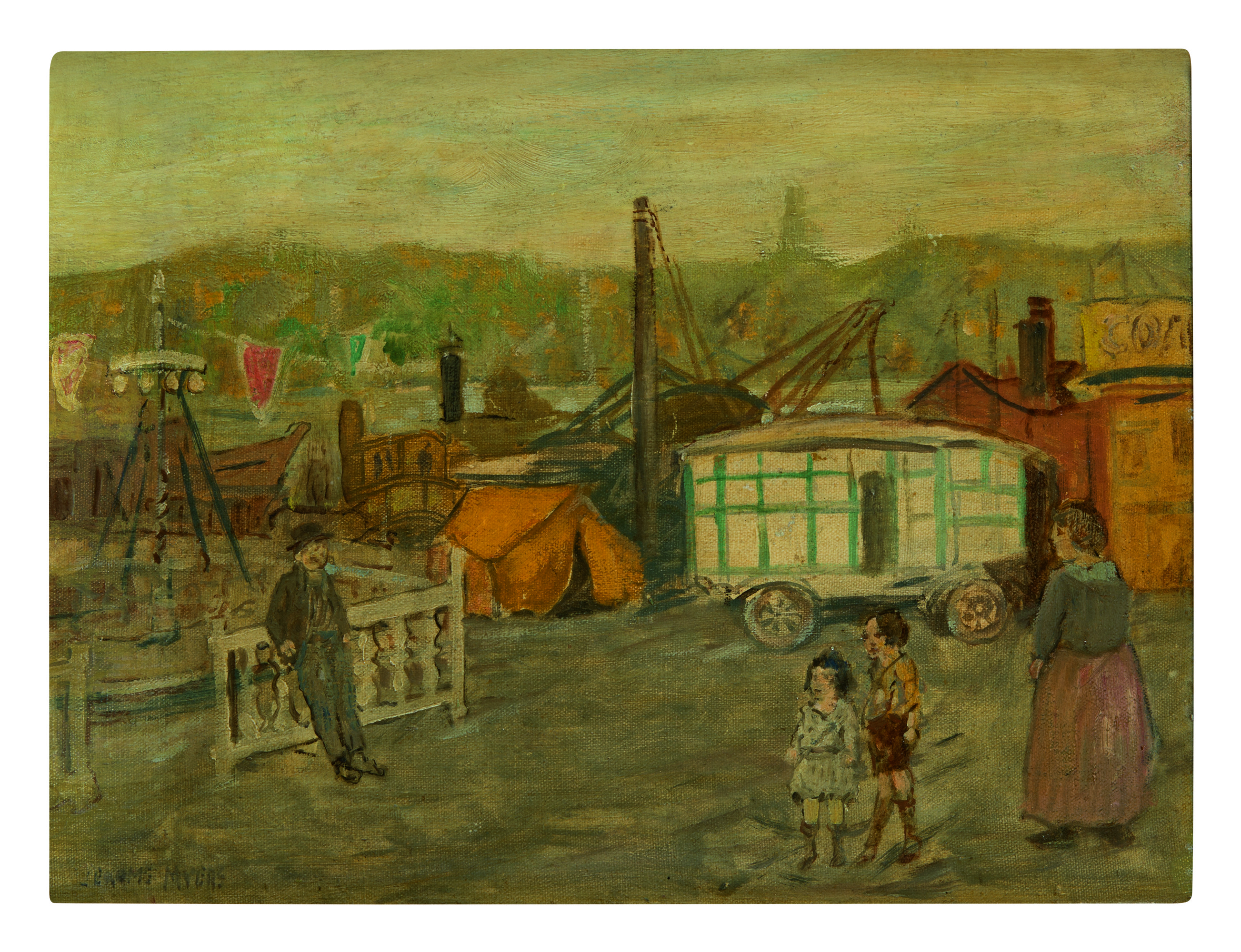
Jerome Myers
On The Western Front
Museum programming over the past decade has been quietly but persistently reexamining what the Ashcan painters were actually doing, and the results have complicated the received story in interesting ways. The Brooklyn Museum and the Smithsonian American Art Museum have both staged exhibitions that situate these works within their specific social and political contexts rather than treating them as charming period documents. These shows have been attentive to questions of who was being depicted, who was doing the depicting, and what the relationship was between the artist's bohemian sympathy and actual working class experience. The critical framing has become sharper, and the paintings have held up under that scrutiny, which is itself a form of market intelligence.
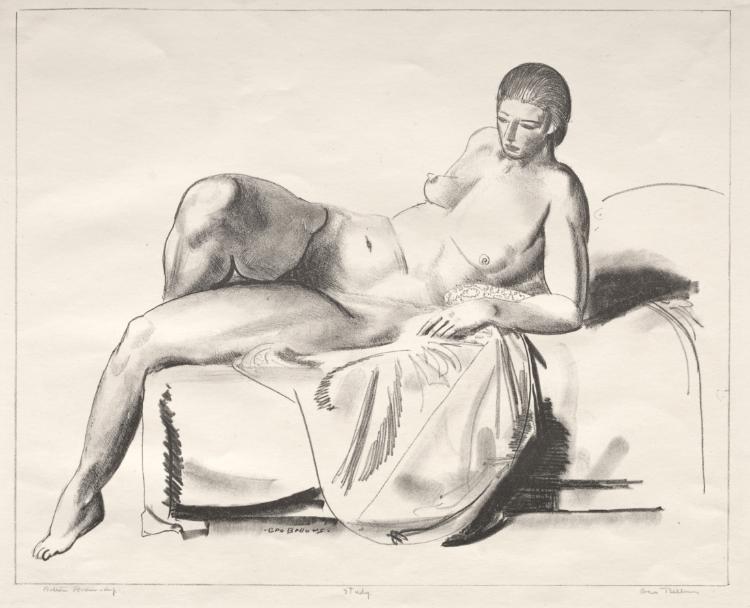
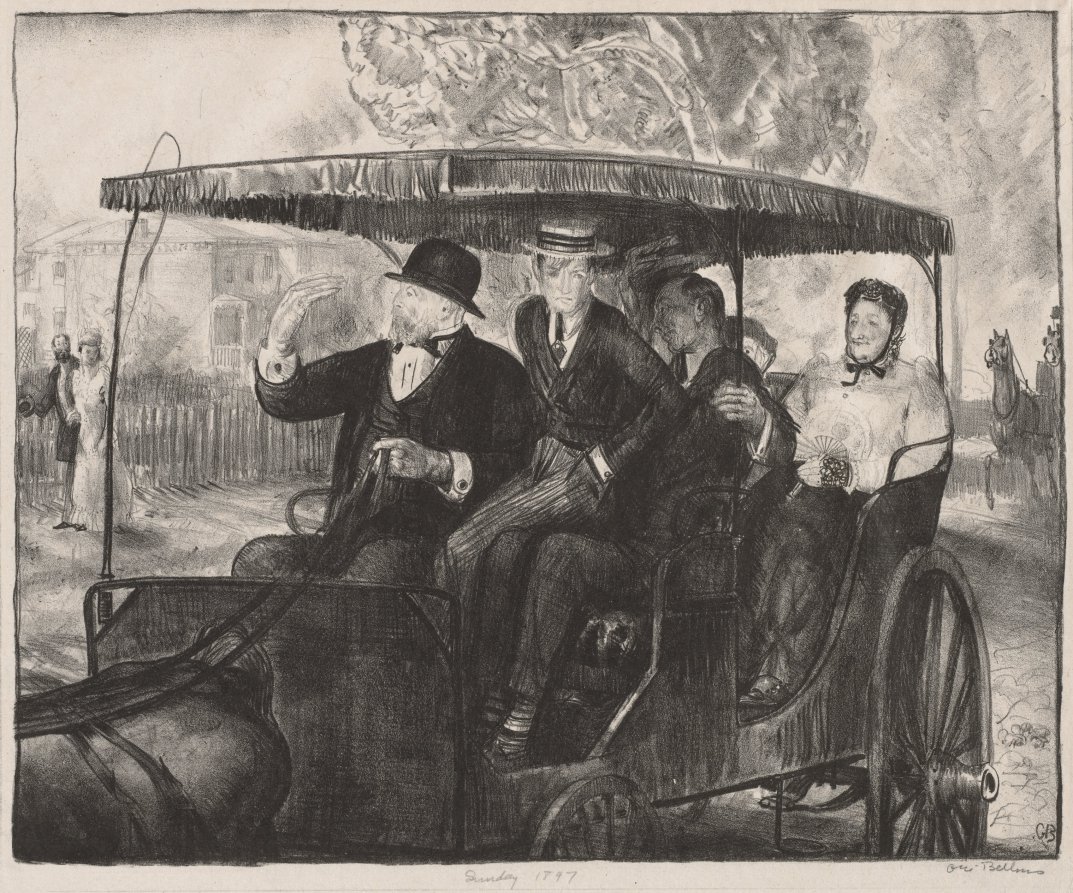
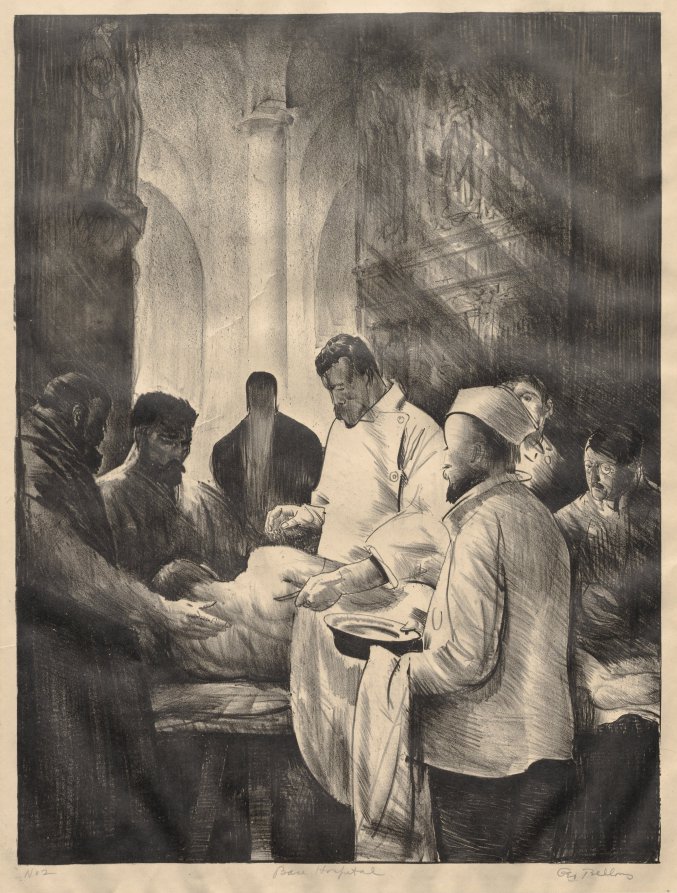
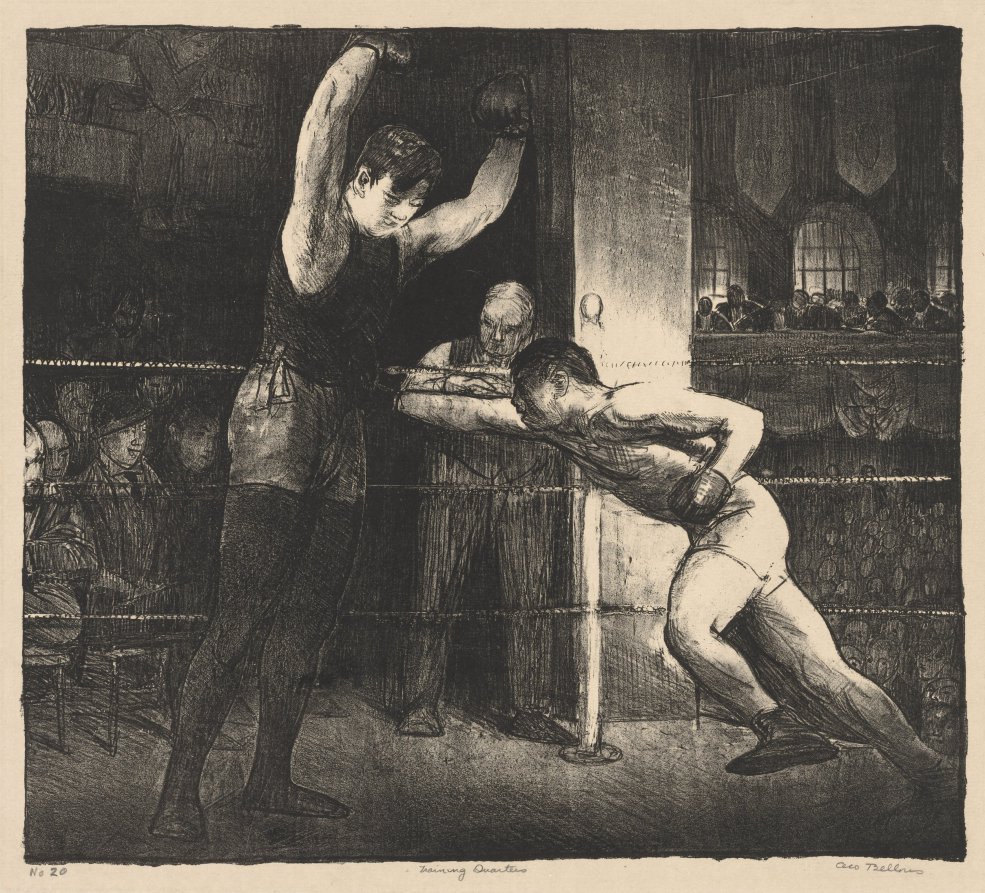
George Bellows remains the name that commands the most serious prices and the most sustained institutional attention. His boxing pictures in particular have become something like cultural touchstones, works that collectors across categories want to engage with because they operate on so many registers at once. They are formally thrilling, built in that urgent loaded brushwork that Bellows developed from Henri, and they are also documents of a particular urban violence that the respectable art world of his moment was not supposed to celebrate. The Whitney Museum of American Art holds major Bellows works and has consistently used them as anchors for thinking about American social life in paint.
George Bellows
Indoor Athlete, 1921
When a Bellows appears at auction, it draws not just American art specialists but collectors with broader modernist appetites who respond to the sheer physical authority of the work. Jerome Myers represents a quieter but equally important current within this tradition. Where Bellows pursued drama and scale, Myers worked in a more intimate register, finding his subjects in the pushcart markets and street festivals of the Lower East Side. His work has attracted renewed scholarly interest in recent years precisely because of its sustained attention to Jewish immigrant life in New York, a subject that connects the Ashcan project to larger conversations about whose stories American art has historically chosen to tell.
Institutions building collections with any kind of commitment to social history are increasingly attentive to Myers, and that attentiveness tends to precede market movement. George Luks occupies a fascinating and somewhat undervalued position within the group. He was by many accounts the most naturally gifted draftsman among them, capable of a Hals like bravura that made Henri himself take notice, and his best work has a raw improvisational energy that feels closer to expressionism than to social documentary. The auction market for Luks has historically been less consistent than for Bellows, but that inconsistency creates opportunity.
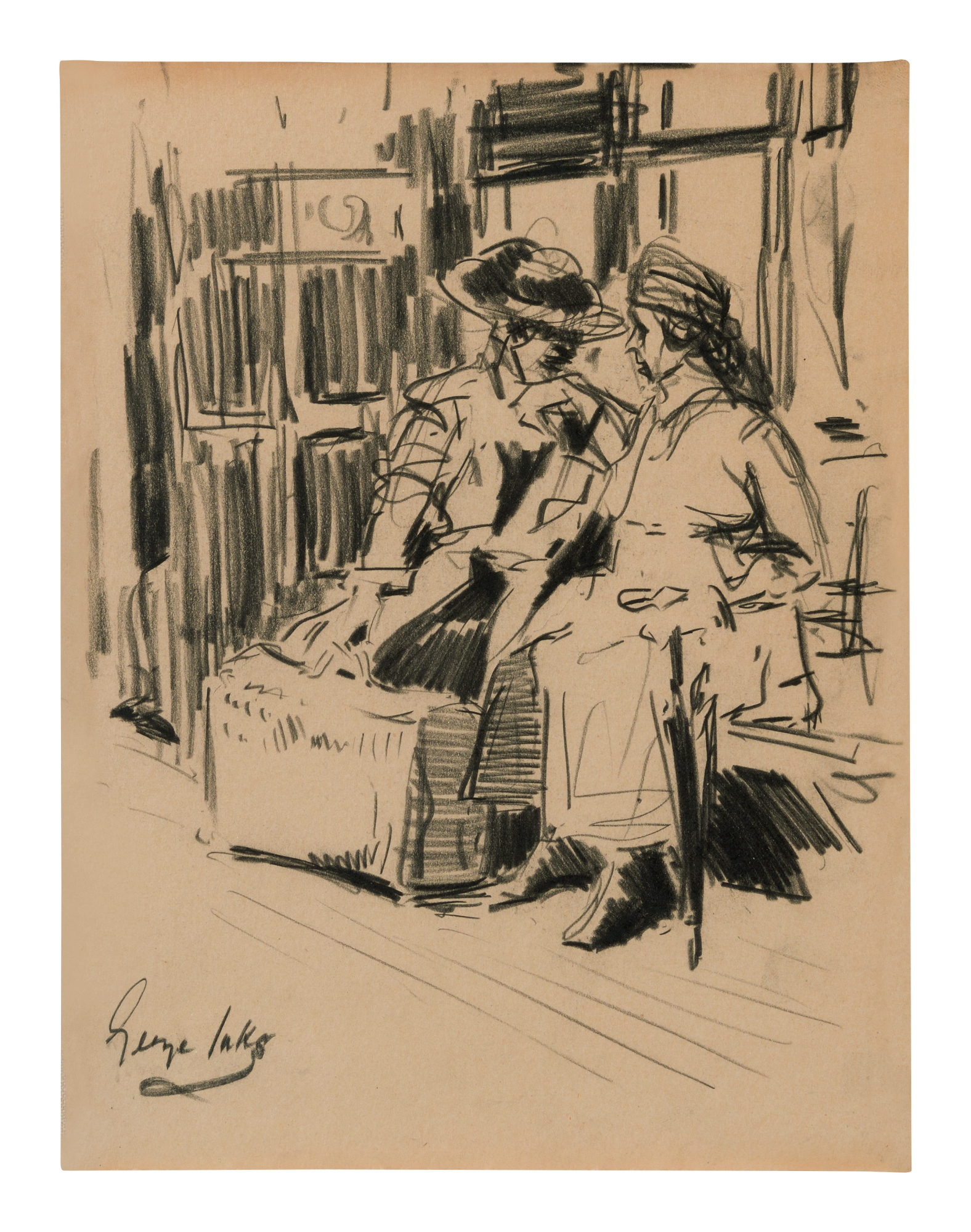
George Luks
Waiting For The Train
Curators who have worked through the full range of his output speak about him with a kind of controlled excitement, the sense that his reputation has not caught up with his actual achievement. The critical conversation around the Ashcan School is being shaped right now by scholars who are bringing tools from urban history, immigration studies, and critical race theory into contact with the paintings themselves. Writers like Sarah Burns have done important work on the cultural politics of American realism, and younger art historians are building on that foundation in ways that are opening new questions rather than closing old ones. The publication of serious catalogue essays accompanying recent museum shows has been particularly valuable, providing collectors with frameworks for thinking about individual works that go beyond connoisseurship into genuine historical argument.
What feels alive in this category is the intersection between the Ashcan painters' subject matter and the current appetite for art that engages with class, labor, and urban inequality. These are not abstract concerns for collectors in 2024. The works on The Collection reflect the range and seriousness of what this movement produced, with Bellows well represented and the chance to engage with the quieter voices in the tradition. What feels settled is the canonical status of the major works, which means that when significant pieces appear, there is genuine competition for them across a wide collector base.
The surprise, if there is one coming, may be a broader revaluation of the secondary figures, the painters who worked in the Ashcan idiom without achieving the same art historical profile, whose work is beginning to attract the kind of scholarly attention that has historically preceded price discovery. The streets these painters walked are long gone, but the argument they were making about what art is for turns out to be a permanent one.