Join The Collection to save, track, and explore works like this.

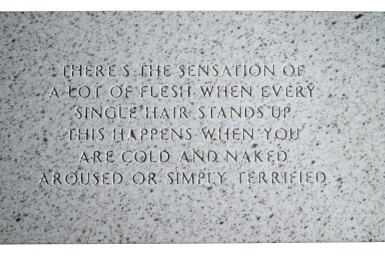
Jenny Holzer — The Living Series: There's the sensation of a lot of
Jenny Holzer

The Living Series: There's the sensation of a lot of

1989

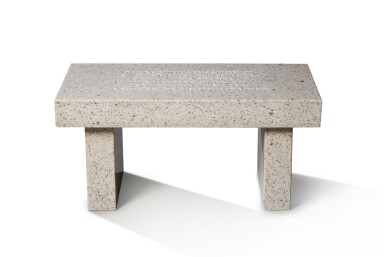
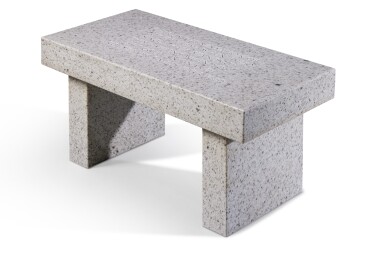
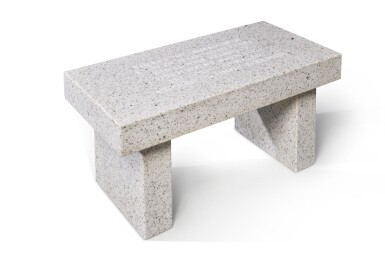
A minimalist sculptural bench crafted from cast concrete or stone aggregate material. The piece features a simple rectangular top supported by four sturdy cylindrical legs, creating a functional yet austere form. The rough, granular surface texture and neutral beige coloration emphasize the raw materiality of the construction. The work exemplifies contemporary approaches to utilitarian design elevated to art object status, questioning the boundaries between furniture and sculpture.

Overall

Notes

Contemporary Day Auction, Sotheby's, sale on 2026-05-15.

🔨 Auction Lot

Contemporary Day Auction

May 15, 2026

Estimate: $600,000$800,000

For Sale

Start the Discussion

Request access to join the discussion

About this work

Jenny Holzer, The Living Series: There's the sensation of a lot of, 1989

A minimalist sculptural bench crafted from cast concrete or stone aggregate material. The piece features a simple rectangular top supported by four sturdy cylindrical legs, creating a functional yet austere form. The rough, granular surface texture and neutral beige coloration emphasize the raw materiality of the construction. The work exemplifies contemporary approaches to utilitarian design elevated to art object status, questioning the boundaries between furniture and sculpture.

Dimensions
overall: 43.2 x 91.4 x 45.7 cm
Year
1989
Seen at
Sotheby's, New York, London, Hong Kong, Paris

Related themes

Concrete Sculpture, Utilitarian Form, Stone Bench, Minimalist Design, Geometric Furniture, Functional Sculpture, Industrial Material, Cast Material, Contemporary Art, Brutalist Aesthetics

More works by Jenny Holzer

Collected by

Alex Capecelatro, Art Institute of Chicago