Join The Collection to save, track, and explore works like this.

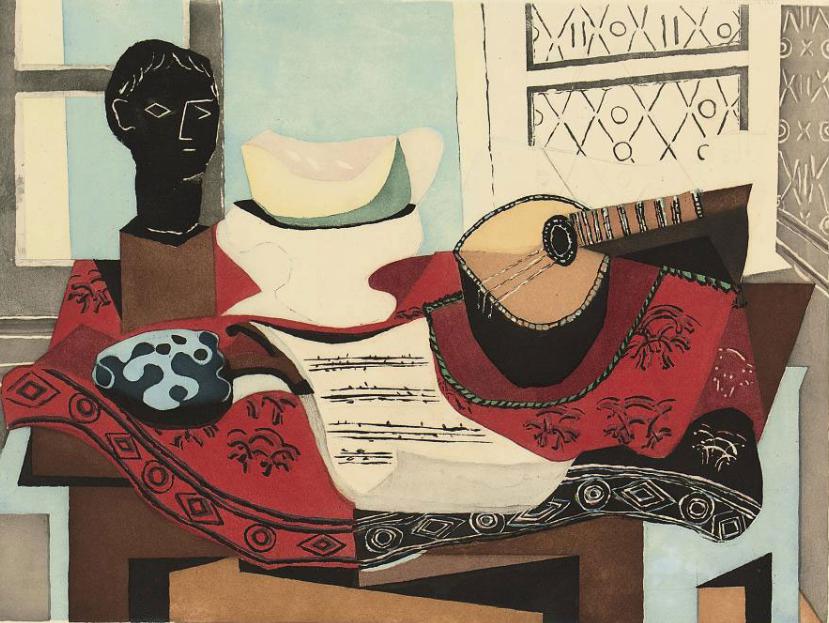
Jacques Villon — Pablo Picasso (after) Nature Morte
Jacques Villon

Pablo Picasso (after) Nature Morte

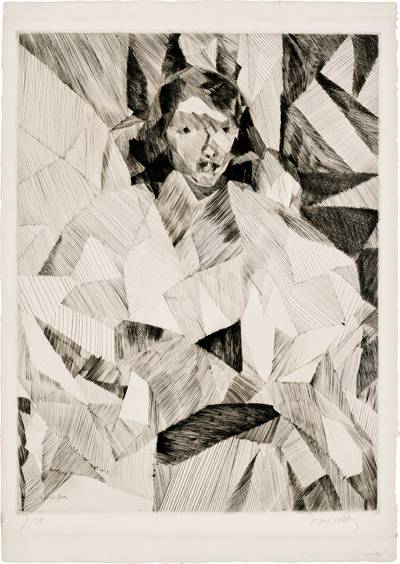
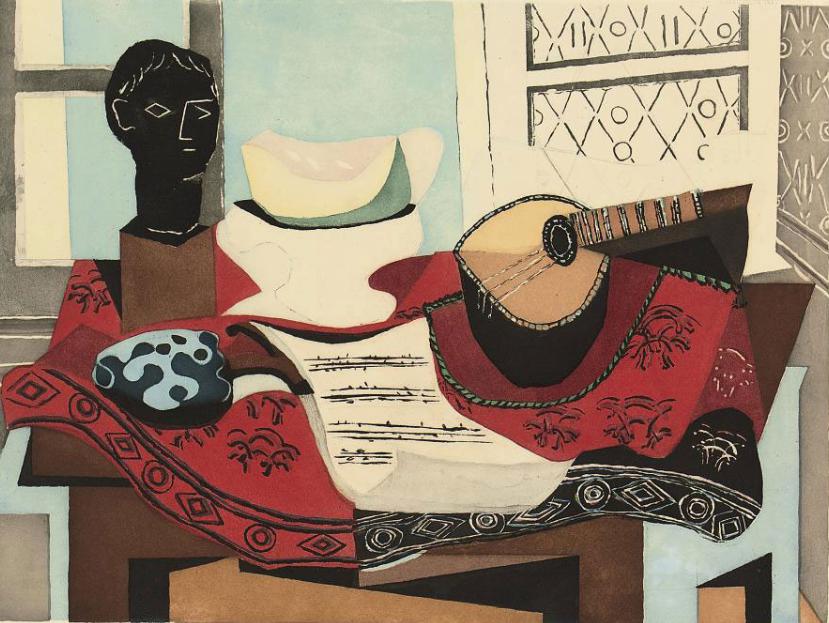
This striking cubist portrait demonstrates Jacques Villon's masterful command of fragmented form and restrained color that characterized his mature practice. The work, a reinterpretation of Picasso's still life compositions, reveals Villon's particular genius for translating volumetric space into a sophisticated interplay of geometric planes rendered in muted earth tones and cool grays. Rather than merely copying his contemporary's motif, Villon engages in a profound visual dialogue, decomposing the subject into crystalline facets that suggest multiple viewpoints simultaneously, a technique that marks the artist's distinct approach within the broader cubist movement. Villon's output from this period showcases his increasing abstraction and refinement of line work, qualities that earned him recognition among collectors and critics as one of the movement's most intellectually rigorous practitioners. The delicate equilibrium between recognizable form and pure geometric abstraction in this work exemplifies why his prints and paintings became highly sought after, particularly among those who appreciated cubism's analytical rather than purely decorative dimensions. This piece represents a moment when Villon's dialogue with his peers, including Picasso, yielded particularly compelling results that transcend simple homage to become independent artistic statements of considerable sophistication.

Start the Discussion

Request access to join the discussion

About this work

Jacques Villon, Pablo Picasso (after) Nature Morte

This striking cubist portrait demonstrates Jacques Villon's masterful command of fragmented form and restrained color that characterized his mature practice. The work, a reinterpretation of Picasso's still life compositions, reveals Villon's particular genius for translating volumetric space into a sophisticated interplay of geometric planes rendered in muted earth tones and cool grays. Rather than merely copying his contemporary's motif, Villon engages in a profound visual dialogue, decomposing the subject into crystalline facets that suggest multiple viewpoints simultaneously, a technique that marks the artist's distinct approach within the broader cubist movement. Villon's output from this period showcases his increasing abstraction and refinement of line work, qualities that earned him recognition among collectors and critics as one of the movement's most intellectually rigorous practitioners. The delicate equilibrium between recognizable form and pure geometric abstraction in this work exemplifies why his prints and paintings became highly sought after, particularly among those who appreciated cubism's analytical rather than purely decorative dimensions. This piece represents a moment when Villon's dialogue with his peers, including Picasso, yielded particularly compelling results that transcend simple homage to become independent artistic statements of considerable sophistication.

Seen at
Georgetown Frame Shoppe, Washington, D.C., United States

More works by Jacques Villon