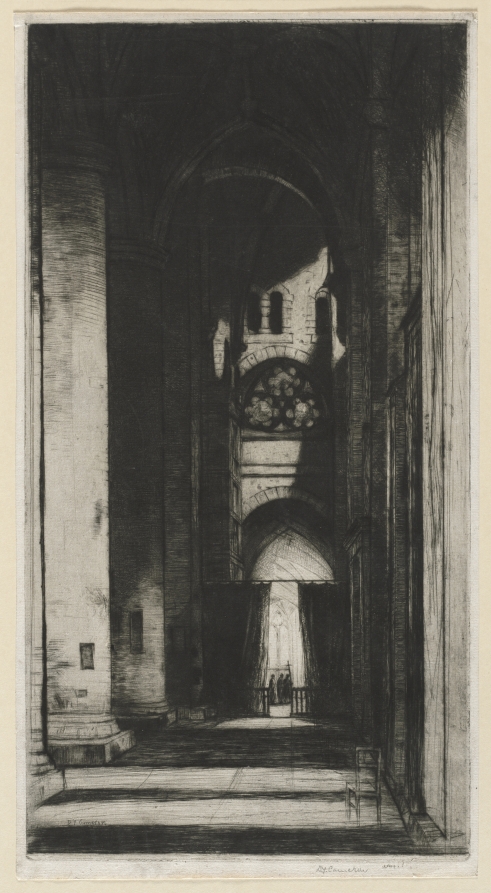
Tewksbury Abbey
1915
David Young Cameron's "Tewksbury Abbey" is an etching and drypoint that captures the architectural grandeur of the medieval Gloucestershire monastery with fine linear detail characteristic of the artist's printmaking technique. Cameron employs the combined methods of etching and drypoint to achieve varied tonal effects, with the drypoint passages creating softer, richer lines that contrast with the crisper etched lines defining the abbey's Gothic structure. The work demonstrates Cameron's skill in rendering complex architectural forms through the deliberate interplay of light and shadow achieved through his mastery of intaglio processes.
- Medium
- etching and drypoint
- Location
- Cleveland Museum of Art, Cleveland, OH
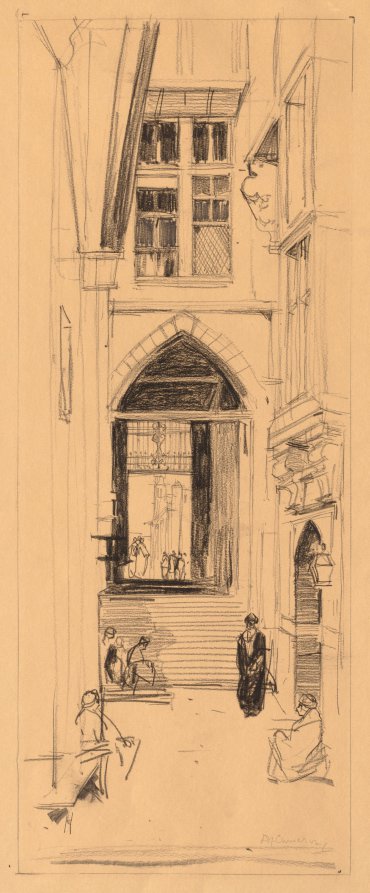
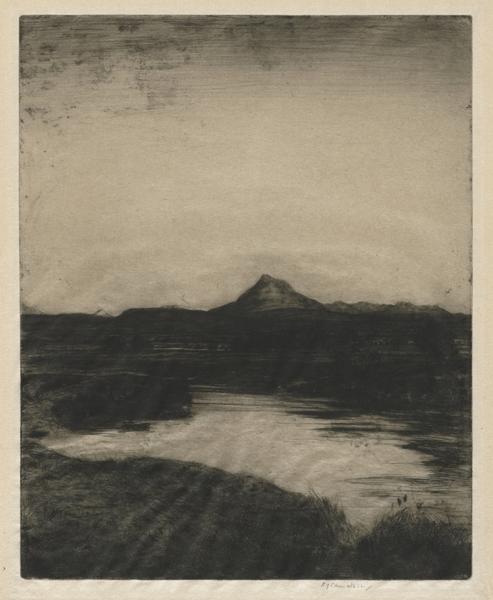
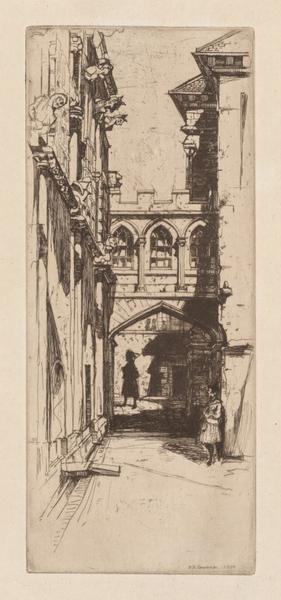
Spotted works by David Young Cameron
Artists in conversation
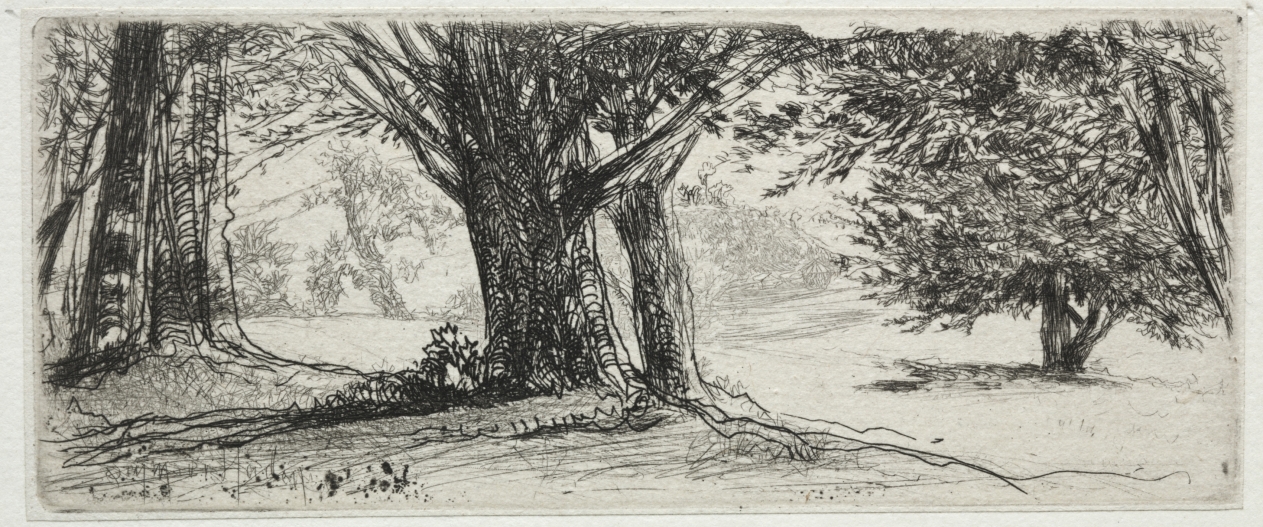
Francis Seymour Haden
British · b. 1818
Haden was a master etcher who similarly combined etching and drypoint techniques to render architectural and landscape subjects with rich tonal variation and atmospheric depth. His prints of historic English scenes share Cameron's romantic sensibility and precise yet expressive linear draughtsmanship.
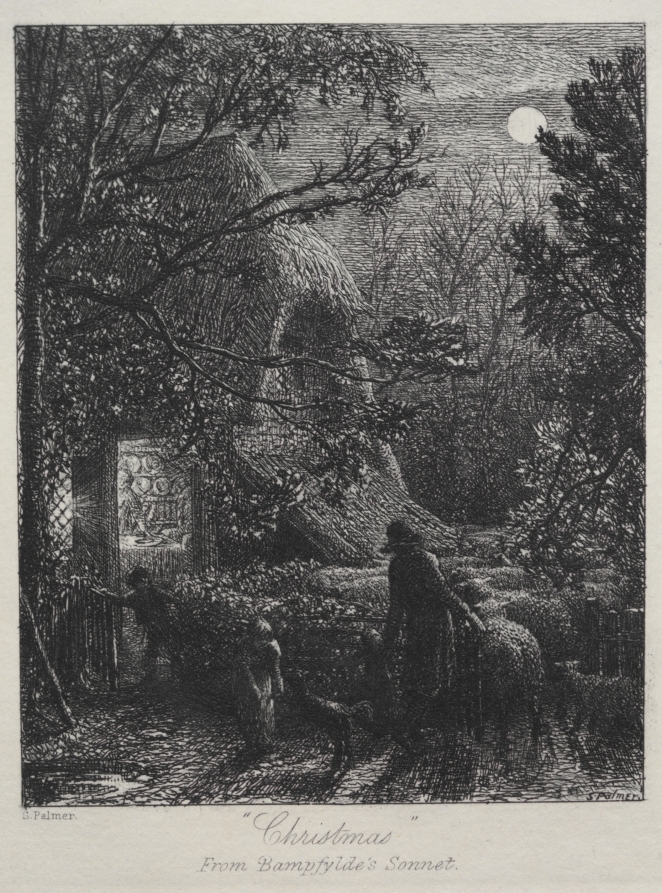
Samuel Palmer
British · b. 1805
Palmer's etchings of Gothic architecture and pastoral English landscapes demonstrate a similar romantic reverence for historic structures bathed in atmospheric light. His printmaking technique achieved comparable contrasts between delicate fine lines and richly worked passages that evoke mood and spiritual grandeur.
Muirhead Bone
Scottish · b. 1876
As a fellow Scottish printmaker working in the same early twentieth century period, Bone created celebrated architectural etchings of cathedrals and historic buildings with the same meticulous linear detail and atmospheric tonal range that defines Cameron's depiction of Tewksbury Abbey.
Start the Discussion
Request access to join the discussion