Join The Collection to save, track, and explore works like this.

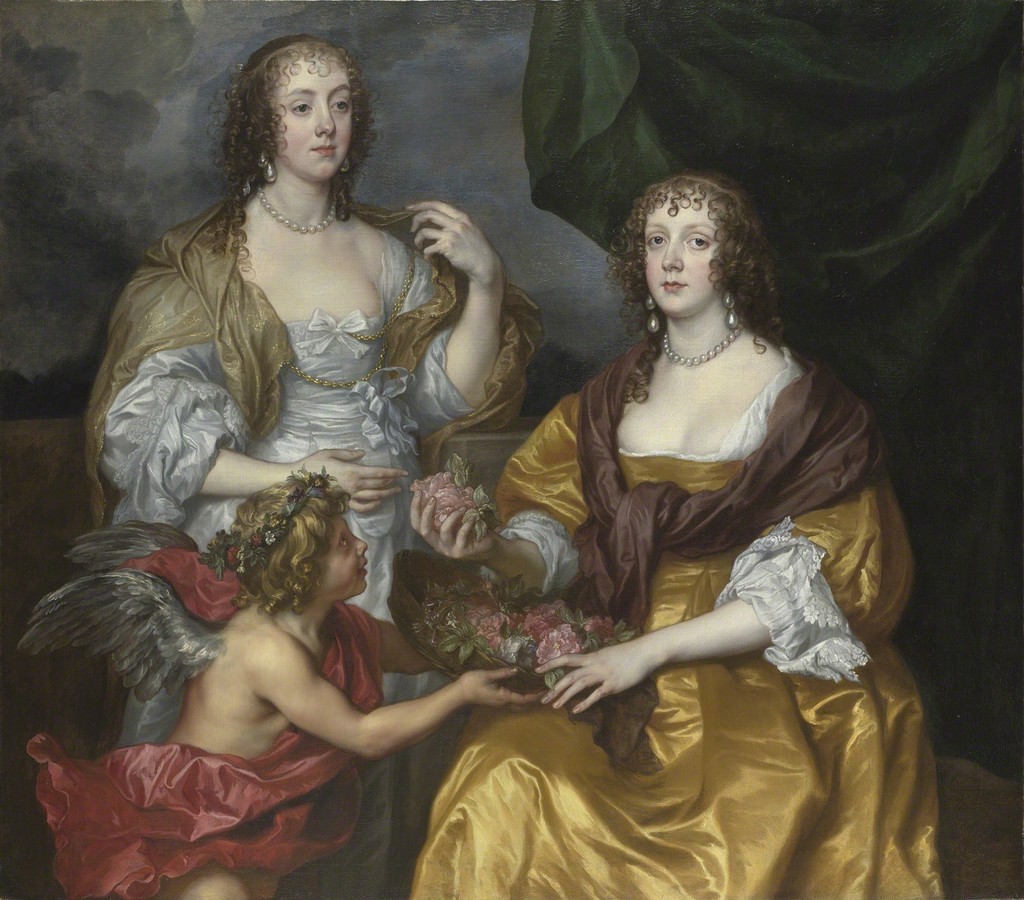
Anthony van Dyck — Lady Elizabeth Thimbelby and Dorothy, Viscountess Andover
Anthony van Dyck

Lady Elizabeth Thimbelby and Dorothy, Viscountess Andover

1637

Painted in 1637 during the height of Anthony van Dyck's celebrated tenure as court painter to Charles I, this monumental double portrait captures Lady Elizabeth Thimbelby and her sister Dorothy, Viscountess Andover, in a moment charged with quiet ceremony and emotional tenderness. The composition unfolds with characteristic Flemish refinement, as a winged putto presents a bouquet of roses, widely interpreted as a reference to Lady Elizabeth's recent marriage. Van Dyck orchestrates the encounter between the figures and the intervening cherub with masterful control of gesture and gaze, drawing the eye through a flowing diagonal that animates the otherwise stately arrangement. The sisters' satin costumes, rendered in shimmering silver-grey and warm gold, demonstrate the artist's unrivalled ability to translate the tactile luxury of aristocratic dress into paint, each fold and highlight applied with a confidence that no contemporary rival could match. The canvas belongs to van Dyck's most productive English period, when he was reshaping the visual language of British portraiture for generations to come. His handling of light here is exceptionally subtle, softening the contours of the faces while preserving an unmistakable psychological intimacy between the two women. The landscape glimpsed beyond them recedes into a silvery atmospheric haze, lending the scene a poetic, almost theatrical quality that elevates portraiture into something closer to narrative painting. At 132 by 149 centimetres, the work commands genuine physical presence, filling a room with the authority and grace one associates only with van Dyck's finest commissions. For the serious collector, works of this calibre and period carry layered significance, operating simultaneously as historical document, technical tour de force, and enduring testimony to van Dyck's singular gift for capturing likeness without sacrificing elegance. The painting currently resides in the collection of The National Gallery, London, confirming its status among the canonical masterworks of seventeenth-century European portraiture. Acquiring a work of comparable ambition, condition, and provenance from this period represents an increasingly rare opportunity in any market.

Medium
Oil on canvas
Overall
Signed
Yes

Start the Discussion

Request access to join the discussion

Spotted works by Anthony van Dyck
About this work

Anthony van Dyck, Lady Elizabeth Thimbelby and Dorothy, Viscountess Andover, 1637

Painted in 1637 during the height of Anthony van Dyck's celebrated tenure as court painter to Charles I, this monumental double portrait captures Lady Elizabeth Thimbelby and her sister Dorothy, Viscountess Andover, in a moment charged with quiet ceremony and emotional tenderness. The composition unfolds with characteristic Flemish refinement, as a winged putto presents a bouquet of roses, widely interpreted as a reference to Lady Elizabeth's recent marriage. Van Dyck orchestrates the encounter between the figures and the intervening cherub with masterful control of gesture and gaze, drawing the eye through a flowing diagonal that animates the otherwise stately arrangement. The sisters' satin costumes, rendered in shimmering silver-grey and warm gold, demonstrate the artist's unrivalled ability to translate the tactile luxury of aristocratic dress into paint, each fold and highlight applied with a confidence that no contemporary rival could match. The canvas belongs to van Dyck's most productive English period, when he was reshaping the visual language of British portraiture for generations to come. His handling of light here is exceptionally subtle, softening the contours of the faces while preserving an unmistakable psychological intimacy between the two women. The landscape glimpsed beyond them recedes into a silvery atmospheric haze, lending the scene a poetic, almost theatrical quality that elevates portraiture into something closer to narrative painting. At 132 by 149 centimetres, the work commands genuine physical presence, filling a room with the authority and grace one associates only with van Dyck's finest commissions. For the serious collector, works of this calibre and period carry layered significance, operating simultaneously as historical document, technical tour de force, and enduring testimony to van Dyck's singular gift for capturing likeness without sacrificing elegance. The painting currently resides in the collection of The National Gallery, London, confirming its status among the canonical masterworks of seventeenth-century European portraiture. Acquiring a work of comparable ambition, condition, and provenance from this period represents an increasingly rare opportunity in any market.

Medium
Oil on canvas
Dimensions
overall: 132.1 x 149 cm
Year
1637
Signed
Hand-signed by the artist
Seen at
The National Gallery, London

More works by Anthony van Dyck

Collected by

Cleveland Museum of Art