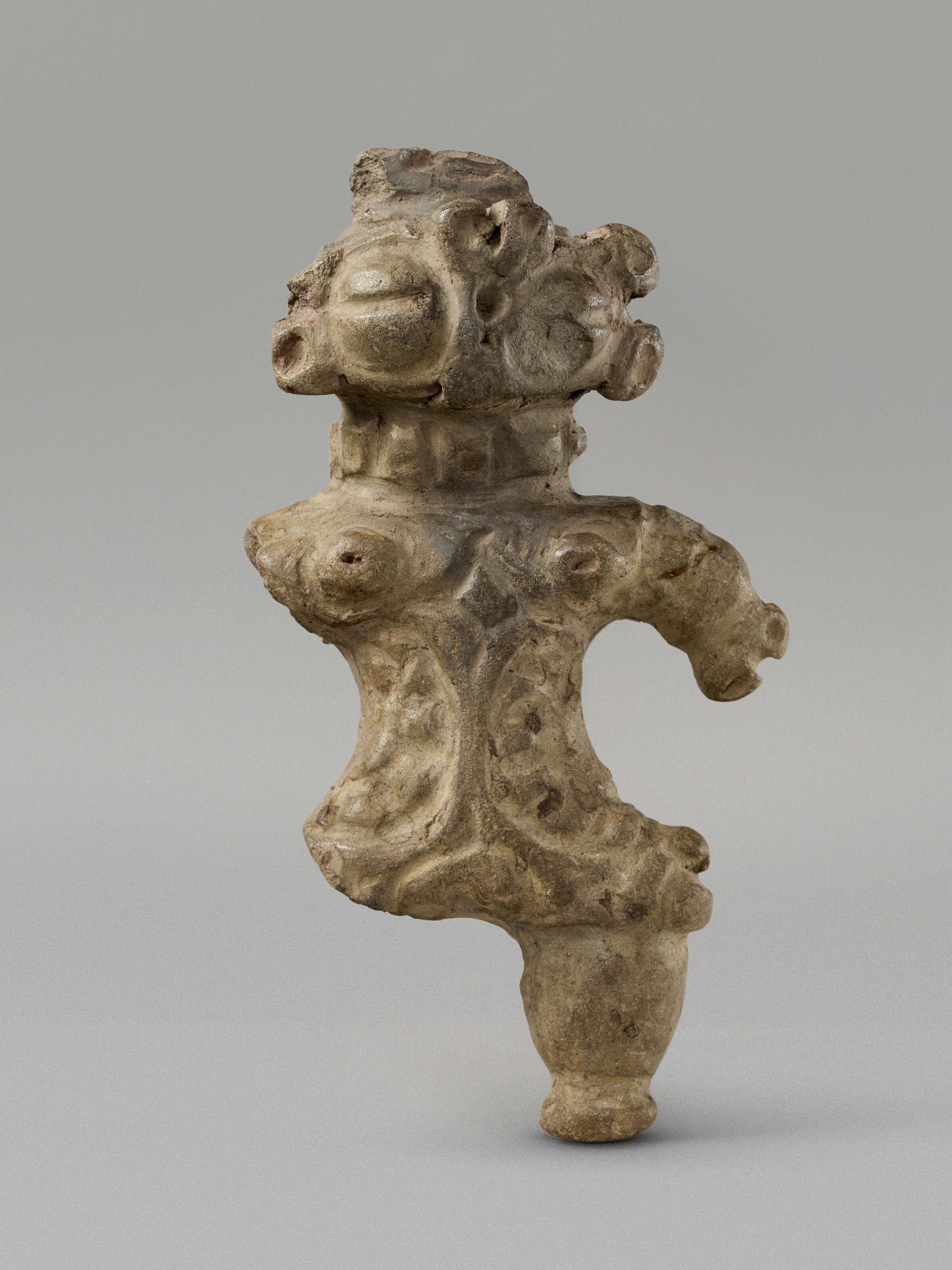
An Earthenware Sculpture Of A Woman ( Shakoki Dogu )
LATE JOMON PERIOD (5TH-3RD CENTURY BCE)
This small earthenware figurine from Japan's Late Jomon period represents one of the earliest known human sculptures, depicting a female form with distinctive facial features including large eyes and a distinctive headdress or hair arrangement. The piece exhibits the characteristic stylized proportions and geometric patterning typical of Jomon dogū figures, which may have held ritual or spiritual significance in prehistoric Japanese society. Created through hand-modeling techniques without the use of the potter's wheel, this artifact demonstrates the sophisticated artistic capabilities of hunter-gatherer cultures approximately 5,000 years ago.
- Spotted At
- Auction House · Christie's
Notes
LOT ESSAY This figure displays the typical decoration of a shakoki dogu (goggle-eyed figure), one of the two mainstream types of clay figurine made at Kamegaoka in Aomori prefecture during the Final Jomon period. Modelled using incised cord marks and distinctive features of the small and narrow eyes suggest the date of this figure to be latter half of the ‘goggled-eye’ period. A similar shakoki dogu with small and narrow eyes is in the collection of the Metropolitan Museum of Art, New York.
🔨 Auction Lot
Japanese and Korean Art
March 24, 2026
Estimate: $15,000 – $25,000
Lot 24
Start the Discussion
Request access to join the discussion