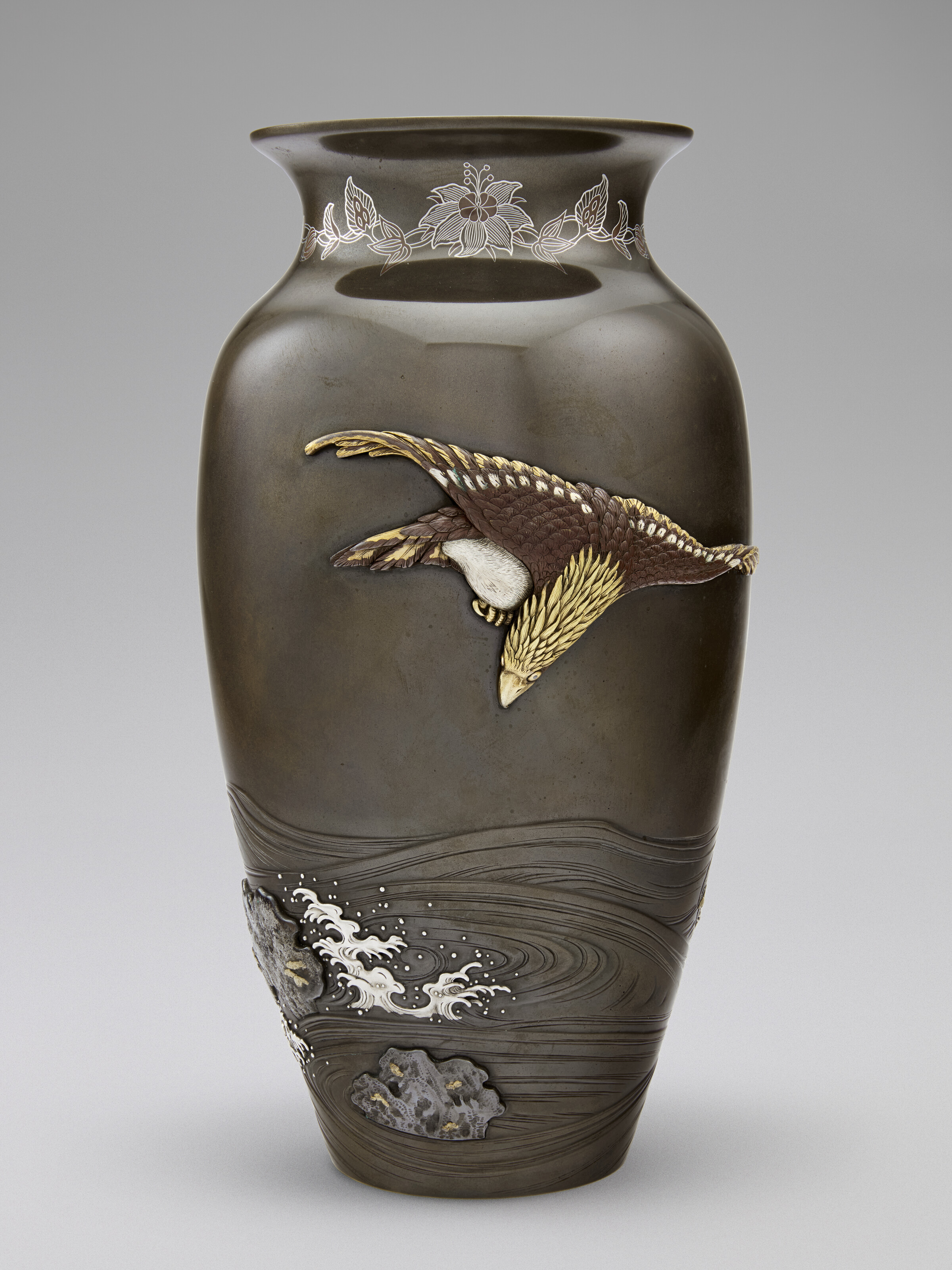
A Soft-metal-inlaid Shibuichi Vase With Hawk Flying Over Waves
MEIJI PERIOD (LATE 19TH CENTURY), WITH A DOUBLE-MOUNTAIN MARK (KIRYU KOSHO KAISHA) AND SEALED KAKO (SUZUKI CHOKICHI; 1848-1919)
This late 19th century Japanese vase exemplifies the refined metalworking techniques of the Meiji period, featuring intricate soft metal inlays in shibuichi, a copper and silver alloy prized for its distinctive gray-blue patina. The composition depicts a hawk in dynamic flight above rolling waves, a subject that combines naturalistic observation with the decorative traditions of Japanese metalcraft. Bearing the mark of Kiryu Kosho Kaisha and the seal of master craftsman Suzuki Chokicki, the work represents the high level of technical achievement and artistic sophistication achieved by Japanese metalworkers during this period of modernization and cultural exchange.
- Spotted At
- Auction House · Christie's
Notes
LOT ESSAY A semi-governmental corporation, Kiryu Kosho Kaisha (The First Japanese Manufacturing and Trading Company) was founded in 1873 after the great success of the Japanese exhibit at the Vienna World Exhibition. The company employed a number of leading bronze artists, such as Suzuki Chokichi (1848-1919), to produce purely decorative bronzes for the international market. During the Meiji period, Chokichi successfully exhibited in many of the international expositions and won prizes. He was also famous for creating images of birds of prey, most notably for his Twelve Hawks exhibited to great acclaim at the World's Columbian Exposition in Chicago in 1893. He was appointed as an Artist to the Imperial Household (Teishitsu Gigeiin) in 1896.
🔨 Auction Lot
Japanese and Korean Art
March 24, 2026
Estimate: $30,000 – $40,000
Lot 50
Start the Discussion
Request access to join the discussion