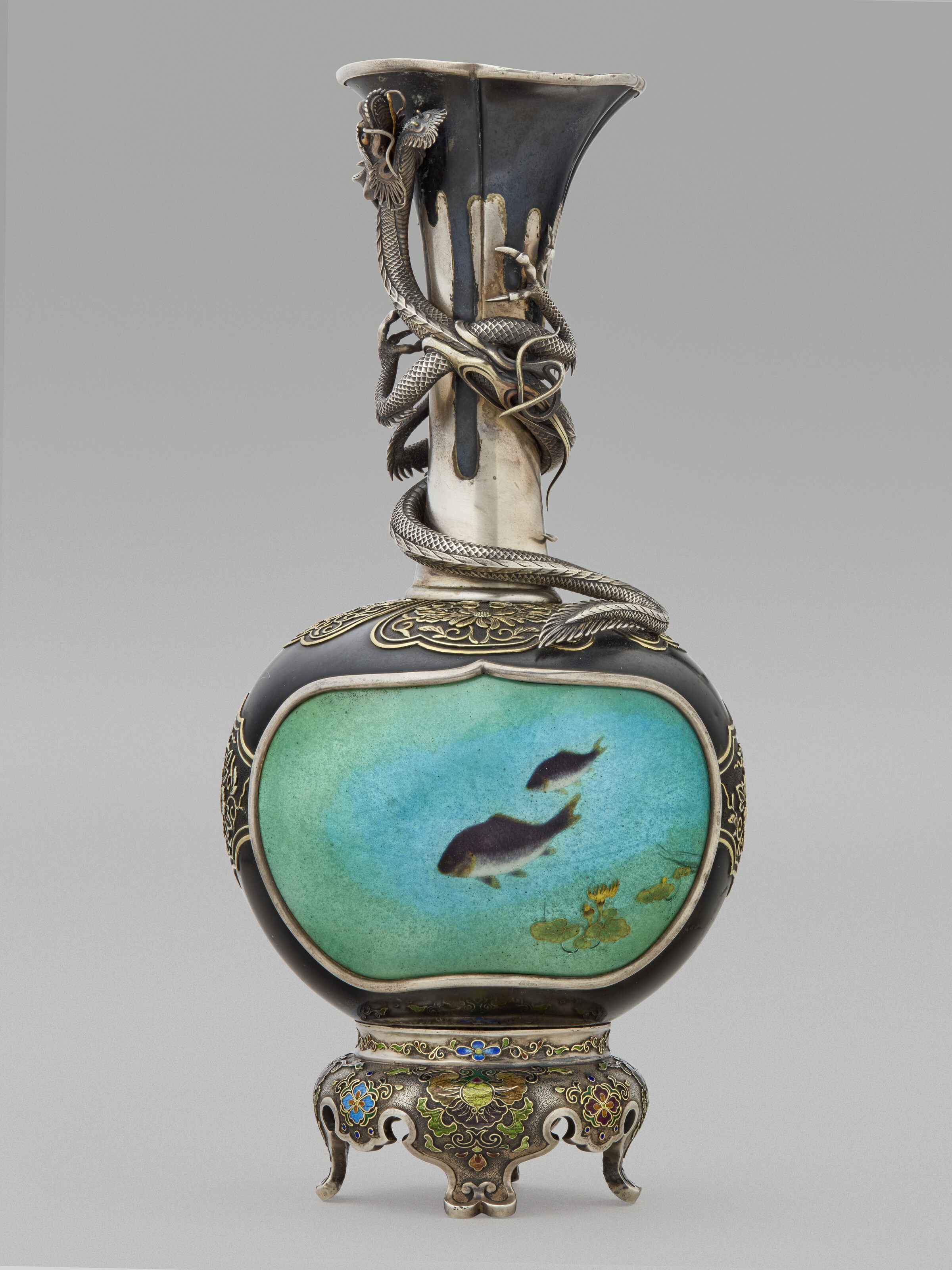
A Cloisonné Enamel And Soft-metal-inlaid Silver And Shakudo Vase
MEIJI PERIOD (LATE 19TH CENTURY), SEALED TAKASAKI (TAKASAKI KOICHI)
This exquisite vase from the late Meiji period exemplifies the sophisticated metalworking techniques that flourished in 19th century Japan, combining cloisonné enamel with inlaid shakudo (a copper alloy) and silver elements. The artist Takasaki Koichi, whose seal marks the work, demonstrates masterful integration of multiple precious materials and decorative methods characteristic of high-quality Japanese metalwork from this era. The piece represents the refined aesthetic and technical excellence that made Japanese decorative arts internationally celebrated during the Meiji period's modernization and cultural synthesis.
- Spotted At
- Auction House · Christie's
Notes
LOT ESSAY Enamel works were first produced in Japan in the mid-19th century, which were decorated with rough and dark enamelling in crude imitation of Chinese prototypes. However, shortly by the late 1880s, a new level of refinement was achieved. Takasaki Koichi is known as one of the most prominent metal-artists of the Meiji period and he exhibited a pair of silver vases with applied enamel at the International Exposition held in Paris in 1900. For a work by the same artist, see Enamel, vol. 3 of Meiji no Takara Treasures of Imperial Japan: The Nasser D. Khalili Collection of Japanese Art, Oliver Impey and Malcolm Fairley, gen. eds. (London: The Kibo Foundation, 1995), no. 80.
🔨 Auction Lot
Japanese and Korean Art
March 24, 2026
Estimate: $18,000 – $22,000
Lot 49
Start the Discussion
Request access to join the discussion