Join The Collection to save, track, and explore works like this.

Anthony van Dyck — Margareta de Vos
Anthony van Dyck

Margareta de Vos

1620

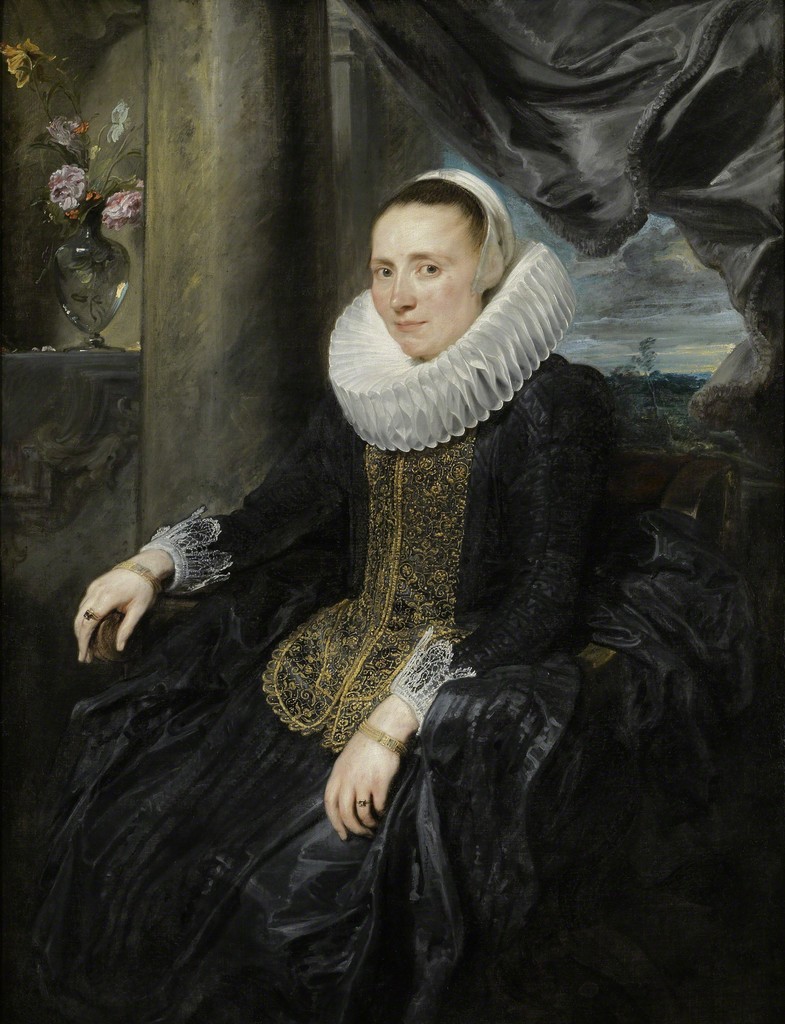
In this intimate yet commanding portrait from 1620, Anthony van Dyck renders Margareta de Vos with a psychological presence that transcends mere likeness. The sitter, wife of the Antwerp painter Frans Snyders, is captured at a moment of quiet authority, her gaze direct and her bearing composed. Van Dyck's handling of fabric and lace reveals the exceptional technical confidence of a painter still in his mid-twenties, already fluent in the language of aristocratic portraiture and capable of elevating bourgeois subjects to near-noble grandeur. The restrained palette, punctuated by luminous whites and the soft warmth of flesh tones, speaks to his careful study of Rubens while signaling a sensibility distinctly his own. The work belongs to a celebrated pair, its pendant being the portrait of Frans Snyders himself, and together they represent one of the finest examples of Van Dyck's early Antwerp period. Margareta de Vos has been held in the permanent collection of The Frick Collection in New York, a context that affirms both its historical importance and its extraordinary quality. Few institutions in the world have shaped the canon of Old Master collecting as profoundly as the Frick, and the presence of this painting within those walls speaks to its standing among scholars and connoisseurs alike. For collectors with a serious engagement with Flemish Baroque portraiture, Van Dyck's ability to individualize his sitters while maintaining an almost musical elegance of composition is precisely what distinguishes his work from contemporaries. Margareta de Vos exemplifies that gift fully, offering not simply a record of a face but a sustained meditation on dignity, intimacy, and the social world of seventeenth-century Antwerp rendered in paint of enduring beauty.

Medium
Oil on canvas
Signed
Yes
Location
The Frick Collection, New York, NY

Start the Discussion

Request access to join the discussion

Spotted works by Anthony van Dyck

About this work

Anthony van Dyck, Margareta de Vos, 1620

In this intimate yet commanding portrait from 1620, Anthony van Dyck renders Margareta de Vos with a psychological presence that transcends mere likeness. The sitter, wife of the Antwerp painter Frans Snyders, is captured at a moment of quiet authority, her gaze direct and her bearing composed. Van Dyck's handling of fabric and lace reveals the exceptional technical confidence of a painter still in his mid-twenties, already fluent in the language of aristocratic portraiture and capable of elevating bourgeois subjects to near-noble grandeur. The restrained palette, punctuated by luminous whites and the soft warmth of flesh tones, speaks to his careful study of Rubens while signaling a sensibility distinctly his own. The work belongs to a celebrated pair, its pendant being the portrait of Frans Snyders himself, and together they represent one of the finest examples of Van Dyck's early Antwerp period. Margareta de Vos has been held in the permanent collection of The Frick Collection in New York, a context that affirms both its historical importance and its extraordinary quality. Few institutions in the world have shaped the canon of Old Master collecting as profoundly as the Frick, and the presence of this painting within those walls speaks to its standing among scholars and connoisseurs alike. For collectors with a serious engagement with Flemish Baroque portraiture, Van Dyck's ability to individualize his sitters while maintaining an almost musical elegance of composition is precisely what distinguishes his work from contemporaries. Margareta de Vos exemplifies that gift fully, offering not simply a record of a face but a sustained meditation on dignity, intimacy, and the social world of seventeenth-century Antwerp rendered in paint of enduring beauty.

Medium
Oil on canvas
Year
1620
Signed
Hand-signed by the artist
Seen at
The Frick Collection, Manhattan, United States

More works by Anthony van Dyck

Collected by

Cleveland Museum of Art