Join The Collection to save, track, and explore works like this.

Jacques Villon — Nu
Jacques Villon — Nu
Jacques Villon

Nu

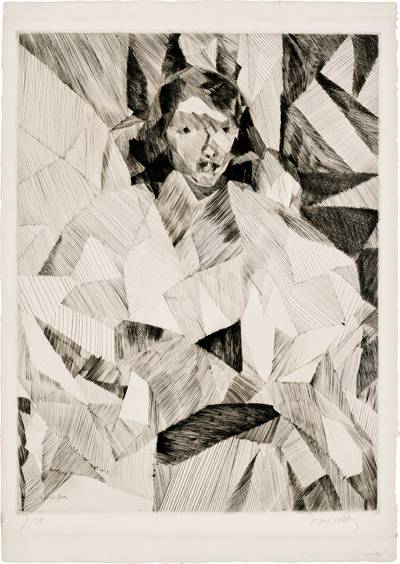
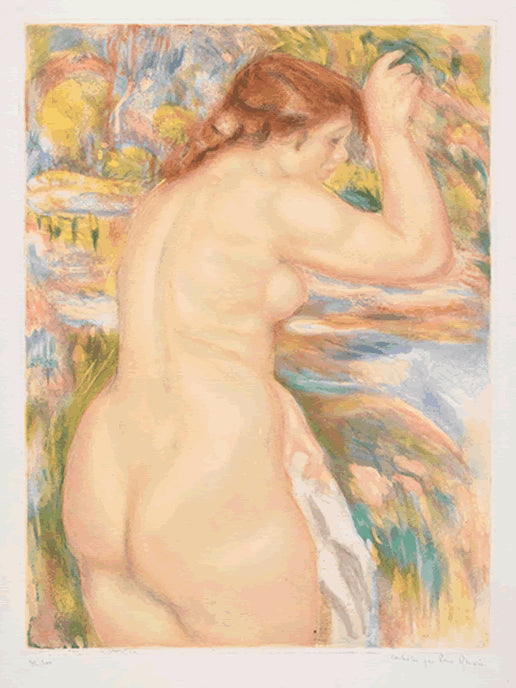
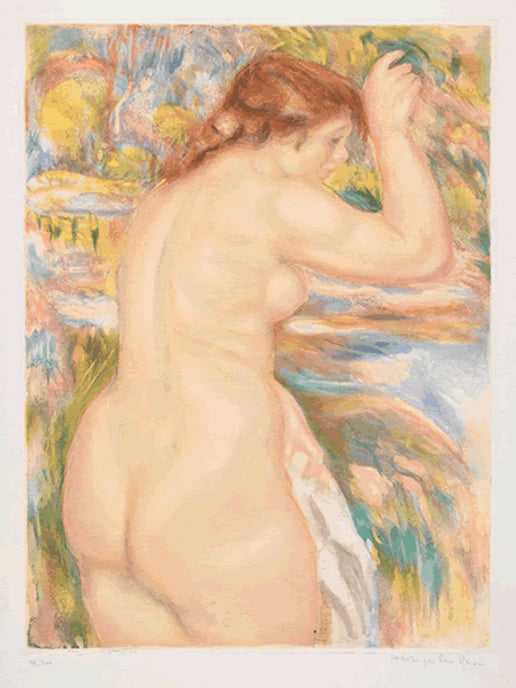
This striking aquatint presents a fragmented female form rendered through Villon's distinctive Cubist vocabulary, where the nude body dissolves into geometric planes of warm ochres, cool blues, and subtle greens. Created in 1923, the work demonstrates the artist's mastery of color aquatint printing, a technically demanding process that allows for remarkable tonal nuance and chromatic complexity. The composition balances abstraction with figuration, inviting viewers to reconstruct the body through its component parts while remaining visually engaged by the luminous interplay of hues across the paper's surface. The edition of 200 suggests this was an important and celebrated work within Villon's printmaking practice. Jacques Villon's graphic works from this period occupy a sophisticated middle ground between representation and pure abstraction, drawing on lessons from Cubism while maintaining a distinctly lyrical sensibility. The Nu exemplifies his conviction that color and form could work in concert to suggest rather than depict the human figure, creating an experience that is both intellectually engaging and aesthetically pleasurable. For collectors, this aquatint represents a significant example of early twentieth-century French printmaking at a moment when the medium was achieving unprecedented artistic ambition and technical refinement.

Medium
Jacques Villon, Jacques Villon Nu, 1923, Aquatint printed in colours on wove paper, Edition 200, 28" x 21 Sheet Size

Start the Discussion

Request access to join the discussion

About this work

Jacques Villon, Nu

This striking aquatint presents a fragmented female form rendered through Villon's distinctive Cubist vocabulary, where the nude body dissolves into geometric planes of warm ochres, cool blues, and subtle greens. Created in 1923, the work demonstrates the artist's mastery of color aquatint printing, a technically demanding process that allows for remarkable tonal nuance and chromatic complexity. The composition balances abstraction with figuration, inviting viewers to reconstruct the body through its component parts while remaining visually engaged by the luminous interplay of hues across the paper's surface. The edition of 200 suggests this was an important and celebrated work within Villon's printmaking practice. Jacques Villon's graphic works from this period occupy a sophisticated middle ground between representation and pure abstraction, drawing on lessons from Cubism while maintaining a distinctly lyrical sensibility. The Nu exemplifies his conviction that color and form could work in concert to suggest rather than depict the human figure, creating an experience that is both intellectually engaging and aesthetically pleasurable. For collectors, this aquatint represents a significant example of early twentieth-century French printmaking at a moment when the medium was achieving unprecedented artistic ambition and technical refinement.

Medium
Jacques Villon, Jacques Villon Nu, 1923, Aquatint printed in colours on wove paper, Edition 200, 28" x 21 Sheet Size
Seen at
Georgetown Frame Shoppe, Washington, D.C., United States

More works by Jacques Villon