Zhang Zongcang 1686-1756
The Quiet Master Who Painted Mountains Breathing
Artist Spotlight · The Collection Editorial
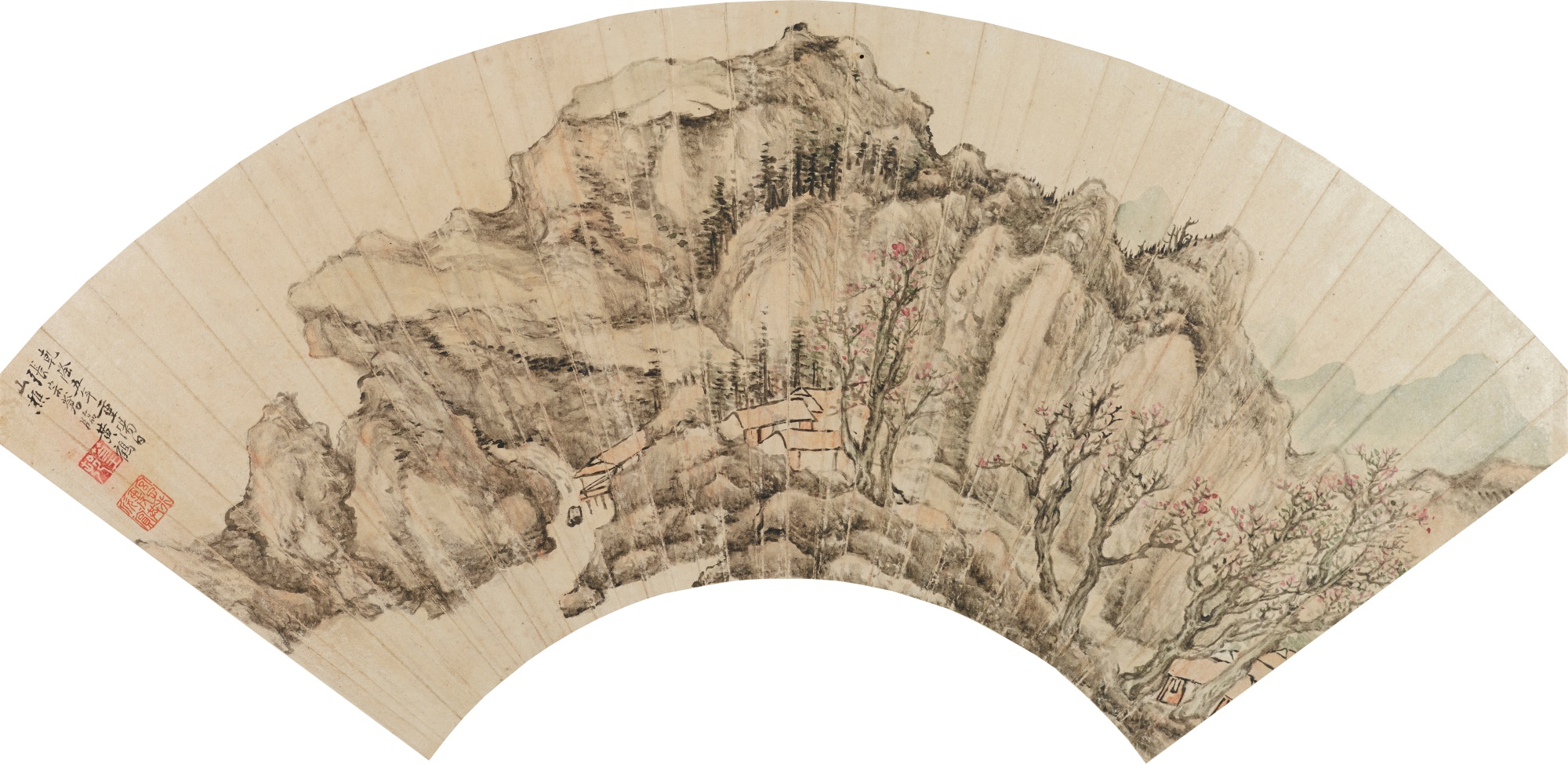
There is a particular kind of looking that the fan leaf demands. Small enough to hold in one hand, intimate enough to feel like a confidence shared between artist and viewer, the folded fan painting occupies a singular place in the history of Chinese art. It asks everything of its creator: compression, precision, a complete world rendered in the span of a breath. Zhang Zongcang, the Qing Dynasty painter and calligrapher who lived from 1686 to 1756, understood this as well as any artist of his era, and his surviving fan leaf landscapes remain among the most quietly commanding objects in the literati tradition.
Zhang Zongcang 1686-1756
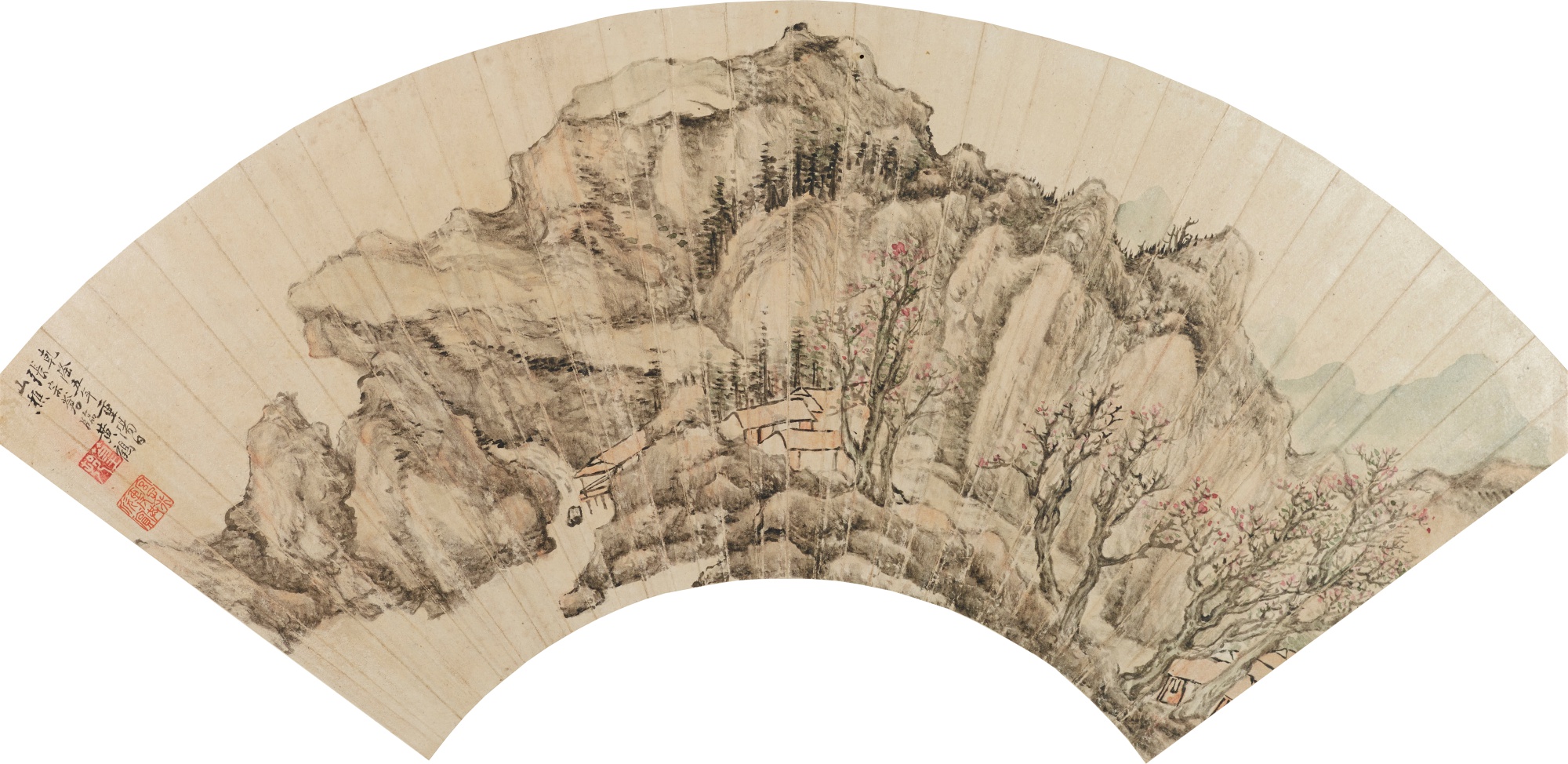
Zhang Zongcang, Landscape after Wang Meng
Zhang Zongcang was born in 1686 during a period of remarkable cultural consolidation in China. The Qing Dynasty, established by the Manchu led conquest of the previous century, had by the late seventeenth century entered a phase of relative stability and artistic flourishing under the Kangxi Emperor. The literati culture that Zhang absorbed was one of deep historical self consciousness, where painting was understood not merely as representation but as a form of intellectual and spiritual conversation with the past. Scholars trained not only in brushwork but in poetry, calligraphy, and classical literature, and the finest painters were expected to move fluently between all of these modes.
Zhang came of age in precisely this world, shaped by the twin demands of erudition and sensibility that defined the cultivated gentleman artist. The literati painting tradition that Zhang worked within traced its lineage to the great masters of the Yuan Dynasty, figures such as Wang Meng and Ni Zan, whose ink landscapes had established a visual language of restraint, personal feeling, and philosophical weight. By the time Zhang was developing his practice in the early eighteenth century, this tradition had been elaborated and annotated by generations of brilliant inheritors. The Orthodox school of painting, championed by Dong Qichang in the late Ming period, had laid out a kind of canonical map of artistic influence, and Zhang navigated this map with considerable intelligence and care.
Zhang Zongcang 1686-1756
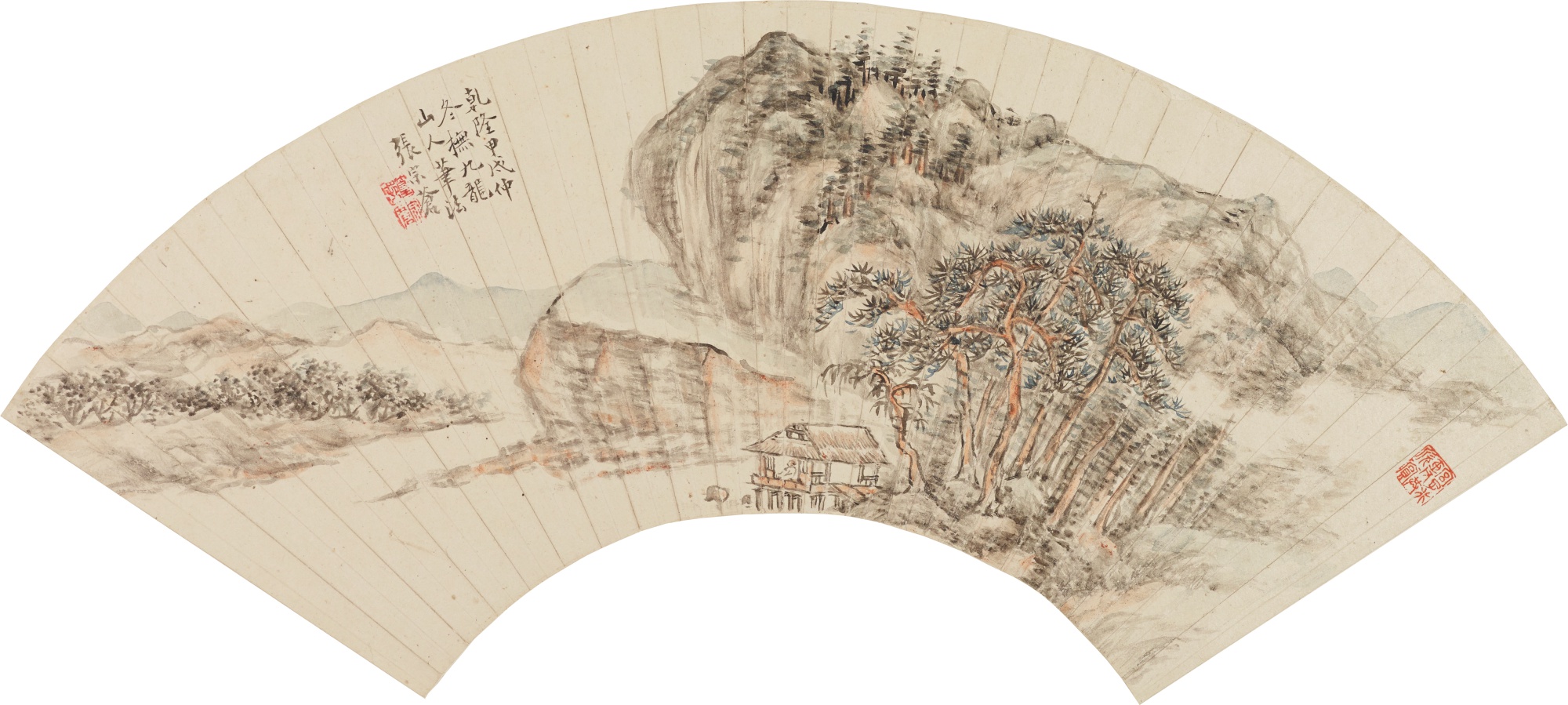
Zhang Zongcang, Landscape after Wang Fu
His work demonstrates a fluency with historical styles that speaks to a serious and sustained program of study, one in which copying the ancients was understood not as mere imitation but as a form of deep creative dialogue. The two fan leaf paintings that represent Zhang Zongcang's work on The Collection offer a vivid illustration of his method and his sensibilities. The landscape composed after Wang Meng and the landscape composed after Wang Fu both deploy ink and colour on paper with the characteristic economy of the learned painter who knows precisely when to add and when to withhold. Wang Meng, the fourteenth century Yuan master, was celebrated for his dense and energetic mountain compositions, his canvases teeming with twisted pines and layered rock formations that seem almost to vibrate with internal life.
Zhang's response to this legacy in fan leaf format is a remarkable act of translation, distilling the elder master's vital complexity into a format that rewards the closest and most patient attention. The Wang Fu homage draws on a slightly different tradition, one associated with a more lyrical and spacious approach to landscape, and together the two works illuminate the breadth of Zhang's artistic range. For collectors approaching Zhang Zongcang and his contemporaries, the fan leaf format carries particular significance and particular appeal. These works were not peripheral productions dashed off between more serious projects.
They were prized objects in their own right, exchanged between scholars and officials as tokens of esteem and intellectual kinship. Their small scale is in no sense a limitation but rather a concentrated form of ambition, the artist required to summon an entire world within the arc of the fan's spread. Works on paper from this period require careful attention to condition and provenance, and surviving examples in good state represent genuine treasures from a golden moment in Chinese cultural history. The market for Qing literati paintings has deepened considerably in recent decades as collectors across Asia and internationally have come to appreciate the intellectual richness and visual refinement of this tradition.
Zhang Zongcang belongs to a constellation of Qing period painters whose work repays careful study and whose reputations have grown steadily as scholarship has deepened. His peers and near contemporaries include figures such as Wang Hui, whose long and prolific career helped define the Orthodox school's mature phase, and Yun Shouping, the celebrated flower painter whose cool elegance represents another facet of the period's remarkable range. The Four Wangs, as the dominant Orthodox masters of the early Qing are collectively known, Wang Shimin, Wang Jian, Wang Hui, and Wang Yuanqi, provide the most immediate context for understanding the tradition Zhang was working within and responding to. Collectors who have developed an interest in any of these figures will find Zhang a natural and rewarding companion, an artist who shares their rigour and their erudition while bringing his own distinctive sensibility to bear.
What makes Zhang Zongcang matter today, and why does his work deserve fresh attention from a new generation of collectors and art lovers, is precisely the quality of engaged intelligence that animates everything he made. His landscapes are not passive reproductions of earlier styles but active, thinking responses to a living tradition, works in which the painter's own personality and point of view are consistently present even as he bows to the authority of the masters he admires. There is something genuinely moving about an art that measures its achievements against centuries of accumulated achievement and refuses either empty repetition or anxious novelty. In an art world that often prizes rupture and provocation above all else, Zhang Zongcang's serene and serious commitment to the conversation between past and present feels not like a retreat but like a form of quiet courage.
His mountains breathe. His brushwork thinks. And for those fortunate enough to encounter his work, the encounter tends to last.