Youssef Nabil
Youssef Nabil, Painting Light Into Memory
Artist Spotlight · The Collection Editorial
“I want people to feel they are looking at a painting, but one that comes from reality.”
Youssef Nabil, Interview Magazine
When the Venice Biennale welcomed Youssef Nabil as the first Egyptian artist to represent his country in a national pavilion, it was a moment that felt both overdue and entirely right. The year was 2003, and the international art world was confronting, slowly and sometimes reluctantly, the depth of what had been growing in Cairo and across the Arab world for decades. Nabil arrived not as a newcomer but as someone who had already spent years quietly perfecting a visual language so singular, so suffused with longing and warmth, that it demanded attention on its own terms. His presence at Venice announced something permanent: that hand colored photography, long considered a relic of another era, could carry the full emotional weight of contemporary life.
Youssef Nabil
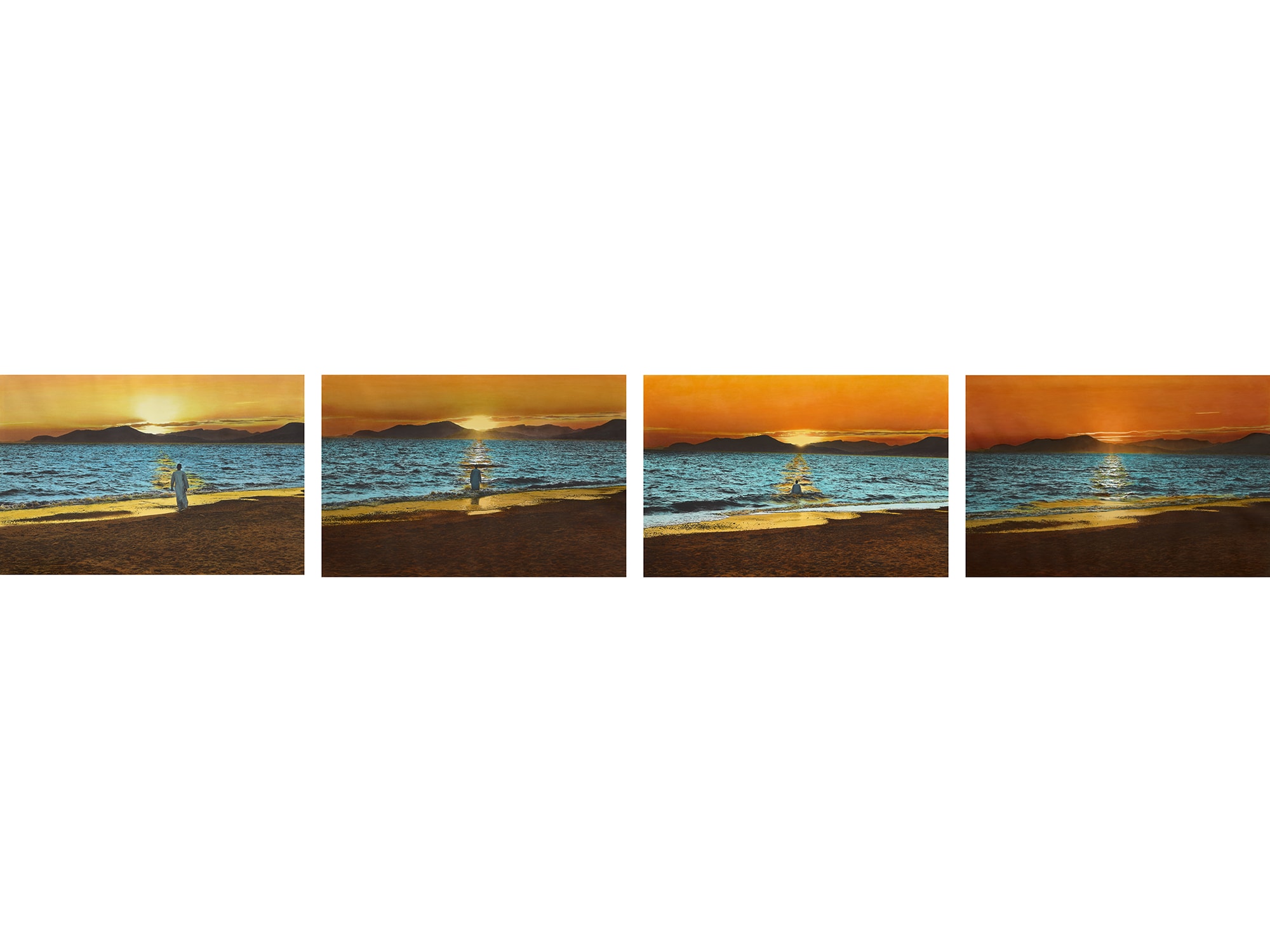
I Will Go To Paradise, Self Portrait, Hyères
Nabil was born in Cairo in 1972, into a city layered with glamour, mythology, and transition. Growing up, he was surrounded by the imagery of Egyptian cinema's golden age, the black and white films of the 1940s and 1950s that starred luminaries like Faten Hamama and Omar Sharif, portraits of whose era seemed to glow from old magazines and cinema posters. This visual inheritance was not merely decorative. It became the emotional architecture of his entire practice.
As a young man he moved between Cairo and Paris, studying photography and absorbing the techniques of early 20th century photographic traditions, including the hand coloring methods that preceded color film and gave portrait photographs of that period their distinctive, almost painted quality. The turning point in Nabil's development came when he began applying these historical techniques to his own image making, photographing on medium format film and then painstakingly applying oil based dyes by hand to silver gelatin prints. The process is labor intensive and intimate. Each print becomes unique, an object carrying the mark of the artist's hand in a way that mass produced photography never can.
Youssef Nabil
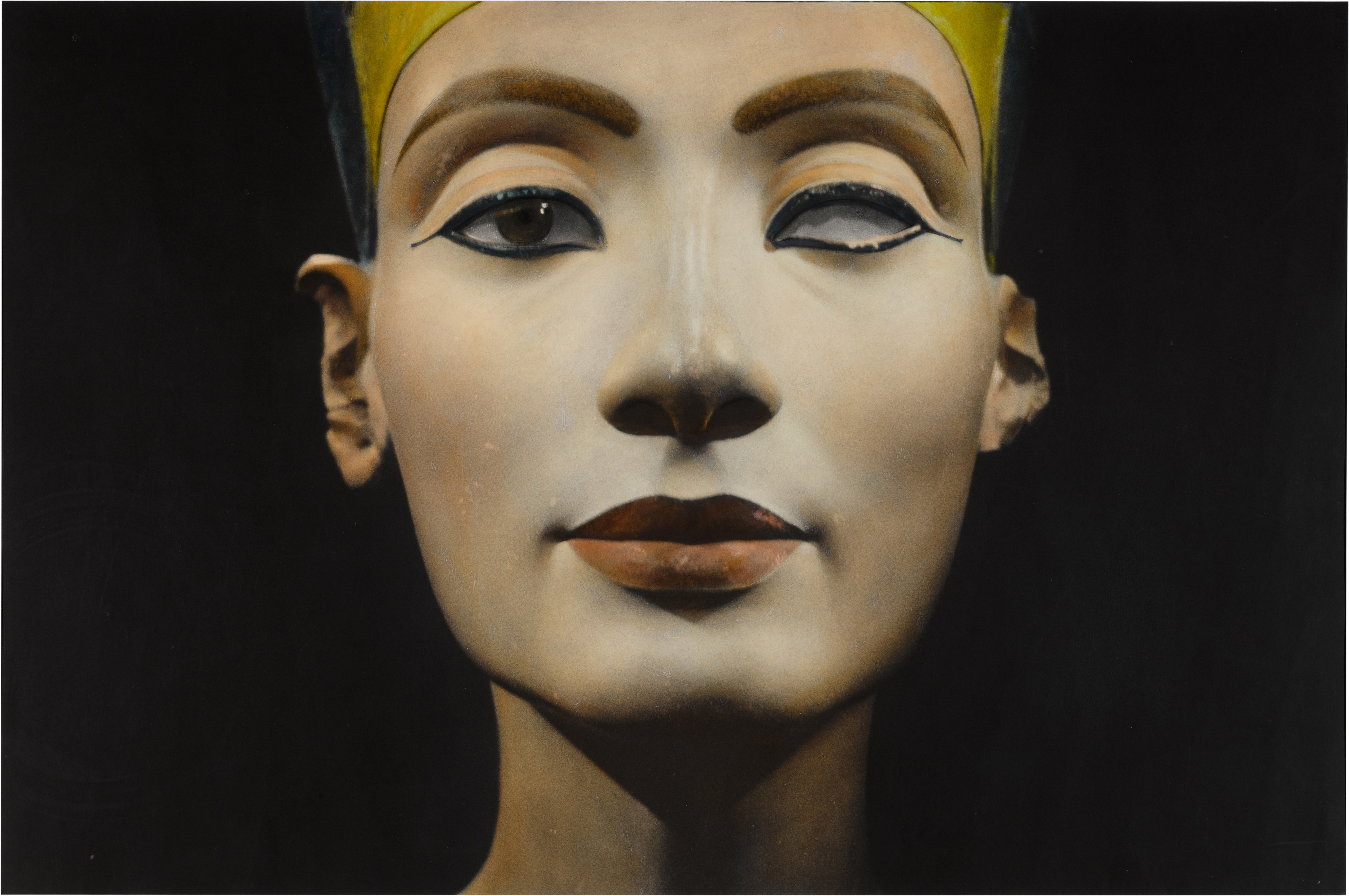
Nefertiti (Berlin), 2003
It was this choice, deliberate and conceptually loaded, that set Nabil apart from contemporaries working in the documentary or conceptual photography traditions dominant in the 1990s. He was making something closer to painting than to reportage, yet entirely honest about being a photograph. His portraits are among the most affecting in contemporary art. Works like "Mona Hatoum, New York" and "Ghada Amer, New York" position fellow artists within Nabil's quietly luminous world, their faces rendered in soft, almost dreaming color that feels borrowed from a more gracious era.
“Nostalgia for me is not about the past. It is about something I never had but always wanted.”
Youssef Nabil, The Guardian
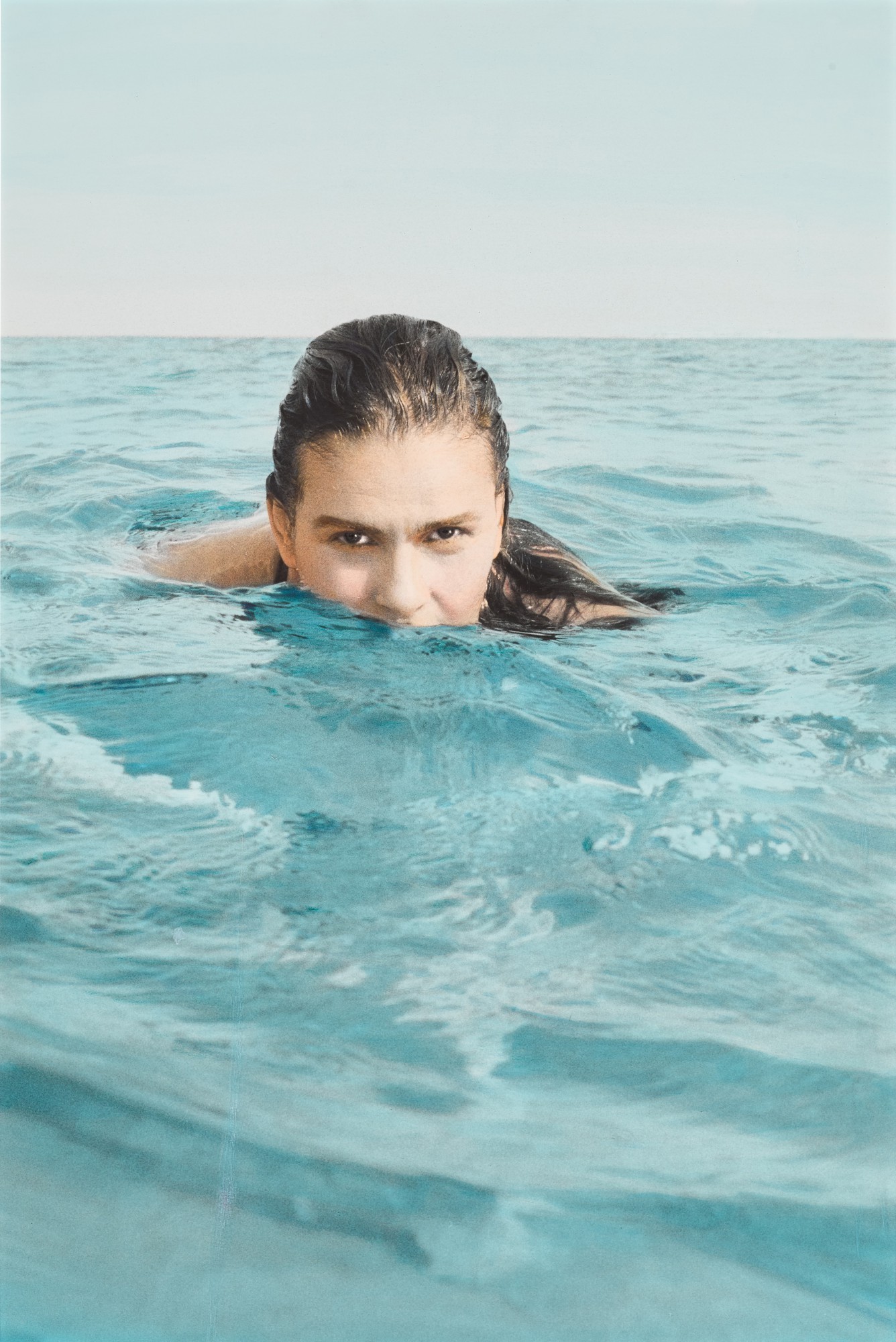
His series of portraits made in Cairo throughout the late 1990s, including "Youssra and Sea II, Sinai, 1996" and "Simone in Downtown Bar, Cairo I, 1997", capture a city and a social world with the tenderness of someone who knows they are preserving something fragile. The image of Youssra, one of Egypt's most beloved actresses, by the sea carries the double weight of celebrity portraiture and personal elegy, the kind of picture that makes you feel the heat of that afternoon and the sadness of knowing it has passed. The self portrait has been a consistent and essential thread throughout Nabil's career. Works such as "Self Portrait, Istanbul" from 2009 and the suite "I Will Go To Paradise, Self Portrait, Hyeres" show an artist willing to submit himself to the same romantic and melancholic gaze he turns on others.
Youssef Nabil
Youssra & Sea II, Sinai, 1996, 1996
These are not confessional images in the raw, unguarded tradition. They are composed and considered, the self as character rather than confession, which places them firmly in the lineage of artists like Cindy Sherman and Claude Cahun while remaining unmistakably Nabil's own. The Istanbul self portrait in particular has the quality of a film still, a solitary figure caught between worlds, between East and West, between the present tense and a deeply remembered past. For collectors, Nabil's work represents an unusually compelling intersection of technical rarity and emotional resonance.
The hand coloring process means that no two prints are identical, and the editions are small, making acquisition decisions feel genuinely consequential. His prints are held in the permanent collections of the Guggenheim Museum in New York and the Los Angeles County Museum of Art, and his work has been exhibited at the British Museum in London, institutions that confer not only prestige but context. The British Museum's engagement with his work speaks to how Nabil operates at the border between fine art photography and cultural history, his images functioning as both artistic objects and documents of a world being actively reimagined. Nabil belongs to a generation of artists who engaged seriously with the politics of representation in the Arab world while refusing to reduce their work to polemic.
Youssef Nabil
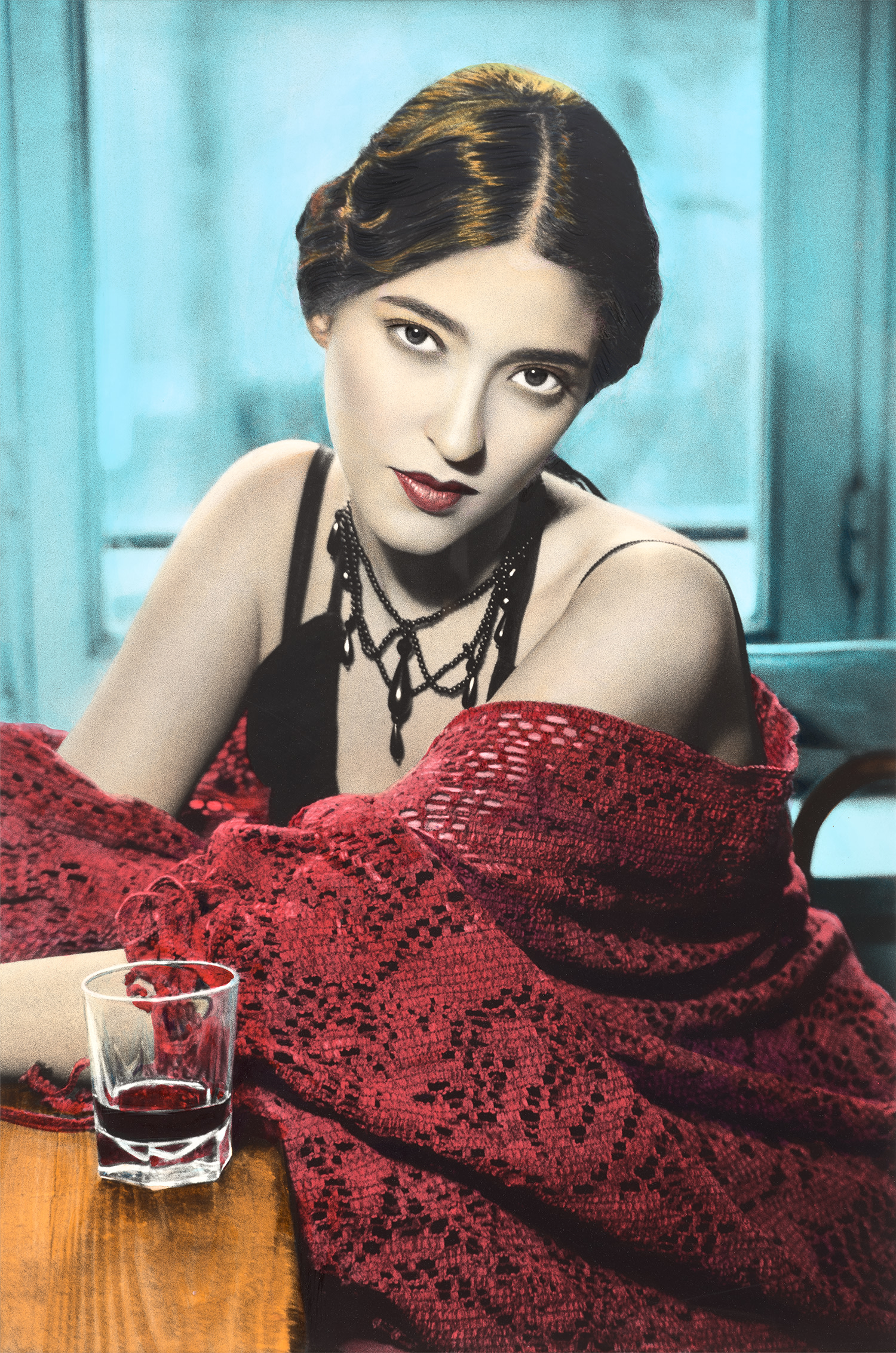
Amani by Window, Cairo
In this he shares an affinity with artists like Lalla Essaydi, whose large format photographs also interrogate the aesthetics of the Middle East and North Africa, and with the late Hassan Hajjaj, whose work similarly reanimates popular culture through a lens of sophisticated formal play. Like these peers, Nabil understands that beauty is not a retreat from meaning but one of its most powerful instruments. His photographs are gorgeous because the act of making something gorgeous is itself a form of argument about what deserves care and preservation. The legacy Youssef Nabil is building is one rooted in devotion: to craft, to memory, to the people he photographs and the places they inhabit.
His work insists that nostalgia need not be passive or sentimental, that it can be an act of critical imagination, a way of asking what was valuable in what came before and what we risk losing if we forget to look. In an art world that often privileges rupture and novelty, his patient, luminous images feel like a gift. They remind us that the most lasting art is often made by those willing to sit quietly with time, to hold it gently, and to give it color.
Explore books about Youssef Nabil