Walter Price
Walter Price Paints the World Anew
Artist Spotlight · The Collection Editorial
In the spring of 2023, the art world paused to take full measure of Walter Price. His solo exhibition at Greene Naftali in New York arrived as a kind of confirmation, a moment when the accumulated force of nearly a decade of relentless, inventive painting announced itself with quiet authority. The show gathered works that pulsed with his signature density, surfaces layered with acrylic, ink, gesso, and gouache, figures half emerging from fields of color that seemed to hold their breath. For those who had been following Price since his earliest appearances on the New York scene, the exhibition felt less like a debut and more like a homecoming, the arrival of a vision that had been building steadily, faithfully, toward something genuinely singular.
Walter Price
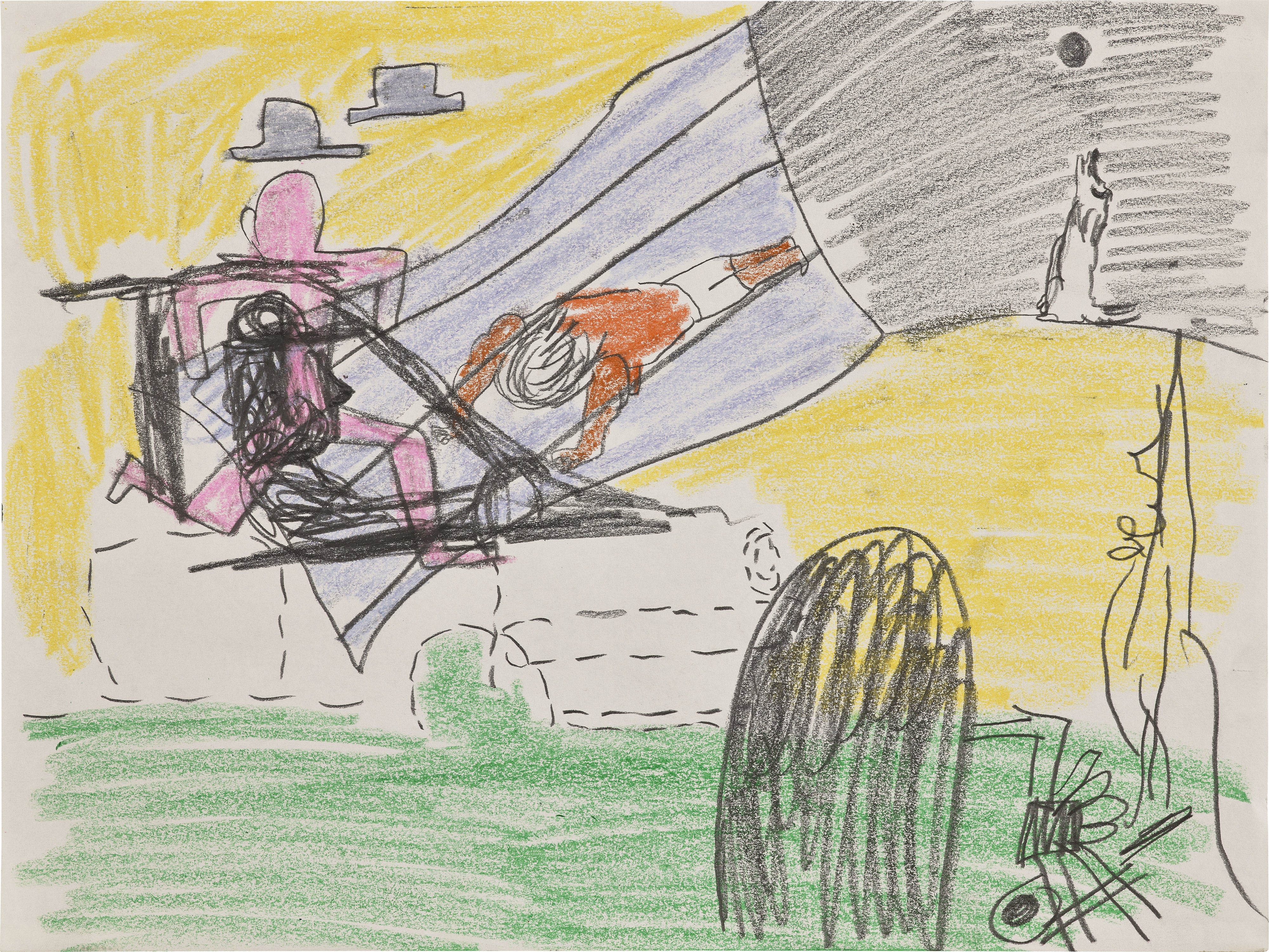
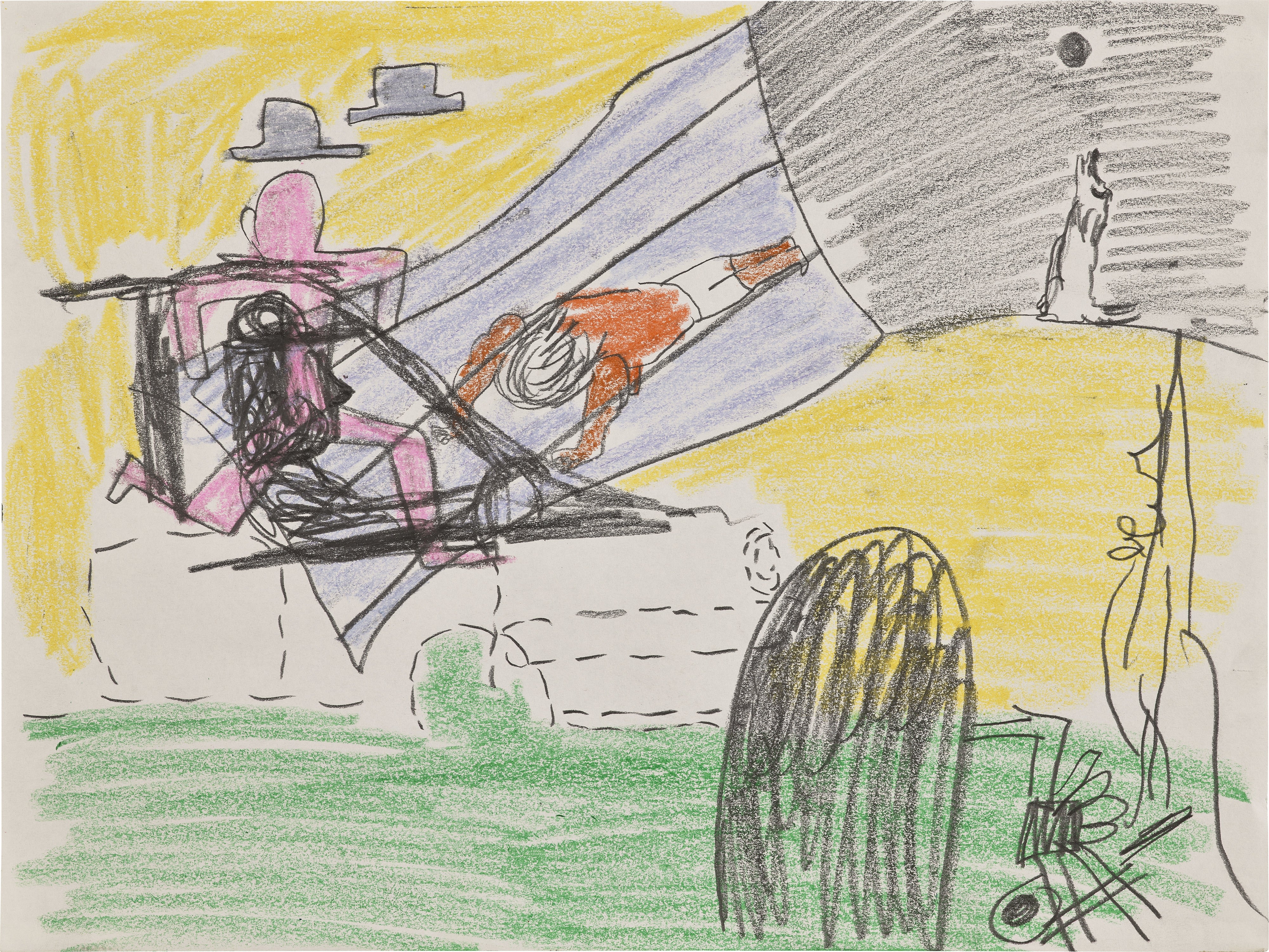
You get no bread with one meatball, 2018
Price was born in 1989 and grew up in Augusta, Georgia, a city with its own complicated, richly layered relationship to American history, music, and the rhythms of Southern vernacular life. That upbringing left deep marks on his imagination. The textures of everyday Black life in the American South, the visual culture of churches and barbershops and local signage, the weight of history felt in ordinary spaces, all of it found its way into the substrate of his thinking long before it surfaced in his paintings. He went on to study at the Rhode Island School of Design and later the Yale School of Art, where he earned his MFA, and those years sharpened his formal intelligence without dimming the raw, searching quality of his instincts.
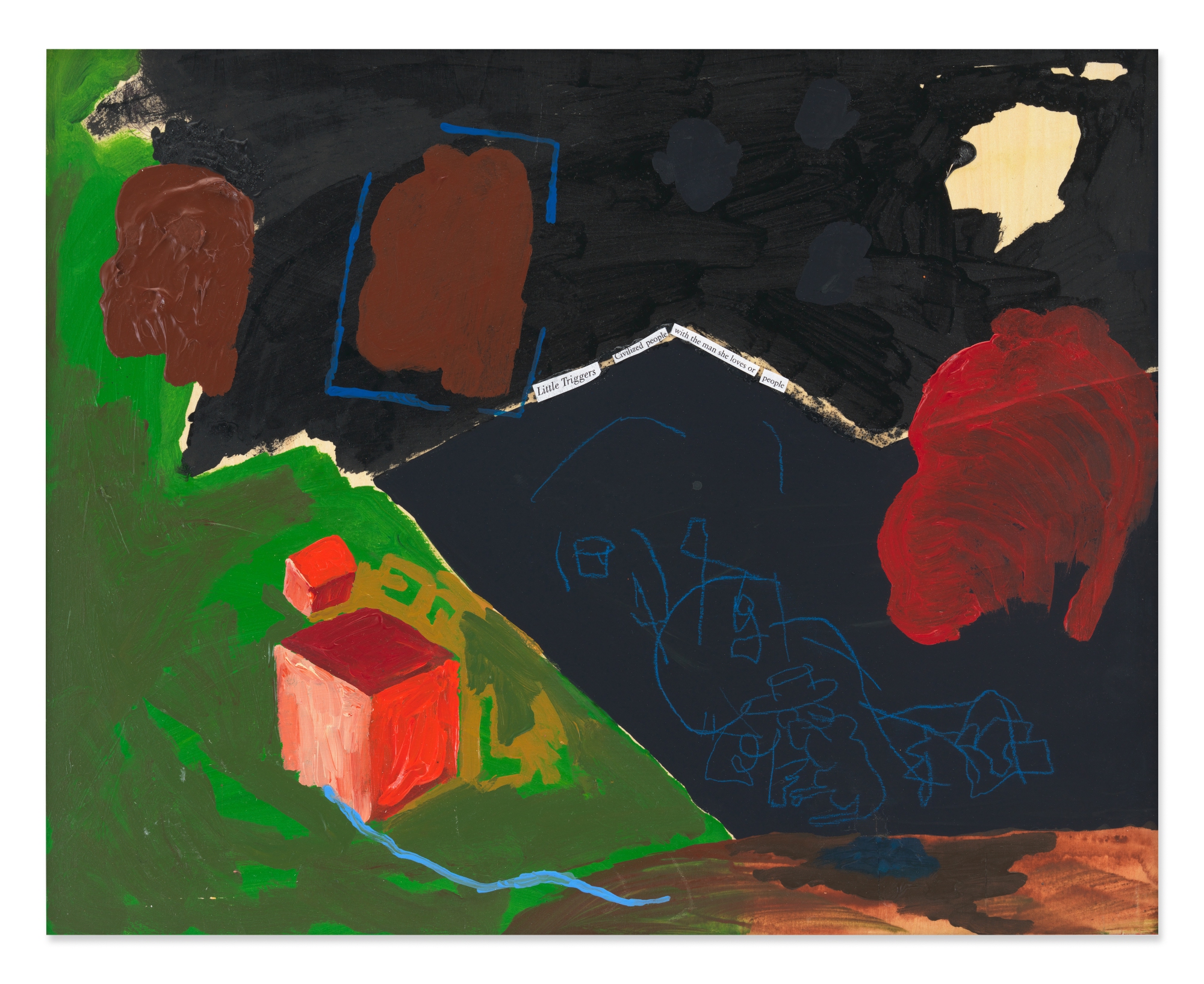
What happened in Price's studio in the years following graduate school was a kind of productive explosion. Between 2014 and 2018, he developed the visual grammar that would come to define him: a system of marks, gestures, and symbols that borrows from cartoons, graffiti, architectural drawing, and the history of painting all at once. Works from this period, including the quietly unsettling coloured pencil and graphite piece "Distract them while we run" from 2014, and the glitter and collage charged "Little Triggers" from 2017, show a painter testing the edges of his own language, finding out how much contradiction a single surface could hold. He worked across an unusually wide range of materials and supports, moving between acrylic on board, crayon and pencil on paper, and chipboard primed with pastel and tape, each substrate chosen with intention rather than convenience.
Walter Price
Little Triggers, 2017
The paintings resist easy resolution. That resistance is not a provocation but a philosophical stance. Price is interested in the way meaning accumulates and slips away, in how images and words coexist without explaining each other. Text fragments appear in his work not as caption or commentary but as visual events, carrying the rhythm of speech without delivering the comfort of a complete sentence.
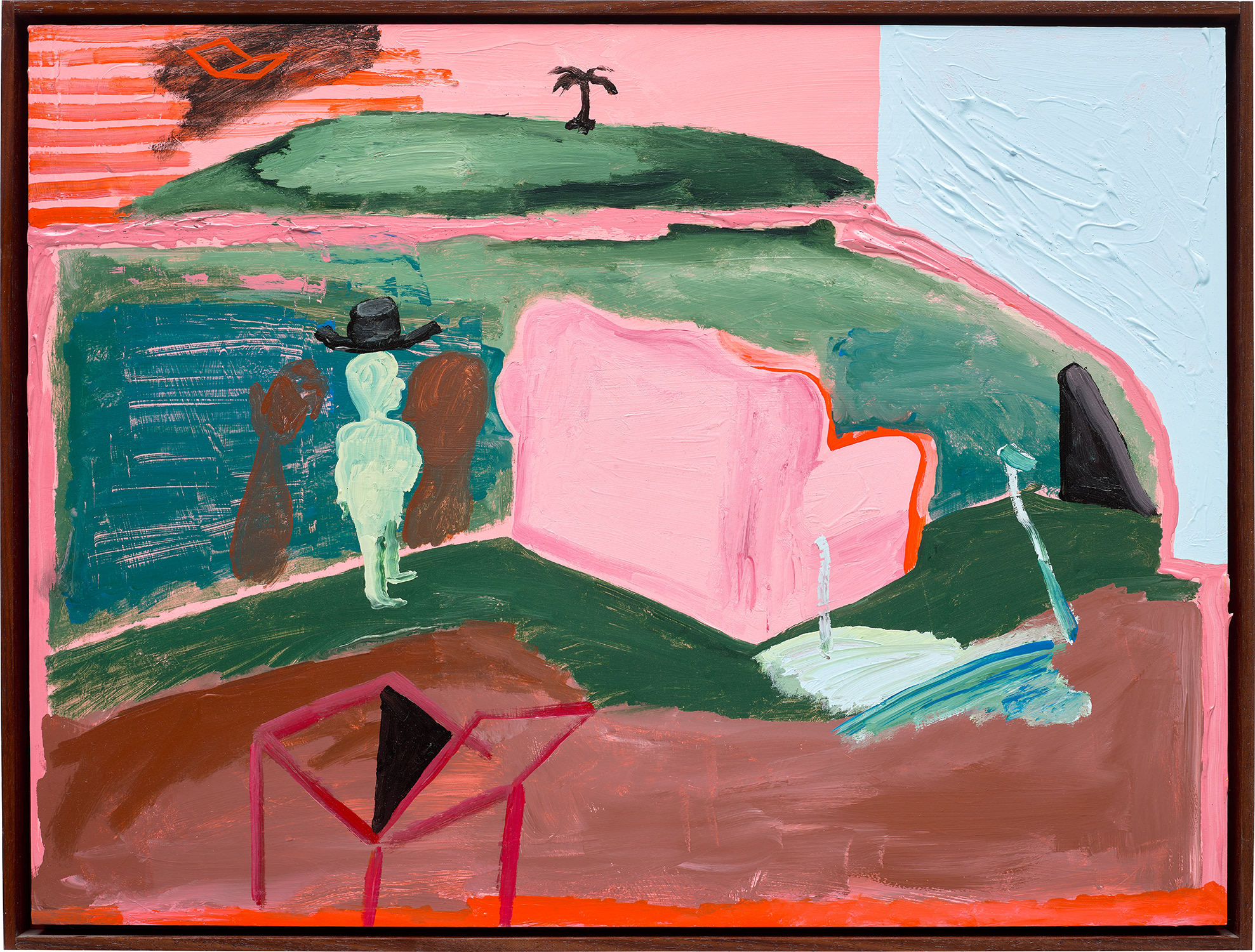
His 2017 acrylic on panel "Sit ENDS" exemplifies this quality, its truncated phrase hanging in a field of color that refuses to settle into background or foreground. The 2018 work "Parasympathetic," an acrylic on board presented in the artist's own frame, extends this practice into the object itself, the frame becoming part of the argument the painting is making. And "You get no bread with one meatball" from the same year, rendered in crayon and pencil on paper, shows how his lighter touch on works on paper can carry just as much conceptual freight as his densest board paintings. For collectors, Price represents something genuinely rare: an artist whose market has grown steadily and whose critical standing has deepened in parallel, without the two ever feeling at odds with each other.
Walter Price
Parasympathetic, 2018
His works entered important collections early, and the secondary market has reflected consistent demand, particularly for works from the 2016 to 2019 period when his language was crystallizing. Collectors who recognized the intelligence behind his practice at that stage have been rewarded not only in the conventional sense but in the more durable sense of living with works that continue to yield new meanings over time. His pieces on paper, including the "Afro blue" series from 2017 and the "Felt soot" works on chipboard, offer an entry point that feels intimate without sacrificing any of the conceptual seriousness of his larger paintings. The 2016 "Double Encounter," made with acrylic and airplane glass beads on paper laid on Dibond, is exactly the kind of work that rewards close attention, its material specificity revealing new dimensions the longer one spends with it.
Price occupies a vital position in a generation of painters who have reinvigorated figuration and its relationship to abstraction and history. He can be usefully considered alongside artists such as Njideka Akunyili Crosby, whose layered surfaces also negotiate between cultures and archives, and Jordan Casteel, whose figuration carries a similar warmth and political attentiveness. He shares with Noah Davis, whose practice was tragically cut short, a commitment to painting as a form of memory work, a way of holding and transmitting experience that written history cannot fully capture. These comparisons illuminate a broader moment in which Black American painters have moved to the center of the conversation about what painting can do and why it still matters.
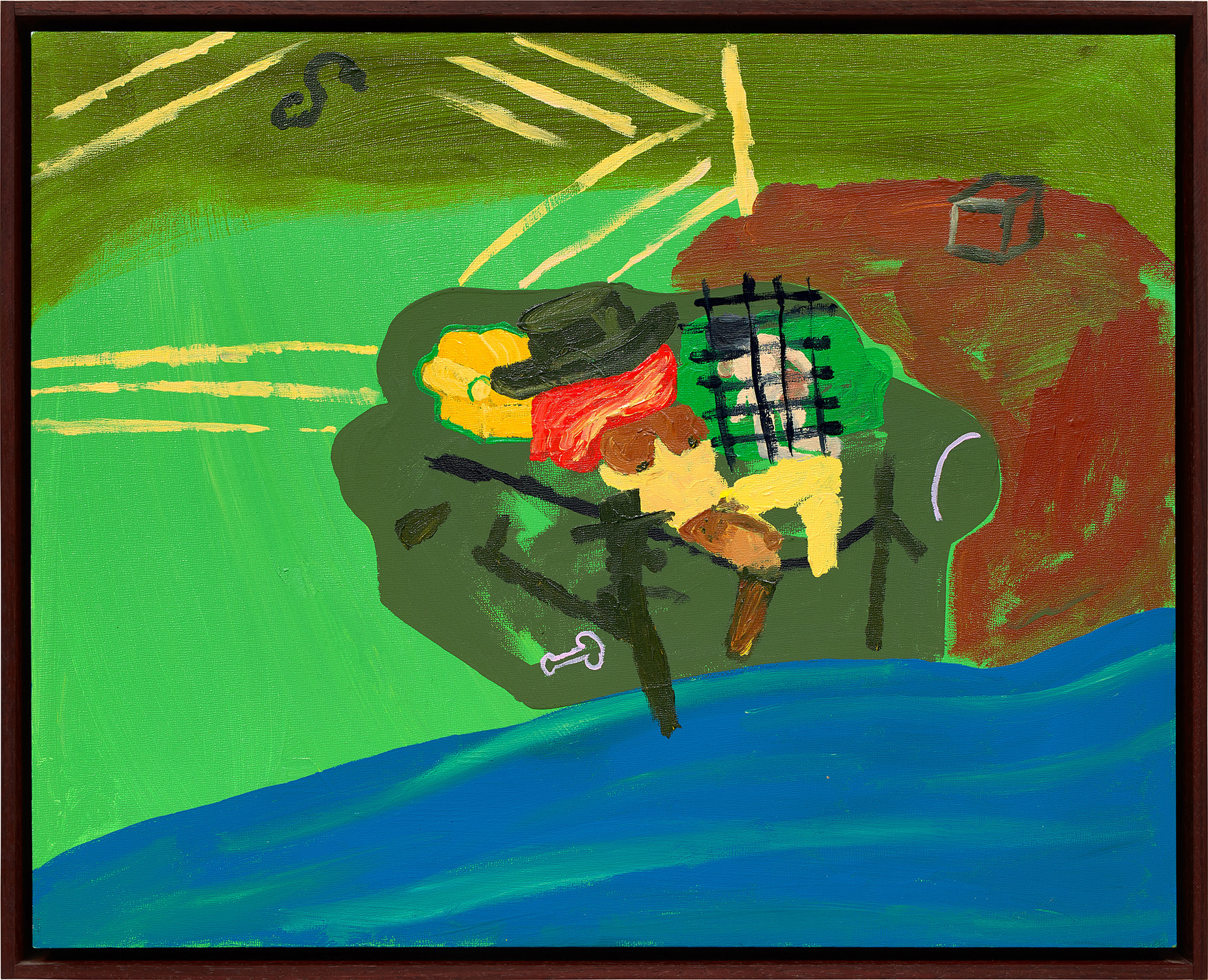
Walter Price
Sit ENDS, 2017
What makes Price's position so compelling as we move further into the 2020s is precisely his refusal to simplify. His 2023 work "The leaves are turning brown now," executed in acrylic, gesso, Flashe, ink, and gouache on wood, demonstrates that he continues to push his own syntax rather than consolidate it into a marketable formula. The painting is both seasonal and elegiac, both immediate and layered with time. That combination, of presence and depth, of playfulness and gravity, is what has drawn serious collectors and serious curators to his work in equal measure.
Walter Price is not an artist arriving at a destination. He is one of the most alive and necessary painters working today, and the pleasure of following his practice is the pleasure of watching a genuinely free mind at work.