Vladimir Yankilevsky
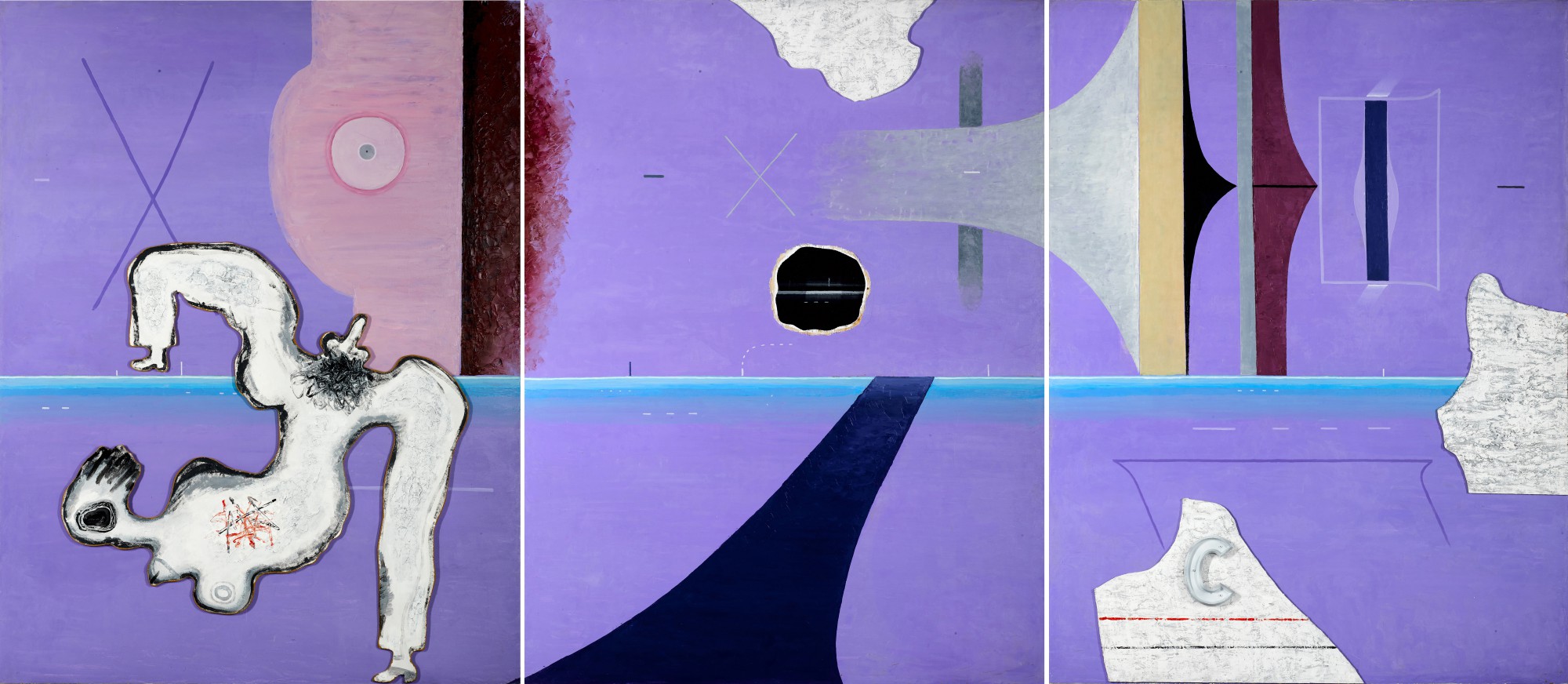
Vladimir Yankilevsky, A Vision Beyond Borders
Artist Spotlight · The Collection Editorial
In the winter of 1962, a group of Soviet artists carried their paintings into the Manezh exhibition hall in Moscow and changed the course of Russian art history. Among them was a young Vladimir Yankilevsky, barely twenty four years old, whose presence at that watershed moment would define not only his own career but the entire arc of nonconformist art in the Soviet Union. When Nikita Khrushchev toured the show and unleashed his furious condemnation of abstract and experimental work as degenerate filth unworthy of the Soviet people, Yankilevsky and his peers did not retreat. They went deeper into their vision, and the world is richer for it.
Vladimir Yankilevsky
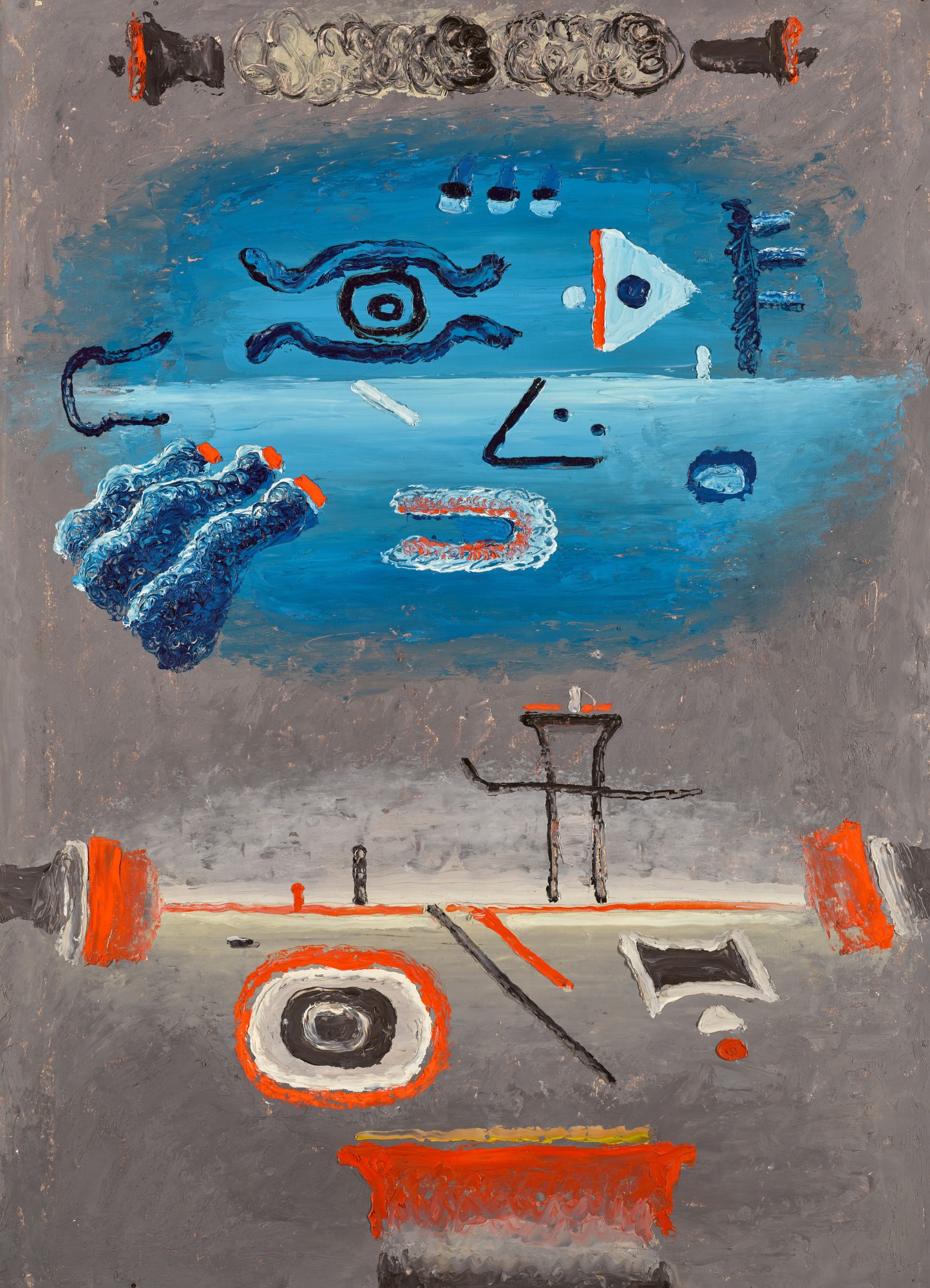
Untitled
Vladimir Borisovich Yankilevsky was born in Moscow in 1938, into a family where culture and intellectual life were taken seriously. He studied at the Moscow Secondary Art School and later at the Moscow Polygraphic Institute, where he trained as a graphic artist and printmaker. These early technical disciplines gave his mature work its remarkable structural precision, the sense that every element of a composition is placed with intention and never by accident. His formation coincided with the brief cultural thaw under Khrushchev, a fleeting opening that allowed young Soviet artists to glimpse Western modernism for the first time and to imagine that a different kind of art making might be possible within their world.
That encounter with possibility shaped everything Yankilevsky would become. Where the official Socialist Realist tradition demanded optimistic legibility, Yankilevsky moved toward psychological density, constructing images that folded the interior life of the individual against the oppressive machinery of collective Soviet existence. He developed a visual language that drew on Surrealism, on the figurative traditions of German Expressionism, and on a deeply personal mythology of the body, the machine, and the labyrinthine spaces that human beings inhabit both physically and mentally. His work was never simply protest art, though it carried unmistakable political weight.
Vladimir Yankilevsky
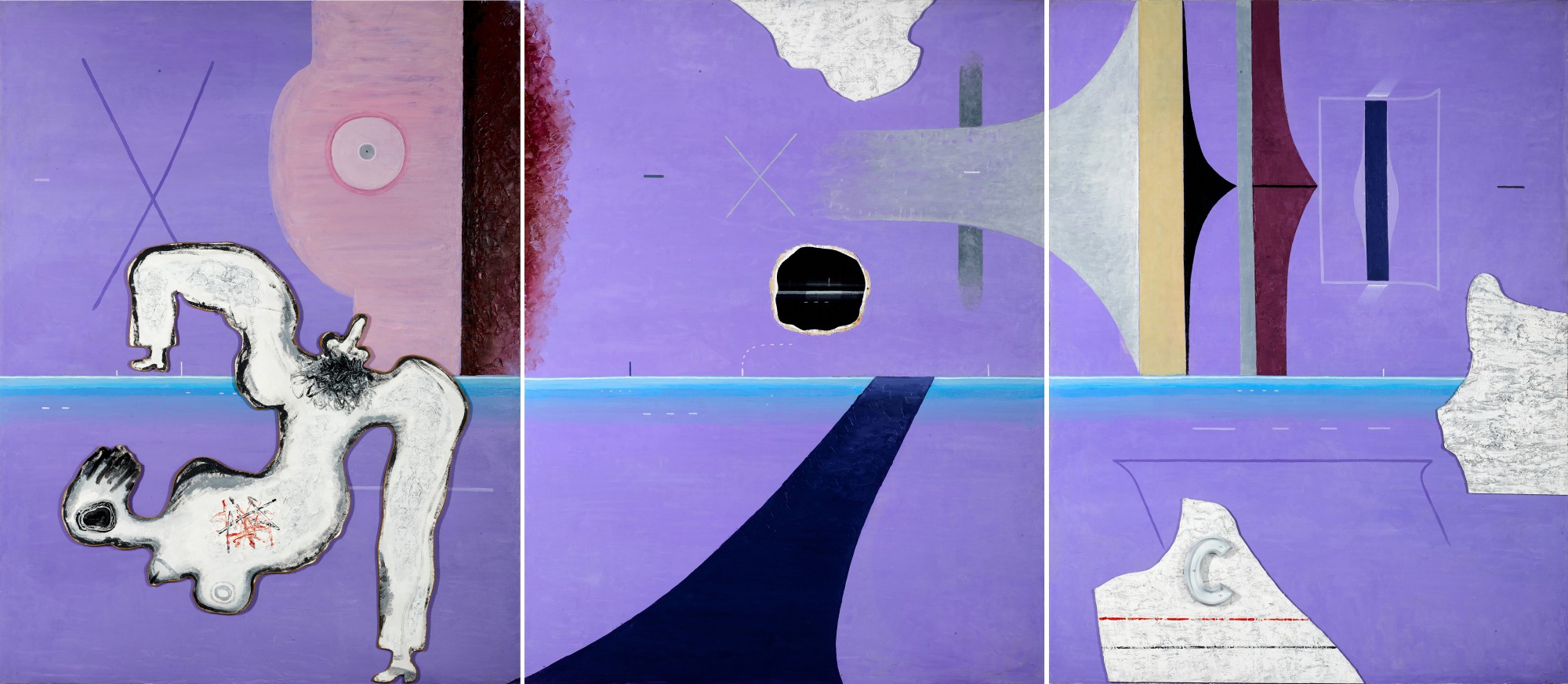
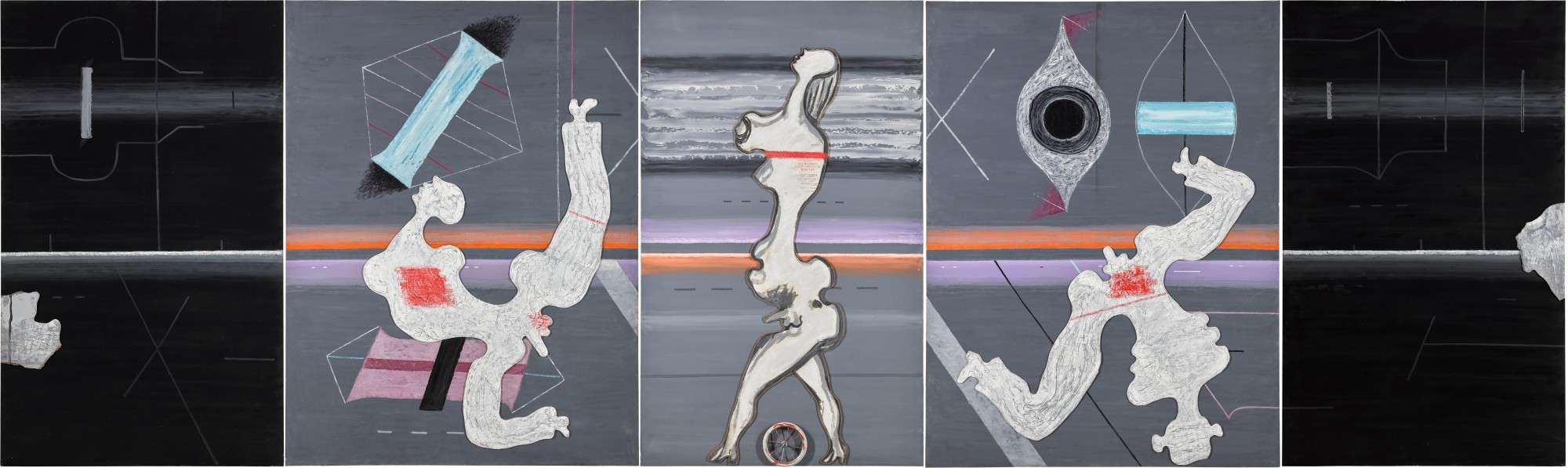
Take a Train V
It was something more ambitious: a sustained philosophical inquiry into what it means to be a conscious self in a system designed to erase that selfhood. The triptych format became Yankilevsky's most celebrated and characteristic contribution to postwar art. Working across large wooden panels, he created compositions in which fragmented figures, architectural passages, and dreamlike corridors exist in unresolved tension with one another. The triptych structure, borrowed from the altarpiece tradition of Western European painting, gave his secular and often anguished subjects a formal gravity that elevated them beyond personal expression into something approaching the universal.
Works such as those from his ongoing series exploring the city and the crowd demonstrate how he could move between the intimate and the panoramic within a single composition, trapping the viewer in the same claustrophobic in between spaces his figures inhabit. The series he developed around trains, represented here by works including Take a Train V and Take a Train IV, uses the railway as a charged metaphor for transit, departure, and the inexorable movement of time through lives that have little control over their own direction. The materials Yankilevsky chose were themselves expressive statements. His mixed media constructions incorporated plywood, fiberboard, collage, and found elements including actual wheels, pushing his paintings into three dimensional space and giving them a tactile, almost architectural presence.
Vladimir Yankilevsky
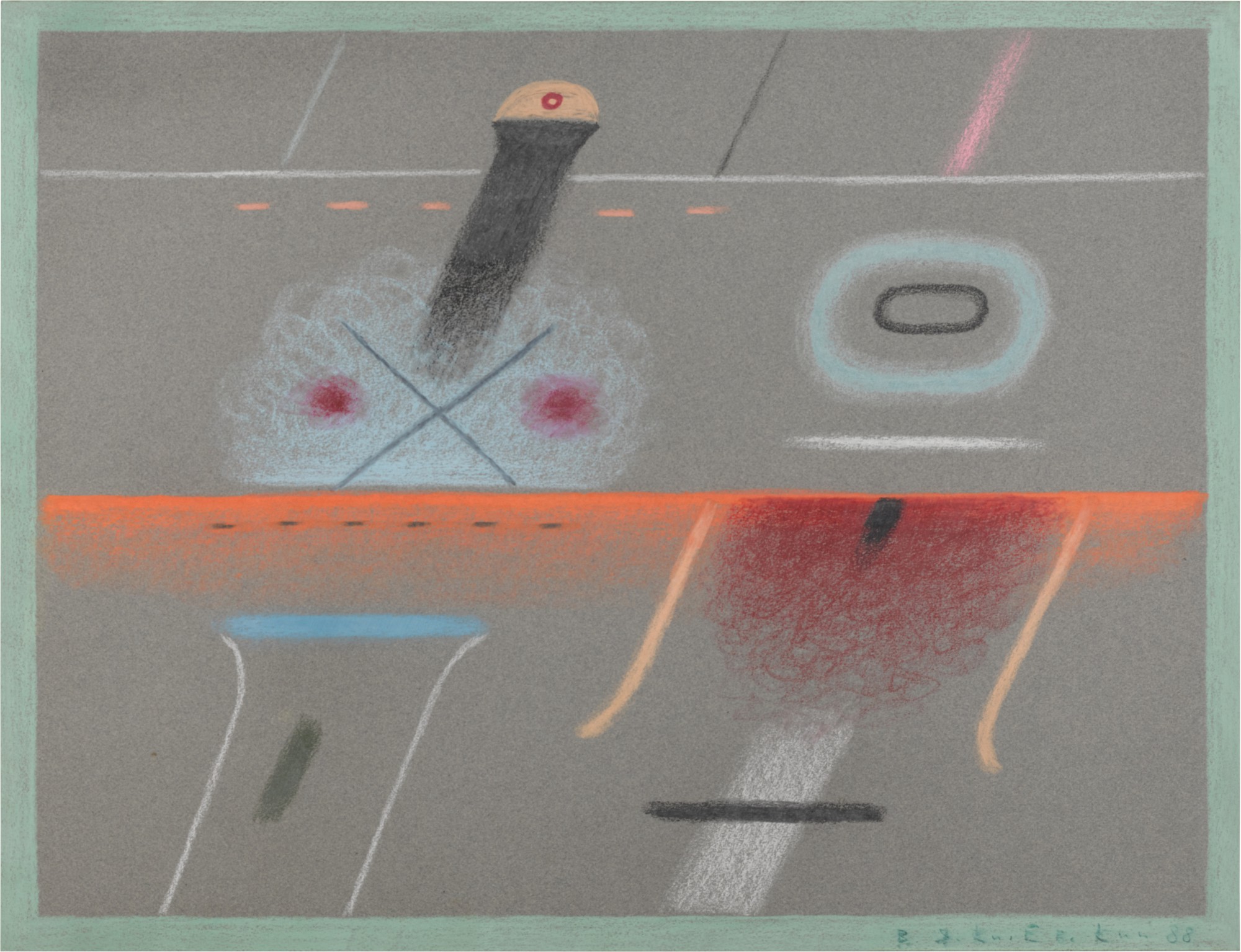
The Space of Experience
These are not works that ask to be viewed from a safe distance. They demand engagement, the way a city demands navigation. His works on paper, including the pastels and gouache compositions that form a significant part of his output, reveal a different register of his sensibility: more intimate, more lyrical, with colour deployed in warm and atmospheric layers that soften without ever fully resolving the underlying tensions of his imagery. The pastel works from his Women's Faces and City Series show a draughtsman of exceptional sensitivity, capable of rendering psychological states through the most economical and yet most affecting mark making.
For collectors, Yankilevsky represents one of the great undervalued propositions in twentieth century art. His peers from the Soviet nonconformist movement, figures such as Ilya Kabakov, Erik Bulatov, and Ernst Neizvestny, have attracted sustained international attention and commanding auction results over the past two decades. Yankilevsky, whose work is no less rigorous and in many respects more visually adventurous, has remained somewhat outside the mainstream collecting conversation in the West, which makes the current moment an extraordinary opportunity. His works have appeared at major auction houses and have entered significant private collections in Europe and Russia, but the broader recognition that his achievement deserves is still building.
Vladimir Yankilevsky
Take a Train… IV
Collectors who are drawn to the conceptual ambition of Kabakov, the psychological intensity of Francis Bacon, or the structural complexity of Sigmar Polke will find in Yankilevsky a kindred spirit whose work rewards sustained looking and deepens with time. Within the broader history of postwar and contemporary art, Yankilevsky occupies a position that art historians are only beginning to fully articulate. The nonconformist movement he helped define operated in near total isolation from Western art world institutions for decades, developing its own sophisticated responses to modernism without access to the galleries, museums, and critical infrastructure that shaped artists in New York or London or Düsseldorf. That isolation produced something genuinely distinctive: an art that is neither Soviet nor Western but something irreducibly its own, shaped by lived experience of a specific and extraordinary historical pressure.
Yankilevsky's work belongs in the same conversations as Bacon and Kiefer and Richter, not as a lesser satellite to those canonical figures but as an equal voice addressing the same fundamental questions about the human condition in the aftermath of catastrophe. Vladimir Yankilevsky passed away in 2018, leaving behind a body of work that stands as one of the most coherent and compelling artistic visions produced anywhere in the twentieth century. His legacy is held in museums, private collections, and the memories of everyone who encountered his work during his lifetime. For a new generation of collectors and curators coming to his art now, there is the particular pleasure of discovery, of finding an artist whose ambition and achievement have been hiding in plain sight.
The works available through The Collection offer precisely that encounter: with a painter, draughtsman, and constructivist thinker whose images, once seen, are genuinely impossible to forget.