Thomas Fuhs
Thomas Fuhs: Painting the World Anew
Artist Spotlight · The Collection Editorial
There is a particular kind of artist who arrives at the conversation not with a single knockout gesture but with an entire world already built, layer by layer, mark by mark, over years of sustained and serious looking. Thomas Fuhs is that kind of artist. The German painter and mixed media practitioner has been quietly assembling one of the more compelling bodies of work in contemporary European figuration, a practice that rewards close attention and grows richer the longer you spend inside it. As collectors and institutions across Europe and beyond sharpen their focus on painters who refuse easy categorization, Fuhs finds himself exactly where thoughtful eyes are turning.
Thomas Fuhs
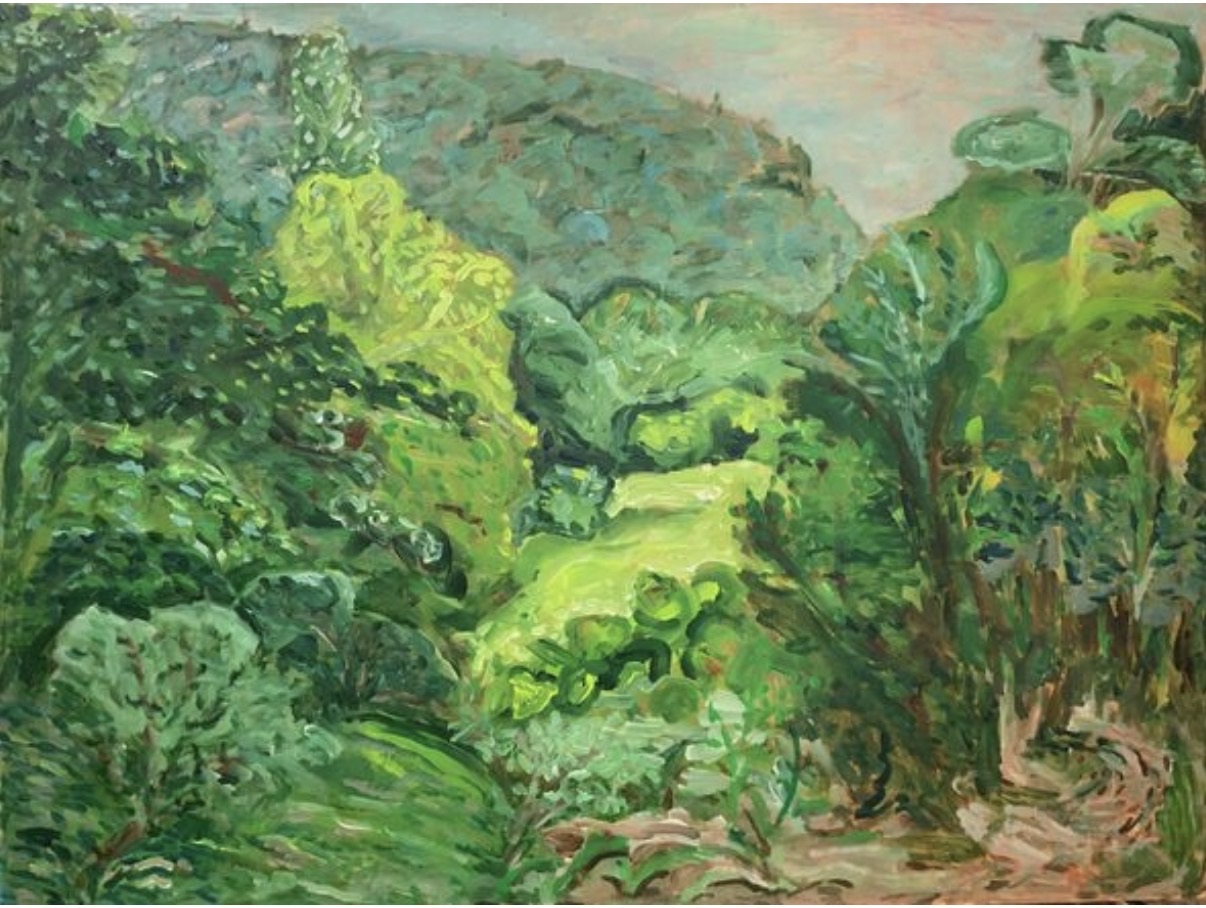
Untitled
Fuhs was born in Germany in 1966, coming of age in a country whose postwar culture carried an almost gravitational pull toward questions of identity, history, and the ethics of image making. The Germany of his formation was one still actively processing the legacies of Expressionism, of the Fluxus movement, of Joseph Beuys and his insistence that art was inseparable from social and psychological life. It was also a Germany being reshaped by reunification, by new migrations, by the collision of East and West that produced fresh anxieties and fresh freedoms in equal measure. For a young artist with a restless visual intelligence, this was extraordinarily fertile ground.
The tradition Fuhs inherited is one of the richest in modern art history. German Expressionism, from Ernst Ludwig Kirchner and Emil Nolde through to the Neo Expressionist eruption of the 1980s, gave him a lineage that prized rawness, psychological intensity, and the willingness to distort in service of emotional truth. The Neo Expressionist generation that preceded him, painters such as Georg Baselitz, A.R.
Penck, and Markus Lüpertz, had already demonstrated that figuration could be radical, that the human form could carry enormous conceptual weight without sacrificing visceral power. Fuhs absorbed these lessons deeply while pushing toward something distinctly his own. What distinguishes the mature practice of Thomas Fuhs is the remarkable density of his visual field. His canvases and works on paper are not places of quiet resolution but of productive, energetic conflict.
Gestural abstraction and figurative imagery do not take turns in his work; they occur simultaneously, each complicating and enriching the other. Graphic elements drawn from sources as varied as art historical iconography and the vernacular imagery of popular culture are woven into compositions that feel genuinely hybrid, genuinely alive. There is an immediacy to his mark making that suggests both speed and deliberation, as though the hand and the mind are racing each other toward meaning. Mixed media approaches allow him to introduce texture and materiality that painting alone cannot provide, and the result is work that demands to be experienced in person, where its physical presence becomes part of the argument.
Portraiture and questions of identity run as persistent threads through the work. Fuhs is interested in what a face can hold, what it reveals and conceals, and how the act of depicting a person is always also an act of interpretation and even transformation. His figures rarely settle into comfortable legibility. They emerge from and dissolve back into their surrounding mark fields, suggesting that selfhood is similarly porous, similarly in process.
This is not pessimism but a kind of philosophical generosity: the sense that identity is something actively made rather than simply given, and that painting is one of the tools by which that making can be witnessed and celebrated. For collectors, the work of Thomas Fuhs represents a genuinely compelling proposition. He occupies a mid career moment at which an artist's vision has fully crystallized while the energy of discovery remains entirely present. Works on paper offer an entry point that reveals his draftsmanship and his instinct for composition in concentrated form, while larger painted works demonstrate the full orchestral ambition of his practice.
Collectors drawn to the Neo Expressionist tradition, or to contemporary painters such as Daniel Richter, Neo Rauch, or Jonathan Meese, will find in Fuhs a figure whose work engages seriously with those precedents while staking out genuinely independent territory. His is a practice that repays sustained collecting, where individual works gain additional resonance when understood in dialogue with one another. The broader art historical context places Fuhs within a generation of European painters who have kept faith with the expressive potential of the painted surface at a moment when that faith was frequently tested by competing claims from installation, digital media, and conceptual practice. The return of serious critical and market attention to painting over the past decade and a half, evidenced by the institutional championing of artists across Germany, the United Kingdom, and the United States, has created an environment in which the sustained commitment Fuhs brings to his craft reads not as conservatism but as a form of radicalism.
To insist, as he does, that the layered painted surface can still hold complexity, still generate genuine surprise, is itself a statement. What ultimately makes Thomas Fuhs matter, and matter increasingly, is the sense that his work is genuinely necessary rather than merely accomplished. In a cultural moment saturated with images, he makes images that ask to be looked at differently, slowly, and more than once. His compositions do not yield their full content on first encounter, and that quality of depth is increasingly rare and increasingly valuable.
For collectors who want to live with work that continues to give, that opens rather than closes the longer it is known, Fuhs is an artist to follow with real seriousness. The world he has built, canvas by canvas, drawing by drawing, is one well worth entering.