Teresita Fernández
Teresita Fernández Illuminates the World Anew
Artist Spotlight · The Collection Editorial
“I am really interested in the idea of landscape as something that is deeply internalized, not just scenery.”
Teresita Fernández, interview with BOMB Magazine
In 2017, Teresita Fernández completed one of the most talked about public art commissions in recent American memory: "Fata Morgana," a monumental golden landscape installed at the Pérez Art Museum Miami that seemed to conjure both mirage and memory simultaneously. The work drew visitors into a shimmering corridor of refracted light and implied geography, asking them to question where the horizon ends and imagination begins. That singular ability to collapse the distance between the physical and the phenomenal has made Fernández one of the most consequential artists working in the United States today. Her presence in major institutional collections and her continued capacity to produce works of genuine surprise and intellectual rigor place her at the very center of contemporary sculptural practice.
Teresita Fernández
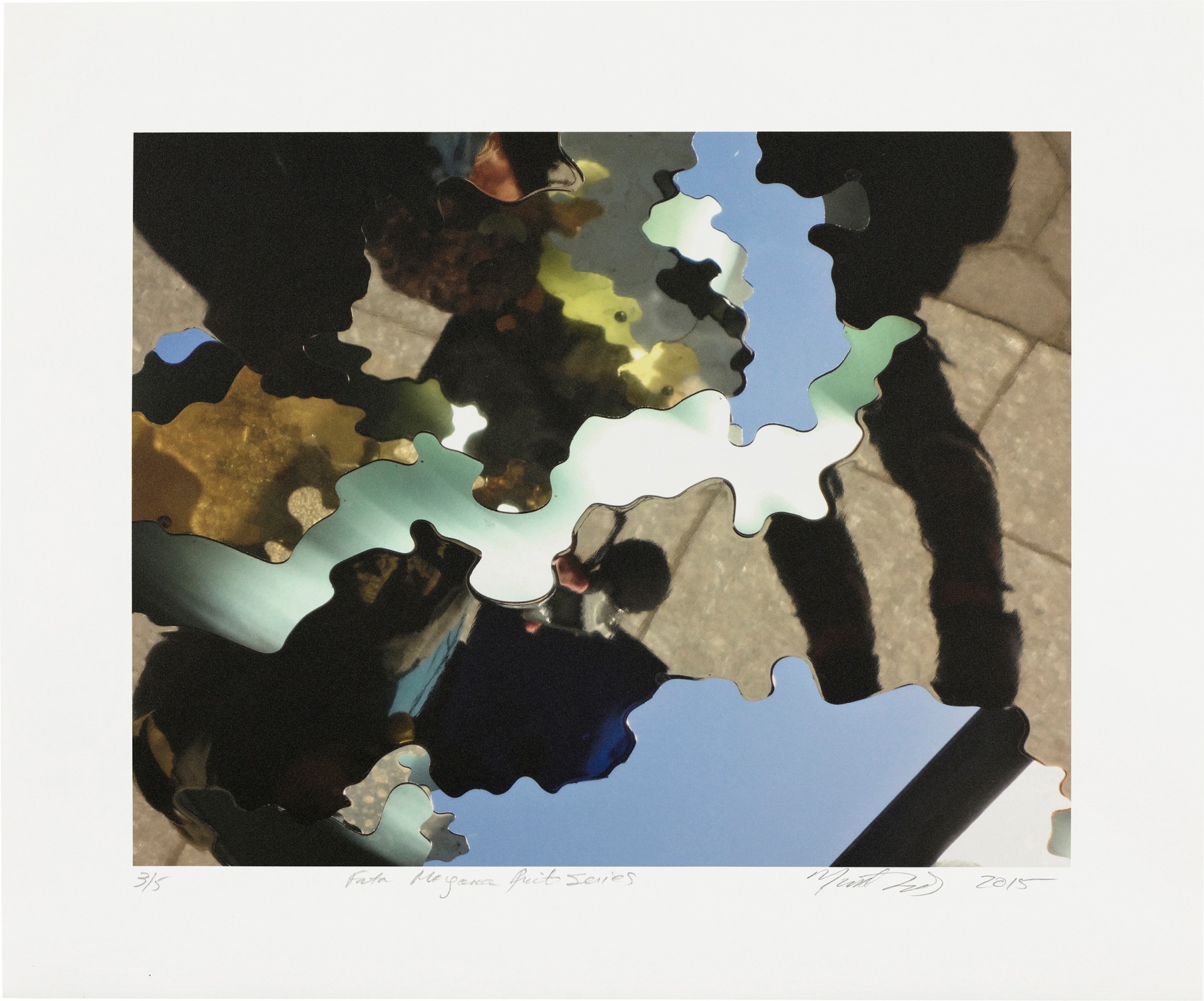
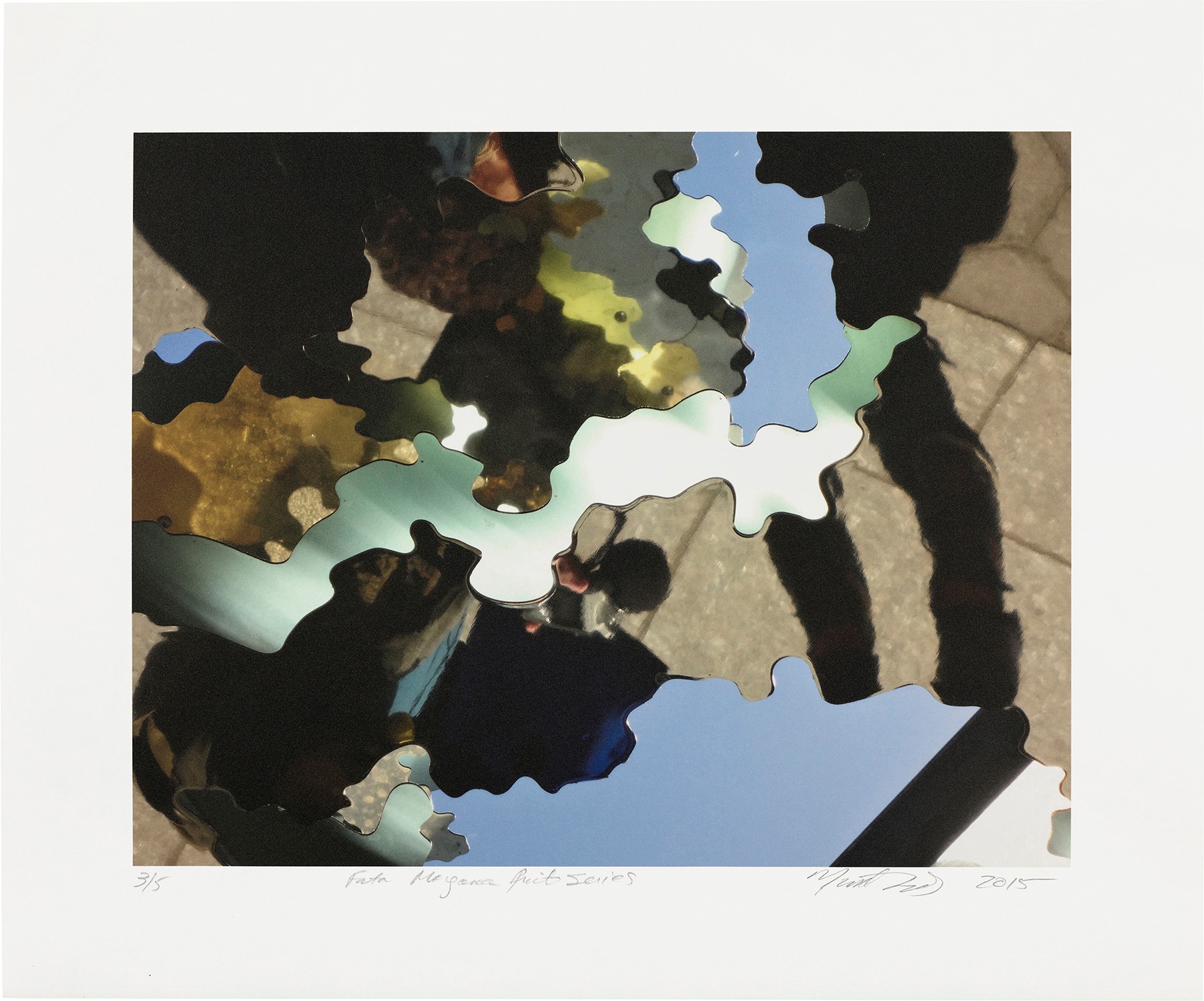
Fata Morgana Print Series
Fernández was born in Miami in 1968 to Cuban American parents, and the layered cultural landscape of South Florida shaped her sensibility from the beginning. She studied at Florida International University before completing her MFA at Virginia Commonwealth University in 1992, an institution that was quietly becoming one of the most generative programs in the country. Miami itself, with its particular quality of tropical light and its uneasy relationship between natural abundance and urban transformation, left an indelible mark on her visual imagination. Those early years cultivated an artist who would always be preoccupied with place, not as mere backdrop, but as something living and unstable beneath the surface of perception.
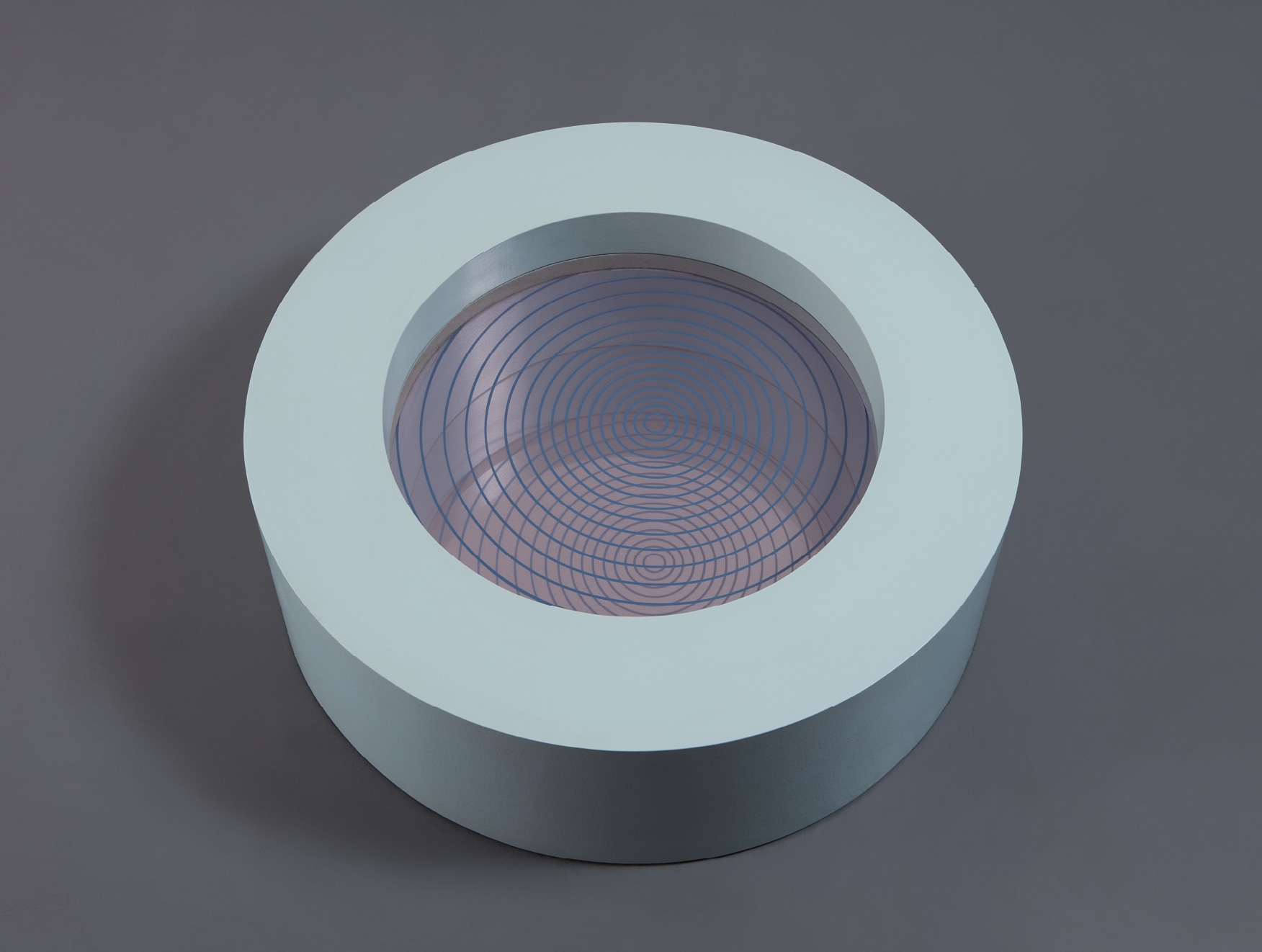
Her early career was defined by an almost scientific curiosity about how materials behave under specific conditions of light and attention. Working through the 1990s in New York, she developed a practice rooted in the quiet drama of optical experience. Works from this period, including "Supernova (2)" from 1999, reveal an artist already committed to the idea that sculpture need not announce itself loudly to command absolute presence. The piece is characteristic of her early interest in creating phenomena rather than objects, drawing the viewer into an encounter with something that feels more like a natural event than a manufactured thing.
Teresita Fernández
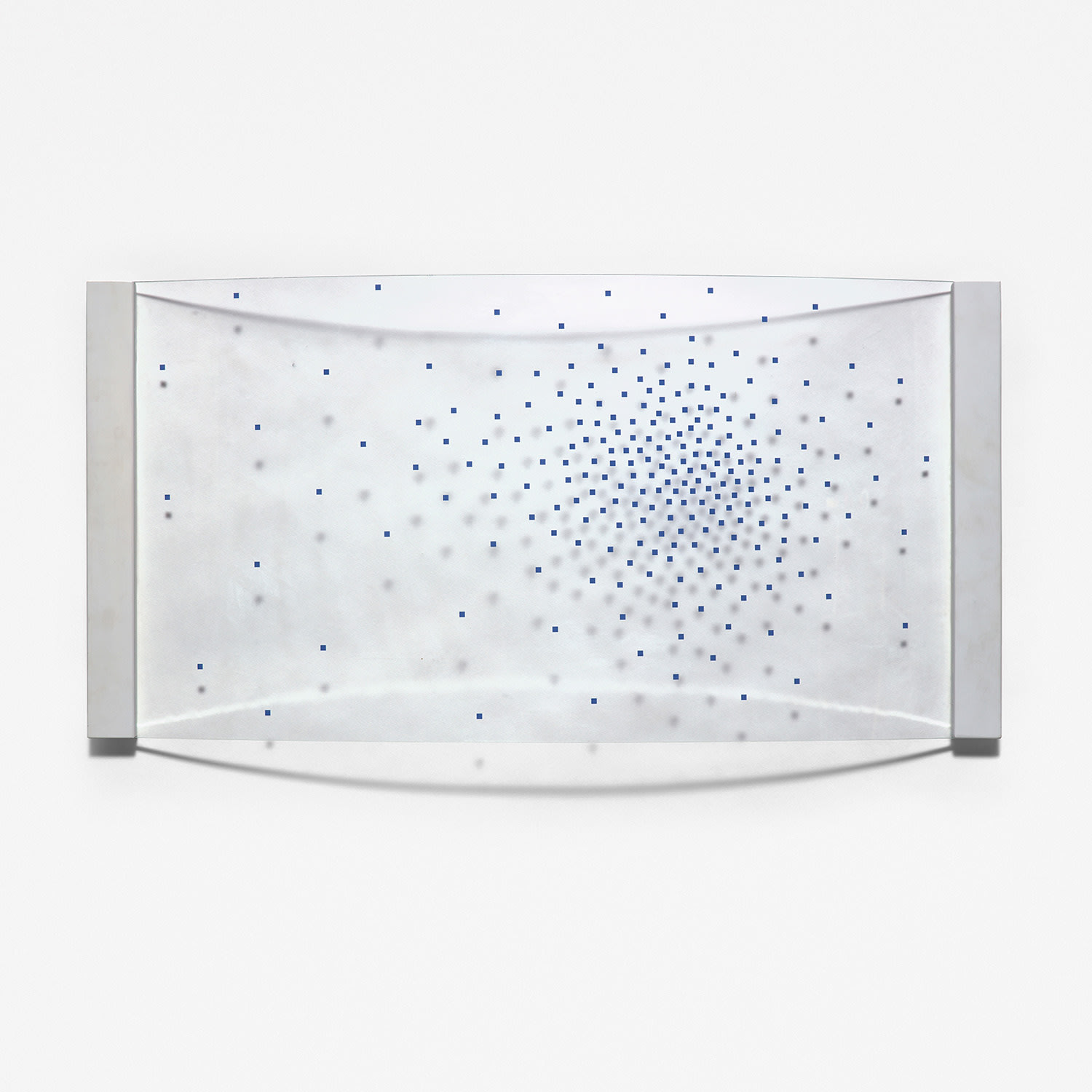
Midnight, Late May, 2004
This was not minimalism in any austere or academic sense, but something warmer and more seductive, concerned with wonder as a legitimate artistic category. Over the following decade, her work expanded in scale and ambition without ever losing that fundamental intimacy. The "Fire" series and the widely celebrated "Stacked Waters" installation demonstrated her mastery of graphite and colored glass as instruments of near cinematic illusion. "Liquid Flame" from 2003, a work incorporating digital print on vinyl, glass beads, aluminum, and MDF, captures this period beautifully: materials borrowed from industrial production are transformed through careful composition into something that pulses and breathes.
“I want people to feel a sense of wonder that is earned, not just a spectacle.”
Teresita Fernández, MacArthur Foundation profile
"Midnight, Late May" from 2004, executed in silkscreen ink on glass and wood, carries the same quality of arrested atmospheric light, as though the artist has fixed a precise emotional temperature in physical form. These are works that reward sustained looking, offering new visual information at each distance and angle. The MacArthur Fellowship she received in 2005 confirmed what many collectors and curators had already understood: Fernández was operating at a level of sustained conceptual and material invention that placed her in rare company. Her appointment in 2011 to the United States Commission of Fine Arts, where she eventually served as chair, signaled her importance not only as a maker but as a thinker about how art inhabits public space and civic life.
Teresita Fernández
Supernova (2), 1999
The "Burned Landscape (Puerto Rico)" from 2018 demonstrated that her practice had also grown more explicitly political without sacrificing any of its sensory intensity. Created in the aftermath of Hurricane Maria, the work mourns and memorializes through the language of scorched earth and altered topography, situating personal and collective grief within the longer history of landscape as a site of power. For collectors, works on paper and unique drawings offer some of the most compelling points of entry into her practice. The "Fata Morgana Print Series," signed, titled, dated, and numbered by the artist, brings the immersive logic of her large installations into an intimate and ownable format.
Similarly, "Signal (Ring)," a unique ink and pencil drawing on mylar with artist specified blue paper backing, is the kind of work that reveals Fernández at her most direct and personal. Mylar carries light differently than paper, and her choice of the material is never arbitrary: it extends the perceptual questions her sculptures ask into a format that lives quietly on a wall but never quite settles. "Ghost Vines (Anthem) No. 3" from 2018, rendered in ink on board, continues her meditation on botanical form and landscape memory with characteristic restraint and precision.
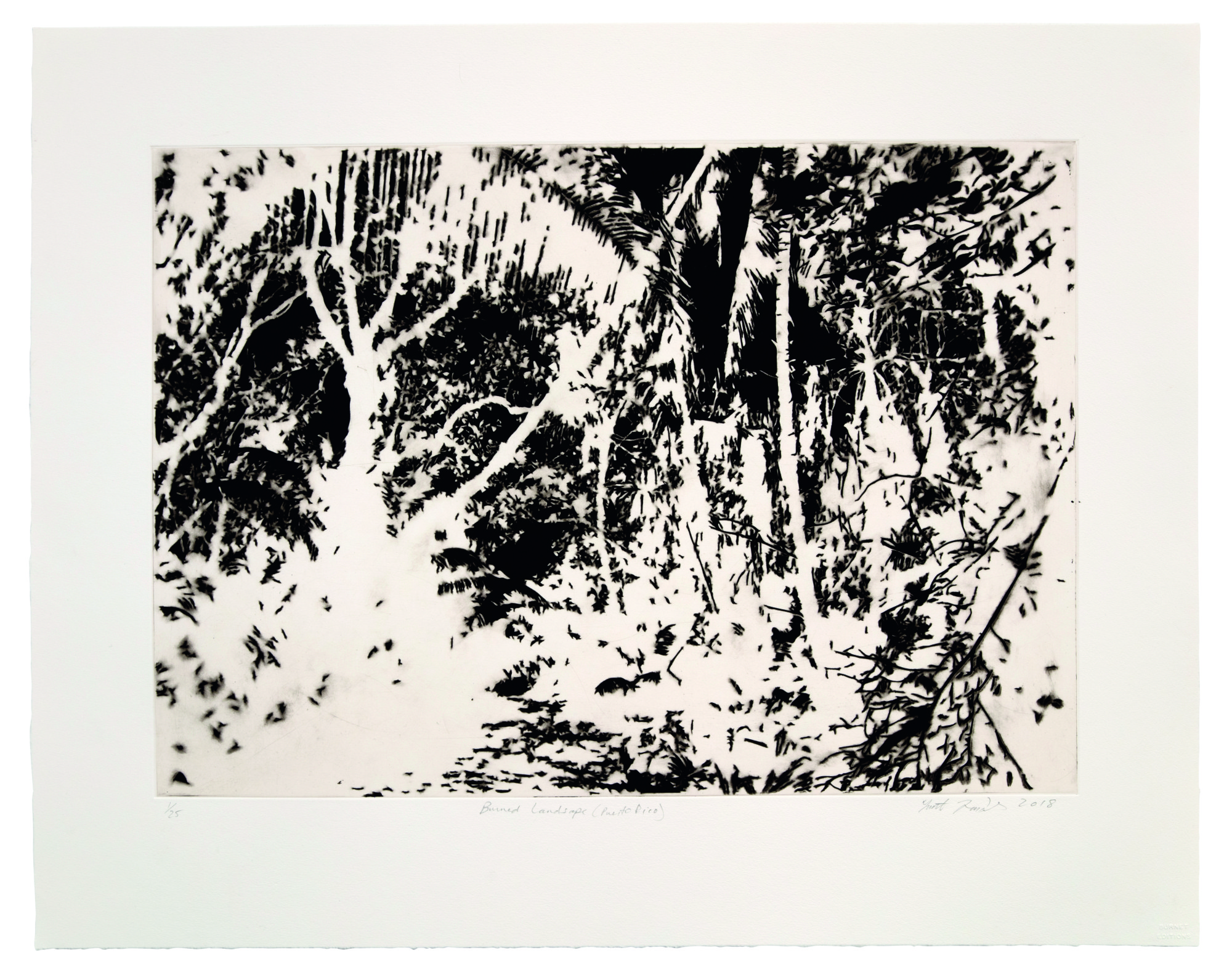
Teresita Fernández
Burned Landscape (puerto Rico), 2018
Fernández belongs to a generation of American artists who came of age alongside figures like Kara Walker, Chris Ofili, and Do Ho Suh, all of whom found ways to embed political and cultural complexity within forms of extraordinary visual beauty. Her closest formal ancestors might include James Turrell in his dedication to light as primary material, and perhaps Agnes Martin in her commitment to a kind of meditative surface that invites the viewer into sustained and unhurried looking. Yet Fernández is finally her own category: more geographically and historically specific than Turrell, more materially experimental than Martin, and more openly engaged with questions of diaspora, belonging, and ecological fragility than either. She draws from the traditions of Land Art, Latin American Conceptualism, and American craft while remaining beholden to none of them.
The enduring significance of Fernández lies in her insistence that beauty and rigor are not competing values but deeply interdependent ones. At a moment when contemporary art sometimes seems to choose between spectacle and scholarship, her work refuses that false choice. The sculptures, prints, and drawings she has produced across more than three decades constitute a body of work that is philosophically coherent, visually extraordinary, and genuinely moving. Collectors who live with her work consistently report that it changes over time, not because the work itself changes, but because it is sensitive enough to reflect the quality of light, the season, and the mood of the room.
That responsiveness to context while maintaining a strong internal logic is the mark of work built to last.