Tala Madani
Tala Madani Lights Up Every Room
Artist Spotlight · The Collection Editorial
“I am interested in the male body as a site of power and vulnerability at the same time.”
Tala Madani, interview with Artforum
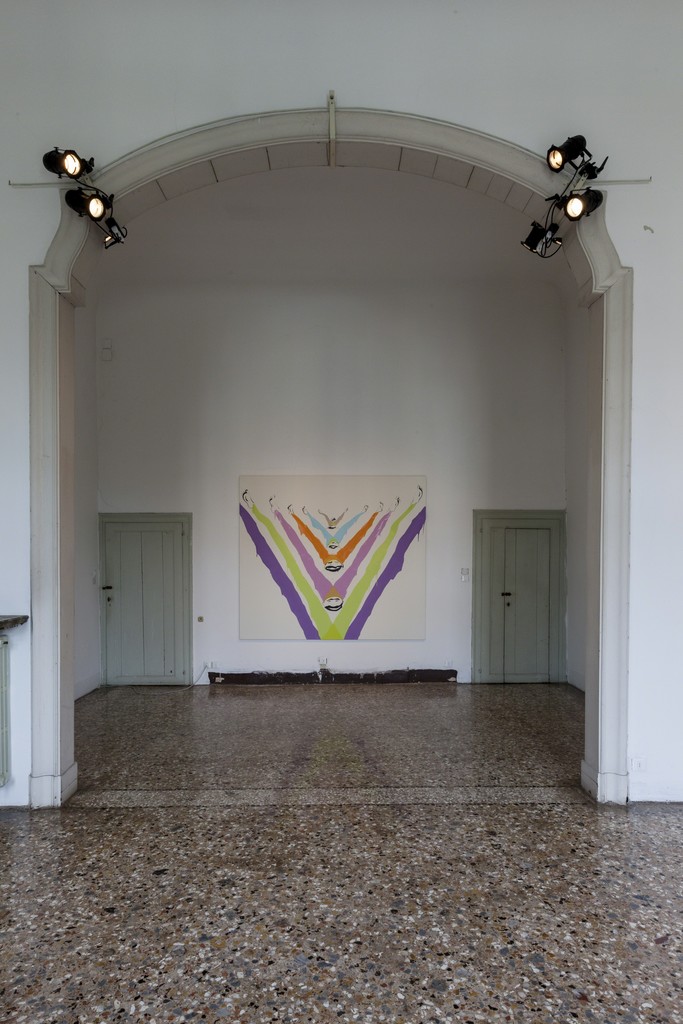
When Tala Madani was included in the 2019 Venice Biennale, the art world took collective notice of something that sharp eyed collectors had understood for years: here was a painter operating at the absolute center of contemporary discourse, making work that was simultaneously hilarious, unsettling, and profoundly intelligent. Her paintings arrived in Venice with the confidence of an artist who had long since mastered her language and was now dictating the terms of the conversation. That international recognition cemented a reputation built steadily over nearly two decades of rigorous, uncompromising studio practice. Madani was born in Tehran in 1981 and emigrated to the United States as a young woman, eventually completing her MFA at Yale School of Art in 2006.
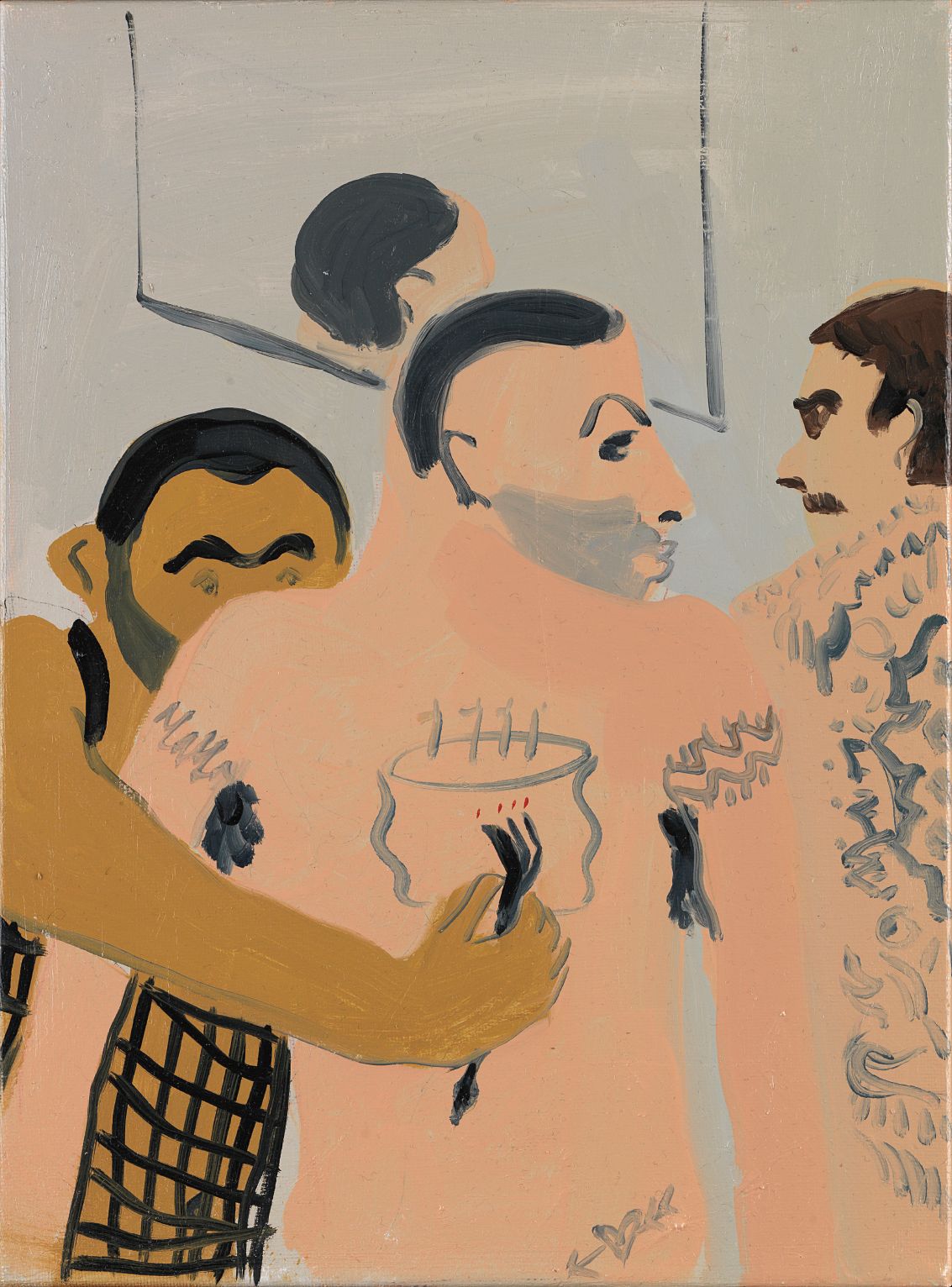
Tala Madani
Mustache, 2008
The journey from Iran to the American academy gave her a particular vantage point, the view of someone who occupies multiple cultural positions at once and is therefore beholden to none of them. Growing up with an intimate understanding of how male authority performs itself in domestic and public life, and then arriving in a Western context with its own elaborate theatrics of power and gender, left her with an extraordinary subject: the universal buffoonery of men who believe themselves to be in charge. Her education at Yale sharpened that instinct into a formal practice. The years immediately following graduate school produced some of the most striking early works in her catalog.
Paintings like Apple Job (2007), Man with Tweezers (2005), and the 2008 trio of Mustache, Finding Zebra, and Face Scrub established the vocabulary that would define her career. These works featured anonymous, balding, mustachioed men engaged in rituals that teetered between the mundane and the absurd. The paint itself was loose and gestural without being sloppy, each composition carefully staged to maximize a peculiar comedic tension. Madani had found her cast of characters and her mise en scène, and she was just getting started.
Tala Madani
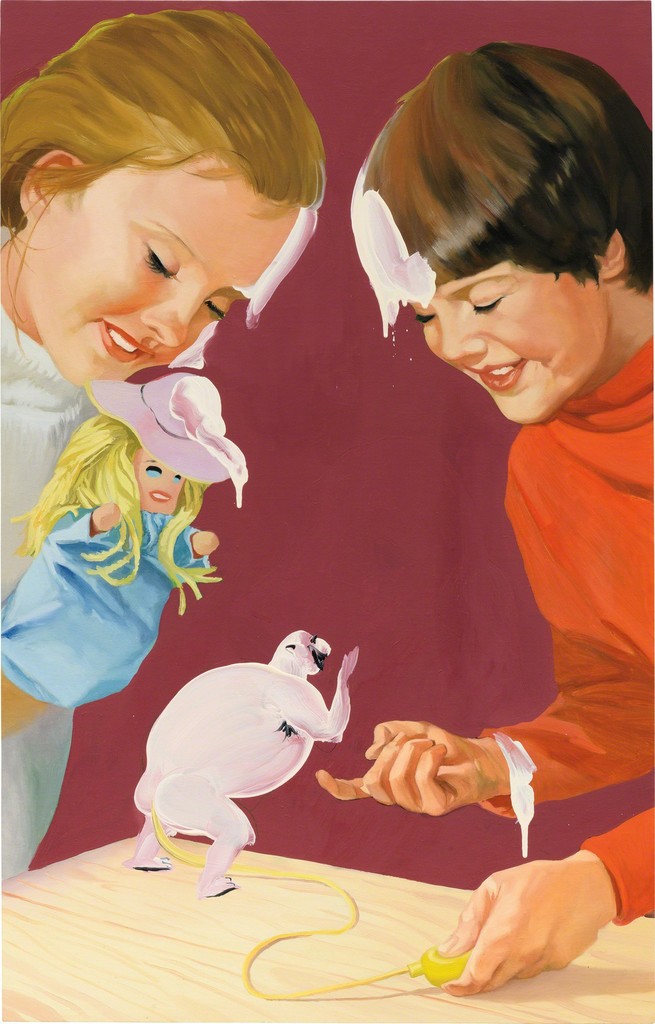
Popular Toys, 2013
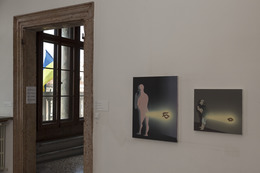
What makes Madani's formal approach so distinctive is the way she uses light. Many of her most celebrated paintings feature figures illuminated from within, or bathed in a projector's beam, or slathered in viscous substances that seem to glow with an internal logic. This preoccupation with light as both a physical material and a metaphor for scrutiny gives her work a theatrical quality that is entirely her own. In works like The X (2015) and the more recent Roller Coaster (2021) and The Eater (2021), she extends this language into stranger and more emotionally complex territory, the bodies becoming almost cosmological, the humor darker and more tender in equal measure.
The shift from oil on panel to oil on linen in later works signals a desire for a more open, breathing surface, and her handling of paint has grown correspondingly more assured and expressive. Her animations, screened in gallery and museum contexts around the world, extend the painted world into time. These short looping films use the same cast of fleshy, anonymous figures and subject them to scenarios that push the logic of her paintings into something closer to slapstick tragedy. The Whitney Biennial, where she has shown to considerable acclaim, provided a major American platform for this expanded practice.
Tala Madani
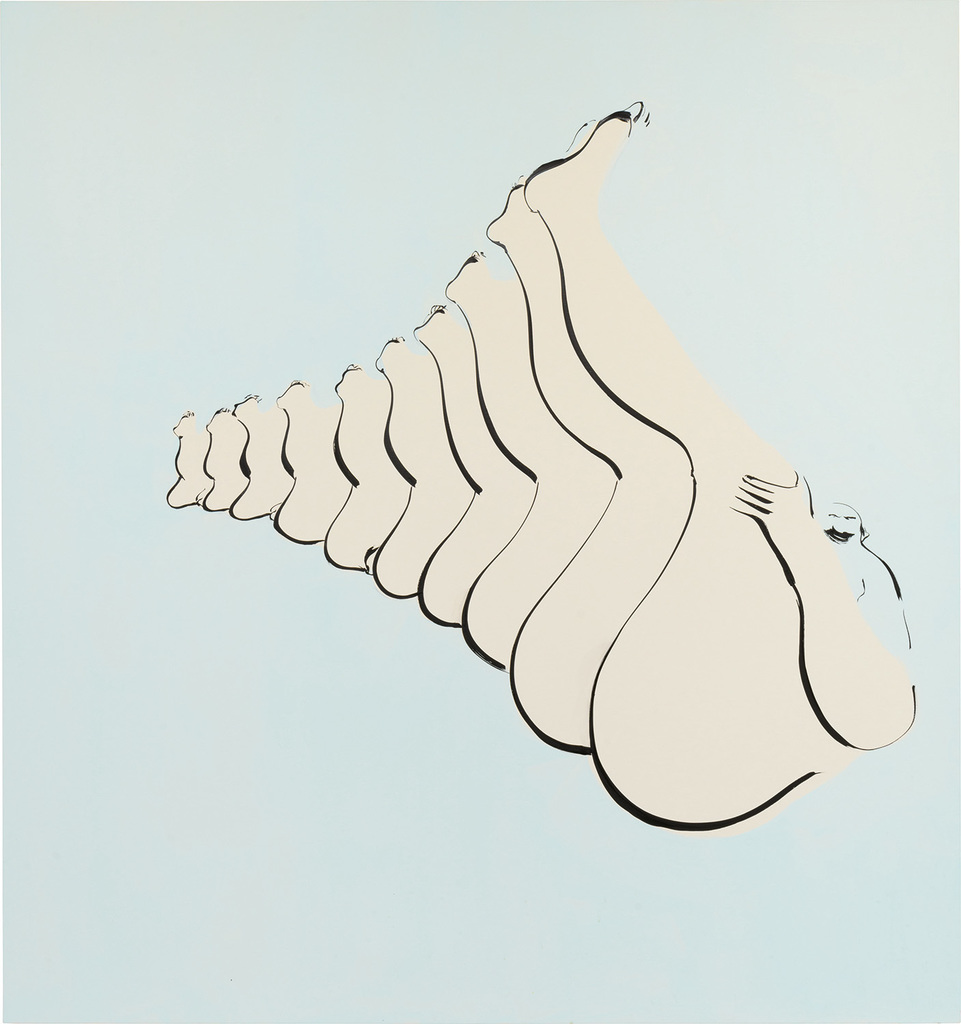
Exhibition, 2012
Institutions including the Museum of Modern Art in New York have acquired her work, and her presence in major public collections is a testament to how seriously the museum world regards her contribution to the history of painting. For collectors, Madani's work represents a rare alignment of critical credibility, art historical importance, and genuine visual pleasure. Her early oil on panel works from the mid to late 2000s, including Apple Job and Face Scrub, are now understood as foundational documents of a major artistic voice, and examples that come to market attract serious institutional and private interest. The larger oil on linen canvases from the 2010s onward offer a more expansive encounter with her vision, and works like The Eater and Roller Coaster from 2021 demonstrate that her ambition and invention continue to grow with time.
Collectors who have followed her practice from the beginning have been rewarded with a body of work that deepens and rewards sustained attention. Madani occupies a distinct and important place within the broader landscape of figurative painting that has defined so much of the most exciting art of the past two decades. Her work resonates with artists like Nicole Eisenman, whose mordant wit and commitment to the figure share certain affinities with Madani's project, though Madani's approach is more stylized and theatrically compressed. She also invites comparison with painters working in traditions of political satire and grotesque comedy stretching back through Philip Guston and further to the Flemish masters who understood that the ridiculous and the profound are permanent neighbors.
Tala Madani
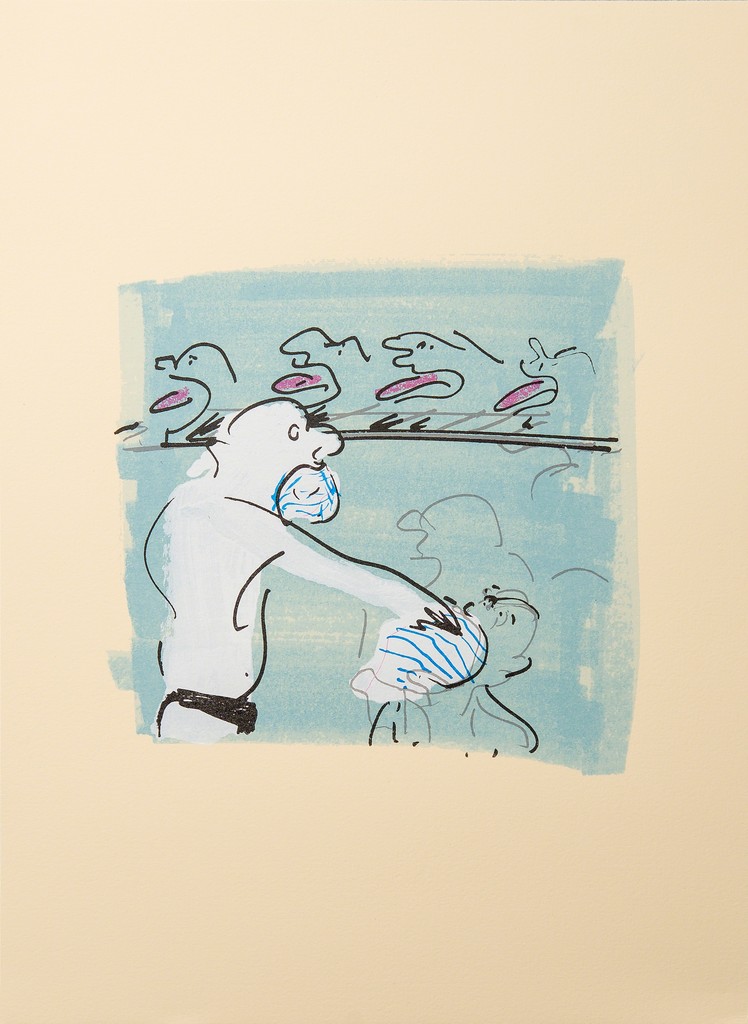
Paper Feed, 2014
To place her in that lineage is not hyperbole. It is simply accurate. What Madani has achieved, and what makes her work feel so urgent in the present moment, is a form of critique that never collapses into didacticism. She is not making illustrations of feminist theory.
She is making paintings that operate on the nervous system before they operate on the intellect, paintings that make you laugh before they make you think, and that leave you thinking long after the laughter has passed. Her figures waddle and preen and suffer and exult, and in their grotesque pageantry we recognize something true about power and its discontents. That is the rarest achievement in contemporary art, and it is what collectors who live with her work know every single day.
Featured Works