Tahia Halim
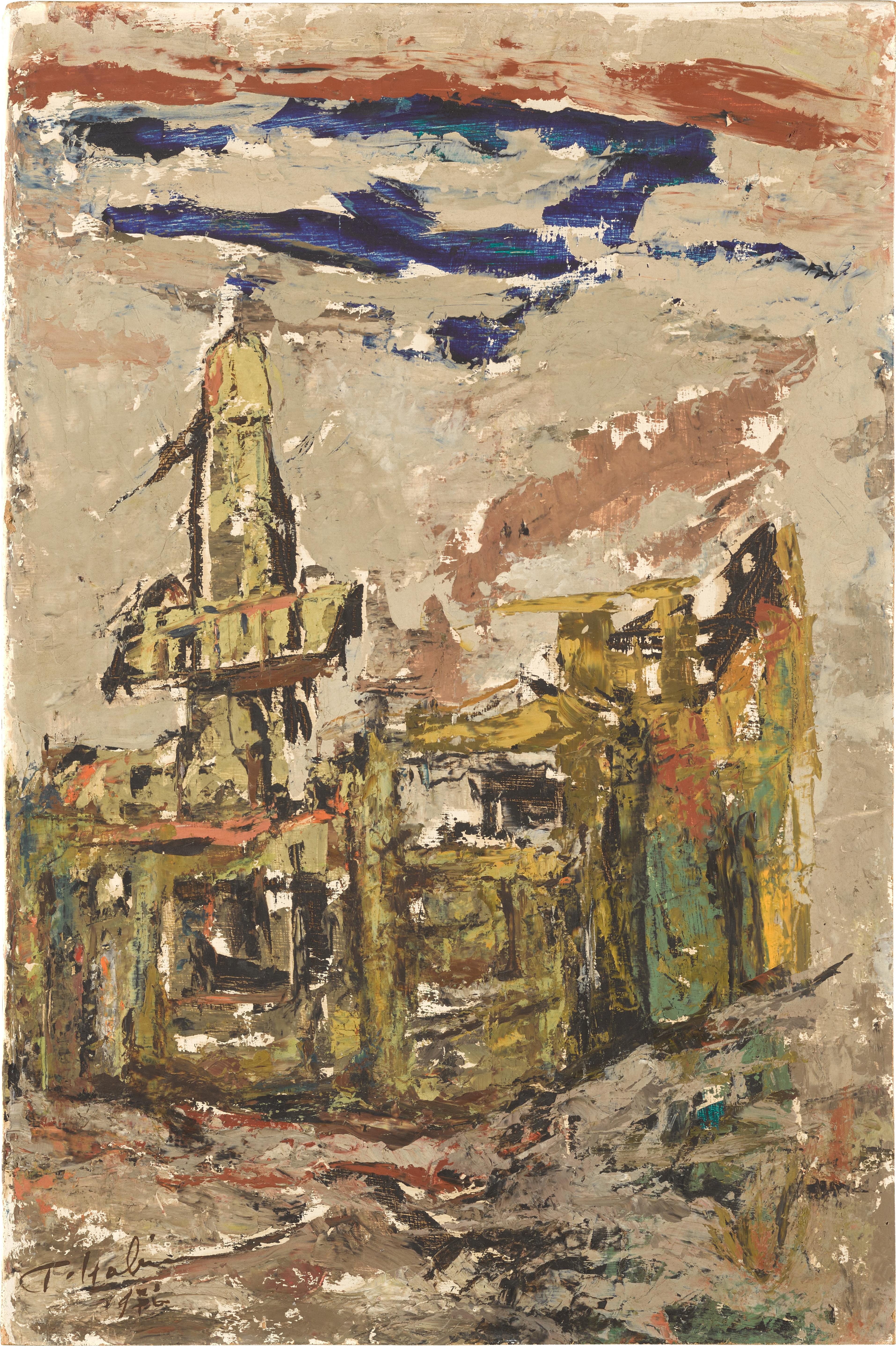
Tahia Halim, Painting Memory Into Radiant Life
Artist Spotlight · The Collection Editorial
In the grand sweep of twentieth century Egyptian modernism, few figures have been as quietly luminous and as persistently undersung as Tahia Halim. That is beginning to change. In recent years, major cultural institutions across the Arab world and beyond have turned fresh attention toward the pioneering women artists who shaped Egyptian modernism from within, and Halim's name appears with growing frequency in those conversations. Her paintings, with their dense, jewel like surfaces and their profound tenderness toward the people and places she loved, feel not like artifacts of a bygone era but like urgent, living things.
Tahia Halim
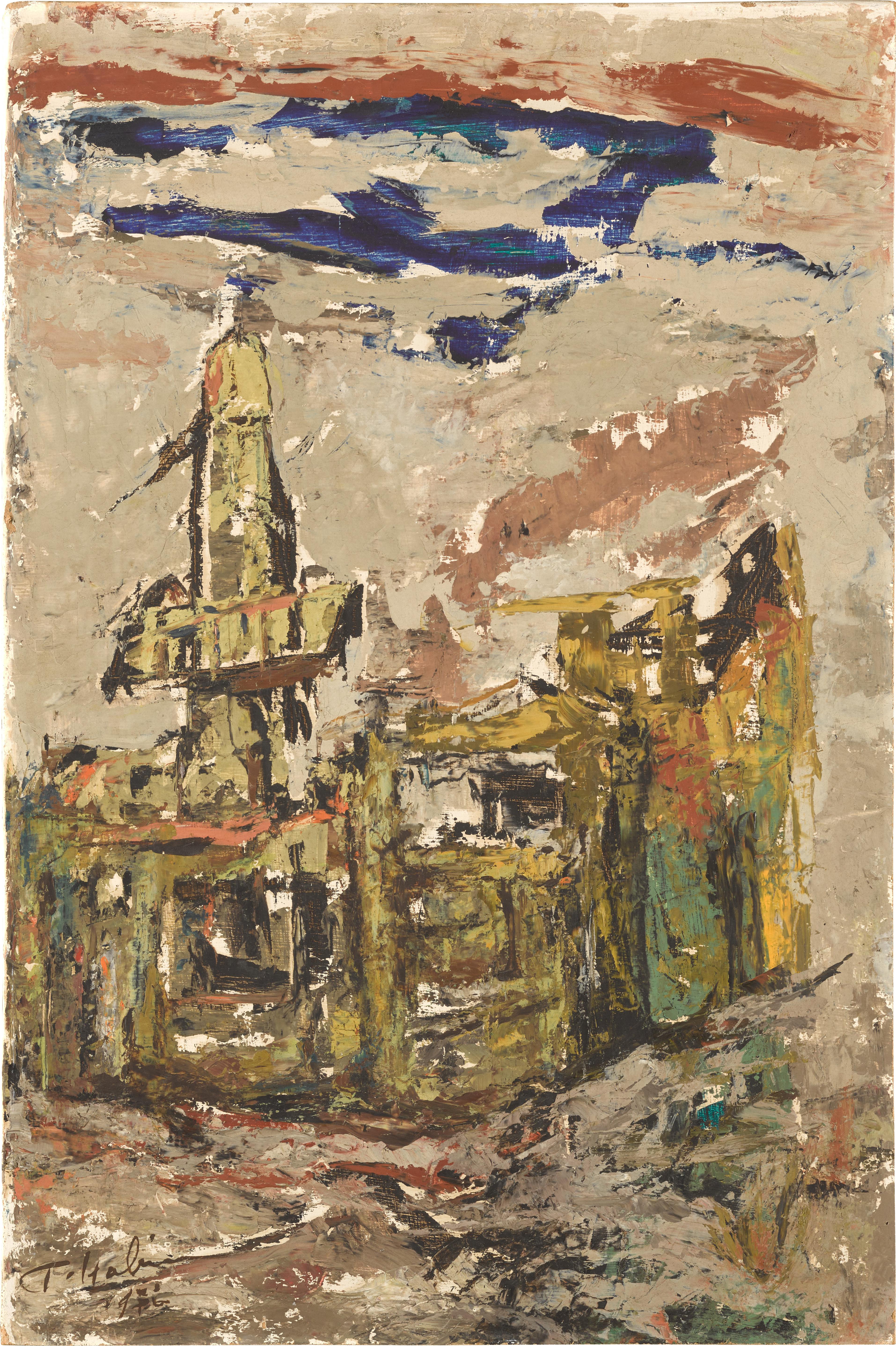
The Village, 1976
Tahia Halim was born in Cairo in 1919 into a distinguished Egyptian family, and her early formation reflected the cosmopolitan intellectual atmosphere of a city that was, in the interwar period, one of the great cultural crossroads of the world. She studied at the Cairo School of Fine Arts, where she absorbed the rigorous training in European academic technique that defined the institution's curriculum, but she was never content to remain within those boundaries. She traveled to France and studied in Paris during the late 1940s and early 1950s, immersing herself in the Post Impressionist and Fauvist currents that were transforming European painting, and she returned to Egypt carrying that knowledge but determined to bend it toward something deeply, specifically her own. What distinguished Halim from the beginning was her instinct for place and for people.
She was not interested in the abstract universalism that appealed to many of her contemporaries. She was drawn instead to the particular, to the faces of women in villages along the Nile, to the rhythms of daily life in markets and mosques, to the quality of light falling on the river at dusk. Her palette was extraordinary, built from warm ochres and deep terracottas, from the blues and greens of water and sky, from the violet shadows that gather in fabric and in memory. She worked with an almost devotional attention to color, understanding it not as decoration but as the primary vehicle of feeling.
Tahia Halim
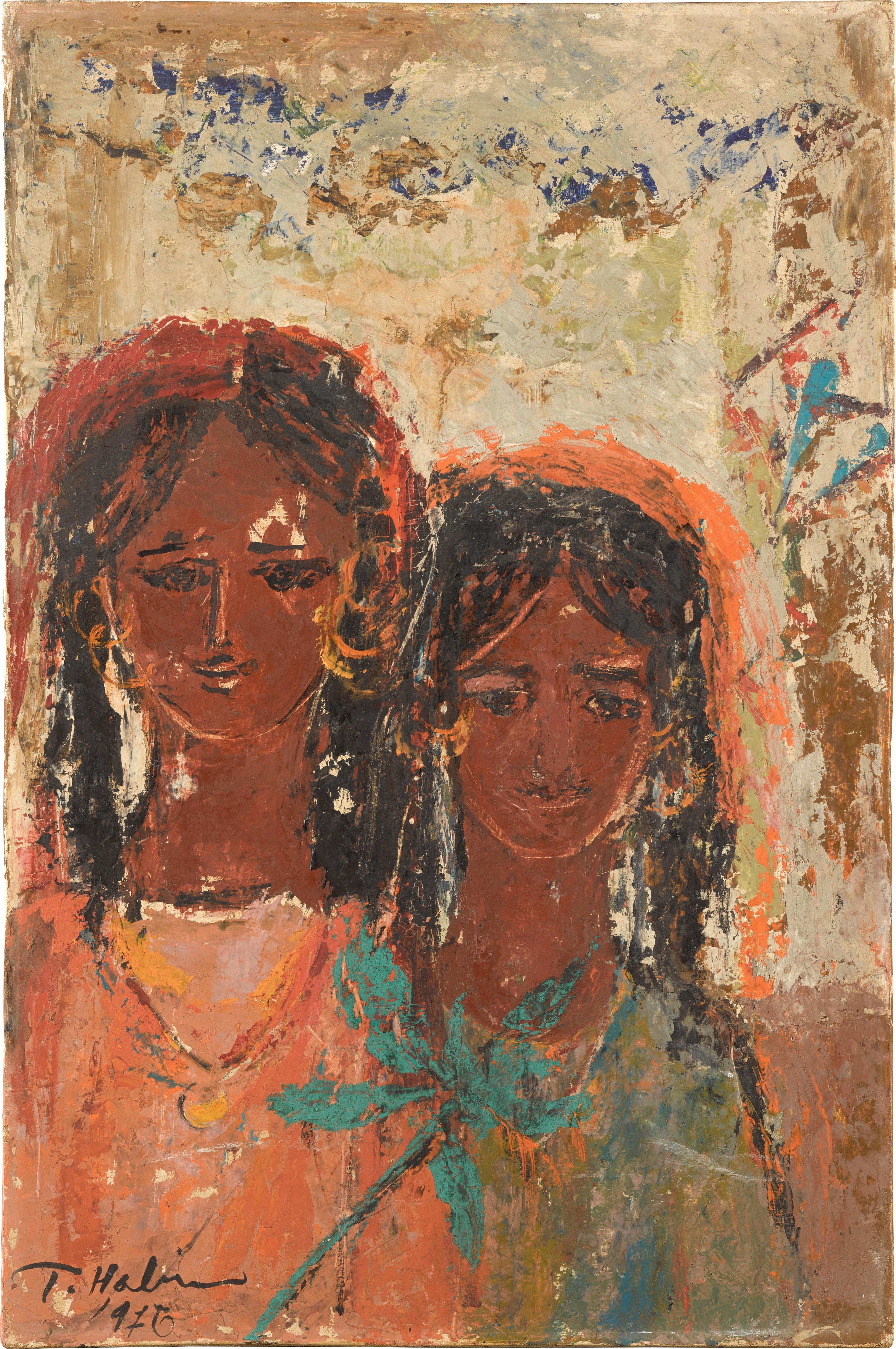
From Nubia (Nubian Girls), 1976
The works she produced in 1976 stand among the finest achievements of her career and represent a sustained meditation on Egyptian identity in its most elemental forms. "The Village," rendered in oil on board mounted on a wood frame, is characteristic of her best work in its compression of a whole world into a single, charged image. The figures in her village scenes carry themselves with a quiet dignity that is never romanticized and never condescending. Halim observed her subjects with the eye of someone who understood that she was documenting something precious and perhaps fragile.
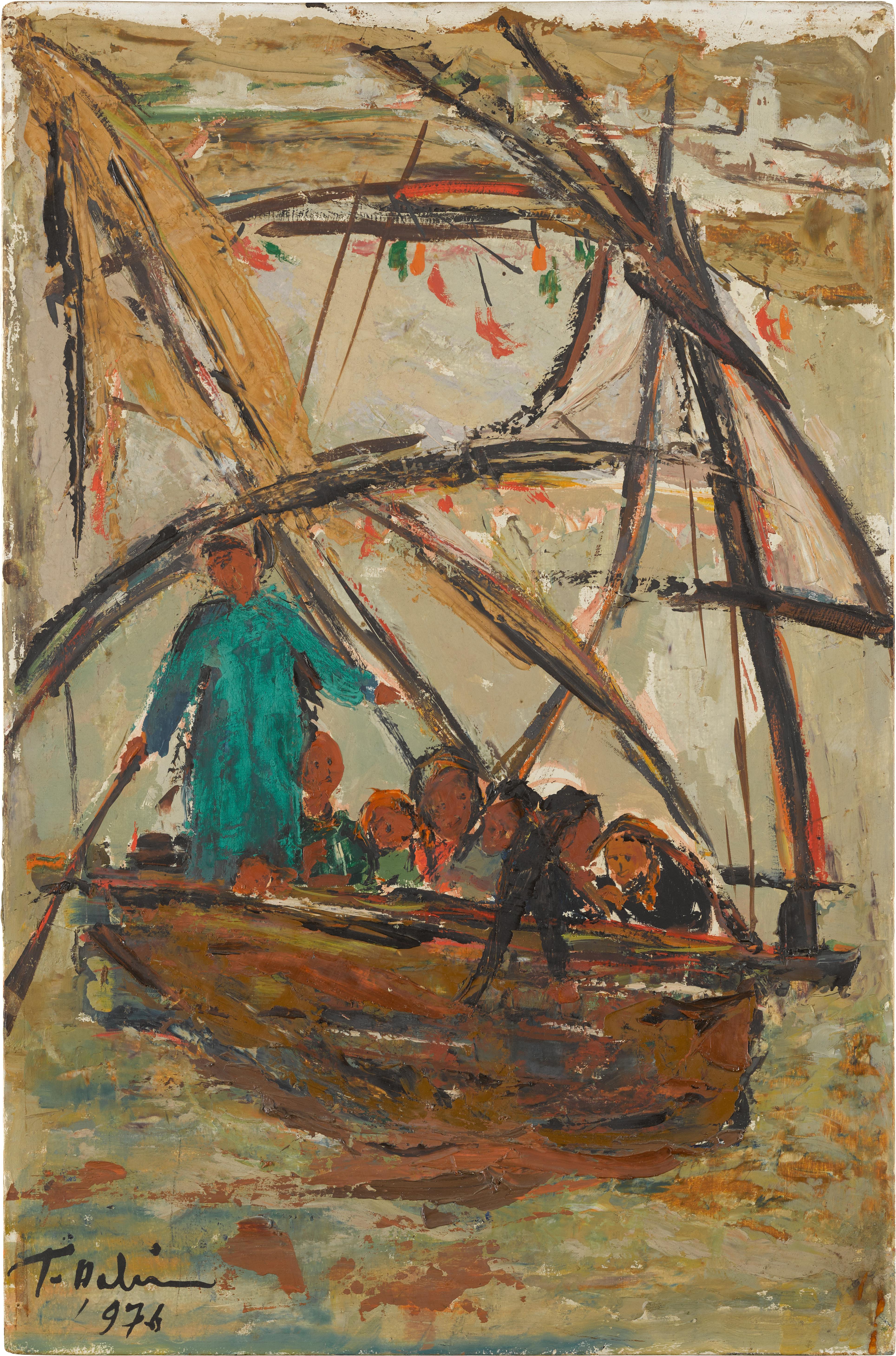
The same attentiveness animates the two paintings she made under the title "From Nubia," one depicting Nubian girls gathered together with an ease and warmth that feels lived and remembered rather than composed, the other showing a boat on water in a scene of such spare, luminous beauty that it reads almost as elegy. These Nubian works are particularly significant. Nubia, the ancient region stretching along the Nile through southern Egypt and northern Sudan, was being transformed in this period by the construction of the Aswan High Dam and the displacement of communities that had lived along those banks for millennia. Halim's attention to Nubia in 1976 was not incidental.
Tahia Halim
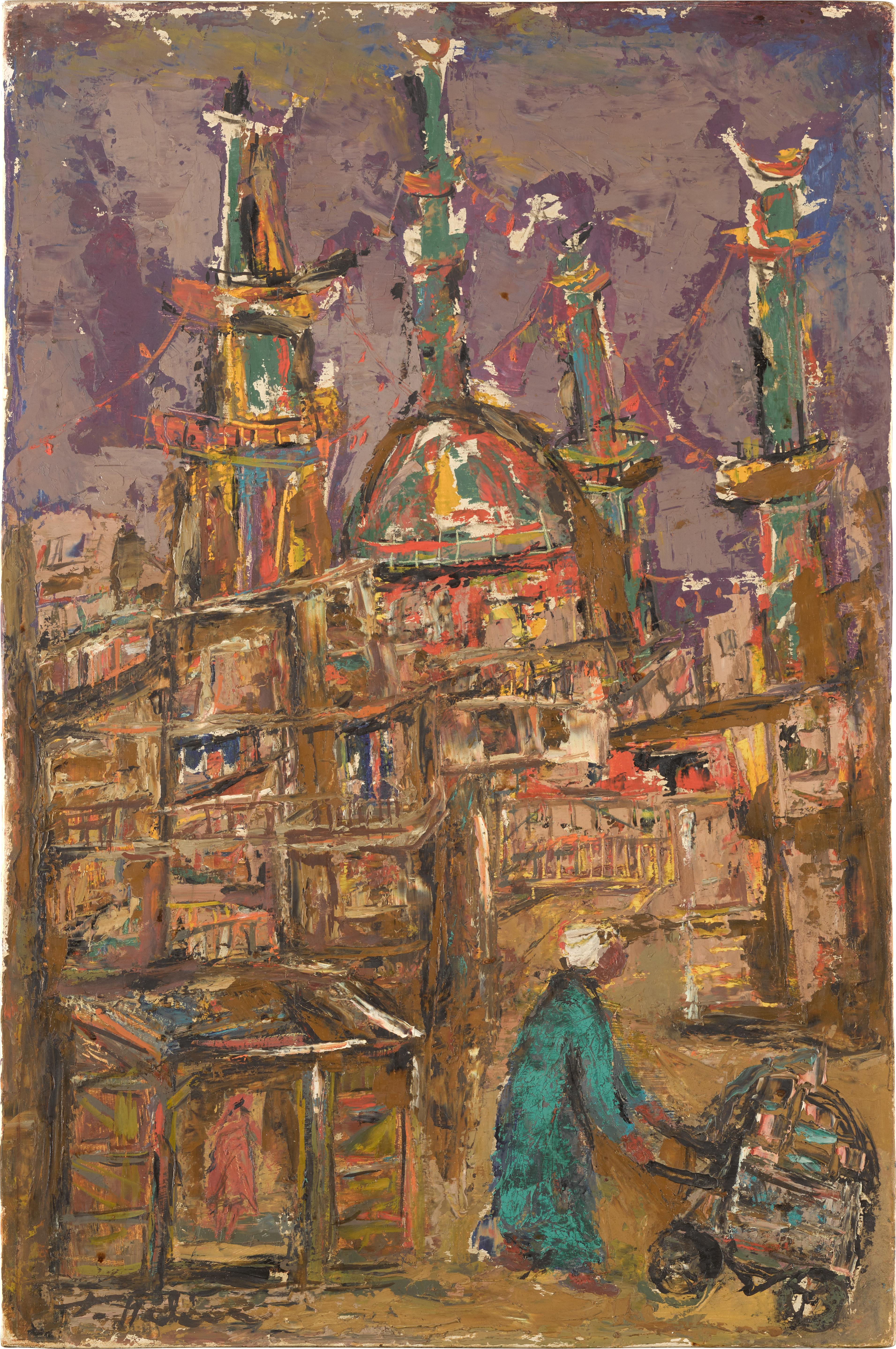
Al-Azhar in Ramadan, 1976
It was a deliberate act of cultural witness. "Al Azhar in Ramadan" from the same year turns from the villages to the city, capturing the sacred atmosphere of Cairo's great mosque district during the holy month with the same quality of reverential looking. For collectors approaching Halim's work today, these paintings represent an extraordinary opportunity to acquire a significant voice in the story of African and Arab modernism at a moment when that story is being comprehensively reassessed. Her work sits at the intersection of several urgent critical conversations: about the place of women in twentieth century art history, about the global reach of modernism beyond its European centers, about the ethics of cultural memory and documentation.
She was a peer and contemporary of artists such as Inji Efflatoun, whose politically charged paintings of Egyptian women brought international attention to the generation of Egyptian modernists working through the middle decades of the twentieth century. Like Efflatoun, Halim brought a deeply personal and political consciousness to her practice, though her mode was lyrical where Efflatoun's was often declarative. Collectors interested in the broader context of Egyptian modernism should consider Halim alongside artists like Gazbia Sirry and Tahia Halim's generation of Cairo School graduates who collectively made the mid twentieth century a golden period for Egyptian painting. The market for Egyptian modernism has strengthened considerably over the past decade, driven in part by dedicated auctions at houses including Bonhams and Christie's that have brought sustained attention to the region's artistic heritage.
Tahia Halim
From Nubia (The Boat), 1976
Works by Egyptian modernists of Halim's generation that were once overlooked outside specialist circles now attract serious international interest, and Halim's paintings, with their combination of technical accomplishment and historical significance, are particularly well positioned in this environment. The intimacy of scale that characterizes many of her board paintings makes them especially suited to private collectors who want to live with work rather than simply display it. There is something about a Halim that rewards sustained attention, that gives more the longer you spend with it. Tahia Halim died in 2003, leaving behind a body of work that deserves far wider recognition than it has so far received.
She spent decades teaching at the Cairo School of Fine Arts, shaping generations of Egyptian artists, and her influence on the development of Egyptian painting is woven into the fabric of the country's visual culture in ways that are only now being properly traced. To collect her work is to participate in an act of recovery and recognition, to insist that the full story of twentieth century art must include the women who painted the Nile, the mosques, the faces of Nubia, with such skill and such love. Halim painted not to be seen but to see, and in that seeing she gave us something we are only beginning to understand how to receive.
Explore books about Tahia Halim
Tahia Halim: A Journey Through Art and Life
Samia Mehrez
Egyptian Women Artists: Tahia Halim and Her Contemporaries
Nada Shabout
Tahia Halim: Retrospective Exhibition Catalogue
Cairo Opera House