Stephan Balkenhol
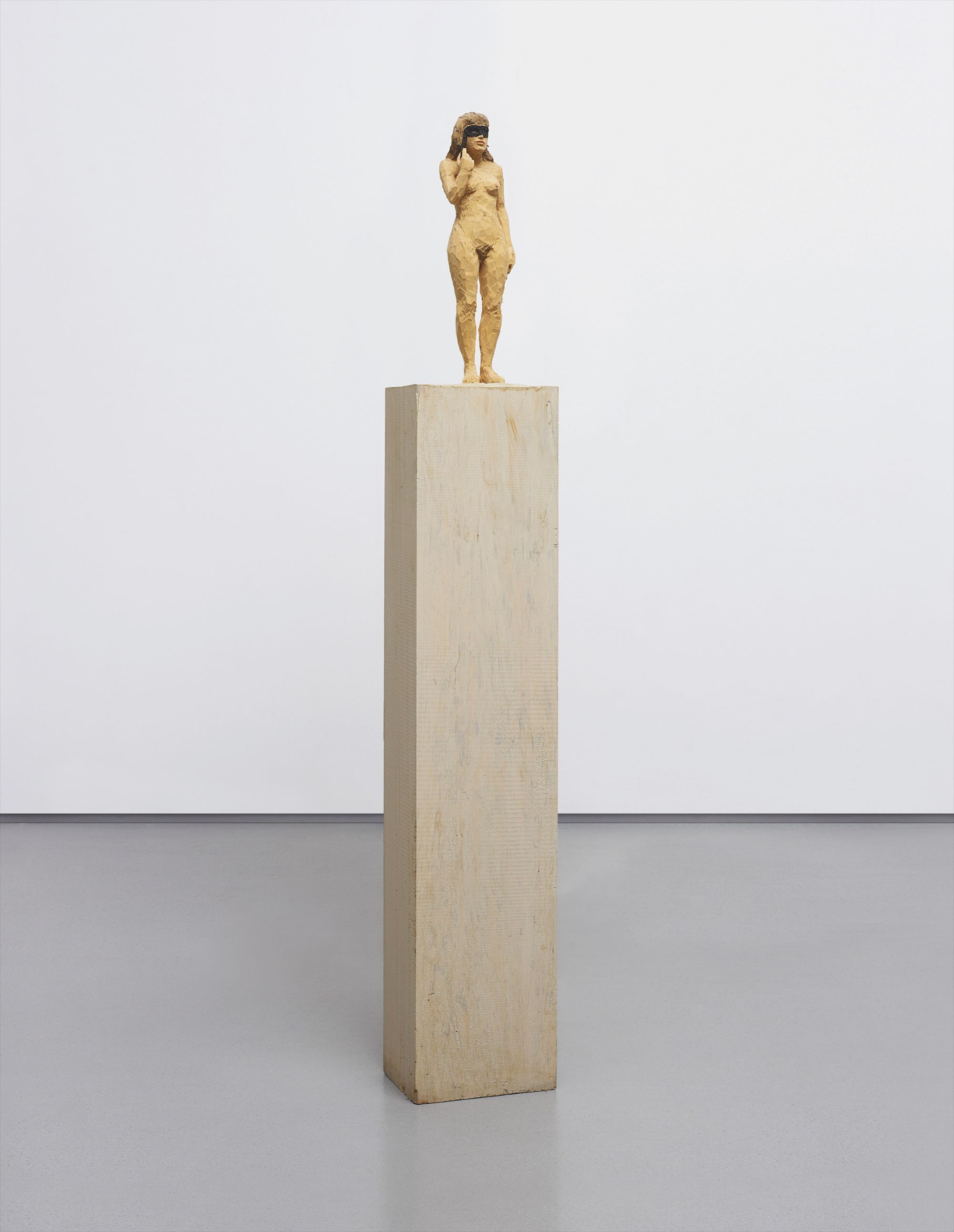
Stephan Balkenhol: Humanity Carved Into Being
Artist Spotlight · The Collection Editorial
“I want the figures to be open. They should not tell a specific story. The viewer should be able to project their own thoughts.”
Stephan Balkenhol, interview
In the grand atrium of the Hamburger Bahnhof in Berlin, a crowd gathers around a figure that seems, at first glance, almost unremarkable. A man stands upright, wearing a plain white shirt and dark trousers, his expression neither joyful nor sorrowful, neither wise nor foolish. He is simply there, present, watching back. This is the quietly radical proposition of Stephan Balkenhol, a German sculptor whose decades of work have made the ordinary human form one of the most compelling subjects in contemporary art.
Stephan Balkenhol
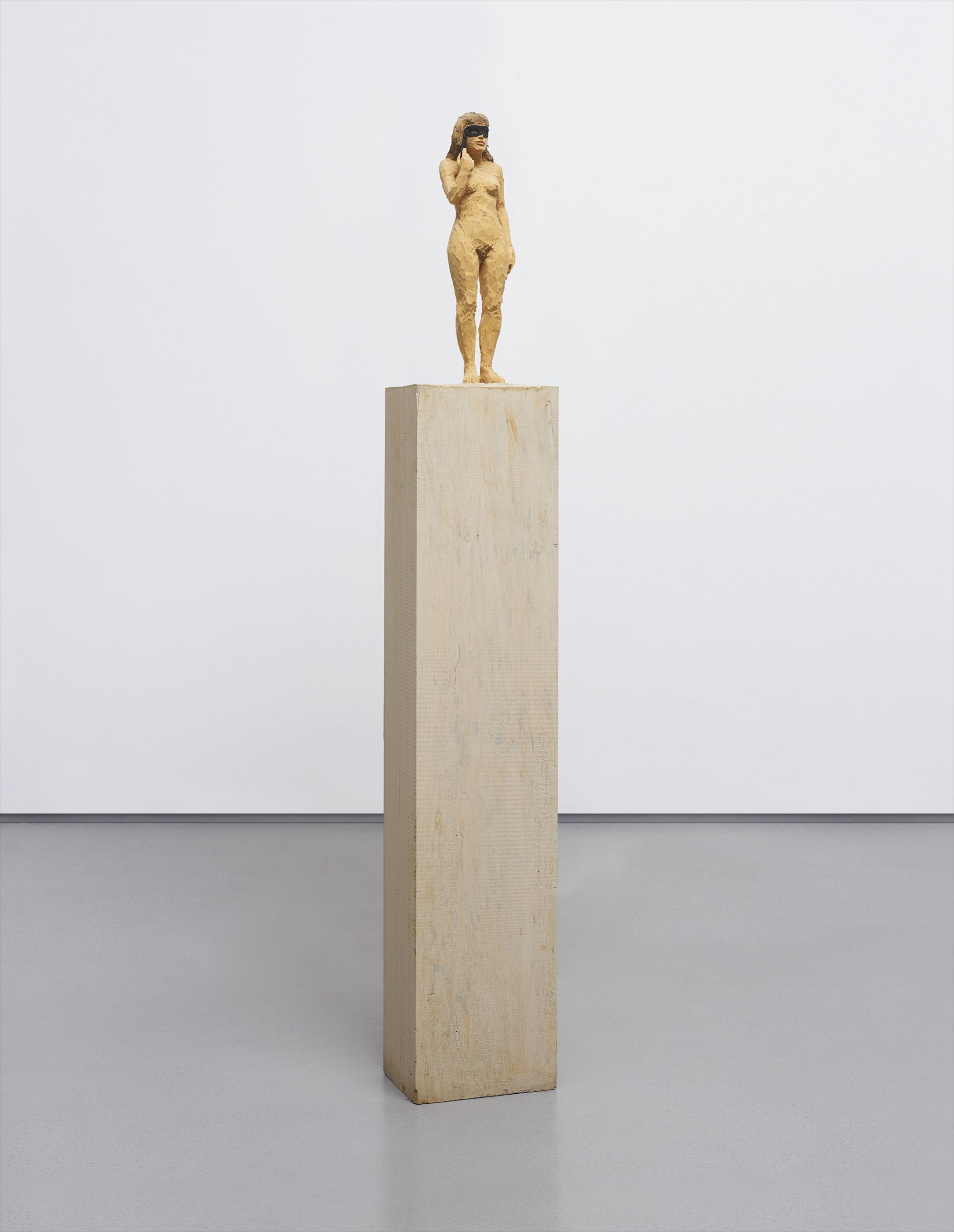
Wawa wood, paint
His figures do not demand anything of the viewer. They simply exist, and in that existence they ask everything. Balkenhol was born in 1957 in Fritzlar, a small medieval town in the heart of Hesse, Germany. He came of age in a country still processing the weight of its twentieth century history, surrounded by a postwar culture that was simultaneously rebuilding and interrogating its relationship to monuments, heroism, and collective memory.
He studied at the Hochschule für Bildende Künste in Hamburg from 1976 to 1982 under the legendary Ulrich Rückriem, a sculptor whose own work explored the raw, unmediated quality of stone and material. From Rückriem, Balkenhol absorbed a deep respect for the physical properties of his chosen medium, but he would quickly chart a course that diverged sharply from his mentor's rigorous abstraction. It was in Hamburg in the early 1980s that Balkenhol discovered what would become his signature approach: carving directly into large blocks of wawa wood, a lightweight tropical timber with a pale, almost skin like grain, and leaving the marks of the chisel visible on the surface. This was a decisive move.
Stephan Balkenhol
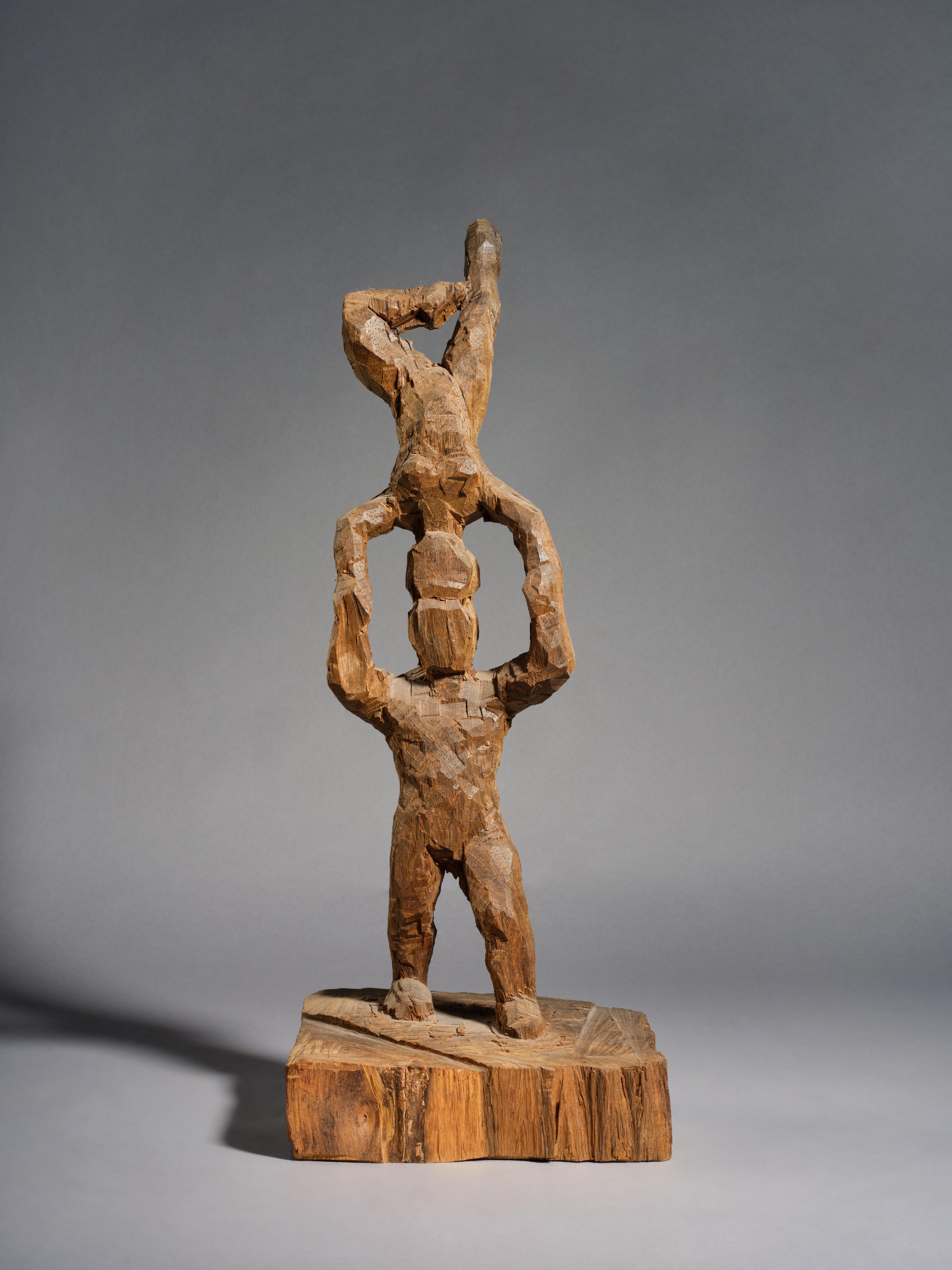
Akrobatenpaar (Acrobat Couple), 1987
At a time when figurative sculpture was broadly considered academically suspect, caught between the legacy of Socialist Realism and the dominance of conceptualism and minimalism, Balkenhol's return to the carved human figure felt both anachronistic and entirely fresh. His breakthrough came rapidly. By the mid 1980s, works such as the 1987 Akrobatenpaar, or Acrobat Couple, showed his ability to animate two figures in relation to one another with remarkable economy of means, the rough wood surface giving the work a spontaneity and directness that polished bronze or marble could never achieve. The figures Balkenhol carves are resolutely anonymous.
They are not portraits of specific individuals, not allegorical stand ins for virtues or vices, and not monuments to achievement. They wear ordinary clothes: a red shirt, a black skirt, a coat. Works such as Man with Coat from 2018 and the paired Small Pair from 1997, carved from wawa wood in two parts, demonstrate how consistently he returns to this democratic vision of humanity. His Katzenfrau from 2004 introduces a gentle element of the uncanny, a woman with feline features that disrupts the everyday just enough to make the viewer pause.
Stephan Balkenhol
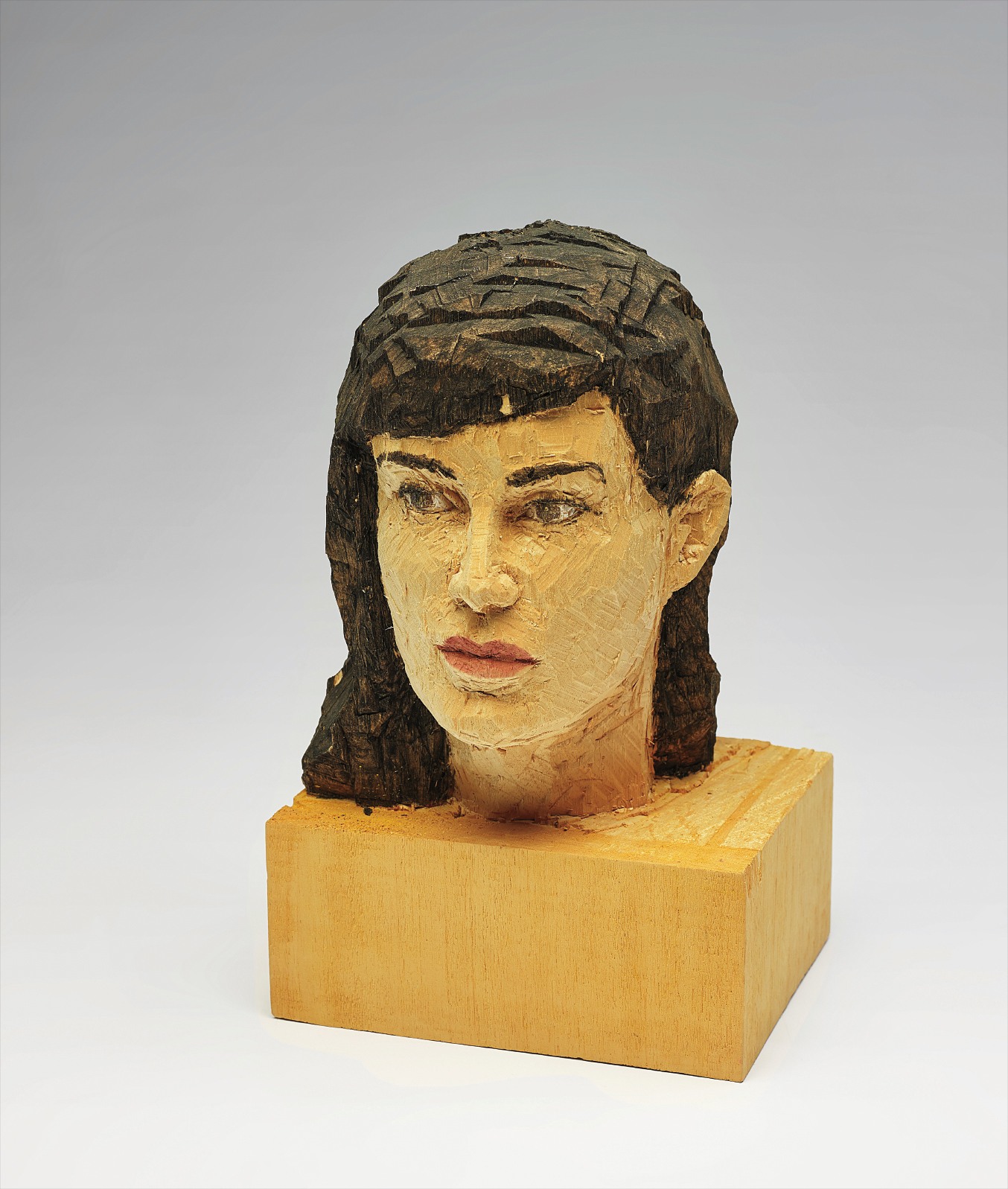
Kopf 7 (Head 7), 2011
Frau auf Schneckenhaus, the Woman Sitting on a Snailshell from 1997, takes a similar approach, placing a plainly dressed female figure atop a monumental natural form, combining the mythological with the mundane in a way that feels both timeless and disarmingly contemporary. The Kopf series, including Kopf 7 from 2011, distills his practice to its essence: a single head, painted with clean, unfussy color, confronting the viewer with nothing more and nothing less than a face. Balkenhol's practice has also extended into public commissions and large scale installations that place his figures in dialogue with urban and architectural space. His sculptures have appeared atop columns in city squares, perched on facades, and installed in rivers and harbors across Europe, always maintaining that quality of quiet surprise: the sense that an ordinary person has arrived somewhere extraordinary, or that something extraordinary has been found in the presence of an ordinary person.
He has held professorships at the Städelschule in Frankfurt and the Akademie der Bildenden Künste in Karlsruhe, and his influence on younger generations of figurative sculptors working in Europe and beyond is difficult to overstate. His work is held in major museum collections including the Museum of Modern Art in New York, the Tate in London, and numerous European institutions. For collectors, Balkenhol offers something rare in the contemporary market: a body of work that is immediately accessible in emotional register yet philosophically rich, and one that has demonstrated sustained institutional and critical esteem over more than four decades. His carved wawa wood pieces, with their visible tool marks and warm painted surfaces, carry an intimacy that his bronze editions translate differently, offering the durability of a traditional sculptural material while preserving the gesture and directness of his forms.
Stephan Balkenhol
Stephan Balkenhol
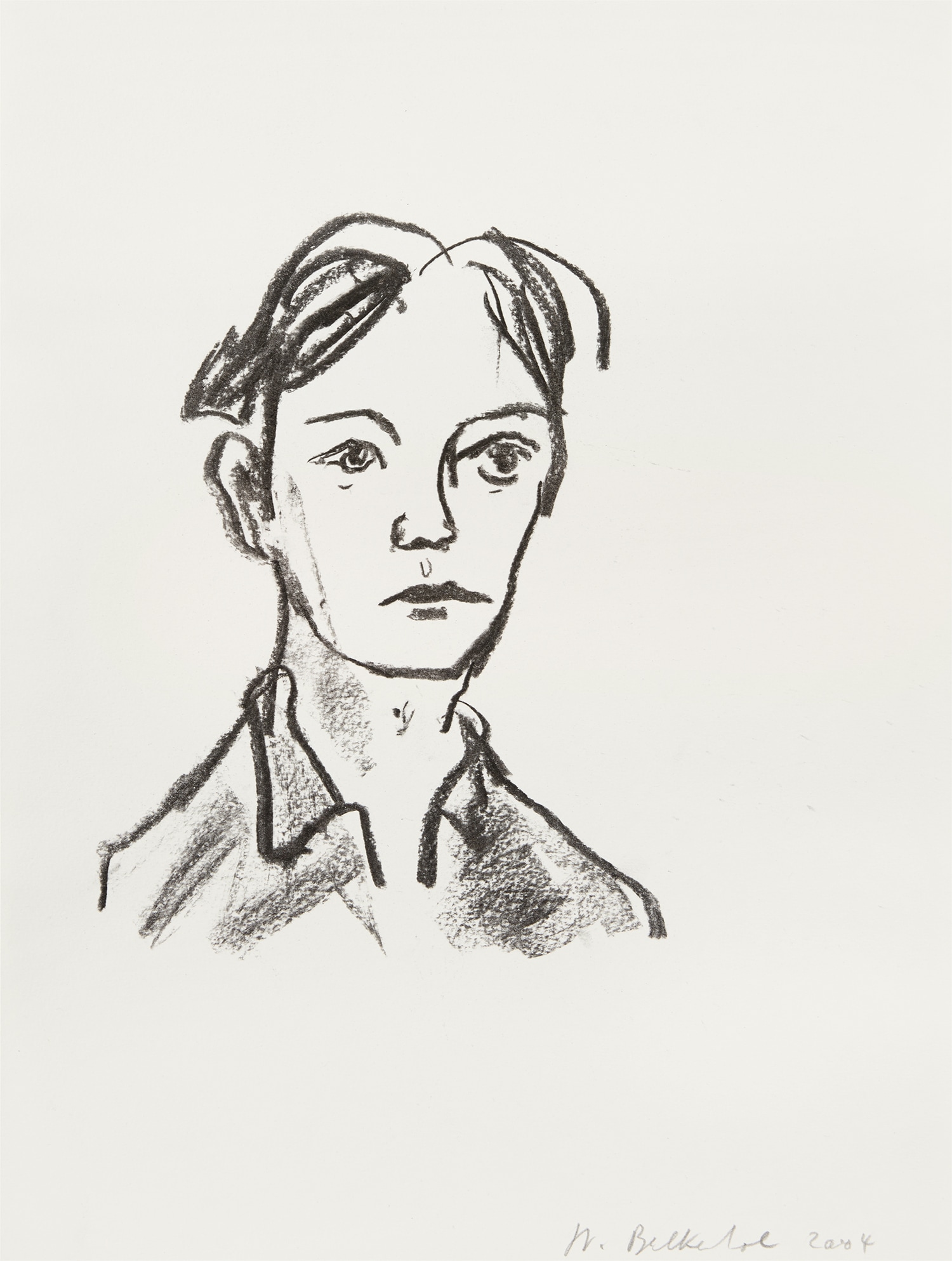
Works on paper, including charcoal drawings, reveal the same sensibility at a more intimate scale, and for collectors entering his world these offer a compelling point of connection with the larger sculptural practice. In the secondary market, his works have attracted consistent interest at major auction houses, with carved and painted wood sculptures and bronze multiples both performing strongly. The range of scales and media in his output means that there are meaningful points of entry for collectors at various stages of their journey with his work. In the broader context of art history, Balkenhol occupies a singular position.
His work invites comparison with the Expressionist carving traditions of Ernst Ludwig Kirchner and Wilhelm Lehmbruck, yet he strips away their psychological intensity in favor of something more neutral and open. He is sometimes discussed alongside artists such as Kiki Smith, Thomas Houseago, and Georg Baselitz, each of whom in different ways reasserted the human body as a site of contemporary inquiry after decades in which it had been theorized out of mainstream sculptural practice. Yet Balkenhol's refusal of drama or hierarchy sets him apart. Where others sought to wound or exalt the body, he simply stood it up and let it be.
What Balkenhol has given contemporary art is a form of attention: patient, non judgmental, and deeply humanist. In an era of spectacular imagery and constant narrative, his figures ask the viewer to slow down and look at someone who is not performing anything, not selling anything, not suffering or triumphant. They are standing in the world, as we all stand in the world, asking to be seen. More than forty years into a remarkable career, that invitation feels as urgent and as generous as ever.
Explore books about Stephan Balkenhol
Stephan Balkenhol: Sculpture 1982-1992
Peter Selz
Stephan Balkenhol
Museum of Modern Art
Balkenhol: Sculpture and Drawings
Germano Celant
Stephan Balkenhol: Skulpturen, Zeichnungen, Drucke
Klaus Ottmann
Stephan Balkenhol: Works 1982-2010
Paul Moorhouse
Balkenhol
Christoph Schaden