Sanyu: Where East Meets Timeless Elegance
Artist Spotlight · The Collection Editorial
When Christie's Hong Kong brought a major group of Sanyu's works to auction in recent years, the rooms filled with a particular kind of reverence, the sort usually reserved for artists whose reputations have long outpaced their availability. Sanyu's paintings and drawings, intimate in scale yet enormous in presence, routinely set records for modern Chinese art at auction. His "Five Nudes," a luminous canvas that distills the female form into something approaching pure calligraphic gesture, achieved tens of millions of Hong Kong dollars and announced to the global market what a devoted circle of Asian collectors had understood for decades: that Sanyu is among the most singular artistic voices of the twentieth century, and that his work remains profoundly undervalued relative to its historical importance. Born Chang Yu in Nanchong, Sichuan province, in 1901, Sanyu grew up immersed in the classical traditions of Chinese ink painting and calligraphy.
Sanyu
Untitled
His early education steeped him in the disciplined elegance of brushwork, instilling a visual sensibility rooted in economy and precision. In 1921, he joined a cohort of ambitious young Chinese artists who traveled to France on the Diligent Work and Frugal Study program, arriving in Paris at a moment when the city was at its most electrically alive to modernist experiment. He would spend the rest of his life there, eventually dying in his Paris apartment in 1966 in circumstances that only deepened his myth: found among his paintings, largely unknown to the broader Western art world despite decades of quiet, devoted work. Paris in the 1920s was both a liberation and a crucible for Sanyu.
He moved through the same circles as his compatriots Zao Wou Ki and Pan Yuliang, artists who were similarly navigating the charged space between their classical Chinese training and the modernist energies swirling through Montparnasse. Sanyu studied briefly at the École Nationale Supérieure des Arts Décoratifs and later at the Académie de la Grande Chaumière, absorbing lessons from Post Impressionism and early European abstraction. Yet he never surrendered his foundational instincts. Where his Western contemporaries labored toward formal reduction, Sanyu arrived there naturally, through the calligraphic logic he had internalized since childhood.
Sanyu
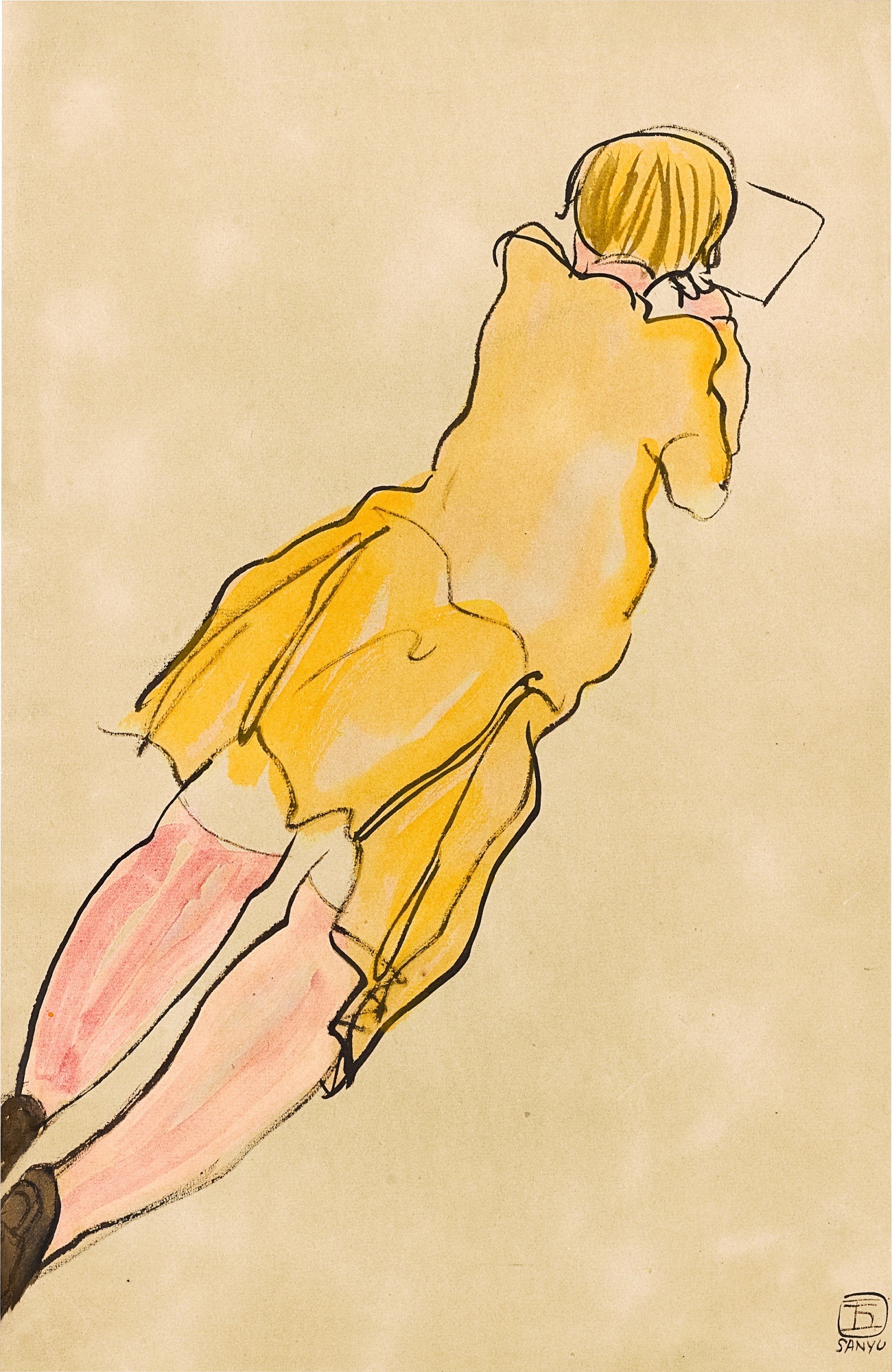
Femme à la robe jaune avec chaussettes roses 黃洋裝粉長襪女士, 1920
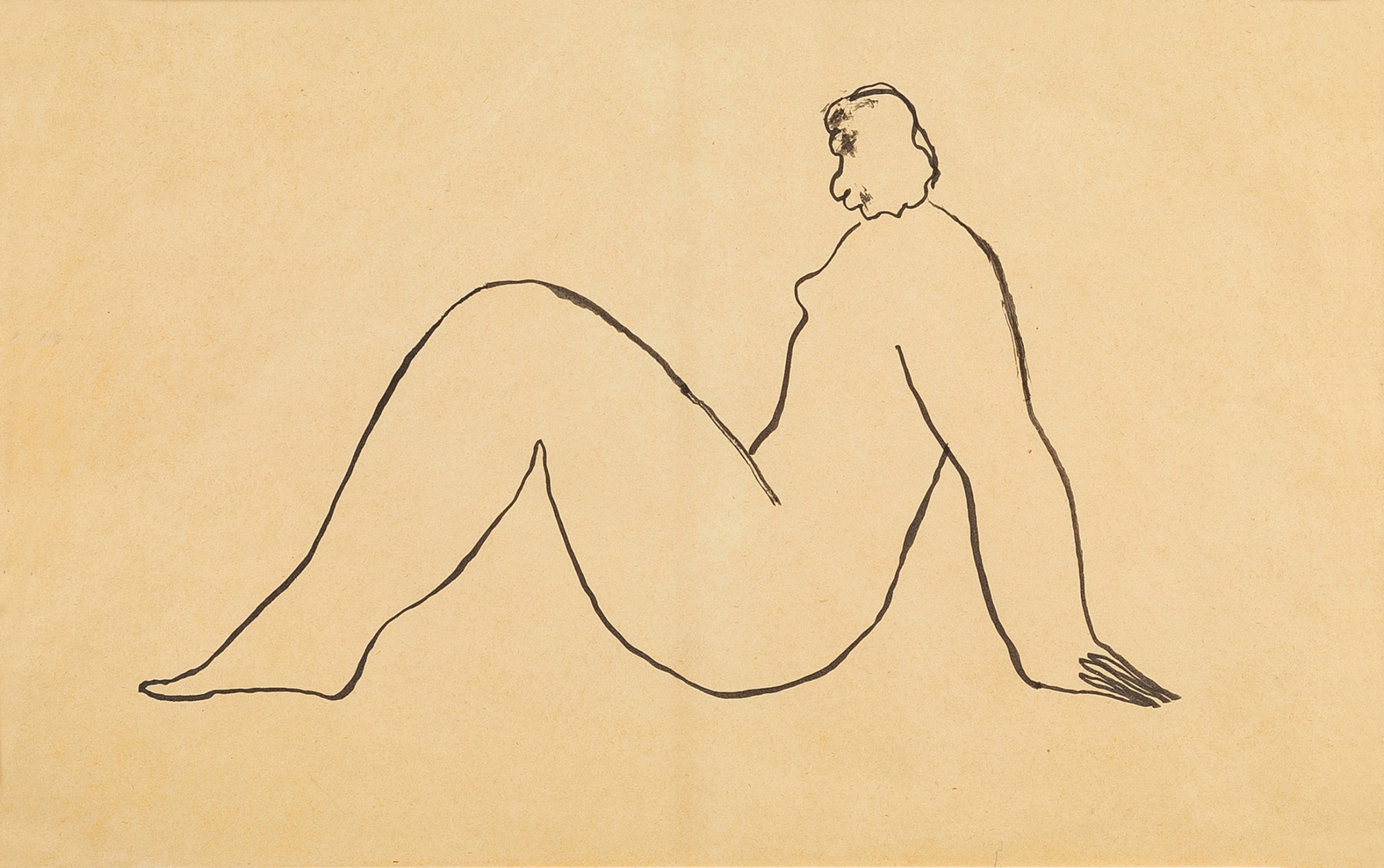
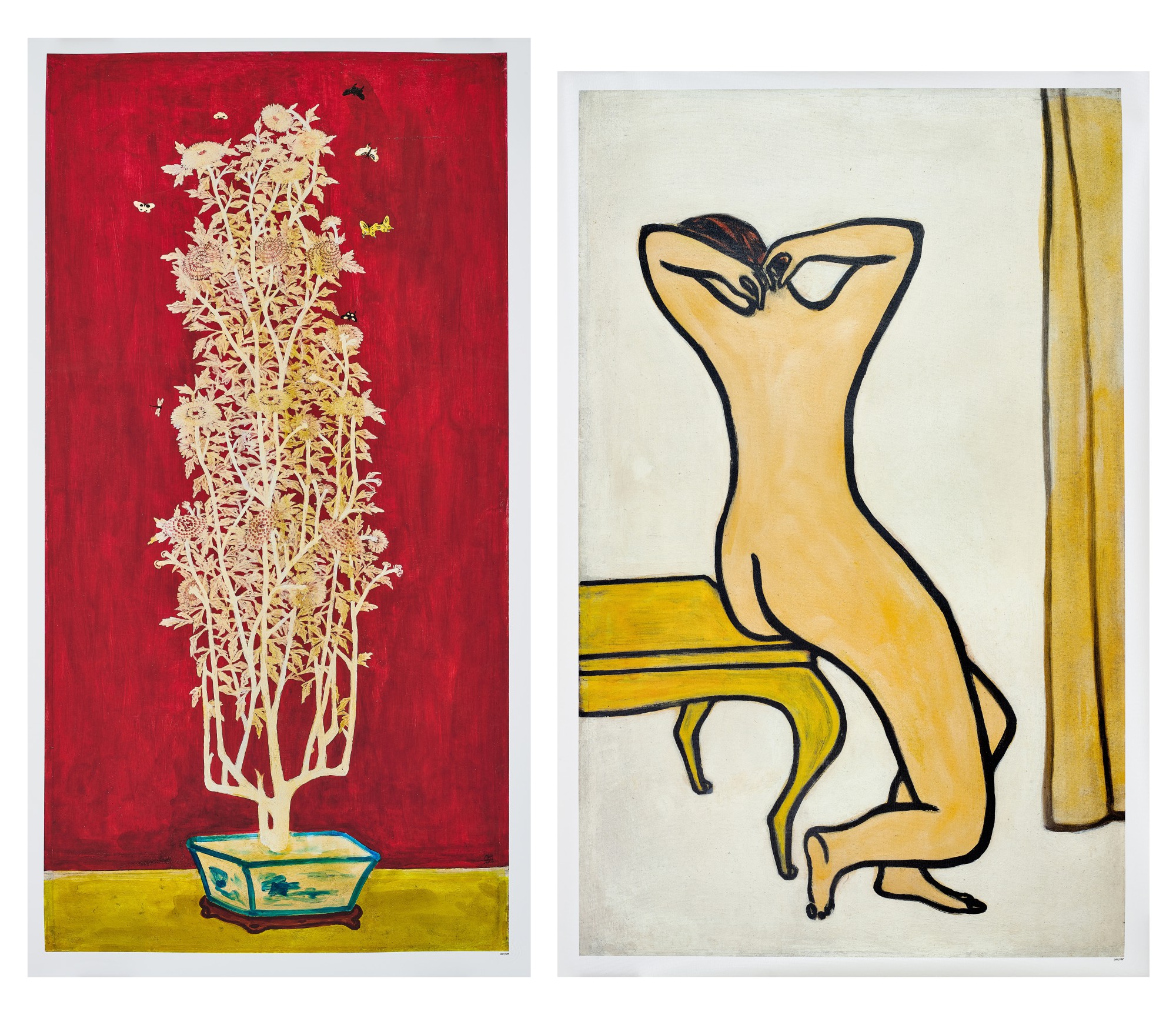
The result was a style entirely his own. What distinguishes Sanyu's mature practice is a quality that resists easy categorization. His nudes, perhaps his most celebrated subject, are rendered in fluid, unbroken contour lines that describe the body with breathtaking economy. The figures seem to float against grounds of deep black or warm neutral tone, weightless and eternal.
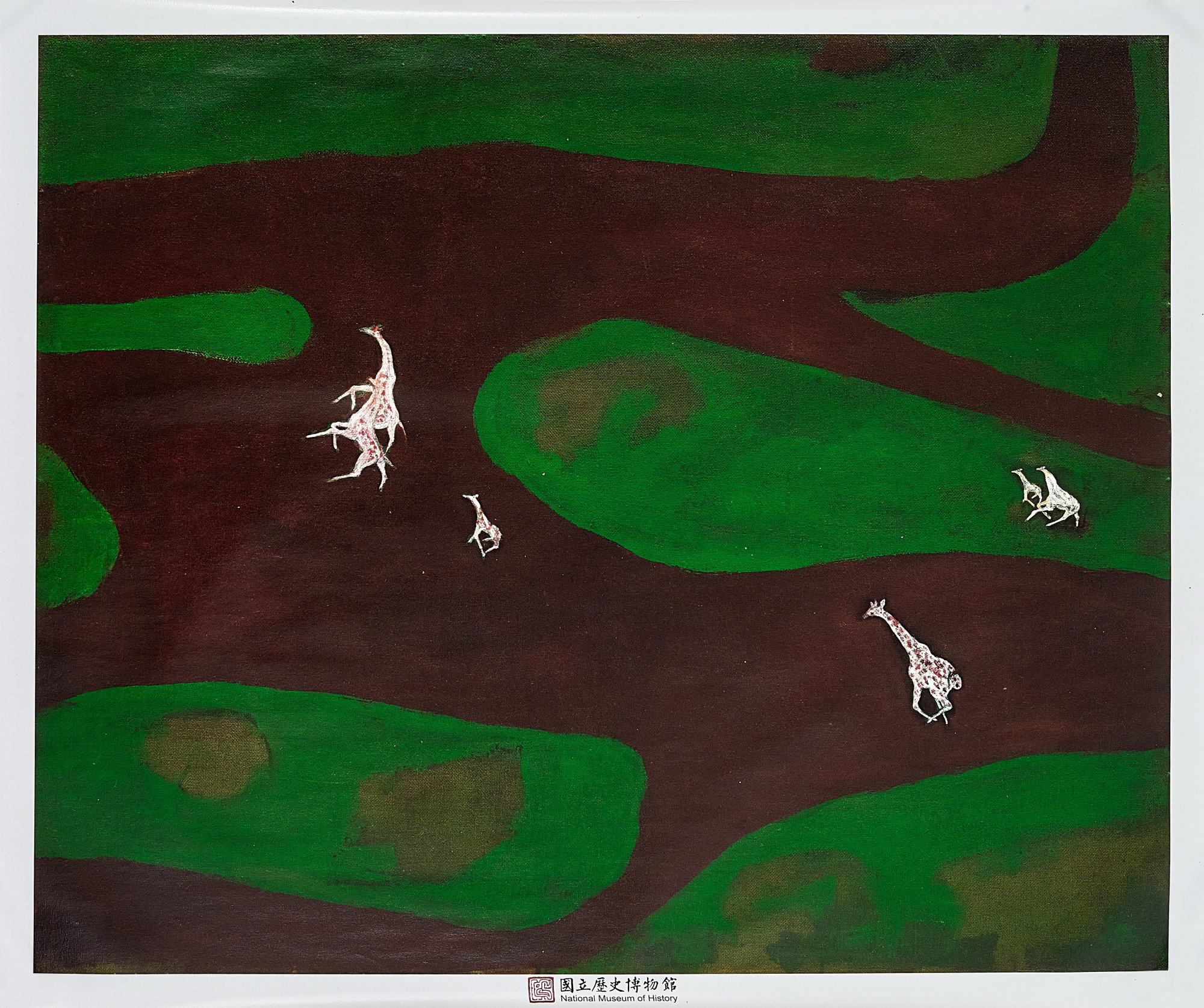
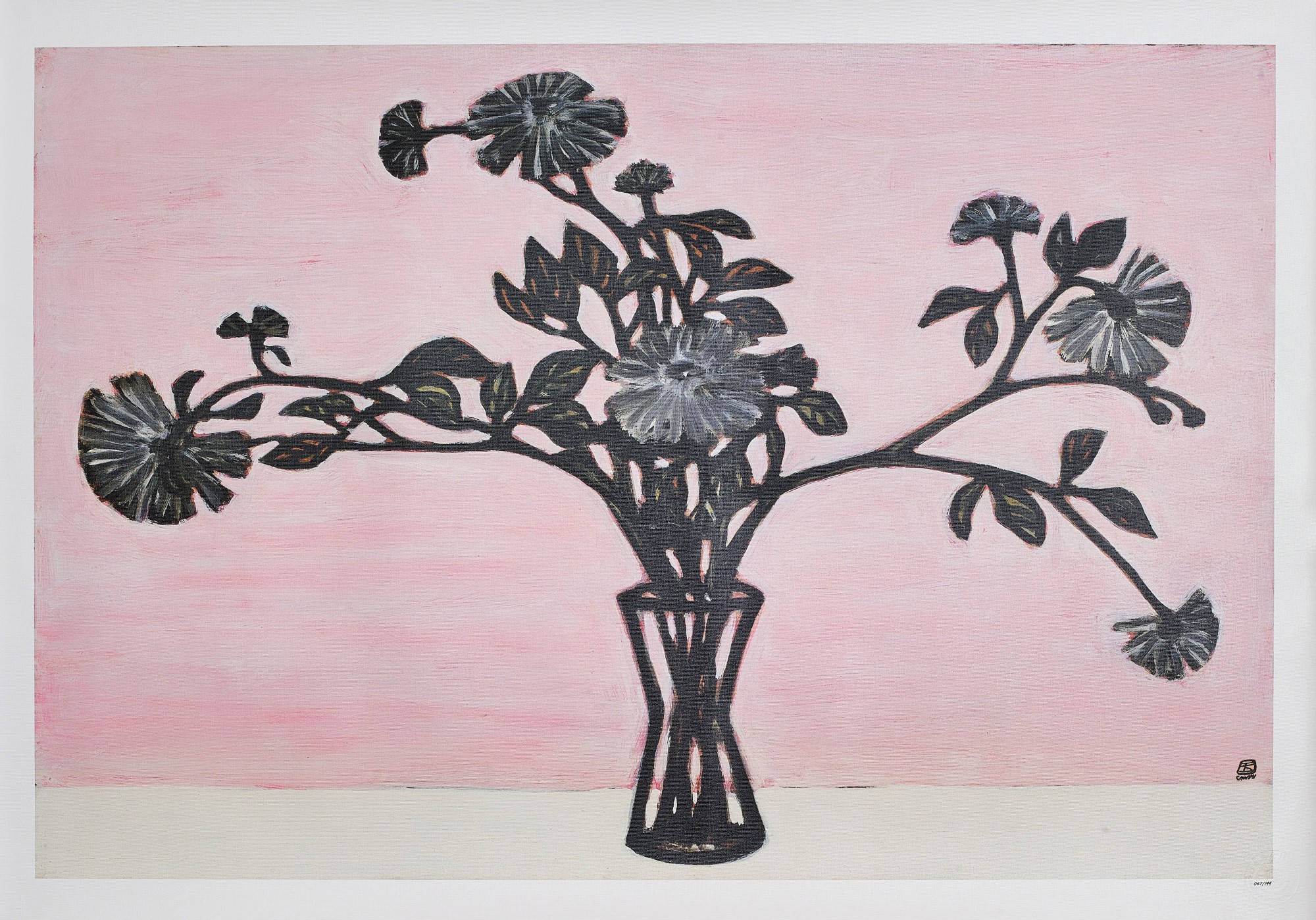
There is no anxiety in these paintings, no academic strain. The line simply knows where to go. His still lifes of flowers carry the same quality, a single stem or a loose arrangement of blooms occupying the canvas with the confidence of a scholar's brushstroke on silk. Works from the 1930s and 1940s in particular, including oils like "Paysage Aux Hirondelles" from 1931, reveal an artist who had fully synthesized his influences into a coherent and mature vision, one that anticipates the minimalist concerns of Western art by decades.
Sanyu
a. Chrysanthemum; b. Woman in Bath a. 菊;b. 浴女, 2017
His early ink and watercolor works on paper, including delicate figure studies from around 1920, show the full range of his draftsmanship and the intimacy that characterizes even his smallest efforts. For collectors, Sanyu presents a fascinating and genuinely rewarding proposition. Works on paper, including ink drawings and watercolor studies, offer points of entry that place the collector in direct contact with his most essential quality: the line itself. These works carry enormous intimacy, the sense of watching a master think through the page.
His oil paintings, where they come to market, command significant attention from collectors across Asia, Europe, and increasingly North America, as the global art world continues to recalibrate its understanding of twentieth century modernism beyond its traditionally Eurocentric frame. Giclée editions of key compositions, including floral works and figure studies, have also made his visual language accessible to a wider audience and serve as a meaningful introduction to his formal concerns. Provenance and period are important considerations: works from the 1930s through the 1950s represent the fullest expression of his synthesis, and works with documented exhibition histories carry additional weight in the market. To understand Sanyu fully, it helps to place him in a broader constellation of artists who moved between cultural worlds.
Sanyu
Flowers in Vase 瓶花, 2017
His closest spiritual companions are figures like Zao Wou Ki, whose abstract canvases similarly translate the energies of Chinese landscape painting into a Western modernist idiom, and Leonard Tsuguharu Foujita, the Japanese artist who became a beloved figure in the School of Paris through his own synthesis of Eastern draftsmanship and Western subject matter. One might also draw lines toward Amedeo Modigliani, whose elongated nudes share Sanyu's commitment to the expressive, unadorned contour, and toward Henri Matisse, whose late paper cutouts and decorative canvases suggest a kindred belief in simplicity as a form of spiritual arrival. Yet Sanyu remains irreducibly himself. No Western modernist quite achieves the specific quality of stillness that his paintings carry, a stillness that is not emptiness but rather a kind of concentrated presence, the same presence one finds in the finest Chinese classical art.
The legacy of Sanyu is still being written, and that is part of what makes collecting his work feel urgent and meaningful right now. Major institutions across Asia, including the National Palace Museum in Taipei, have devoted serious scholarly attention to his practice, and retrospective exhibitions in recent decades have introduced his work to new generations of viewers who encounter him with fresh eyes, unencumbered by the neglect that defined his lifetime. There is a justice in this gathering recognition, a sense that the art world is correcting a long oversight and finding in Sanyu not merely a footnote to European modernism but one of its most quietly radical voices. For those who collect his work, who live with his nudes and his flowers and his calligraphic lines, there is the particular pleasure of knowing that one is in the presence of a genuinely original mind, one whose time, after all these years, has fully and beautifully arrived.
Explore books about Sanyu