Sandro Chia
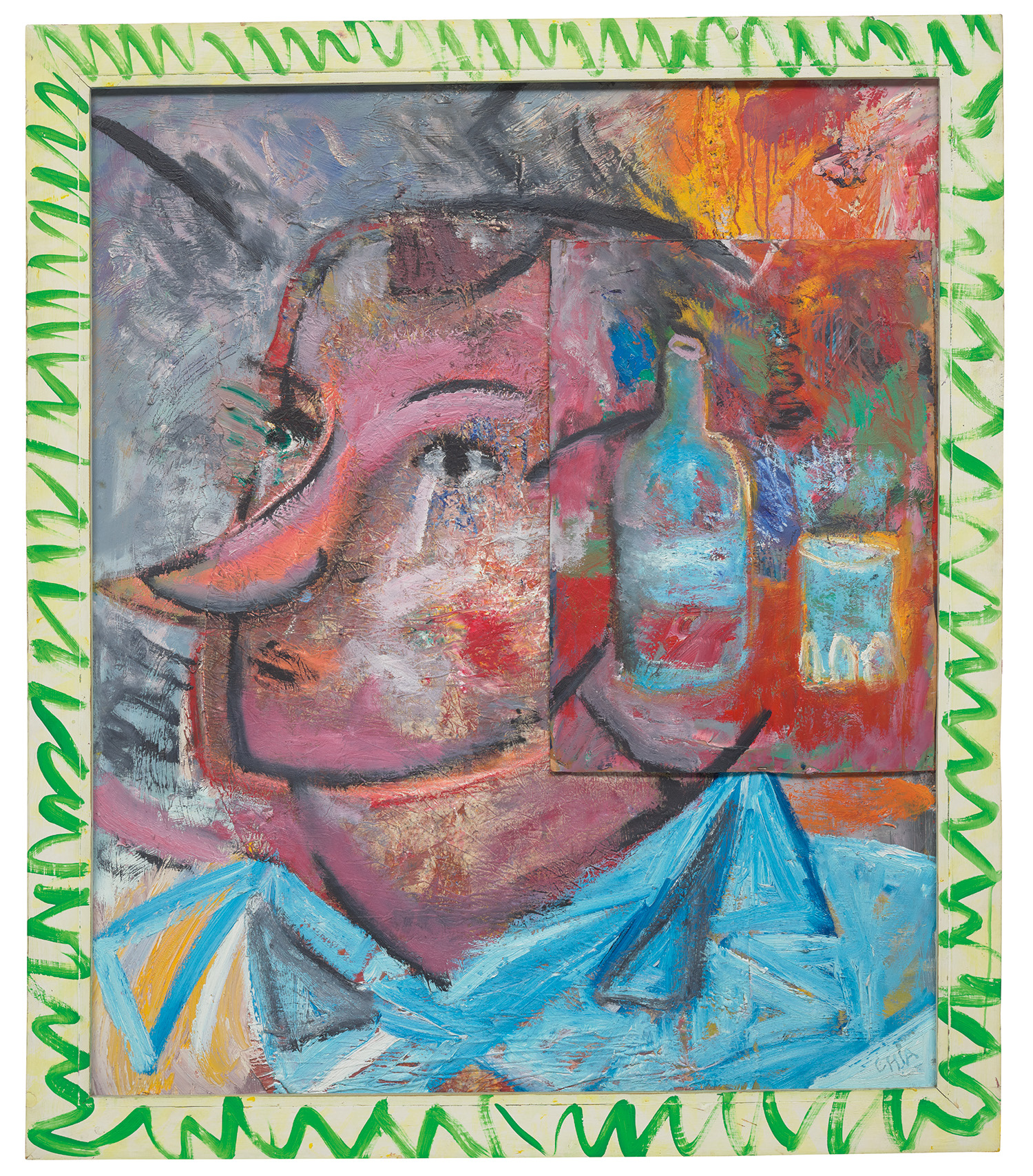
Sandro Chia, Painting Life Larger Than Life
Artist Spotlight · The Collection Editorial
In the grand sweep of postwar Italian art, few figures have burned as brightly or as defiantly as Sandro Chia. Born in Florence in 1946, Chia emerged in the late 1970s as one of the central voices of the Transavanguardia, the Italian movement that reasserted the primacy of painting at a moment when conceptualism and minimalism had all but declared the medium dead. Decades on, with his works held in major museum collections across Europe and North America, and with a body of work that ranges from monumental oil paintings to intimate works on paper and cast bronze sculpture, Chia endures not as a relic of a particular moment but as a living argument for the inexhaustible vitality of figuration. Chia grew up in Florence, a city whose every piazza and palazzo amounts to an education in Western painting.
Sandro Chia
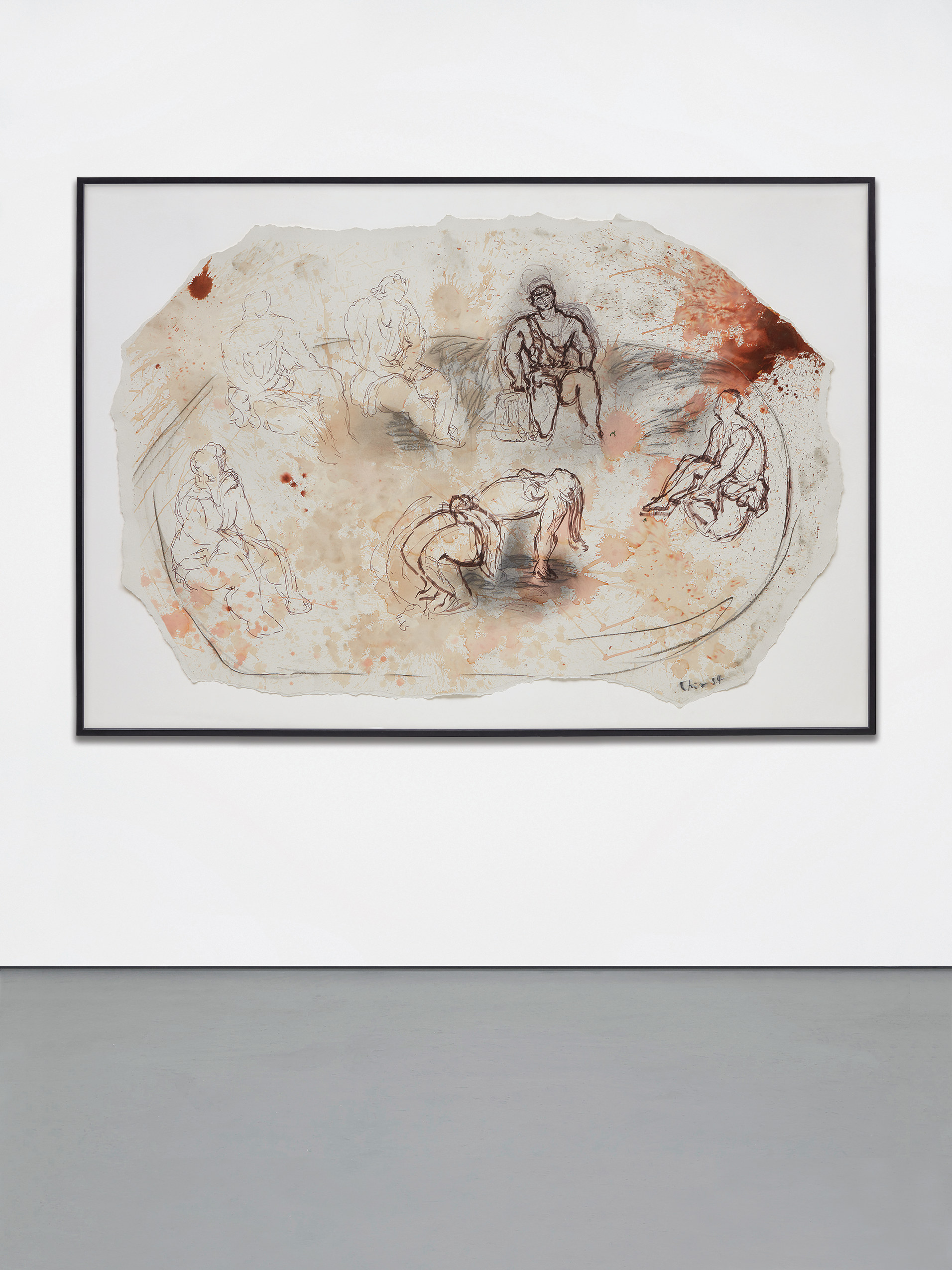
Philosophers and Ballerinas, 1984
He studied at the Istituto d'Arte in Florence before enrolling at the Accademia di Belle Arti, graduating in 1969. He then spent time in India and traveled widely, absorbing sources far outside the canonical Italian tradition. When he arrived in Rome in the early 1970s, he was already a restless, omnivorous thinker, drawn equally to Arte Povera, to Conceptual art, and to the deeper histories of German Expressionism, Italian Futurism, and the great figurative painters of the Renaissance and Baroque. That breadth of appetite would prove essential to everything that followed.
The breakthrough came around 1978 and 1979, when Chia, alongside Francesco Clemente, Enzo Cucchi, Nicola De Maria, and Mimmo Paladino, was identified by the critic Achille Bonito Oliva as a practitioner of the Transavanguardia. Bonito Oliva's argument was that these painters were not retreating from the avant garde so much as moving through it and beyond it, reclaiming myth, allegory, and the human body as legitimate subjects after years of conceptual austerity. For Chia, this was not a programmatic choice but a natural expression of who he was: a painter who loved painting, who found in the loaded, gestural mark something essential that no other medium could replicate. His canvases from this period are enormous in ambition, populated by heroic and sometimes absurd male figures, muscular presences who cavort, brood, and tumble through charged chromatic atmospheres.
Sandro Chia
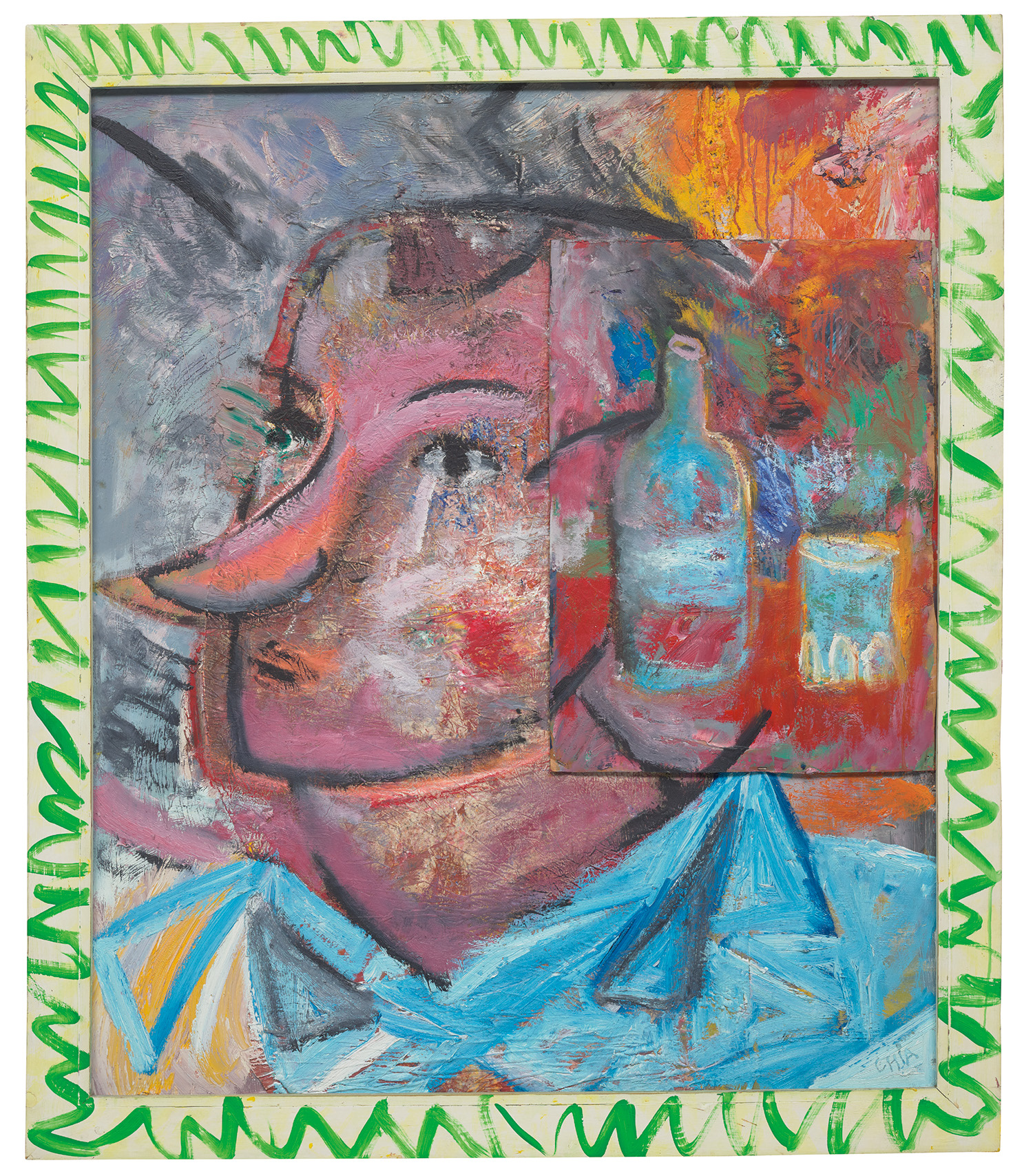
Melancholic Drinker, 1985
Chia relocated to New York in the early 1980s, a move that coincided with a period of intense international attention. His exhibitions at Sperone Westwater in New York brought him before a new audience hungry for exactly what he offered: painting that was unapologetically sensuous, steeped in art history, and yet absolutely of its moment. The work he produced through the mid 1980s is among the most celebrated of his career. Philosophers and Ballerinas, a 1984 watercolor, felt tip pen and charcoal work on paper, captures the playful erudition that defines his practice at its best.
Figures from the life of the mind meet figures from the life of the body, and the collision is rendered in a medium that rewards close, intimate looking. The following year brought Melancholic Drinker, an oil, canvas and cardboard collage with staples on board housed in an artist's frame, a work that demonstrates how Chia transforms melancholy not into despair but into a kind of tender, philosophically charged contemplation. Reflective Man, also from 1985, shows that his instincts translated powerfully into bronze, the cast figure carrying the same mythic weight as his painted counterparts. The late 1980s saw Chia continue to evolve, working across a remarkable range of materials.
Sandro Chia
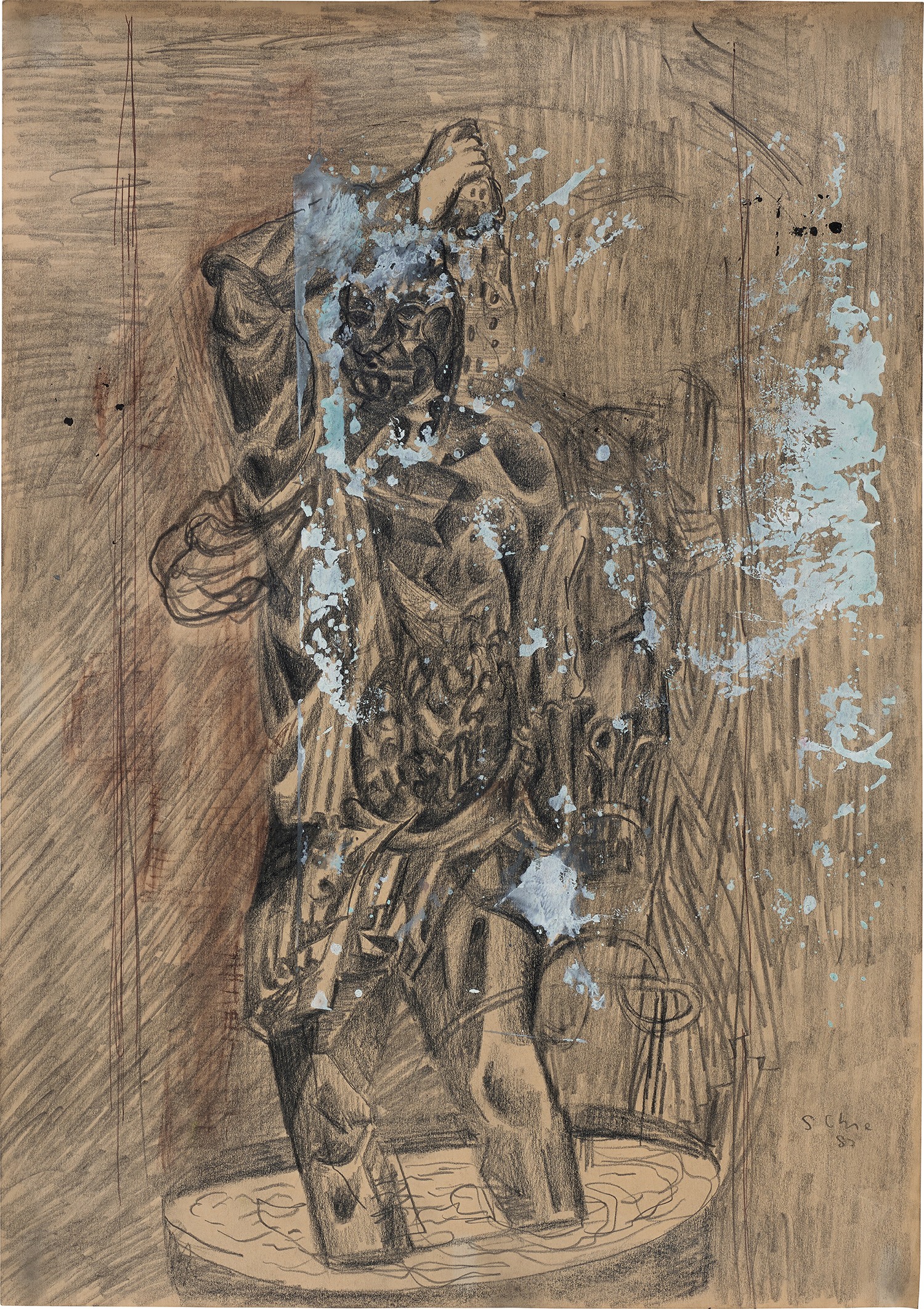
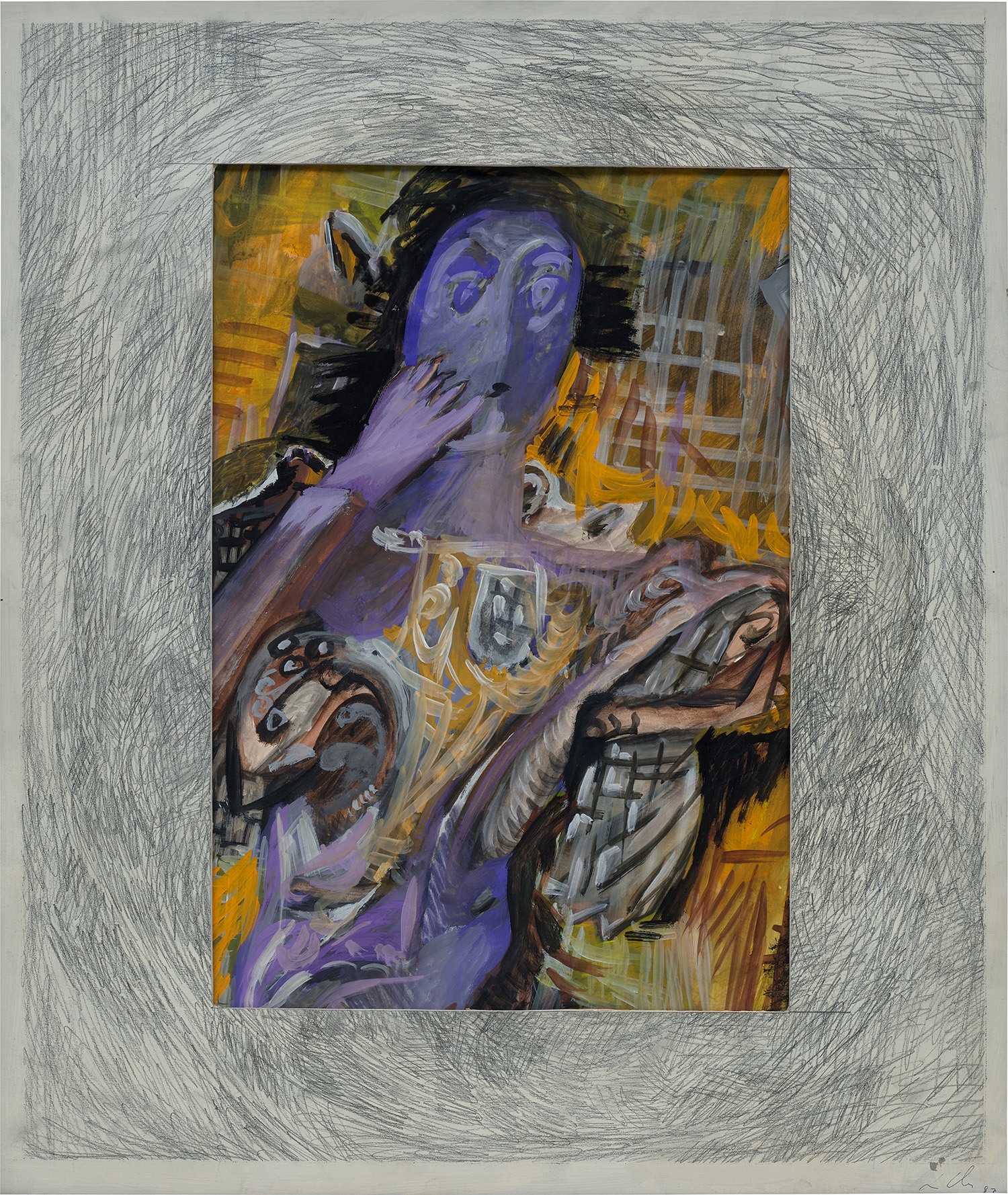
Y me sonrieron, 1987
Y me sonrieron from 1987, rendered in tempera, pencil, charcoal, and acrylic on paper, and 12 Juglio from the same year, suggest an artist interrogating his own pictorial language, testing boundaries between mark making systems and building surfaces of layered intention. His frames, often made by the artist himself, are not decorative afterthoughts but integral components of the work, extending the act of making to the very edge of the object. This attentiveness to the total physical presence of a work speaks to a sensibility shaped as much by craft tradition as by the elevated discourses of contemporary art. In more recent years, works such as Senza Titolo from 2007, a gouache, charcoal and pastel on paper in an artist's frame, and Volti from the same year, tempera on plaster laid on Hexalite, confirm that Chia's formal curiosity has never dimmed.
Volti in particular points to his interest in surfaces that carry the memory of other surfaces, plaster evoking the fresco traditions of his Florentine formation while the Hexalite substrate asserts an entirely contemporary material sensibility. His large scale religious subjects, including San Carlo Borromeo and Sant'Ambrogio, both oil on paper laid on linen, reveal a painter unafraid of iconographic ambition, willing to engage with centuries of devotional imagery and bring it forward into the present tense. For collectors, Chia represents a particularly compelling proposition. His works appear regularly at the major international auction houses, and prices for strong examples on paper as well as significant oils have attracted serious attention from European, American, and Asian buyers.
Sandro Chia
12 Juglio
The works on paper are an especially rewarding entry point: they display the full range of his draftsmanship and chromatic intelligence, often at a scale that rewards living with rather than simply looking at. His artist's frames, present on multiple works, reward collectors who value the total integrity of an object as the artist conceived it. Those drawn to the broader world of Neo Expressionism, and to artists such as Georg Baselitz, A.R.
Penck, Julian Schnabel, and Jean Michel Basquiat, will find in Chia a figure of comparable stature whose relationship to European figurative tradition gives his work an additional layer of depth and historical resonance. Sandro Chia matters today for reasons that go beyond art historical category. At a moment when painting is again the subject of intense critical and market enthusiasm, and when younger artists are openly revisiting the mythologies and chromatic freedoms of the 1980s, Chia stands as a primary source rather than a secondary influence. His insistence on the body, on narrative, on the pleasure of paint itself, anticipated arguments that feel freshly urgent now.
To collect Chia is to participate in a tradition that runs from the Florentine workshops of the Renaissance through the cafes of early twentieth century Rome and into the studios of contemporary painters working on every continent. That is a long and distinguished lineage, and it is one this artist has done genuine honor.
Explore books about Sandro Chia
Sandro Chia
Pierre Restany
Sandro Chia: Paintings and Drawings
Germano Celant
Sandro Chia: Recent Works
Various Contributors
Transavanguardia
Achille Bonito Oliva
Sandro Chia: Works on Paper
Diane Waldman