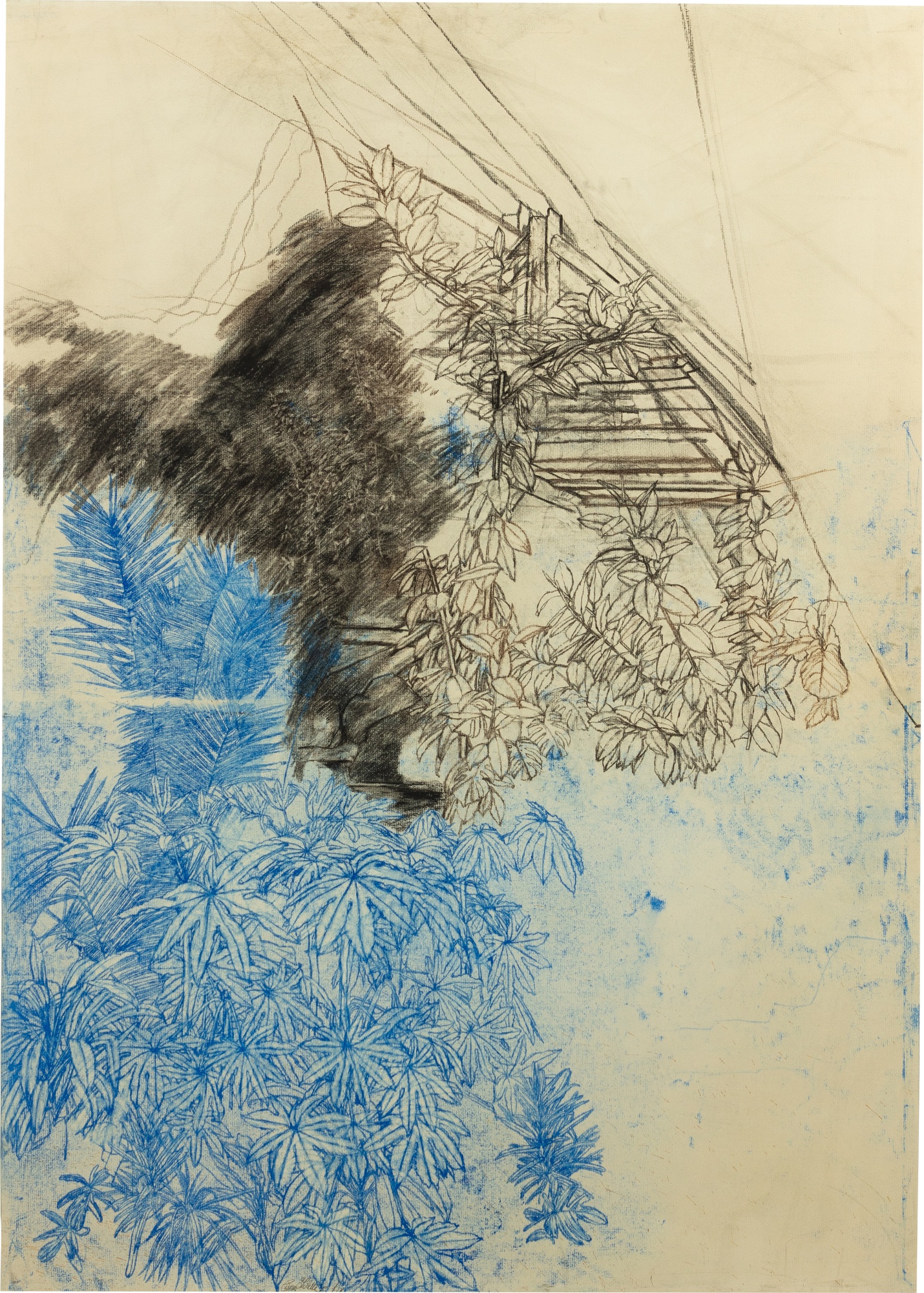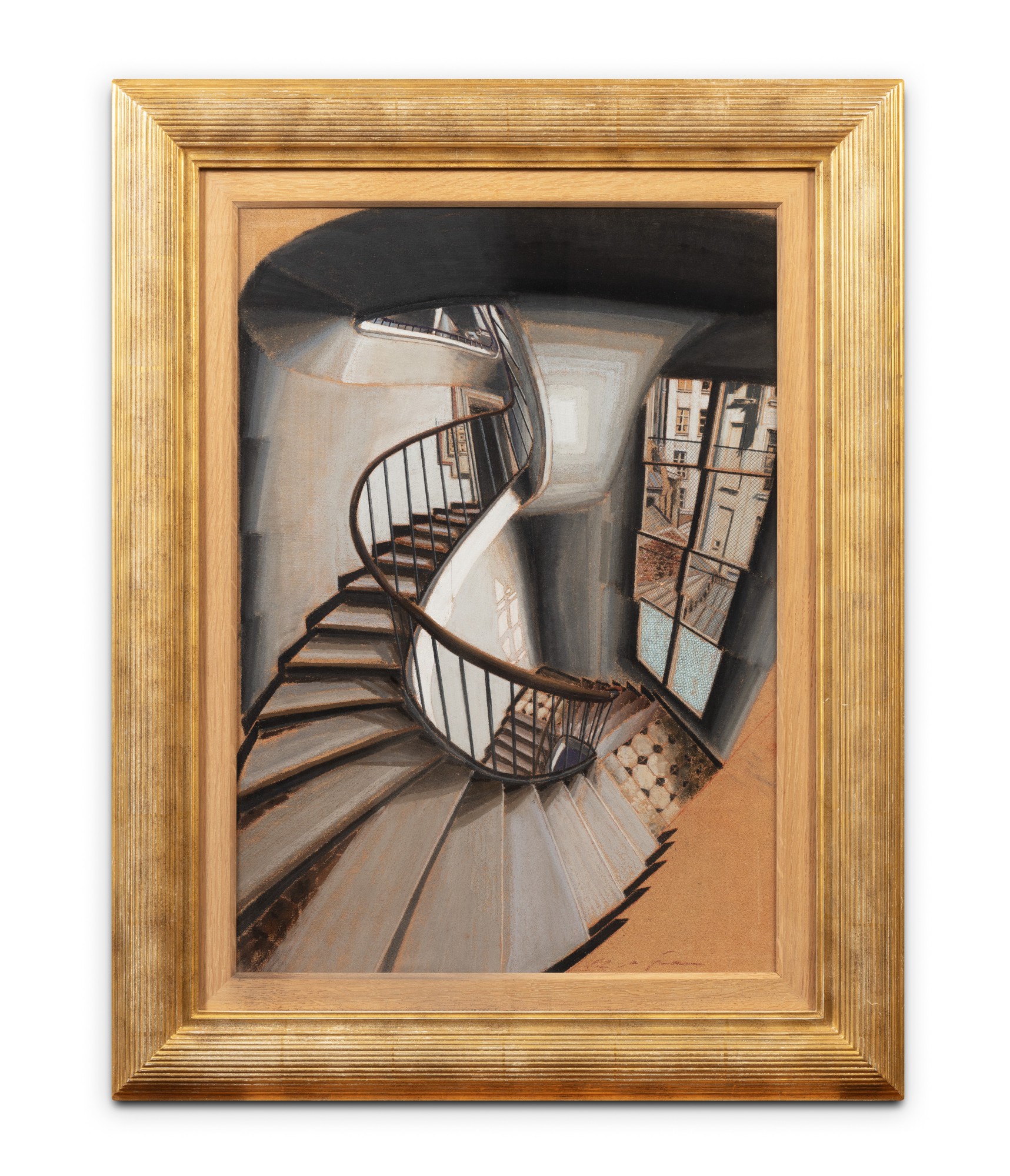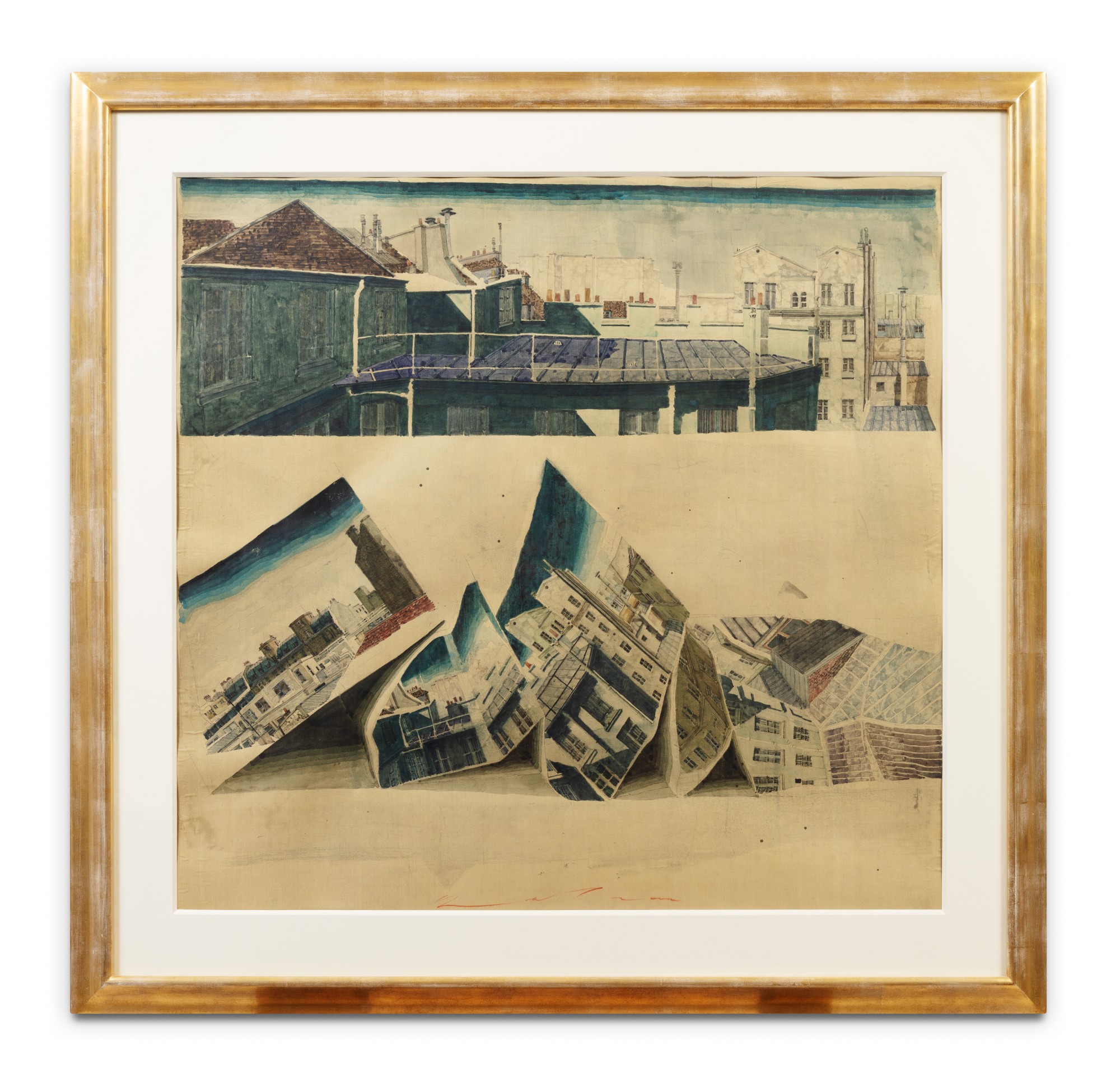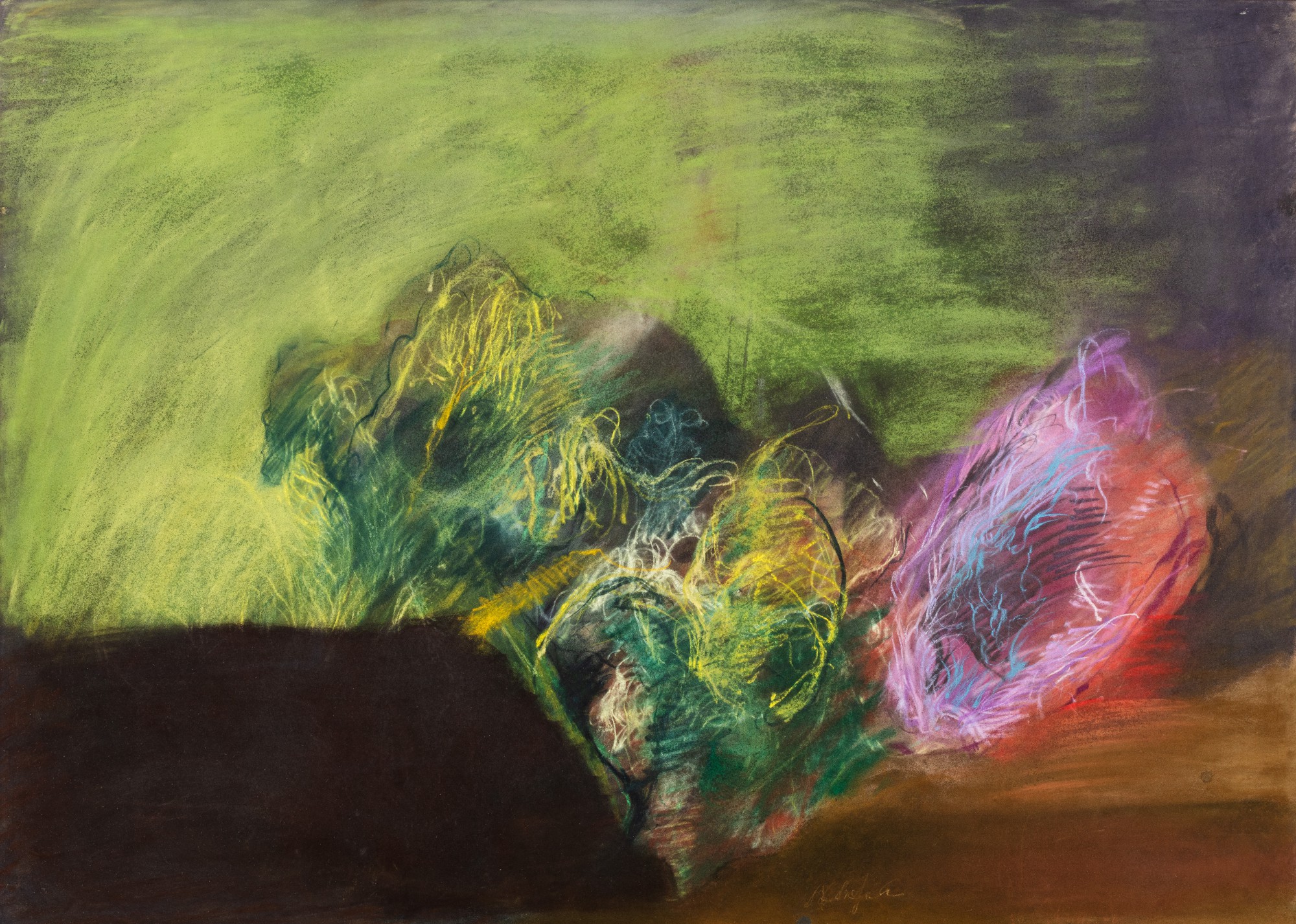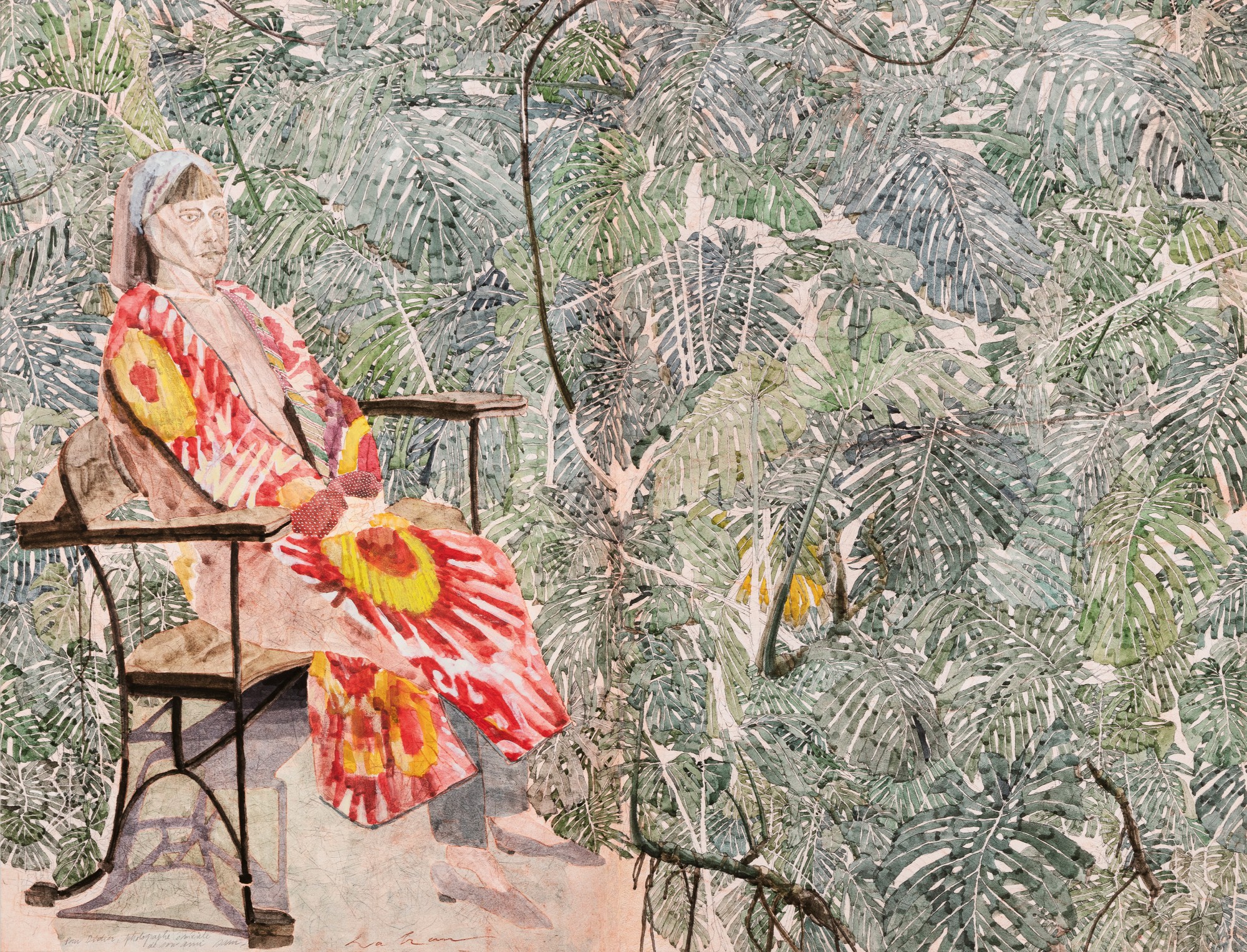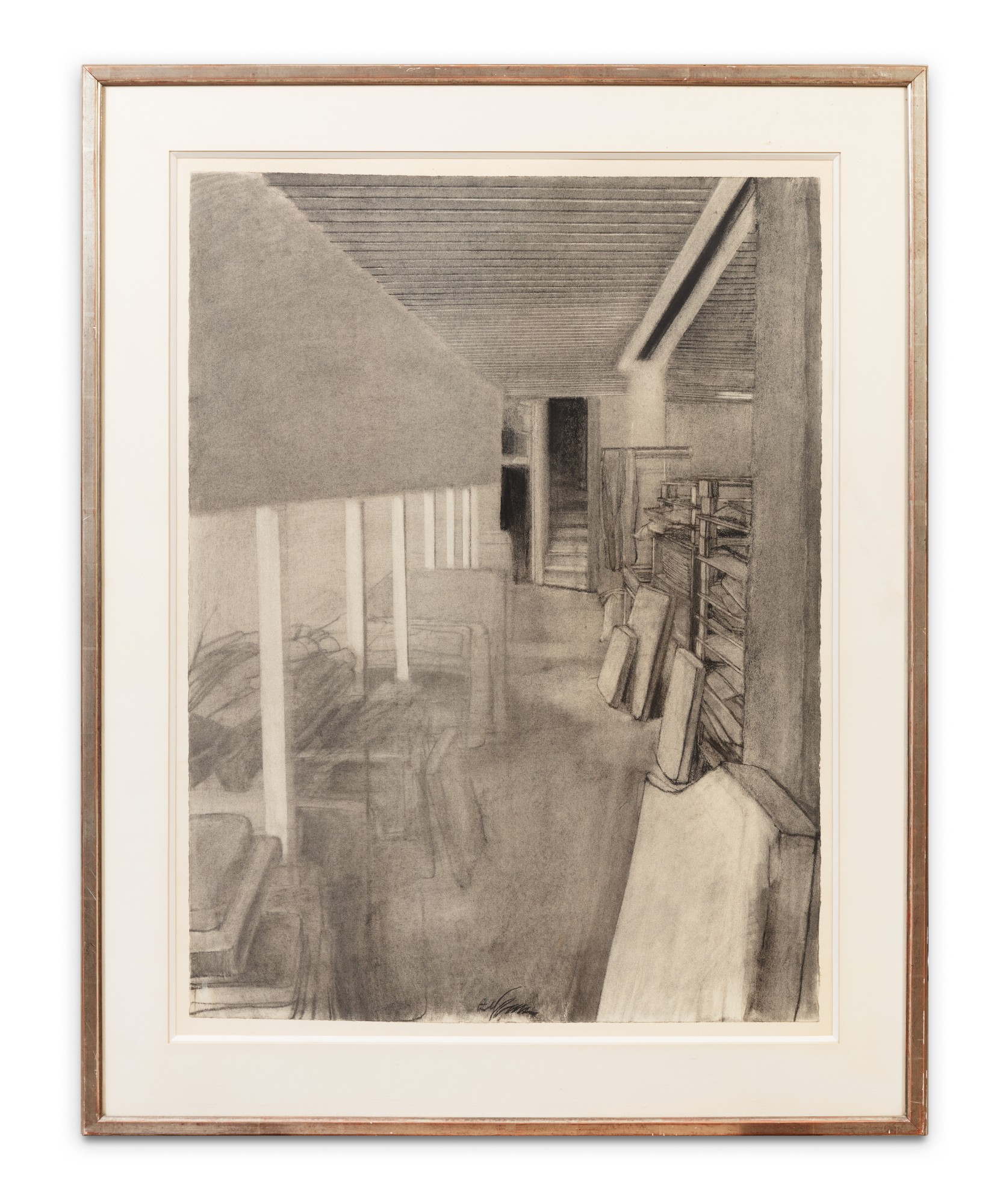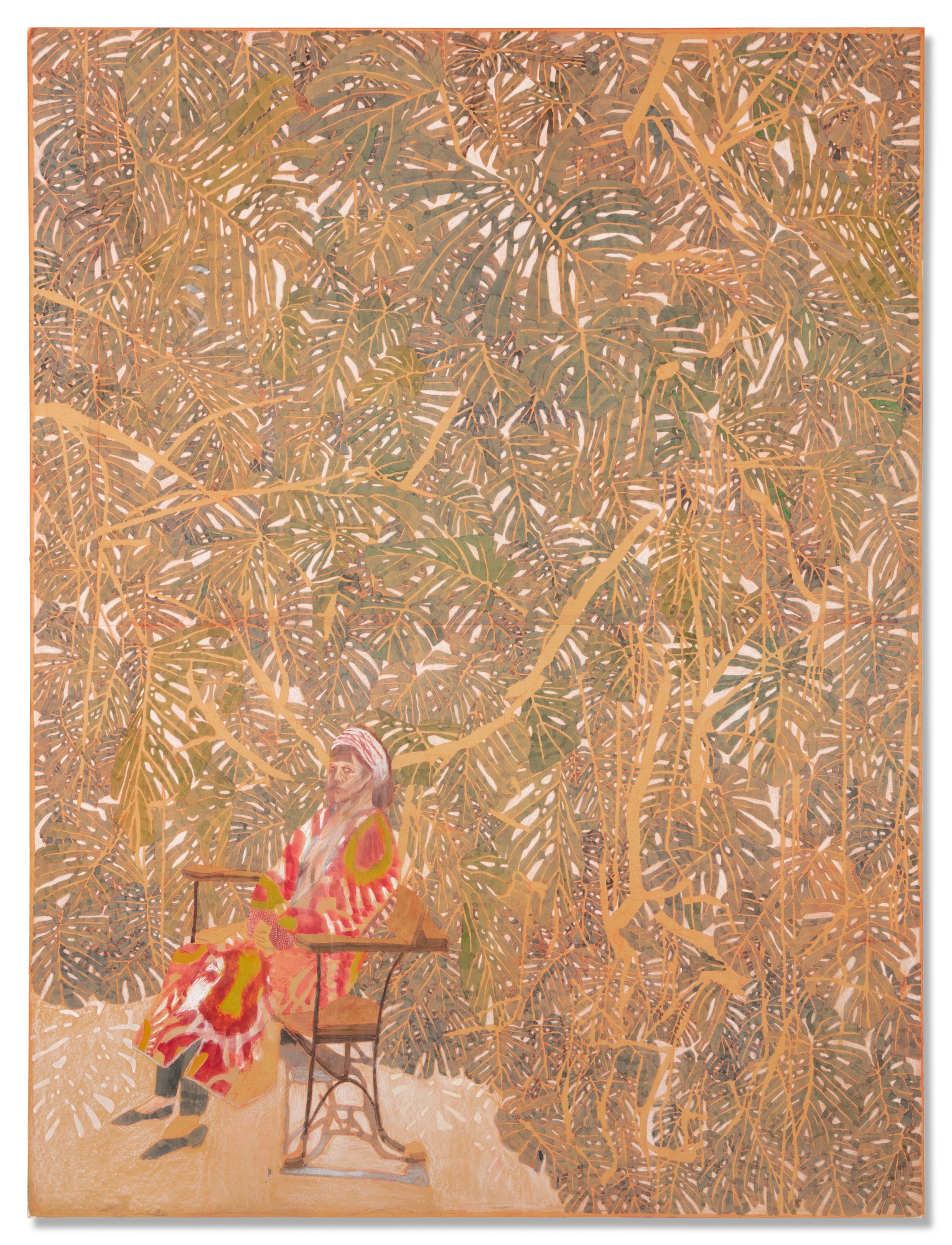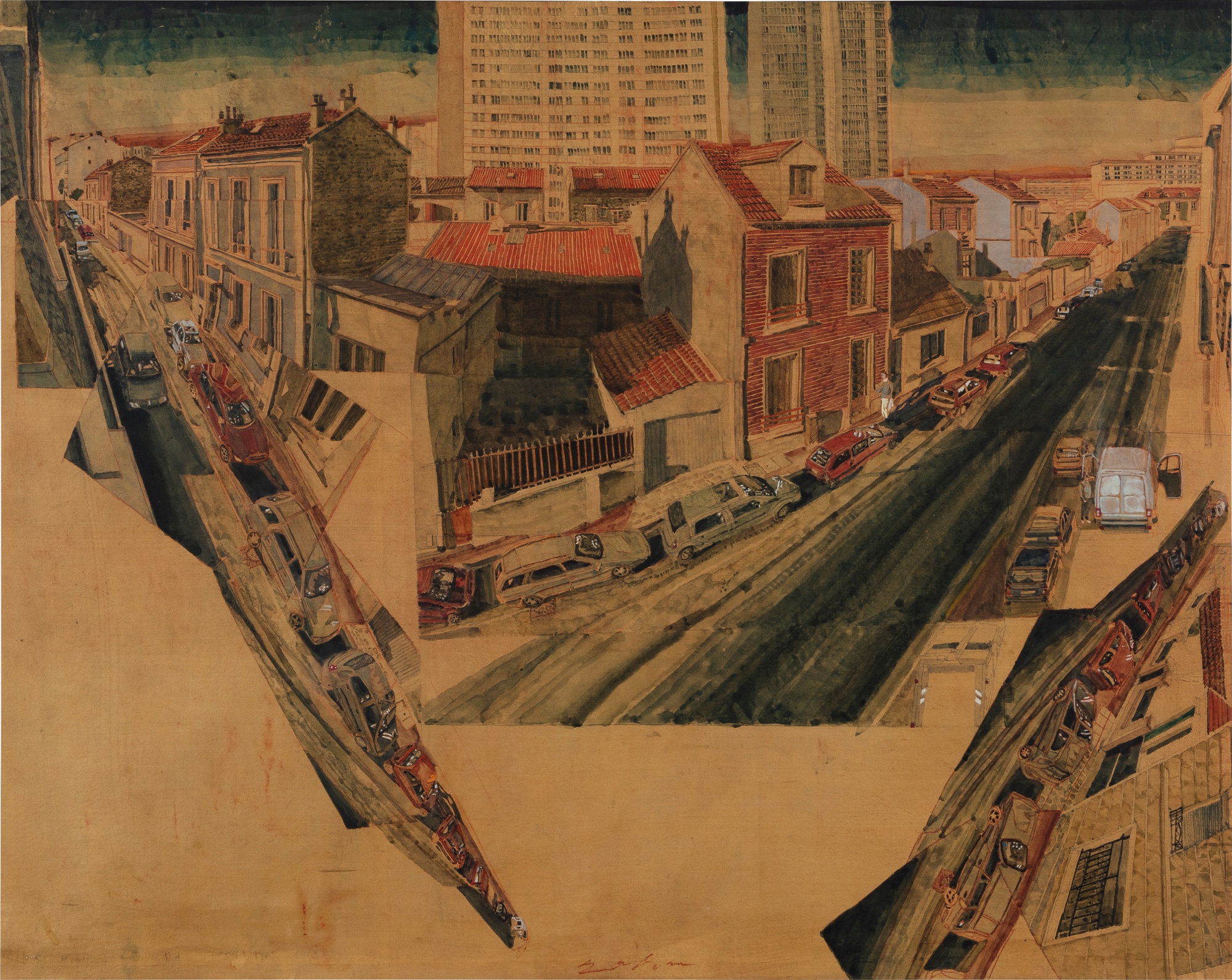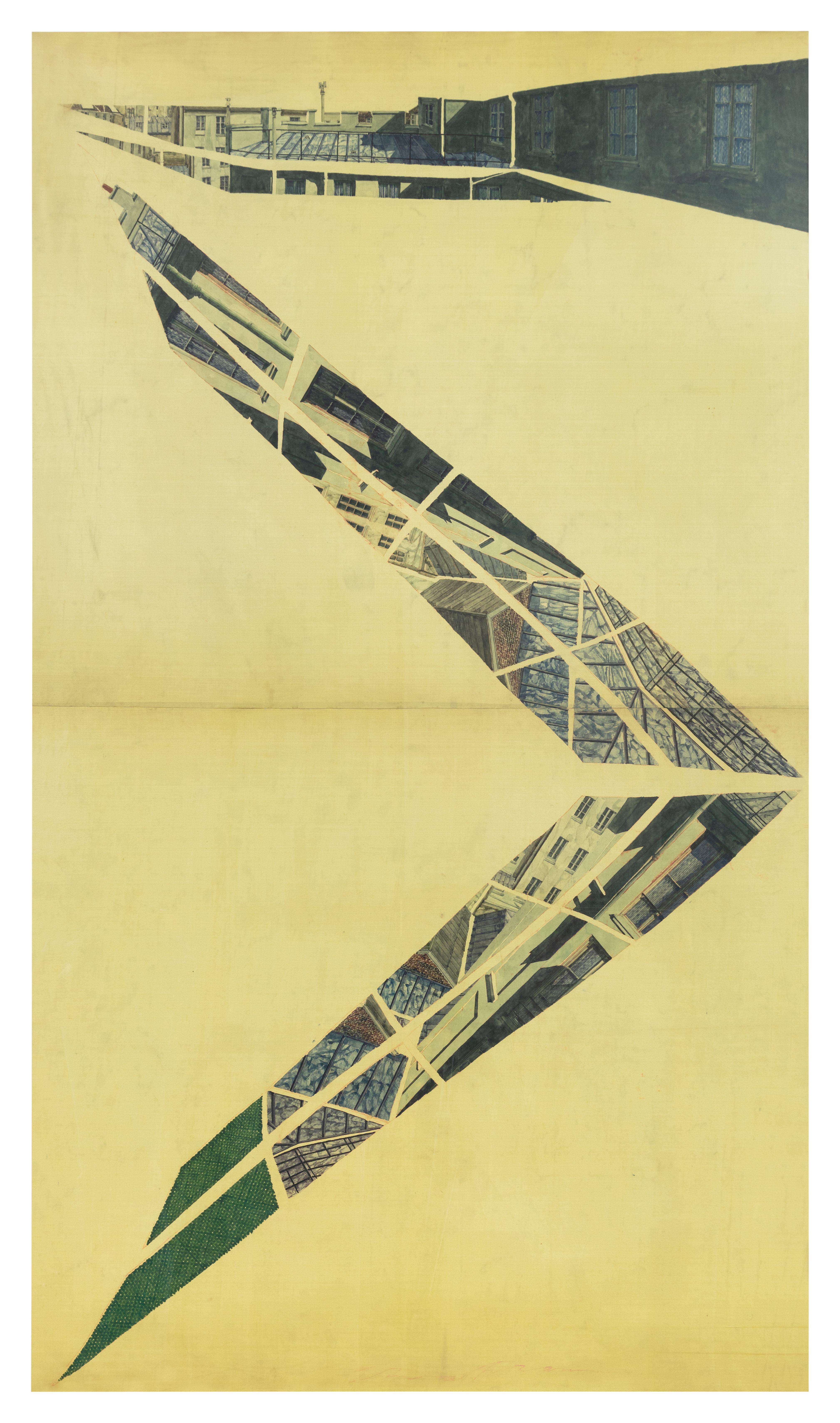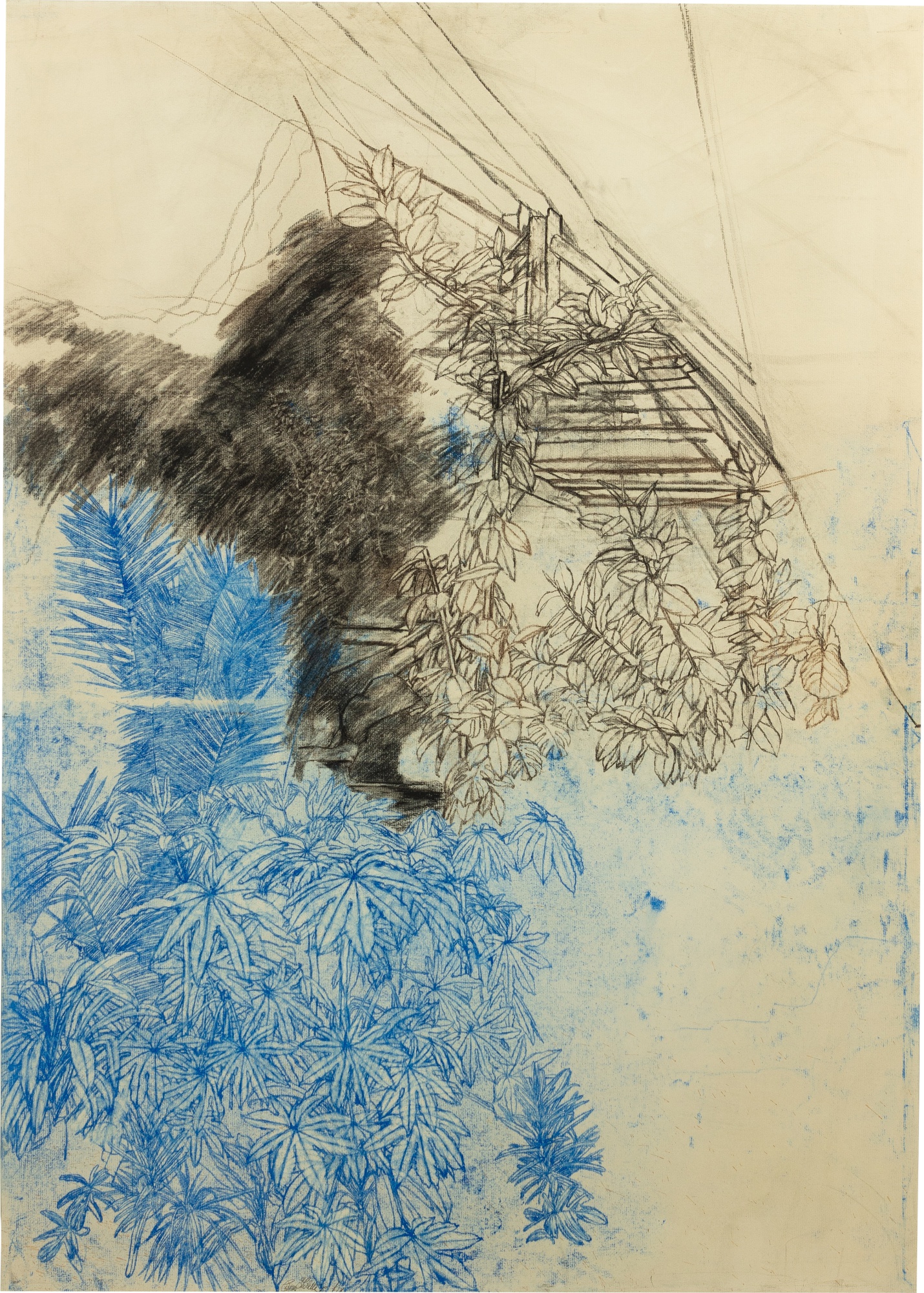
In 2023, the Fondation Pathé in Paris mounted a landmark retrospective of Sam Szafran's work, drawing fresh waves of visitors through its grand circular atrium to encounter the artist's extraordinary world up close. The exhibition reminded a new generation of what devoted collectors and museum professionals had long understood: that Szafran occupied a singular position in postwar French art, building a universe of vertiginous staircases, trembling foliage, and luminous studio interiors entirely on his own terms. His pastels and watercolors do not ask to be glanced at. They ask to be entered, and once you step inside, the way back feels surprisingly far. Sam Szafran was born in Paris in 1934 into a Jewish family of Polish origin, and his early years were marked by the particular precariousness of wartime Europe. He survived the Nazi occupation by hiding, separated from family, and the experience of concealment and displacement left a permanent watermark on his interior life. He was largely self taught, a fact that becomes astonishing when you stand before his work, because the technical command on display in every millimeter of a major pastel suggests decades of formal academy training. Instead, what shaped him were the streets and cafés of Paris, the company of extraordinary minds, and an almost ferocious commitment to looking. The friendships Szafran formed in the 1950s and 1960s proved foundational. His closeness to Alberto Giacometti exposed him to an artist who also believed that seeing was a lifelong, possibly endless, project, and that the struggle between the eye and its object was itself the subject of art. His friendship with Samuel Beckett brought a literary and philosophical seriousness to his sensibility, a sense that obsessive repetition was not a limitation but a method, perhaps even a form of grace. These were not casual acquaintances but genuine intellectual companions, and their influence can be felt in the patient, almost monastic intensity with which Szafran returned again and again to the same subjects over decades. The great themes of Szafran's practice arrived one by one and then stayed for life. In the early 1960s he began his celebrated series of cabbages, the "choux" that would become among his most recognizable images. Works such as "Untitled (Les Choux)" from 1964, rendered in pastel on cardboard, present the vegetable not as a still life object but as a dense, spiraling cosmos, the leaves folding inward and outward simultaneously in a way that anticipates his later obsessions with infinite recession. Around the same period he began drawing and painting staircases, those vertiginous helical structures that seem to descend forever into a luminous void or climb without promise of arrival. "Sans Titre (Escaliers)" from 1995, executed in the refined medium of watercolor on silk, shows how completely he mastered the emotional charge of this motif over three decades of engagement with it. His studio interiors form another cornerstone of his legacy. Works such as "L'Atelier de la rue Crussol" from 1969 and "L'Atelier Bellini" in charcoal document the artist's own working spaces with a loving and slightly delirious attention, crowding the picture plane with objects, views, and reflected light until the boundary between the room and the world outside becomes deliberately unstable. His foliage works carry a related enchantment. "Végétation à la Besnadière" from 1968, in pastel and charcoal on paper, presents plant life as something close to architecture, a cathedral of leaves in which scale and depth are magnificently disorienting. "Feuillage No. 1" from 1982 demonstrates how a single pencil, in his hands, could render the shimmer of vegetation with something close to photographic complexity, though the result feels entirely unlike a photograph and entirely like a lived experience. For collectors, Szafran presents a particularly rewarding proposition. His work exists at the intersection of extraordinary technical achievement and deep emotional resonance, and it rewards sustained ownership in a way that more immediately dramatic work sometimes does not. Living with a Szafran means noticing new details for years: a passage of light you had not previously registered, a spatial relationship that suddenly makes itself clear on an afternoon when the sun hits the frame at a different angle. His pastels, which require exceptional handling and care, represent the pinnacle of his output and are the most sought after by serious collectors. His charcoal drawings offer a more accessible entry point without any sacrifice of seriousness, and works like "Gisant" from 1970 demonstrate that he was equally commanding in that medium. Auction appearances of significant Szafrans consistently generate serious competition, and institutional interest continues to affirm that the market reflects genuine art historical standing rather than speculative enthusiasm. In situating Szafran within art history, one is tempted by several neighboring figures without quite capturing him in any of them. He shares with Balthus a devotion to technical mastery and a certain deliberate distance from the movements of his time. He shares with Vija Celmins a love of obsessive surface and a patience that approaches the meditative. He has something of the spatial drama of Piranesi in his staircase works, though his mood is lyrical rather than oppressive. But the truest answer is that Szafran built his own territory, and the artists who came after him who work with interior space, with botanical complexity, or with the emotional life of domestic environments owe him a debt they may not always know to name. Szafran died in 2019, leaving behind a body of work that feels, if anything, more vital now than it did in his lifetime. The appetite for deeply crafted, emotionally intelligent art has only grown in the years since his death, and the institutions that championed him, including the Musée de l'Orangerie and the Fondation Pathé, have ensured that the scholarly framework surrounding his practice continues to deepen. He was an artist who never chased fashion and was never caught by it either, and that independence now reads not as marginality but as integrity of the rarest kind. To collect Szafran is to align yourself with a vision of art as a patient, life long conversation between the eye and the world, and that conversation, in his hands, was one of the most rewarding of the twentieth century.