Salvatore Scarpitta
Salvatore Scarpitta: Speed, Bandages, Pure Freedom
Artist Spotlight · The Collection Editorial
There is a moment in the galleries of the Rome Galleria La Tartaruga, sometime in the late 1950s, when a wrapped and bandaged canvas by Salvatore Scarpitta stopped visitors cold. Not because it was a painting in any conventional sense, but because it seemed to breathe. Bound in gauze, layered in resin and cloth, the surface was wounded and healed at once, a kind of second skin stretched over a frame. That image, of an artwork simultaneously restrained and bursting with latent energy, remains one of the most haunting and original propositions in postwar art.
Salvatore Scarpitta
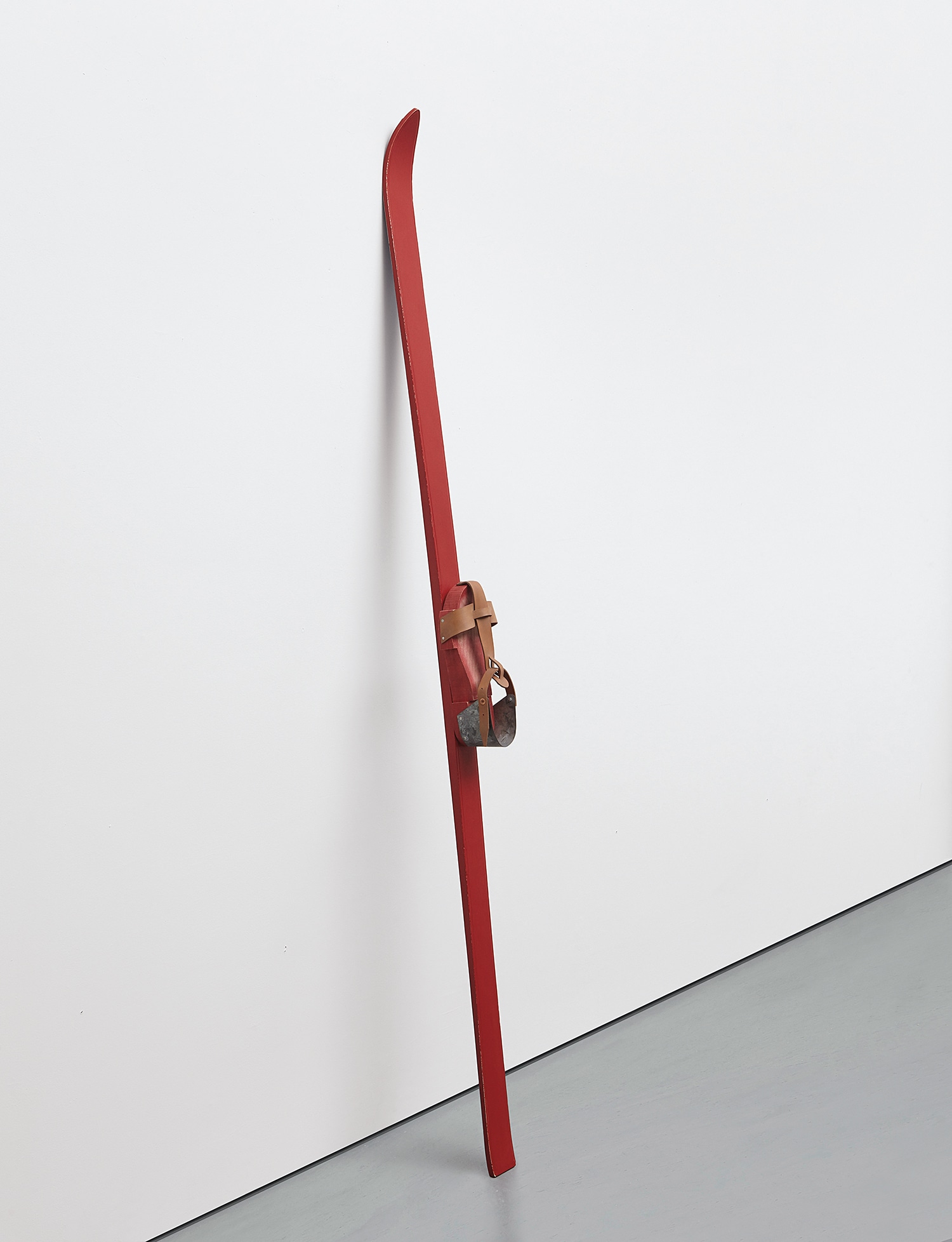
Red Friar (Sci Ribelle)
Decades on, as institutions and collectors across Europe and North America rediscover the full arc of his career, Scarpitta stands revealed as one of the most singular voices of his generation. Salvatore Scarpitta was born in 1919, and his origins were as layered as his surfaces. The son of an American father and an Italian mother, he spent his formative years in Los Angeles before relocating to Italy, where he would live for much of his early adult life. He studied at the Real Academia de Bellas Artes de San Fernando in Rome and became deeply embedded in the Roman art world during and after the Second World War.
That wartime experience, the sight of bodies wrapped in bandages, of things damaged and carefully preserved, of speed and violence and the fragile persistence of the human form, would leave marks on his imagination that never fully faded. By the 1950s, Scarpitta had made himself a figure of genuine importance within the European avant garde. His relationship with Leo Castelli, the legendary New York dealer, would prove transformative. Castelli brought him into the orbit of the American art scene at a pivotal moment, and Scarpitta exhibited at the Castelli Gallery beginning in 1959, finding himself in remarkable company.
Salvatore Scarpitta
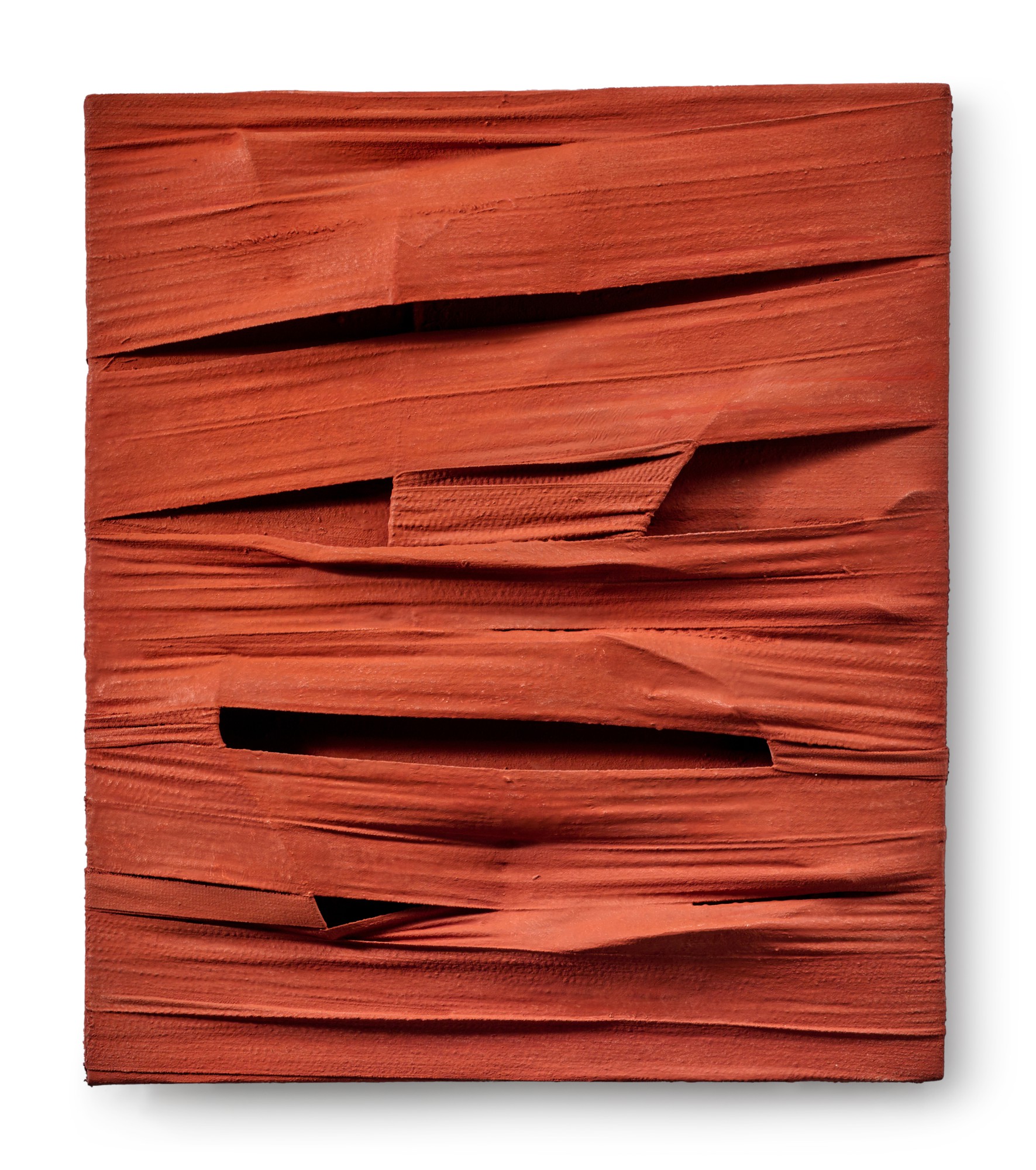
《跑手即將衝線》
He bridged two worlds with unusual fluency, absorbing the gestural energies of Art Informel in Europe while remaining alert to the conceptual restlessness that was reshaping American art. He was neither purely one nor the other, and that in between quality gave his work its peculiar charge. The bandaged canvases of the late 1950s and early 1960s are the works that first secured his reputation, and they reward sustained attention. Works such as Franz's Ferrari from 1961 and Red Freight from that same year are not paintings in the traditional sense and not sculpture either.
They occupy a charged middle ground, built up from layers of bandage, resin, canvas, and mixed media, their surfaces taut with compressed feeling. The title references in some of these works point to the world of motor racing, which would soon become an obsession. Tête de Nègre from 1959 shows the full range of his formal sophistication, using canvas and mixed media on panel to achieve a surface of extraordinary tactile complexity. These are works that insist on being read as objects rather than images, as things that have histories and have endured.
Salvatore Scarpitta
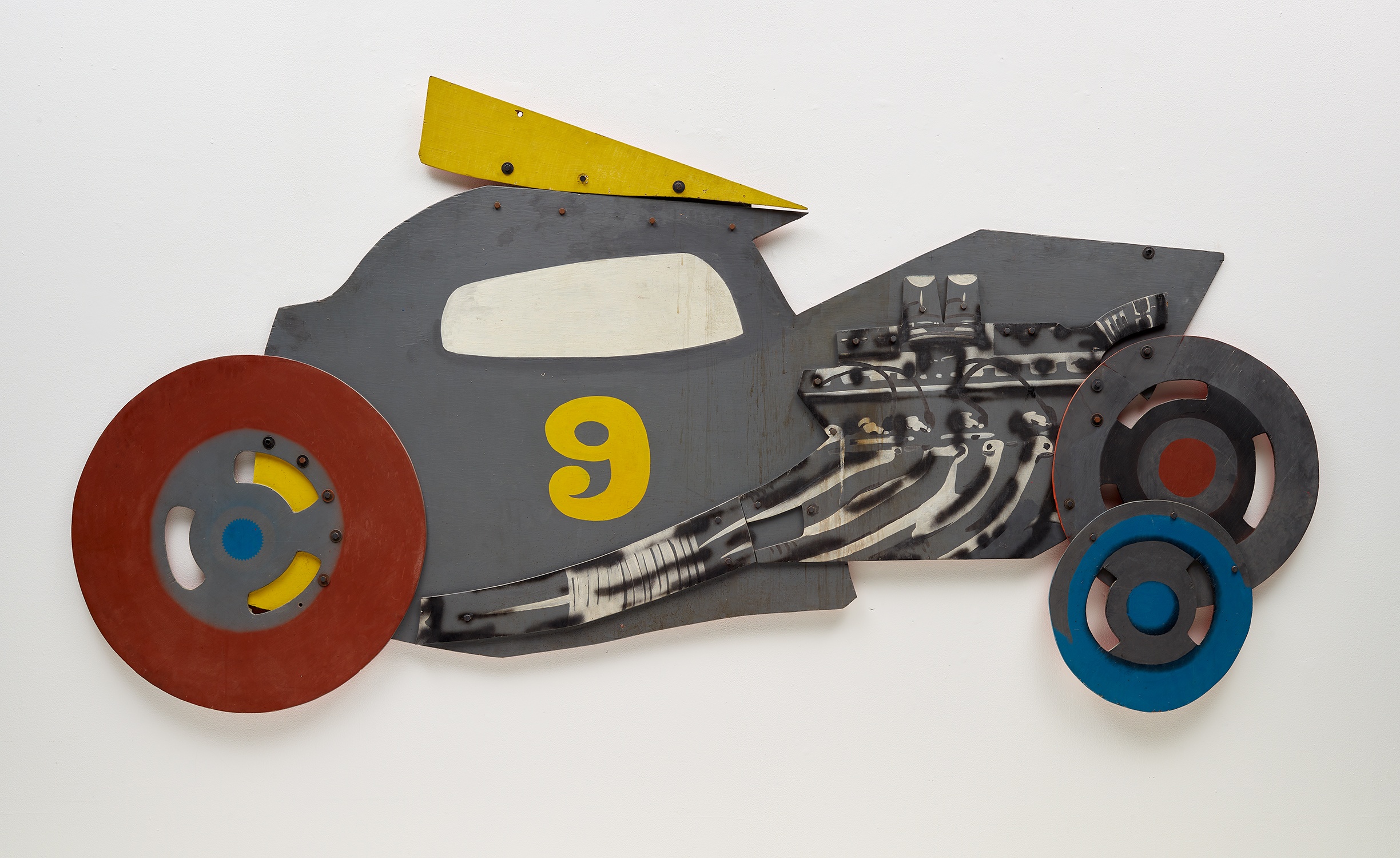
Racing Car 9, 1967
The racing cars represent a bold and at the time genuinely shocking expansion of his practice. Beginning in the early 1960s, Scarpitta began constructing life sized racing vehicles, actual objects that could be and sometimes were raced. Franz's Ferrari sits at the origin of this impulse, and by 1967 works like Racing Car 9, built from acrylic and spray enamel on found wood with metal screws, made the proposition fully explicit. These were not representations of speed but its embodiments, objects saturated in the culture of American dirt track racing that Scarpitta had come to love deeply.
He participated in racing himself, and his cars were entered into actual competitions. This was not performance art in any ironic sense. It was a genuine love affair with the physicality and danger of speed, translated into objects that functioned simultaneously as sculpture and as working machines. The sleds that occupied him from the late 1980s onward brought a different emotional register.
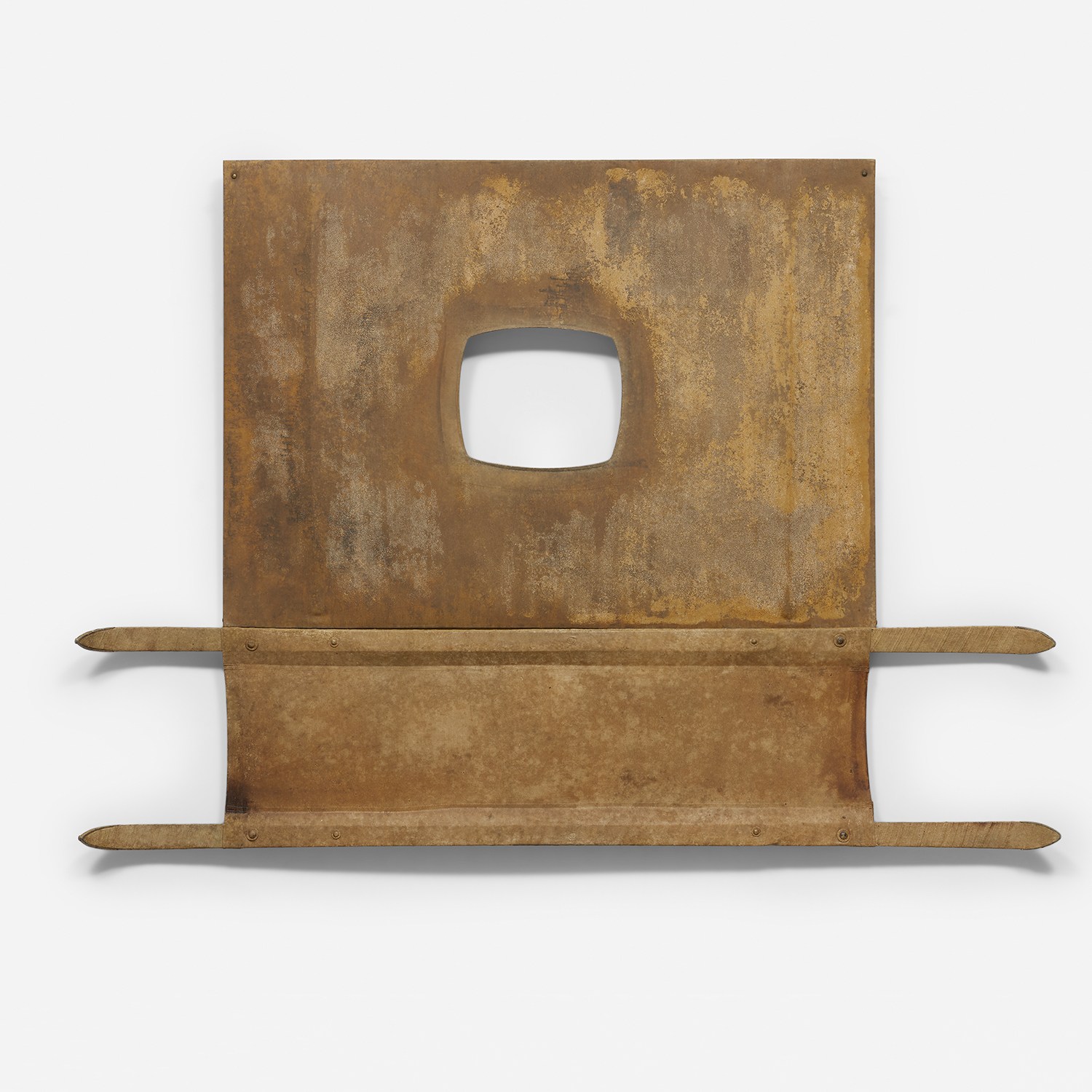
Salvatore Scarpitta
Cow Catcher Sled and Canvas, 1989
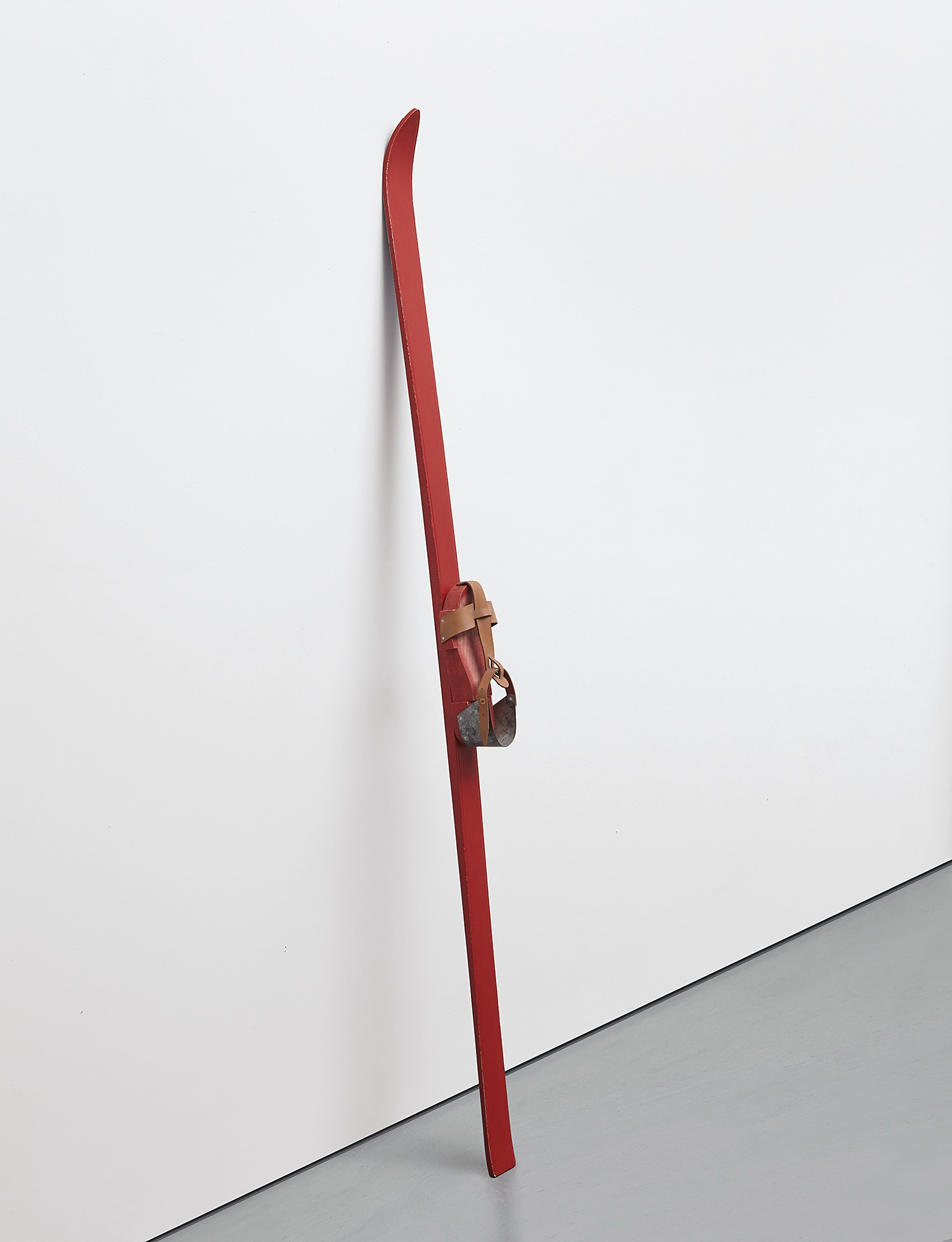
Works like Cow Catcher Sled and Canvas from 1989 and Racing Rubber Sled from the same year carry a quality of memory and endurance. Built from cloth, wood, rubber, bandages, and mixed media, they evoke the long winters of childhood, the weight of the body against frozen ground, and something older still, the necessity of movement through hostile landscapes. The ski work Red Friar (Sci Ribelle), made from painted fiberglass, wood, leather, and galvanized metal, extends this vocabulary into a realm that feels almost ceremonial. These objects are never merely decorative.
They insist on function and on the history of use. For collectors, Scarpitta presents an opportunity that is both intellectually serious and genuinely rare. His work appears at auction with meaningful frequency at major houses, and examples from the bandaged canvas period of the late 1950s and early 1960s command particular respect. The combination of material inventiveness, art historical significance, and genuine rarity makes these works compelling across multiple collecting strategies.
Those drawn to the Arte Informale tradition will recognize his dialogue with artists such as Alberto Burri and Lucio Fontana, while collectors with an eye on American postwar practice will see the connections to Rauschenberg and the broader world of assemblage and combine painting. Scarpitta fits no single category neatly, which is precisely what makes him so rewarding to live with. His place in art history is still being fully calibrated, which is part of what makes this moment so interesting for collectors and curators alike. He belongs to a generation of artists who moved fluidly across national identities and aesthetic movements, resisting easy classification.
His friendship and professional relationship with Castelli placed him at the center of one of the most consequential gallery programs of the twentieth century. His European formation gave him a depth of material thinking that distinguished him from many of his American contemporaries. And his genuine passion for racing and physical culture grounded his work in a lived experience that never allowed it to become merely cerebral. Salvatore Scarpitta died in 2007, leaving behind a body of work that grows more significant with each passing decade.
Museums and private collections that hold his pieces tend to place them prominently, and there is a gathering sense in the market and in scholarly circles that his full contribution has not yet received the recognition it deserves. That is, in the best sense, an invitation. To collect Scarpitta now is to participate in a reappraisal that feels both overdue and genuinely exciting, to bring home an object made by a man who understood speed and stillness, damage and healing, the American highway and the Roman piazza, and who made from all of that something entirely and unmistakably his own.
Explore books about Salvatore Scarpitta