Russell Young
Artist Spotlight · The Collection Editorial
```json { "headline": "Russell Young Turns Fame Into Radiant Art", "body": "There is a moment, standing before one of Russell Young's large scale silkscreen paintings, when the shimmer catches you off guard. The diamond dust catches the gallery light, Marilyn Monroe's face fractures into something almost sacred, and you understand immediately why collectors from Los Angeles to London have been drawn to this work for decades. Young has built a practice that is at once deeply American in its obsessions and unmistakably British in its knowing, slightly cool remove from those obsessions. That productive tension sits at the heart of everything he makes.
Russell Young
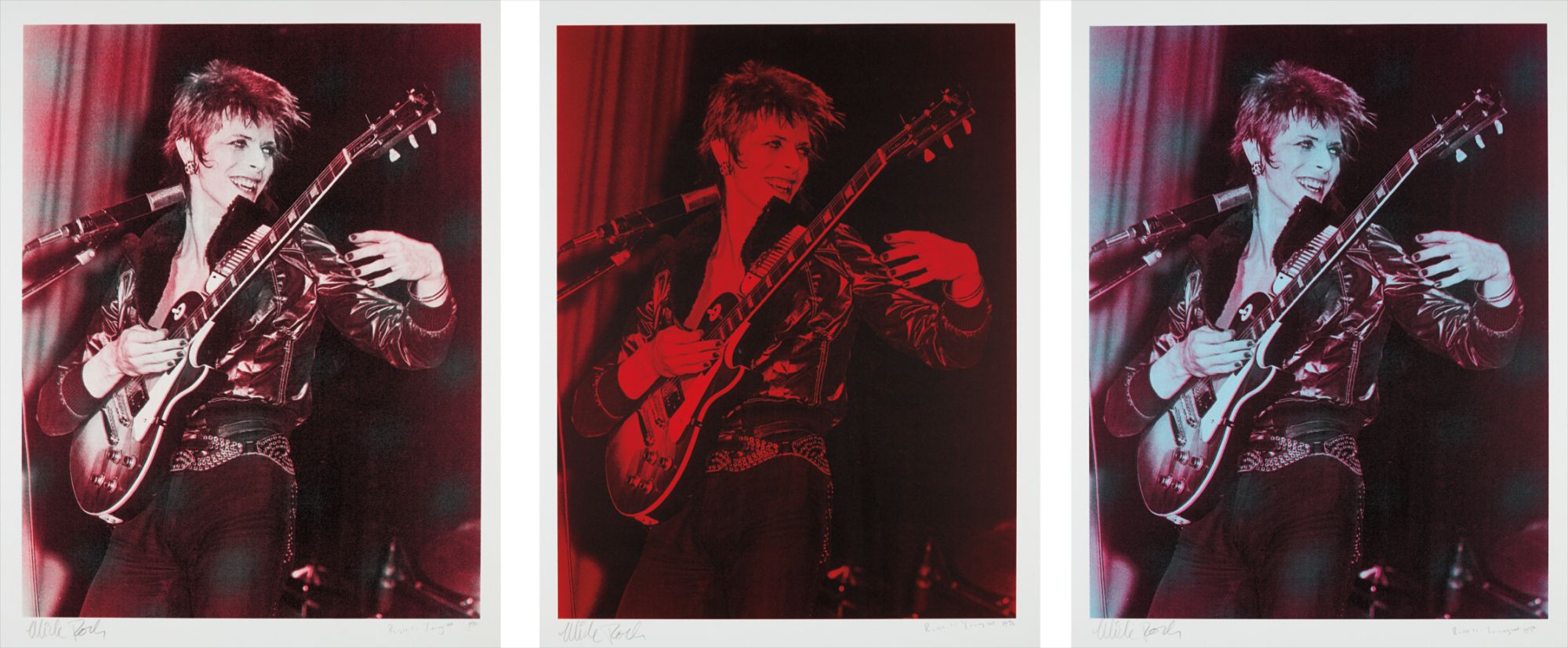
David Bowie: three prints
\n\nYoung was born in 1960 in England, and his early years were shaped by the particular electricity of British popular culture in the 1970s. The glam rock era, punk, tabloid photography, and the relentless churn of celebrity imagery through magazines and television formed the visual grammar he would later translate into paint and silkscreen ink. He worked as a photographer in London before relocating to Los Angeles, a move that proved transformative. California gave him physical proximity to the Hollywood mythology he had long observed from a distance, and the distance he retained as a British outsider gave his work its critical edge.
\n\nThe decision to take up painting and printmaking in Los Angeles placed Young squarely in dialogue with the legacy of Andy Warhol, though his practice quickly established its own distinct register. Where Warhol approached celebrity with a kind of affectless blankness, Young brings a rawer emotional charge to his surfaces. He works from tabloid photographs, film stills, and the kind of grainy, reproduced imagery that defined how mass culture consumed its icons. By enlarging these sources to monumental scale and layering them with enamel, acrylic, glitter, and diamond dust, he transforms the disposable into the durational.
Russell Young
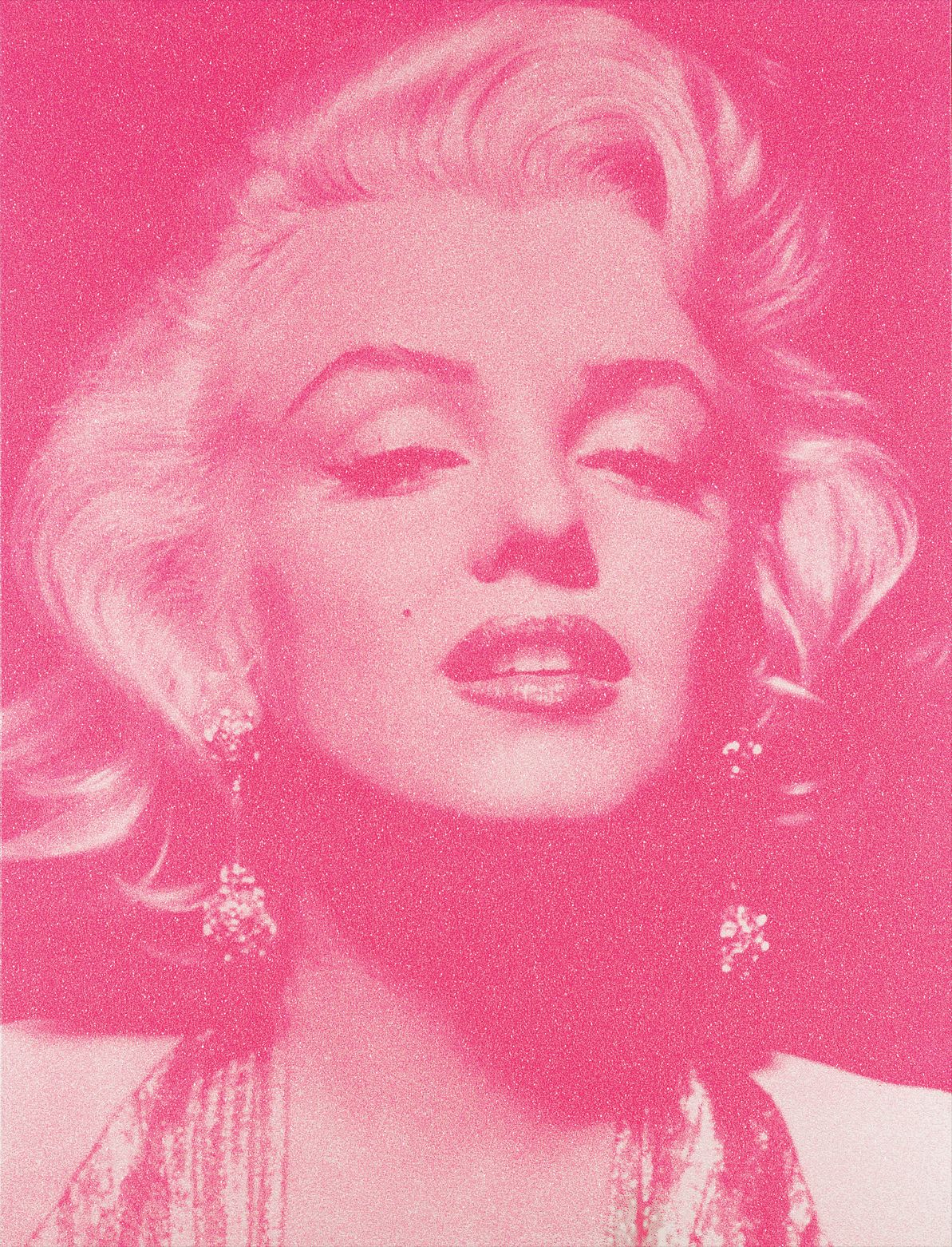
Marilyn Portrait "Reach out and touch Faith"
The image that was once used and discarded becomes something you want to live with.\n\nThe silkscreen process itself is central to Young's meaning. Silkscreening, like celebrity, is fundamentally about reproduction and repetition. Each pass of the squeegee deposits another layer of meaning, and Young exploits this quality with great deliberateness, sometimes allowing colours to bleed or register slightly off, introducing a kind of controlled imperfection that humanises his subjects.
His series of Marilyn Monroe works represents perhaps the fullest expression of this approach. Pieces such as Marilyn Suicide from 2014, Marilyn Crying, and Marilyn Monroe "And You Can Have It All, My Empire Of Dirt" do not simply celebrate the icon. They mourn her, question the systems that produced and destroyed her, and implicate the viewer in that process. The diamond dust scattered across the surface is simultaneously glamorous and funereal, a dusting of both stardust and ash.
Russell Young
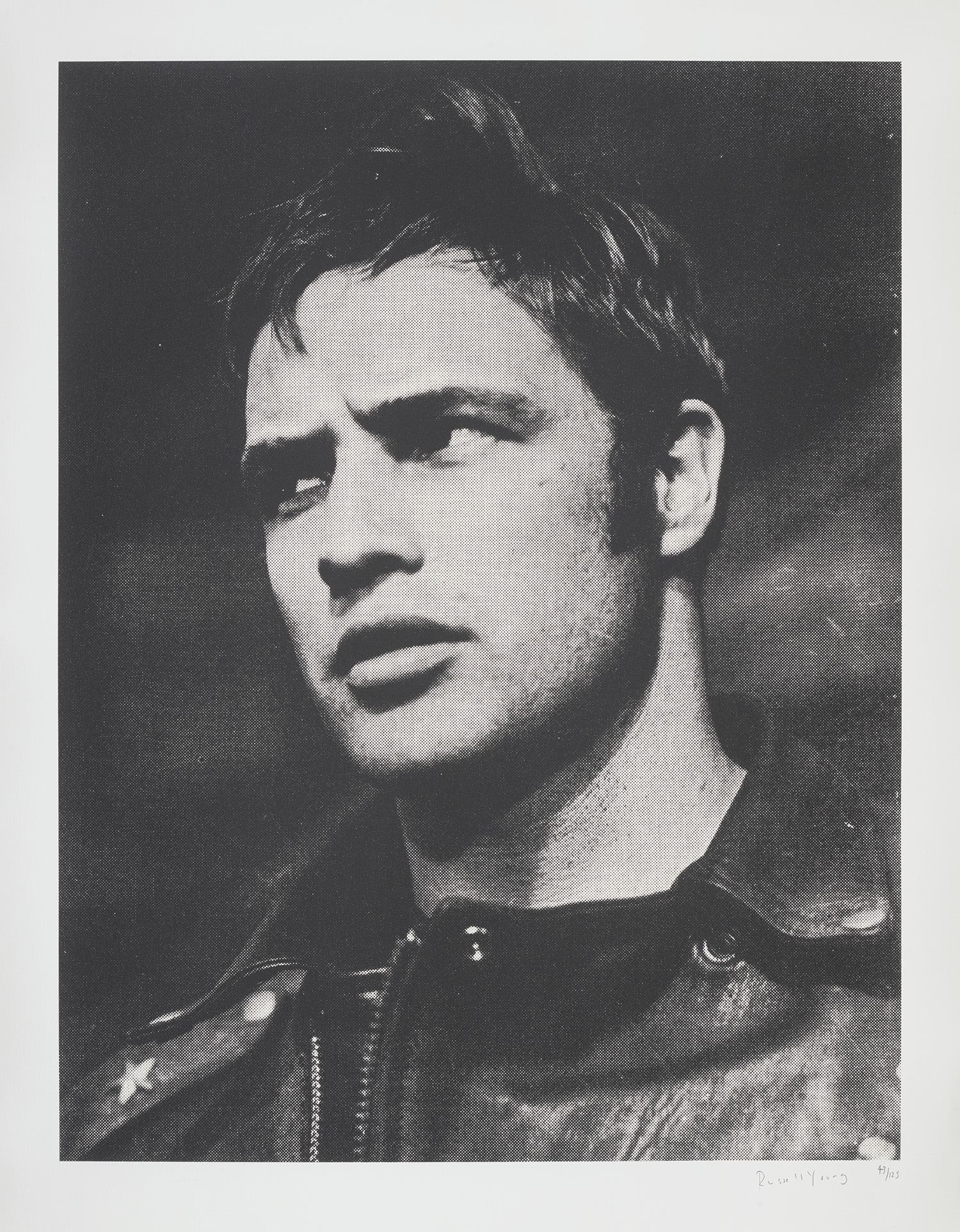
Marlon Brando
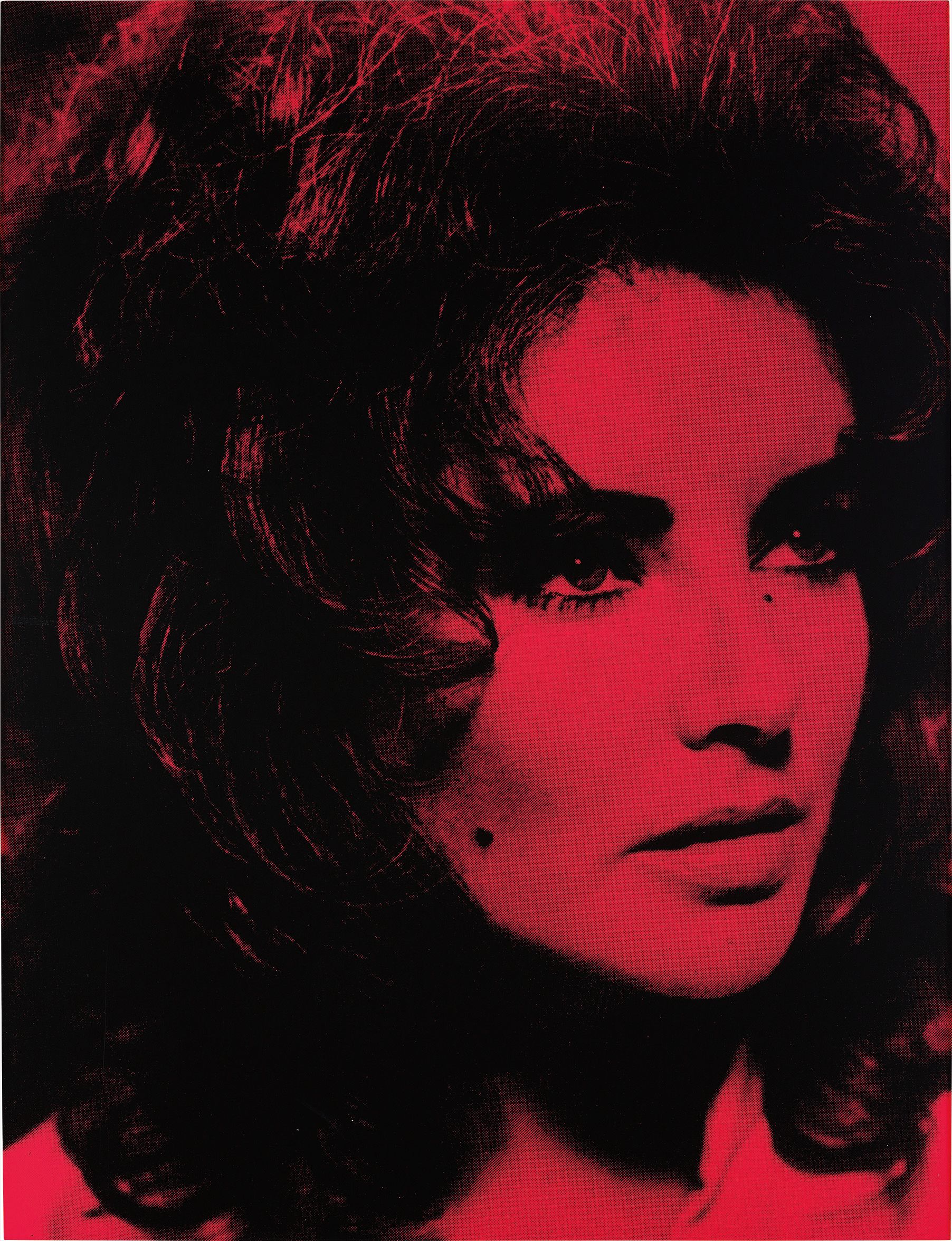
\n\nBeyond Marilyn, Young's cast of subjects reads like a roll call of twentieth century mythology. His Elizabeth Taylor, rendered in enamel screenprint and acrylic on linen, captures the operatic quality of that particular life. His portrait of Marlon Brando on wove paper carries a brooding weight that honours the man's complexity. The David Bowie prints, published by Bankrobber in London in 2008 and issued as printer's proofs in an edition of twenty for each colour combination, have become genuinely covetable objects among collectors who understand that Bowie and Young share a sensibility rooted in reinvention and the theatrical possibilities of identity.
Landing, 1979 with its portrait of Keith Richards in black and silver on linen, and the work depicting Sid Vicious from 2006, round out a pantheon that spans rock and roll mythology with affection and intelligence. Even Young's portrait of Andy Warhol himself, rendered with screenprint and diamond dust, carries an elegiac quality, a tribute from one student of celebrity culture to its greatest chronicler.\n\nFrom a collecting perspective, Young's work occupies a compelling position in the contemporary market. His prints and unique works on linen and canvas appeal to collectors who want the visual vocabulary of pop art but with a contemporary British sensibility and a technical richness that rewards close looking.
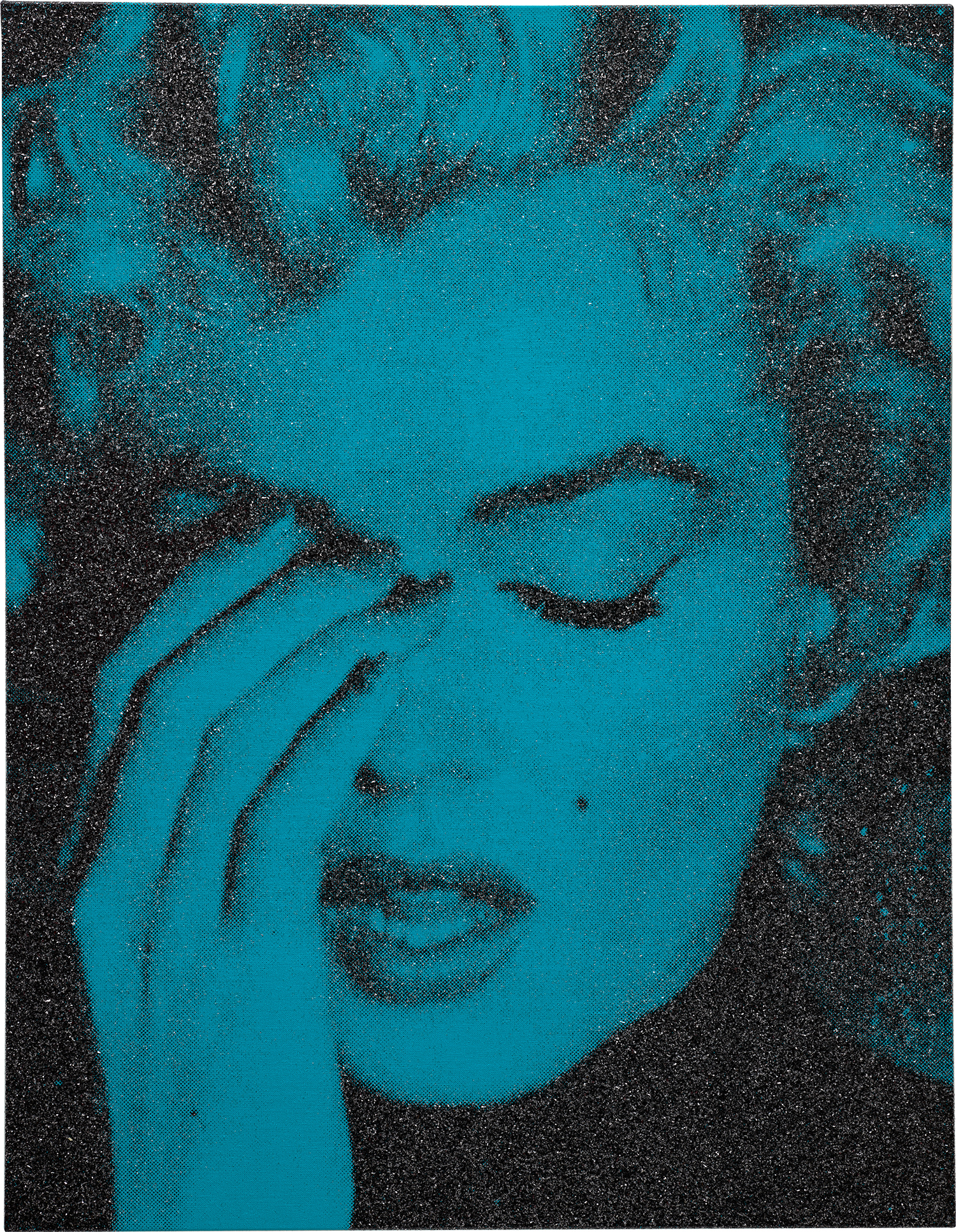
Russell Young
Marilyn Suicide, 2014
The use of diamond dust, a technique most closely associated with Warhol's Shadows series from the late 1970s, adds both material value and conceptual depth to Young's canvases. Works published through Bankrobber, the respected London gallery that has represented and published his editioned works, carry strong provenance and appeal to collectors who appreciate institutional support behind their acquisitions. Young's larger unique paintings on linen command significant attention when they come to market, and the combination of recognisable subject matter with genuine artistic ambition makes them accessible entry points for newer collectors as well as desirable additions for those building more serious holdings.\n\nWithin art history, Young sits in a lineage that runs from Warhol through Richard Hamilton, whose British pop sensibility prefigured much of what Young would later explore.
There are resonances too with the work of Shepard Fairey in his engagement with iconic imagery and screenprint technique, and with the broader field of artists who have interrogated celebrity culture including Douglas Gordon and even elements of Damien Hirst's engagement with glamour and mortality. Yet Young's voice is genuinely his own. The emotional temperature of his work is warmer than Warhol's, more willing to admit longing and loss into the frame alongside the celebration.\n\nWhat makes Russell Young essential right now is precisely that the questions his work asks have become more urgent, not less.
In an era of social media, streaming platforms, and the industrialised production of celebrity, Young's paintings remind us that fame has always been a kind of alchemy involving desire, projection, and mortality. His icons are not simply famous faces. They are mirrors held up to the culture that made them, and to us. For collectors building collections with genuine intellectual weight and visual pleasure in equal measure, Young's work represents exactly the kind of lasting investment that rewards revisiting across a lifetime.