Rupprecht Geiger
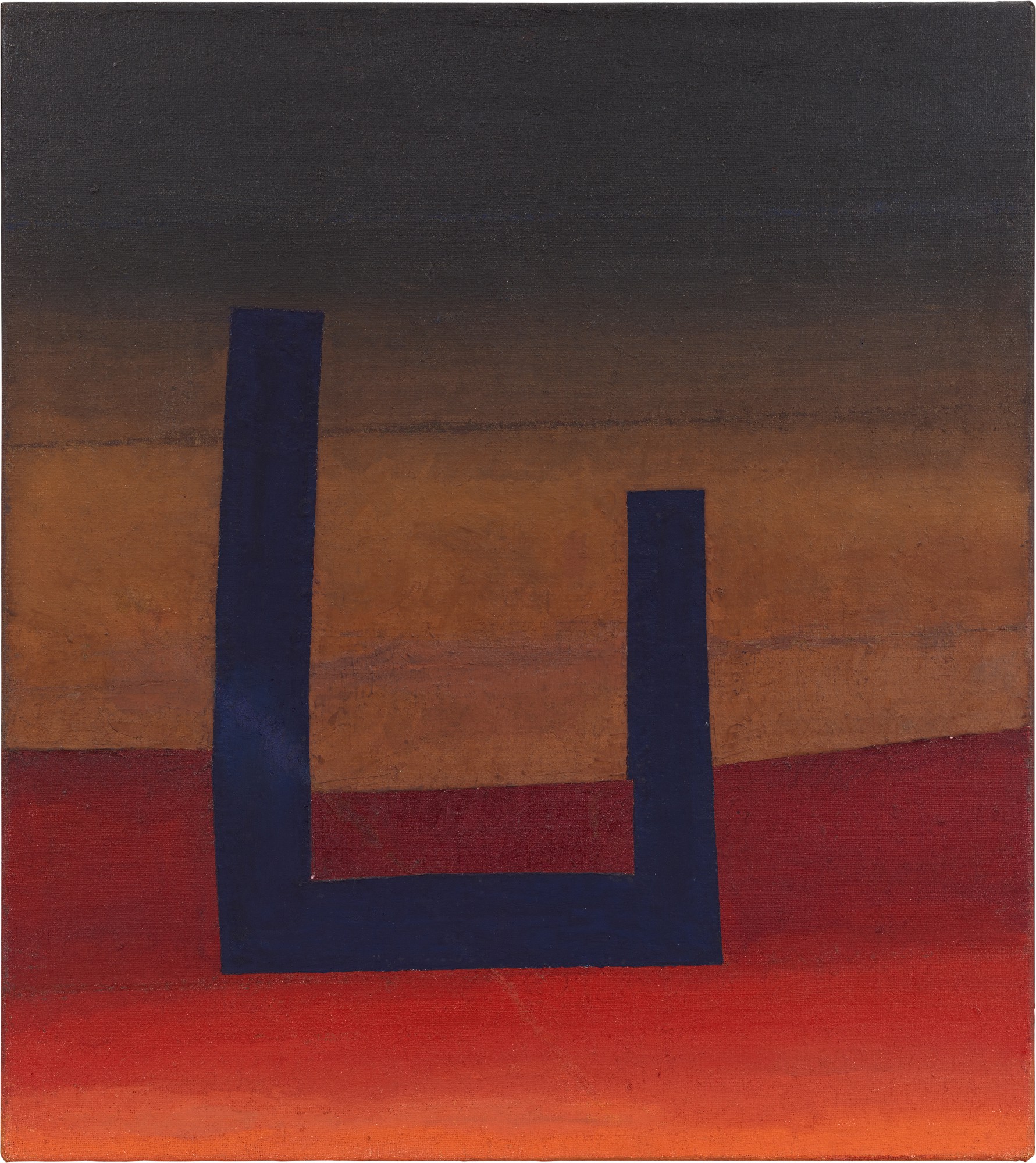
Rupprecht Geiger: The Radiance of Pure Color
Artist Spotlight · The Collection Editorial
“Red is the color of human beings. It is the color of our blood, our warmth, our energy.”
Rupprecht Geiger, artist statement
In the permanent collection of the Museum Brandhorst in Munich, a city that claimed Rupprecht Geiger as one of its own across an extraordinary century of life and work, his large format paintings vibrate with an intensity that stops visitors mid step. The canvases glow with concentrated fields of red, violet, and blue, colors stripped of everything superfluous, reduced to their most essential emotional frequency. To stand before a Geiger is to understand, almost physically, that color is not decoration. It is a living force.
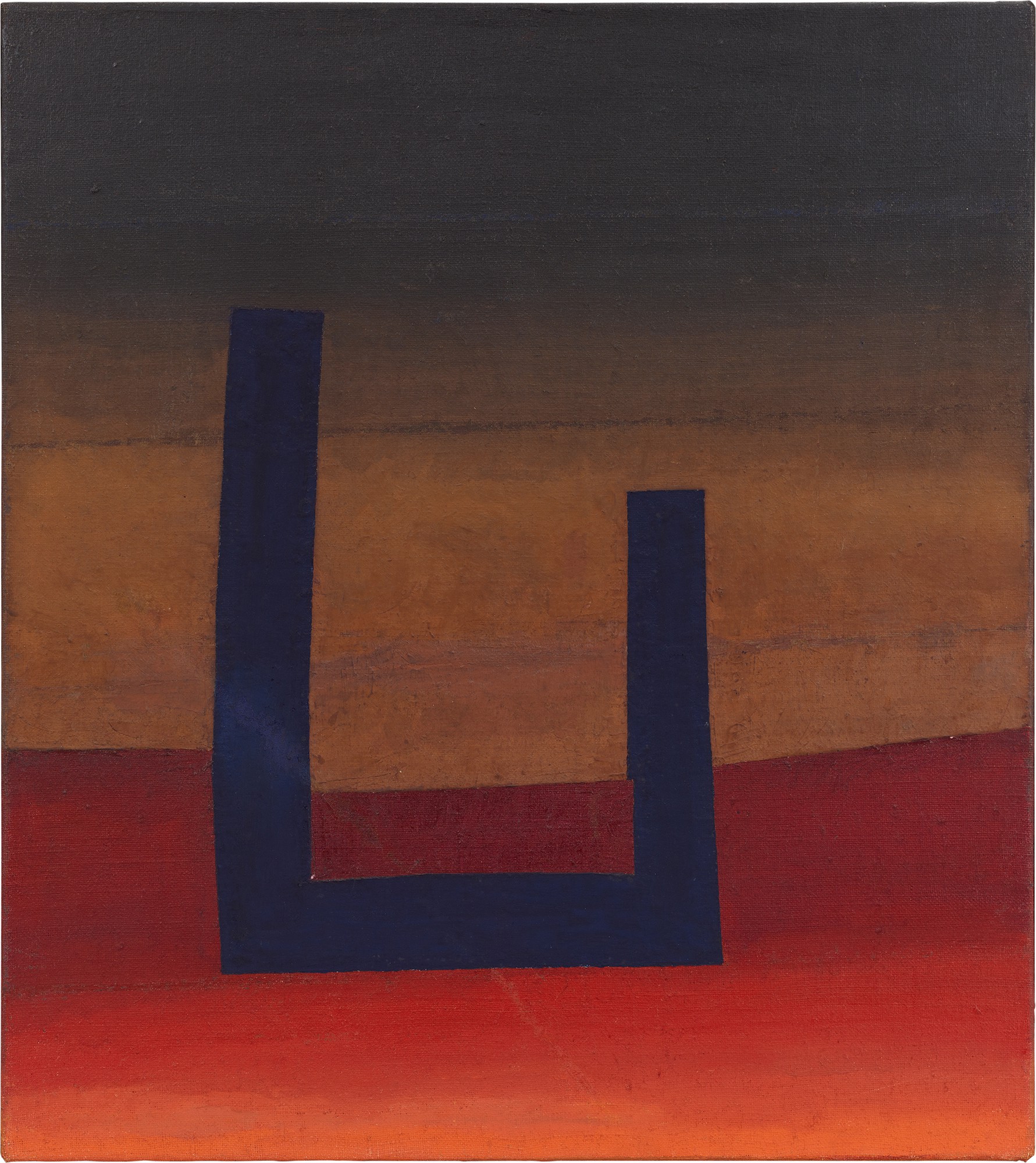
Rupprecht Geiger
Oe 244, 1957
Rupprecht Geiger was born in Munich in 1908, the son of the celebrated painter Willi Geiger, and he grew up inside a world where art was not a career aspiration but simply the texture of daily life. He studied architecture at the Kunstgewerbeschule in Munich, graduating in 1935, and it was this training in structure, proportion, and spatial thinking that would quietly underpin everything he made as a painter. Architecture gave him a framework, literally and philosophically, for understanding how form organizes space and how a viewer moves through and responds to visual experience. His path to painting as a primary practice was shaped by an unlikely crucible: the Second World War.
Geiger served in the German military and was stationed at various points across Europe and into Russia, and he began painting seriously during these years, carrying the impulse to make something luminous through the darkest of circumstances. By the time he returned to Munich after the war, his commitment to painting was absolute. He became a founding member of ZEN 49, the group of abstract artists established in Munich in 1949 who sought to reconnect German art with the international avant garde after the long isolation of the National Socialist period. This association placed Geiger firmly within the postwar European conversation about abstraction, color, and what painting could still mean.
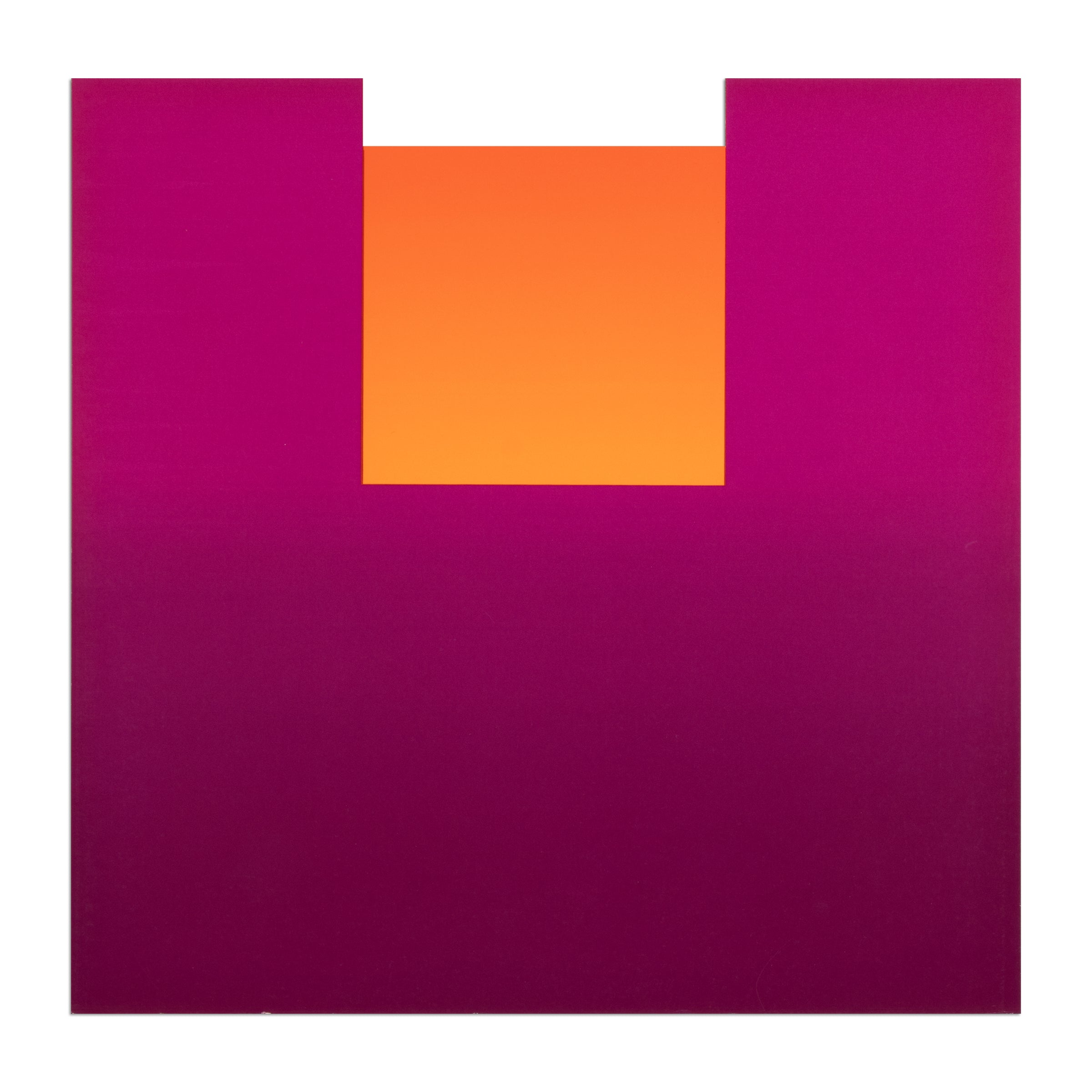
Rupprecht Geiger
Red on Violet, 1908
Through the 1950s, Geiger arrived at what would become his defining territory. He began to pare away figuration, representation, and gestural expressionism in favor of something more concentrated and more demanding. His canvases from this decade, including the oil on canvas work "Oe 244" from 1957, show a painter who has found his subject and is learning to speak its language with increasing authority. The forms are simple, ovoid or rounded shapes that seem to emerge from or dissolve back into fields of color, their edges soft and atmospheric rather than hard and declarative.
These were not geometric abstraction in the cool, intellectual European tradition. They were warmer, more visceral, almost biological in their suggestion of energy and pulse. Geiger's singular obsession was red. He wrote and spoke about it throughout his career with the focus of a scientist and the passion of a devotee.
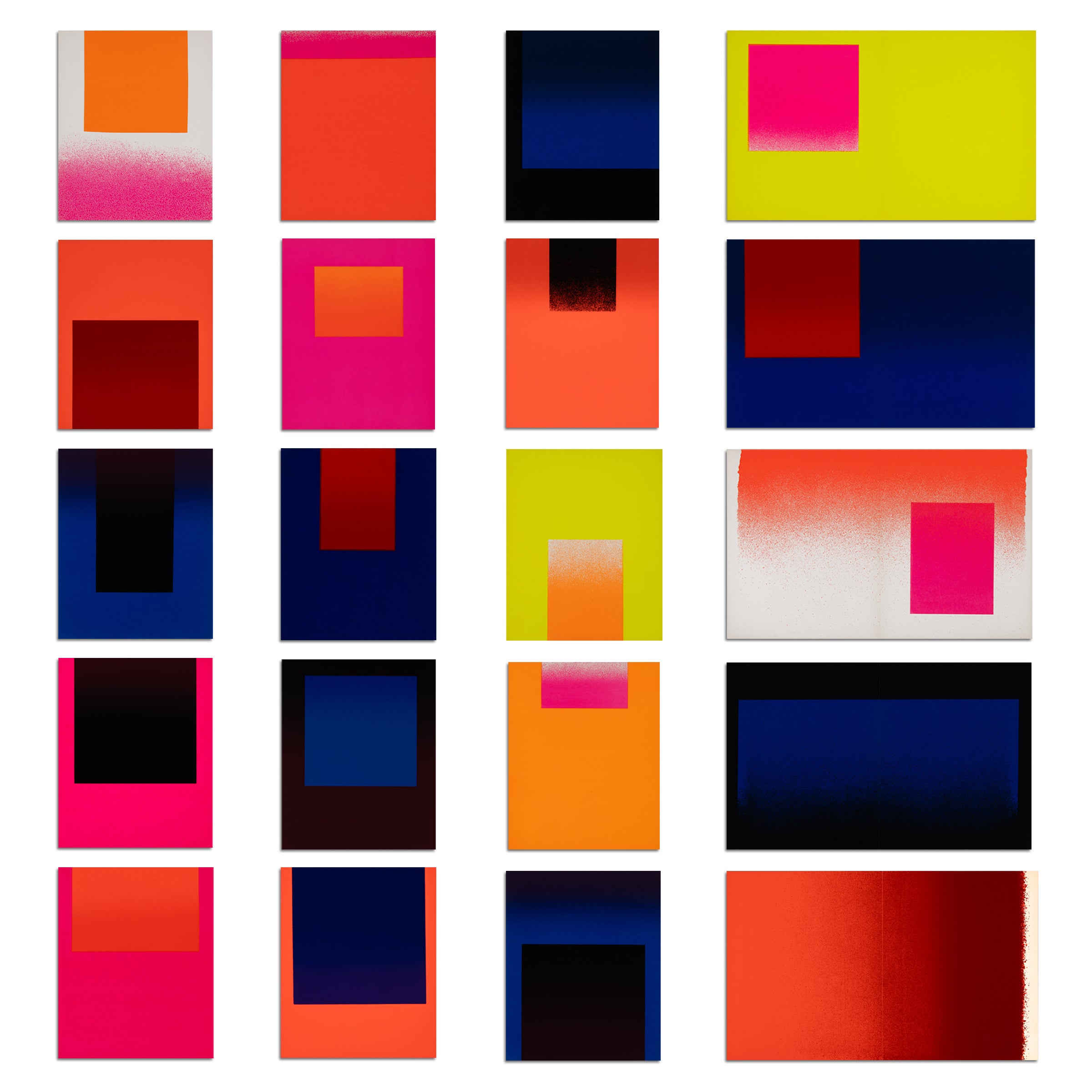
Rupprecht Geiger
Zurückgehen, Weitergehen, Fortgehen, 1908
For Geiger, red was the color closest to human experience, connected to warmth, blood, fire, and vitality. He explored its full spectrum, from the deepest crimson toward violet on one side and toward luminous orange and yellow on the other, treating this chromatic territory as an inexhaustible landscape. Works such as "Rot zu Gelb" from 2007 and the series of prints including "Red on Violet" and "Black on Different Reds" reveal how tirelessly he worked across his entire life to map and remap this terrain. In his prints especially, he achieved a quality of concentrated luminosity that makes the paper seem almost to emit rather than simply reflect light.
The prints Geiger made across several decades represent one of the most rewarding areas of his practice for collectors coming to his work today. Working in screenprint and other techniques, he was able to achieve the same quality of optical intensity that characterized his paintings but in multiples that brought his vision to a wider audience. "Bluish Red and Blue Black" and "Blue Black and Bluish Red" and "Black on Blue" demonstrate his fascination with adjacency and relationship, with the way one color transforms its neighbor and is in turn transformed. These are works about perception as much as about painting, and they reward sustained looking in ways that photographs of them cannot fully capture.
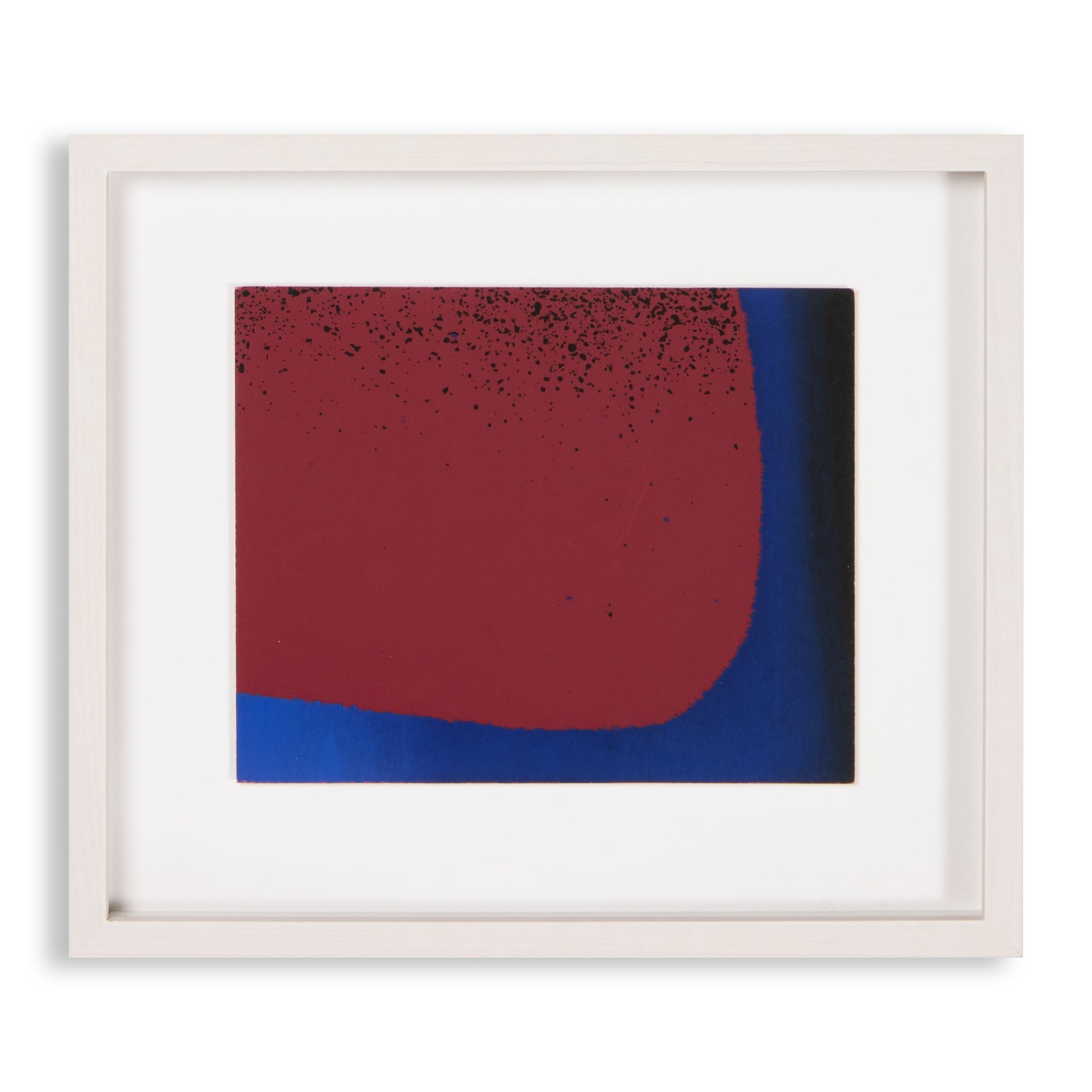
Rupprecht Geiger
Bluish Red and Blue-Black, 1961
For a collector considering an entry point into Geiger's world, the prints offer both accessibility and genuine depth. Within art history, Geiger occupies a place that is sometimes described as bridging the American Color Field painters and European lyrical abstraction. His work invites comparison with artists such as Mark Rothko, whose large fields of luminous color share a similar emotional ambition, and with Josef Albers, whose systematic investigation of color interaction was a formative influence. Yet Geiger's sensibility is distinctly European and distinctly his own: warmer, more intuitive, less structural than Albers, less melancholic than Rothko.
He also belongs in conversation with the German postwar abstract tradition, alongside artists such as Ernst Wilhelm Nay and Fritz Winter, fellow travelers in the project of rebuilding a serious abstract painting practice in Germany after 1945. Geiger taught for many years at the Kunstakademie Düsseldorf, where he held a professorship from 1965 to 1976, and his influence on generations of younger German artists is part of his legacy that operates beneath the surface of the contemporary scene. The Rupprecht Geiger Foundation, established to preserve and promote his work, continues to ensure that his paintings and prints are seen in context and documented with the rigor his practice demands. Major retrospectives at the Städtische Galerie im Lenbachhaus in Munich have affirmed his standing within the canon of postwar German abstraction.
What makes Geiger matter today, beyond the pleasure and power of the individual works, is the clarity and conviction of his artistic philosophy. In an era of conceptual complexity and ironic distance, his paintings and prints insist on direct experience, on the encounter between a viewer and a field of color as something real and significant. He lived and worked for more than a hundred years, producing into his late nineties with undiminished purpose, and the body of work he left behind is a remarkable argument for the continuing life of painting. To collect Geiger is to invest in one of the most coherent and passionate visions in postwar European art, a vision built on the belief that color, at its most essential, is enough.
Explore books about Rupprecht Geiger
Rupprecht Geiger: Catalogue Raisonné
Various contributors
Rupprecht Geiger: Farbe ist Licht
Dieter Honisch
Rupprecht Geiger: Monographie
Christos M. Joachimides
Rupprecht Geiger: Works 1937-1997
Peter-Klaus Schuster
Rot ist Licht: Rupprecht Geiger
Christine Mehring