Rudolf Ernst
Rudolf Ernst: Splendor Rendered in Perfect Detail
Artist Spotlight · The Collection Editorial
There are painters who observe the world, and then there are painters who construct an entire universe from it. Rudolf Ernst belonged to the second category. When his richly jeweled interiors and luminous figural studies appear at auction, whether at Christie's, Sotheby's, or Bonhams, bidding tends to climb well past estimate, a testament to the enduring power of his vision. In recent years, collectors pursuing the finest examples of Orientalist painting have returned again and again to Ernst as a touchstone, a painter whose command of surface, light, and cultural specificity places him among the most accomplished artists working in any genre during the late nineteenth and early twentieth centuries.
Rudolf Ernst
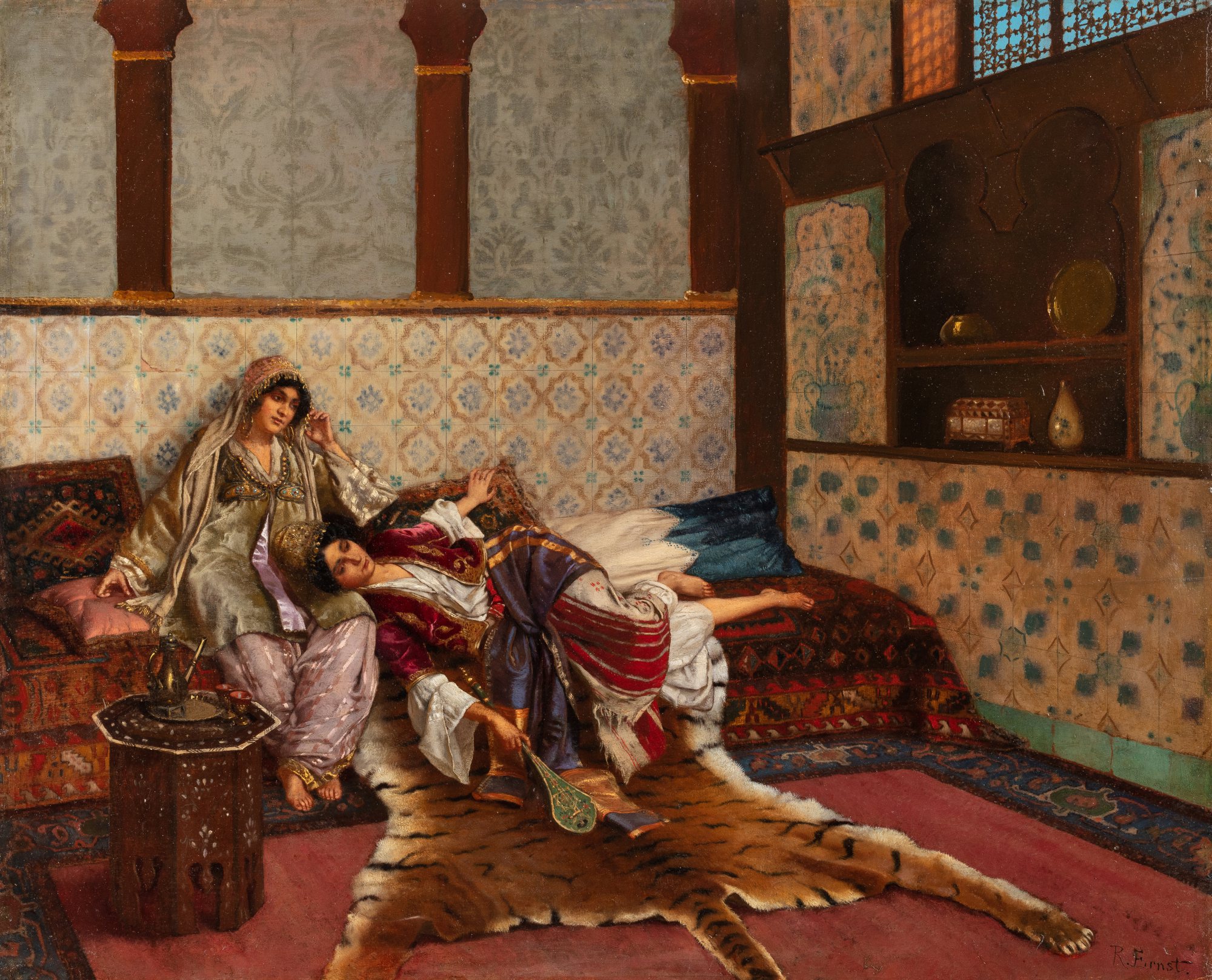
The Forgotten Tune
Ernst was born in Vienna in 1854, a city then at the height of its imperial ambition and artistic confidence. The Vienna of his youth was a place where craftsmanship was elevated to the status of fine art, where the decorative and the pictorial were understood as equals. This sensibility would prove formative. His early training took place in the tradition of Viennese academic painting, grounding him in the rigorous study of the human figure, perspective, and the meticulous rendering of surface textures that would become his defining gift.
He came of age in an era when European artists were increasingly drawn southward and eastward, following trade routes and colonial passages toward the cultures of the Mediterranean, North Africa, and the Middle East. By the time Ernst settled in Paris, he had made the decisive journey that would shape the entire arc of his career. Paris in the 1870s and 1880s was the undisputed capital of the art world, and the Salon was its most prestigious arena. Ernst exhibited under the Gallicized name Rodolphe Ernst, signaling a cultural translation that mirrored the broader project of his painting: the encounter between Western artistic tradition and the visual world of the Islamic East.
Rudolf Ernst
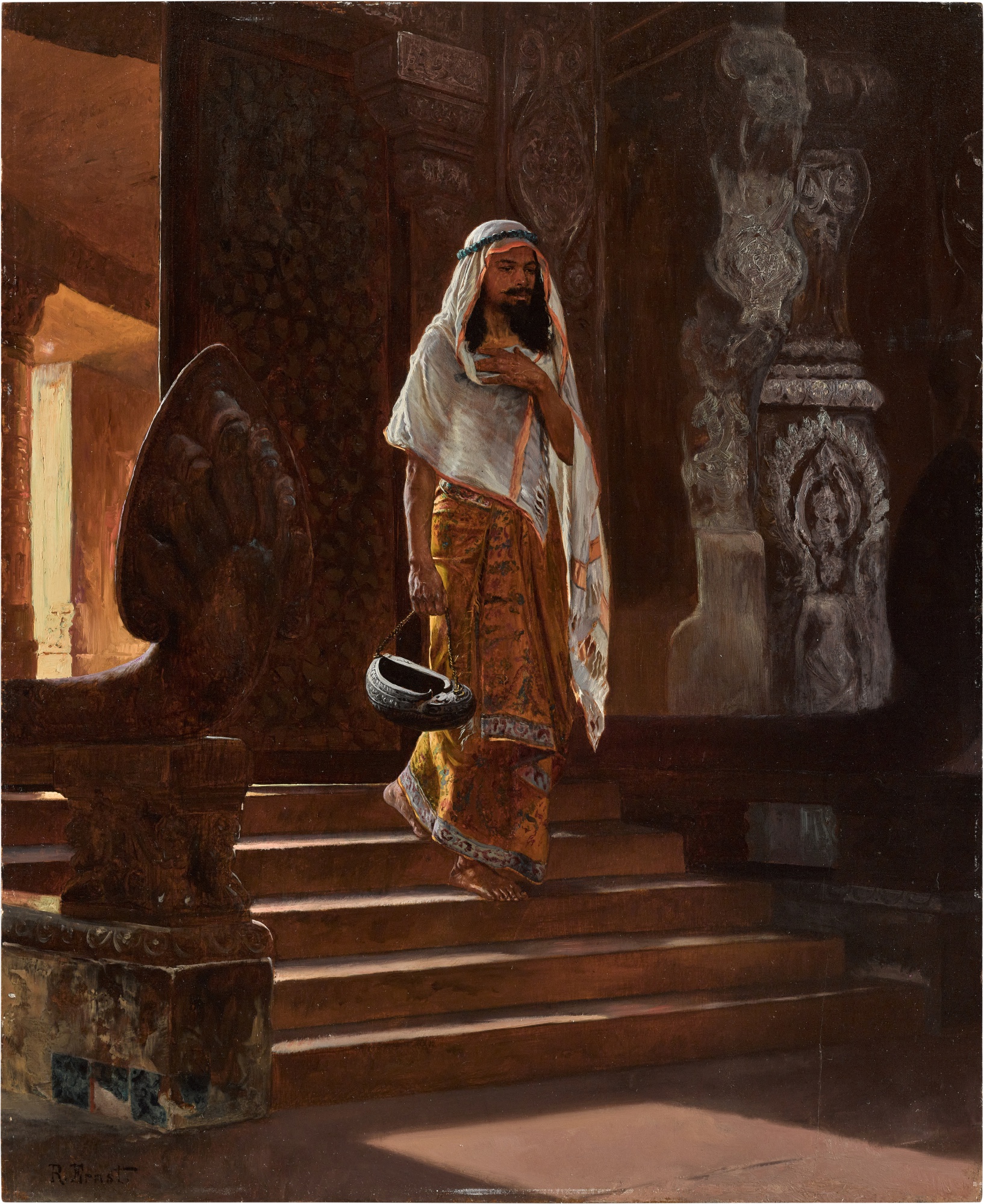
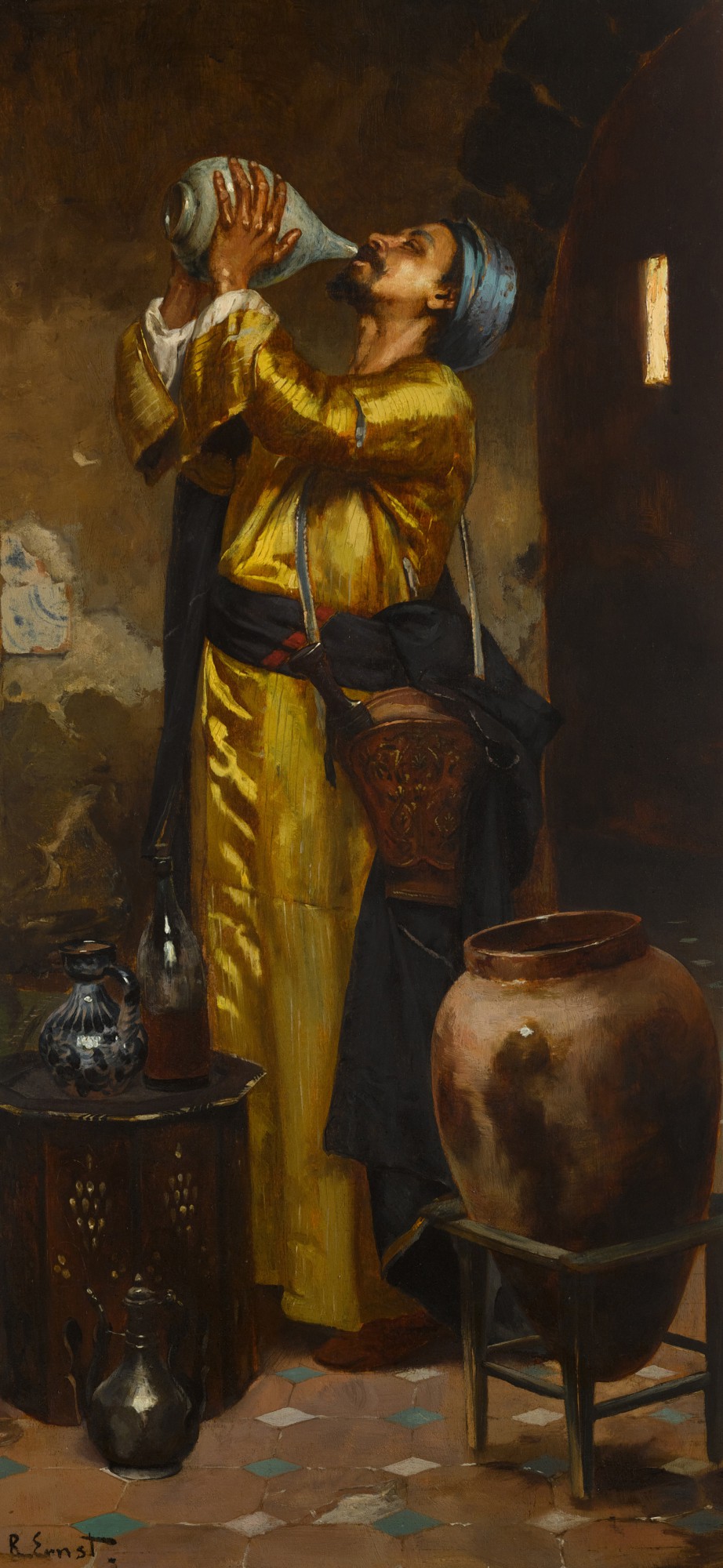
A Dervish
He became a regular presence at the Paris Salon and earned a reputation among collectors and fellow artists as a painter of rare technical accomplishment. His Parisian studio in Fontenay aux Roses became a kind of theater of objects, filled with carpets, ceramics, brass lamps, and embroidered textiles gathered from his travels, all of which found their way into his compositions with extraordinary fidelity. What makes Ernst so compelling as a painter is the completeness of his attention. Where other Orientalist painters sometimes allowed the exotic setting to carry the emotional weight of a composition, Ernst went further, treating every surface as a problem worth solving on its own terms.
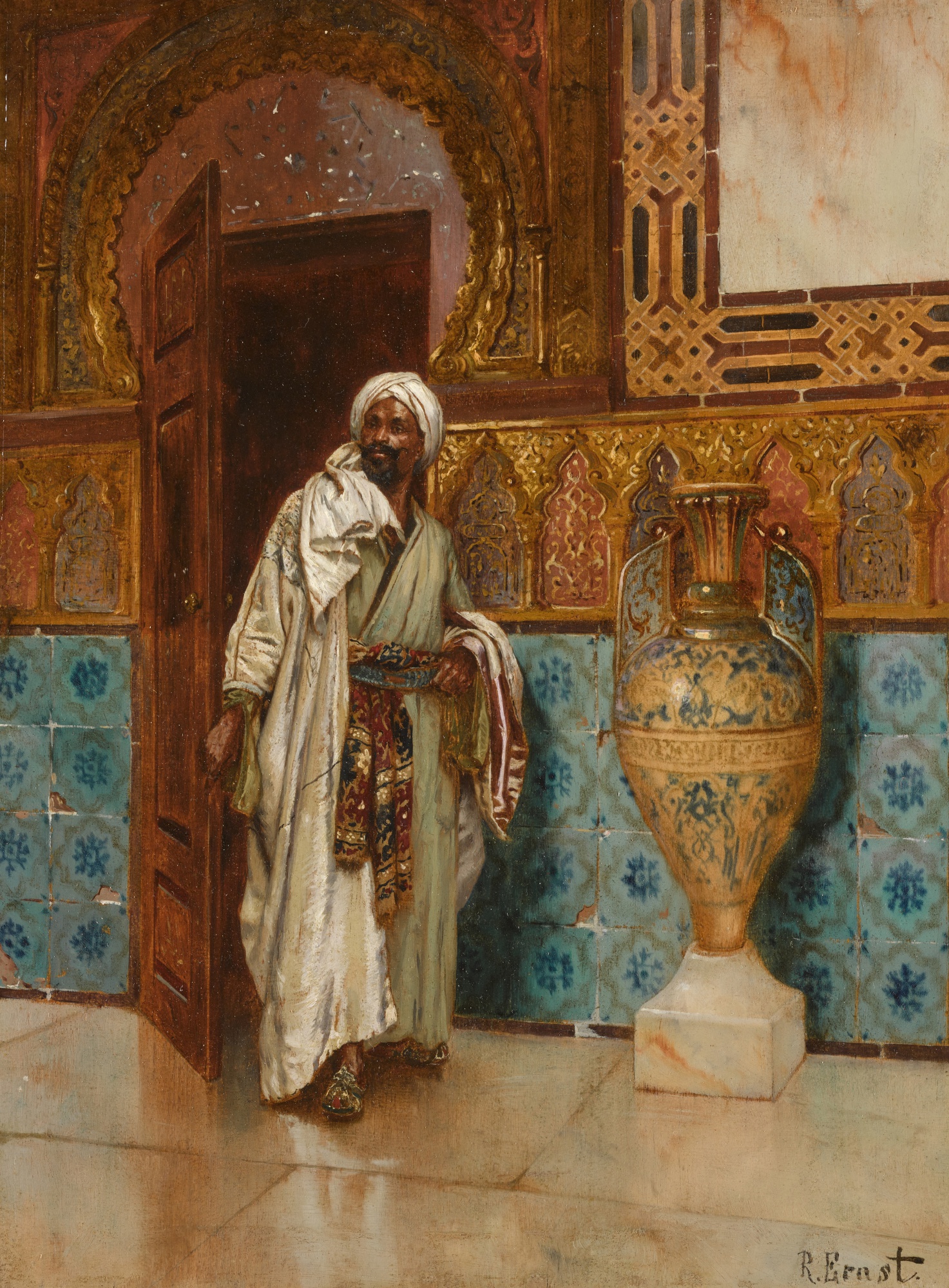
In a work such as The Palace Warden, the geometry of tilework, the weight of a wool robe, and the stillness of a guarded threshold are rendered with equal devotion. The Forgotten Tune brings a similar intensity to a single figure lost in reverie, the instrument resting in the figure's hands almost incidental to the interior world the painting evokes. In Guarding the Alhambra, Ernst finds a subject that allows him to bind Moorish architectural splendor to human solitude with complete conviction. These are not illustrations of a foreign world; they are meditations on presence, beauty, and the passage of time.
Rudolf Ernst
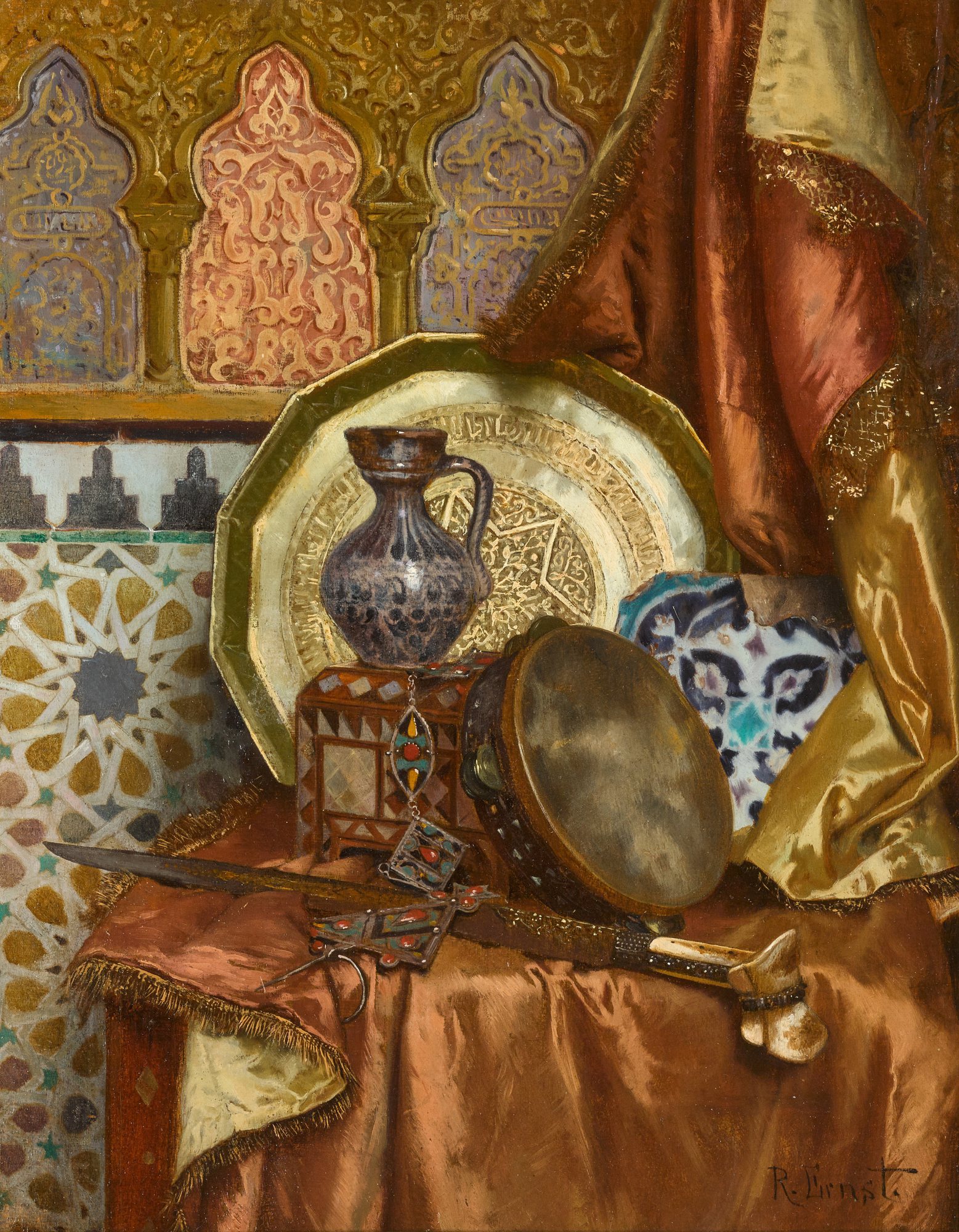
A Still life with Moroccan Objects
The oil on panel format appears repeatedly across Ernst's output, and it is worth pausing to consider why. Panel supports lend themselves to the kind of fine, controlled brushwork that Ernst favored, allowing him to build up layers of glazed color and fine detail without the textural interference of canvas weave. The result is surfaces of almost enameled richness, paintings that reward sustained, close looking. Works such as Reciting the Koran and In the Madrasa demonstrate this quality at its fullest: the paint handles the shimmer of light on ceramic tiles and the soft fall of daylight through a screened window with a precision that feels genuinely earned rather than merely decorative.
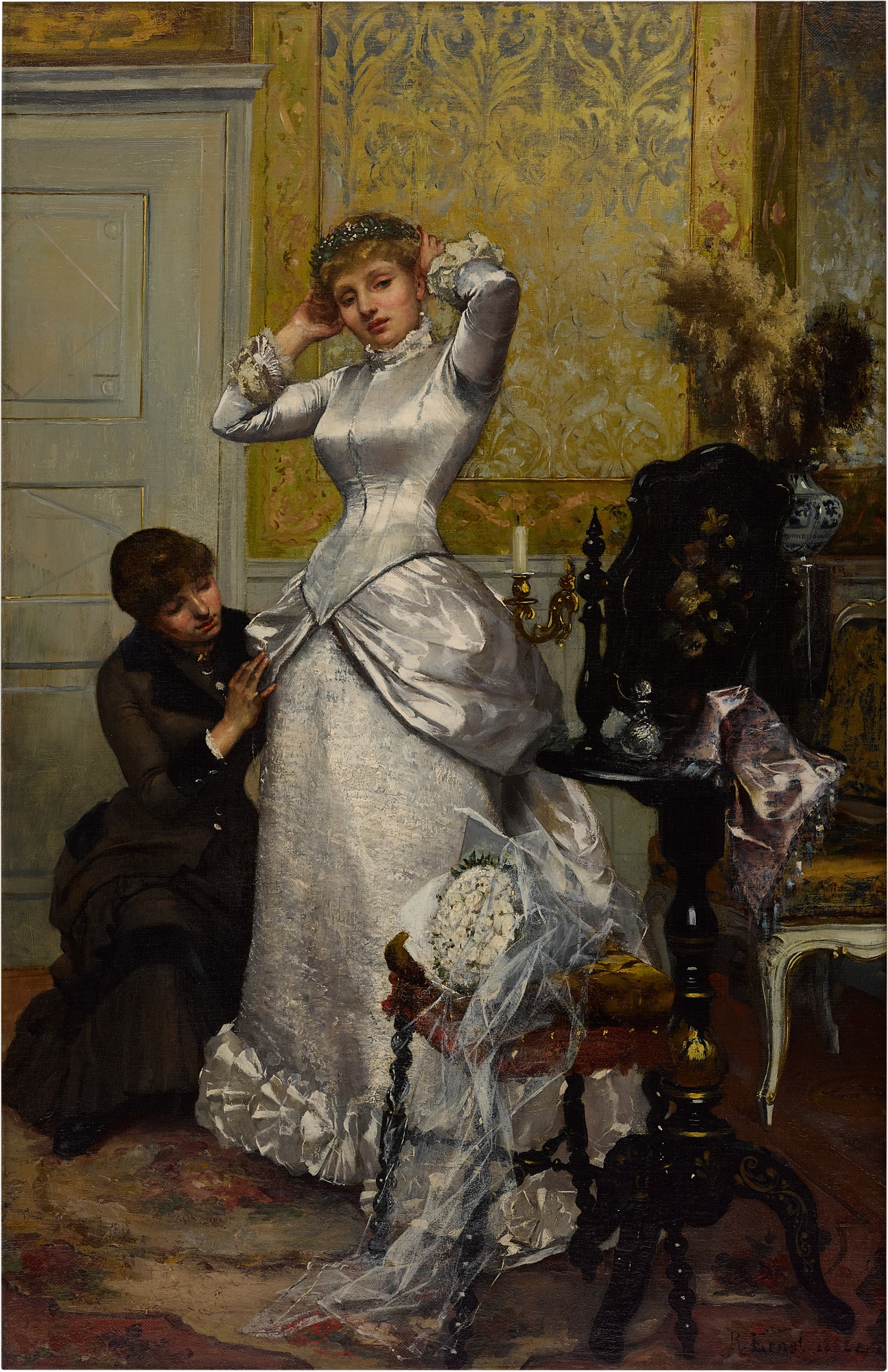
Dressing the Bride, executed on canvas, shows Ernst equally capable of orchestrating a more complex figural arrangement without losing the intimacy that characterizes his smaller panels. From a collecting perspective, Ernst occupies a position of genuine strength in the current market. The Orientalist category has attracted serious scholarship and institutional attention over the past three decades, with major survey exhibitions at the Institut du Monde Arabe in Paris and the Dahesh Museum of Art in New York helping to contextualize the movement and elevate its finest practitioners. Ernst benefits from this renewed interest while also standing apart from it: his works sell not merely because of category momentum but because of their intrinsic quality.
Rudolf Ernst
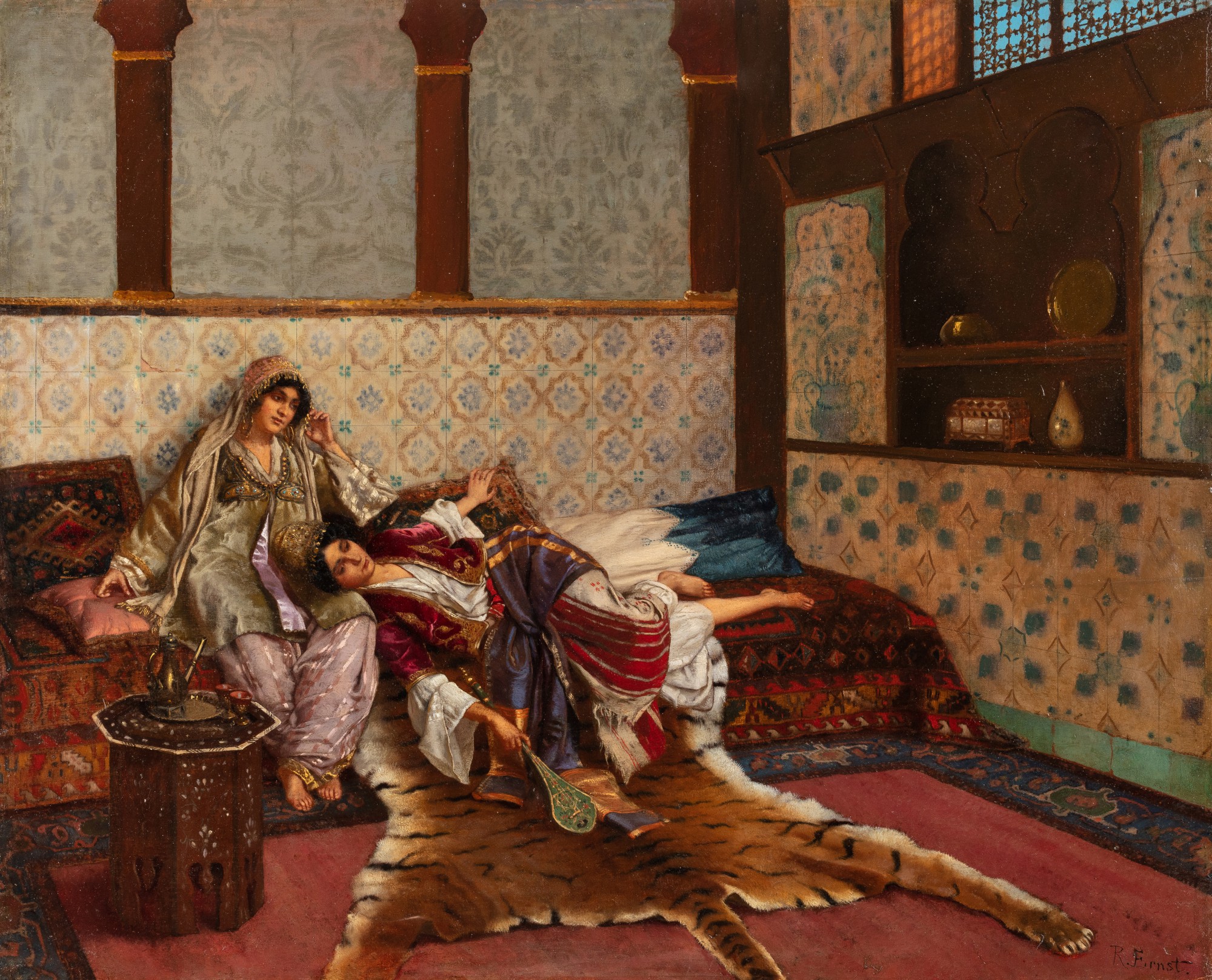
Sweet Lullaby
Collectors who acquire works such as After Prayers or Sweet Lullaby are not simply buying into a trend; they are acquiring paintings of lasting visual intelligence. Condition and provenance are, as always, important considerations, and Ernst's panels in particular tend to age gracefully when properly cared for. Ernst belongs to a distinguished community of painters working at the intersection of European academic tradition and Orientalist subject matter. Jean Leon Gerome, the French master whose rigorous draftsmanship and archaeologically precise settings set the standard for the genre, was a central influence on the generation Ernst joined.
Ludwig Deutsch, another Viennese painter who settled in Paris, shared Ernst's preoccupation with architectural interiors and the textures of Islamic decorative arts, and the two artists are frequently considered together by collectors and scholars. Ettore Cercone and Giulio Rosati round out a circle of painters who brought similar qualities of craft and observation to related subjects. Within this company, Ernst holds his own through the particular warmth of his palette and the quality of interiority he brings to his figures. The legacy of Rudolf Ernst rests on something more durable than fashion.
His paintings ask us to slow down and look carefully, to notice the difference between the blue of a Moroccan tile and the blue of a silk cushion, to feel the weight of silence in a sunlit courtyard. In an era of accelerating visual culture, there is something almost radical about that invitation. Collectors and institutions returning to his work today are responding to a vision of sustained attention and technical mastery that feels not like a relic of another century but like a rebuke to superficiality in any century. Ernst's world was constructed with great care, and it repays care in kind.
Featured Works
Explore books about Rudolf Ernst
Rudolf Ernst: Orientalism and the Visual Culture of the Nineteenth Century
Lynne Thornton
Rudolf Ernst: 1854-1932
Alastair Grieve
The Orientalists: Delacroix to Matisse
MaryAnne Stevens