Rose Wylie
Rose Wylie, Painting Life on Her Own Terms
Artist Spotlight · The Collection Editorial
“I paint what I see and what I remember and what I imagine, and sometimes I don't know which is which.”
Rose Wylie
When Rose Wylie received the Turner Prize nomination in 2017 at the age of eighty three, the art world did not so much discover her as finally catch up with her. Her solo exhibition at the Serpentine Gallery in London that same year drew long queues and genuine enthusiasm, with visitors responding to paintings that felt both utterly immediate and strangely timeless. Here was an artist who had been working with absolute commitment for decades, quietly building one of the most distinctive bodies of work in contemporary British painting, and the institutional recognition felt less like a coronation than a long overdue acknowledgment. Wylie was born in 1934 in Hythe, Kent, and her path to artistic prominence was anything but conventional.
Rose Wylie
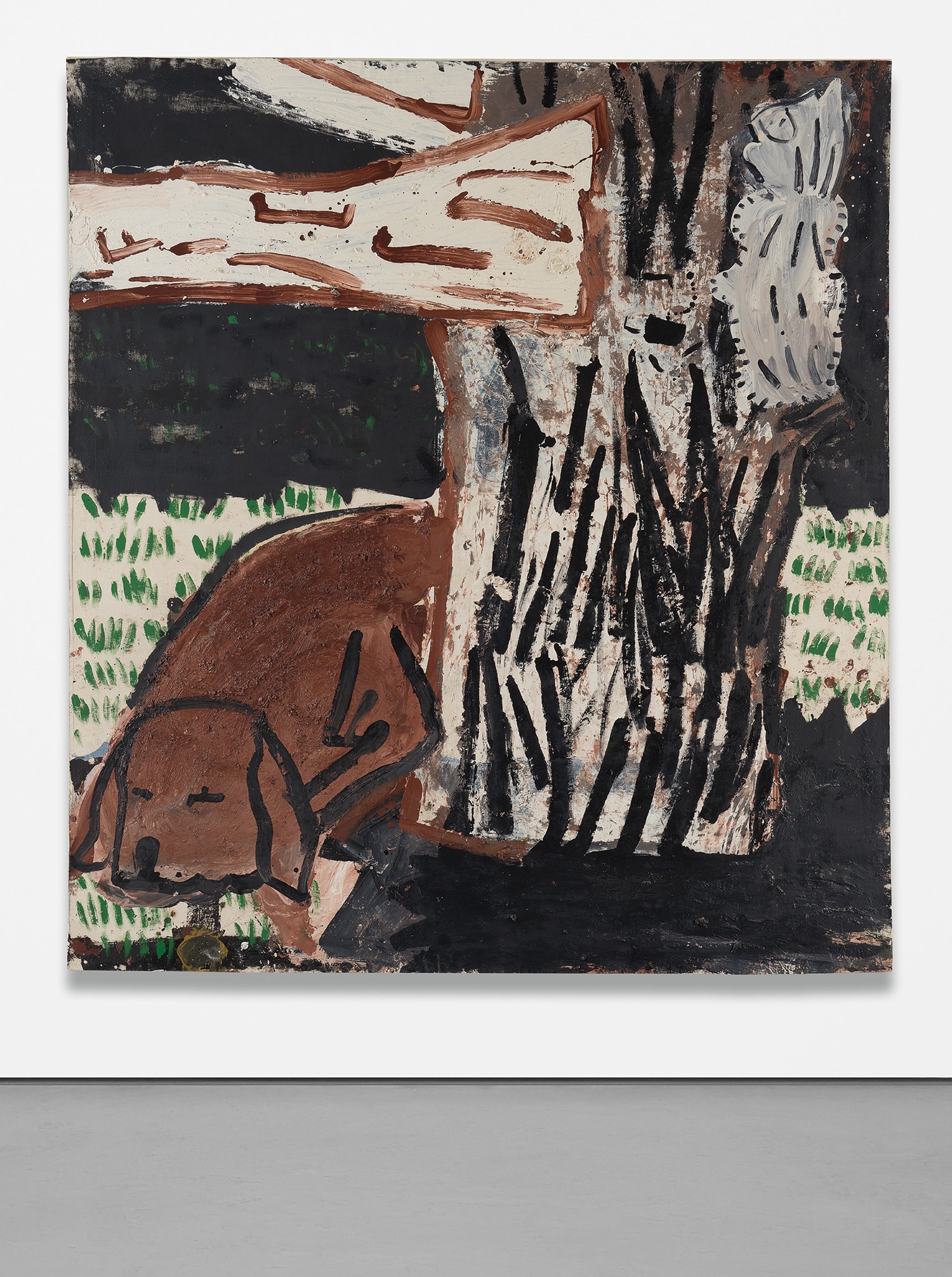
Green Grass, White Cat, 1997
She studied at the Folkestone and Dover School of Art and later at the Royal College of Art in London, graduating in 1981 after returning to full time study in her forties, a decision she made alongside her late husband, the painter John Norris Wood. That shared commitment to the studio, to looking and making and questioning, shaped the intellectual atmosphere in which her practice developed. The domestic and the professional were never separate categories for Wylie, and that fusion runs through everything she makes. For much of her adult life, Wylie raised a family and painted in relative obscurity, showing occasionally but without the institutional support or market attention that her peers might have attracted.
It was not until her sixties and seventies that galleries and curators began to pay serious attention, and the delay, rather than diminishing her work, seems to have given it a particular kind of freedom. Wylie had nothing to prove and no market expectations to satisfy, which meant she could paint exactly what interested her, in exactly the way she wanted to paint it. The result is a body of work that feels genuinely unencumbered. The paintings themselves are large, often sprawling across multiple panels, and they operate according to a logic that is entirely their own.
Rose Wylie
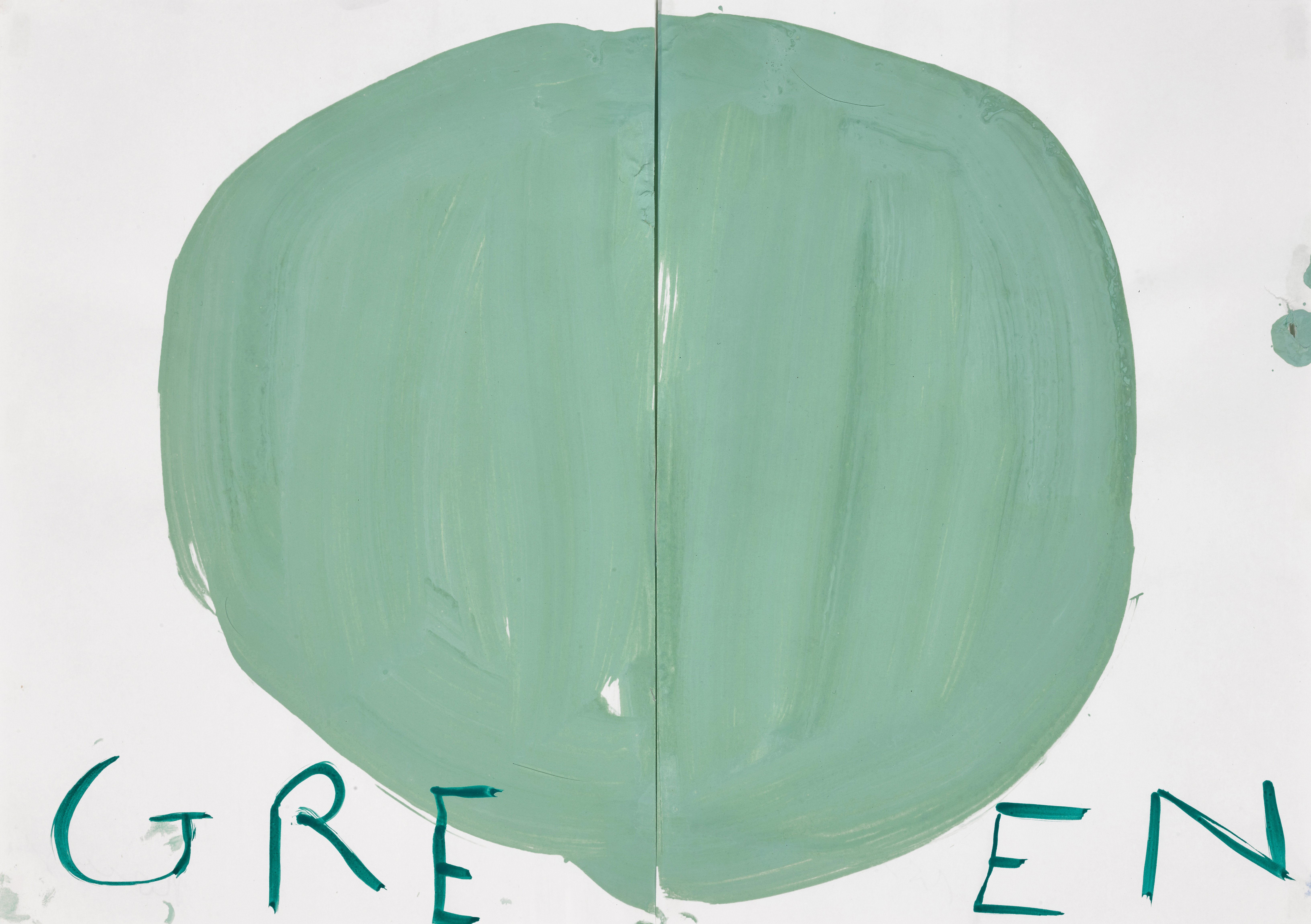
Green, 2011
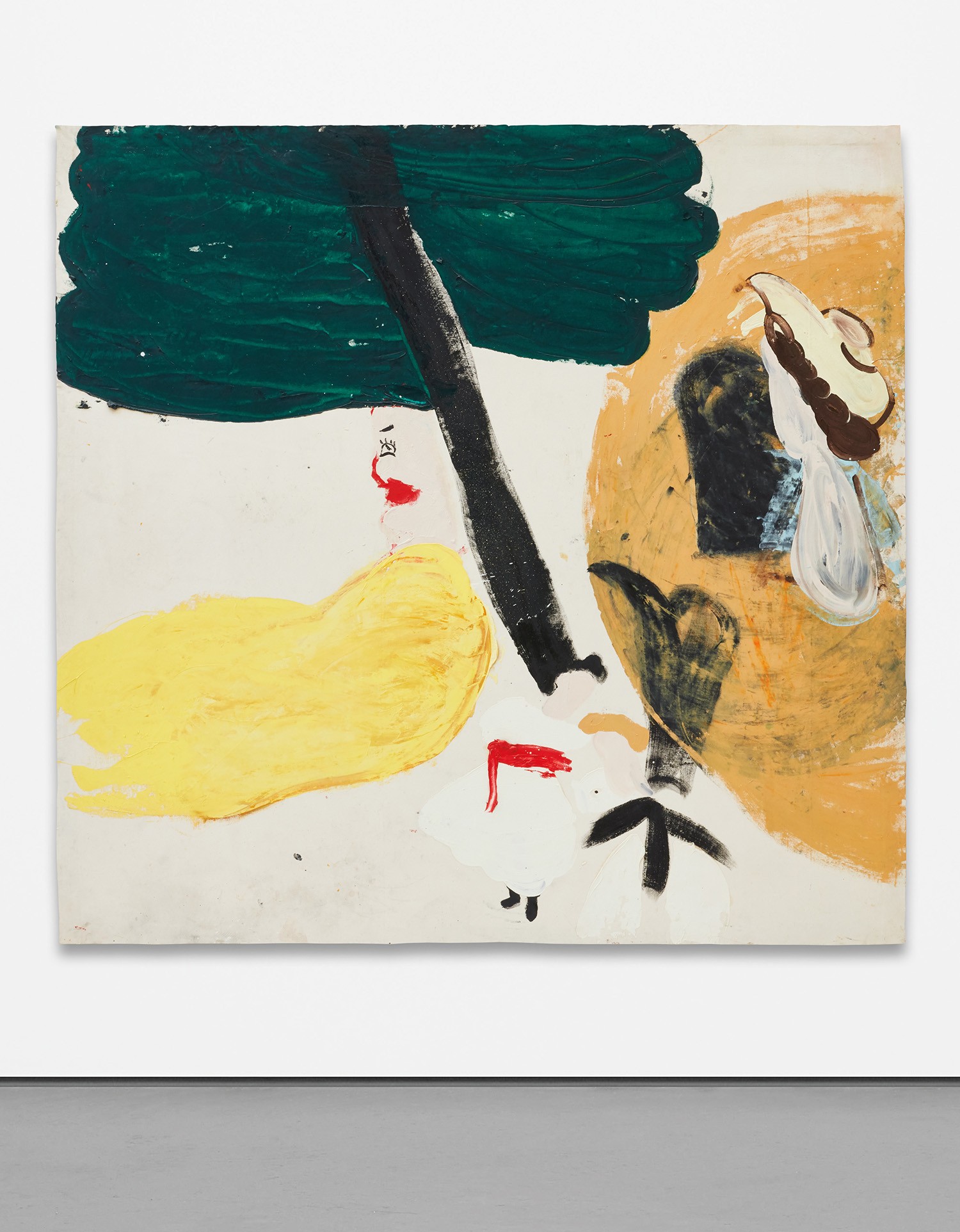
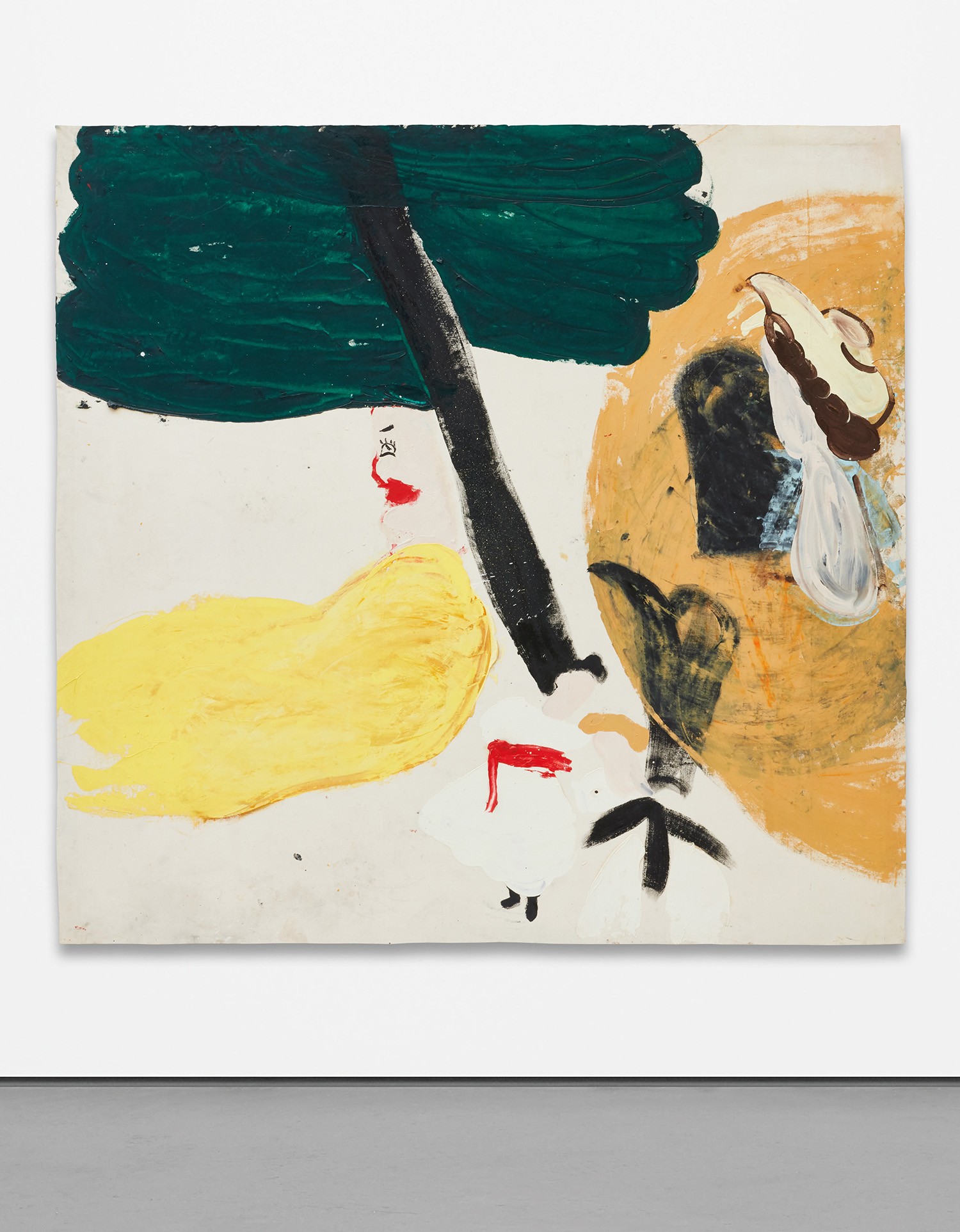
Wylie draws on cinema, sport, art history, myth, and the textures of daily life, flattening these sources into compositions that feel simultaneously naive and rigorously considered. Works from the late 1990s such as "Green Grass, White Cat" and "Red Belt, Red Lipstick," both oil on canvas from 1997, already demonstrate the confidence of her mature approach: bold outlines, unexpected colour relationships, and a willingness to let the painted surface carry the weight of thought without any decorative smoothing over. Text appears in her work not as caption or explanation but as another visual element, sitting alongside figures and marks with equal pictorial authority. The cultural references in her paintings are wide and genuinely personal.
"Marcellus, Back of Head with Plaster" from 2009 takes its cue from a famously charged moment in Quentin Tarantino's Pulp Fiction, the inscription across the canvas edge acknowledging the source with the directness of a notebook entry rather than a formal title. "Queen of Sheba with Gold Lump" from 2012 reaches toward myth and art history with the same unfussy appetite. "Cara Delevingne (Yellow Ochre)" places a celebrity face within the same visual field as ancient queens and film characters, because in Wylie's world these figures occupy the same plane of fascination. "Plastic Footballers" from 2003, rendered in marker, crayon, and paper collage, finds in the cheap materiality of children's toys the same formal interest she might bring to a Velázquez.
Rose Wylie
Red Belt, Red Lipstick, 1997
This is not irony. It is genuine curiosity, applied without hierarchy. For collectors, Wylie's work offers something increasingly rare in the contemporary market: a practice that is visually unmistakable but formally restless, where each work repays sustained looking. Works on paper, including watercolours and the screenprint "Pop Witch" and lithograph "King John, Frog," provide accessible points of entry into her world, demonstrating the same gestural confidence as the large canvases at a more intimate scale.
The 2011 watercolour and graphite work "Bahrain" and the two part acrylic "Green" from the same year show her moving fluidly between media without ever sacrificing the quality of directness that defines her vision. Collectors who have followed her work over time speak consistently about the way the paintings hold the room, not through scale alone but through a kind of insistent pictorial energy. Wylie belongs to a tradition of figurative painters who have resisted the pressure to resolve their imagery into something polished or easily consumed. In this she invites comparison with artists such as Philip Guston, whose late return to figuration also confounded expectations and generated some of the most vital painting of his era, and with Cecily Brown, whose work shares a similar appetite for the loaded image and the loaded surface.
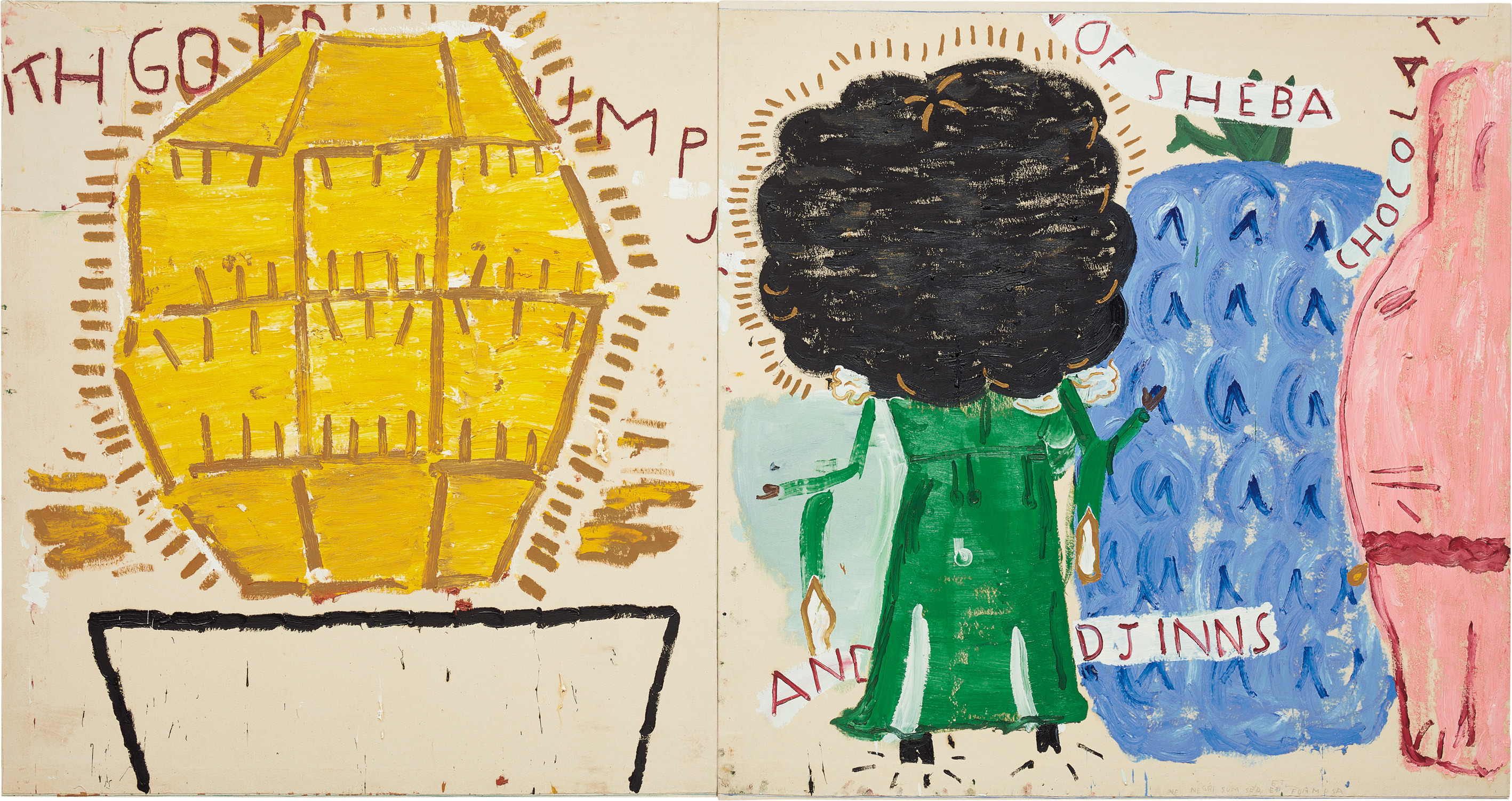
Rose Wylie
Queen of Sheba with Gold Lump, 2012
There are also affinities with the work of Paula Rego in the way that narrative is treated as something fragmented and potent rather than linear and resolved. Within the specifically British context, her independence of spirit recalls the example of Frank Auerbach and Leon Kossoff, painters who pursued their own visual obsessions over long careers with complete fidelity to their own seeing. What makes Wylie matter so much right now is precisely the quality of that fidelity. In a period when painting is frequently discussed in terms of strategy and positioning, her work stands as evidence that the deepest investments are made to the work itself rather than to the market or the institution.
She has won the Paul Hamlyn Award and received the Turner Prize nomination, and her work is held in significant public and private collections, but the paintings do not feel like the products of a career managed toward these outcomes. They feel like the work of someone who genuinely cannot imagine doing anything else, which is perhaps the most compelling thing a painting can communicate. To spend time with Wylie's canvases is to be reminded of what painting is for.