Roger Hilton
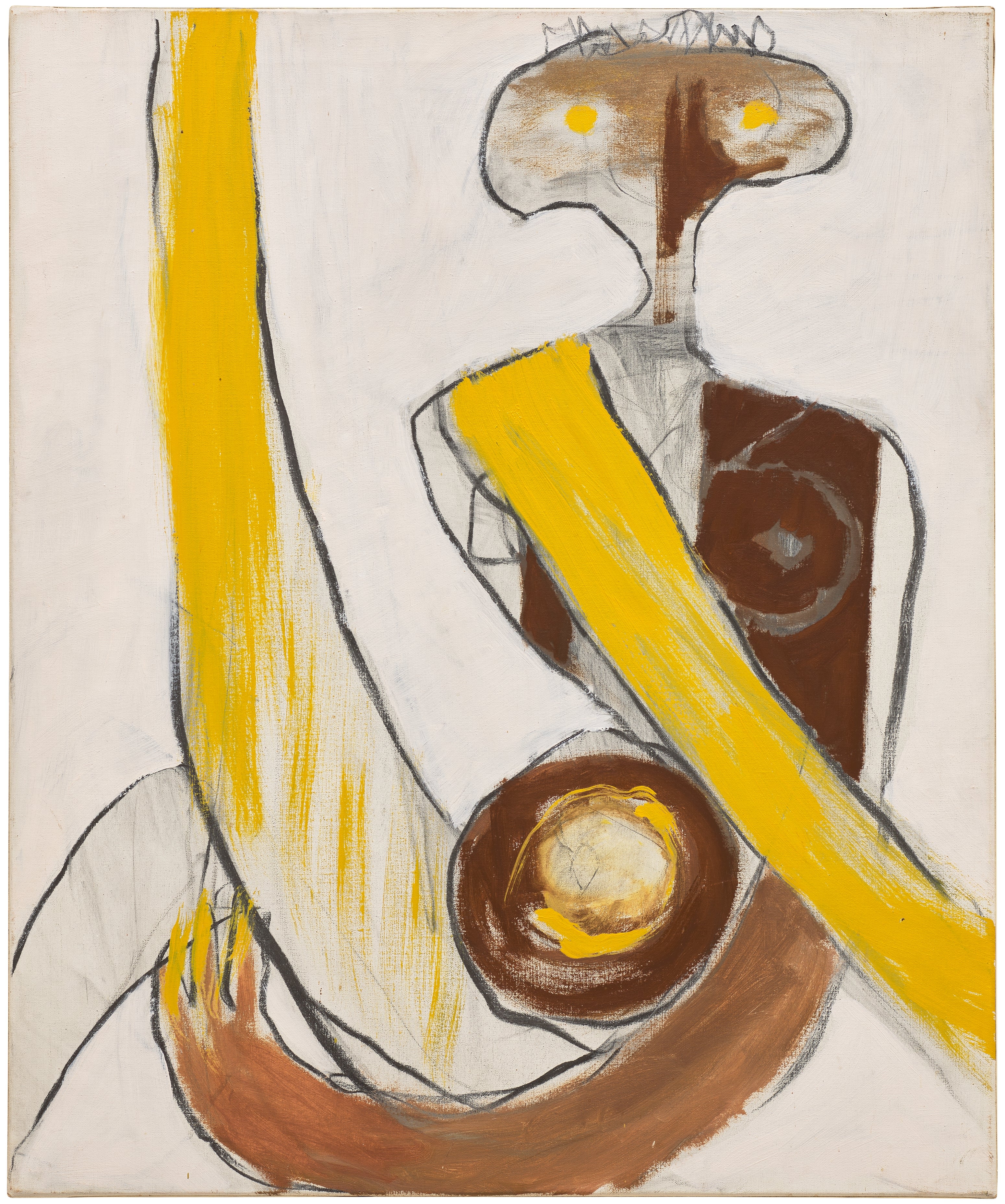
Roger Hilton, Where Abstraction Finds Its Joy
Artist Spotlight · The Collection Editorial
“A painting should be an event, something that happens to you rather than something you merely look at.”
Roger Hilton
In the spring of 2023, Tate St Ives mounted a season of programming celebrating the enduring legacy of the artists who transformed a remote Cornish fishing town into one of the most vital centres of postwar British art. Among the names that kept surfacing, in conversations between curators and collectors alike, was Roger Hilton. More than four decades after his death in 1975, his paintings and works on paper continue to exert a pull that feels entirely contemporary, animated by a restless energy and a refusal to be solemn about the act of making. For those who collect seriously in this area, Hilton remains one of the most rewarding figures to pursue.
Roger Hilton
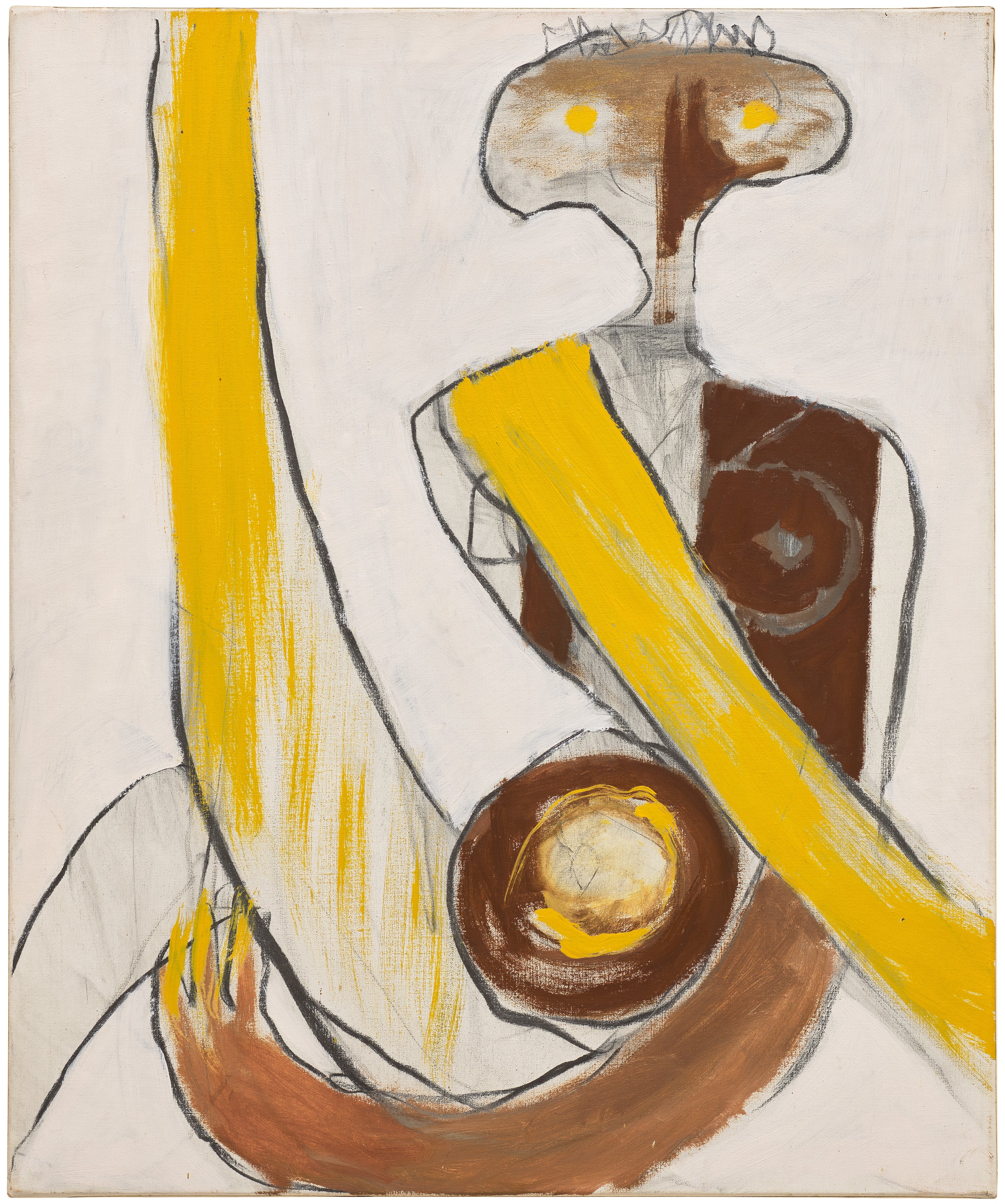
Figure 1972, 1972
Roger Hilton was born in Northwood, Middlesex, in 1911, into a family with German Jewish roots. His father had anglicised the family name from Hildesheim, and this sense of dual identity, of belonging to more than one world, would quietly inform Hilton's relationship with European modernism throughout his life. He studied at the Slade School of Fine Art in London, where he received a rigorous grounding in drawing and composition, and then travelled to Paris to study under Roger Bissière at the Académie Ranson in the early 1930s. That Parisian formation was decisive.
Bissière was a painter who occupied a fascinating position between figuration and abstraction, and his influence on Hilton was less about style than about attitude: a belief that painting should be alive, exploratory, and genuinely felt. Hilton's development through the 1940s and into the 1950s traces one of the most compelling arcs in British postwar art. His early canvases were figurative, grounded in observed reality, but a series of visits to Amsterdam brought him into contact with the legacy of Piet Mondrian and the De Stijl movement, and something shifted irreversibly. He began to understand abstraction not as a rejection of the world but as a more honest encounter with it, a way of getting closer to the essential rhythms of space, weight, and feeling.
Roger Hilton
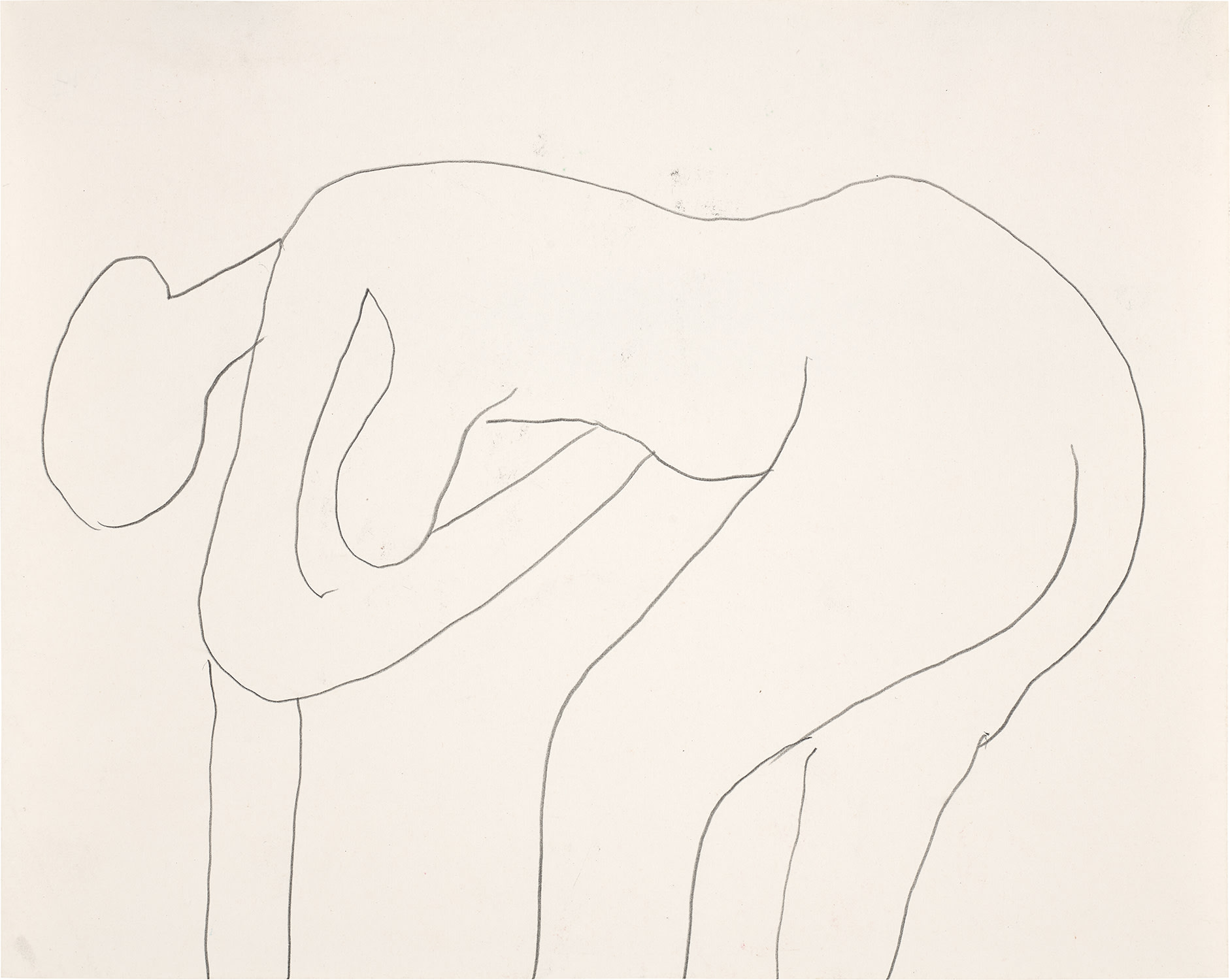
circa 1969
By the early 1950s he was producing paintings of real originality, works that sat apart from both the gestural American painting then gaining dominance and the cooler European geometric tradition, occupying instead a space that was distinctly his own. The years from roughly 1953 to 1965 represent the first great peak of Hilton's achievement. These are paintings in which form seems to breathe, where ochres and greys and warm whites press against one another with a sense of controlled tension. He was in dialogue with fellow painters including Terry Frost, Patrick Heron, and Peter Lanyon, all of whom were negotiating the relationship between the Cornish landscape and non representational painting.
Hilton was always resistant to the idea that his abstractions were straightforwardly landscape paintings in disguise. He insisted on the autonomy of pictorial structure, on the idea that a painting was first and foremost an object with its own internal logic. Yet the physicality of Cornwall, the light and the sea and the rough Atlantic weather, is undeniably present in the work, not as subject matter but as a kind of atmospheric inheritance. In the late 1960s and early 1970s, confined to his bed for extended periods due to serious illness, Hilton produced a remarkable body of works on paper.
Roger Hilton
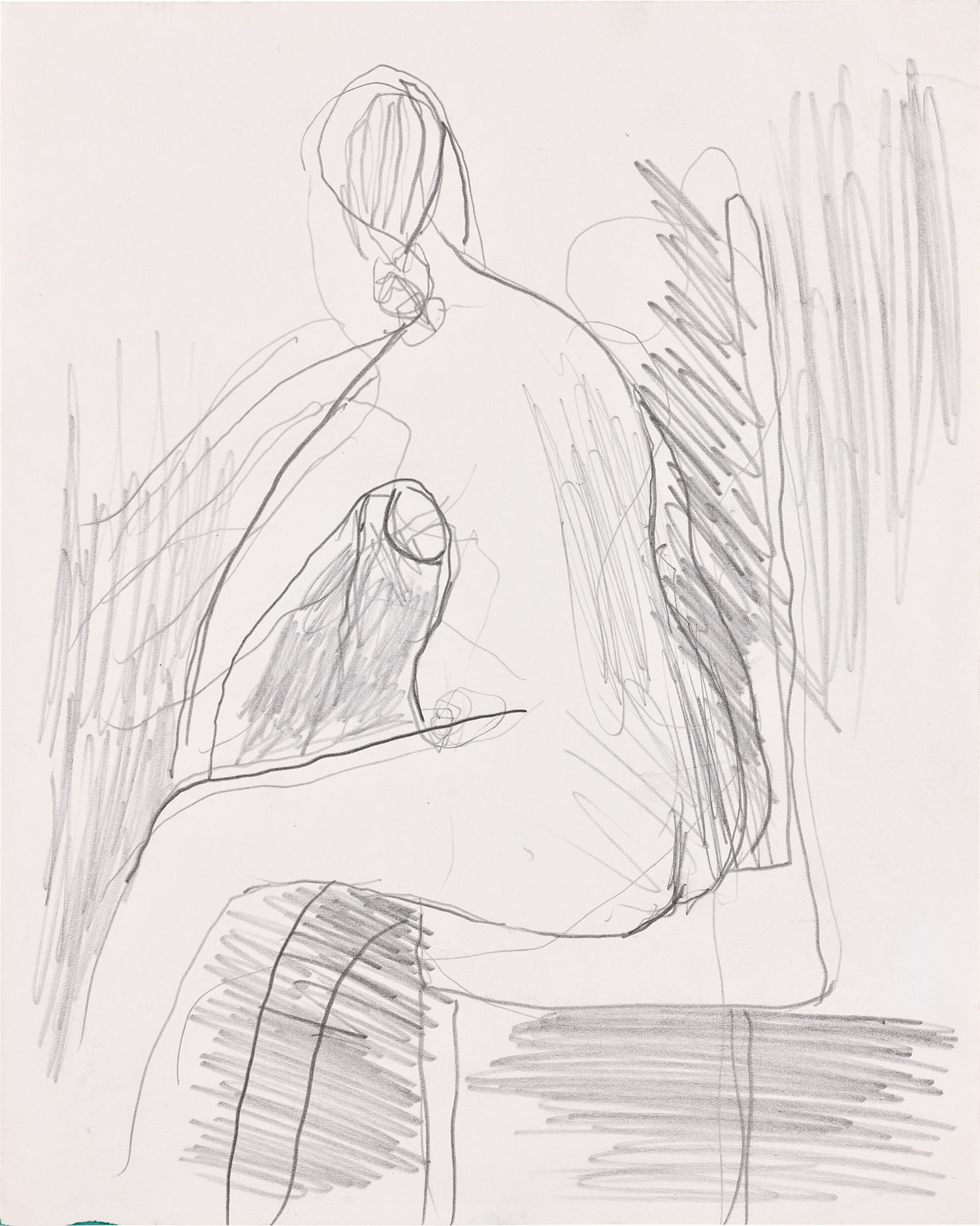
circa 1972-73
These late pieces, gouaches and charcoal drawings and works combining pastel with ink, have gradually come to be understood as among his most significant achievements. Often featuring rough, joyful figures, birds, women, animals, sketched with a directness that recalls both cave painting and the work of Paul Klee, they seem to distil a lifetime of looking and making into something almost effortlessly vital. Far from being the work of a man diminished by illness, they are bracingly alive, full of wit and appetite. Works from this period, including the gouaches and mixed media drawings that now appear on The Collection, offer collectors an extraordinary opportunity to encounter Hilton at his most unguarded and his most essential.
On the market, Hilton occupies a position that informed collectors have long understood to be one of the most interesting in postwar British art. His major oil paintings from the 1950s and early 1960s appear relatively rarely at auction, and when they do they attract serious attention. Works on paper from the late period represent a more accessible entry point, but their quality is in no way secondary. Auction houses including Christie's and Sotheby's have offered examples across various price points, and the sustained collector interest reflects both the historical importance of the work and its genuine visual pleasure.
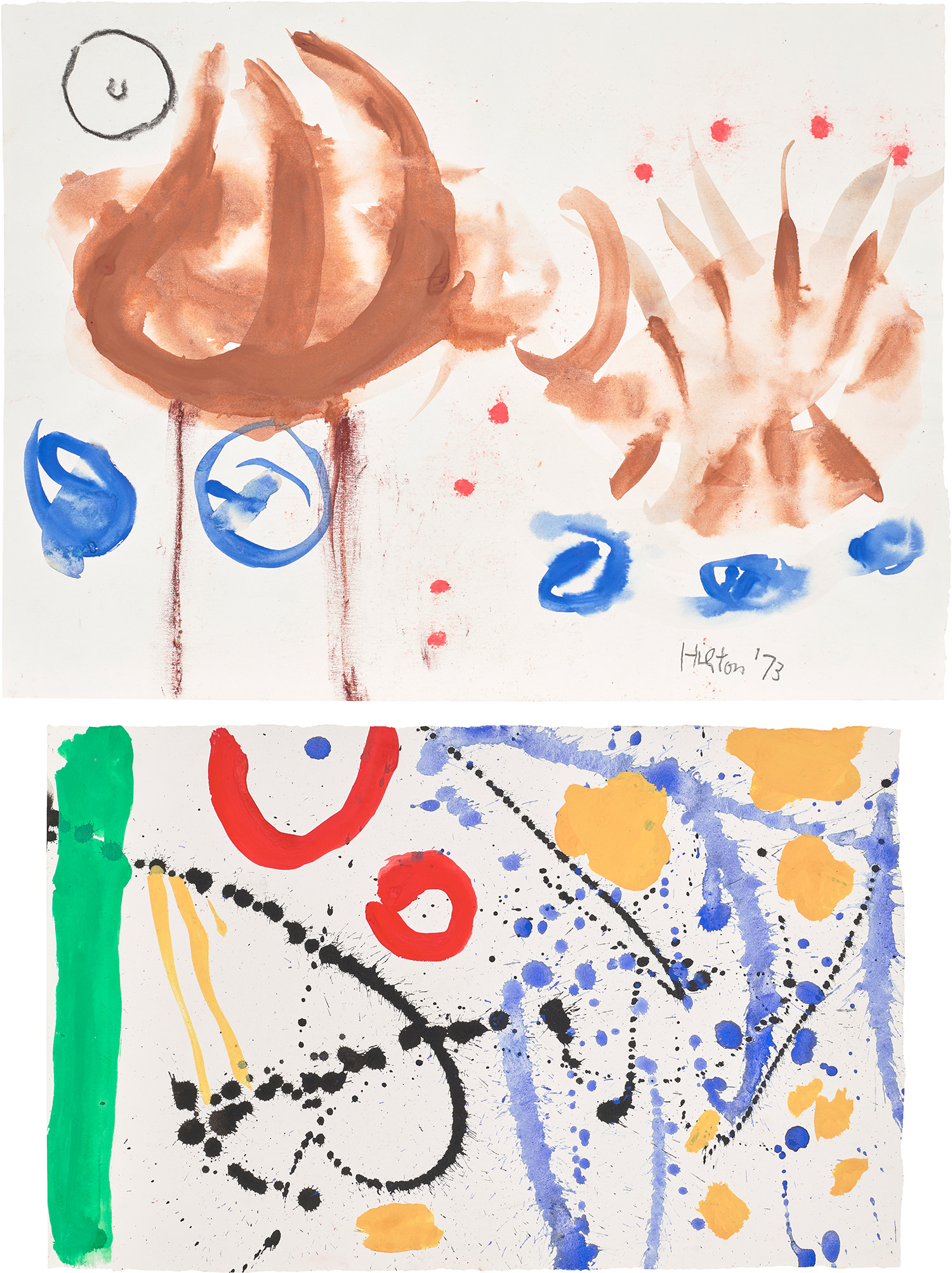
Roger Hilton
circa 1973
Anyone building a collection focused on the St Ives school, or on postwar European abstraction more broadly, would be well served by considering Hilton carefully and early. To understand Hilton's place in art history, it helps to think about him in relation to several overlapping conversations. He belongs to the generation of British painters who were serious students of European modernism at a time when that required real effort and real travel. His connections to Mondrian and to Bissière link him to a tradition of thoughtful, structurally rigorous abstraction that also produced painters like Nicolas de Staël, whose work Hilton admired, and Jean Hélion.
At the same time his place within the St Ives constellation connects him to Heron, Frost, Lanyon, and Barbara Hepworth, artists who were collectively remaking the terms on which British art engaged with international modernism. Hilton was never quite at ease with group identity, but he was a generous and engaged presence in those conversations. What endures in Roger Hilton's work is something that resists easy summary. It is the sense of a painter who never stopped asking what painting was for, who brought genuine philosophical seriousness to the act of making and yet never allowed that seriousness to become heaviness.
The late works on paper in particular feel like gifts: images made by someone who had thought deeply about form and colour for decades and then, freed from the pressure to be monumental, simply drew what delighted him. For collectors, for curators, and for anyone who believes that abstract art can be both intellectually rigorous and warmly human, Roger Hilton remains essential.
Explore books about Roger Hilton
Roger Hilton: A Retrospective
Andrew Causey
Roger Hilton 1911-1975
Peter Lanyon and others
Roger Hilton: Writings and Interviews
Roger Hilton
St Ives: Twenty Years of Painting, Sculpture and Pottery
Michael McNay
Abstract Art in the Late Twentieth Century
Paul Wood