Roger Fenton
Roger Fenton: Vision That Made History
Artist Spotlight · The Collection Editorial
Picture the Crimean Peninsula in the spring of 1855. The air carries the smell of gunpowder and salt water. Across the scarred landscape around Balaklava, amid the chaos of one of the nineteenth century's most brutal conflicts, a man emerges from a converted wine merchant's wagon outfitted as a darkroom, carrying a camera into territory no photographer had meaningfully entered before. Roger Fenton, a barrister turned artist turned pioneer, was about to change forever what photography could be and what it could witness.
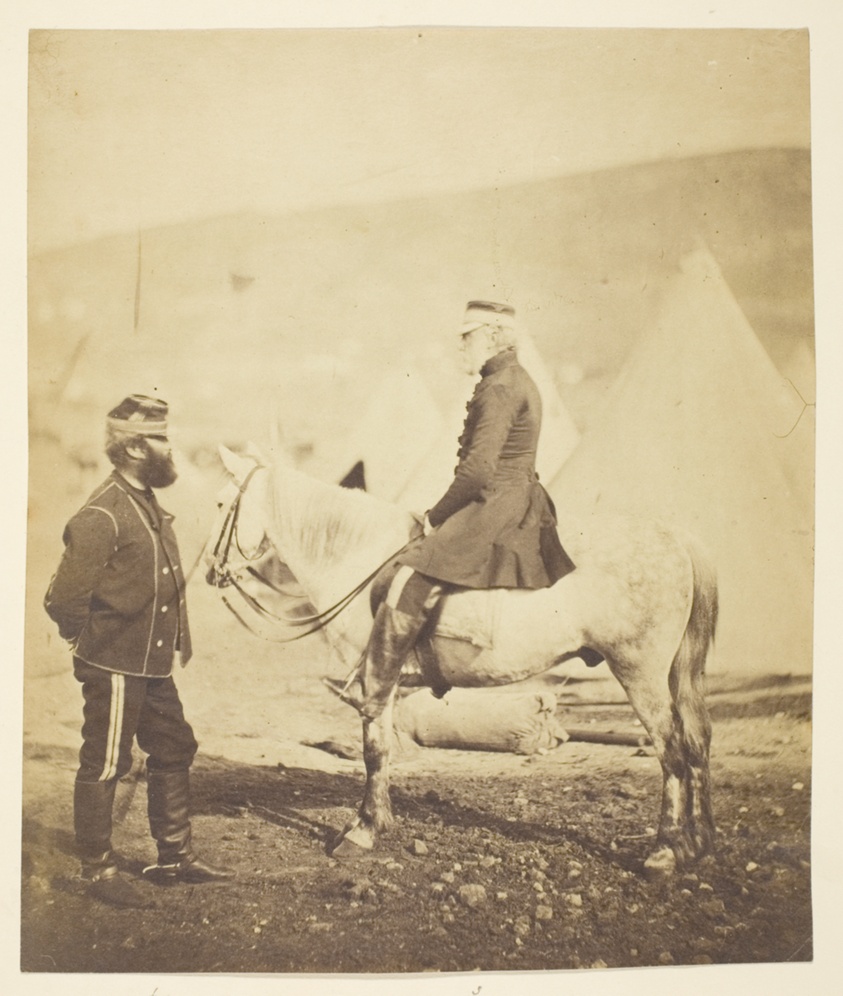
Roger Fenton
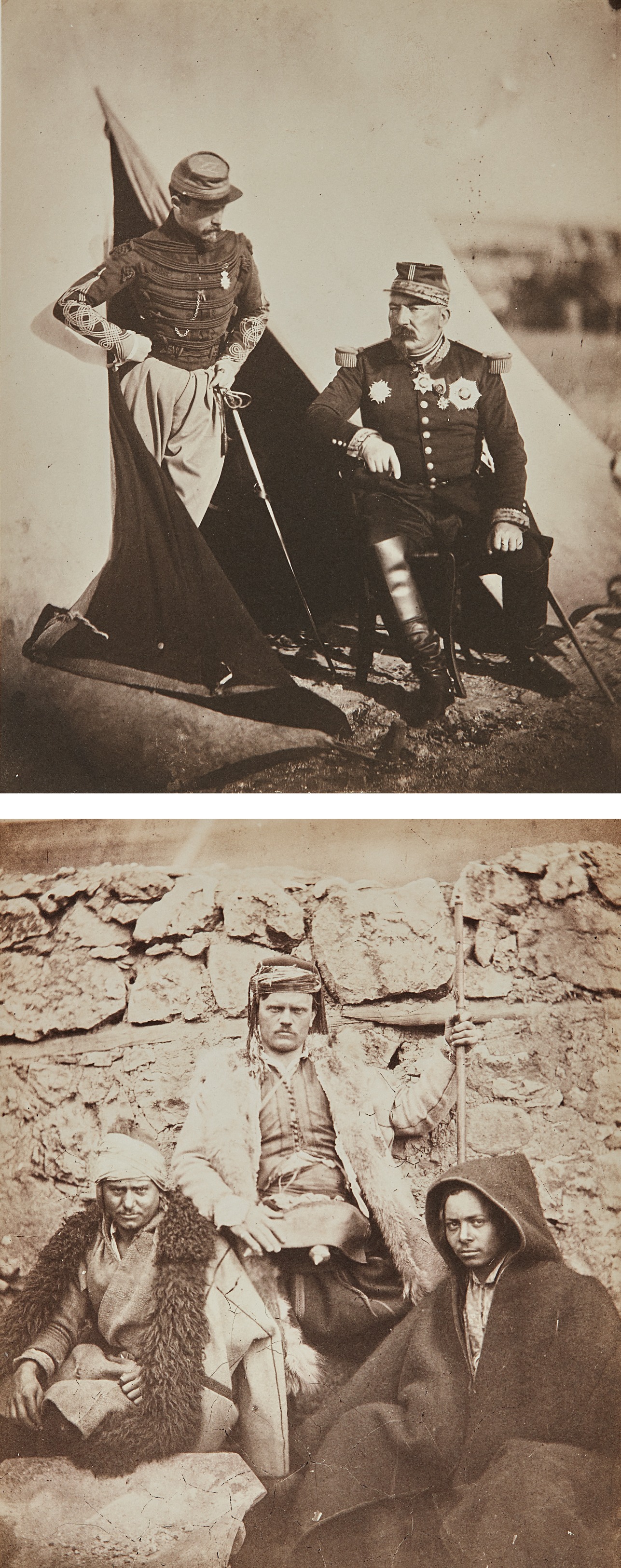
Sir Jas. York Scarlett (1799-1880), General, led Charge of Heavy Brigade, Balaclava (left); Edward Wm. Lowe (1820-1880), General (right); Taken at the Crimea, 1855
That moment of radical ambition, nearly 170 years ago, continues to reverberate through the history of the medium. Fenton was born in 1819 in Crimble Hall, Lancashire, into a prosperous family with deep roots in commerce and civic life. His father, John William Fenton, was a banker and Member of Parliament, and the family's comfortable position afforded Roger an education of genuine breadth. He studied at University College London before traveling to Paris in the 1840s, where he trained as a painter under the celebrated history painter Paul Delaroche.
Paris in this period was a crucible of artistic and intellectual energy, and it was there that Fenton encountered the early photographic experiments circulating among artists and thinkers in Delaroche's orbit. The painter himself had famously declared, upon seeing a daguerreotype, that painting was dead. Fenton drew a different conclusion: he saw a new art form being born. Returning to England, Fenton qualified as a solicitor but never abandoned his passion for image making.
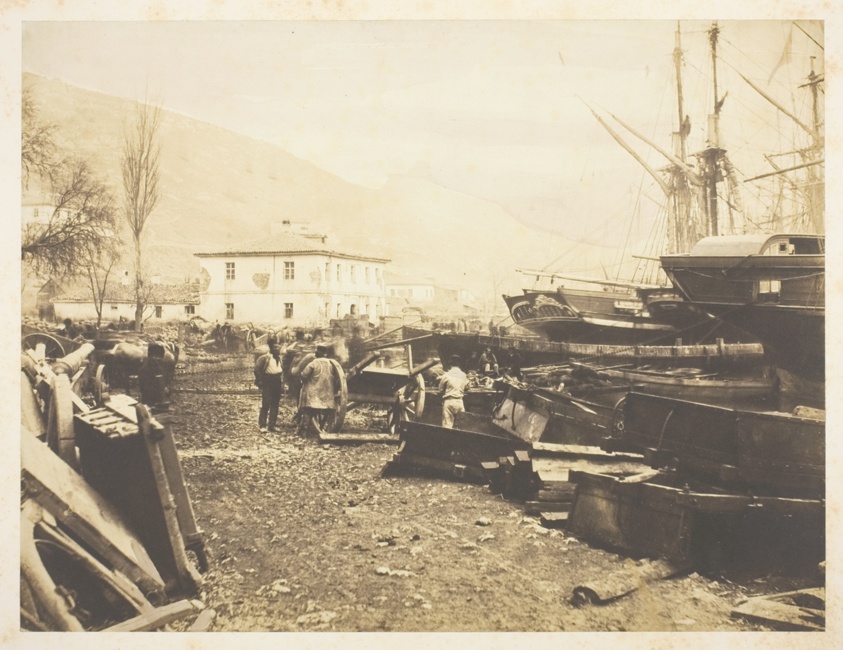
Roger Fenton
Landing Place, Ordnance Wharf, Balaklava, 1855
By the early 1850s he had committed himself seriously to photography, and in 1853 he was among the founding members of the Photographic Society of London, an institution that would later become the Royal Photographic Society. This was not merely a hobbyist's club. Fenton and his fellow founders, including the polymath scientist Sir Charles Wheatstone, were determined to establish photography as a discipline worthy of serious intellectual and artistic regard. The society held its first exhibition in 1854, and Fenton was central to its ambitions from the outset.
He also undertook an early photographic documentation of the British Museum's collections, a commission that demonstrated both the medium's documentary potential and Fenton's instinct for applying it with care and intelligence. The Crimean War commission of 1855 stands as the defining chapter of Fenton's career, and it remains among the most discussed episodes in the entire history of photography. Traveling to the front under a mandate that involved both government interest and the publishing ambitions of Thomas Agnew and Sons, Fenton spent several months documenting the British military campaign. Working under extreme conditions, with the wet collodion process demanding that negatives be coated, exposed, and developed within minutes, he produced roughly 360 photographs.
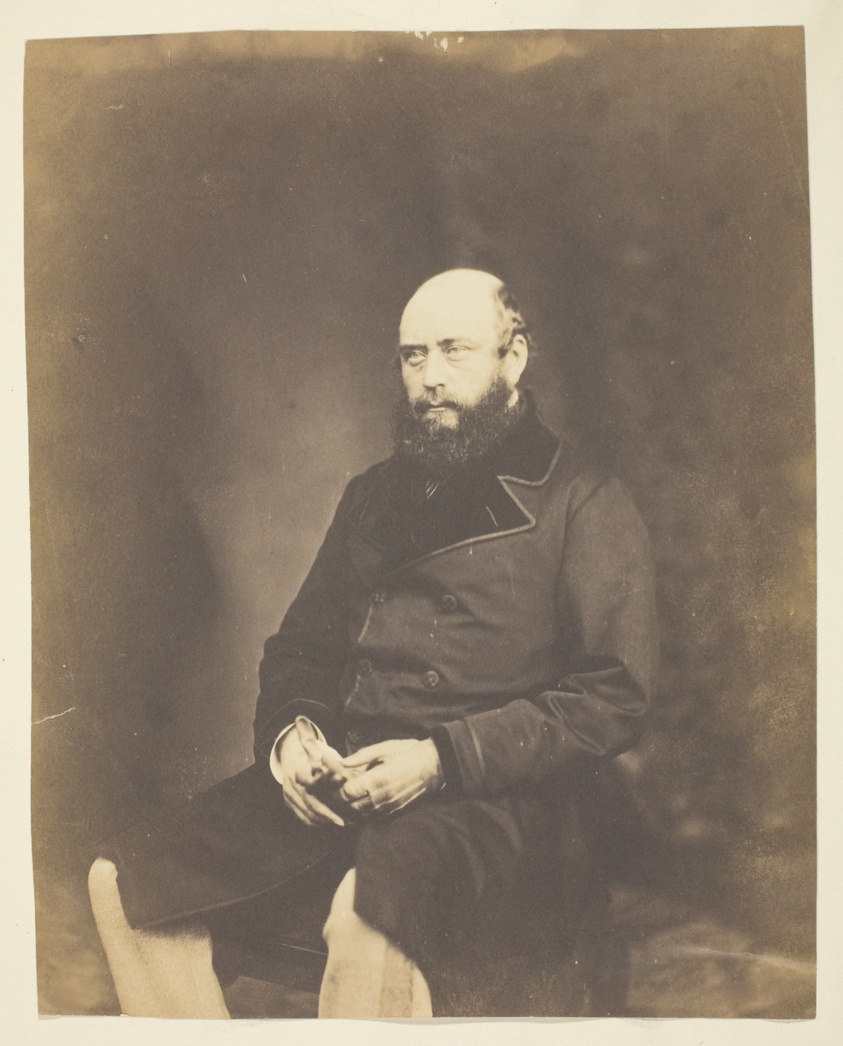
Roger Fenton
George, Duke of Cambridge (1819-1910), Field Marshal; Crimea, 1855
Works such as Artillery Waggons, Balaklava in the Distance and Landing Place, Ordnance Wharf, Balaklava capture the logistics and landscape of war with a compositional authority that feels almost impossibly assured given the circumstances. His portraits of officers, including Sir John Miller Adye and Sir J. Montagu Steele, are studies in character and composure that rival the finest studio portraiture of the era. The Mamelon and Malakoff, from the Mortar Battery offers a panoramic gravity that seems to weigh the cost of the conflict against the silence of the terrain.
These images were published in the album Photographic Pictures of the Seat of War in the Crimea in 1856, reaching a wide public and establishing the template for war photography that would shape the work of every conflict photographer who followed. Yet to define Fenton solely by the Crimea is to miss the full richness of his practice. In the years before and after the war he produced exquisite landscapes of the English and Welsh countryside, architectural studies of cathedrals and abbeys, and still life compositions of remarkable sophistication. His still lifes in particular, often featuring fruit, flowers, ceramics, and game arranged with the learned eye of someone steeped in Dutch and Flemish painting, demonstrate a sensibility that was as much about art history as it was about technological experiment.
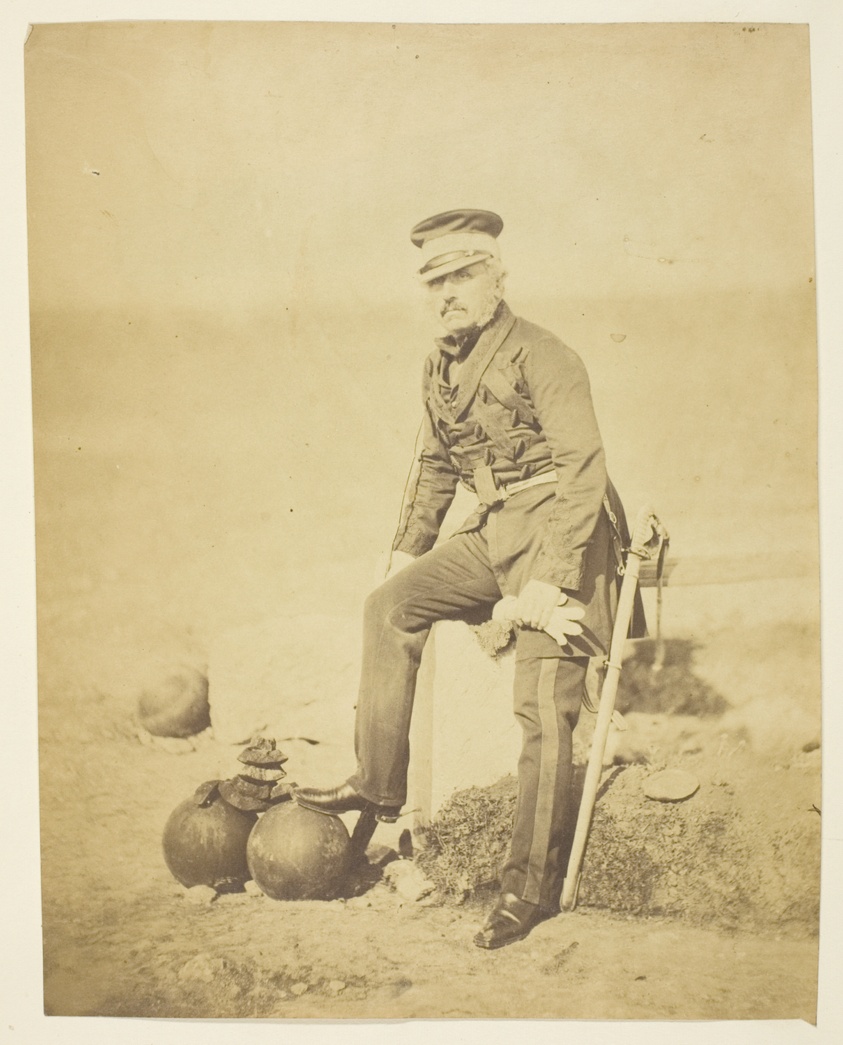
Roger Fenton
Sir Henry William Barnard (1799-1857), General, Chief of Staff; Taken at the Crimea, 1855
These works reveal a photographer who understood that the camera was not merely a recording instrument but a means of interpreting the visible world. For collectors, Fenton's work offers something genuinely rare: entry into the very origins of photography as a medium of artistic and historical consequence. His salted paper prints from the Crimea, many produced from wet collodion negatives, are among the most significant photographic objects of the nineteenth century. The thinly albumenized portrait prints, with their delicate tonal range and extraordinary surface quality, reward close attention in ways that reproductions simply cannot convey.
Collectors and institutions seeking works of genuine art historical importance look for prints with strong tonal presence and provenance that connects them to the original 1856 albums. Major auction houses including Christie's and Sotheby's have handled Fenton's work at the highest levels of the market, and museum collections from the Victoria and Albert Museum to the Library of Congress hold significant holdings. Demand for his Crimean work in particular has remained consistently strong, reflecting both its historical weight and its enduring visual power. Fenton belongs to a constellation of nineteenth century photographer artists whose ambitions pushed the medium toward new territories.
His near contemporaries Gustave Le Gray in France and Carleton Watkins in America shared his conviction that photography could achieve the expressive range of painting. William Henry Fox Talbot, whose calotype process preceded Fenton's work, laid essential technical groundwork that made Fenton's practice possible. Julia Margaret Cameron, working slightly later in Britain, shared his commitment to photography as a fine art. Together these figures form the foundational layer of photographic history, and Fenton's place among them is secure and distinguished.
The enduring significance of Roger Fenton lies in his refusal to accept any single limitation on what photography could do or mean. He brought the camera to a battlefield, to a cathedral nave, to a table laden with fruit and silver, and in each setting he asked the same essential question: what does it mean to truly see? His answers, fixed in silver and light on paper more than a century and a half ago, remain among the most compelling in the entire history of the medium. To collect Fenton is to hold in your hands the moment photography became something more than a novelty and began its long, extraordinary life as art.
Featured Works
Sir Jas. York Scarlett (1799-1880), General, led Charge of Heavy Brigade, Balaclava (left); Edward Wm. Lowe (1820-1880), General (right); Taken at the Crimea
1855
Landing Place, Ordnance Wharf, Balaklava
1855
George, Duke of Cambridge (1819-1910), Field Marshal; Crimea
1855
Sir Henry William Barnard (1799-1857), General, Chief of Staff; Taken at the Crimea
1855
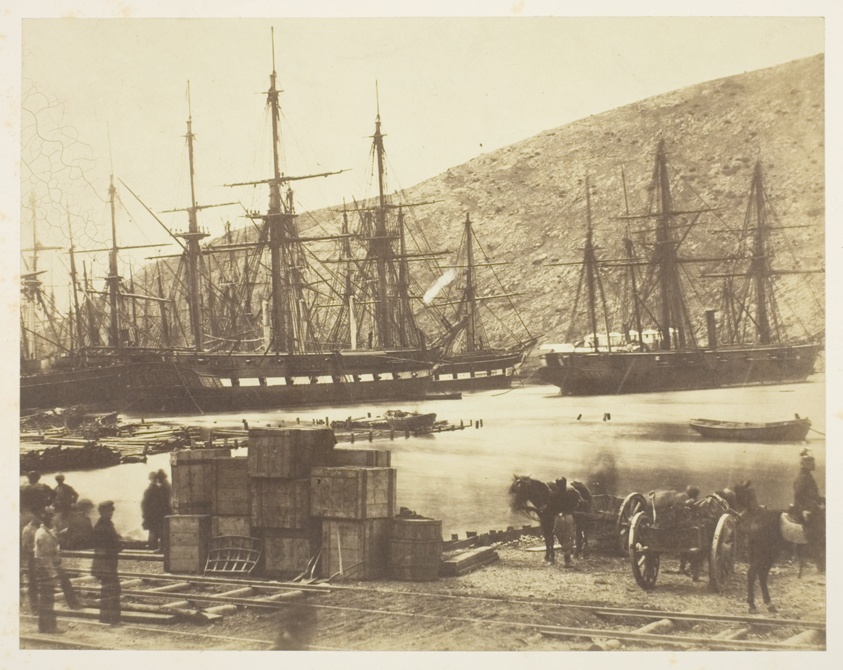
Head of Harbour, Balaklava
1855
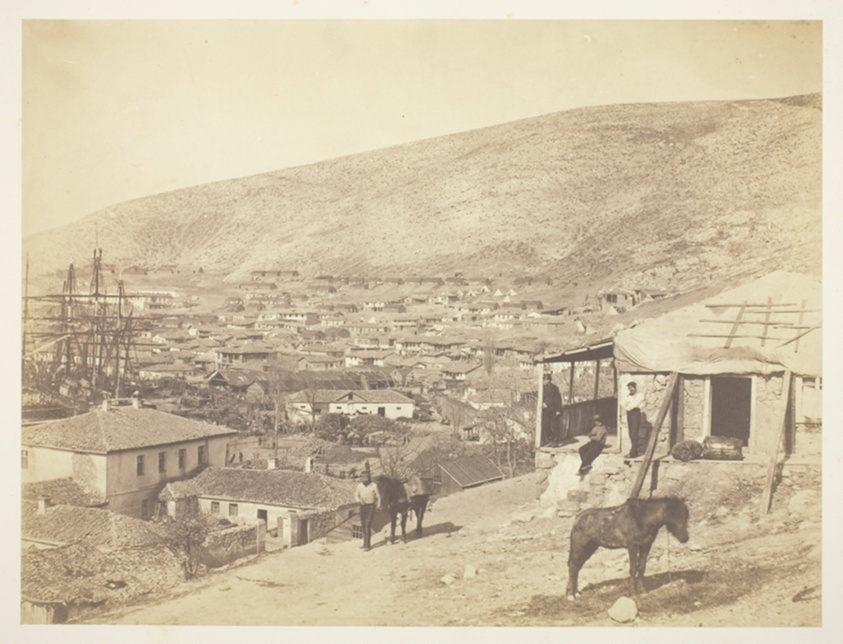
The Town of Balaklava
1855
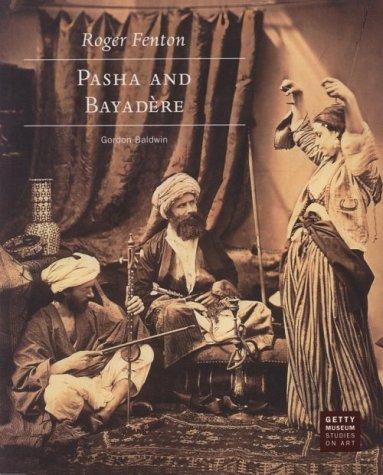
Explore books about Roger Fenton