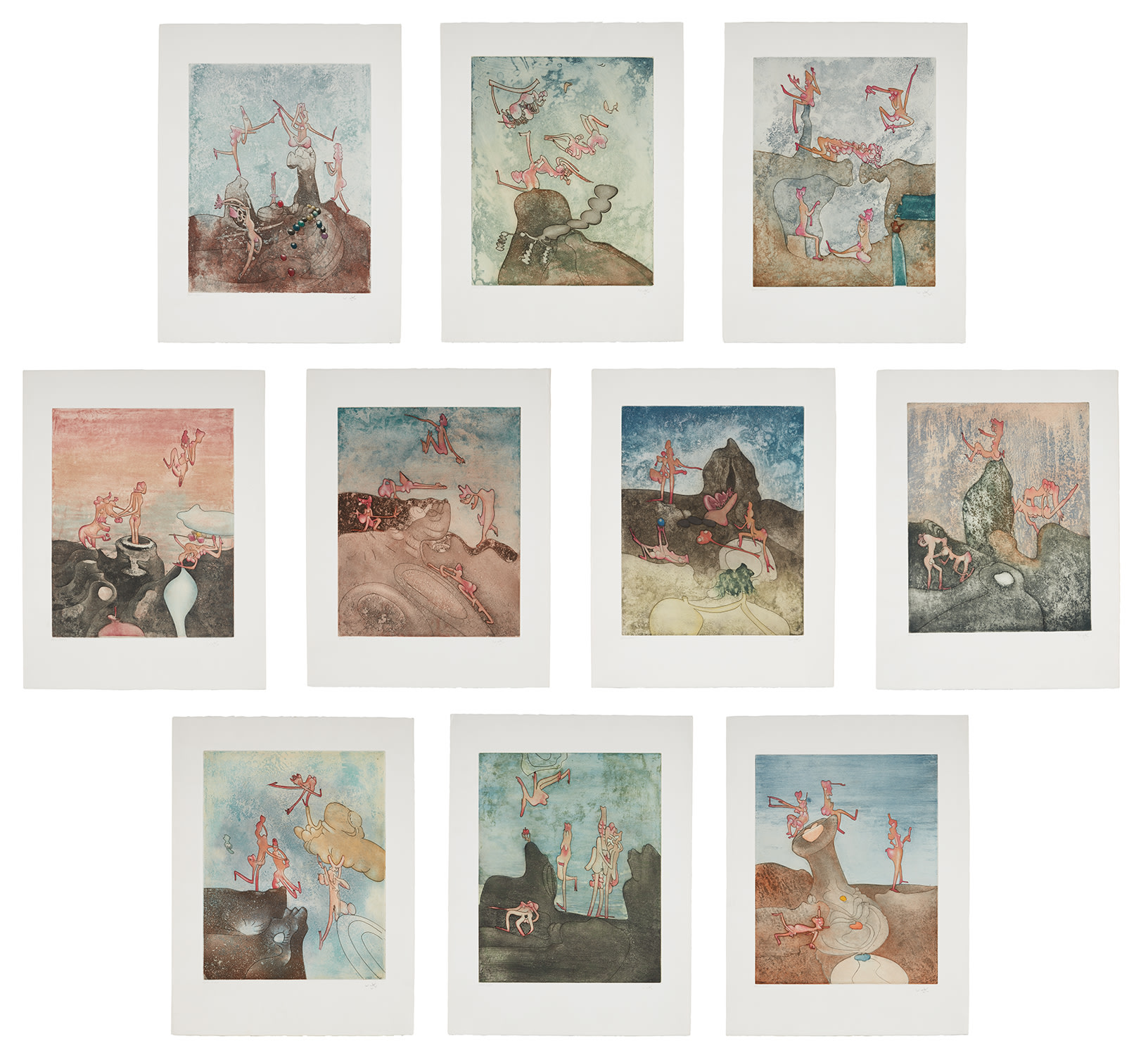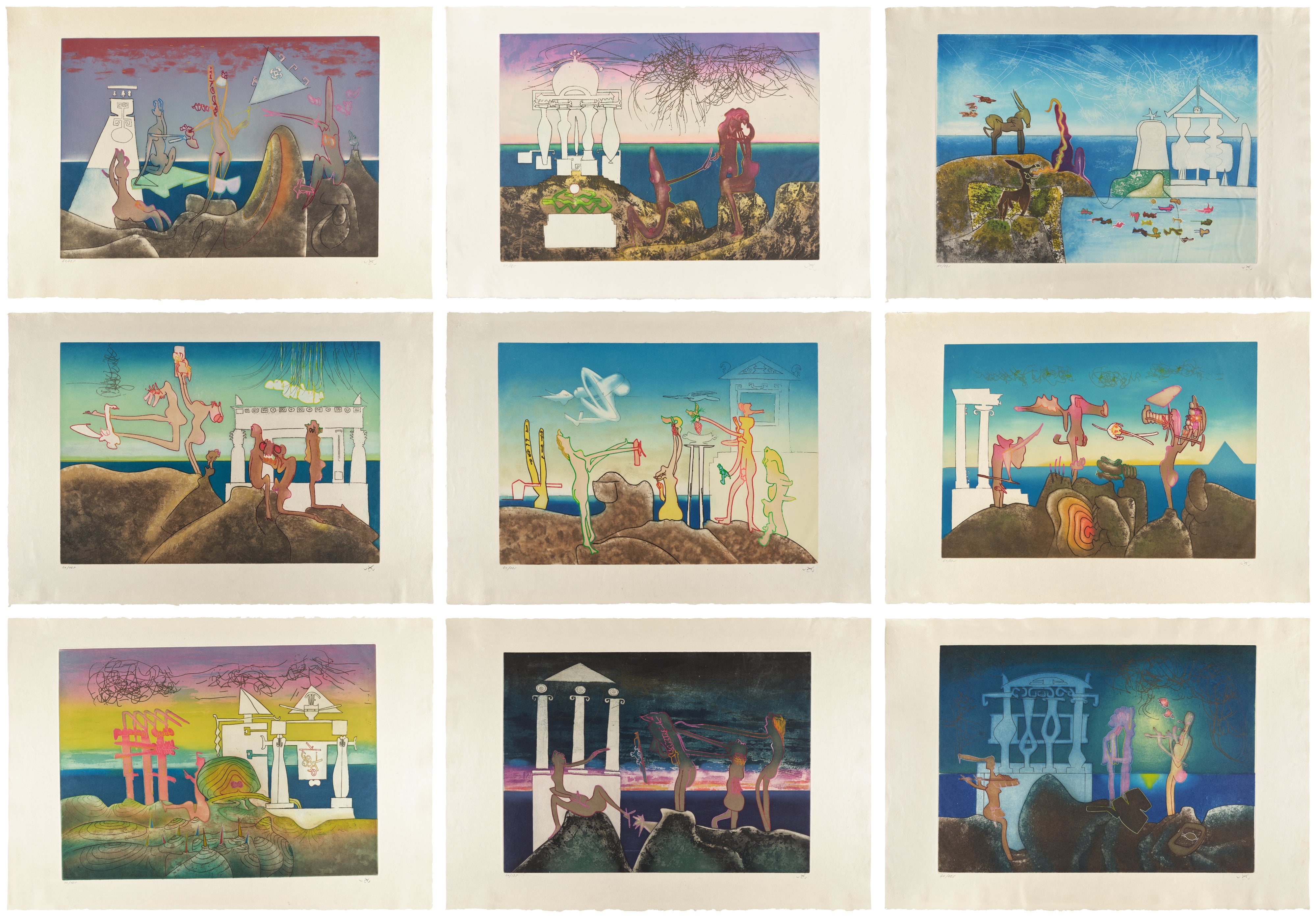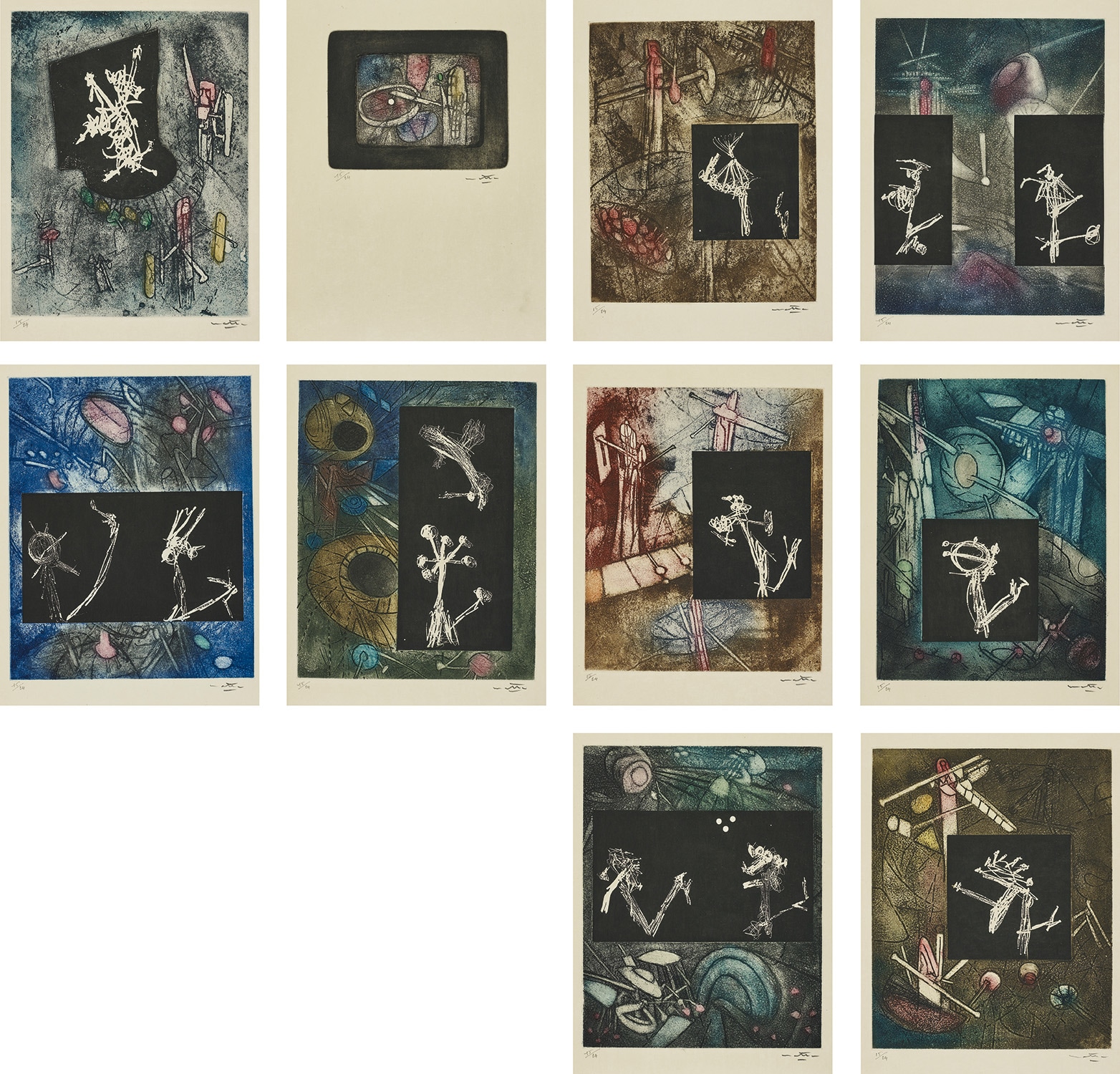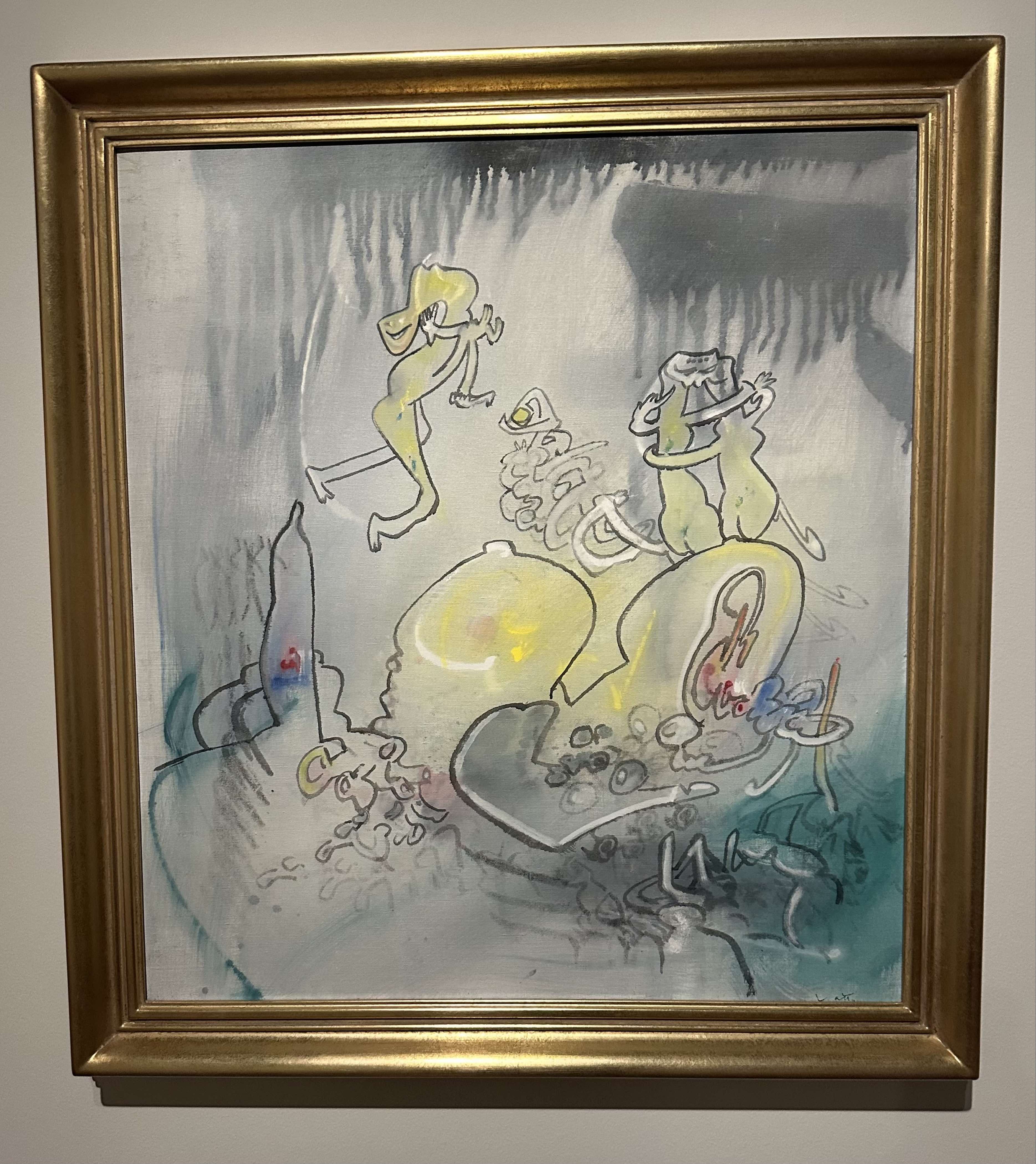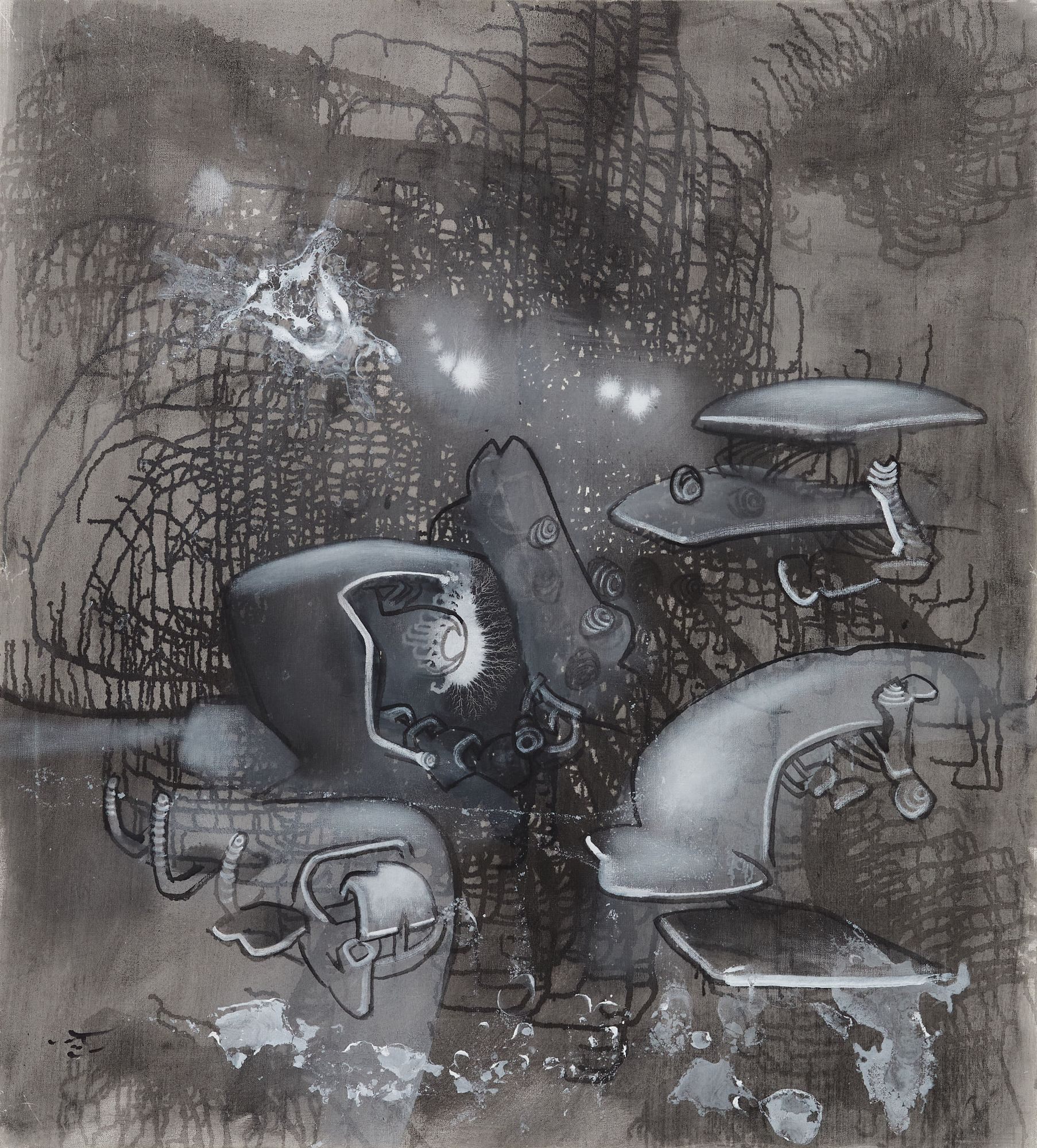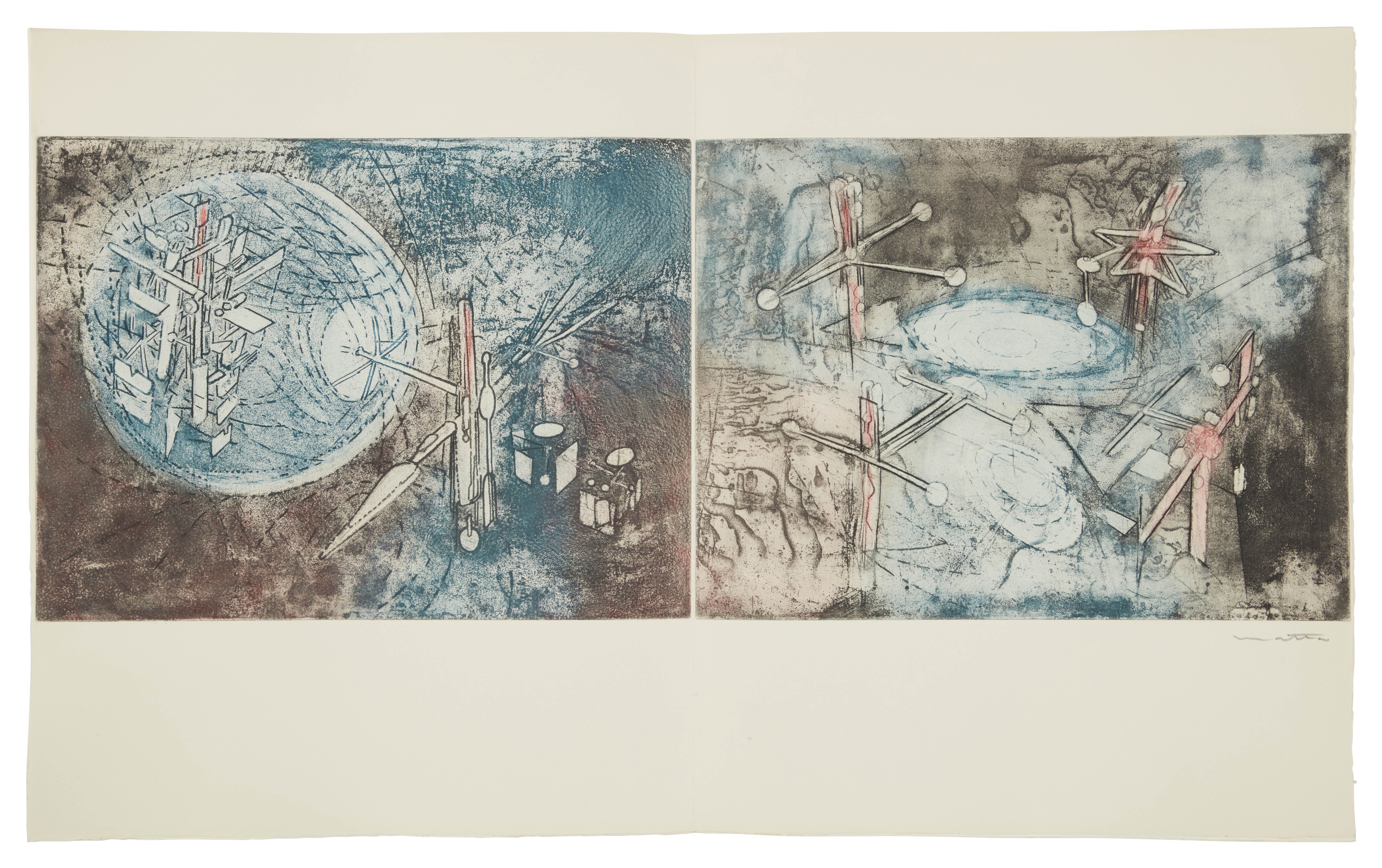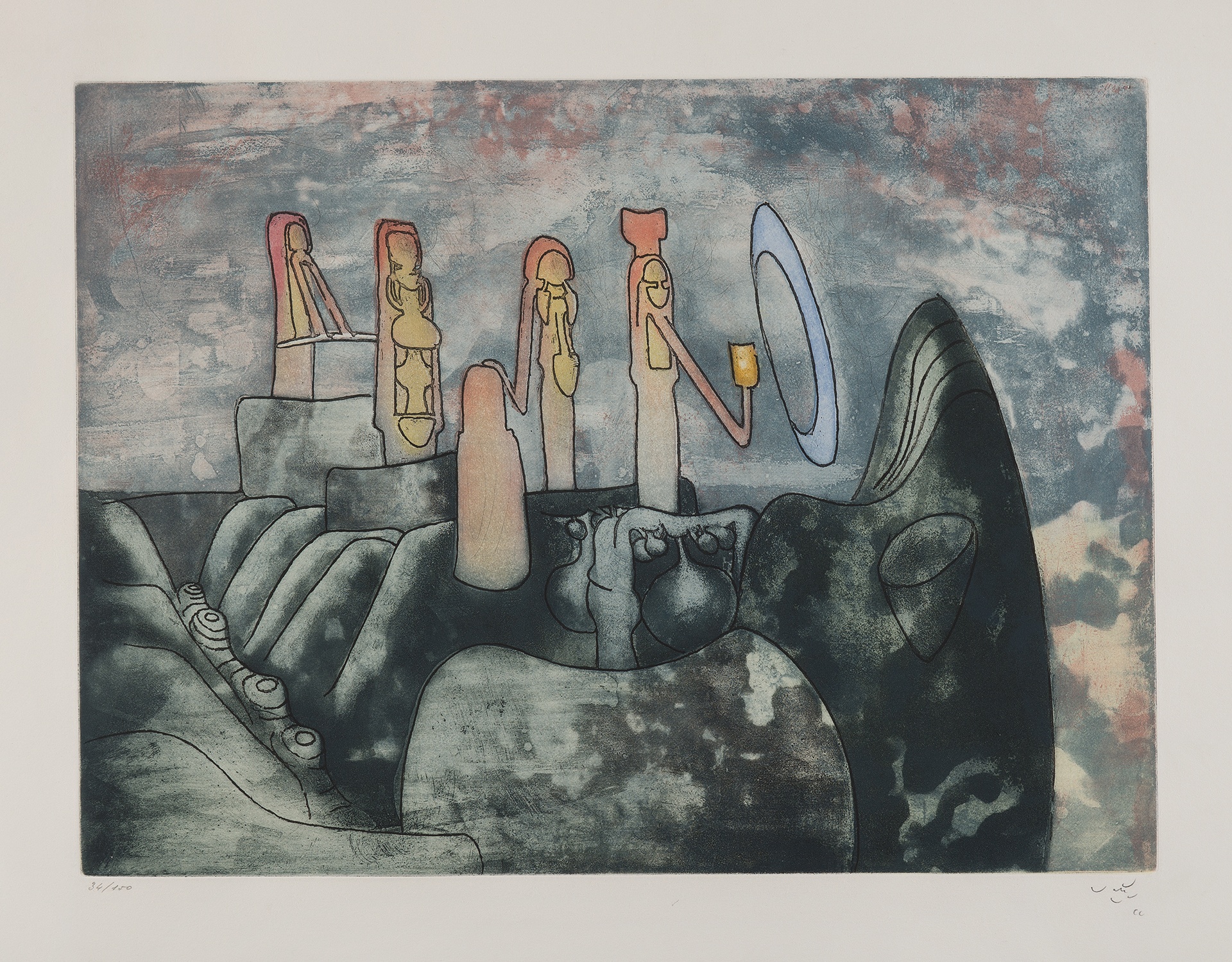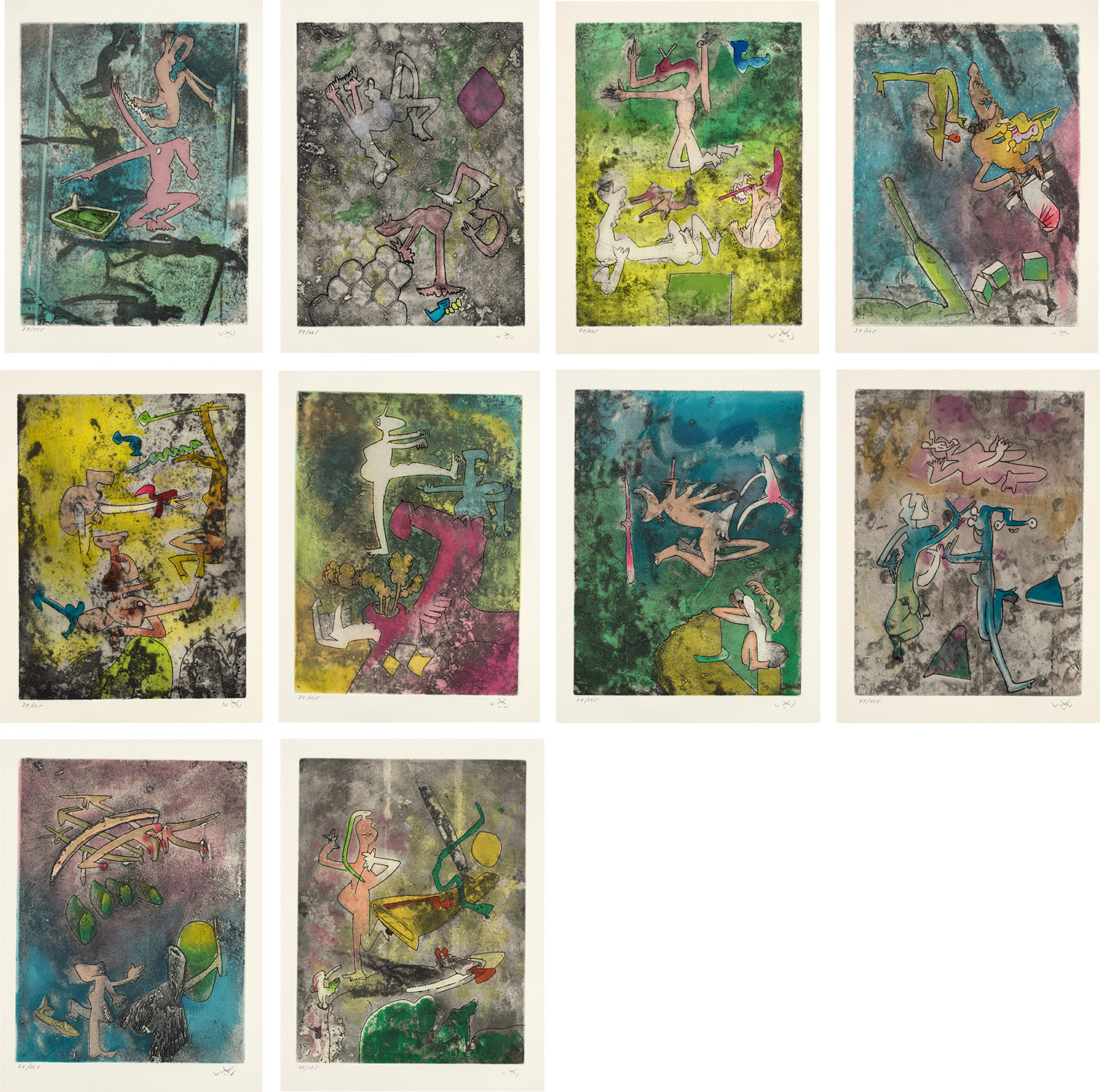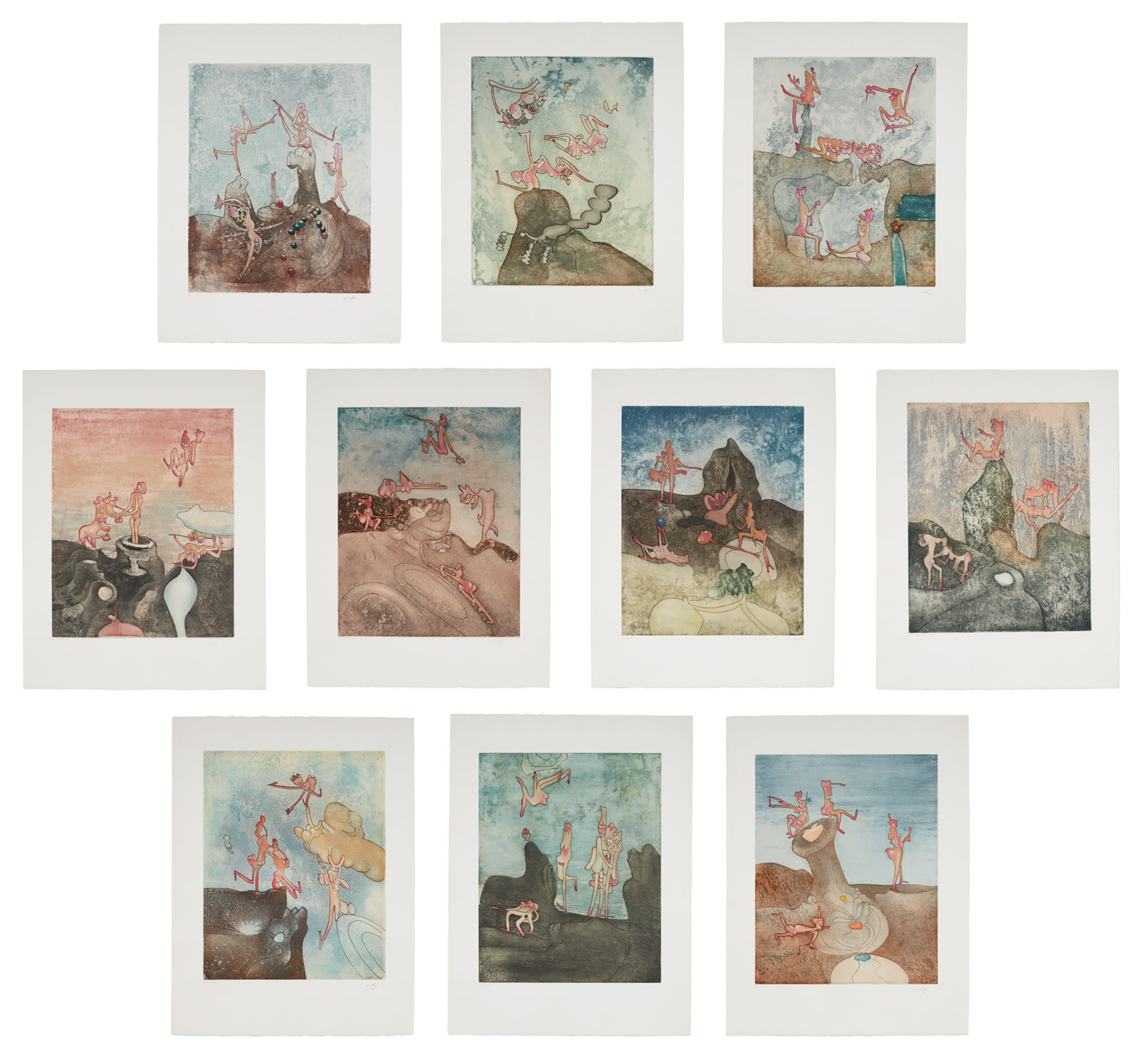
In 2021, the Centre Pompidou in Paris reaffirmed what devoted collectors and museum professionals have long understood: Roberto Matta stands among the most original and transformative painters of the twentieth century. His works have appeared with increasing frequency at major auction houses, with significant canvases achieving impressive results at Christie's and Sotheby's in both New York and London, drawing renewed attention from collectors seeking artists who genuinely expanded the boundaries of what painting could be. There is a feeling, widely shared in the current market, that Matta remains undervalued relative to his historical importance, and that moment of recognition, long anticipated, now feels very close. Roberto Sebastián Antonio Matta Echaurren was born in Santiago, Chile, in 1911, into a family of Basque and Spanish descent with deep roots in Chilean intellectual life. He trained as an architect at the Pontificia Universidad Católica de Chile and moved to Europe in the early 1930s, eventually arriving in Paris where he worked briefly in the studio of the great modernist architect Le Corbusier. That architectural training never left him. His understanding of space, volume, and structure informed everything he would later do on canvas, and his paintings carry within them an almost spatial intelligence, as if the picture plane were a building site for entirely new realities. It was in Paris that Matta encountered André Breton and the Surrealist circle, a meeting that changed the direction of his life entirely. Breton recognised something exceptional in the young Chilean almost immediately, and Matta was welcomed into the movement in 1938. He brought to Surrealism something it had not quite seen before: a sense of infinite cosmological space, vast and luminous, populated by biomorphic forms that seemed to pulse with their own interior logic. His early works, which he called Inscape or Psychological Morphologies, were unlike anything his contemporaries were producing. They were not dreams in the conventional Surrealist sense. They were cosmologies, inner universes rendered with astonishing painterly confidence. When the Second World War forced many European artists to flee to New York, Matta arrived in the city in 1939 and became a pivotal, if sometimes overlooked, bridge between European Surrealism and the emerging New York School. He formed close friendships and working relationships with artists including Arshile Gorky, Robert Motherwell, and William Baziotes, and his influence on the development of what would become Abstract Expressionism was profound and direct. Gorky in particular acknowledged the debt. Matta showed the Americans how automatism and raw painterly energy could operate at an architectural scale, and that lesson transformed the course of American art. His role in that transmission deserves far greater recognition than it has traditionally received. The works available through The Collection offer a remarkable window into the full range of Matta's practice. The 1942 work Mouth to Mouth, rendered in coloured crayon and pencil on paper, shows the intimate, searching quality of his drawing practice, figures locked in a kind of urgent cosmic dialogue. The 1959 oil on canvas Le responsable de l'optimisme and the 1961 canvas Xxiii demonstrate the grand scale ambition of his mature painting, with their swirling, phosphorescent spaces and the half mechanical, half organic presences that inhabit them. His printmaking is equally distinguished: the portfolio Centre Noeuds is a significant work in its own right, published with a poem by Antonin Artaud, whose theatrical and philosophical vision resonated deeply with Matta's own sense of art as a transformative act. The suite Les Voix and the portfolio L'Arc Obscure des heures, with its text drawn from Heraclitus, reveal an artist who understood that great prints require intellectual depth alongside visual mastery. For collectors, Matta offers a genuinely compelling proposition. His work sits at the intersection of multiple canonical movements, Surrealism, Abstract Expressionism, and the Latin American avant garde, yet is not fully claimed by any single one of them. That independence is part of his lasting power. Works on paper and prints, many produced in dialogue with significant literary figures including Artaud, represent an accessible and historically rich entry point. Major oils from his peak decades of the 1940s through the 1960s represent rarer opportunities and tend to attract serious institutional and private competition when they appear. Condition and provenance are, as always, important considerations, and the works catalogued on The Collection are presented with the full documentation that serious buyers require. To understand Matta's place in art history, it helps to think of him alongside artists such as Yves Tanguy, Wifredo Lam, and Max Ernst, all of whom shared something of his surrealist inheritance, and alongside the Abstract Expressionists whose emergence he helped to catalyse. But Matta was never simply a member of a movement. From the 1960s onward his work took on an increasingly political and humanist character, engaging with violence, oppression, and the fate of Latin America with an urgency that his earlier cosmic abstractions had expressed in more purely metaphysical terms. He was deeply affected by the events in Chile in 1973 and wore his political convictions openly without ever allowing them to reduce his painting to illustration. That balance between formal invention and moral seriousness is one of his most admirable qualities. Roberto Matta died in Civitavecchia, Italy, in 2002, at the age of ninety one, having never stopped working. His legacy is one of extraordinary generosity to the history of painting. He gave the Surrealists their cosmic dimension, gave the Abstract Expressionists a crucial lesson in how the unconscious could operate at monumental scale, and gave Latin American modernism one of its most original and internationally celebrated voices. Museums including the Museum of Modern Art in New York, the Tate in London, and the Centre Pompidou in Paris hold significant bodies of his work. The collectors who have gathered his paintings, drawings, and prints around them know they are in the company of a genuinely singular imagination, one whose full importance the art world continues, with increasing enthusiasm, to discover.