Robert Ryman
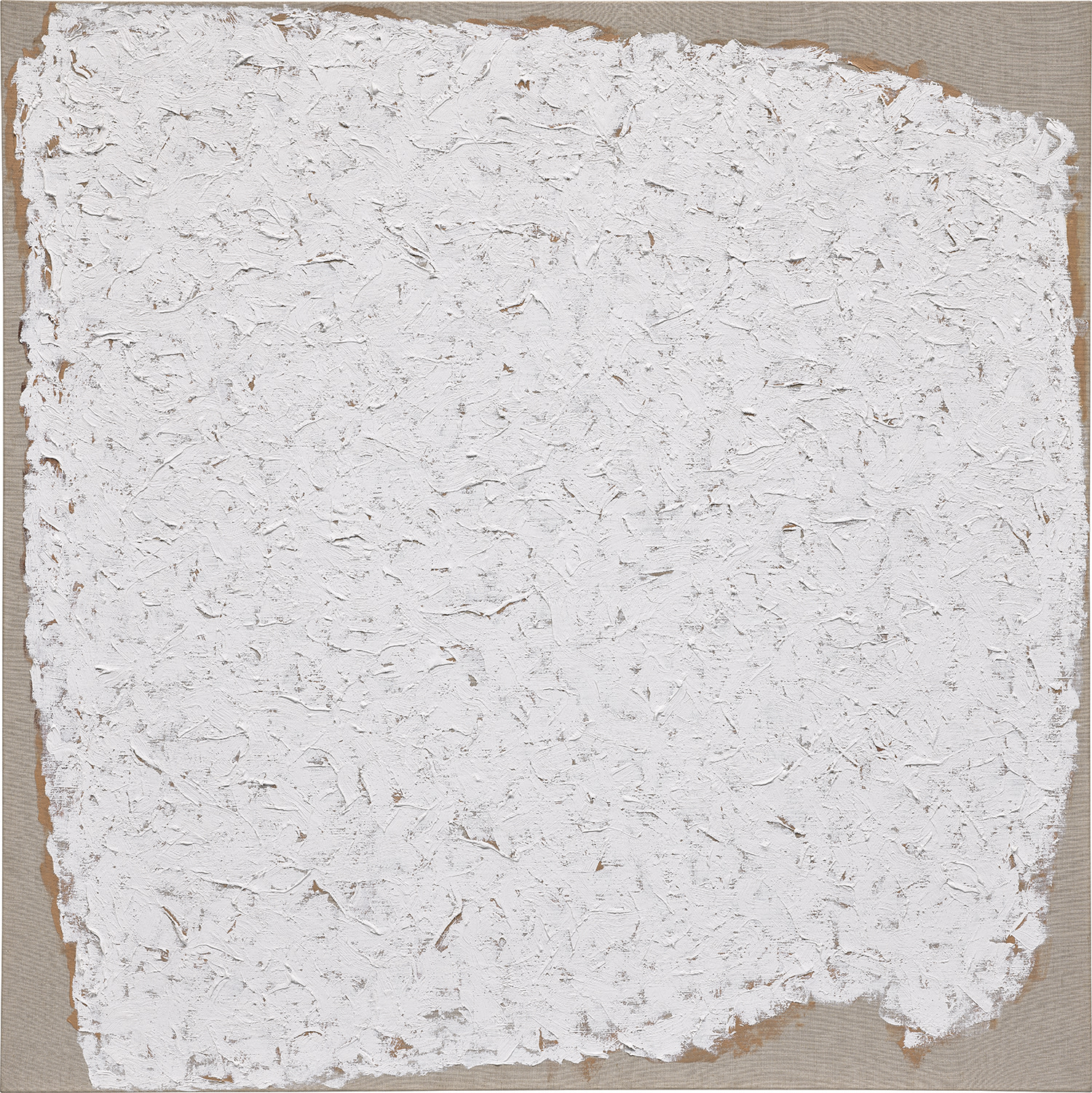
Robert Ryman: The Infinite World of White
Artist Spotlight · The Collection Editorial
“It was a matter of making the surface very animated, giving it a lot of movement and activity.”
Robert Ryman, 1993
In the spring of 2015, the Dia Art Foundation in Beacon, New York reinstalled a significant grouping of Robert Ryman paintings across its vast former factory galleries. The effect was quietly overwhelming. Visitors moving from room to room encountered surfaces that seemed, at first glance, identical, and then revealed themselves to be entirely distinct worlds: linen pulling against oil, fiberglass catching cold northern light, cotton breathing beneath layers of gesso. That experience encapsulated something Ryman had spent six decades achieving, the transformation of apparent simplicity into bottomless complexity.
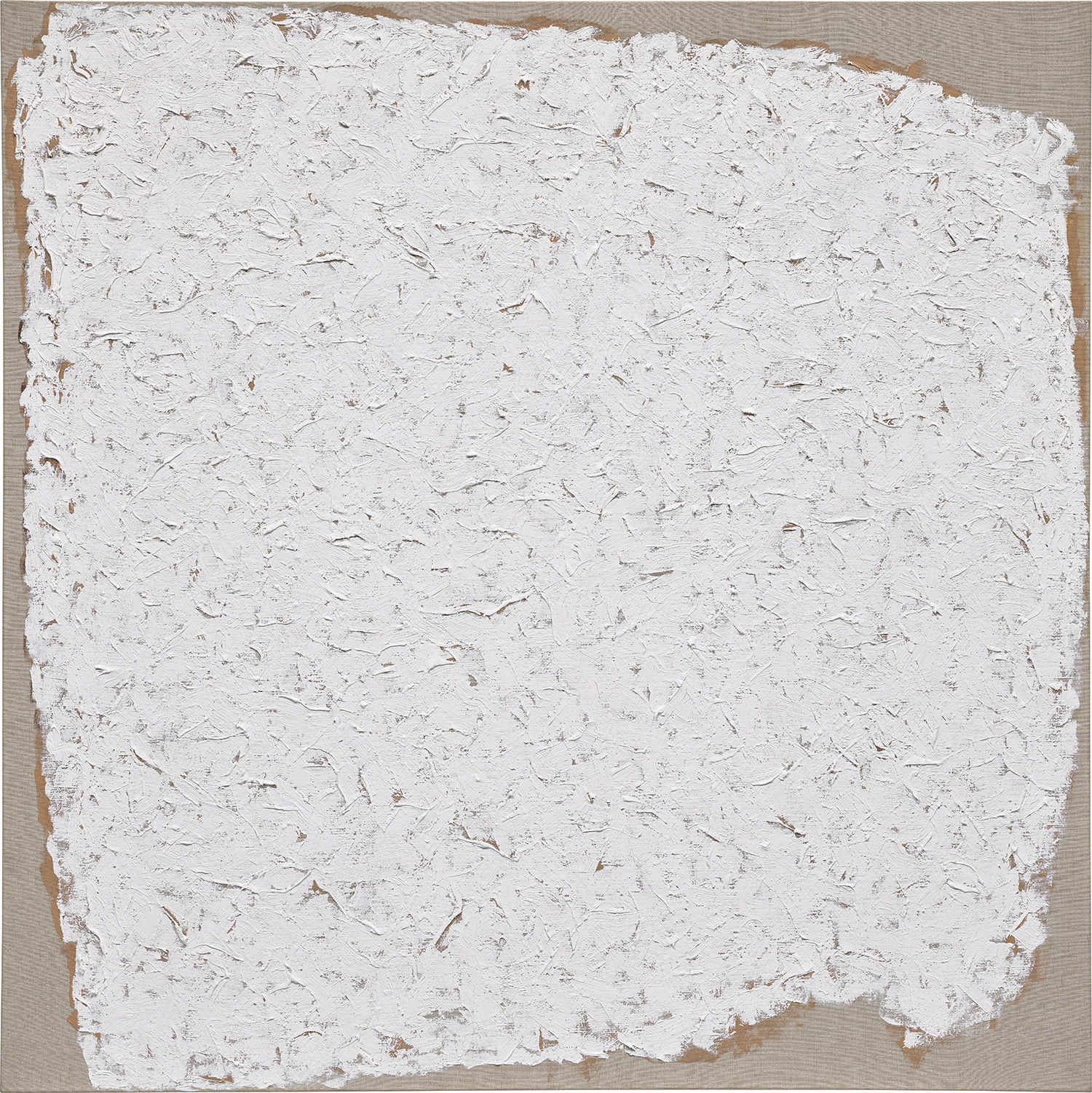
Robert Ryman
Mark, 2002
His death in February 2019 at the age of eighty eight marked the close of one of the most singular and sustained investigations in postwar American art. Ryman was born in Nashville, Tennessee in 1930, and his early ambitions had nothing to do with painting. He moved to New York in 1952 intending to pursue a career as a jazz saxophonist, a formative detail that collectors and critics have long found revealing. Jazz, after all, is a music of process and improvisation, of sound produced in real time through the relationship between a player, an instrument, and the air between them.
When Ryman took a job as a guard at the Museum of Modern Art in 1953, something shifted. Surrounded daily by works by Matisse, de Kooning, and Mark Rothko, he began to teach himself to paint, using his modest wages to buy materials and spending his off hours experimenting in his apartment. The museum was his education, and it was an extraordinary one. His early experiments in the late 1950s were marked by a restless interrogation of what paint could actually do when freed from representational obligation.
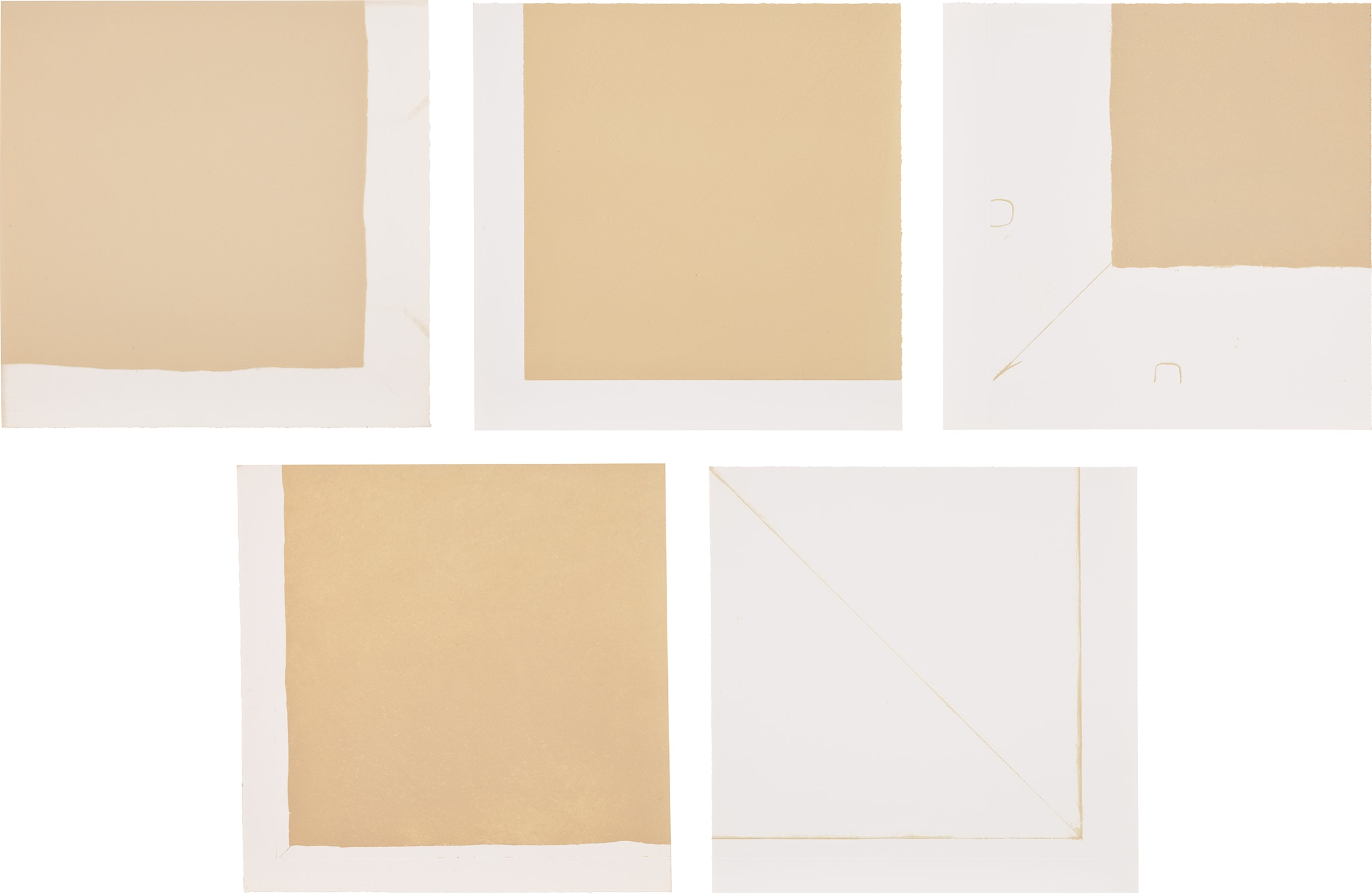
Robert Ryman
Prints 1969-1993 (the Catalogue Raisonne by Amy Baker Sandback)
By the early 1960s, Ryman had largely committed to white, though to describe him simply as a painter of white is to misunderstand his project in a fundamental way. White was not a subject or a symbol for Ryman. It was a condition, a neutral ground that allowed every other variable in the painting to become legible. The support, the substrate, the fastening hardware, the brushstroke, the weight of the paint, the texture of the weave: all of these became the true content of the work.
“There is never a question of what to paint, but only how to paint.”
Robert Ryman
This was a radical reorientation of what a painting could be asked to do, and it placed Ryman in direct conversation with the Minimalist and Conceptual movements emerging around him in downtown New York. Ryman's development through the 1960s and 1970s saw him working with an extraordinary range of materials. He painted on steel, fiberglass, aluminum, corrugated cardboard, and various types of canvas and linen. He experimented with Enamelac, a commercial enamel paint, alongside fine art oil and interference primers.
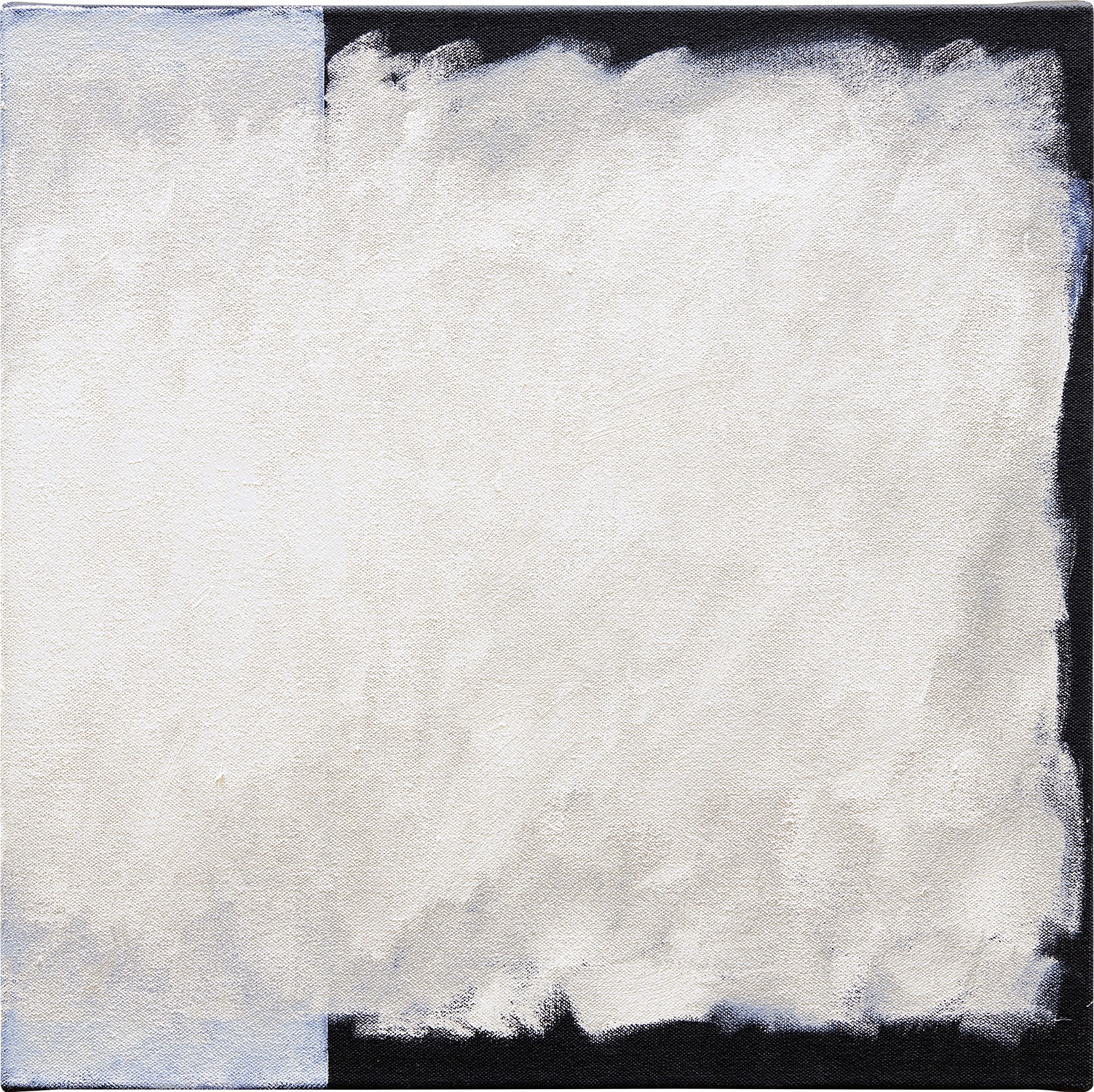
Robert Ryman
Series #25 (White), 2004
Works such as the ongoing "Versions" series demonstrated his interest in how the same essential gesture could be transformed entirely by its material context. His concern extended to installation itself: Ryman was among the first painters to treat the wall, the bracket, and the bolt as active parts of the work rather than neutral infrastructure. The aluminum brackets and six sided bolts visible in works such as "Sign" are not hardware, they are meaning. They make the painting's relationship to architecture explicit and honest.
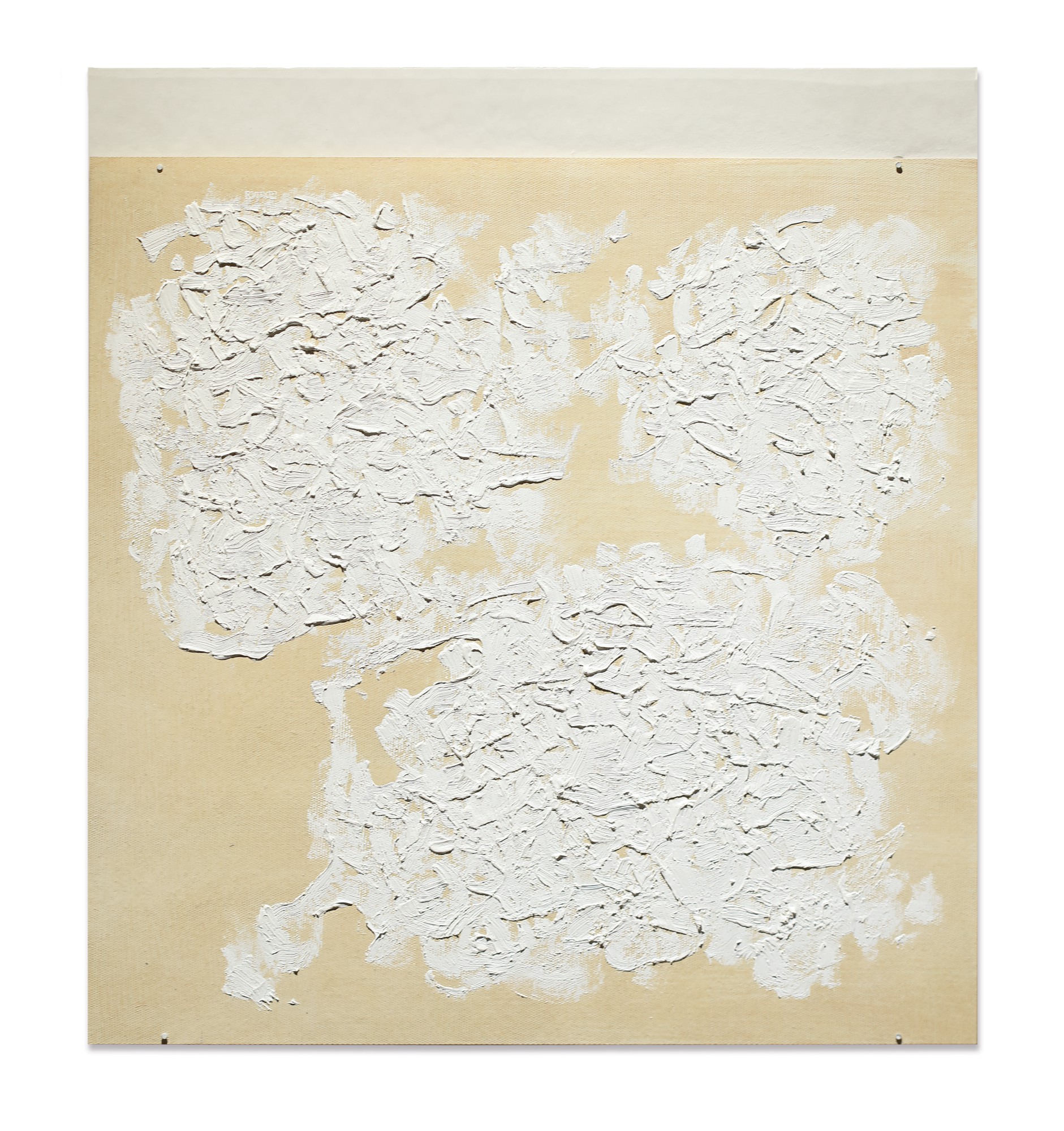
Among the works available through The Collection, several illuminate the full range of Ryman's sensibility. "Mark" from 2002, rendered in oil on linen, demonstrates the late confidence of his brushwork, each stroke deliberate and self aware, bearing witness to the hand that made it. "Series 25 (White)" from 2004, in oil and gesso on canvas, belongs to a body of work in which gesso grounds become actively expressive rather than merely preparatory. "Versions XII", with its oil and interference primer on fiberglass panel, oil paint and wax paper and painted nails, captures the full conceptual architecture of his installation thinking.
Robert Ryman
Versions XII
These are not quiet works, despite their apparent reticence. They reward sustained attention with a kind of perceptual generosity that few paintings of any movement or era can match. From a collecting perspective, Ryman occupies a position of unusual stability and prestige. His work entered the permanent collections of the Museum of Modern Art, the Solomon R.
Guggenheim Museum, and the Dia Art Foundation during his lifetime, and those institutional relationships reinforced both his critical standing and his market. Works by Ryman have appeared consistently at major international auction houses, with strong results reflecting sustained demand from serious collectors across Europe and North America. His prints, including the complete catalogue raisonné of prints from 1969 to 1993 compiled by Amy Baker Sandback, represent a particularly accessible entry point for collectors who wish to engage with the full arc of his thinking across different reproductive and printmaking processes. For collectors interested in Minimalism and postwar abstraction more broadly, Ryman sits alongside figures such as Agnes Martin, Brice Marden, and Ellsworth Kelly as an artist whose work has proven both culturally durable and financially resilient.
Ryman's place in art history is now firmly established, but the living quality of his work resists the kind of museological freezing that can sometimes accompany canonization. He was not making paintings about ideas, he was making paintings that are ideas, embodied in oil and linen and steel and light. His closest intellectual companions include not only the Minimalists but also certain Arte Povera artists working in Italy during the same period, artists equally concerned with the honesty of materials and the phenomenology of encounter. Yet Ryman's voice was always distinctly his own, rooted in the specific light and physical culture of New York, and in a jazz musician's instinct for the eloquence of restraint.
What endures in Ryman's legacy is something almost paradoxical: the proof that limitation can be a form of freedom. By choosing white, by choosing to stay with white across six extraordinary decades, he did not narrow his practice. He deepened it past any easy measurement. Collectors who live with his work report that it changes across the hours and seasons, that it is never the same painting twice.
In an era of accelerating visual noise, that quality of attentive stillness feels not like a relic of Minimalism but like a genuine gift to anyone willing to slow down and look.
Explore books about Robert Ryman
Robert Ryman
Peter Halley
Robert Ryman: A Retrospective
Museum of Modern Art

Robert Ryman: Catalogue Raisonné
Robert Storr
Robert Ryman: Paintings 1960-1973
Dia Art Foundation
Robert Ryman
Roberta Smith
Robert Ryman: Blacks and Whites
David Anfam
Robert Ryman: Recent Work
Klaus Kertess