Robert Indiana
Robert Indiana: America Spelled In Bold
Artist Spotlight · The Collection Editorial
“I am an American painter of signs chartered in the wilderness, a hope for a way of life.”
Robert Indiana, artist statement
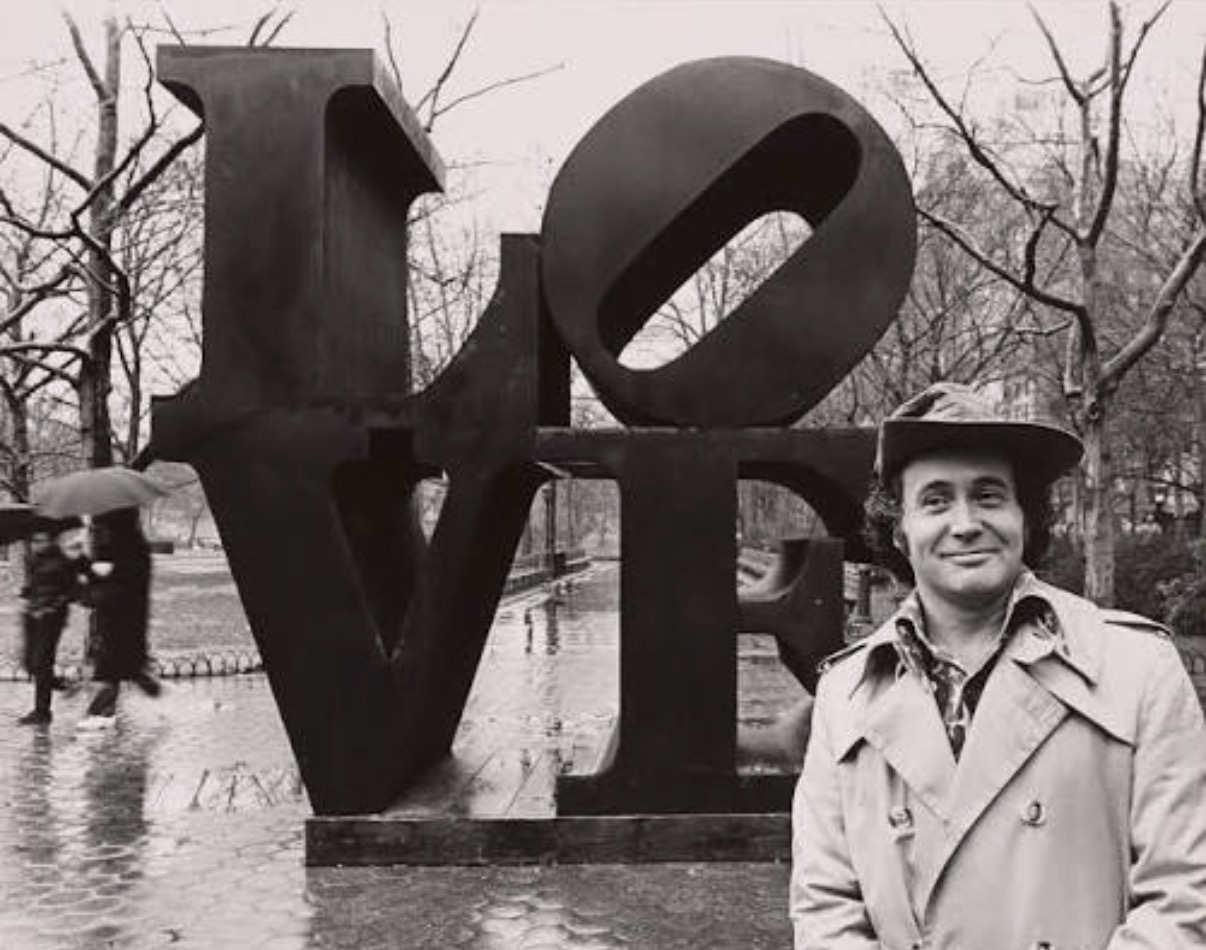
There are few moments in twentieth century art as electrically simple as the first time you encounter a Robert Indiana LOVE. Four letters. A tilted O. A square format.
Robert Indiana
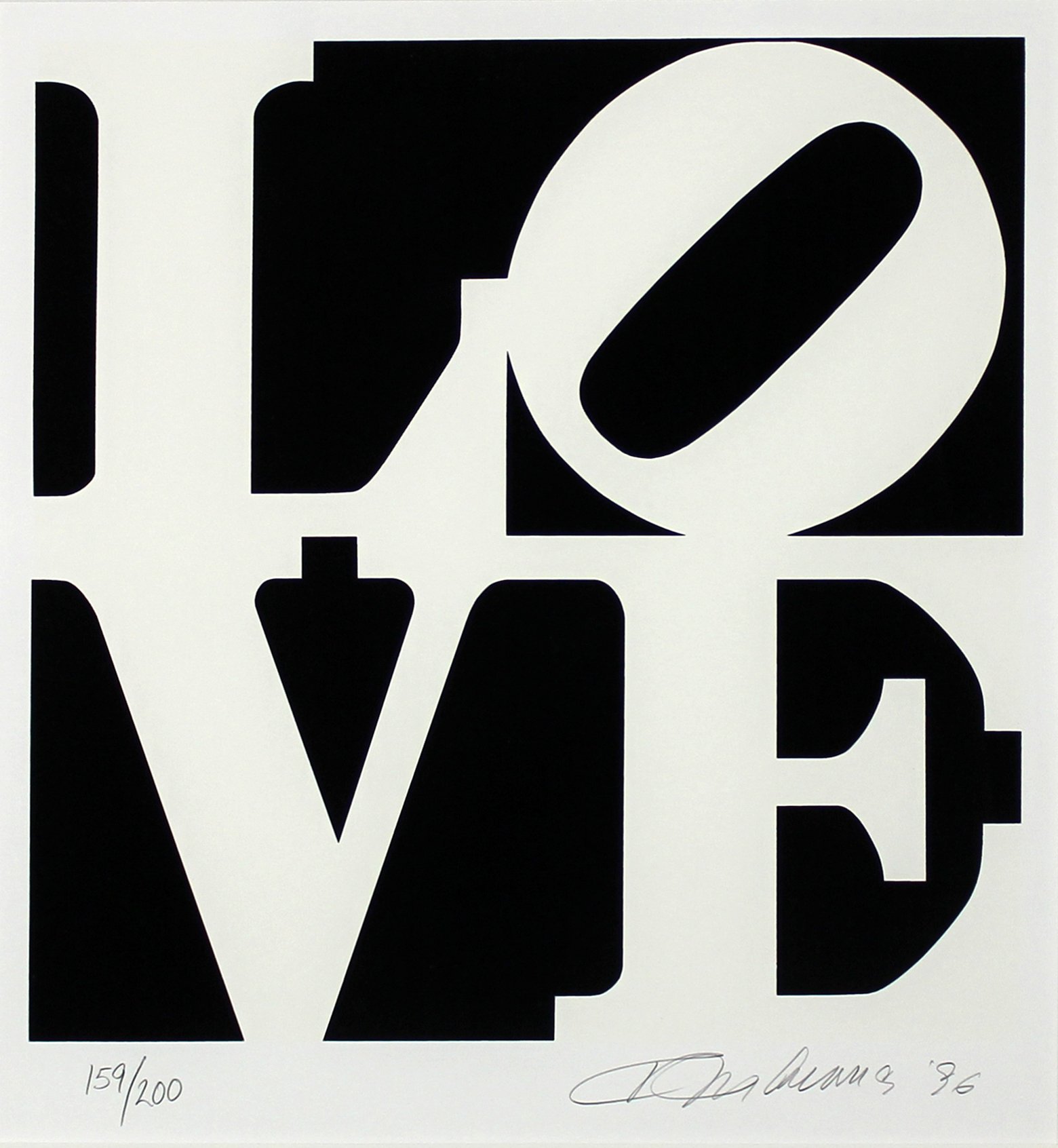
Love, Black and White from The Book Of Love, 1996
Primary colors stacked with the confidence of a manifesto. When the Museum of Modern Art commissioned Indiana's LOVE image for its Christmas card in 1964, neither the artist nor the institution could have anticipated that this compact, almost architectural arrangement of letters would become one of the most reproduced images in American cultural history. Decades later, the work continues to appear in public squares from Philadelphia to Tokyo, in museum collections from the Smithsonian to the Tate, and in the hands of private collectors who recognize in it something genuinely rare: an artwork that is both formally rigorous and emotionally immediate, both personal and universal. Robert Indiana was born Robert Clark in 1928 in New Castle, Indiana, a small midwestern city whose name would eventually become his own.
His early years were marked by upheaval. His parents divorced when he was young, and he moved frequently, attending schools across Indiana before eventually finding his footing through art. He studied at the John Herron School of Art in Indianapolis, then at the Munson Williams Proctor Arts Institute in Utica, New York, before earning his diploma from the School of the Art Institute of Chicago in 1953. A Skousen Scholarship then took him to Edinburgh College of Art and the University of Edinburgh, where he spent time absorbing European modernism before returning to the United States.
Robert Indiana
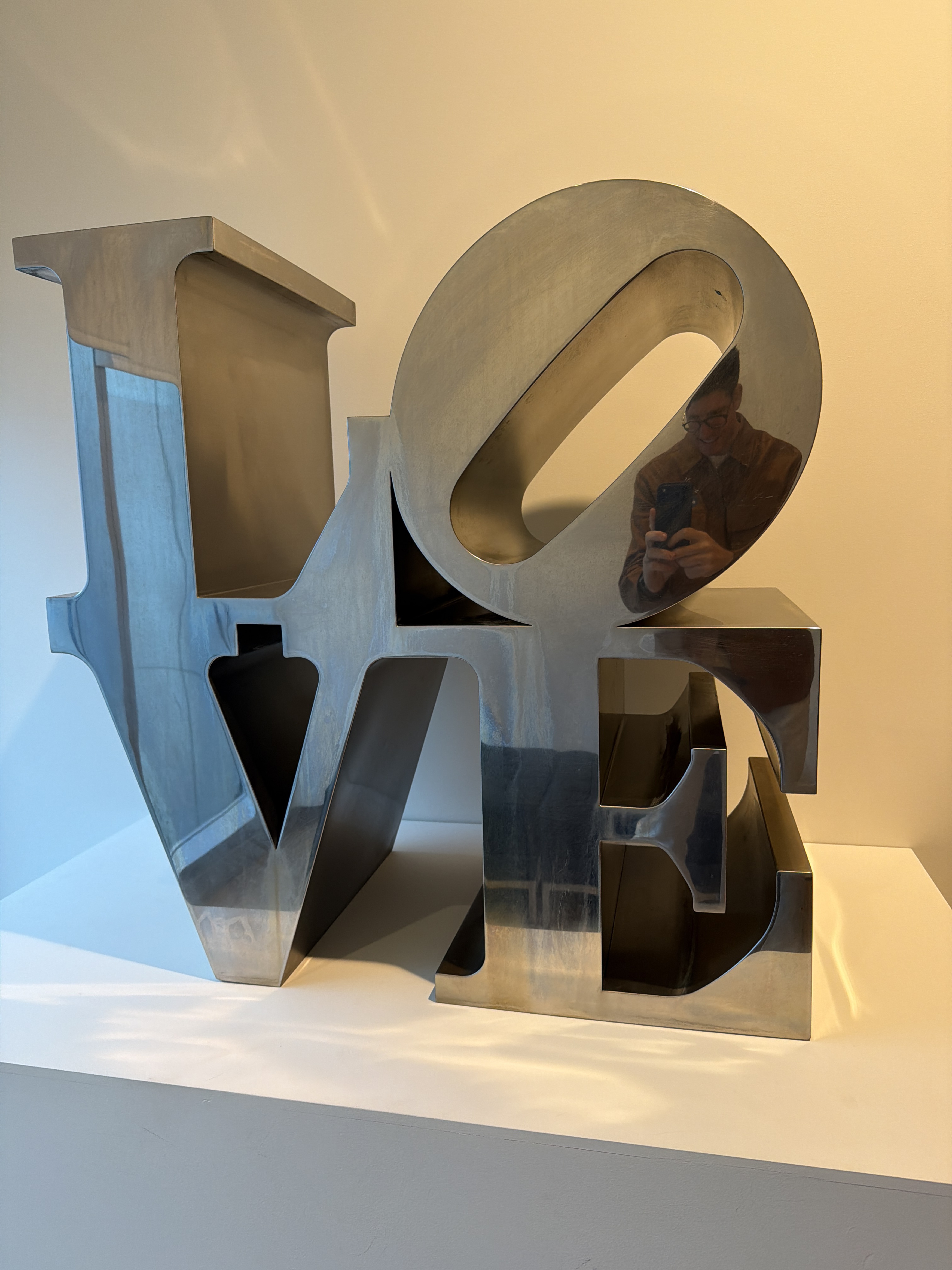
LOVE, 1996
In 1954, Indiana settled in New York City, moving into a studio on Coenties Slip in lower Manhattan, a neighborhood near the financial district where a remarkable constellation of artists had quietly gathered. Ellsworth Kelly, Agnes Martin, Jack Youngerman, and Cy Twombly were among his neighbors on or near the Slip. This community shaped Indiana profoundly. He was immersed in conversations about abstraction, geometry, and the possibilities of the picture plane.
“LOVE is a very short word. I wanted to make it monumental.”
Robert Indiana, interview
It was here, in 1958, that he adopted Indiana as his surname, a gesture that was part autobiography, part artistic declaration, binding his identity permanently to the American landscape and its vernacular imagery. He began incorporating stenciled numbers, words, and heraldic forms drawn from industrial signage, shipping equipment, and the physical debris of the harbor district around him. Indiana's artistic development placed him in the orbit of Pop Art without ever making him entirely comfortable with that label. Where Andy Warhol used commodity culture as a mirror for desire and alienation, and Roy Lichtenstein mined comic books for their graphic tension, Indiana turned to language itself as both subject and material.
Robert Indiana
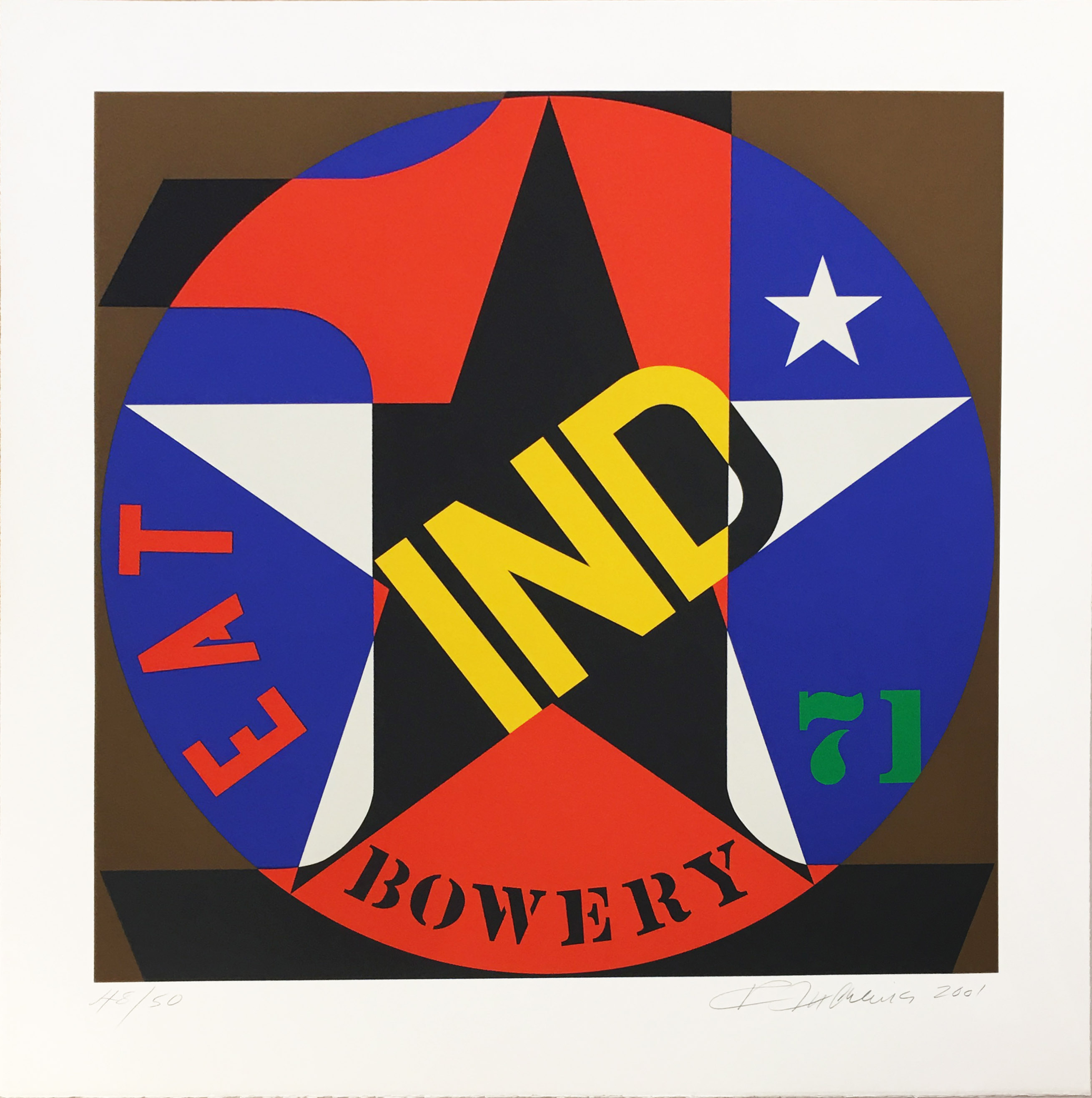
Decade Autoportrait '61, 2001
His EAT, DIE, HUG, and HOPE paintings from the early 1960s treated single words with the same monumental gravity a painter might reserve for a landscape. His Herms, assemblages constructed from salvaged wood and found objects, showed an artist equally at home with texture and density as with the clean planes of his painted works. His American Dream series, begun in 1961, wove together pinball imagery, numbers, and text into meditations on luck, aspiration, and the mythology of American life. These were not simply graphic exercises.
They were paintings that thought carefully about what America believed about itself. The LOVE image crystallized Indiana's practice into something that transcended the art world entirely. The tilted O, which Indiana has described as deriving in part from a childhood memory of Christian Science church signage reading "God Is Love," gave the composition its sense of dynamic instability within an otherwise rigid structure. The original painting of 1964, rendered in red, blue, and green, was followed by sculptures, prints, and variations in aluminum, steel, and other materials across multiple decades.
Robert Indiana
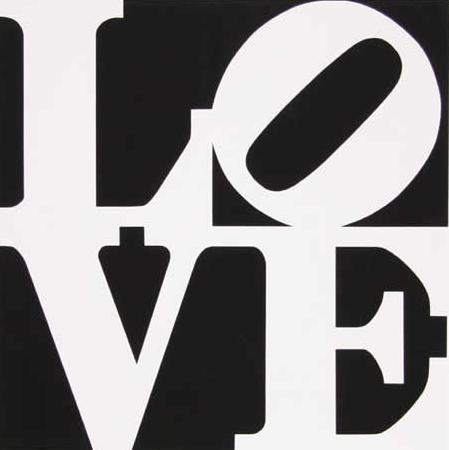
The Book of Love 1
The 1970 LOVE sculpture in polychromed aluminum, and later the stainless steel editions, extended the image into three dimensions with the same satisfying inevitability as the original. The Chinese character version, rendered as "Ai" and produced from 1966 onward, demonstrated Indiana's understanding that the impulse behind LOVE was not narrowly American but could travel across scripts and cultures. For collectors, Indiana's work offers an unusually broad range of entry points. His prints and screenworks, including the Decade Autoportrait series and the Four Seasons of Hope suite, represent the artist's practice in highly considered multiples that retain the graphic force of his unique paintings.
The Book of Love series from 1996, a collaboration that produced screenprints of extraordinary color saturation and formal elegance, is particularly well regarded among print collectors. The stainless steel LOVE sculptures, produced in varying scales and palettes, have commanded strong results at auction and benefit from the artist's reputation for quality control and authentication. Works signed and numbered in the artist's hand, particularly those with well documented provenance from established publishers such as Edition Domberger in Stuttgart or galleries with which Indiana had sustained relationships, carry additional confidence for buyers. Indiana's prices have remained robust since his death in 2018, with sustained institutional and private demand reinforcing his position as a blue chip figure in the American Pop canon.
Placing Indiana within art history requires resisting the temptation to reduce him to a single image. His peers and contemporaries include not only the Pop generation but also the Hard Edge painters who were pursuing geometric clarity at the same moment. Ellsworth Kelly, his Coenties Slip neighbor, pursued pure form and color without text. Frank Stella brought industrial precision to abstraction.
Indiana sat between these currents, insisting that language and image need not be opponents. His work anticipates the text based practices of artists like Lawrence Weiner and Barbara Kruger, who would push the politics of words in art much further in subsequent decades. Indiana's LGBTQ+ identity, lived openly in many respects even during periods when such visibility carried real risk, also places him in a lineage of queer artists whose biographies and practices are now receiving the fuller scholarly attention they deserve. Indiana spent the final decades of his life on Vinalhaven, a remote island off the coast of Maine, where he continued to work until shortly before his death in May 2018 at the age of eighty nine.
The Vinalhaven years were not a retreat from ambition. He produced new series, continued to oversee the production of sculptures, and maintained the Star of Hope Lodge, a nineteenth century Odd Fellows hall he had purchased and filled with his own work and collected objects. His late career has attracted renewed curatorial attention in the years since his passing, with scholars and institutions examining both the breadth of his output and the complexity of his personal history. The Morgan Library and Museum mounted a significant exhibition of his literary and text based works, underscoring the depth of Indiana's engagement with American poetry and literature, including the influence of Walt Whitman and Marianne Moore on his thinking.
What endures about Robert Indiana is not simply the LOVE image, though that image will likely outlast most of what the twentieth century produced. What endures is the seriousness of his conviction that language could be beautiful, that a word placed boldly on a canvas or cast in steel could carry as much weight as any figurative composition or abstract gesture. He believed in legibility without simplicity, in accessibility without condescension. For collectors who bring one of his works into their homes, and for anyone who pauses in front of a LOVE sculpture in a public square and actually feels something, the proof of that conviction is impossible to argue with.
Explore books about Robert Indiana