Robert Heinecken
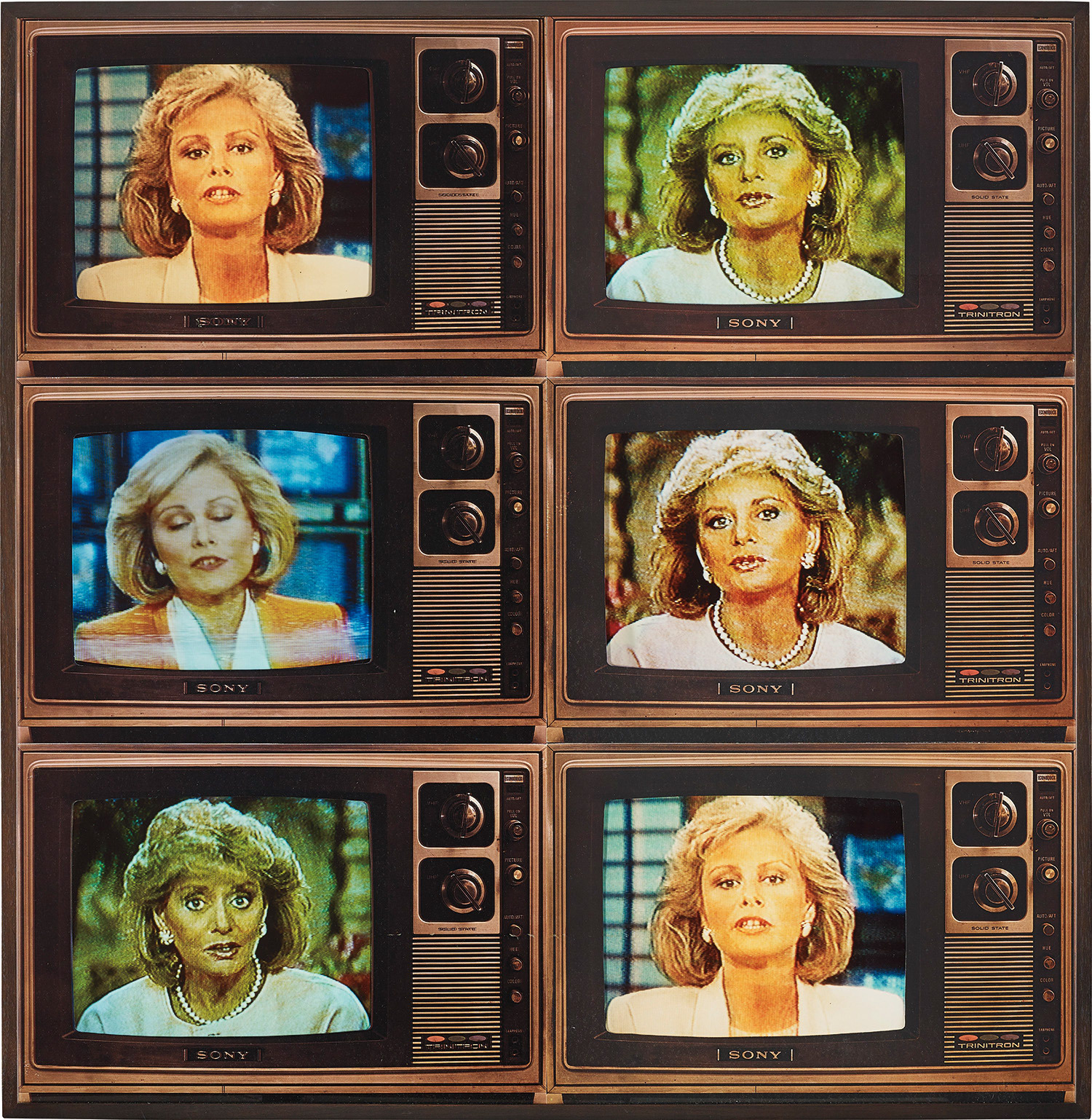
Robert Heinecken, The Radical Eye Wins
Artist Spotlight · The Collection Editorial
“I am not a photographer in the traditional sense. I am interested in manipulating and re-presenting existing photographic imagery.”
Robert Heinecken, artist statement
Imagine walking into a darkened gallery in Los Angeles sometime in the early 1970s and encountering images that feel simultaneously familiar and deeply unsettling. Television newswomen rendered in layered photolithographic prints. Magazine spreads dissected, reassembled, and charged with new meaning. Pornographic imagery colliding head on with the visual grammar of advertising.
Robert Heinecken
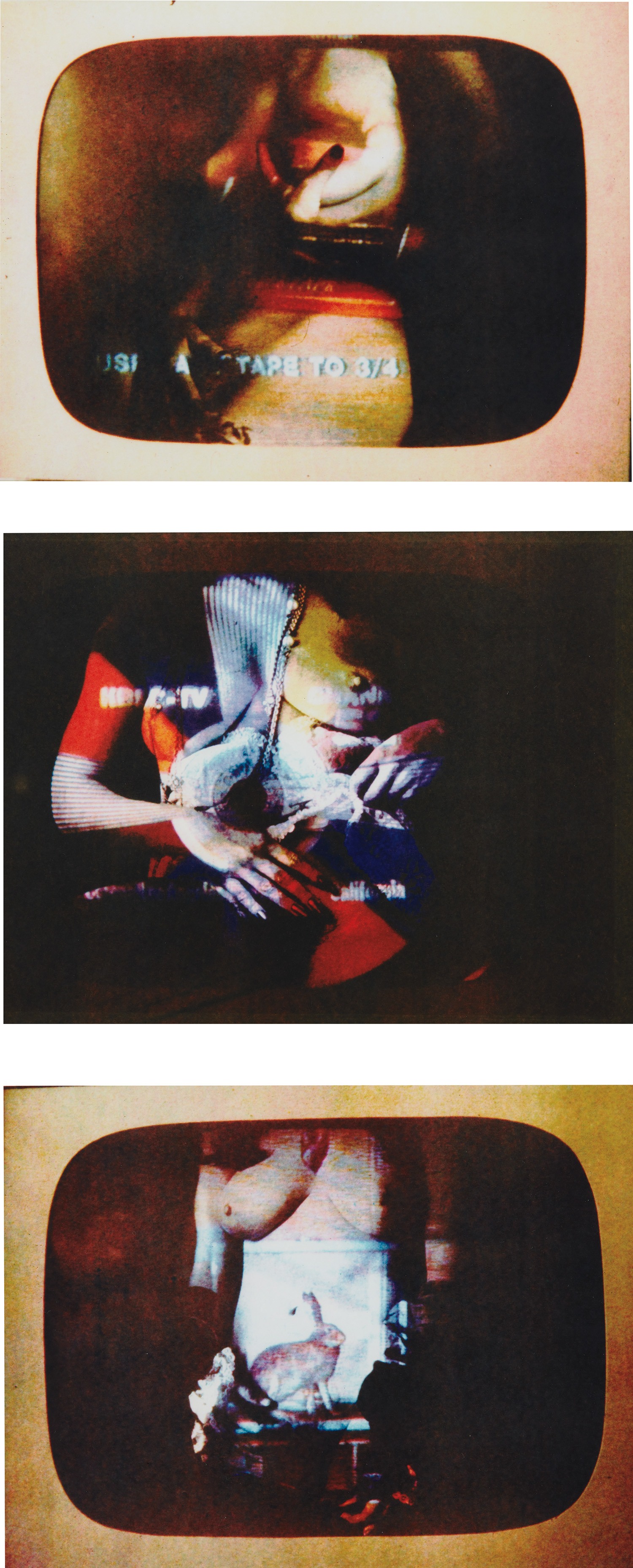
Daytime Color TV Fantasy (4A, 23A, 10A)
This was the world Robert Heinecken made, and decades after he first upended the photography establishment, institutions and collectors alike are returning to his work with fresh urgency, recognizing in it a prescience that feels less like art history and more like a live wire. Heinecken was born in Denver, Colorado in 1931 and came of age in the postwar American landscape that was simultaneously flush with optimism and saturated with mediated imagery. He served as a Marine Corps pilot before arriving at UCLA, where he would eventually earn his MFA in 1960. It was at UCLA that he would spend the better part of three decades shaping not only his own practice but also a generation of photographers and image makers who passed through his legendary teaching studio.
His background in printmaking and his pilot's eye for spatial logic informed an approach to the photographic image that was anything but conventional. From the very beginning, Heinecken refused to pick up a camera in the way his contemporaries did. Instead, he worked directly with found imagery, pulling from magazines, television broadcasts, and the flood of commercial print culture surrounding him. He coined the term paraphotography to describe this practice, a word that perfectly captures his position: alongside photography, adjacent to it, using its raw material while fundamentally questioning its assumptions.
Robert Heinecken
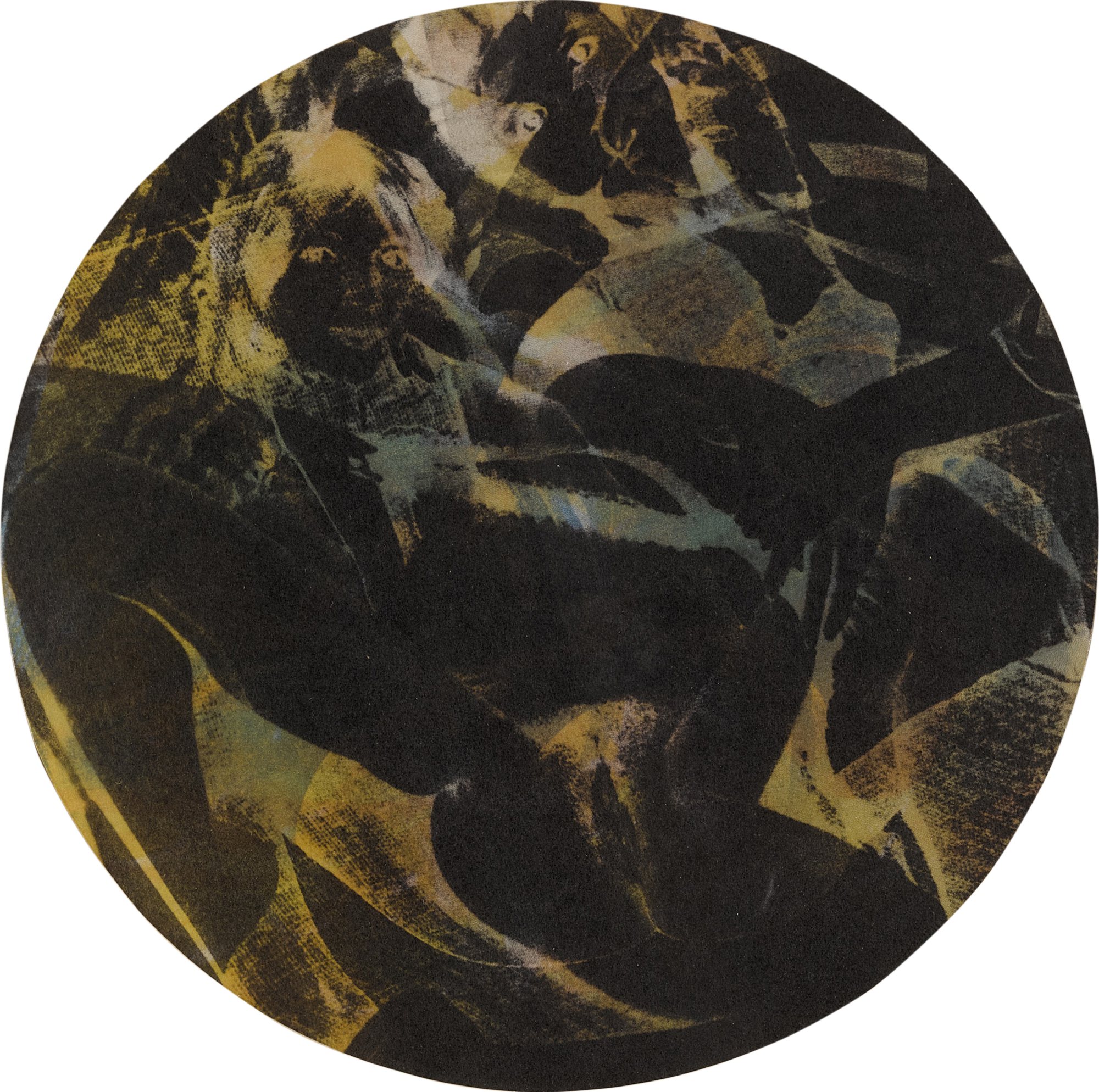
'Porno Photo Litho #3'
Where other photographers pointed lenses at the world, Heinecken pointed his attention at photographs themselves, treating them as objects to be manipulated, layered, exposed, and transformed. His technical range was extraordinary and deeply intentional. He worked with photograms placed directly onto magazine pages, allowing light to expose the existing printed imagery in new configurations. He produced lithographs and offset prints that collapsed the distance between fine art and mass reproduction.
He used 3M Color in Color dye sublimation printing, a technology borrowed from commercial industry, to create works of startling chromatic intensity. Works such as Daytime Color TV Fantasy, with its three luminous dye sublimation prints, show Heinecken translating the passive act of watching television into something active and confrontational. His Recto/Verso series of 1988, comprising twelve dye destruction prints each bearing text overlays, demonstrates the sophistication of his layering logic and his understanding of how language and image compete for authority on a single surface. Perhaps no body of work better encapsulates his method than the Cliché Vary series, a sustained investigation into cultural taboo and photographic representation that he developed across multiple years.
Robert Heinecken
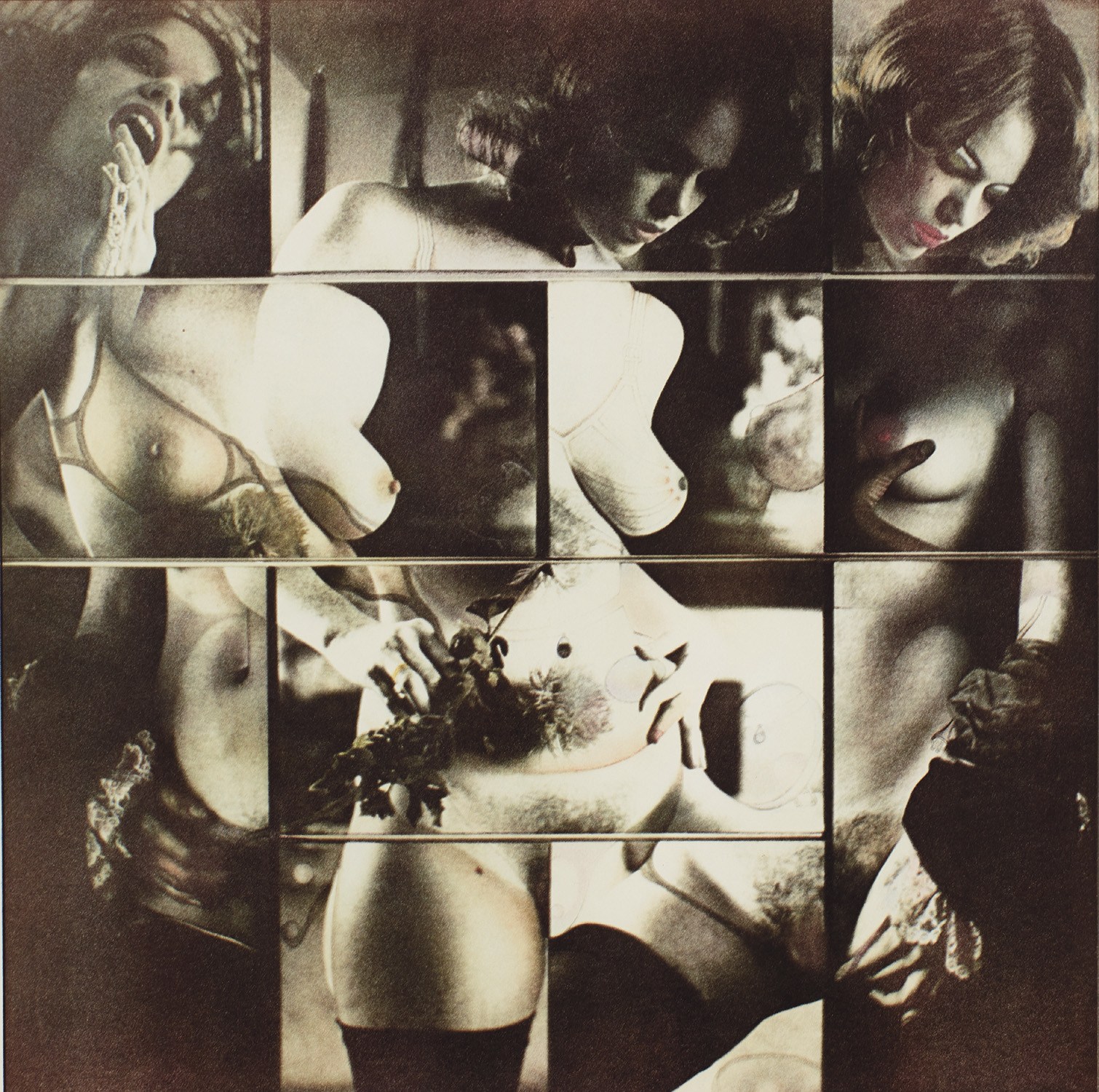
Vary Cliché / Autoeroticism
Works from this series such as Vary Cliché/Autoeroticism and Cliché Vary/Lesbianism push image and material into radical conjunction, using canvas panels coated with photographic emulsion and finished with pastel chalk to produce objects that resist easy categorization as either photograph or painting. These are works that demand physical and intellectual engagement, refusing to let the viewer settle into a comfortable relationship with what they are seeing. His T.V.
Network Newswomen Corresponding, a composition of six dye destruction prints and photolithographs mounted together in an artist's frame, takes the trusted, composed faces of television journalism and submits them to a process of doubling and displacement that reveals just how constructed the authority of the broadcast image truly is. For collectors, Heinecken presents an exceptionally compelling proposition. His work sits at the intersection of several major art historical currents: the Conceptualism of the 1960s and 70s, the Pictures Generation's interrogation of mass media imagery, and the feminist and postmodern critique of visual culture that gathered force through the 1980s. Though Heinecken himself preceded and in many ways anticipated the Pictures Generation, his practice rhymes productively with artists such as Richard Prince, Barbara Kruger, and Cindy Sherman, all of whom engaged with appropriated or mediated imagery as their primary material.
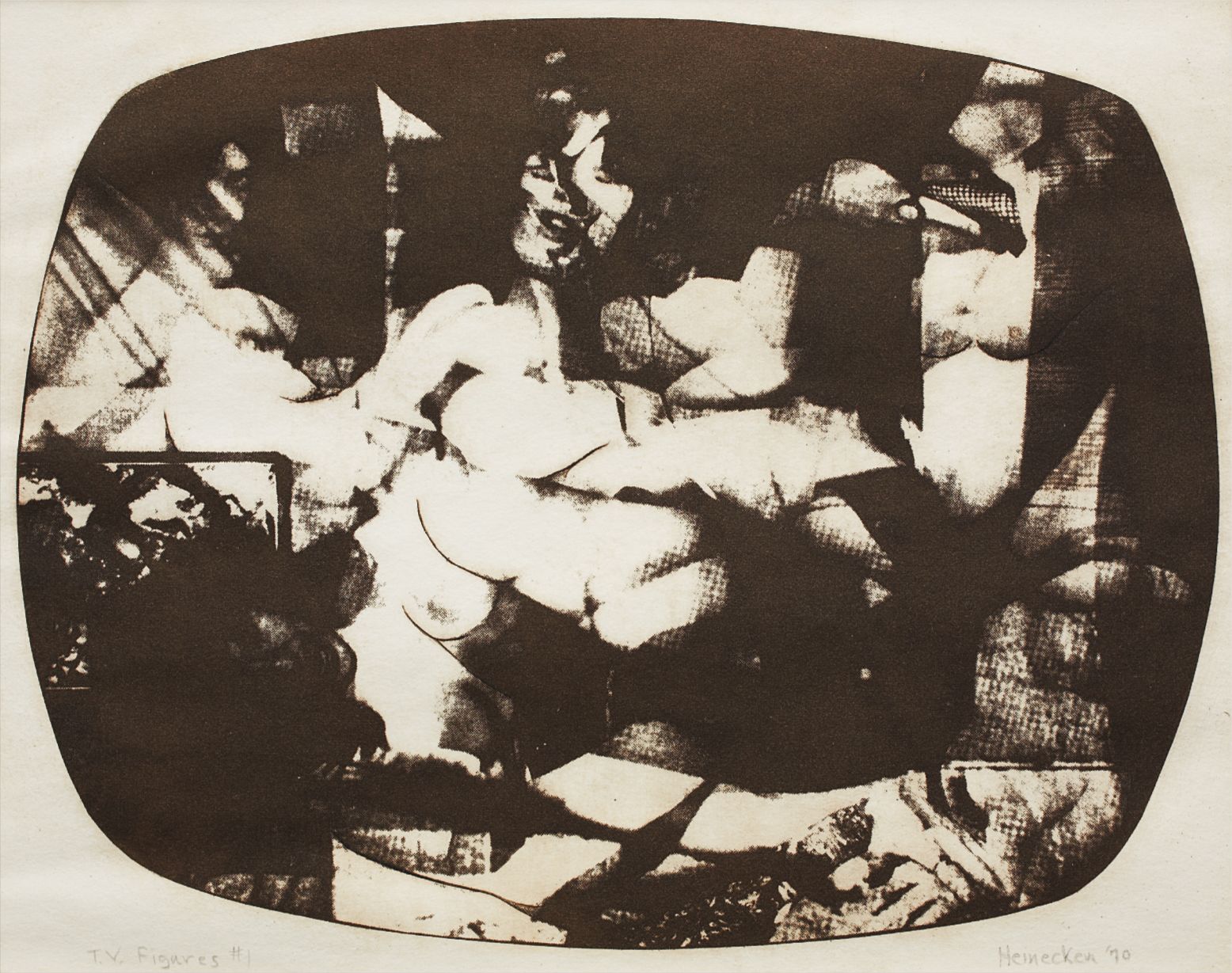
Robert Heinecken
TV Figures # 1
His deep roots in printmaking also place him in productive conversation with Rauschenberg and the tradition of combining fine art processes with vernacular visual culture. On the market, Heinecken remains genuinely undervalued relative to his historical importance, which is precisely what makes this a compelling moment to engage with his work. His prints and unique constructions have appeared at auction at Christie's, Phillips, and Swann Galleries, where informed buyers have recognized that his place in the canon of American postwar art is both secure and still consolidating. Works from the Cliché Vary series and the TV Figures group represent the clearest expression of his mature thinking and carry the greatest weight for serious collectors.
Unique constructions, particularly those involving multiple media and the handwork of chalk or paint alongside photographic emulsion, are especially rare and tend to command the attention of collectors who understand the category defying nature of his achievement. Heinecken died in Albuquerque, New Mexico in 2006, but his influence has only grown more legible with time. In an era defined by the overwhelming proliferation of images across digital platforms and social media, his insistence that the photograph is never innocent, never neutral, and always already embedded in systems of power and desire reads less like provocation and more like plain description. He saw what was coming with the clarity of someone who had spent decades staring directly at the machinery of visual culture.
To collect Heinecken now is to acquire not just a remarkable object but a way of seeing, one that was radical in its moment and remains indispensable in ours.