Rob Pruitt
Rob Pruitt Finds Glitter in Everything
Artist Spotlight · The Collection Editorial
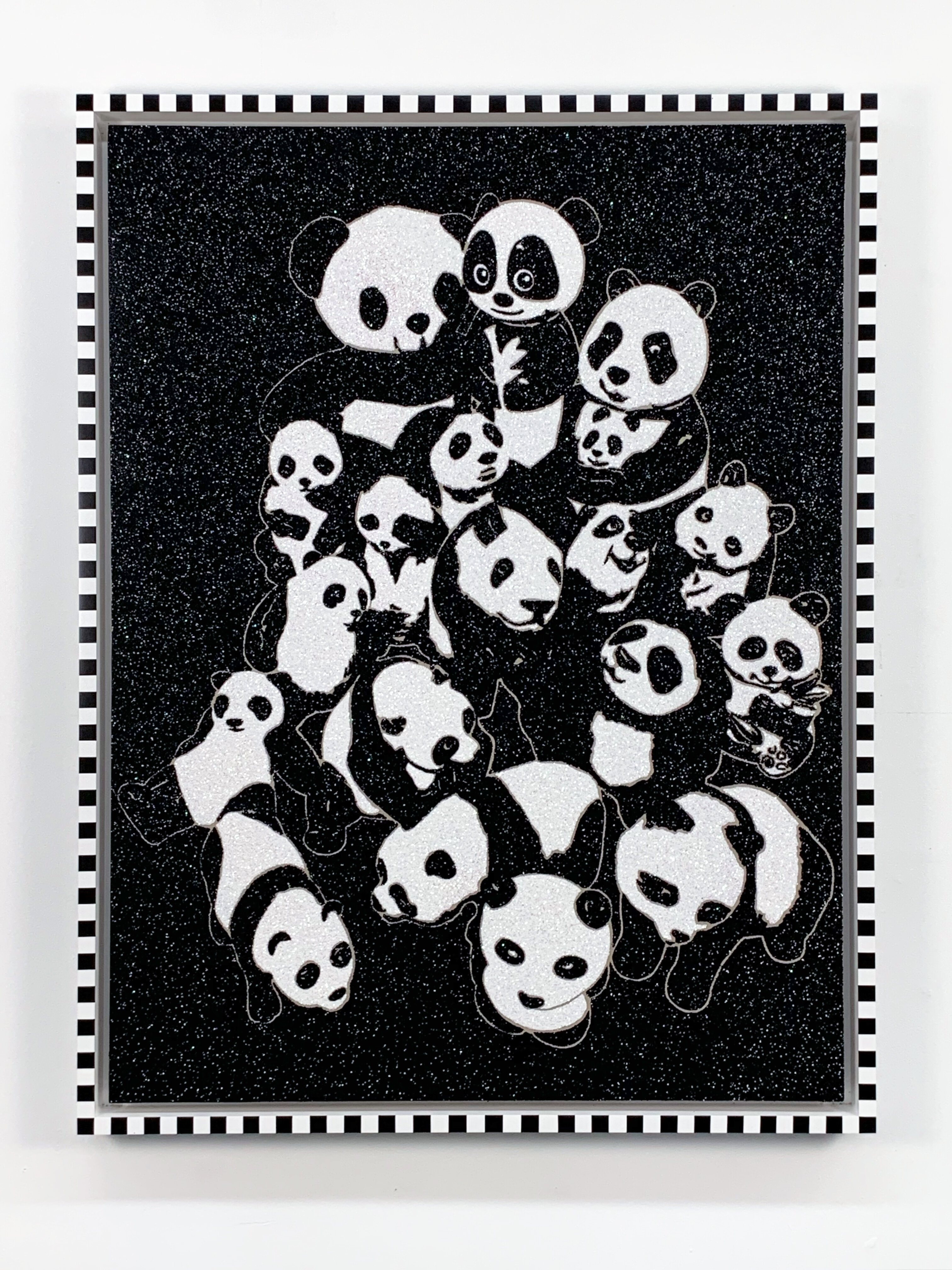
There is a particular kind of joy that arrives fully formed in a Rob Pruitt exhibition. Walking into one of his shows is less like entering a white cube and more like stumbling into the interior of someone's very specific, very American mind: pandas multiplying across linen, surfaces catching light because they are buried in glitter, consumer symbols reborn as totems of longing and humor. In recent years, Pruitt has continued to expand his reach across institutions and the primary and secondary markets alike, cementing a reputation that was already decades in the making. His work sits at a genuinely rare intersection: beloved by collectors who appreciate craft and conceptual rigor, and accessible enough in spirit to draw audiences who have never set foot in a gallery.
Rob Pruitt
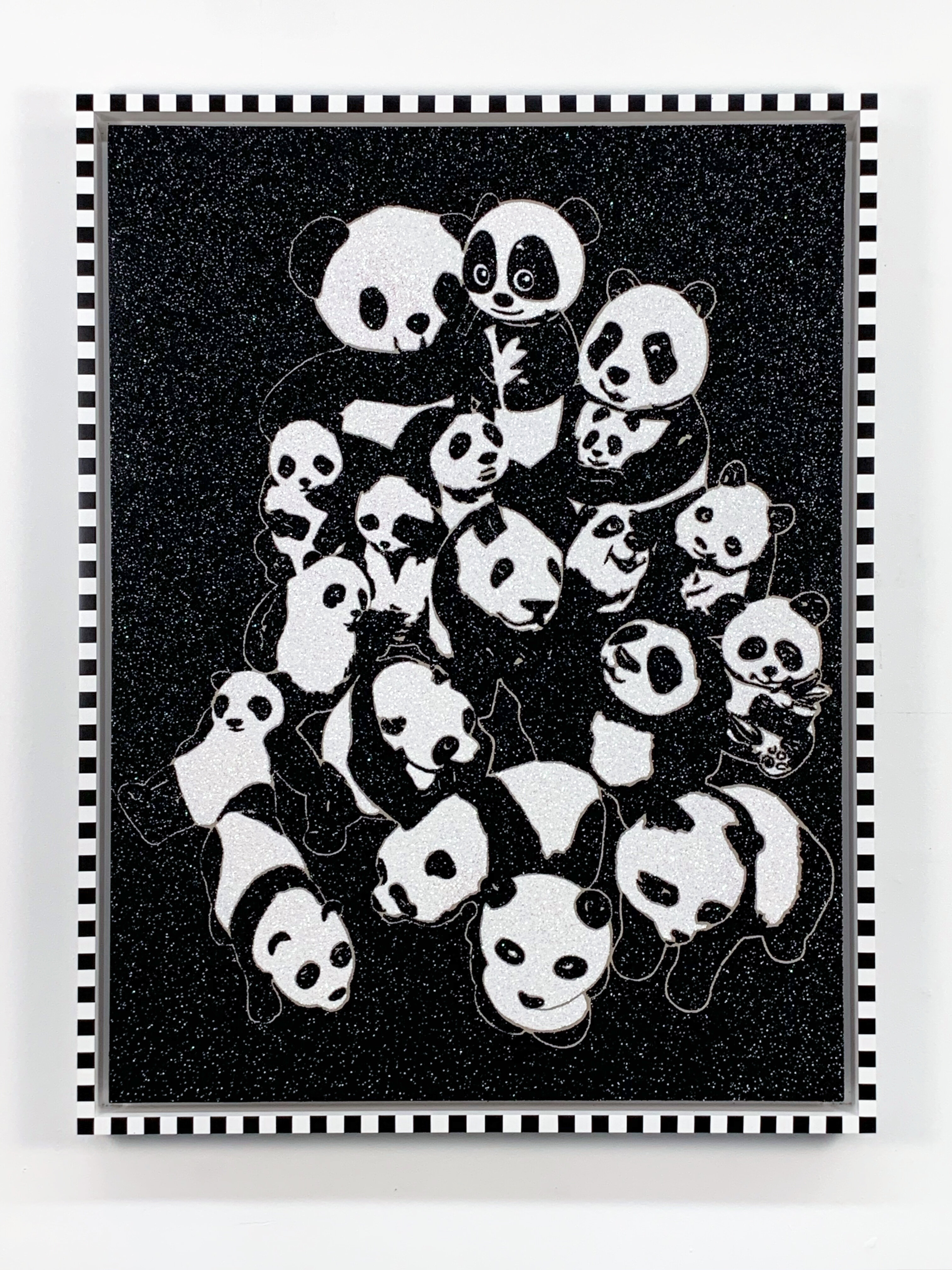
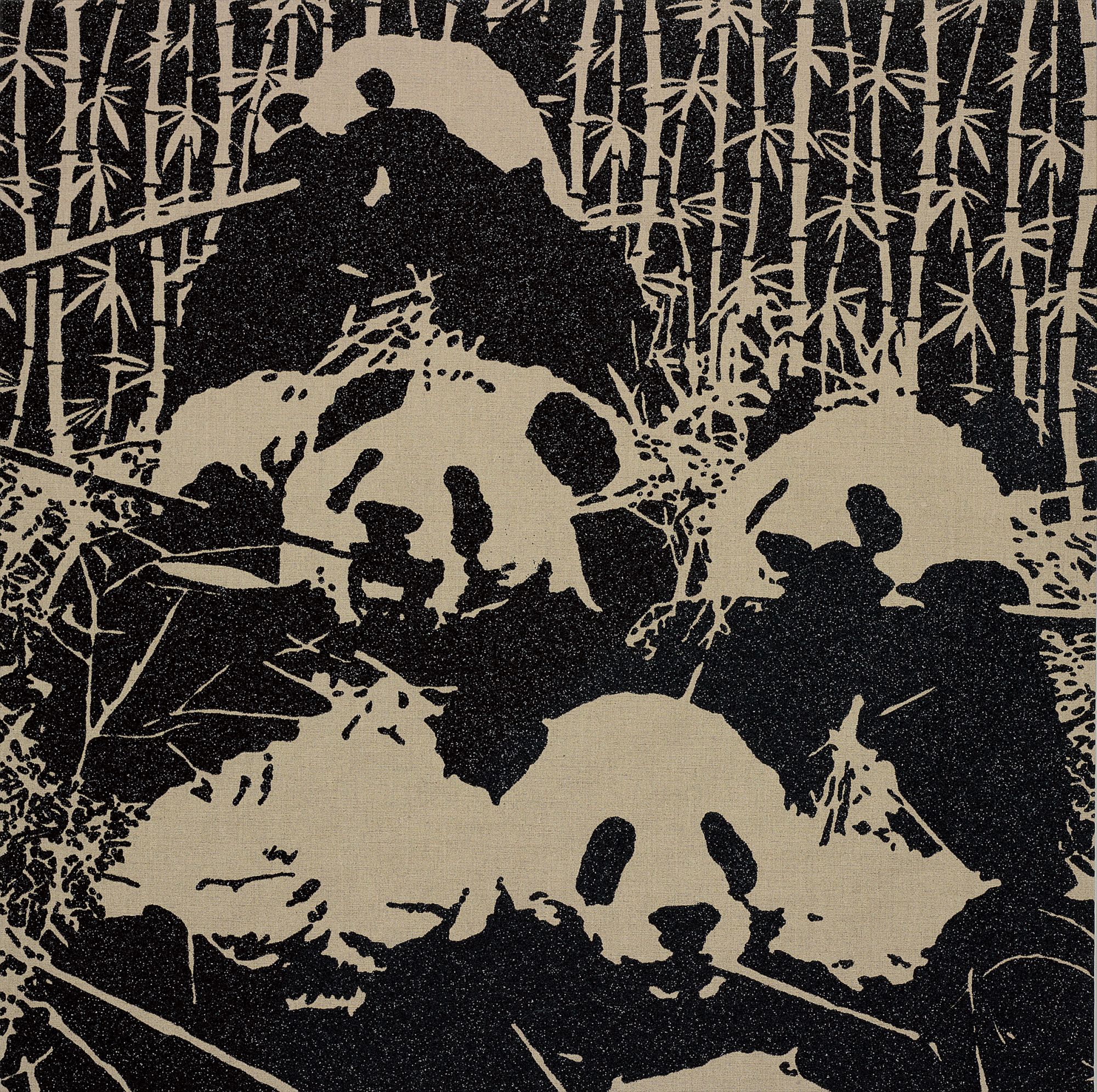
Panda Collection #3, 2021
Pruitt was born in 1964 and came of age in Washington, D.C., before making his way to New York, the city that would define and occasionally bruise his career. He studied at the Corcoran School of Art in Washington and later at the Cooper Union in New York, institutions that gave him both a formal grounding and an appetite for rebellion against it.
The downtown New York scene of the 1980s was formative in ways that were atmospheric as much as artistic: the collision of high theory and street energy, of AIDS activism and club culture, of Warhol's lingering shadow and a new generation demanding to be seen. Pruitt absorbed all of it. His early career was marked by a collaboration with fellow artist Jack Early under the name Pruitt Early. The pair showed at Leo Castelli Gallery in 1992, a debut that generated significant attention and then, almost immediately, significant controversy.
Rob Pruitt
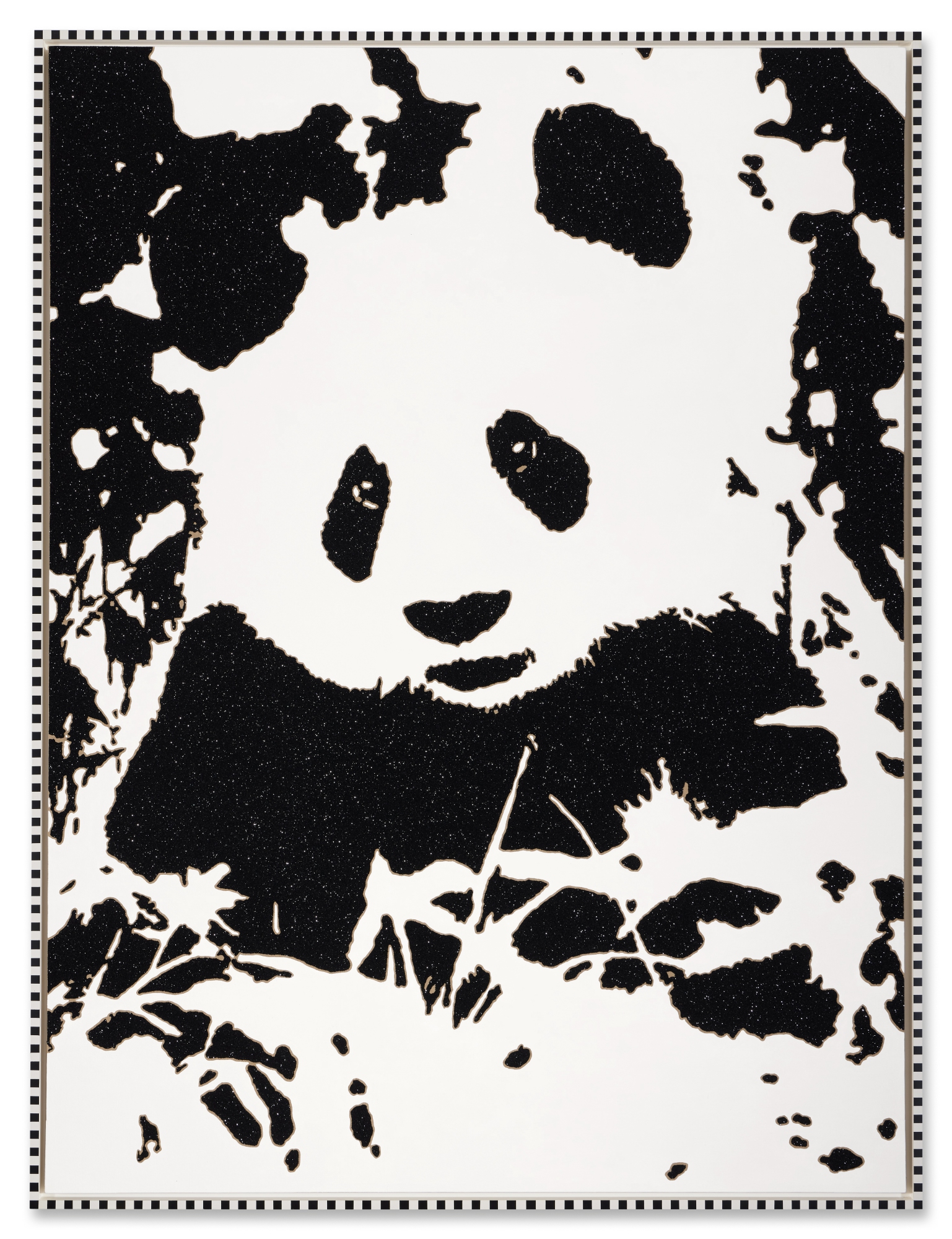
Innocent, 2015
A subsequent show was widely criticized, and Pruitt has spoken candidly about the professional collapse that followed and the years it took to rebuild. That period of failure, far from being a footnote, became something like the emotional bedrock of his practice. The preoccupation with desire, embarrassment, nostalgia, and recovery that runs through his mature work is not theoretical; it is lived. By the late 1990s and into the 2000s, Pruitt had re emerged with a voice that was both more personal and more expansive.
The panda motif, now inseparable from his identity, arrived as a kind of gift to himself and to viewers: an image of something universally adored, simultaneously rare and kitsch, Chinese in origin and utterly absorbed into Western consumer culture. Pandas gave him a vehicle for thinking about desire without aggression, about cuteness as a genuine aesthetic category, about the way we project tenderness onto things that cannot really hold it. Works like Panda Collection and Midnight Snack (Panda) from 2016 demonstrate his extraordinary skill at using a repeated image to accumulate rather than exhaust meaning. Glitter, applied by hand across large linen surfaces, does something similar: it democratizes beauty, makes it cheap and irresistible and slightly excessive all at once.
Rob Pruitt
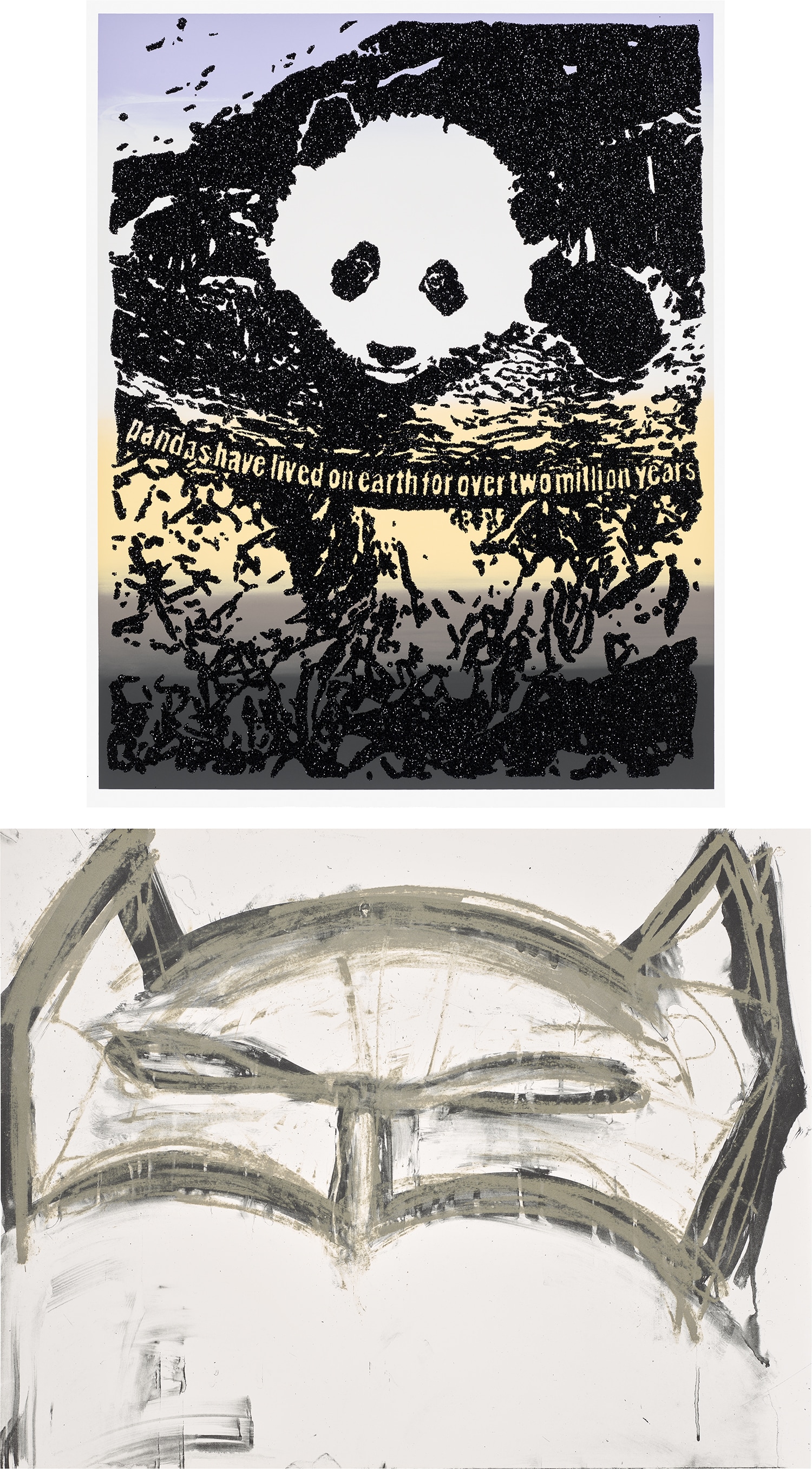
Save the Children ONE HUNDRED YEARS Print Portfolio: two plates
Pruitt's paintings reward close attention even as they seduce from across the room. Gay Zebra and Chinese Buffet, two works that exemplify his use of glitter and enamel on canvas, show how precisely he calibrates surface and image. The titles are doing real work: they hold queer identity and multicultural American life with an almost casual ease, refusing either sentimentality or irony. Innocent from 2015, rendered in enamel and glitter on linen within one of his signature hand painted artist's frames, carries something genuinely moving in its single word: it reads as provocation, as elegy, and as sincerity simultaneously.
The frames themselves are worth noting as an element of the practice. Pruitt frequently creates or heavily personalizes the frames for his works, treating them not as neutral borders but as part of the composition, an argument that the painting does not end where the wall begins. The market for Pruitt's work has grown steadily and thoughtfully. Collectors are drawn to the works for reasons that are easy to understand on the surface and surprisingly deep on examination.
Rob Pruitt
Chinese Buffet
There is the immediate pleasure of the object, the shimmer and color and warmth. There is the humor, which never tips into condescension. And there is the underpinning intelligence: a genuine engagement with art history, with Pop Art's legacy, with the question of what American culture actually looks like when you describe it without flinching. Works on paper, including screenprints with hand applied glitter such as those produced for the Save the Children One Hundred Years Print Portfolio, offer entry points for collectors at various stages of their journey, while major multi panel paintings like White Pandas in six parts and Midnight Snack (Panda) in nine parts represent the kind of ambitious, room defining commitments that serious collections are built around.
Hot Air Painting No. 14 from 2012, made with melted crayon and printed paper collage, shows yet another dimension: a more intimate, almost childlike material vocabulary that sits in productive tension with the scale and ambition of the glitter paintings. Pruitt belongs to a generation and a sensibility that includes artists like Jeff Koons, Takashi Murakami, and Tom Sachs, figures who have all, in different ways, taken the visual language of consumer culture and asked what happens when you treat it with the same seriousness we reserve for canonical painting. But where Koons pursues a kind of triumphant, sealed perfection, Pruitt allows vulnerability into the frame.
The handmade quality of the glitter application, the artist's frames, the confessional resonance of titles like Gray Days: these are the traces of a human being working through something, not just an aesthetic program being executed. That distinction matters enormously to collectors who want to live with work over time. What Pruitt's career ultimately demonstrates is that sincerity and sophistication are not opposites. He has spent decades building a body of work that holds American culture up to the light, not to condemn it but to understand it, to find in its pandas and its glitter and its pop imagery something that looks, if you stand close enough, quite a bit like us.
His work is in significant private and public collections, and his influence on younger artists working at the intersection of camp, craft, and cultural critique is visible and growing. To collect Pruitt now is to recognize, as the best collectors tend to do just slightly ahead of the crowd, that the joy he offers is built on something that lasts.