Richard Tuttle
Richard Tuttle: Poetry Made Gloriously Visible
Artist Spotlight · The Collection Editorial
“I think that art is a force, and the question is whether you can find a form for it.”
Richard Tuttle, interview with Madeleine Grynsztejn, 2005
In the autumn of 2005, visitors to Tate Modern in London encountered something they had not quite expected from one of the world's great contemporary art museums: small, tentative, almost whispering objects installed across the vast expanse of the Turbine Hall and the galleries beyond. The exhibition, simply titled "The Art of Richard Tuttle," had originated at the San Francisco Museum of Modern Art before traveling to the Whitney Museum of American Art in New York, and its arrival in London confirmed what a devoted circle of artists, curators, and collectors had long understood. Richard Tuttle, working with wire and cloth and paper and wood, had quietly become one of the most consequential artists of his generation. Tuttle was born in 1941 in Rahway, New Jersey, and came of age during one of the most turbulent and generative periods in American art history.
Richard Tuttle
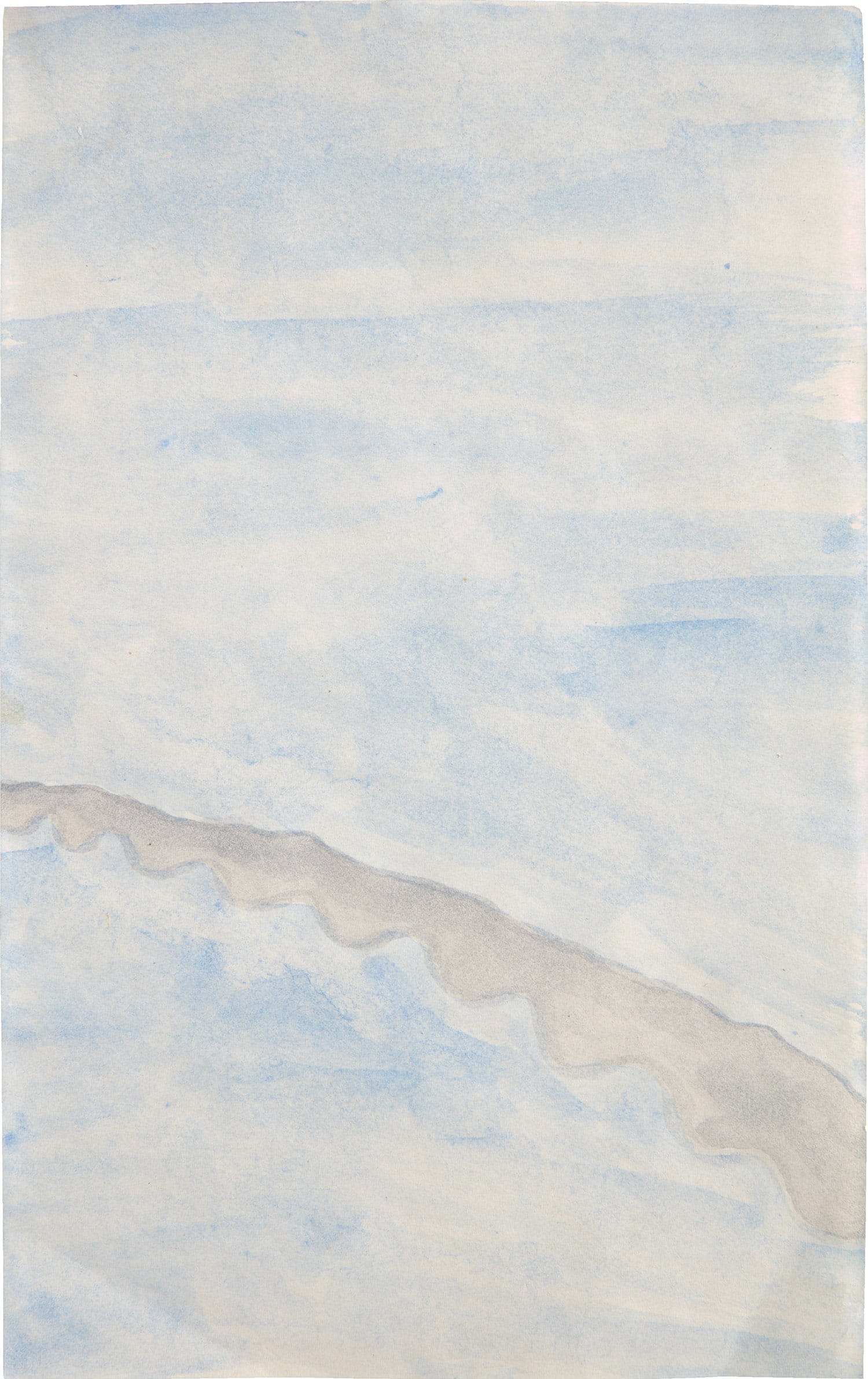
Maine Works (1), 1977
He studied at Trinity College in Hartford, Connecticut, graduating in 1963, and shortly afterward found his way into the orbit of Betty Parsons, the legendary New York gallerist who had championed Abstract Expressionism and whose eye for the unconventional was unmatched. Parsons gave Tuttle his first solo exhibition in 1965, an act of faith that launched a career built entirely on refusing the expected. His formation was shaped not by adherence to any single movement but by an openness to what art could be when stripped of pretension and bravado. The late 1960s and early 1970s marked Tuttle's emergence as a singular voice within and beyond Minimalism.
Where his contemporaries were constructing industrially fabricated objects that declared their own objecthood with authority, Tuttle was doing something more personal and more puzzling. His octagonal canvas pieces, laid directly on the floor rather than hung on the wall, asked viewers to reconsider not just what they were looking at but where art began and ended in relation to its surroundings. His wire pieces of the mid 1970s, installed with shadows as integral components, treated the wall itself as a collaborator. Each work felt discovered rather than made, as though Tuttle had simply noticed something the rest of the world had overlooked.
Richard Tuttle
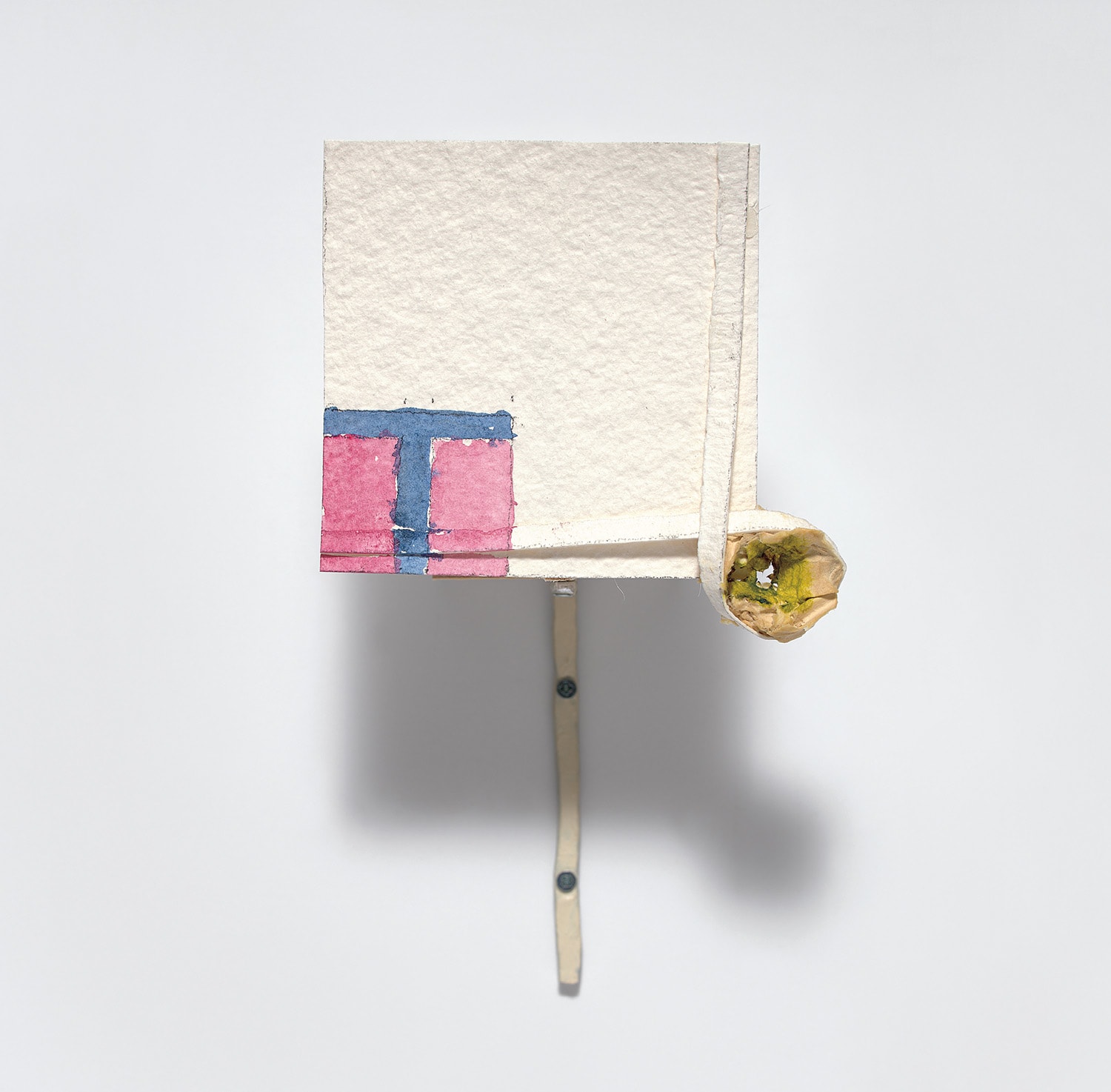
Section I, Extension A, 2007
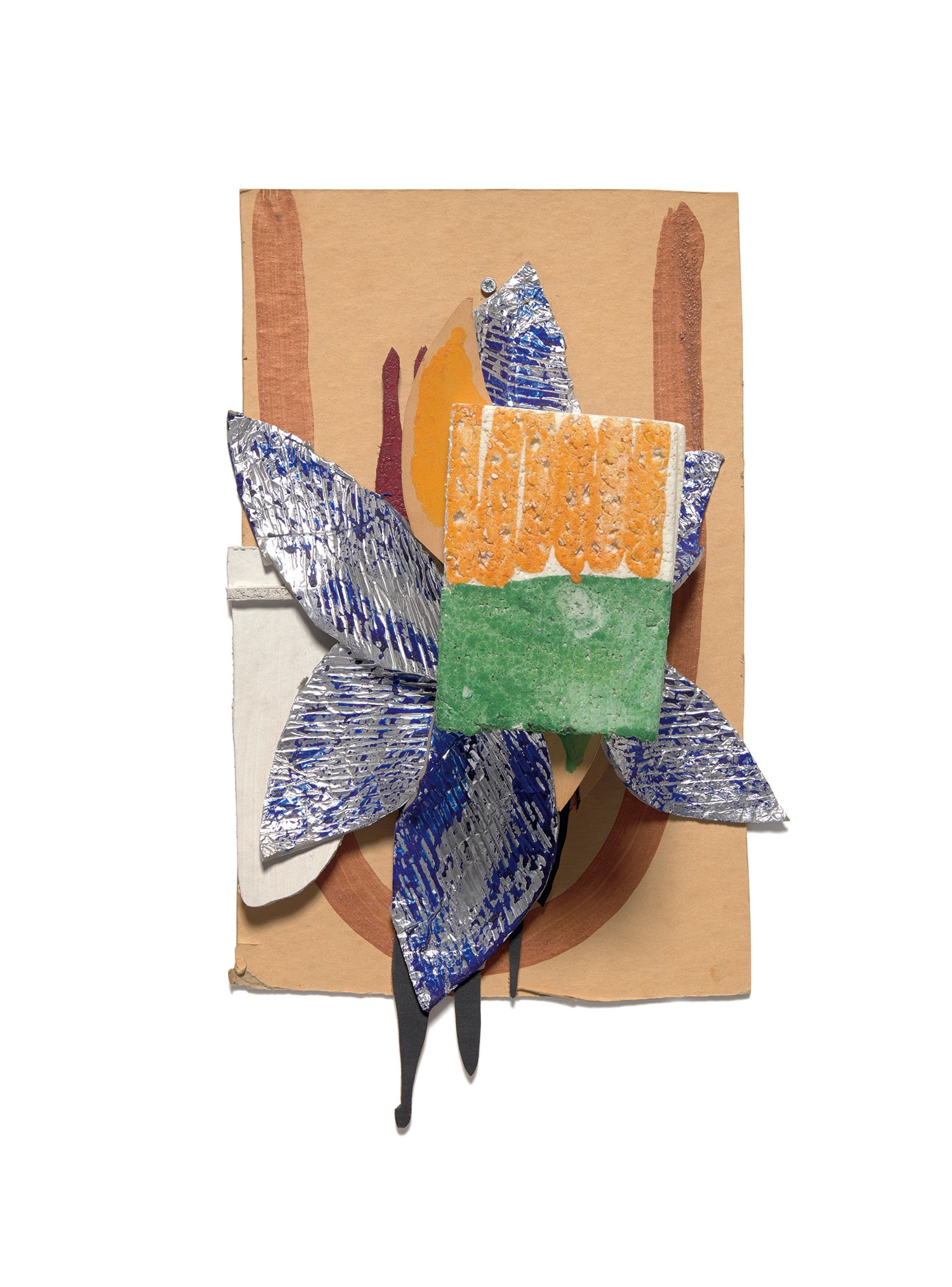
The range of works that define his practice is both broad and deeply coherent. "Maine Works (1)" from 1977, a watercolor on paper, exemplifies his gift for finding amplitude in the smallest gesture. The paper works and ink drawings from the mid 1970s, including pieces from his "60 inch center works" series, demonstrate how rigorously he interrogated the relationship between mark, support, and space. Works like "Blue Star Transparent Orange" from 1986 and "Lonesome Cowboy Styrofoam Number 2" from 1988 reveal a playful, almost mischievous intelligence at work, an artist who took the question of beauty seriously enough to pursue it through alkyd enamel on shaped Styrofoam without a trace of irony.
“The artist's job is to be as close to nothing as possible.”
Richard Tuttle
The 2007 series that includes "Section I, Extension A" and "Section I, Extension E," constructed from paper, acrylic, aluminum foil, hammered armature wire, graphite, hot glue, wood, and screws, represents one of the most mature expressions of his sculptural thinking: works that seem simultaneously in the process of becoming and of quietly insisting on their own completeness. For collectors, Tuttle presents a particular kind of opportunity. His work exists across an unusually wide range of formats, from intimate drawings and prints to sculptures and complex mixed media constructions, which means that a thoughtful collection can be built at multiple levels of engagement. The print editions published by Brooke Alexander Editions and Editions Fawbush in New York, some signed and carefully numbered, offer points of access that carry genuine art historical weight.
Richard Tuttle
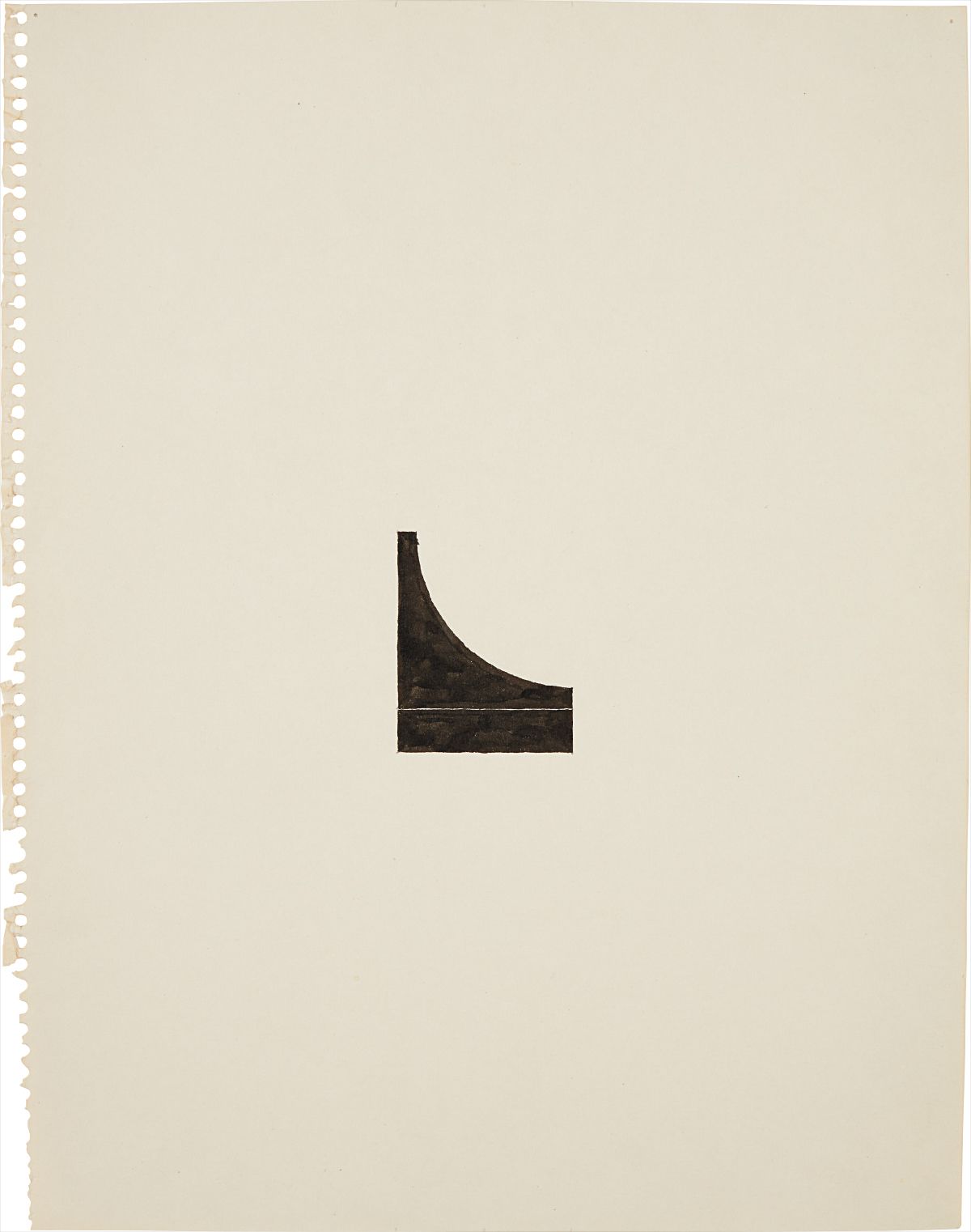
No. 127, 60" center works (4), 1975
Collectors drawn to works on paper have long recognized the ink drawings and watercolors of the 1970s as foundational objects, works made during a period when Tuttle was actively redefining what drawing could mean. The "Plastic History" portfolio, with its complete set of three screenprints hand colored with pigmented gelatin on transparent cotton rag paper and accompanied by texts from René Descartes, Baruch Spinoza, and Joseph Beuys, is the kind of rare object that rewards sustained attention and speaks to Tuttle's deep engagement with ideas beyond the visual. In the broader landscape of postwar and contemporary art, Tuttle occupies a place that is genuinely his own, though the company he keeps is distinguished. His commitment to humble materials and quiet scale places him in conversation with Arte Povera artists such as Mario Merz and Giovanni Anselmo, who similarly elevated the overlooked and the modest into objects of contemplation.
Within American art, his work rhymes with aspects of Eva Hesse's anti form sensibility and with the spatial investigations of Fred Sandback, who also used minimal means to create surprisingly powerful environmental experiences. Yet Tuttle resists easy categorization alongside any of them. He is not a Minimalist in the strict sense, not a Conceptualist, not a Post Minimalist in any programmatic way. He is simply, and beautifully, himself.
Richard Tuttle
Blue Star Transparent Orange, 1986
What makes Tuttle matter so urgently today is precisely his insistence on the value of the small, the provisional, and the hand made in an era that has sometimes seemed to reward only the monumental and the immediately legible. His work requires something of its viewer: patience, attentiveness, a willingness to let scale and expectation shift. When that shift happens, and it does happen, the reward is genuine. A wire affixed to a wall becomes a drawing in space.
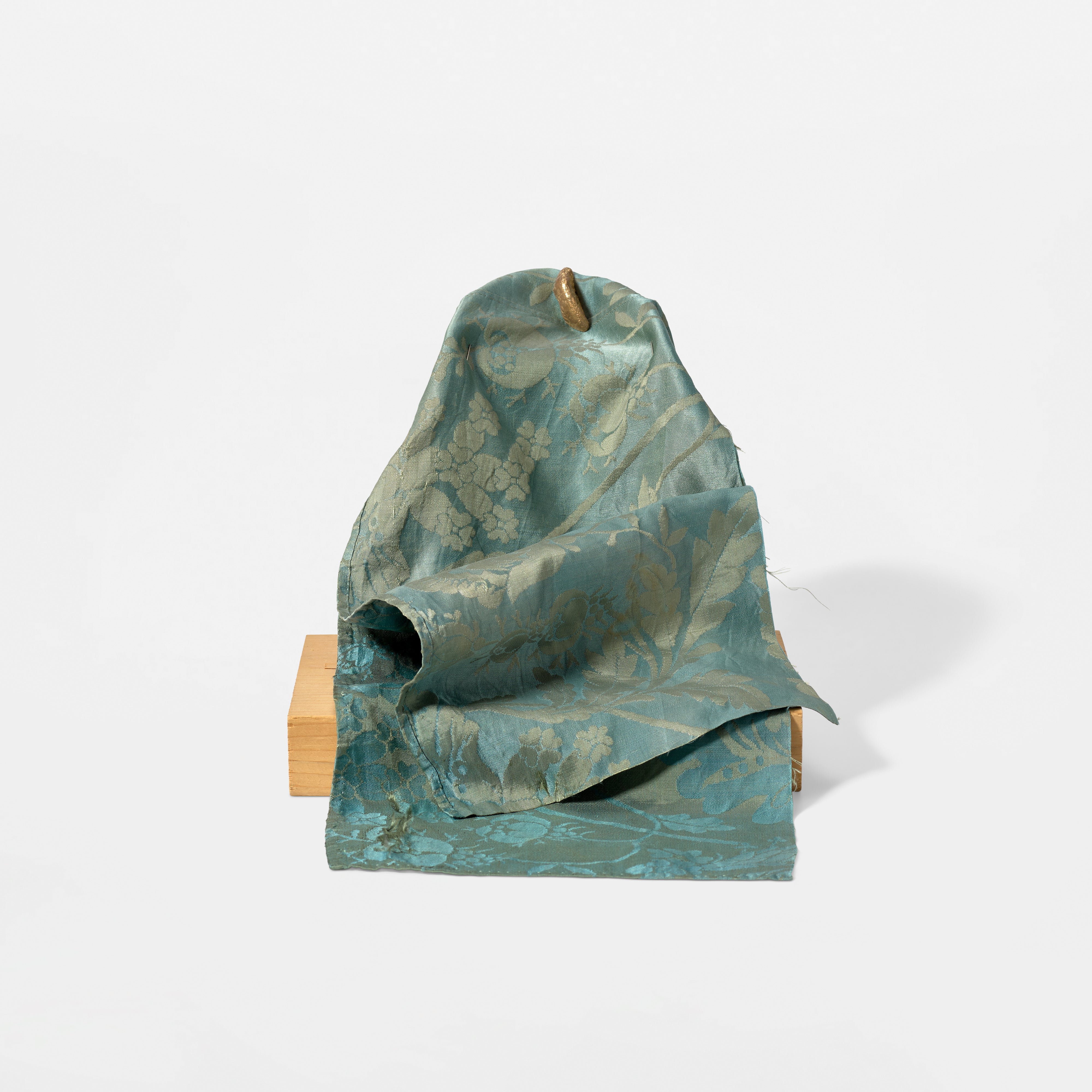
A piece of dyed cloth pinned directly to a surface becomes a landscape. A small watercolor becomes a complete world. The retrospectives at the Whitney, SFMOMA, and Tate Modern did not simply survey a career; they offered evidence that art made with almost nothing can nonetheless contain everything. For collectors and institutions fortunate enough to live with his work, that evidence renews itself every day.
Explore books about Richard Tuttle