Richard Serra
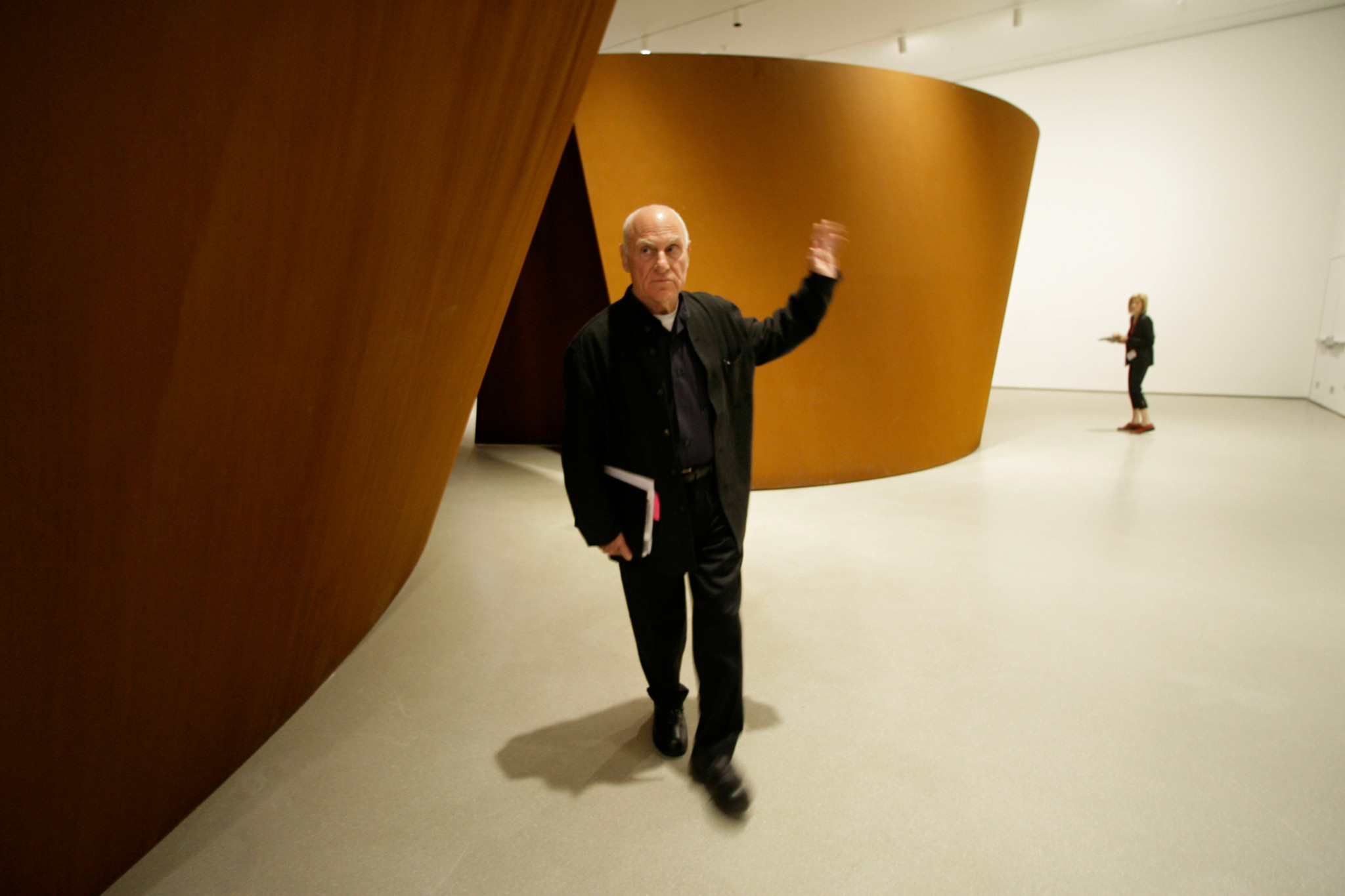
Richard Serra, Steel Poet of Our Time
Artist Spotlight · The Collection Editorial
“I am interested in work where the process is manifest in the result.”
Richard Serra, interview with Peter Eisenman, 1983
When the Guggenheim Bilbao opened its doors in 1997, the world was introduced to a new kind of encounter between a human body and a work of art. Richard Serra's monumental steel sculptures, installed within Frank Gehry's titanium curves, did not hang on walls or sit quietly on plinths. They stood in space like weather systems, demanding that visitors walk through them, lean into them, feel the floor shift beneath their feet. That experience, of space made physical and time made sculptural, defined Serra's entire career and secured his place as one of the most transformative artists of the twentieth and twenty first centuries.
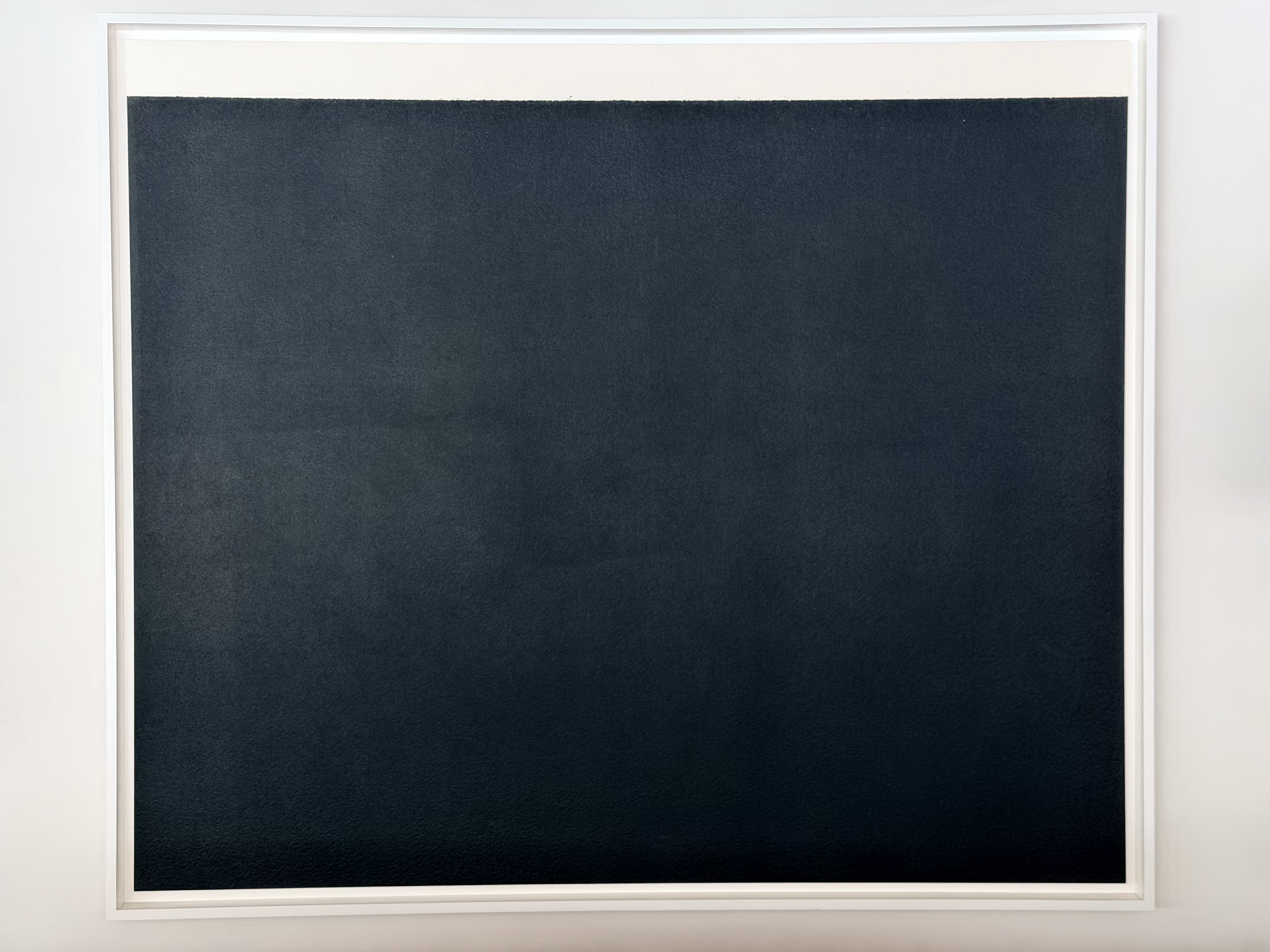
Richard Serra
Level V, 2013
Serra was born in 1938 in San Francisco, a city of hills, fog, and the constant industrial presence of the bay. As a young man he worked in steel mills to fund his education, an experience that left a permanent mark on his understanding of materials and labor. He studied English literature at the University of California, Berkeley, before turning fully toward art, eventually earning his MFA from Yale University in 1964. At Yale he studied alongside a generation that would reshape American art, and he traveled to Europe on a fellowship, where encounters with the work of Brancusi and the writings of Wittgenstein sharpened his thinking about what sculpture could be.
His early work in the late 1960s announced a radical sensibility. Rather than carving or casting, Serra worked with process itself as a creative force. His Prop series placed massive lead plates and pipes in states of precarious balance, held together by gravity alone rather than welds or bolts. His famous Verb List from 1967 and 1968, a handwritten inventory of actions such as to roll, to crease, to fold, to store, functioned as a kind of manifesto, insisting that sculpture was fundamentally about doing, not depicting.
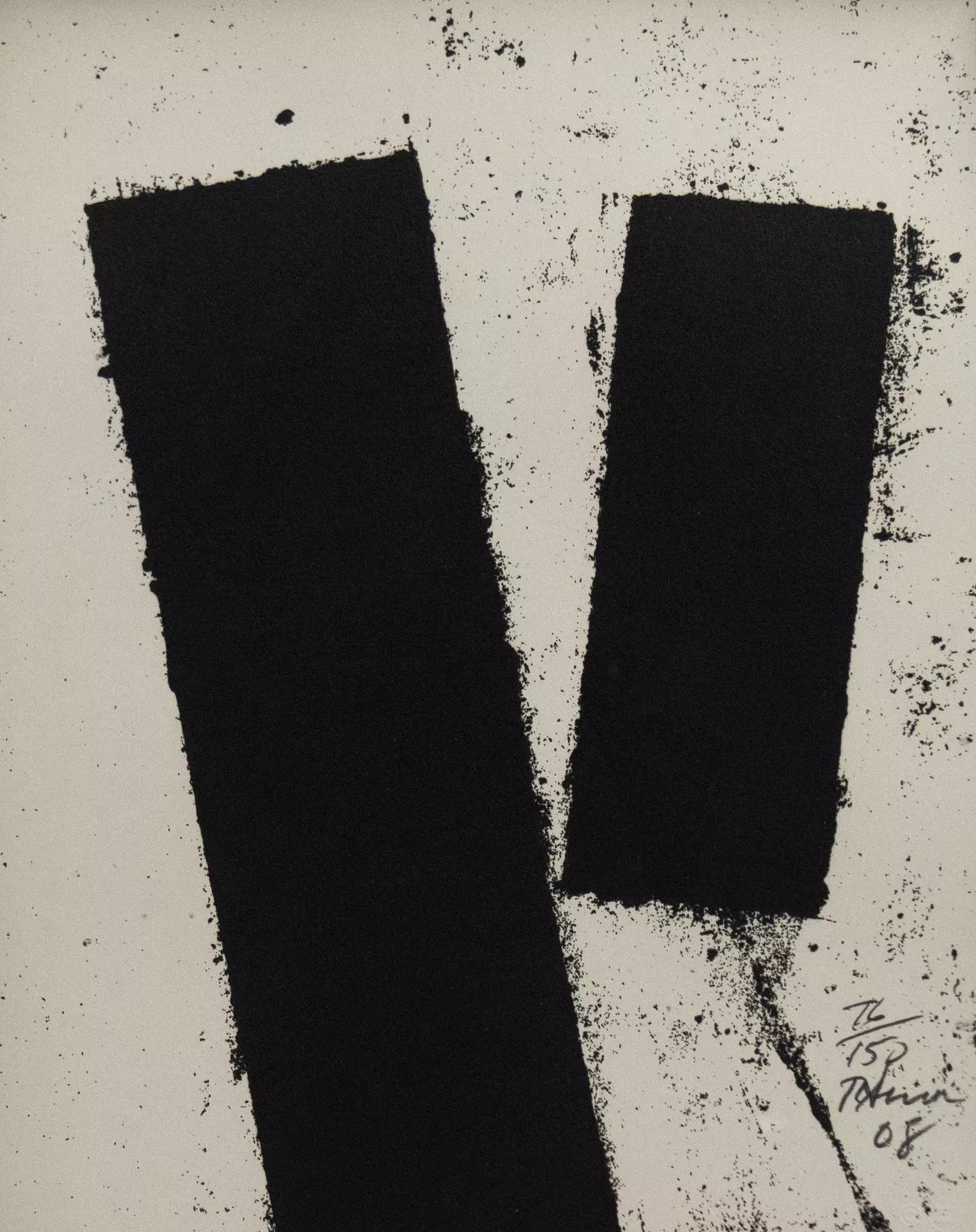
Richard Serra
Promenade Notebook Drawing, 2008
He worked with molten lead splashed against walls, with rubber hanging in strips, with fiberglass and neon, always testing the limits of what a material could reveal about space and physicality. By the 1970s and 1980s Serra had committed fully to Cor Ten and weathering steel, the rusted, oxidized metal that would become his signature material. Works like Clara Clara, installed in the Tuileries Garden in Paris in 1983, introduced the idea of the curved steel plate, forms that bowed outward and inward, creating corridors that compressed and expanded as visitors moved through them. Torqued Ellipses, first shown at Dia Center for the Arts in New York in 1997, took this language further, with walls of steel that twisted as they rose, generating an almost vertiginous sense of disorientation.
“The fact that something is site specific does not mean it is landscape architecture.”
Richard Serra, Writings and Interviews, 1994
These were not sculptures to be looked at. They were sculptures to be experienced with the entire body, in time. Serra was equally committed to works on paper and printmaking throughout his career, and this dimension of his practice rewards close attention. His prints are not reproductions of sculptural ideas but fully independent investigations into weight, texture, and the physicality of mark making.
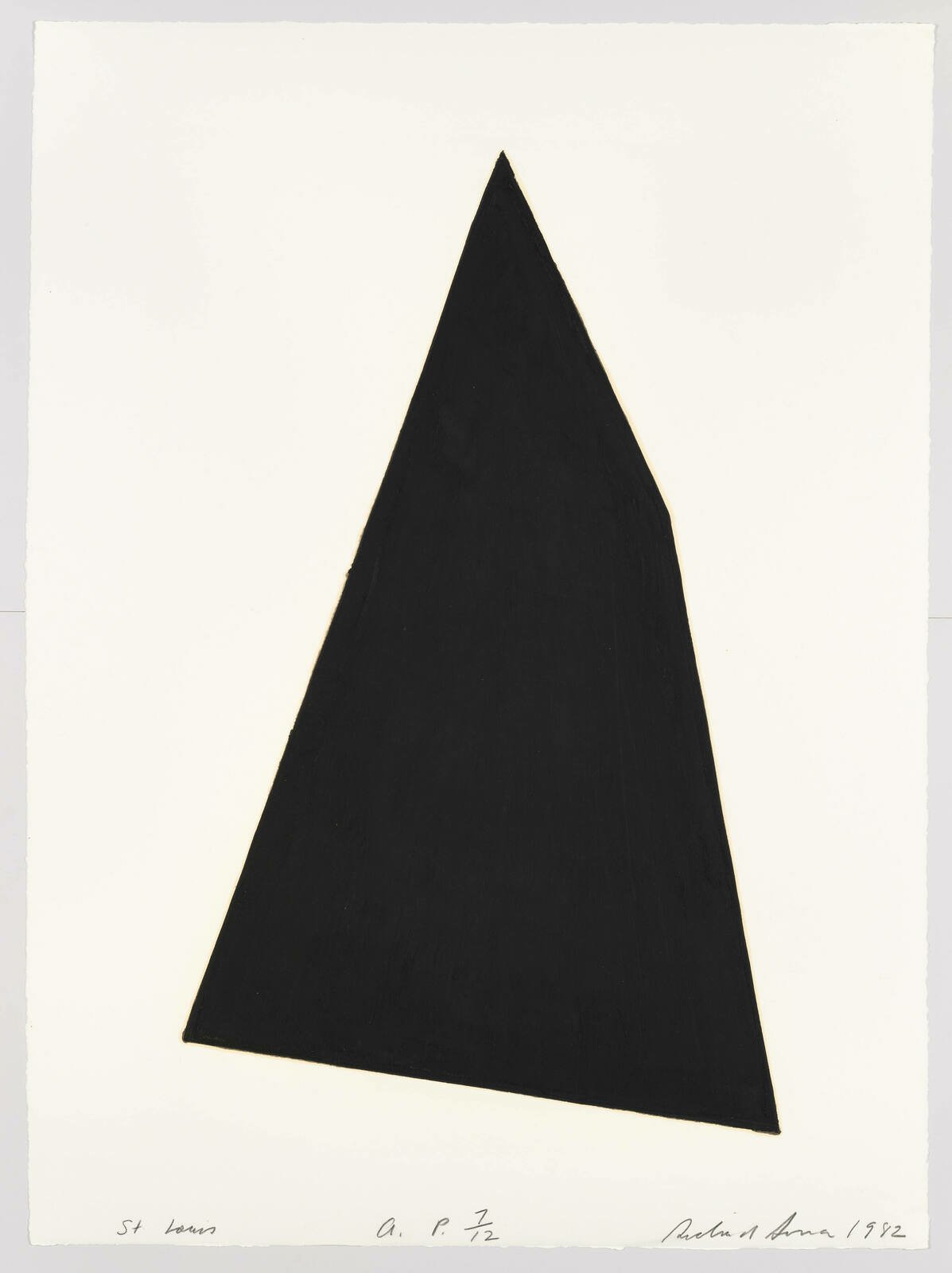
Richard Serra
St. Louis, 1982
Works like Clara Clara I, a monumental screenprint and Paintstik on Japanese Kizuki Hanga Dosa paper, carry the same density and gravity as his steel. His etchings, including pieces like Transversal I and the out of round series, explore the edge, the curve, and the arc with a precision that feels both geometric and deeply felt. His Paintstik drawings, executed on large sheets with a directness and authority, have a muscular presence that stands entirely on their own terms. For collectors, these works offer an intimate point of access to one of the great sculptural minds of the modern era.
“Art does not have to be liked. It has to be thought about.”
Richard Serra
On the secondary market, Serra's works on paper and prints have attracted serious institutional and private collectors for decades. His prints published through Gemini G.E.L.
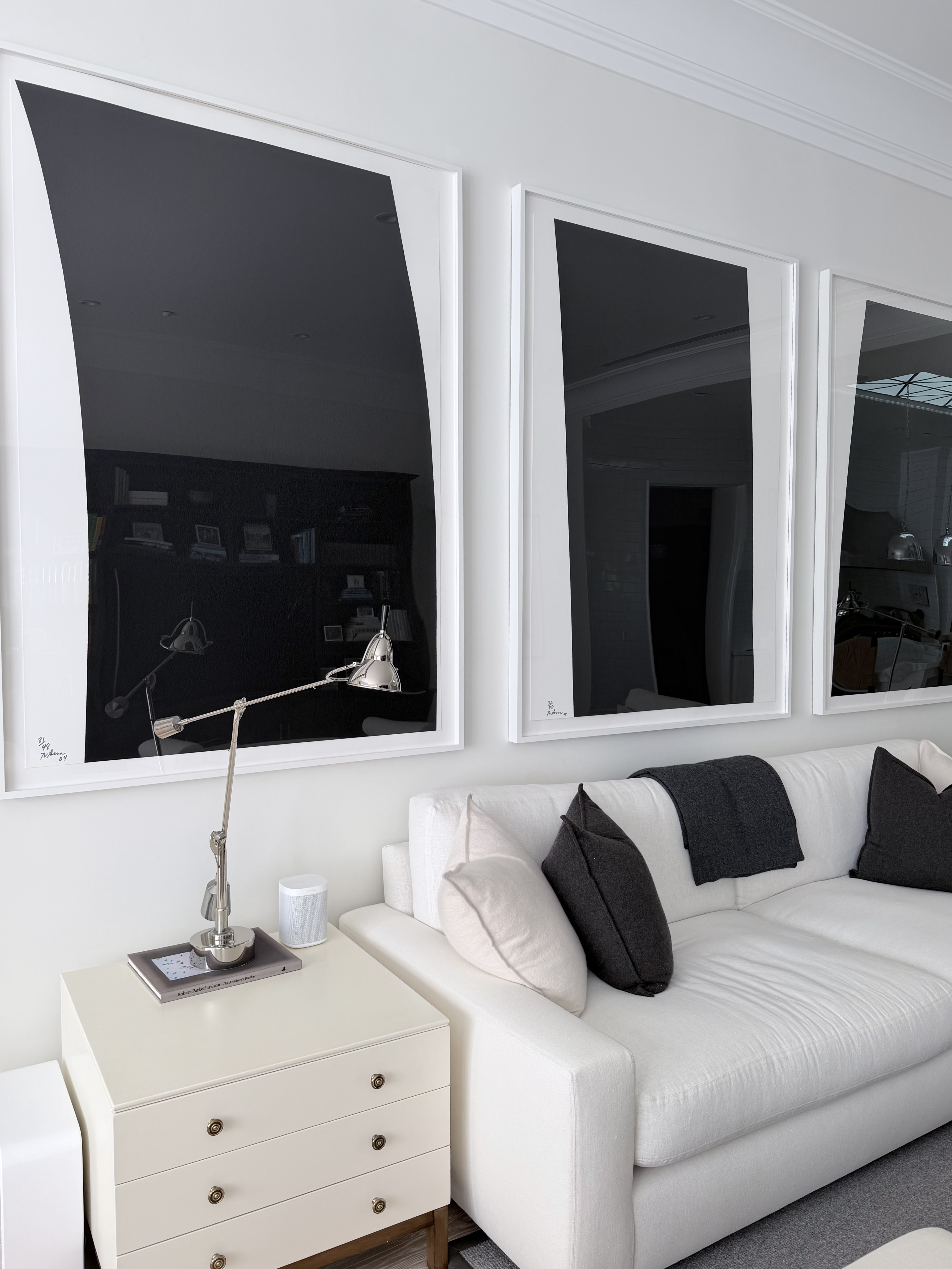
Richard Serra
untitled
in Los Angeles, one of the most respected print workshops in the world, are particularly sought after for their technical ambition and historical significance. Works like Vesurey II, produced in collaboration with Gemini and bearing their distinguishing blindstamps, represent the intersection of Serra's conceptual rigor and the craft traditions of printmaking at the highest level. Auction results for his works on paper have reflected sustained demand from collectors who understand that Serra's graphic work is not peripheral to his achievement but central to it. Within the broader context of postwar and contemporary art, Serra belongs to a generation that includes Donald Judd, Carl Andre, and Robert Smithson, artists who collectively dismantled inherited ideas about what sculpture was and where it could exist.
But Serra went further than most in his insistence on the body as the measure of art, and in his willingness to create work that was confrontational, even difficult, in its physical and psychological demands. His relationship with Minimalism is real but also complex. Where Judd sought cool industrial neutrality, Serra sought friction, weight, and the unresolvable tension between mass and void. His closest spiritual kin might be the Abstract Expressionists who preceded him, particularly Franz Kline and the monumental black works that shared his love of scale and gesture.
Richard Serra passed away in March 2024, leaving behind a body of work that has permanently altered the vocabulary of sculpture and the experience of public space. His legacy is not merely the steel plates standing in museums and plazas around the world, though those are extraordinary enough. It is the insistence, carried through every etching, every Paintstik drawing, every torqued and tilted form, that art can demand something real from the people who encounter it. He believed that space was not neutral, that materials told the truth, and that sculpture was a form of thinking with the body.
For collectors and institutions now stewarding his work, that belief remains as alive and as urgent as ever.
Explore books about Richard Serra
Richard Serra: Writings, Interviews
Richard Serra
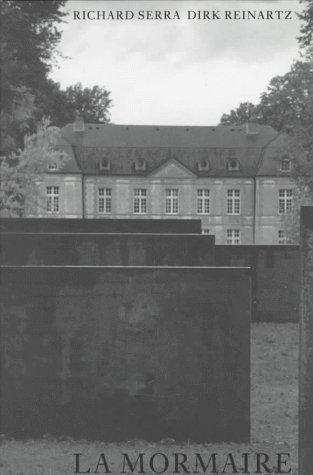
Richard Serra
Rosalind E. Krauss
Richard Serra: Sculpture 1985-1998
Various contributors
Richard Serra: Forty Years
Various contributors
Richard Serra: Torqued Ellipses
Lisa Dennison
Serra: Sculpture and Film
Hal Foster
Richard Serra: Verbs and Nouns
Various contributors