Richard Hambleton
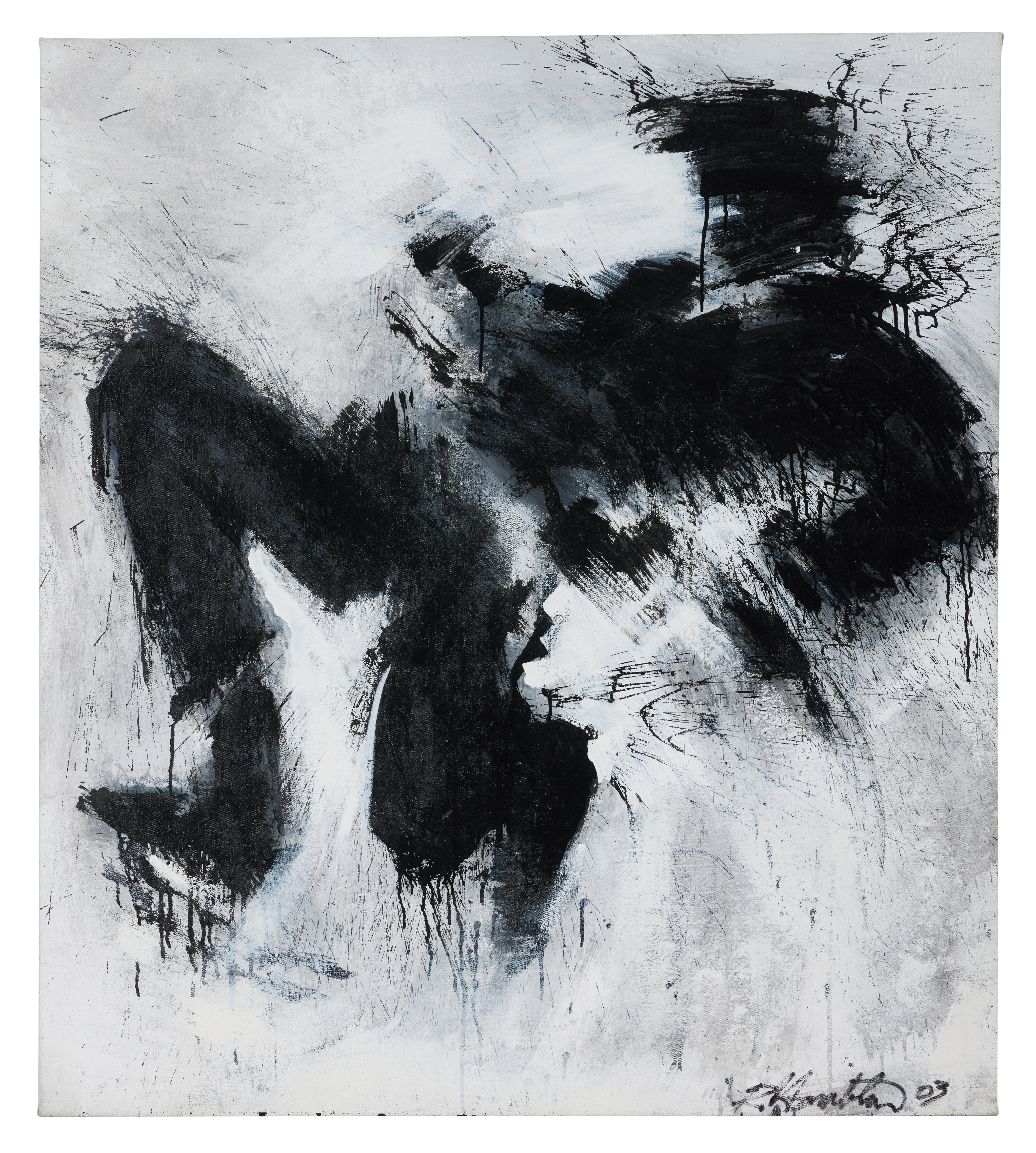
Richard Hambleton: The Shadow That Shaped Everything
Artist Spotlight · The Collection Editorial
In the autumn of 2017, Sotheby's New York staged a dedicated sale of works by Richard Hambleton, bringing long overdue institutional attention to an artist who had spent decades lurking at the margins of the art world he helped define. The sale confirmed what a devoted circle of collectors had understood for years: that Hambleton's contributions to the visual culture of the twentieth century were not merely significant but foundational. His Shadowman figures, those slashing, gestural silhouettes that once haunted the doorways and alleyways of New York's Lower East Side, had transformed from acts of urban intervention into some of the most collectible works of their generation. Richard Hambleton was born in Vancouver, Canada, in 1952, and came of age in a country that produced an outsized number of artists who would find their most resonant voices elsewhere.
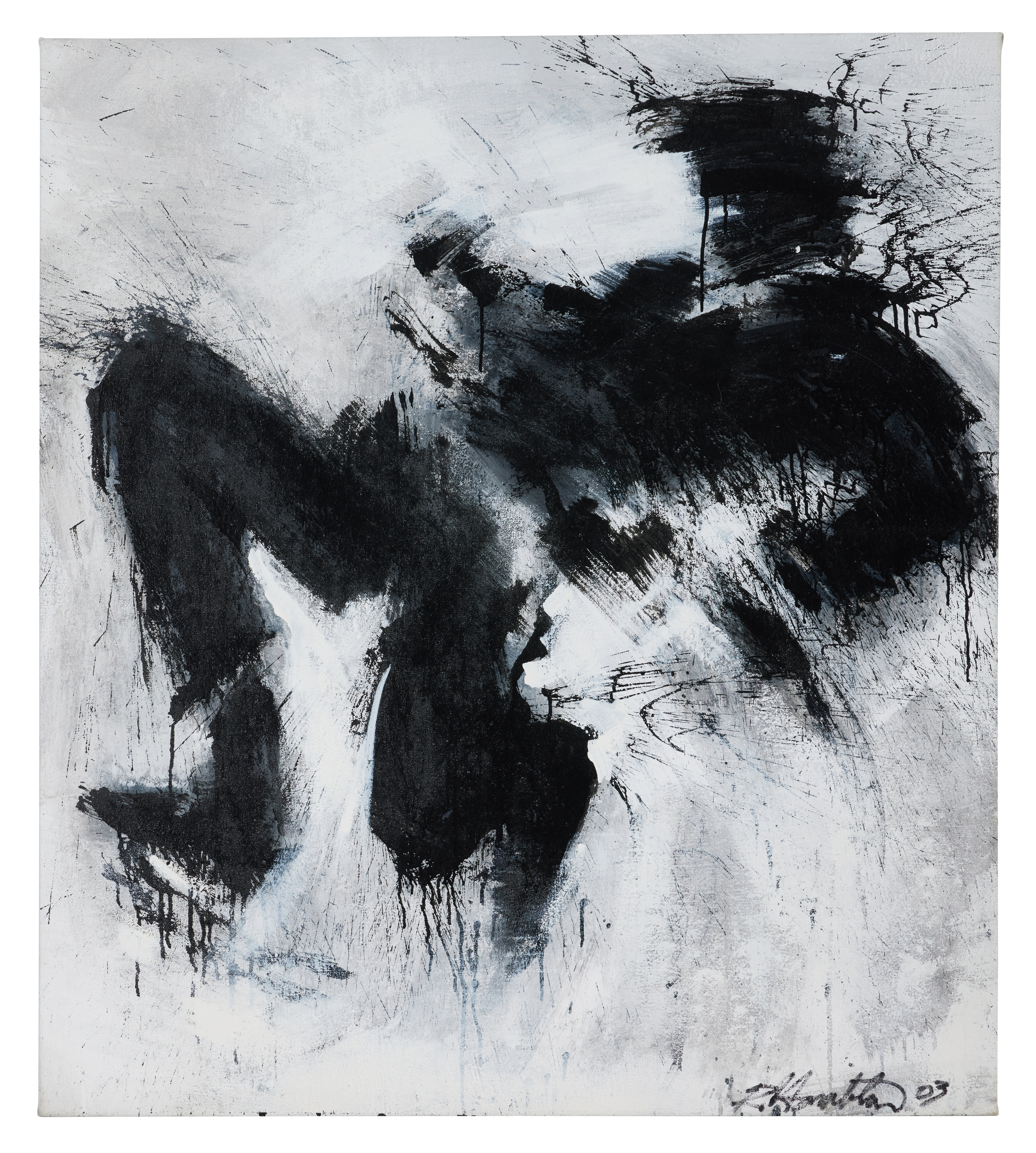
Richard Hambleton
Jumping Shadow, 2003
He studied at the Emily Carr College of Art and Design in Vancouver, where he developed an early appetite for conceptual provocation and a willingness to treat the city itself as both canvas and collaborator. Even in his student years, Hambleton was drawn to the idea that art could unsettle, that it could operate not in the controlled environment of a gallery but in the unguarded, unmediated flow of daily life. His earliest major body of work announced this ambition with startling directness. Between 1976 and 1978, Hambleton executed his Image Mass Murder series across cities throughout North America and Europe, chalking out elaborate crime scene outlines on sidewalks and public spaces, complete with body silhouettes, numbered markers, and pools of simulated blood.
The works borrowed the visual language of police forensics and turned it into something deeply theatrical, confronting passersby with the sudden suggestion of violence in ordinary places. It was a conceptually sophisticated act for a young artist, and it demonstrated a gift for public spectacle that would define his entire career. By the early 1980s, Hambleton had arrived in New York at precisely the right moment. The Lower East Side and the East Village were fermenting with creative energy, and the streets themselves had become a contested space where art, commerce, and social urgency collided.
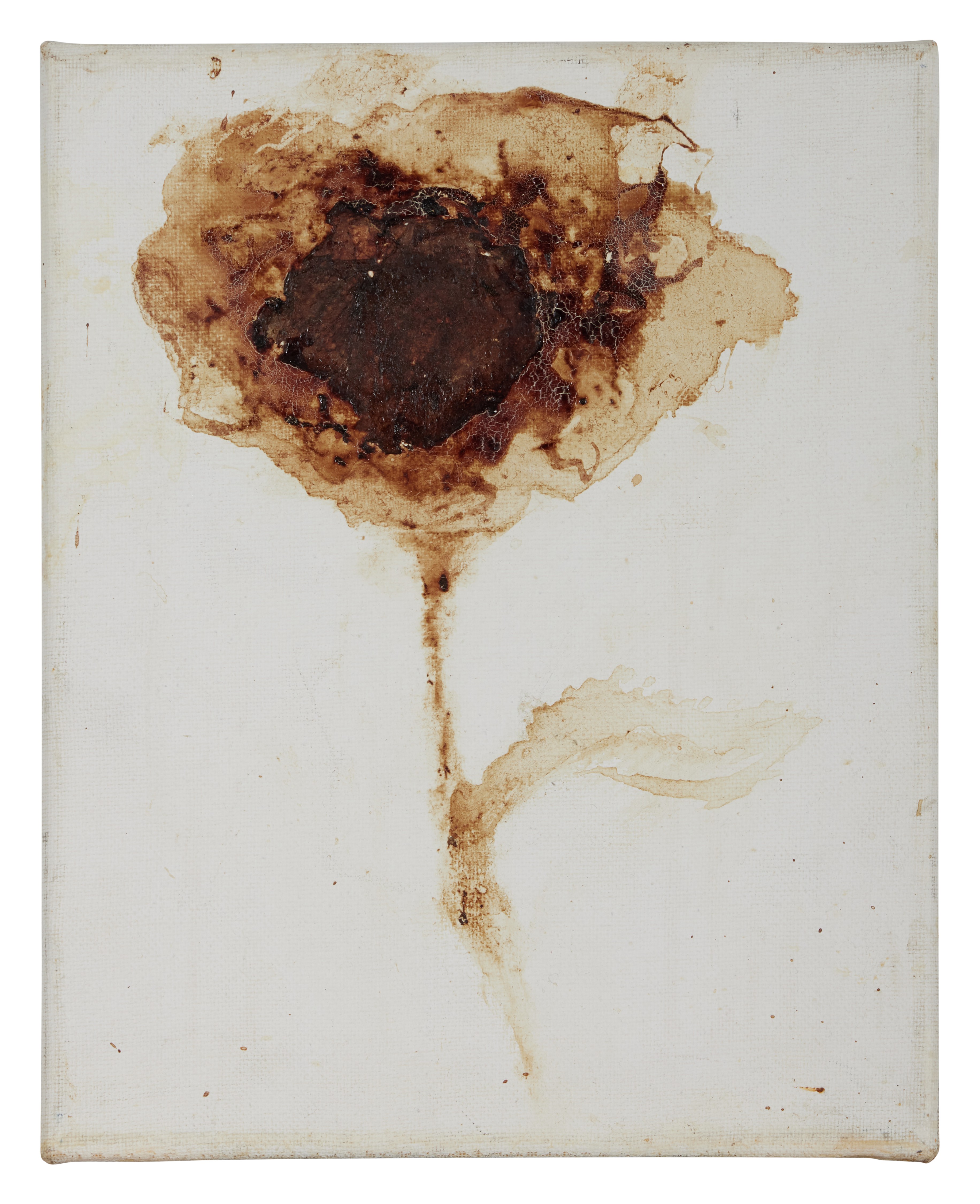
Richard Hambleton
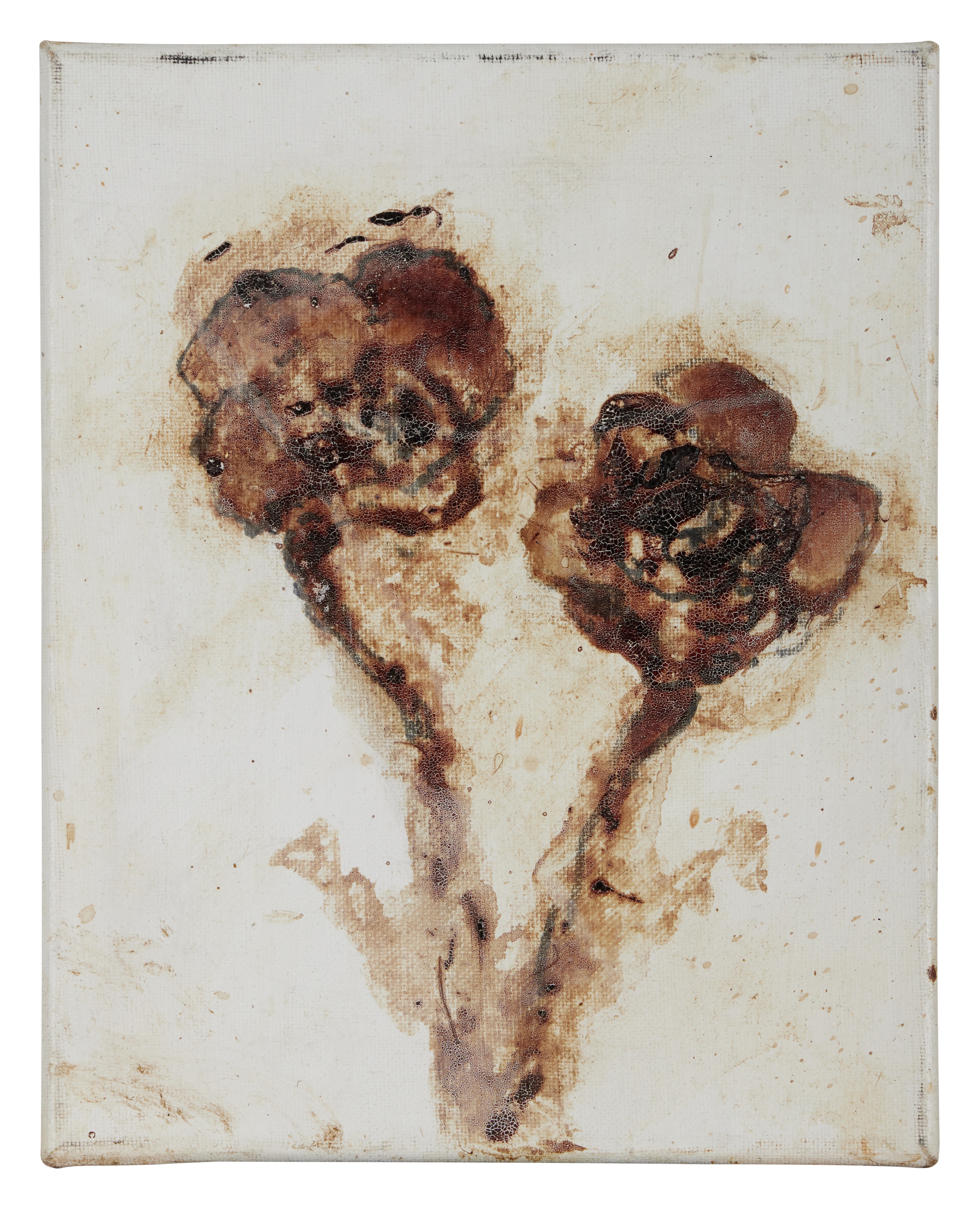
Untitled (Flower), 2015
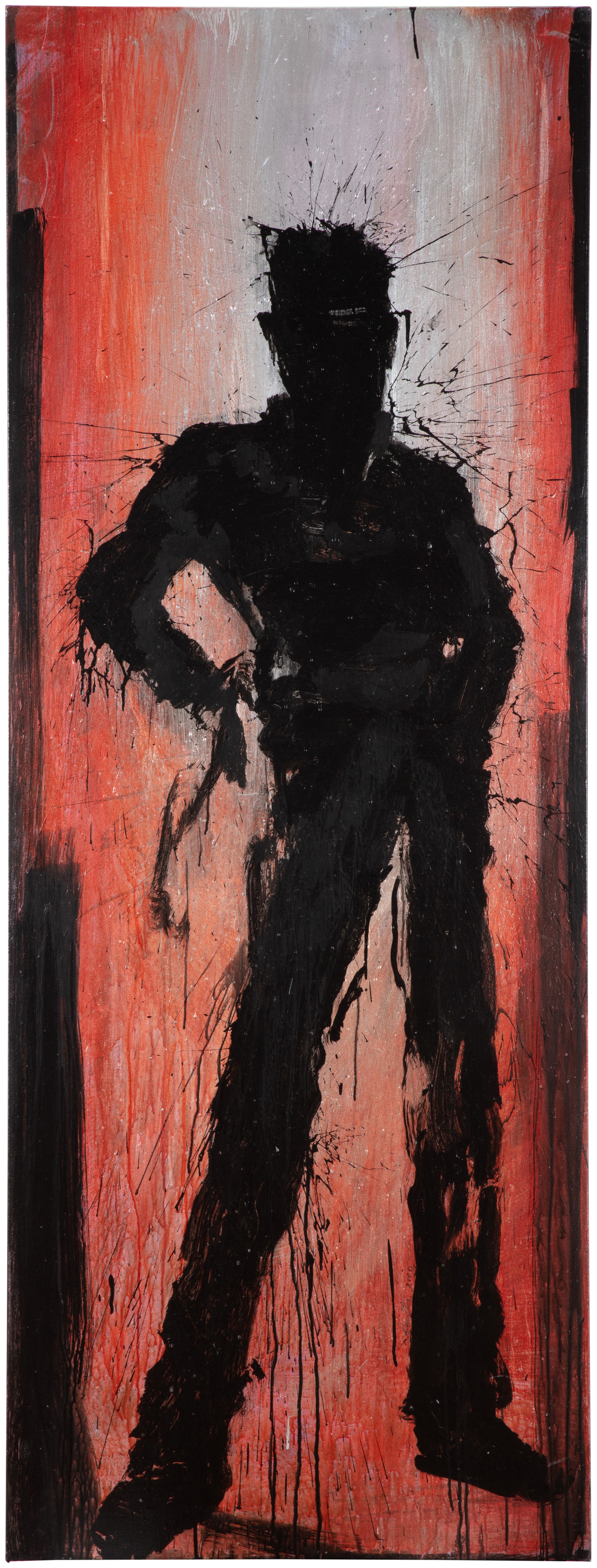
It was here that Hambleton developed his Shadowman series, painting large, frenzied human silhouettes onto walls, doorways, and building corners throughout the neighborhood. Unlike the clean, graphic imagery of his contemporaries, Hambleton's Shadowmen were visceral and unsettling, their surfaces scraped and layered, their postures caught in moments of ambiguous action. They seemed to breathe with the city around them, appearing overnight and persisting for months, weathered by rain and light into something that felt genuinely alive. Working during the same years as Jean Michel Basquiat and Keith Haring, Hambleton occupied a distinct and somewhat more elusive position in the downtown scene.
Where Basquiat channeled language and history into his canvases and Haring embraced a graphic universality, Hambleton was primarily a painter of atmosphere and dread, his figures summoned from the dark rather than drawn against it. The gallerist and dealer Tony Shafrazi was among the first to exhibit Hambleton's work formally, and European collectors took notice early, with significant interest emerging from galleries and private collections in Italy, where his neo expressionist sensibility resonated strongly. Hambleton showed at the Galleria Salvatore Ala in Milan and attracted collectors who understood his work as part of the broader neo expressionist conversation that included artists such as Georg Baselitz and Julian Schnabel. The works available through The Collection offer a remarkable survey of Hambleton's range across several decades.
Richard Hambleton
Untitled (Flowers), 2015
"Buenos Aires" from 1982, acrylic on canvas, captures the raw immediacy of his street practice translated onto a more traditional support, the paint applied with the same urgency he brought to building facades. "Shadow Man" from 1983, executed in acrylic, tinted metallic acrylic, and tape on paper, is a direct document of his most celebrated period, and works from this early decade carry particular weight for collectors seeking to understand the origins of his vision. "Jumping Shadow" from 2003 demonstrates how Hambleton continued to develop the Shadowman motif across his career, the figure suspended in kinetic energy, the surface dense with painterly incident. Among the most striking of his later works are the two pieces titled "Untitled (Flower)" and "Untitled (Flowers)," both from 2015, executed in blood on canvas.
These works belong to a body of material Hambleton produced in his final years, when his health had severely declined and his materials had become deeply personal, almost confessional. The use of blood as medium is not merely shocking but genuinely moving: it transforms the act of painting into something intimate and irreversible, connecting the work directly to the body of the artist. "Yellow Shadow Head" from 2017, one of the last works he completed before his death that year, shows no diminishment of his expressive authority, the chromatic warmth of the yellow ground animating the dark head that floats upon it. For collectors considering Hambleton's market position, several factors make this a particularly compelling moment.
Richard Hambleton
Standing Shadow in Orange and Pink
His critical reassessment has accelerated significantly since his death in October 2017, with estate works carefully managed and scholarship around his practice growing steadily. Works on canvas from his peak 1980s period represent the firmest foundation for a serious collection, while works on paper offer accessible entry points without sacrificing quality. The later blood paintings occupy a singular position in his output and in contemporary art more broadly, combining conceptual weight with an emotional directness that is rare. Collectors who engage with Hambleton are joining a lineage that includes some of the most discerning early adopters of the East Village scene.
Hambleton's legacy is most usefully understood not as that of a street artist in the contemporary sense, but as a painter who chose the street as his primary exhibition space and the city's population as his intended audience. His influence on subsequent generations of artists who work in public space, from Banksy to KAWS, is substantial, though rarely acknowledged with sufficient specificity. He proved that the wall could carry as much psychological and aesthetic weight as any museum wall, and that work made without institutional permission or support could achieve a depth and durability that outlasted its physical conditions. The shadows he painted in New York in the early 1980s have long since faded, but the idea they embodied, that art could ambush you, that it could make you feel something before you had time to decide how to respond, remains as urgent and alive as anything in the contemporary moment.
Explore books about Richard Hambleton