René Magritte
René Magritte, Master of Magnificent Mysteries
Artist Spotlight · The Collection Editorial
“Everything we see hides another thing. We always want to see what is hidden by what we see.”
Interview with Jean Neyens, 1965
Stand before a René Magritte canvas long enough and something quietly remarkable happens. The familiar world begins to loosen its grip. A bowler hat floats above a well dressed man whose face you will never see. A pipe declares, with perfect composure, that it is not a pipe.
René Magritte
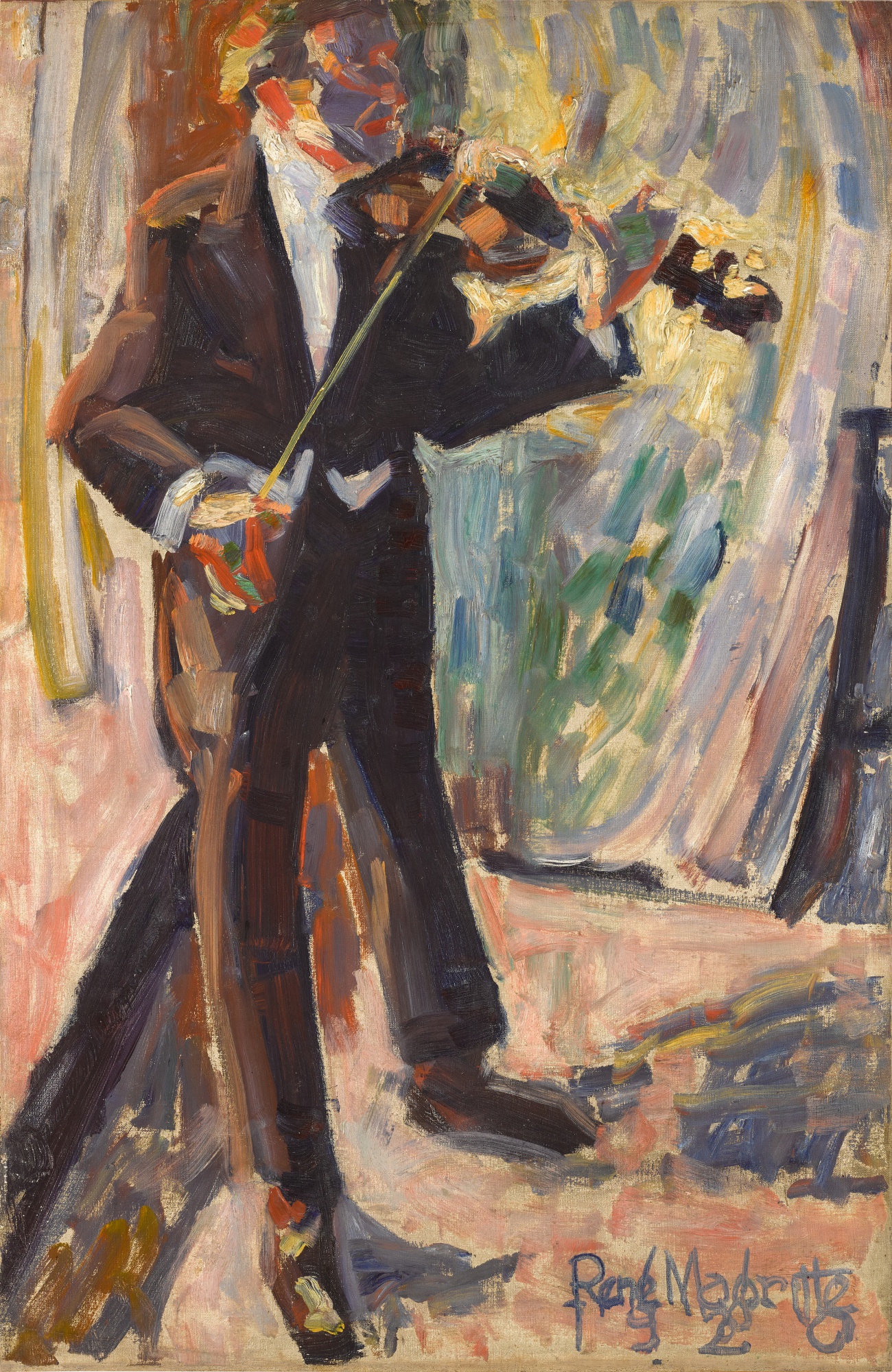
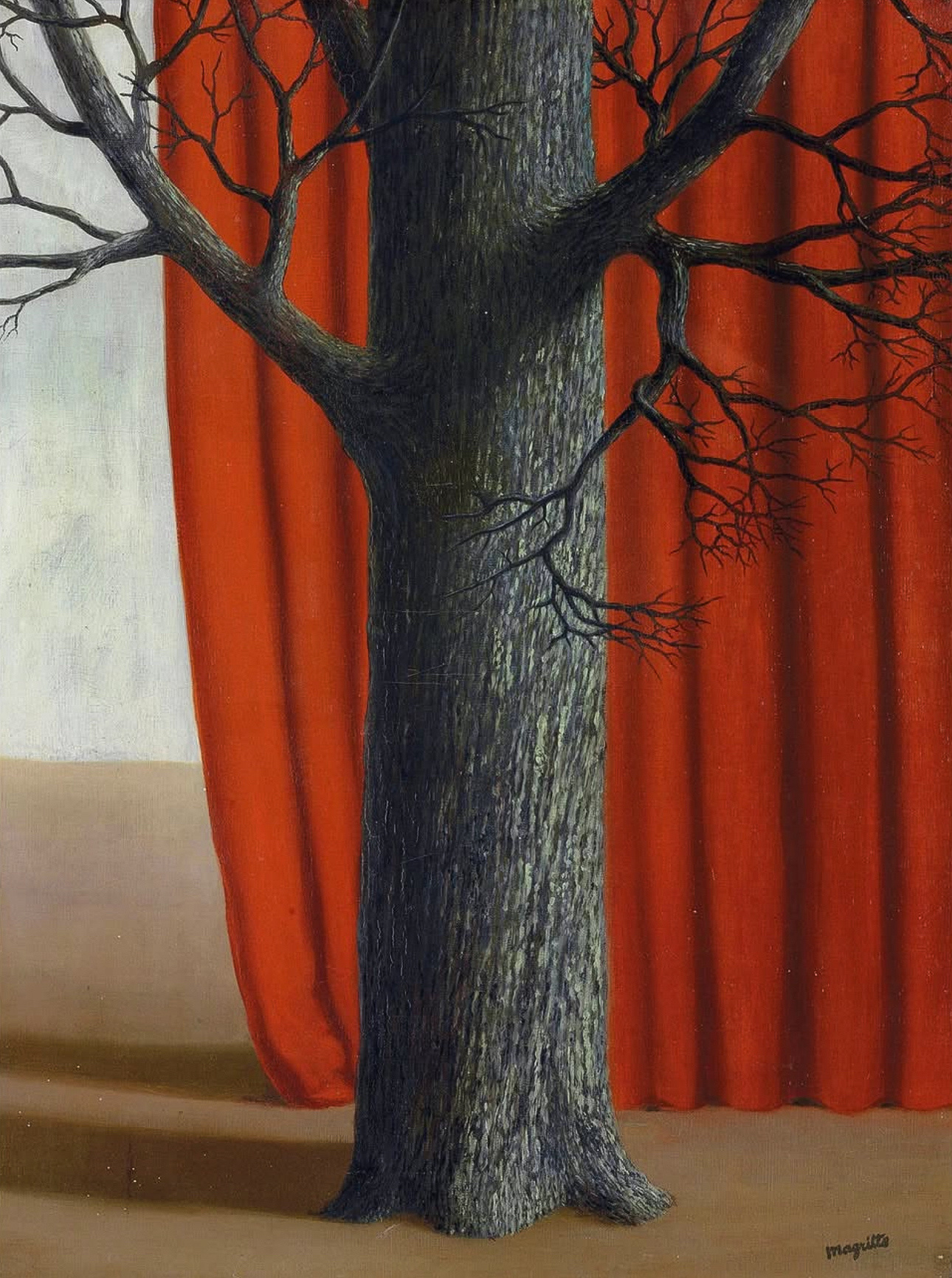
La parade, 1940
A green apple fills a room until there is no room left. The Museum of Modern Art in New York holds several of his canonical works in its permanent collection, and each visit confirms the same truth: Magritte did not merely make paintings. He made questions that have no final answer, and he dressed them in the most reasonable clothes imaginable. That tension between the ordinary and the impossible is precisely what continues to draw collectors, curators, and the simply curious into his orbit more than half a century after his death.
René François Ghislain Magritte was born on November 21, 1898, in Lessines, a small town in the Hainaut province of Belgium. His early years were shadowed by private grief. His mother, Régina, died by drowning in the Sambre river in 1912, when René was thirteen, an event whose psychological weight has been examined extensively by critics though Magritte himself remained characteristically reticent about its influence. He began studying art at the Académie Royale des Beaux Arts in Brussels in 1916, where he encountered the formal conventions he would spend his career quietly dismantling.
René Magritte
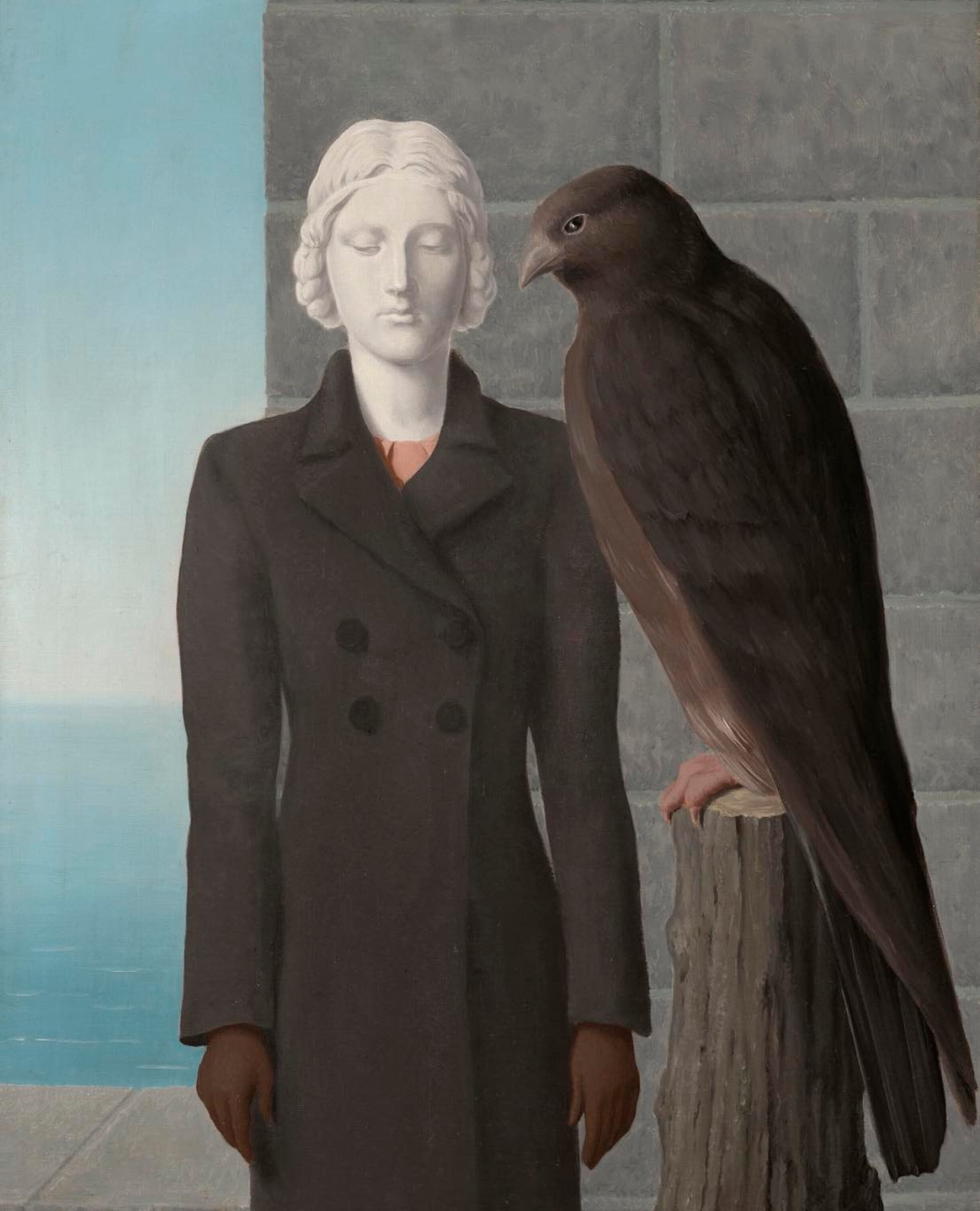
Les eaux profondes, 1941
His early commercial work designing wallpaper patterns and advertising posters gave him a fluency with graphic clarity that would become central to his mature visual language. The pivotal shift came in 1922, when Magritte encountered a reproduction of Giorgio de Chirico's "The Song of Love," painted in 1914. The image, with its juxtaposition of a classical plaster head, a rubber glove, and a receding perspective, opened a door Magritte walked through immediately and never looked back. He began developing the Surrealist imagery that would define him, and by 1927 he had his first solo exhibition at the Galerie Le Centaure in Brussels.
“My painting is visible images which conceal nothing. They evoke mystery and indeed when one sees one of my pictures, one asks oneself the simple question: what does that mean?”
René Magritte
The following year he moved to Paris, where he entered the circle of André Breton and the official Surrealist movement, a relationship that was intellectually productive if personally fraught. His time in the Paris suburb of Perreux sur Marne, from 1927 to 1930, proved among the most generative periods of his life, producing some of the works that would later become touchstones of the twentieth century. Magritte returned to Brussels in 1930, where he remained for the rest of his life, working in a modest terraced house in the Jette neighborhood with his wife Georgette, who served as his constant companion and frequent model. This domestic setting is important context.
René Magritte
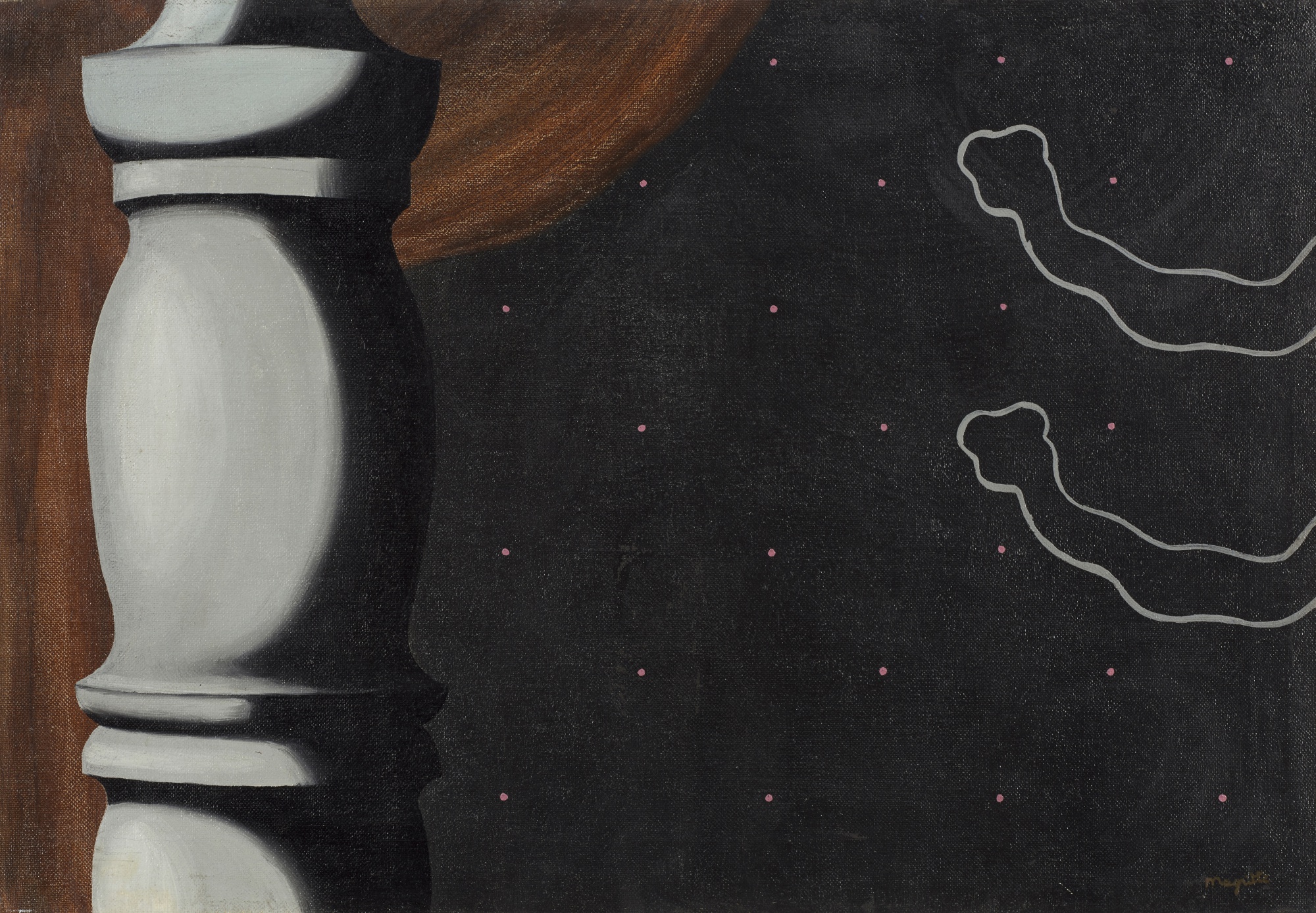
Le palais désert , 1928
Unlike many of his Surrealist contemporaries who cultivated theatrical personas and dramatic biographies, Magritte lived with deliberate ordinariness. He wore the bowler hat not as costume but as daily dress. He walked his Pomeranian dog. He played chess.
“The mind loves the unknown. It loves images whose meaning is unknown, since the meaning of the mind itself is unknown.”
René Magritte
This refusal of bohemian spectacle was itself a kind of statement, and it inflected everything he painted. His surfaces were smooth, his brushwork invisible, his technique borrowed more from commercial illustration than from painterly bravura. The strangeness was never in the handling. It was always in the idea.
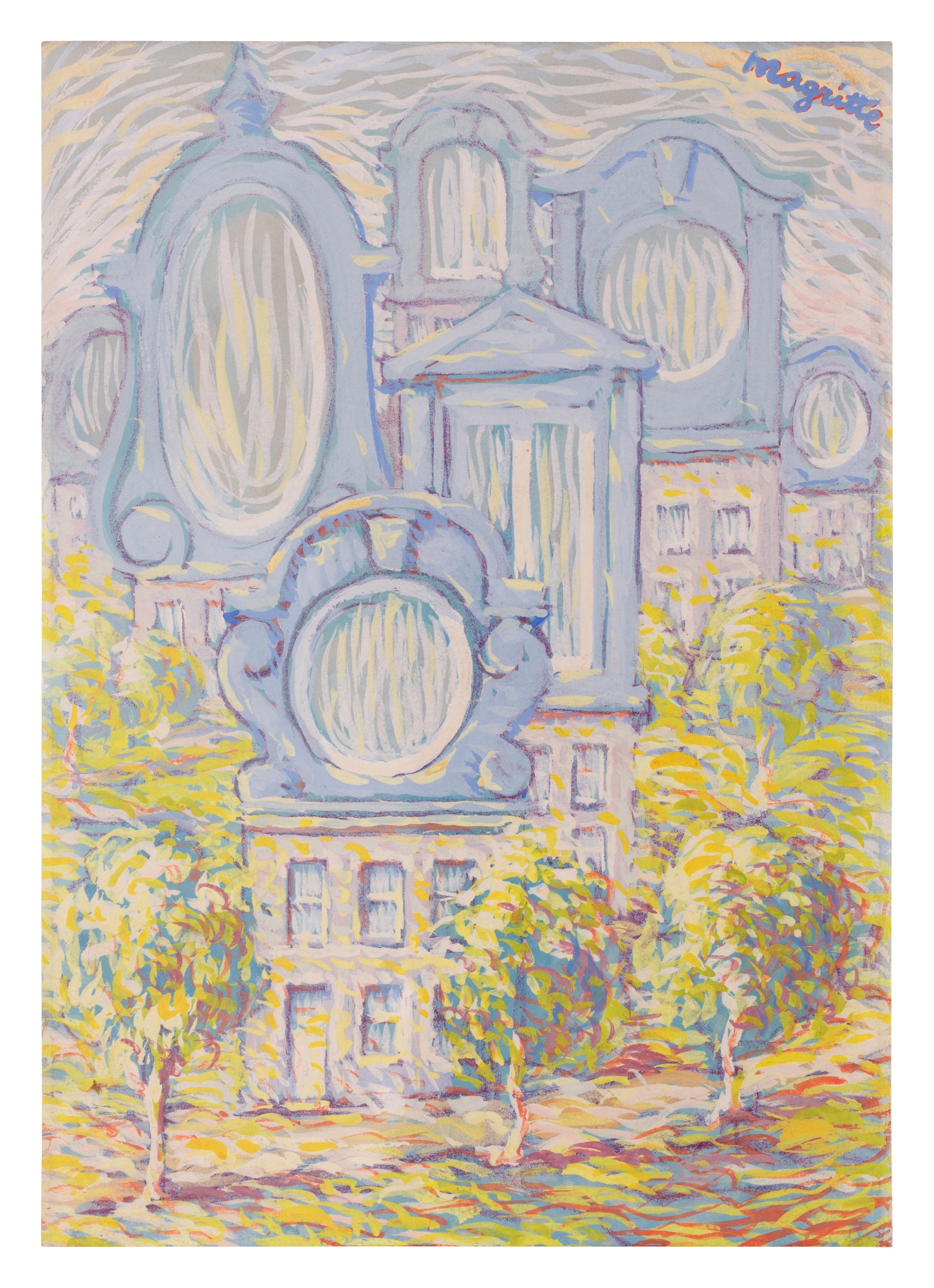
René Magritte
Les Yeux bleus, 1947
Among the works available on The Collection, several illuminate key moments across his career. "Le palais désert" from 1928 and "Le paysage fantôme" from the same year represent Magritte at the height of his first Paris period, bristling with the conceptual energy of his newly formed visual vocabulary. "La parade" from 1940 and "Les eaux profondes" from 1941 belong to a wartime period when Magritte briefly turned toward a softer, more Impressionist inflected palette, a phase sometimes called his "Renoir period" that initially puzzled his admirers but which art historians now regard as a courageous experiment in difficult circumstances. "L'art de la conversation" from 1950 exemplifies his postwar mastery, in which massive stone letters spelling a word rise from a ruined landscape like an archaeological discovery.
"Le météore" from 1964 belongs to his final decade, when his imagery grew if anything more precise and more serene. Taken together, these works offer a genuinely rare opportunity to trace the arc of a mind at work across four decades. In the auction market, Magritte occupies a position of sustained and serious value. His record at auction was set at Sotheby's New York in 2018, when "Le Principe du plaisir" from 1937 achieved in excess of 26 million dollars.
Works on paper, including gouaches such as "Les Yeux bleus" from 1947 and "L'Incendie" from the same year, represent a meaningful point of entry for collectors who wish to engage seriously with his practice without competing at the top tier of the oil painting market. Prints and multiples, including the Mourlot lithograph suite represented in The Collection, carry the additional resonance of Magritte's direct involvement with master printer Fernand Mourlot, whose atelier also produced work for Picasso, Matisse, and Braque. For collectors, condition, provenance, and authentication through the Magritte Foundation in Brussels are the critical considerations. To understand Magritte fully, it helps to place him in relation to the artists who shared his preoccupations.
Giorgio de Chirico, as noted, was his foundational inspiration. Salvador Dalí pursued the irrational through convulsive, melting imagery where Magritte pursued it through precision and stillness. Max Ernst brought a Germanic darkness and collage sensibility. Paul Delvaux, Magritte's fellow Belgian, populated dream landscapes with sleepwalking figures in moonlit train stations.
What distinguishes Magritte from all of them is his insistence on the philosophical rather than the psychological. He was less interested in the unconscious than in the problem of representation itself, a concern that places him in productive dialogue not only with Surrealism but with the Conceptual art that followed decades later. Artists like Joseph Kosuth and the Pictures Generation of the 1970s and 1980s owe a considerable debt to the questions Magritte posed about images, language, and meaning. René Magritte died in Brussels on August 15, 1967, of pancreatic cancer, leaving a body of work that has only deepened in cultural resonance with time.
The Magritte Museum, which opened in Brussels in 2009 and holds the world's largest collection of his work, draws visitors from around the globe who come seeking not comfort exactly, but something more valuable: the productive discomfort of a world seen freshly, with the ordinary and the extraordinary held in perfect, inexplicable balance. For collectors, owning a Magritte is owning a key to that experience, an object that continues to ask its question every time you enter the room.
Explore books about René Magritte

Magritte: The True Art of Painting
Michel Foucault
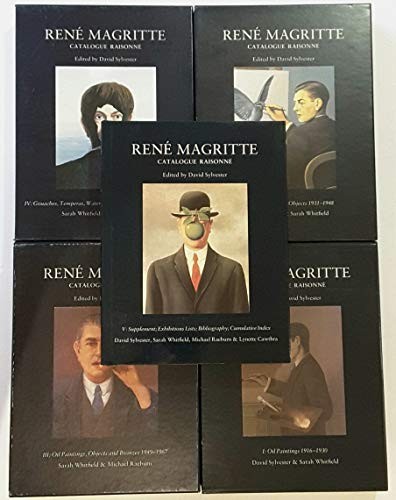
René Magritte: Catalogue Raisonné
David Sylvester
Magritte: The Dangerous Liaisons
Sarah Whitfield
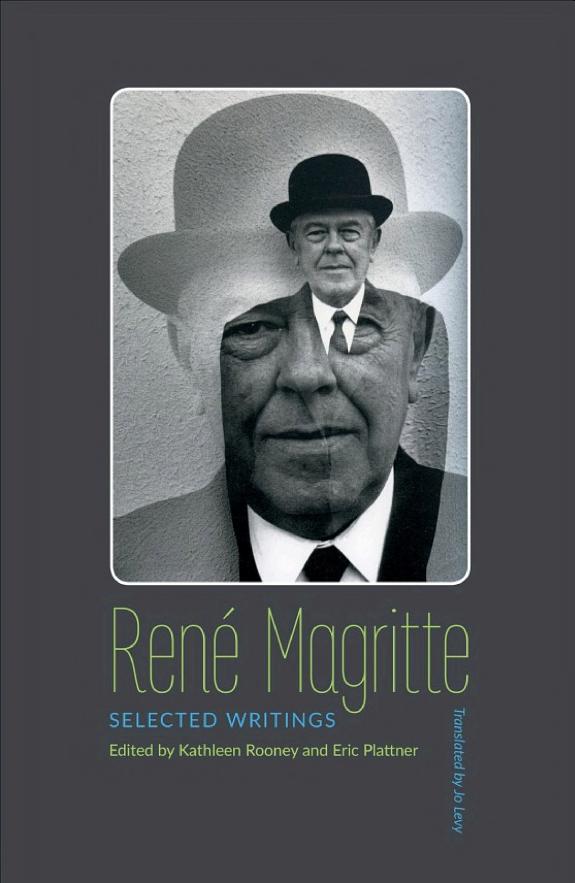
René Magritte: Selected Publications
René Magritte

Magritte and Contemporary Art
Harry Torczyner
The Life and Works of René Magritte
Patrick Waldberg
Magritte: Ideas and Images
Alastair Fowler
René Magritte: The Mystery of the Ordinary
Lucy Moore