Refik Anadol
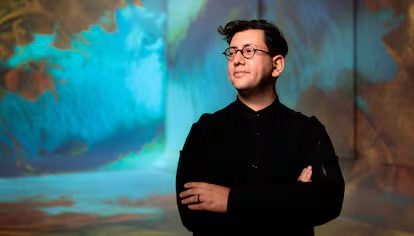
Refik Anadol Turns Data Into Pure Wonder
Artist Spotlight · The Collection Editorial
“Data is the material of our time. I want to make it felt, not just understood.”
Refik Anadol, TED Talk, 2023
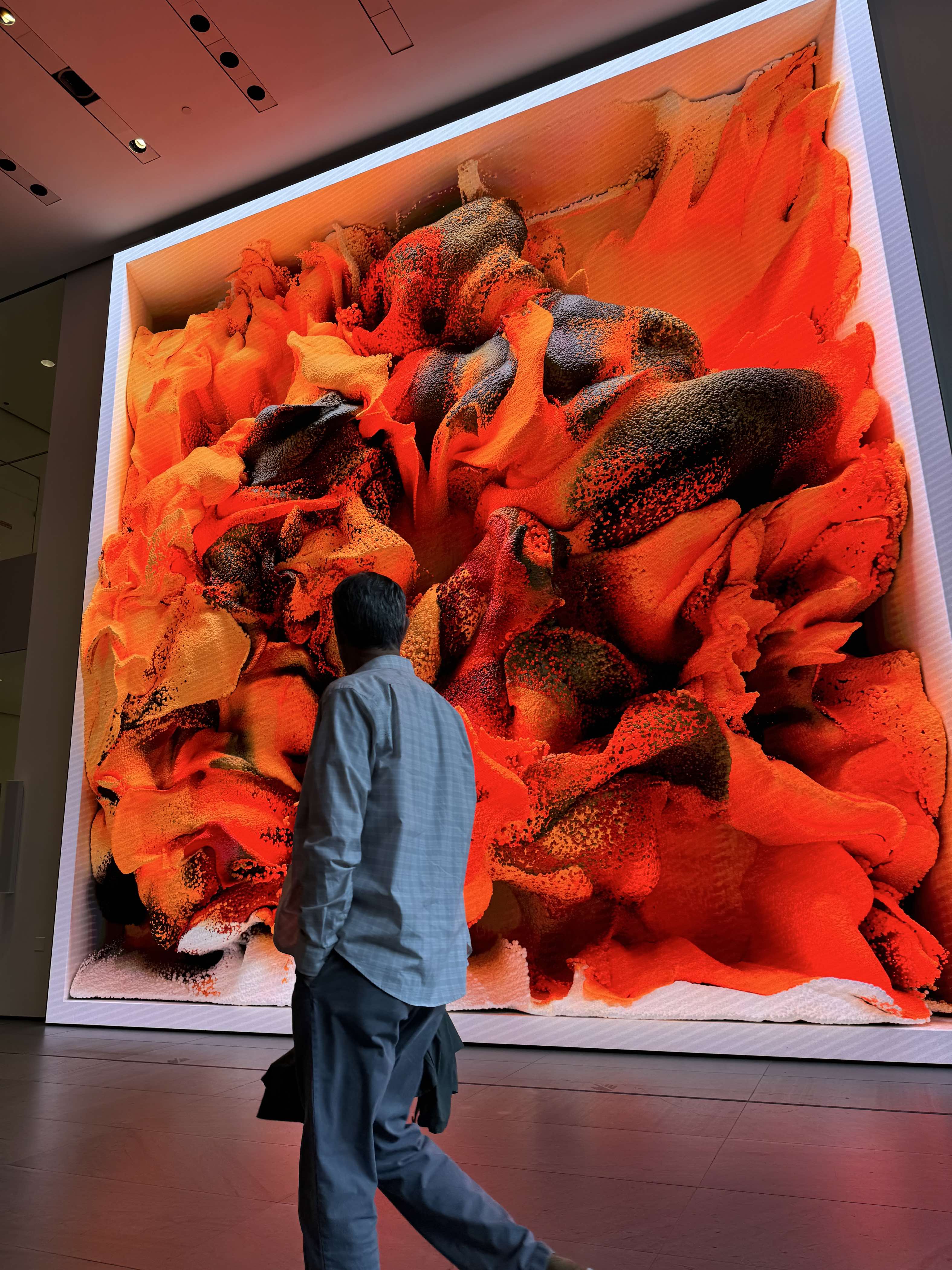
When the Museum of Modern Art in New York unveiled Unsupervised in late 2022, something remarkable happened. Crowds gathered not simply to observe a work of art but to witness a living, breathing entity seemingly dreaming in real time. The towering installation, fed on MoMA's own archive of over two hundred years of art history, generated an endless flow of shifting, luminous forms in the museum's street level gallery window. Passersby stopped on West 53rd Street in the winter cold, faces tilted upward, watching a machine imagine what art might look like if it could feel.
Refik Anadol
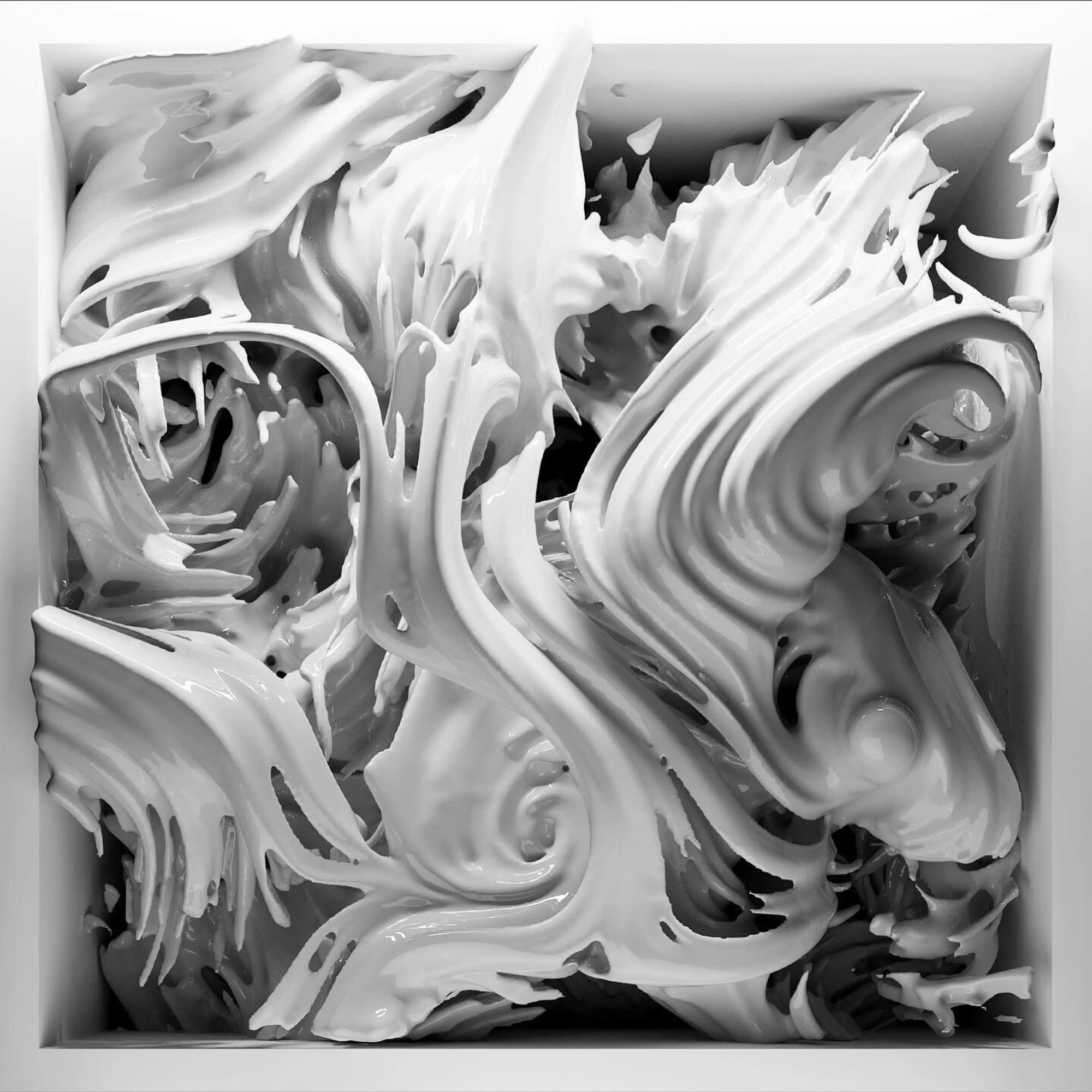
Quantum Memories: Noise A, B and C, 2020
It was a cultural moment that announced, with quiet but undeniable authority, that Refik Anadol had arrived at the center of contemporary art. Anadol was born in Istanbul in 1985, and the city shaped him in ways that still pulse through every work he makes. Istanbul is itself a kind of data set, a place where Byzantine geometry, Ottoman ornament, the Bosphorus light, and the noise of twenty million lives overlap and collide. He studied architecture at Istanbul Bilgi University, and that training gave him something many artists working with technology lack: a profound sensitivity to space, to the way human bodies move through and feel environments.
Architecture taught him that form is never neutral, that the built world carries meaning in its proportions and materials. That lesson never left him. He moved to Los Angeles to pursue graduate studies at UCLA's Design Media Arts program, completing his MFA in 2015, and the city became his second home and the base for his studio, established in 2014. Los Angeles, with its film industry, its tech culture, and its particular quality of light, proved to be fertile ground.
Refik Anadol
Untitled
The studio grew into a multidisciplinary collective of artists, researchers, and engineers, a kind of atelier for the twenty first century. From that base in Silver Lake, Anadol began developing the methodology that would define his practice: feeding vast quantities of data into machine learning algorithms and then translating the resulting outputs into immersive visual and sonic experiences. The process sounds technical, but the results are consistently, almost startlingly, beautiful. The concept of machine hallucination sits at the heart of his artistic vocabulary.
“I think of my studio as a place where art, science, and technology meet to ask questions about what it means to be human.”
Refik Anadol, Interview with MoMA, 2022
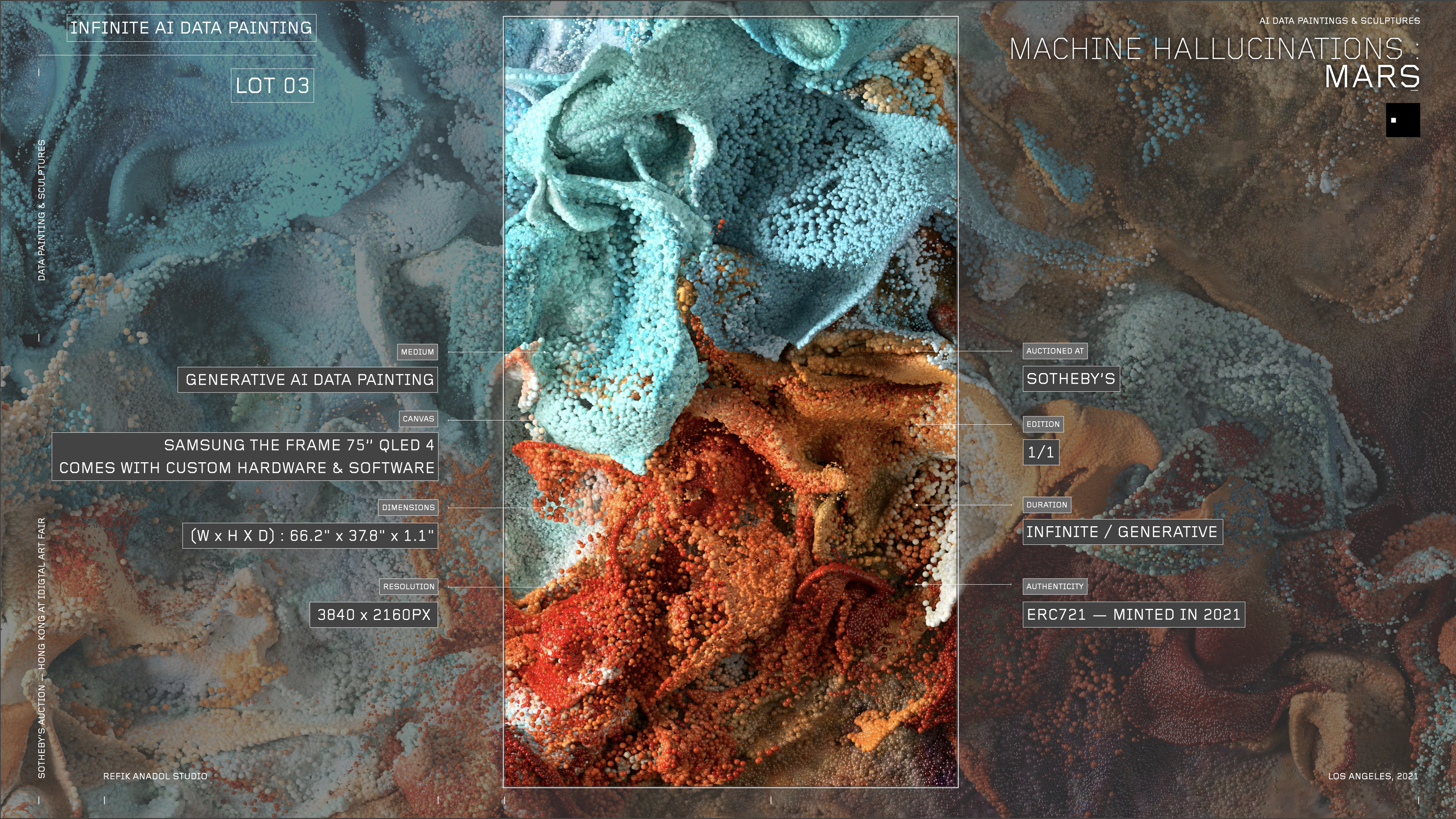
Anadol uses this term to describe what happens when an artificial intelligence, trained on enormous archives of images or data, begins to generate its own visual interpretations, finding patterns and producing forms that no human hand directed but that nonetheless carry an uncanny coherence. His ongoing Machine Hallucinations series has become one of the defining bodies of work in new media art, applying this process to subjects as varied as the surface of Mars, the deep structure of galaxies, the forests of Patagonia, and the architecture of cities. Works such as Machine Hallucinations: Mars, Machine Hallucinations: Galaxy, and Machine Hallucinations: Earth transform NASA imagery and astronomical data into meditations on scale, time, and the strangeness of existence. They are simultaneously scientific documents and pure poetry.
Refik Anadol
Machine Hallucinations : Mars (Infinite AI Data Painting)
His Quantum Memories series, produced in 2020, represented a significant evolution in the work. Using quantum computing research and Google's quantum data as source material, the pieces grapple with notions of superposition and entanglement, ideas from physics that feel metaphorically resonant in a world of fragmented attention and interconnected lives. The Chromogenic prints from Quantum Memories carry within them a stillness that his large scale projections cannot always achieve, making them particularly compelling as collectible objects. There is something deeply satisfying about holding, or hanging on a wall, what is essentially a frozen moment from a process of continuous transformation.
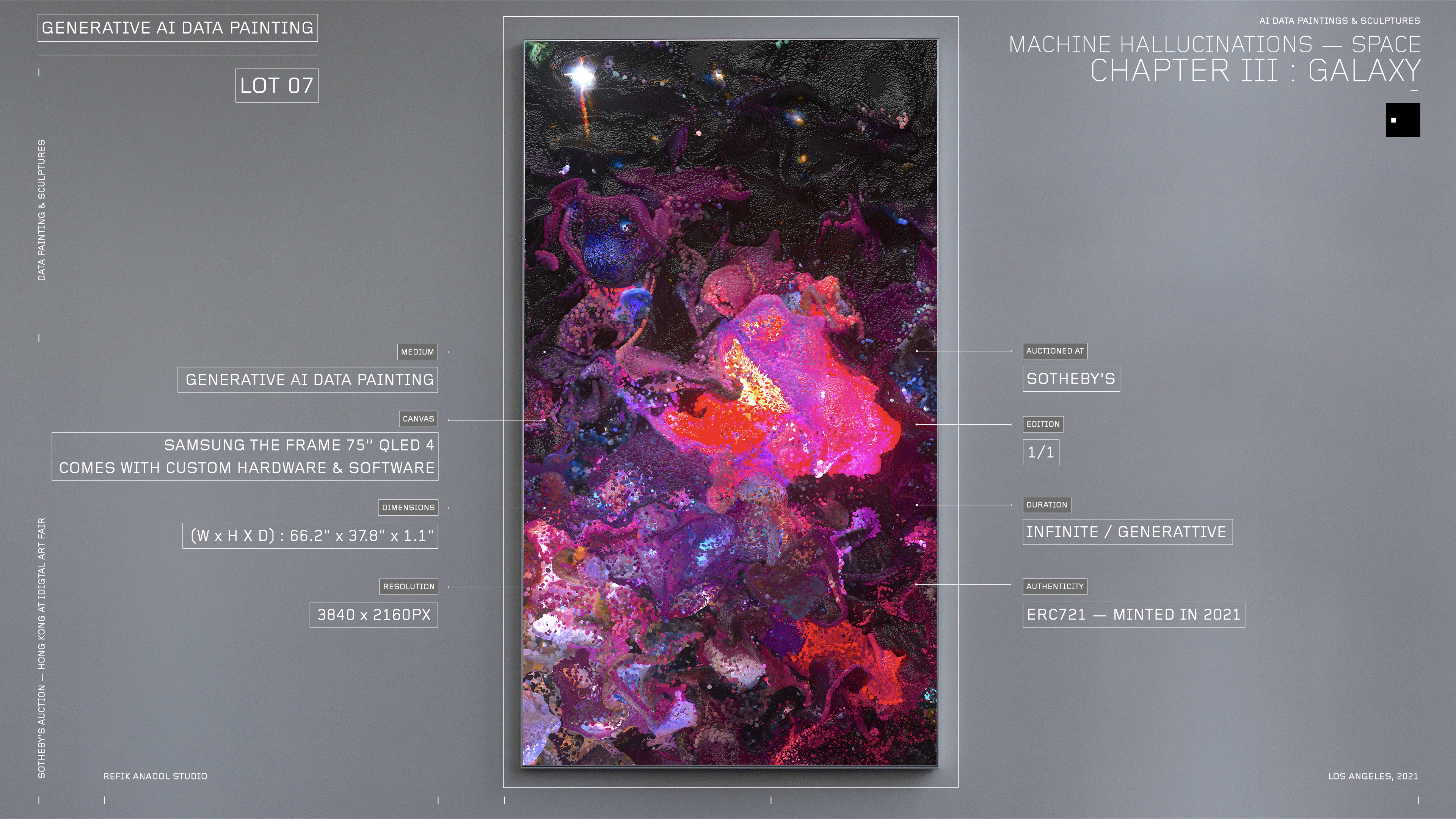
The Chapter series, including Chapter I: Earth, Chapter II: Mars, and Chapter III: Galaxy, similarly distills his cosmic preoccupations into the format of generative AI data paintings, works that blur the boundary between screen and canvas, between computation and craft. For collectors, Anadol occupies a uniquely appealing position in the current market. He is among the first artists to have built a substantial institutional reputation on work that is native to both the physical gallery world and the digital realm, including NFTs and blockchain based works. His pieces have entered major museum collections and have been commissioned for permanent architectural installations around the world, from the facade of the Dongdaemun Design Plaza in Seoul to the entrance of the Frank Gehry designed Walt Disney Concert Hall in Los Angeles.
Refik Anadol
Chapter III: Galaxy (Generative AI Data Painting)
This institutional validation matters. It signals that his work is not a speculative novelty but a serious contribution to art history, one that leading curators and directors have committed to preserving and presenting. Collectors acquiring his prints, data sculptures, and NFT works are not simply buying into a trend; they are participating in the formation of a new canon. Anadol's practice invites comparison with a lineage of artists who have explored the generative and systemic dimensions of art making.
He stands in productive dialogue with the pioneering computer art of Vera Molnár and Harold Cohen, with the immersive environment building of James Turrell and Olafur Eliasson, and with the data driven aesthetics of Casey Reas and Ryoji Ikeda. Yet his sensibility is distinctly his own. Where Turrell works with pure light to induce almost spiritual states of perception, Anadol layers light with narrative, asking the viewer to consider not only what they are seeing but where it came from and what it means that a machine made it. Where Ikeda pursues a cool, mathematical precision, Anadol embraces warmth, even romanticism, finding in his algorithms not sterility but abundance.
What ultimately distinguishes Refik Anadol is his commitment to making artificial intelligence feel humane. At a moment when public discourse around AI is dominated by fear, by concerns about displacement and deception and loss of control, his work insists on another possibility. It asks what happens when we give a machine the accumulated visual memory of our civilization and invite it to dream. The answers it produces are not threatening but generous, not cold but incandescent.
His art reminds us that technology is only ever as meaningful as the questions we ask of it, and that beauty remains one of the most important questions we can pose. For collectors, for institutions, and for anyone who has stood before one of his shimmering, restless works and felt something shift inside them, Anadol represents one of the most vital and genuinely original voices in art today.
Explore books about Refik Anadol