Piero Dorazio
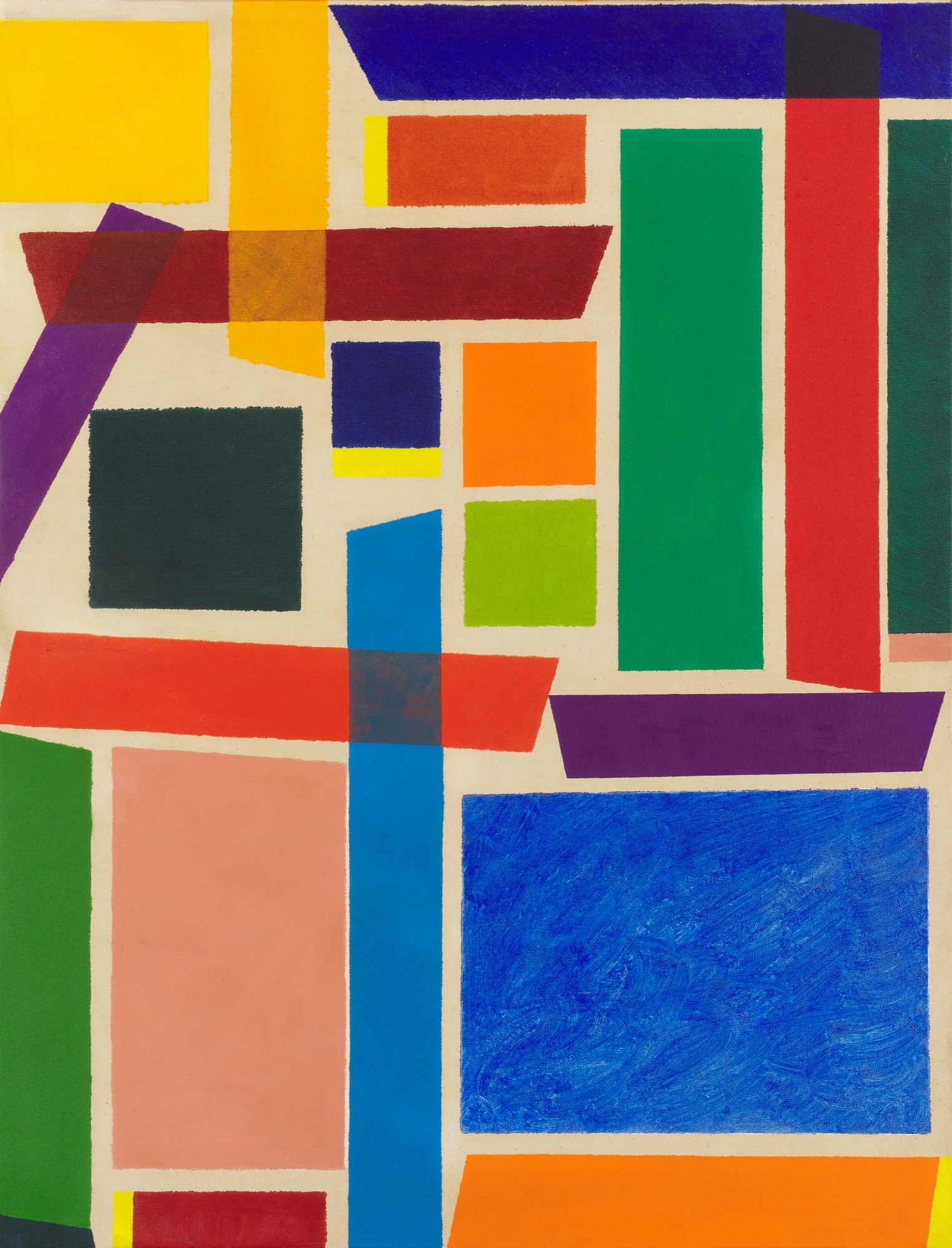
Piero Dorazio: Light Woven Into Pure Joy
Artist Spotlight · The Collection Editorial
In the grand survey rooms of the Galleria Nazionale d'Arte Moderna in Rome, where Piero Dorazio spent formative years absorbing the radical possibilities of color and abstraction, his canvases still stop visitors mid stride. The shimmering, interlaced grids of chromatic light that define his mature work feel, even decades after their creation, like transmissions from a mind utterly devoted to the sensory possibilities of paint. Dorazio belongs to that rare category of artists whose work rewards both the immediate glance and the prolonged, contemplative gaze, offering something new each time the eye returns. Piero Dorazio was born in Rome in 1927, and the city's layered visual culture left a permanent impression on a young mind already attuned to beauty and form.
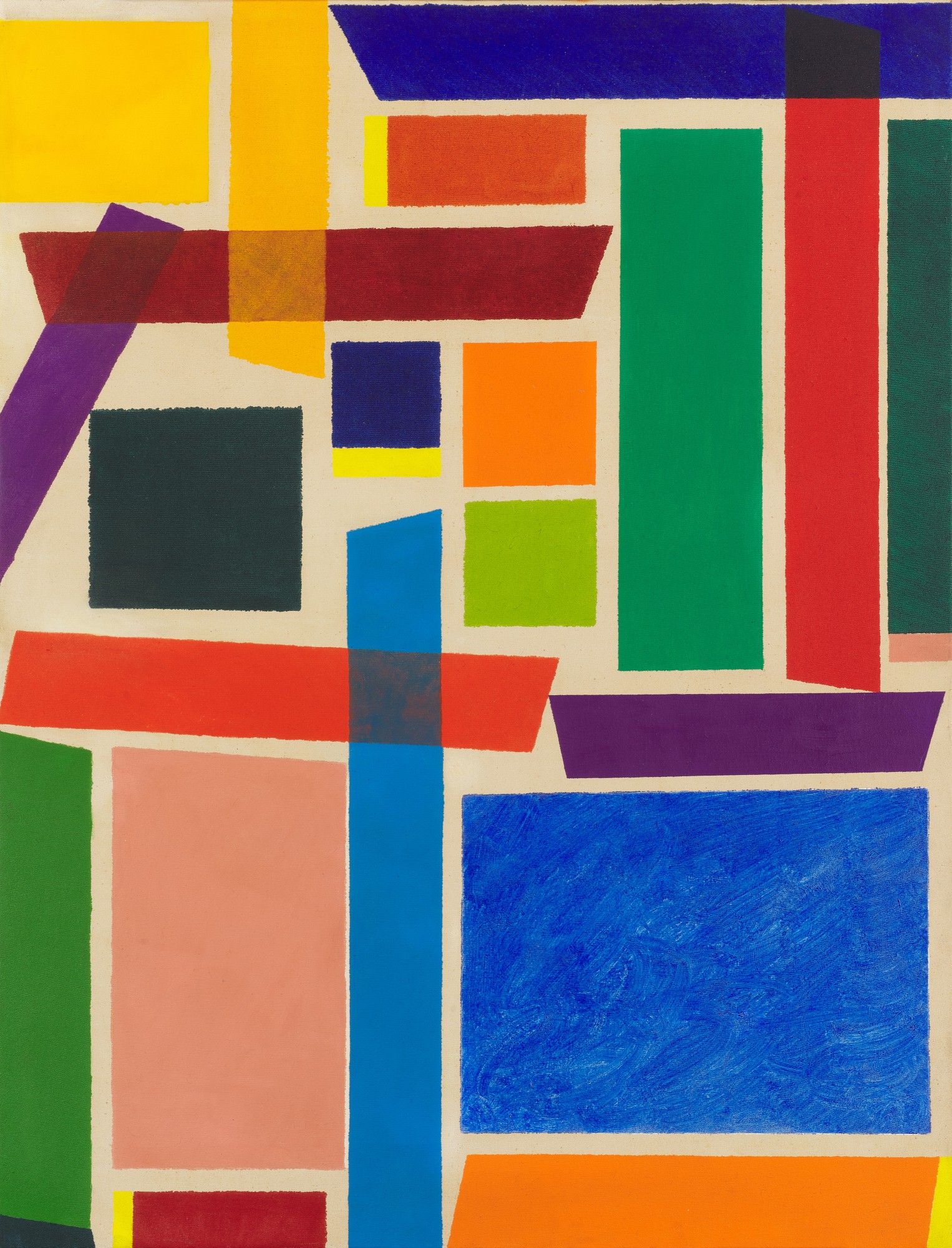
Piero Dorazio
Fouilles
His early education brought him into contact with the Italian avant garde at a pivotal moment, and he studied architecture at the Università La Sapienza before committing fully to painting. As a student and young artist in the late 1940s, he co founded the group Forma 1 alongside artists including Carla Accardi, Giulio Turcato, and Achille Perilli, a collective that boldly declared its commitment to formalist abstraction at a time when Italian cultural politics were pulling artists toward social realism. That early act of intellectual courage set the tone for an entire career. The formation of Forma 1 in 1947 was more than a youthful manifesto.
It positioned Dorazio and his contemporaries as bridge builders between the Italian tradition and the international currents of modernism sweeping through Paris and New York. Dorazio traveled extensively and spent significant time in the United States during the 1950s, where he encountered the Abstract Expressionists and engaged with figures including Arshile Gorky and the broader New York School. Rather than being overwhelmed by American ambition, he absorbed it and turned it toward his own deeply Mediterranean sensibility, one rooted in luminosity, craft, and the ancient pleasures of color as meaning. Dorazio's artistic development moved through several distinct phases before arriving at the signature visual language that collectors prize most highly today.
Piero Dorazio
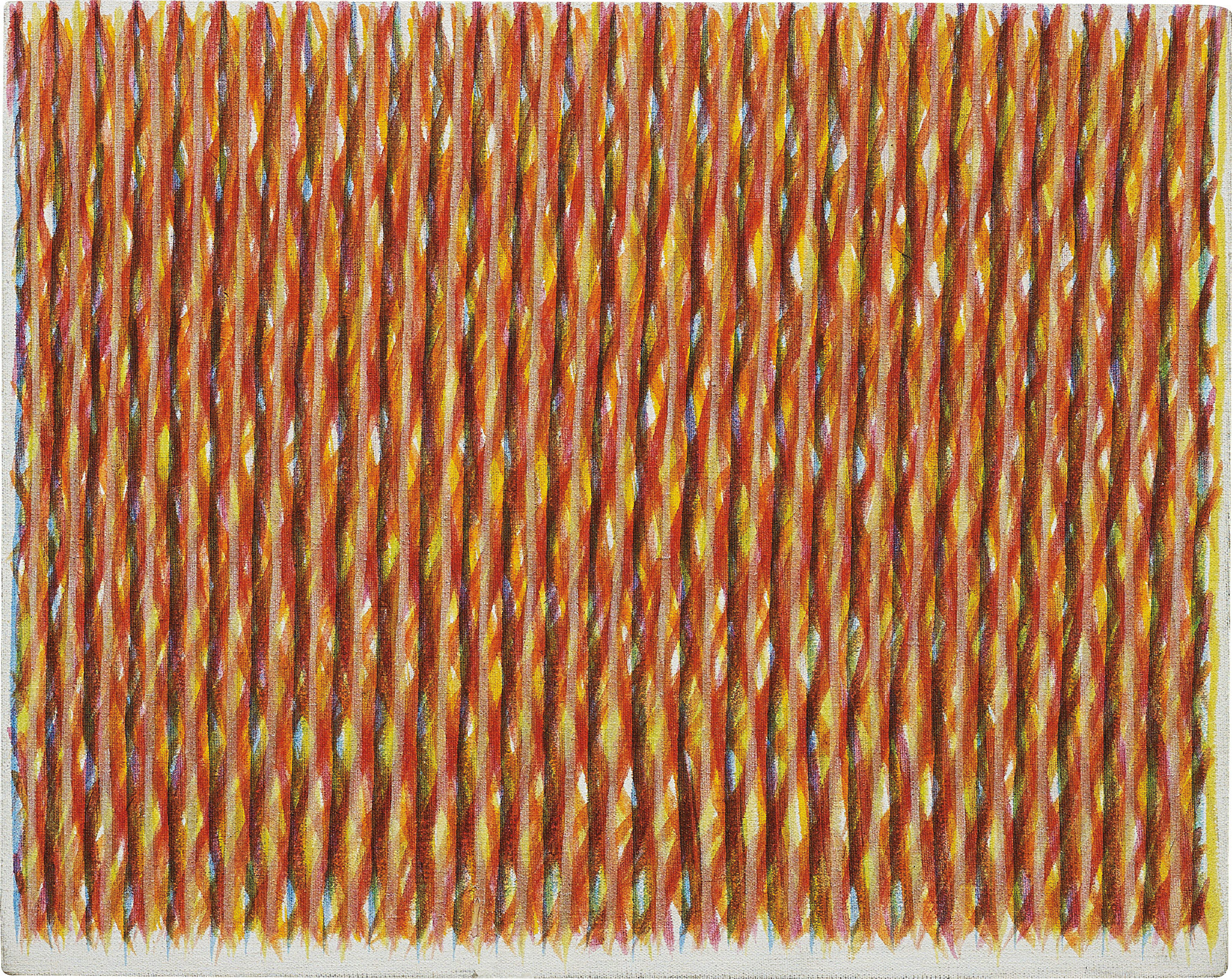
Jeu Flamand II, 1963
His early work experimented with gestural mark making and compositional fragmentation, but by the late 1950s and into the 1960s, something remarkable began to crystallize. He started building his canvases from interwoven bands and threads of color, layering translucent strokes so that the eye perceives not individual marks but a luminous field in which dozens of hues vibrate simultaneously. Works such as Incomunicado from 1960 show this transition in eloquent form, the surface alive with color relationships that feel both rigorously constructed and spontaneously joyful. The canvases of the 1960s represent perhaps the most celebrated period of Dorazio's output, and works like Jeu Flamand II from 1963 and No Counterpart from 1965 illustrate the full sophistication of his approach.
In Jeu Flamand II, the title itself signals an awareness of northern European painting traditions, a wink toward the Flemish masters whose luminous surfaces Dorazio admired and reinterpreted through a resolutely modern lens. The Reticolo series, represented here in a 1964 tempera on paper laid on burlap, demonstrates his willingness to experiment with support and medium, understanding that the physical ground of a painting is never neutral. Each of these works functions as a kind of optic poem, language replaced by wavelengths. Dorazio maintained a long association with the University of Pennsylvania, where he taught from 1960 onward, becoming a beloved and influential presence in American art education.
Piero Dorazio
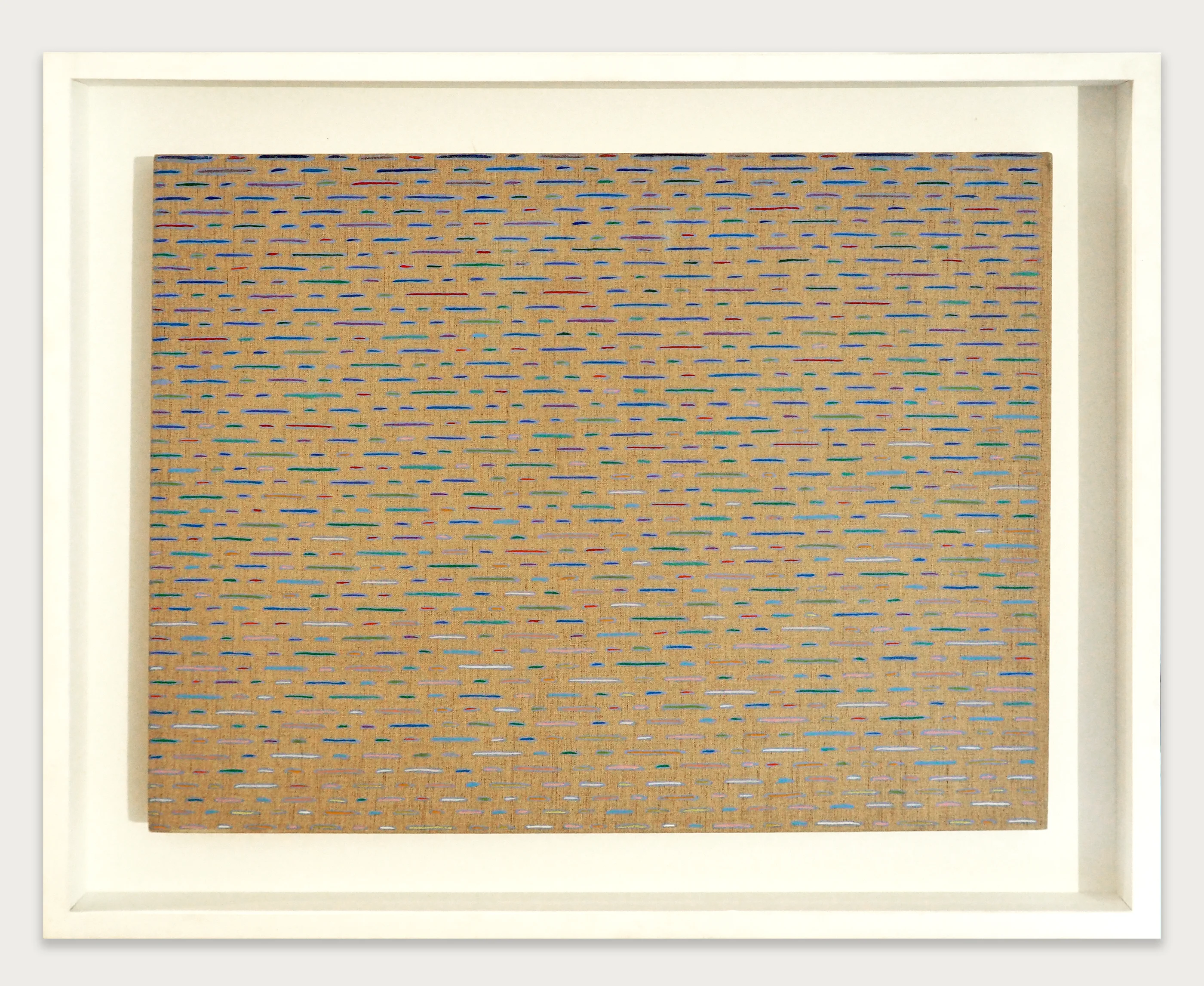
Grisaille XVII, 1976
This transatlantic life gave his practice a unique dual citizenship, fully understood and celebrated in both Europe and North America. His later canvases, including the Grisaille XVII series of 1976 and works like Repetita II from 1988 and the lyrical LÌ. LÌ. LÌ from 1984, show a painter who never stopped evolving, moving at times toward a more restrained palette while retaining the underlying architectural logic of interwoven form.
The Grisaille works in particular reveal a confidence that color, even when reduced to near monochrome, carries enormous expressive weight. For collectors, Dorazio presents a compelling proposition. His work occupies a well defined and respected position within the story of postwar European abstraction, firmly connected to movements that also produced artists such as Josef Albers, whose investigations into color interaction parallel Dorazio's own, and Bridget Riley, whose optical concerns share certain formal affinities. Within the Italian context, he stands alongside Lucio Fontana and Alberto Burri as a figure who helped define what Italian modernism could be beyond figuration and beyond the shadow of fascist cultural programs.
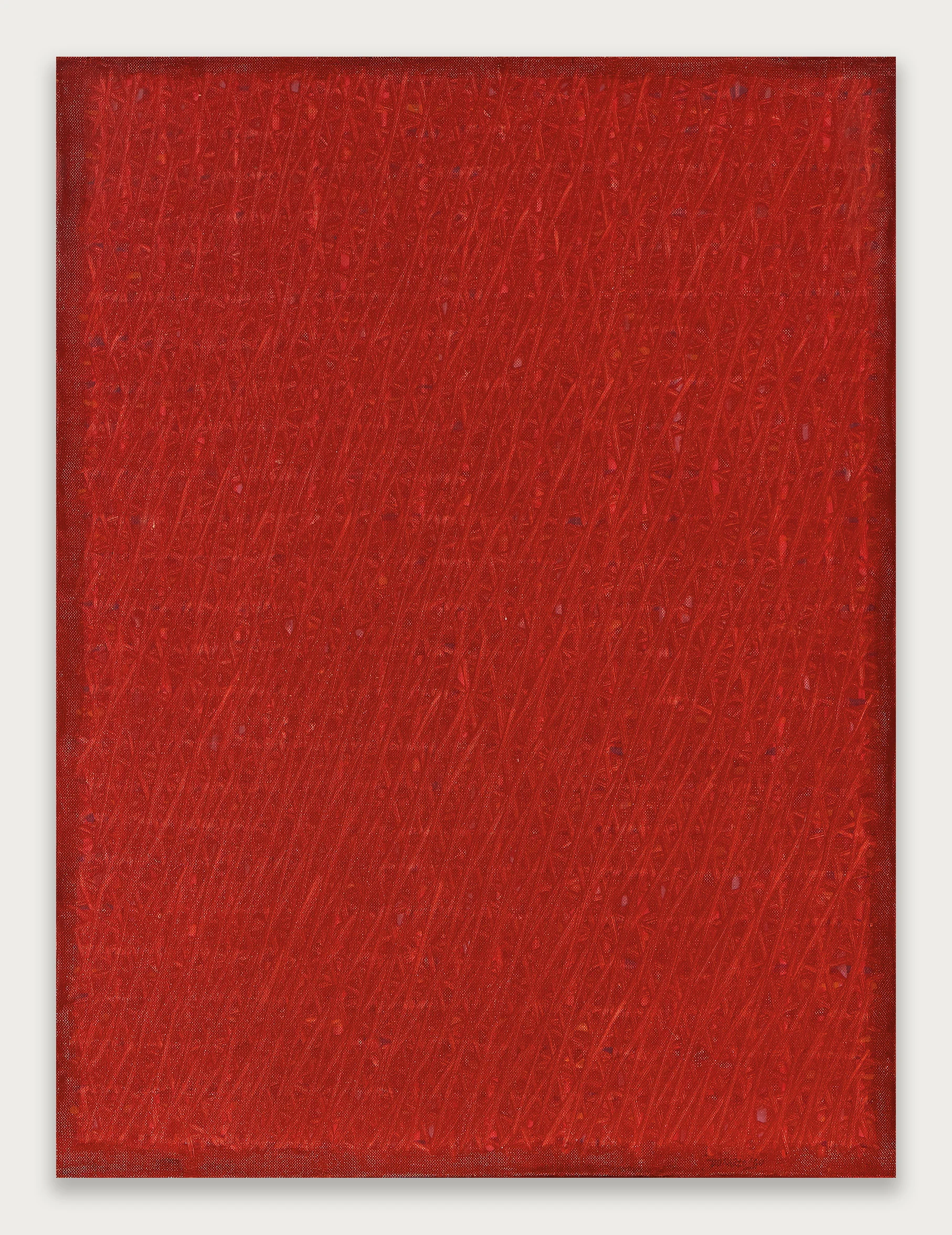
Piero Dorazio
Incomunicado, 1960
Auction appearances of his major canvases at houses including Sotheby's and Christie's have consistently attracted serious interest, and his work holds particular appeal for collectors who value the intersection of intellectual rigor and genuine sensory pleasure. What makes Dorazio especially rewarding to collect is the range of entry points his career offers. Works on paper and smaller canvases allow collectors new to his practice to encounter his visual thinking with intimacy, while the large scale oil paintings deliver an almost architectural experience of color and light. The works available through The Collection represent a meaningful cross section of his development, from the charged early abstractions of the 1960s through the meditative later canvases, offering a genuine opportunity to engage with an artist of real historical importance.
Dorazio died in Perugia in 2005, having spent his final years in the Umbrian landscape that had always nourished the Italian colorist tradition. His legacy is one of uncompromising dedication to the idea that painting, at its most ambitious, is a form of thinking in light. At a moment when collectors and institutions worldwide are deepening their understanding of postwar European abstraction, Dorazio stands as an artist whose time for full recognition has unmistakably arrived. His canvases ask nothing of the viewer except attention, and they repay that attention with something that feels very close to wonder.
Explore books about Piero Dorazio
Piero Dorazio: A Retrospective
Diane Waldman
Piero Dorazio: Paintings and Drawings 1947-1987
Maurizio Fagiolo dell'Arco
Dorazio
Giulio Carlo Argan
Piero Dorazio: Catalogue Raisonné
Gianna Amen Panza di Biumo
Piero Dorazio: Works 1958-1968
Paolo Fossati