Paul Mpagi Sepuya
Paul Mpagi Sepuya Opens the Studio Wide
Artist Spotlight · The Collection Editorial
“The studio is a space of possibility, of negotiating what a body can be in relation to another body and to the camera.”
Paul Mpagi Sepuya, Aperture interview
There is a particular energy surrounding Paul Mpagi Sepuya right now, and it feels entirely earned. In recent years his work has entered the permanent collections of the Guggenheim Museum, the Museum of Modern Art, and the Getty, an alignment of institutional recognition that signals not merely critical approval but something deeper: a consensus that his photographs are reshaping how we understand portraiture, desire, and the very mechanics of the camera. At a moment when photography is being reconsidered across museum programming and the primary market alike, Sepuya stands at the center of that conversation, celebrated for a practice that is at once rigorously conceptual and searingly intimate. Born in 1982, Sepuya grew up with an attentiveness to the human figure that would become the animating force of his entire body of work.
Paul Mpagi Sepuya
Untitled
He studied photography formally, and from early in his career he understood the studio not as a neutral backdrop but as a charged space, a place where power, vulnerability, and representation are constantly being negotiated. His formation was shaped by the traditions of queer photography and portraiture, by the legacies of photographers who understood that the body is never simply a subject but always a site of meaning. Those influences gave him both a visual vocabulary and a critical framework that he has spent years refining and complicating. The work that brought Sepuya widespread attention is organized around a deceptively simple premise: what happens when the studio itself becomes the subject?
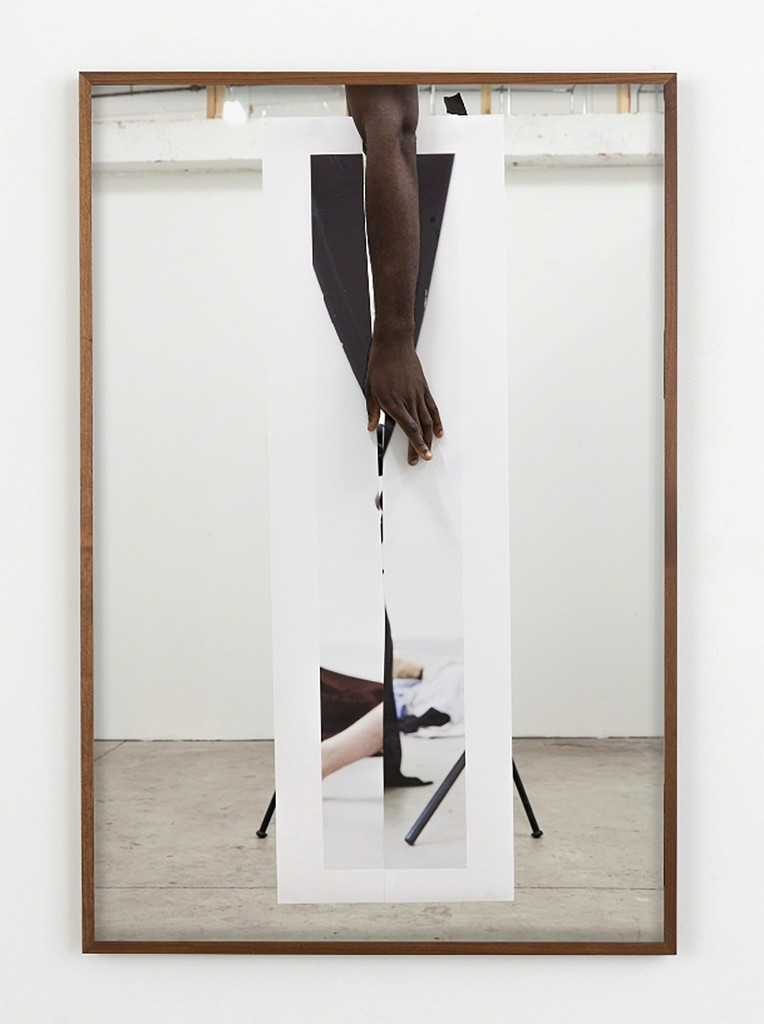
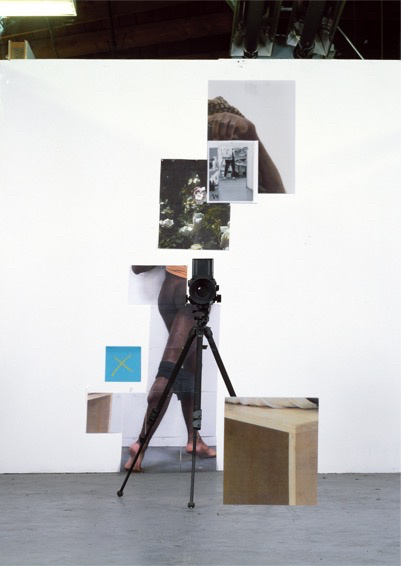
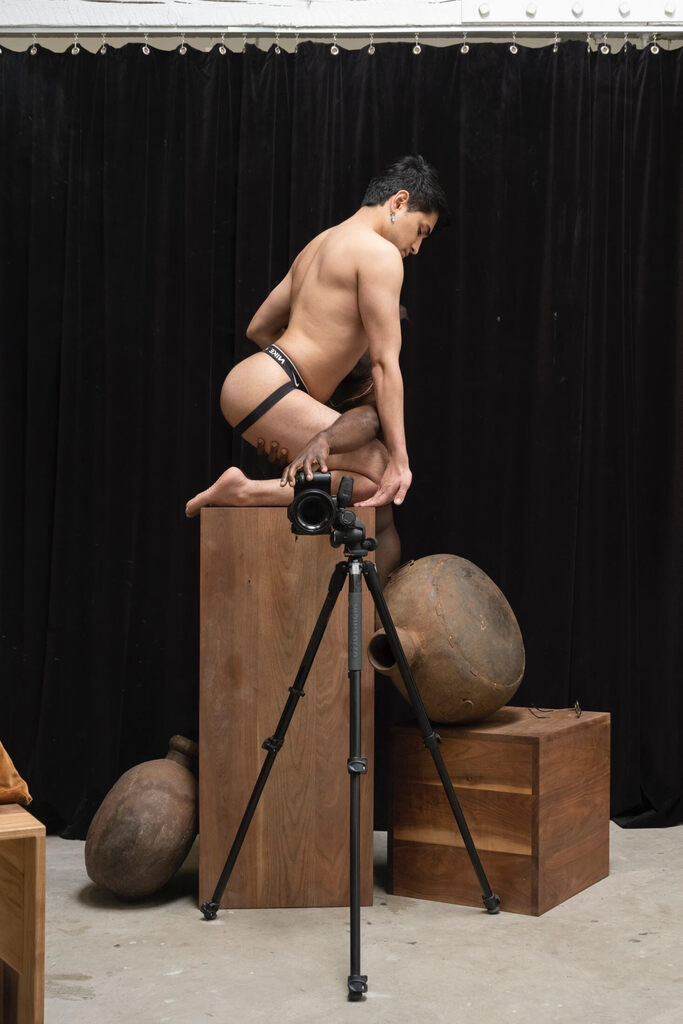
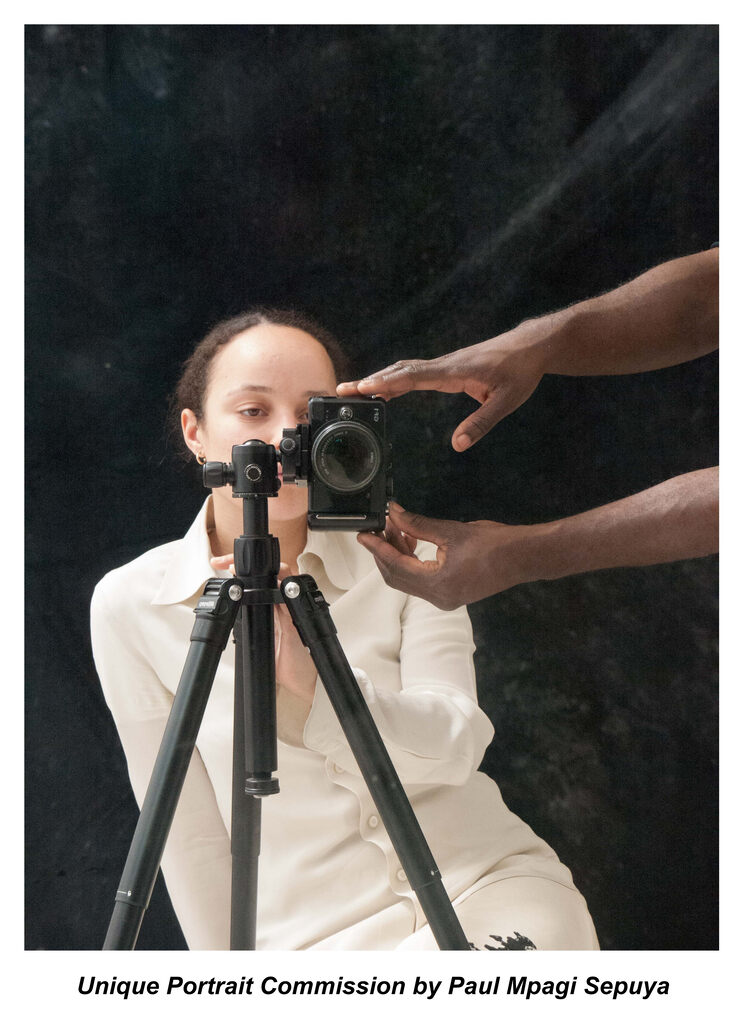
In his Darkroom and Mirror Study series, begun around 2016, he introduces mirrors, fabric, photographic backdrops, and his own body and those of his collaborators into compositions that refuse easy resolution. The camera is often visible. The photographer is frequently present. The boundary between subject and author collapses into something productively unstable, and the viewer is never allowed to forget that they are looking at a constructed image, a photograph about photography as much as it is about the people within it.
Paul Mpagi Sepuya
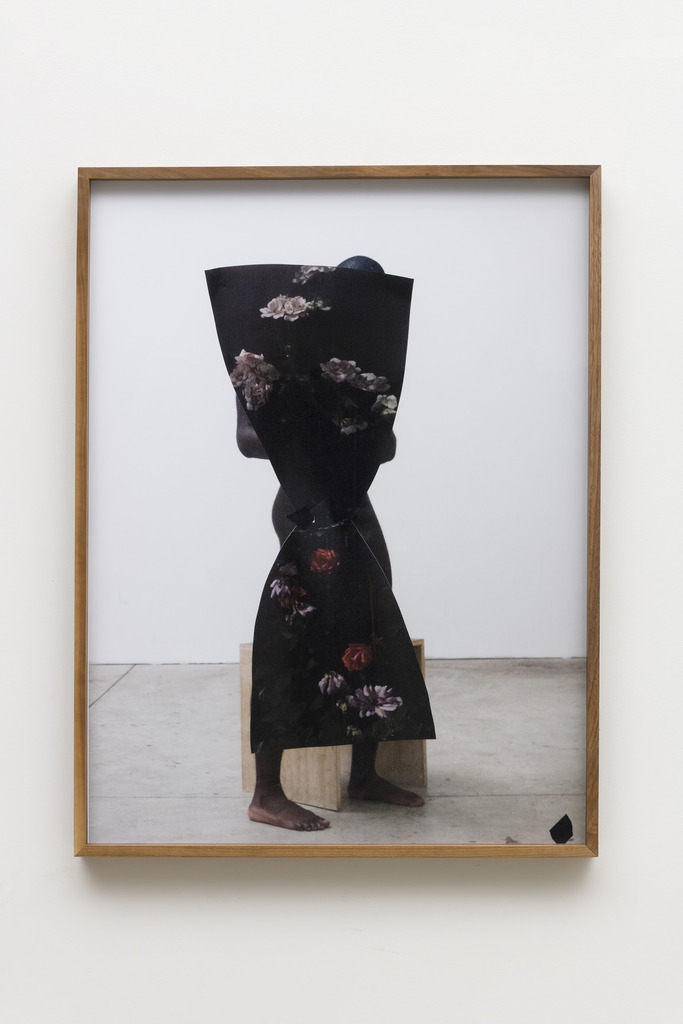
Self-portrait Study with Roses at Night (1709), 2015
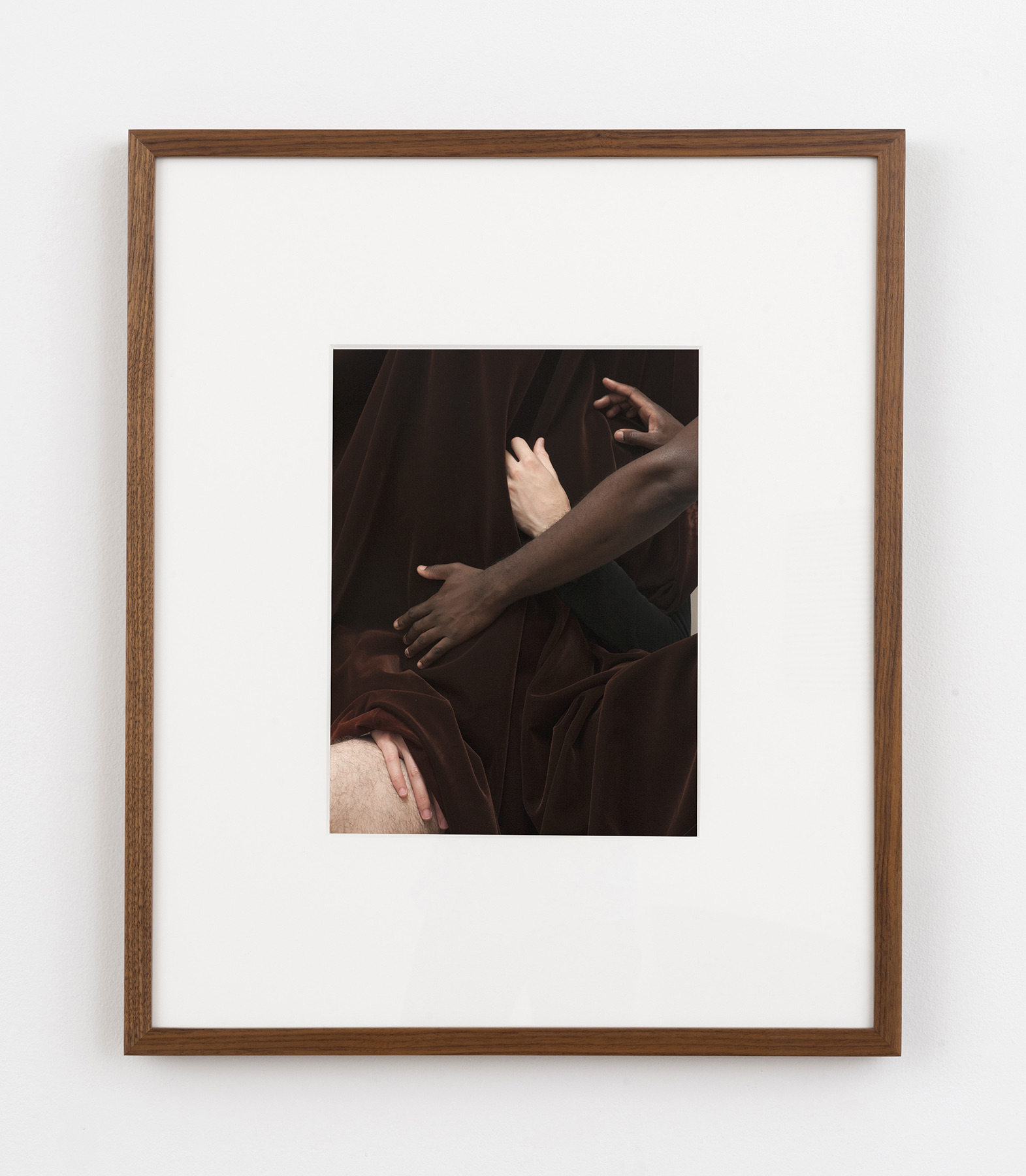
Looking closely at two works from this period makes the ambition of his practice immediately legible. In one framed pigment print, presented in a warm walnut frame with generous white matting that gives the small photograph room to breathe, two pairs of hands reach across and into a mass of deep brown fabric. One hand is pale, one is dark, and both are caught in gestures that hover between tenderness and tension. The palette is almost entirely composed of browns and near blacks, with the skin tones reading as luminous against the heavy textile.
There is no face, no identifying feature beyond the hands and the cloth, and yet the image is overwhelmingly present, even charged. The cropping is deliberate and the composition draws the eye in a slow spiral, refusing to settle on a single focal point. In a second image, a figure sits on a plain wooden plinth in what is unmistakably an artist's studio, back turned to the camera, holding what appears to be a camera or headphones. The figure is shirtless, and the muscular architecture of the back is rendered with documentary clarity against a white studio wall hung with photographic prints.
Paul Mpagi Sepuya
Daylight Studio Mirror (_DSF4313), 2022
Scattered across the floor are the ordinary residues of a working day, a piece of tape, a fragment of orange peel, a tripod leg at the edge of the frame. The image insists on the reality of artistic labor while simultaneously making that labor beautiful and mysterious. Together these two works demonstrate something essential about Sepuya: he is a photographer who thinks deeply about scale, materiality, and the cropped fragment, using the edge of the frame as an active compositional tool rather than a boundary. The Darkroom series deserves particular attention as the conceptual heart of his practice.
By naming works after the conditions of photographic production rather than their ostensible subjects, Sepuya aligns himself with a long tradition of process based art while insisting on the specific intimacy of the darkroom as a queer space, a space of transformation and revelation. His archival pigment prints are produced with exceptional technical care, the surface quality holding detail and tonal range in a way that rewards close looking. When works are flush mounted, as several are, the absence of glass brings the surface of the print into unmediated contact with the viewer, a decision that feels consistent with his broader insistence on proximity and presence. For collectors, the appeal of Sepuya's work operates on several registers simultaneously.
Paul Mpagi Sepuya
Portrait commission, 2025
There is the immediate visual pleasure of beautifully made photographs with a confident, distinctive palette. There is the intellectual satisfaction of work that rewards sustained engagement, where each viewing produces new readings of the spatial relationships and the compressed studio world within the frame. And there is the historical positioning: Sepuya is creating a body of work in dialogue with canonical photographers of the figure while expanding the representational possibilities of portraiture to include Black queer subjectivity with warmth, complexity, and full artistic authority. Collectors drawn to contemporary photography would do well to look carefully at the range of works available, from smaller framed prints that carry the intimacy of the studio encounter to larger flush mounted works that command a room.
Within the broader landscape of contemporary photography, Sepuya's closest affinities are with artists who have used self portraiture and the studio as sites of conceptual inquiry. His work speaks to the legacy of photographers who understood that the camera is always also a mirror, and that the studio is a theater in which identities are performed, questioned, and remade. He is part of a generation of American photographers redefining what figurative photography can hold, alongside practitioners who take the intimacy of the photographic encounter as seriously as its formal and critical possibilities. What makes Sepuya matter in this particular cultural moment is not simply his institutional recognition, impressive as that is, but the quality of attention his work demands and rewards.
He has built a practice that is genuinely rigorous without being cold, deeply personal without being confessional in any reductive sense. His photographs hold bodies and spaces and desires with equal care, and they ask the viewer to slow down, to notice the hand against the fabric, the back turned toward the camera, the ordinary studio floor scattered with the evidence of a day's work. That quality of sustained, generous attention is rare in any medium. In photography, it feels like a kind of gift.
Featured Works