Othon Friesz
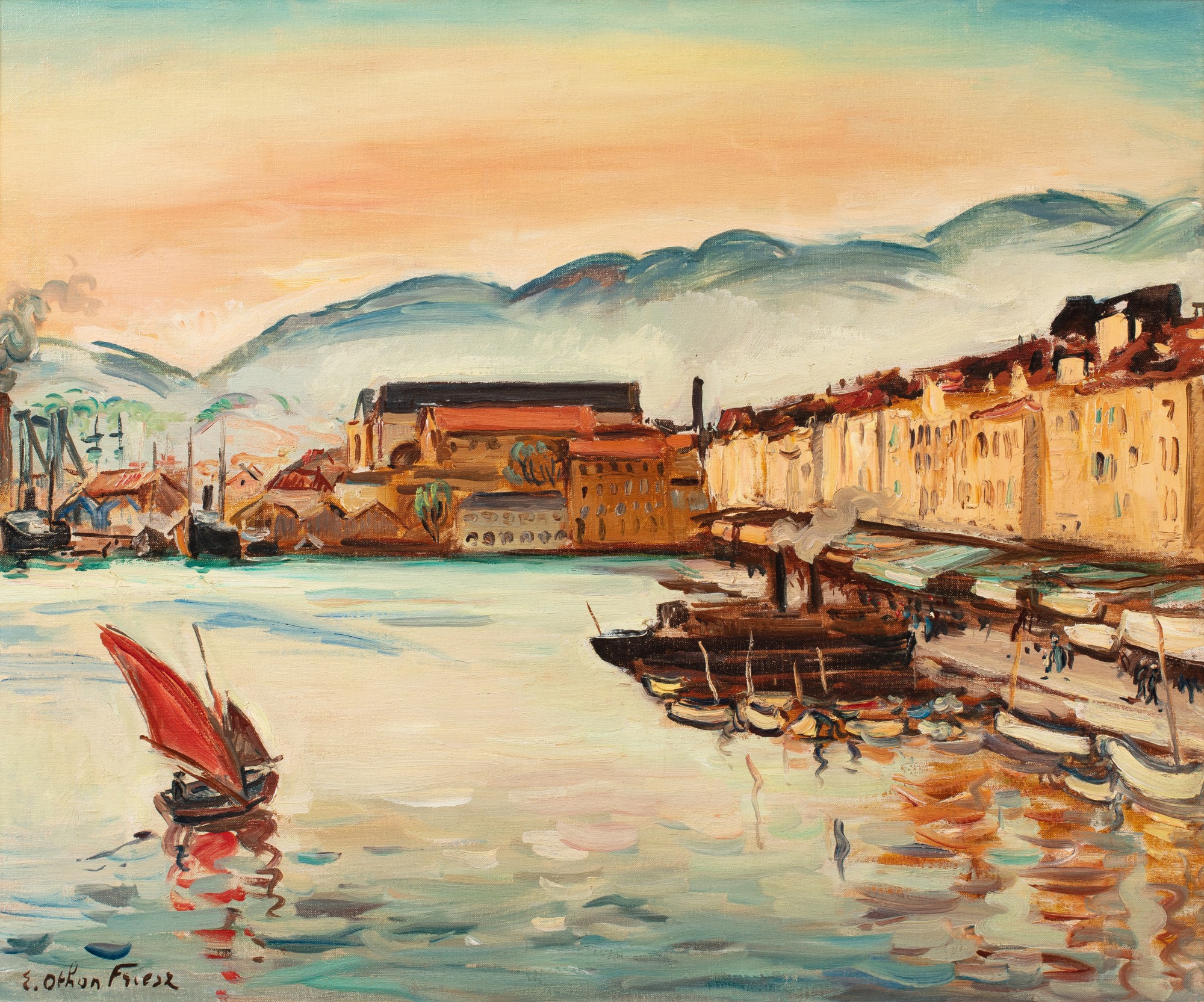
Friesz: Color, Structure, and Radiant Light
Artist Spotlight · The Collection Editorial
There is a particular quality of light in the paintings of Othon Friesz that stops you mid step in a gallery. It is warm but not sentimental, bold but never reckless. In the autumn of 1905, when the Salon d'Automne threw open its doors in Paris, visitors encountered a room so charged with color and raw pictorial energy that a critic dubbed its contributors les fauves, the wild beasts. Among those painters, alongside Henri Matisse, André Derain, and Maurice de Vlaminck, stood Friesz, a young man from the Normandy coast whose eye for color rivaled any of his celebrated peers.
Othon Friesz
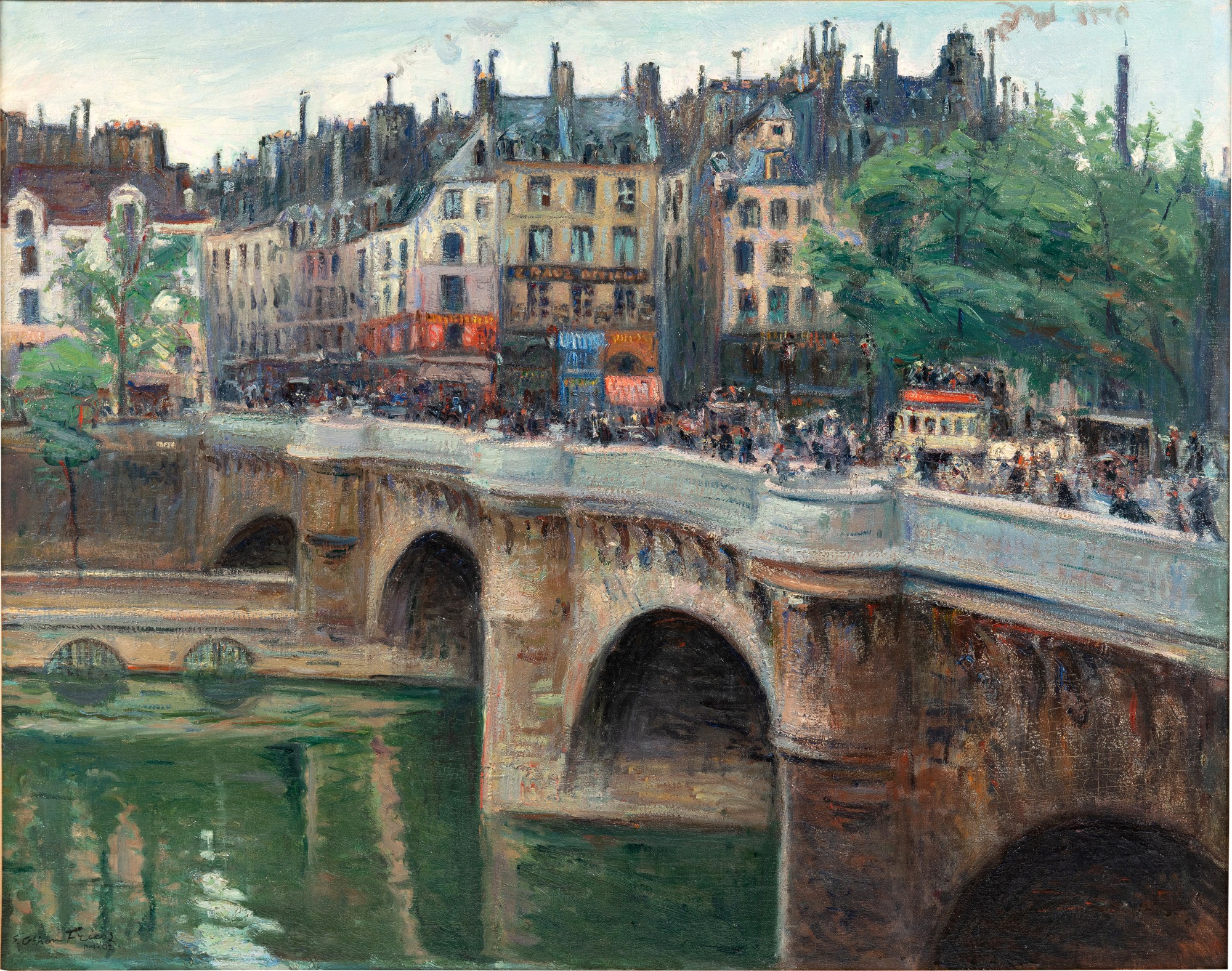
Le Pont-Neuf, 1902
More than a century later, his work continues to reward close looking, offering collectors a window into one of the most electrically creative moments in the history of modern painting. Achille Émile Othon Friesz was born in Le Havre in 1879, into a family with deep roots in the seafaring culture of the Normandy coast. The harbor, the wide Atlantic sky, the particular silvery luminosity of northern France these were the visual conditions of his childhood, and they never entirely left his painting even when his palette grew most extravagant. His friendship with Raoul Dufy, a fellow Le Havre native and eventual Fauvist companion, began in these early years, and the two would remain linked throughout their careers, sharing studios, sketching trips, and a fundamental delight in the pleasures of observed life.
The city of Le Havre recognized Friesz's gifts early, awarding him a municipal scholarship that allowed him to travel to Paris and enroll at the prestigious École des Beaux Arts, where he studied under Léon Bonnat. That academic foundation in drawing and tonal painting would later give his most liberated work a structural confidence that distinguished him from painters who reached for color without the discipline to control it. In Paris, Friesz immersed himself in the fermenting world of the Parisian avant garde. He encountered the work of Paul Cézanne, Paul Gauguin, and Vincent van Gogh, absorbing the lessons of painters who had broken the connection between color and literal description, who used hue and stroke to express feeling and structure simultaneously.
Othon Friesz
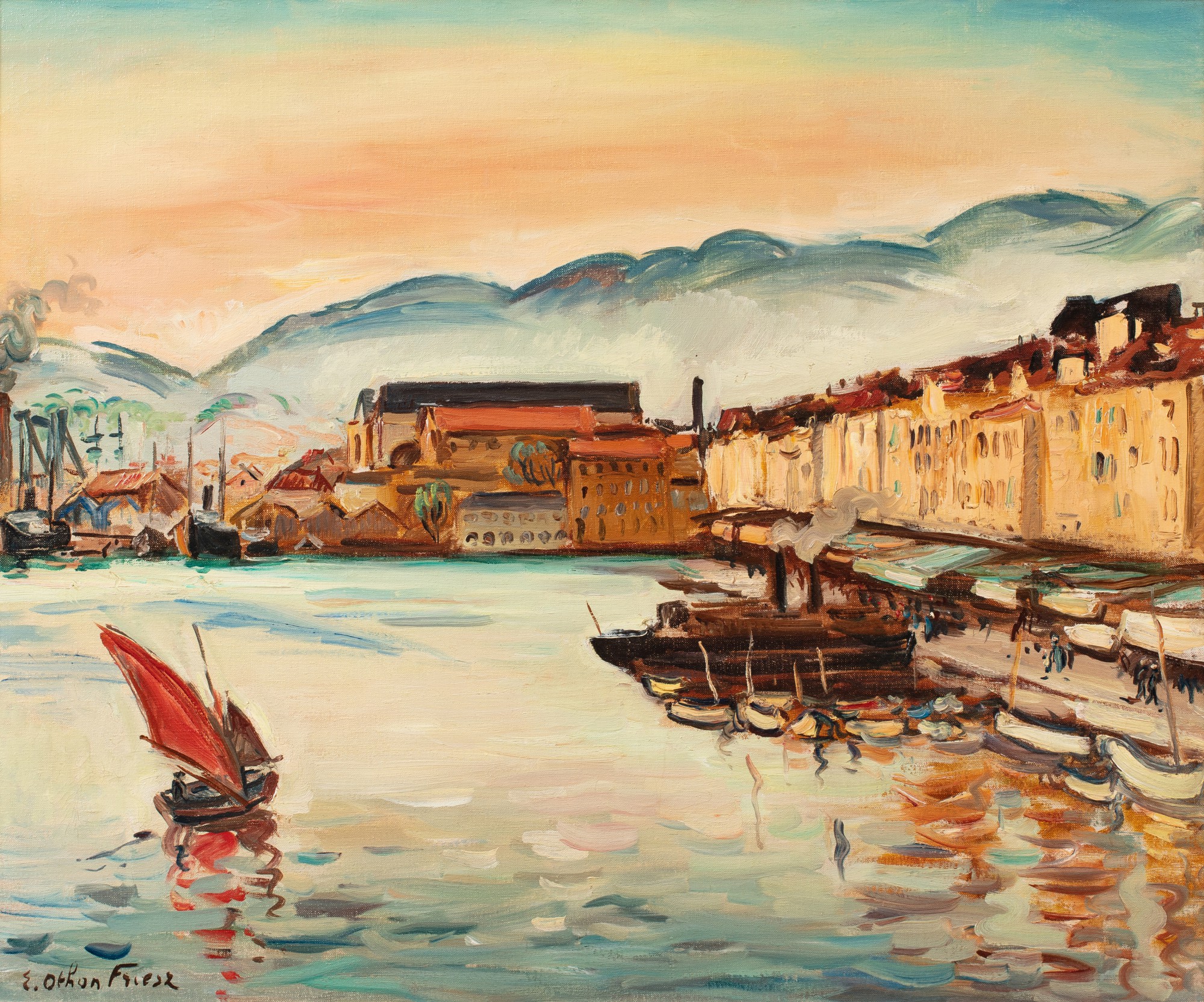
Le port
The Fauvist moment, when it arrived in the years between 1905 and 1908, was for Friesz a period of joyful experimentation. He traveled to Antwerp in 1906, to Munich and La Ciotat on the Mediterranean coast, and these southern landscapes became the crucible in which his Fauvist palette fully ignited. The azure of the Mediterranean, the terracotta warmth of Provençal hillsides, the dancing light on harbor water Friesz translated all of it into paint with an almost euphoric directness, applying color in broad, confident strokes that declared their own presence on the canvas. The works from this Fauvist peak, roughly 1906 to 1908, represent some of the most sought after paintings in his output.
"Le printemps" from 1908, with its surging organic energy and luminous color harmonies, and the "Etude pour Travail à l'automne" from the same year, reveal a painter at the height of his powers, using color not merely decoratively but structurally, to organize space and convey the emotional temperature of a scene. Yet Friesz was never content to remain in one mode. From around 1908 onward, he began a thoughtful return toward the lessons of Cézanne, tempering pure color sensation with a renewed interest in geometric solidity and compositional order. This evolution was not a retreat but a deepening, a synthesis of the Fauvist inheritance with a classical instinct for permanence and form.
Othon Friesz
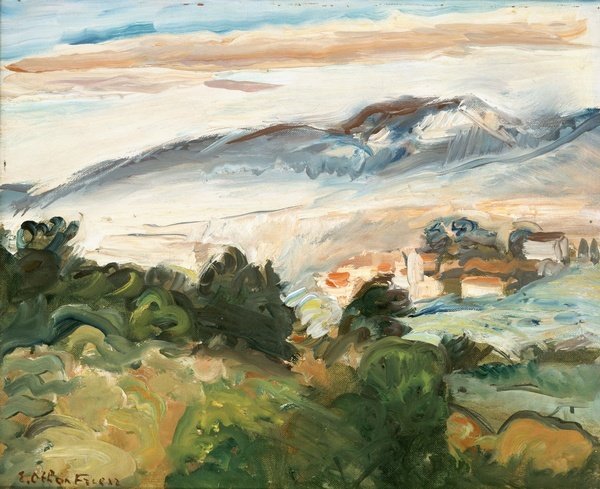
Paysage près de Toulon, 1938
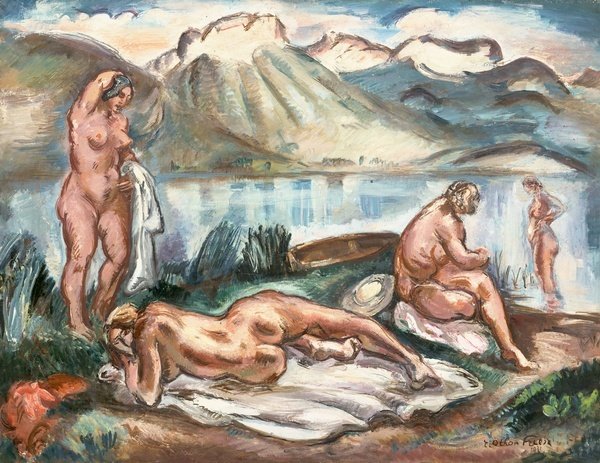
His landscapes from the 1920s and 1930s, including the serene and beautifully composed "Le lac d'Annecy" of 1931 and the late Normandy views such as "Paysage de Honfleur" of 1939, carry this hard won balance with quiet authority. Across his long career, Friesz worked with remarkable range. His early "Le Pont Neuf" of 1902 shows a painter already in command of the urban landscape, finding poetry in the familiar stonework and river light of Paris before Fauvism had even been named. The harbor paintings, including "Le port" with its evocation of maritime life and industrial rhythm, recall the world he grew up in and demonstrate his ability to find grandeur in the everyday.
His figure paintings, including the contemplative "Femme debout," reveal a draughtsman of real quality, someone for whom the human form carried the same pictorial weight as a hillside in Provence or a reflective lake in the Alps. The breadth of this body of work makes Friesz a particularly rewarding subject for a collector building a coherent picture of early twentieth century French modernism. From a collecting perspective, Friesz occupies a genuinely interesting position in the market. He is not the first name that surfaces in a broad survey of Fauvism, and that relative underrecognition, compared with Matisse or Dufy, means that significant works can still be acquired at prices that would be unthinkable for his peers.
Othon Friesz
Le lac d'Annecy, 1931
Auction results at houses including Christie's and Sotheby's have demonstrated consistent demand for his Mediterranean landscapes and figure studies, with the Fauvist period canvases commanding the strongest prices. Collectors who prioritize quality over celebrity will find in Friesz a painter whose best work stands comparison with anyone of his generation. The key is knowing the periods: the incandescent works of 1906 to 1908, the resolved classical landscapes of the 1920s and 1930s, and the late Normandy paintings that bring his journey full circle to the light of his origins. To understand Friesz fully is to understand the Fauvist generation as a whole, a circle that included not only Matisse and Derain but Georges Braque, with whom Friesz traveled to La Ciotat and L'Estaque in 1907 in a collaboration whose importance to the development of both artists' thinking about pictorial structure has sometimes been underappreciated.
Braque's subsequent path toward Cubism diverged sharply from Friesz's chosen synthesis of color and classical form, but the conversation between them illuminates how many roads led away from the revolutionary summer of 1905. Friesz chose a road that led toward harmony, toward a painting of pleasure and order and the particular beauty of the French landscape in all its variety from the cliffs of Normandy to the lavender hills of Provence. Othon Friesz died in Paris in 1949, leaving behind a body of work that embodies some of the deepest pleasures painting can offer: color used with intelligence, light rendered with love, and a sense that the visible world is endlessly, generously worth looking at. In an era when collectors are increasingly drawn to the early twentieth century French masters who shaped modernism's foundations, Friesz rewards attention with the kind of sustained, warm brilliance that never ages.
His paintings ask nothing of you except that you slow down and look, and when you do, they give back something lasting.
Explore books about Othon Friesz
Othon Friesz
François Garnaud
Othon Friesz: Catalogue Raisonné
Danièle Giraudy
Othon Friesz 1879-1949
Musée de Montmartre
Friesz: Le Fauvisme et Après
Jean Leymarie
Othon Friesz: Peintre et Décorateur
Claude Roger-Marx