Osvaldo Borsani
Osvaldo Borsani: Where Beauty Meets Brilliant Function
Artist Spotlight · The Collection Editorial
There is a particular kind of pleasure reserved for encountering an Osvaldo Borsani piece in the wild, whether in the hushed galleries of a major design museum or across the floor of a prestigious auction house. In recent years, the market for Italian modernist design has surged with renewed conviction, and Borsani sits comfortably at its most luminous centre. His work appears regularly at Christie's, Sotheby's, and Phillips, where his signature adjustable lounge chairs and refined side tables draw serious bidders from Milan to Los Angeles, testament to a sensibility that feels, decade after decade, genuinely ahead of its time. Osvaldo Borsani was born in 1911 in Varedo, a small town in the Brianza region north of Milan that had long been the heartland of Italian furniture craft.
Osvaldo Borsani
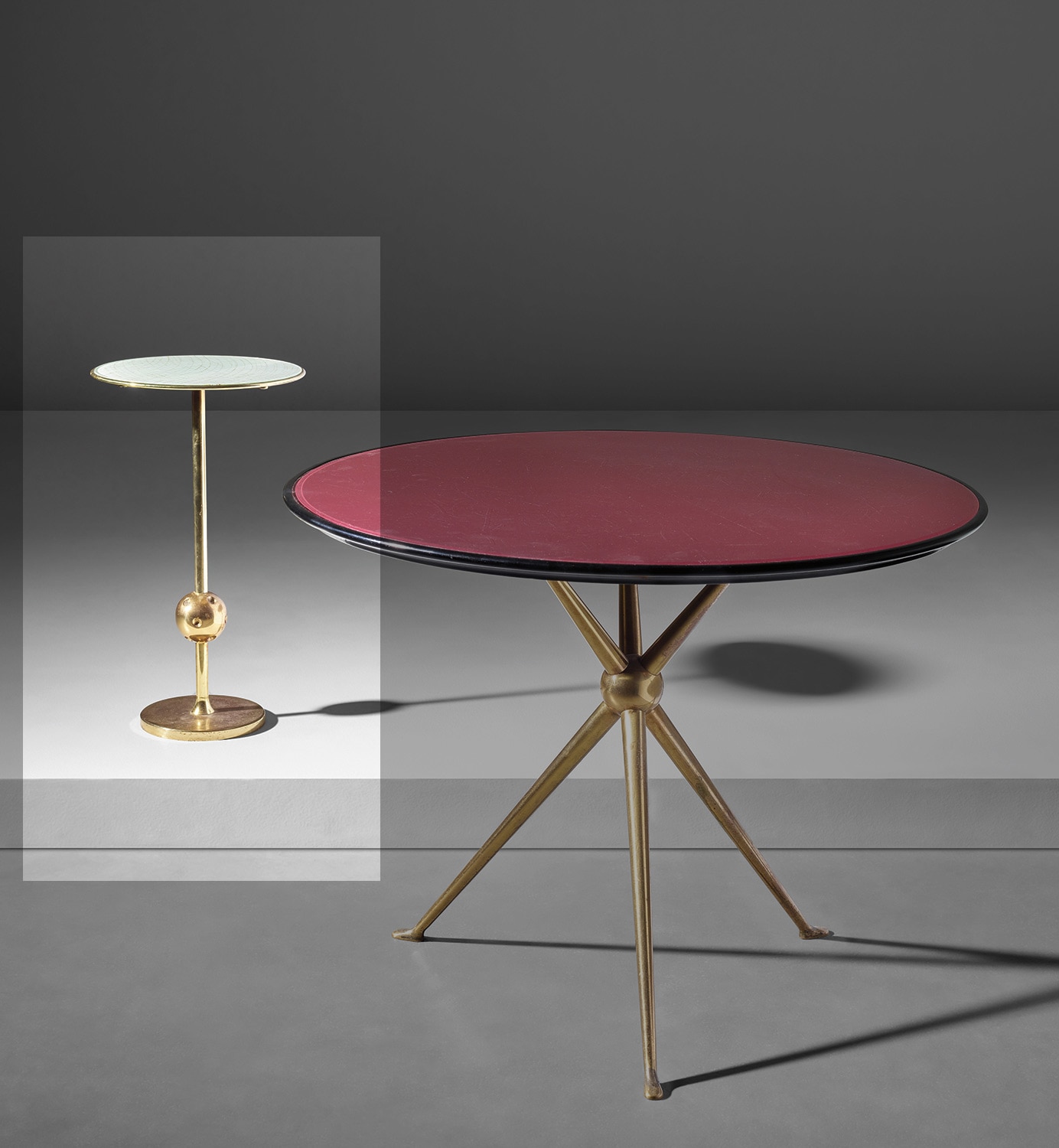
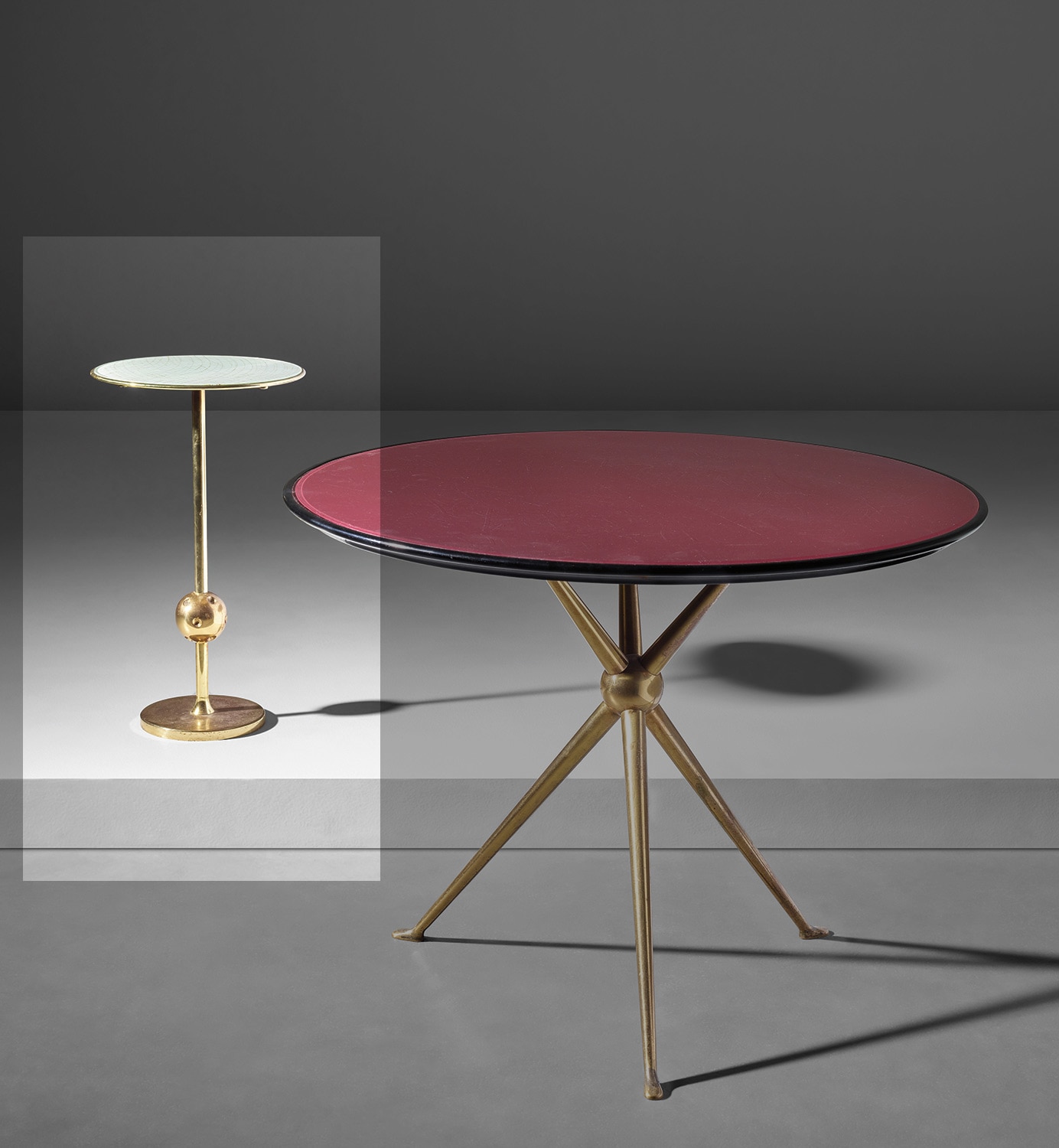
'T1' side table, 1950
He grew up inside his family's workshop, the Atelier di Varedo, founded by his father Gaetano Borsani, where fine cabinetmaking and decorative artistry were the languages of daily life. This immersion in material culture from his earliest years gave Borsani something that no academy could fully replicate: an intuitive understanding of wood, brass, glass, and the relationships between them. He went on to study architecture at the Politecnico di Milano, graduating in 1937, and the discipline sharpened his instinct for structure without ever smothering his delight in ornament. The years between his graduation and the founding of Tecno in 1953 represent one of the most fertile periods in Borsani's career.
Working within and alongside the Atelier di Varedo, he produced furniture that sat at the intersection of Italian rationalism and a more lyrical, almost neo classical warmth. These early pieces, many of them dating from the late 1930s through the early 1950s, demonstrate a designer willing to synthesise competing impulses without apology. He was drawn to the lessons of the European avant garde, particularly the functionalist rigour emanating from Scandinavia and the Bauhaus, but he tempered those influences with the particular Italian instinct for sensual material quality and the pleasures of fine finish. The founding of Tecno alongside his brother Fulgenzio marked a decisive turn.
Osvaldo Borsani
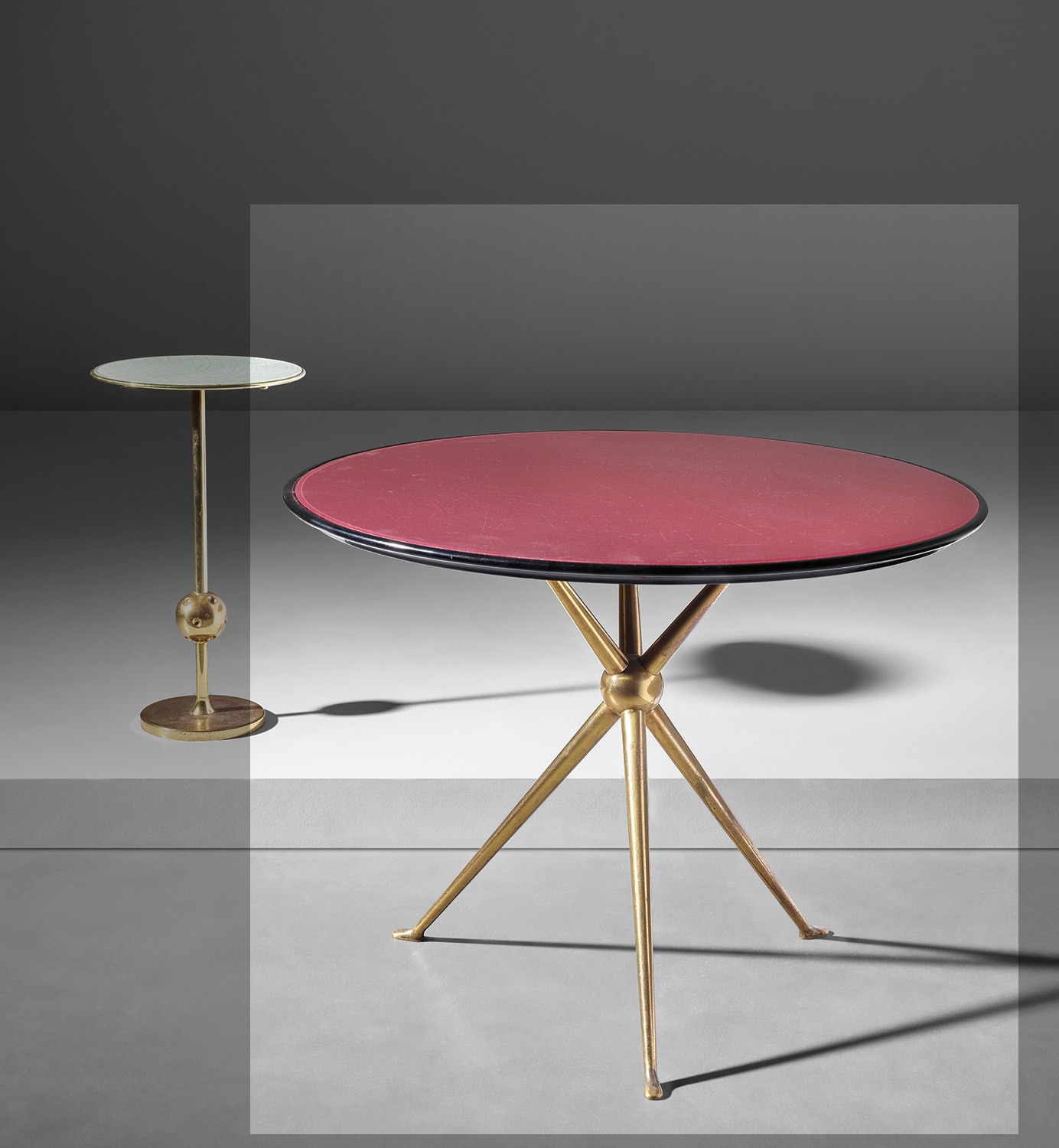
Side table, 1941
Rather than remaining in the realm of bespoke, one of a kind production, Borsani committed himself to the challenge of translating exceptional design into repeatable, industrially produced objects. The results were remarkable. His P40 reclining lounge chair, introduced in 1954, became one of the defining objects of postwar Italian design, capable of adjusting into an extraordinary range of positions through an elegant system of hinges and pivots that seemed to anticipate the ergonomic thinking of later decades. It was technical ingenuity expressed with such formal grace that the mechanics seemed almost incidental to the pleasure of the object.
The D70 sofa followed, offering a similarly generous range of configurations, and together these pieces established Borsani as a pioneer of multifunctional furniture at the highest level of quality. Yet it is Borsani's earlier, more intimate works that increasingly captivate the most discerning collectors. The side tables and occasional furniture produced in and around the Atelier di Varedo in the late 1930s through the early 1950s reveal a craftsman of exceptional refinement. A side table from 1941, worked in glass, painted wood, and brass, shows Borsani composing with materials the way a painter composes with colour, each element chosen for its contribution to a total visual and tactile effect.
Osvaldo Borsani
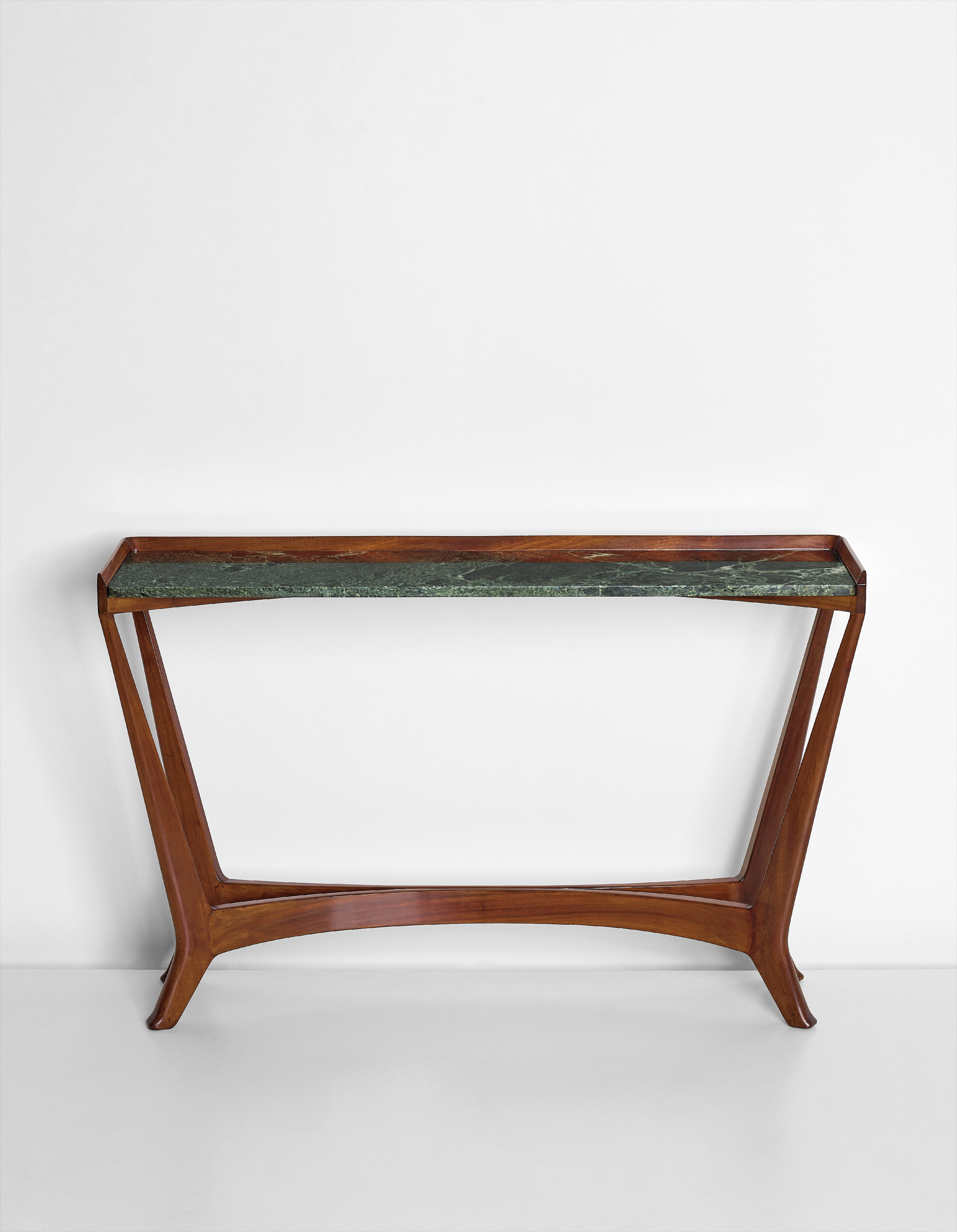
Produced by l'Atelier di Varedo, Milan, Italy, circa 1951.
Similarly, a piece produced by the Atelier di Varedo around 1951 in walnut, walnut veneered wood, and marble demonstrates the confidence with which he balanced warmth and luxury against a genuinely modernist structural clarity. His T1 side table from 1950, rendered in reverse painted glass, brass, and brass plated steel, captures the full range of his sensibility: technically inventive, visually sophisticated, and deeply pleasurable as an object to live with. For collectors, Borsani offers something rare in the market for twentieth century design. His work spans a usefully wide range of scales and price points, from the grand, engineering driven lounge seating of the Tecno years to the more intimate and sometimes singular objects of his earlier practice.
The earlier Atelier di Varedo pieces are particularly prized for their rarity and the evidence they carry of direct craft involvement. Collectors drawn to figures such as Gio Ponti, Carlo Mollino, and Paolo Buffa will find in Borsani a natural companion, someone working at the same high pitch of Italian ambition and material intelligence during the same remarkable decades. His pieces look equally at home in a rigorous modernist interior and in a more eclectic, layered collection, which speaks to their essential generosity as designed objects. Borsani's place within the broader story of twentieth century design is well established, but it rewards continued examination.
He belongs to a generation of Italian designers who collectively transformed the way the world understood what furniture could be, and he did so not by rejecting tradition but by finding within it the seeds of genuine innovation. His contemporaries Ponti and Mollino worked with comparable intensity and comparable respect for the pleasures of material culture, and like them, Borsani produced work that transcends any narrowly functionalist definition of design. There is, in every Borsani piece, an awareness that the objects we live with are also the objects we live through, that good design is a form of sustained attention to human experience. Osvaldo Borsani died in 1985, leaving behind a body of work that continues to grow in critical and market stature.
Major design museums including the Museum of Modern Art in New York and the Triennale di Milano hold his work in their permanent collections, a recognition of his centrality to the modernist canon. But the most vivid measure of his legacy may be the enthusiasm of those who seek his pieces out today, collectors and admirers who understand that in a world saturated with objects, the ones that genuinely reward attention are the ones that were made with love for the work itself. Borsani made objects of that quality consistently, across five decades, and the world of design is richer and more beautiful for it.
Explore books about Osvaldo Borsani