Ole Wanscher
Ole Wanscher: Timeless Grace, Enduring Danish Mastery
Artist Spotlight · The Collection Editorial
Picture a chair that feels inevitable, as though it could not have been designed any other way, as though it emerged fully formed from centuries of accumulated human knowledge about how a body rests and how beauty sustains itself across time. That is the sensation collectors and curators return to again and again when they encounter the furniture of Ole Wanscher. In recent years, the Danish master has experienced a remarkable surge of international attention, with major auction houses in Copenhagen, London, and New York regularly fielding fierce competition for his pieces, and museum collections across Scandinavia reappraising the depth and range of his contribution to twentieth century design. Wanscher is no longer simply a footnote in the history of Danish modernism.
Ole Wanscher
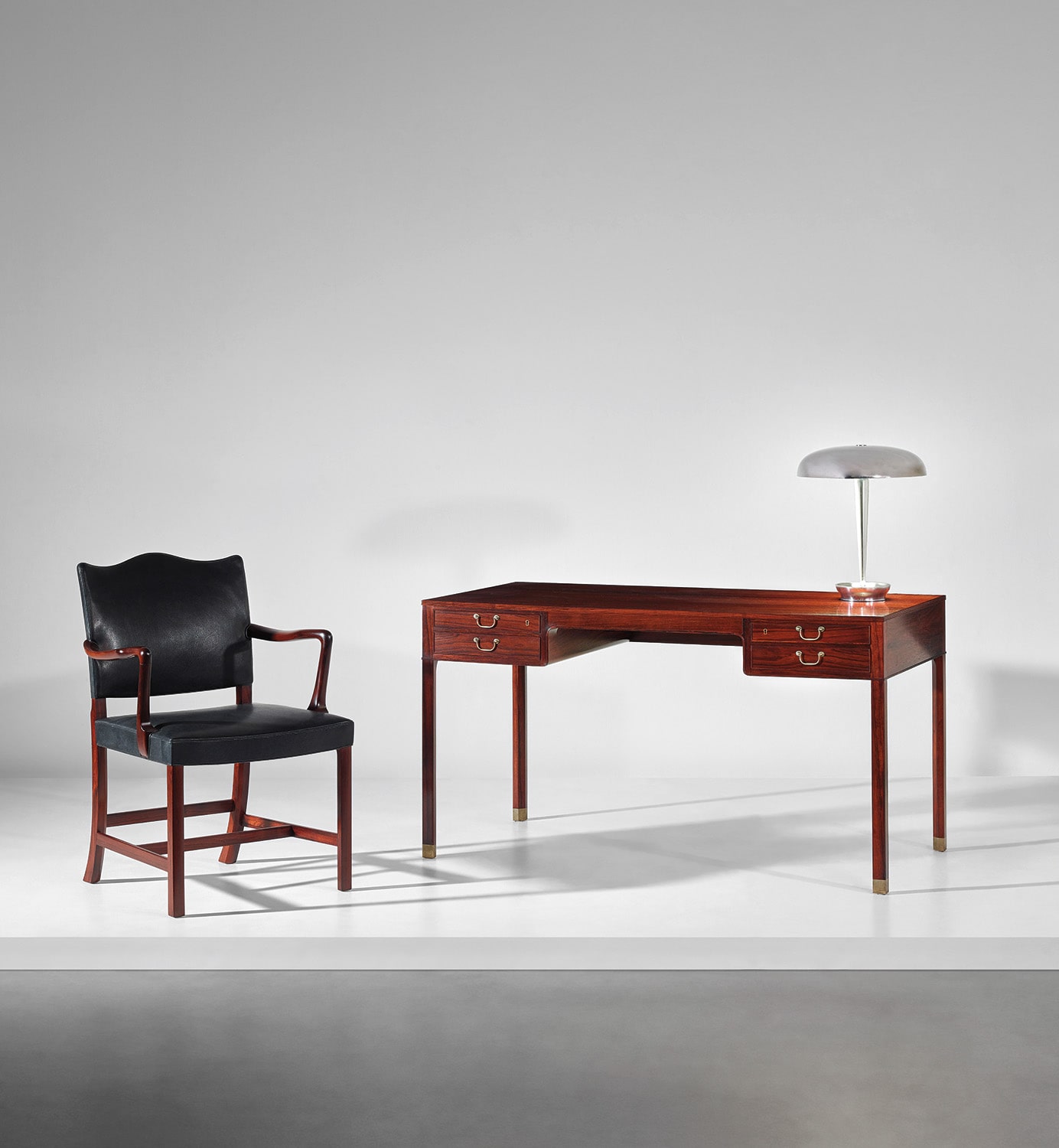
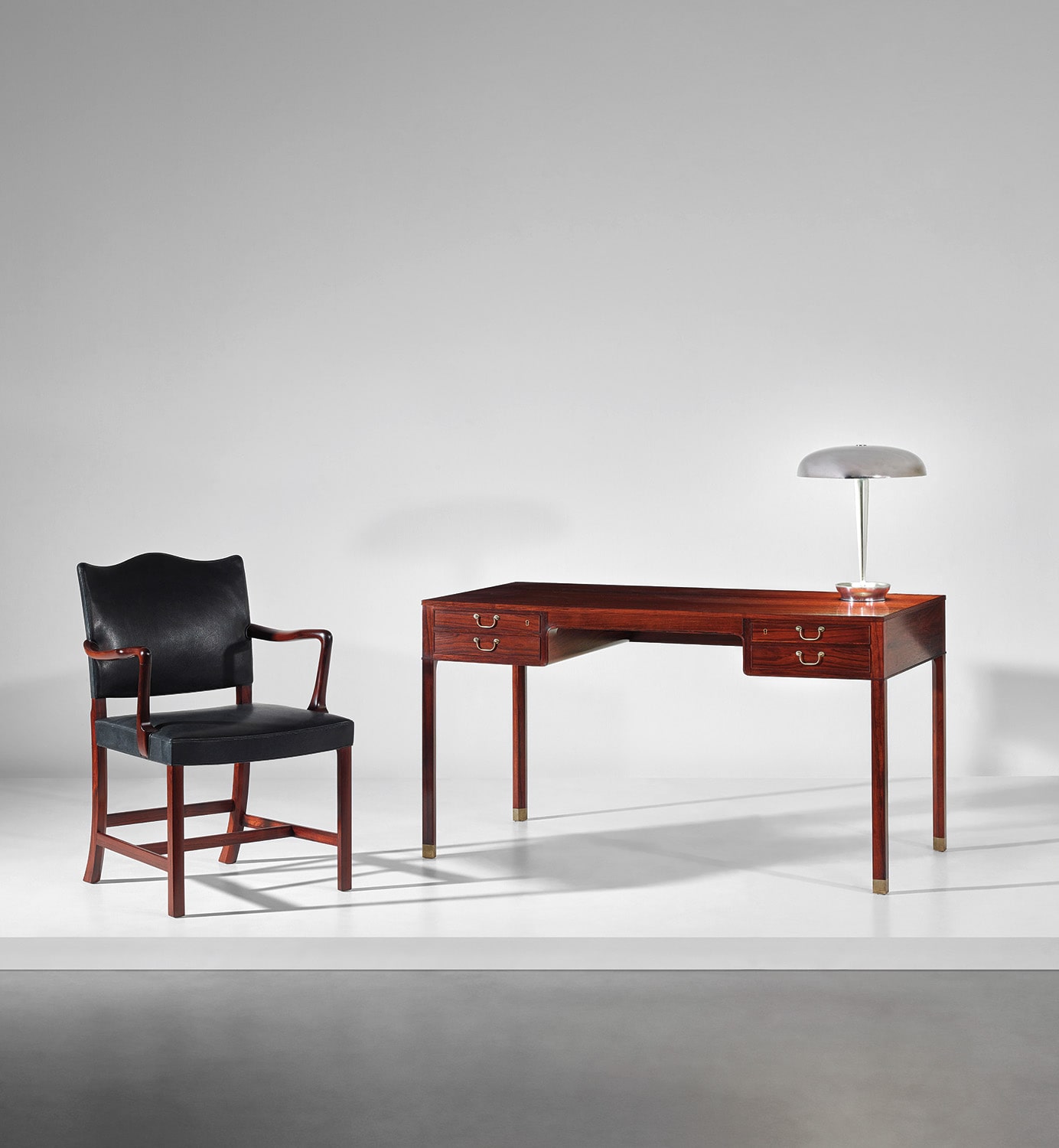
Desk and armchair
He is increasingly understood as one of its most thoughtful and complete practitioners. Ole Wanscher was born in Copenhagen in 1903, into a city that was quietly becoming one of the great centers of applied art and craftsmanship in the Western world. His formation was shaped decisively by his education under Kaare Klint at the Royal Danish Academy of Fine Arts, where Klint had established a rigorous and historically grounded approach to furniture design that stood apart from the more decorative impulses of the era. Klint believed that the finest furniture was not invented but rather discovered through careful study of proven forms, and Wanscher absorbed this philosophy with genuine intellectual enthusiasm.
Where many of his contemporaries looked forward toward abstraction and industrial production, Wanscher looked across centuries and continents, finding in ancient Egyptian stools, English Georgian cabinetry, and Chinese ceremonial chairs the underlying logic of enduring design. Wanscher joined the faculty at the Royal Danish Academy and spent decades teaching, writing, and refining his own practice in parallel. His scholarly output was substantial and serious. His writings on the history of furniture remain reference texts for designers and historians, and they reveal a mind that understood craft not as decoration but as a form of reasoning made physical.
Ole Wanscher
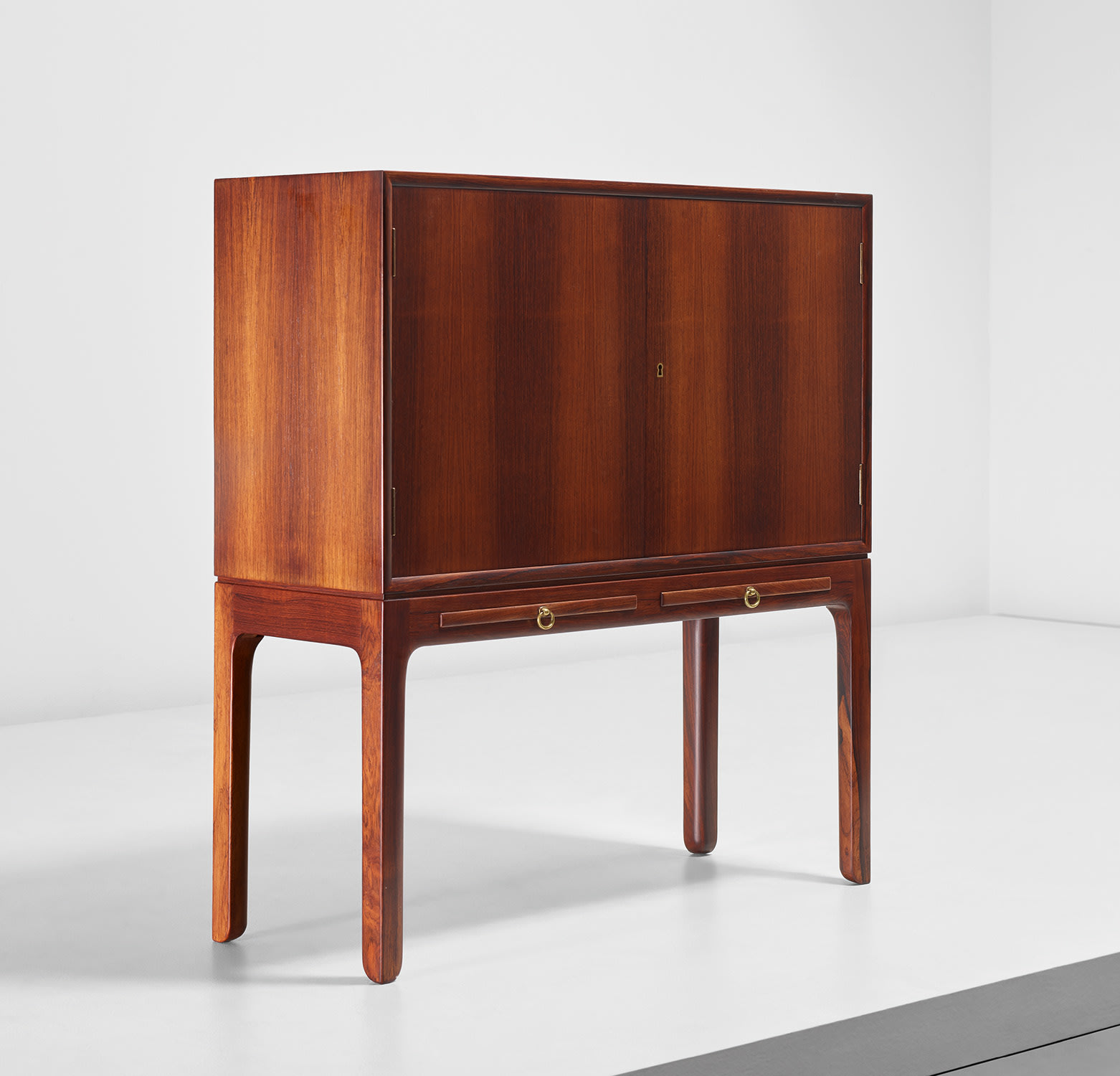
Small cabinet
This dual life as practitioner and historian gave his furniture a quality that is difficult to name but immediately felt: each piece carries the weight of considered judgment, of a designer who knew exactly why every proportion and every joint existed. His work is not experimental in the restless, uncertain sense. It is exploratory in the deep, confident sense of a scholar who has done the reading. Among his most celebrated works, the Egyptian Stool stands as perhaps the purest expression of his method.
Drawing directly on forms documented in ancient Egyptian furniture, Wanscher translated the cross legged folding stool into a piece of mid century Danish craftsmanship, using rosewood and leather to give the archetype a warmth and sensuousness that its ancient antecedents could not have possessed. The Colonial Chair, produced in collaboration with the celebrated cabinetmaker A.J. Iversen, is another landmark: a lounge chair of such relaxed authority that it seems to redefine what comfort means in formal terms.
Ole Wanscher
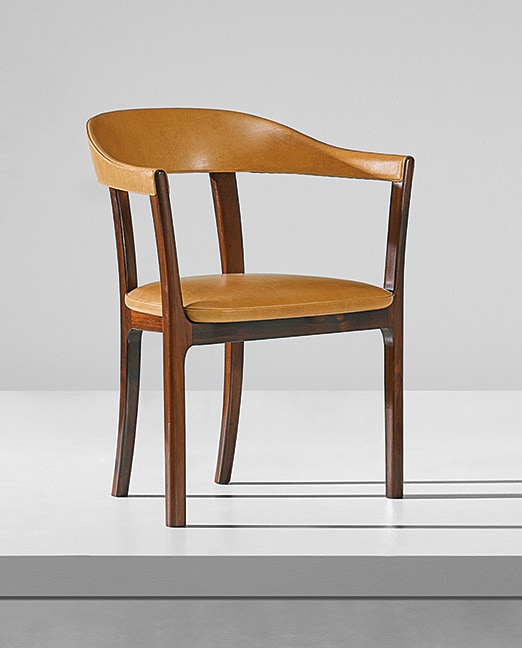
Armchair
His desks, cabinets, and dining sets in Brazilian rosewood, including the 1967 rosewood veneered works that appear among his most sought after pieces today, demonstrate his mastery of material as well as form. Rosewood gave Wanscher's furniture a richness of grain and color that rewarded long acquaintance, deepening and warming over decades of use. For collectors, Wanscher offers something genuinely rare in the current market: the combination of historical integrity and aesthetic pleasure that defines the very best of mid century Scandinavian design, without the ubiquity that has made certain contemporaries feel overexposed. His pieces appear at auction with enough regularity to establish confident price benchmarks, yet the finest examples, particularly matched sets of dining chairs, complete desk and armchair groupings, and his nesting tables from around 1950, remain genuinely competitive at sale.
Collectors drawn to Hans Wegner, Finn Juhl, or Borge Mogensen will find in Wanscher a natural companion, someone working from a shared set of values but with a distinctly scholarly and historically inflected sensibility. The presence of Brazilian rosewood across so much of his output also means that early examples carry an added material rarity, as restrictions on that timber have made original pieces increasingly precious. To understand Wanscher fully, it helps to place him within the broader constellation of Danish modernism at its peak. His closest neighbors in spirit include Finn Juhl, whose sculptural approach to the chair also owed something to non Western formal traditions, and Borge Mogensen, who shared his commitment to honest joinery and functional clarity.
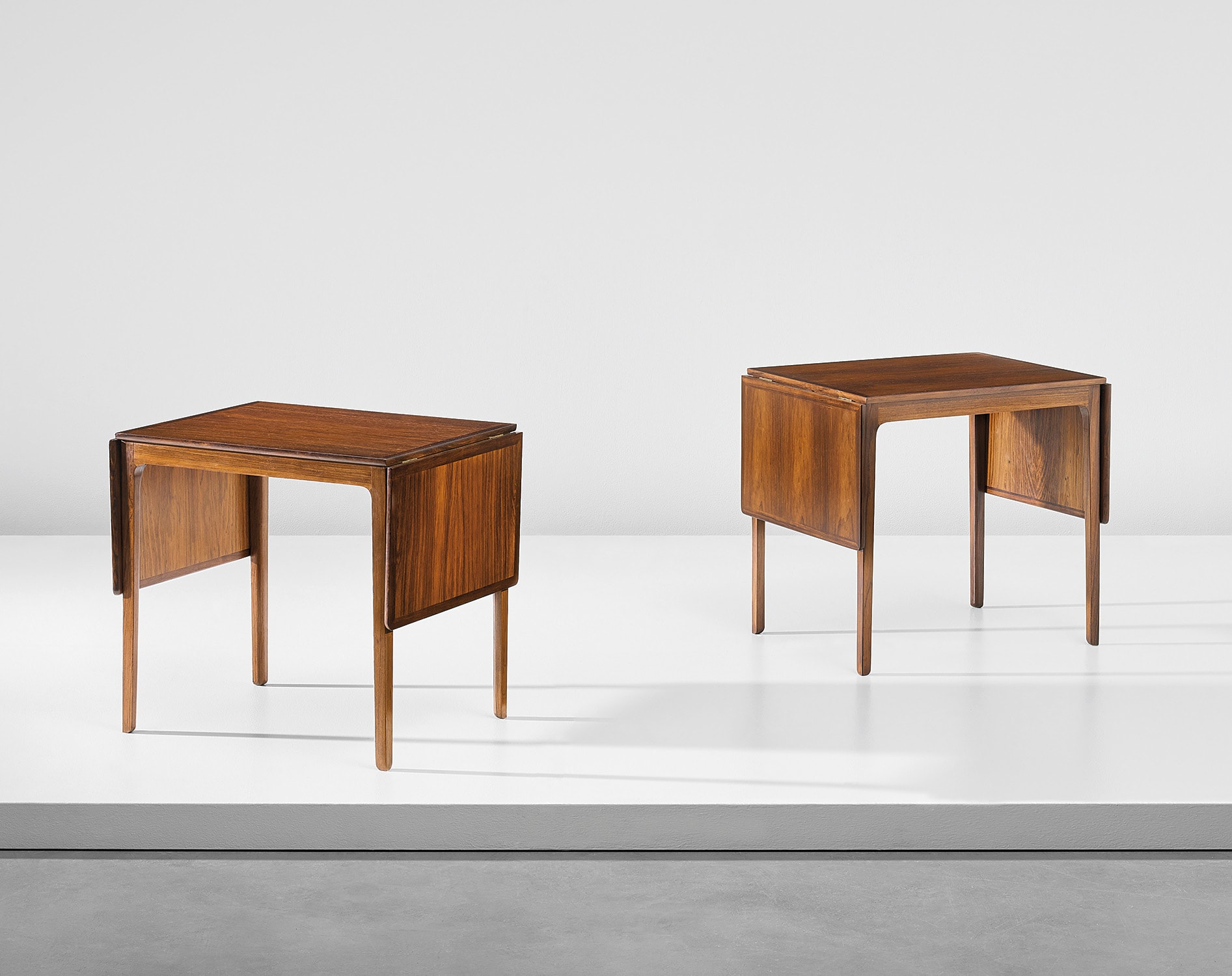
Ole Wanscher
Brazilian rosewood-veneered wood, Brazilian rosewood, 1967
But Wanscher's particular distinctiveness lies in the density of his historical reference and in the restraint with which he deployed it. He never quoted the past as a stylistic gesture. He absorbed it and allowed it to inform his instincts quietly, so that a chair by Wanscher feels simultaneously ancient and entirely of its moment. This is a quality that design history has taken time to fully appreciate, and that appreciation is now firmly, and rightly, underway.
The legacy of Ole Wanscher is one that grows more relevant with each passing decade, not because of nostalgia but because of the enduring questions his work poses to designers and collectors alike. In an era of rapid production and disposable objects, his furniture insists on permanence, on the idea that a chair made with sufficient care and intelligence will outlast its maker and its owner by generations. His scholarly conviction that the history of furniture is part of the history of civilization itself now reads as quietly radical. Wanscher died in 1985, leaving behind a body of work that continues to furnish the finest rooms and collections with something that cannot easily be sourced elsewhere: genuine depth.
To own a piece by Ole Wanscher is to participate in an unbroken conversation between the human body, human skill, and human time.