Nigel Cooke
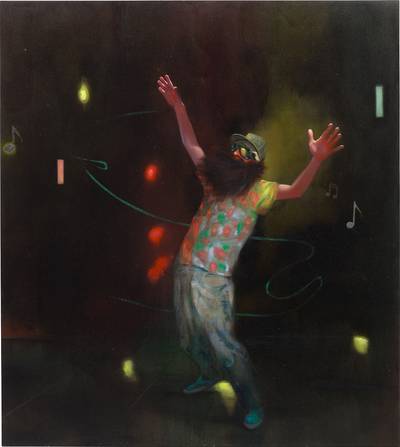
Nigel Cooke Paints the World Gloriously Apart
Artist Spotlight · The Collection Editorial
Something is stirring in the conversation around British painting, and Nigel Cooke finds himself squarely at its center. Over the past several years, major institutional and commercial interest in painters who work at the intersection of figuration, abstraction, and conceptual rigor has intensified considerably, and Cooke's name surfaces again and again as a touchstone, a reference point, a painter's painter whose work rewards both visceral looking and sustained intellectual engagement. His canvases, many of them vast in scale and almost bewildering in their density, have been exhibited across Europe and North America, earning him a reputation as one of the most ambitious and singular voices to emerge from British art in the past three decades. To stand in front of one of his large linen paintings is to feel the accumulated weight of art history pressing against something raw, contemporary, and stubbornly alive.
Nigel Cooke
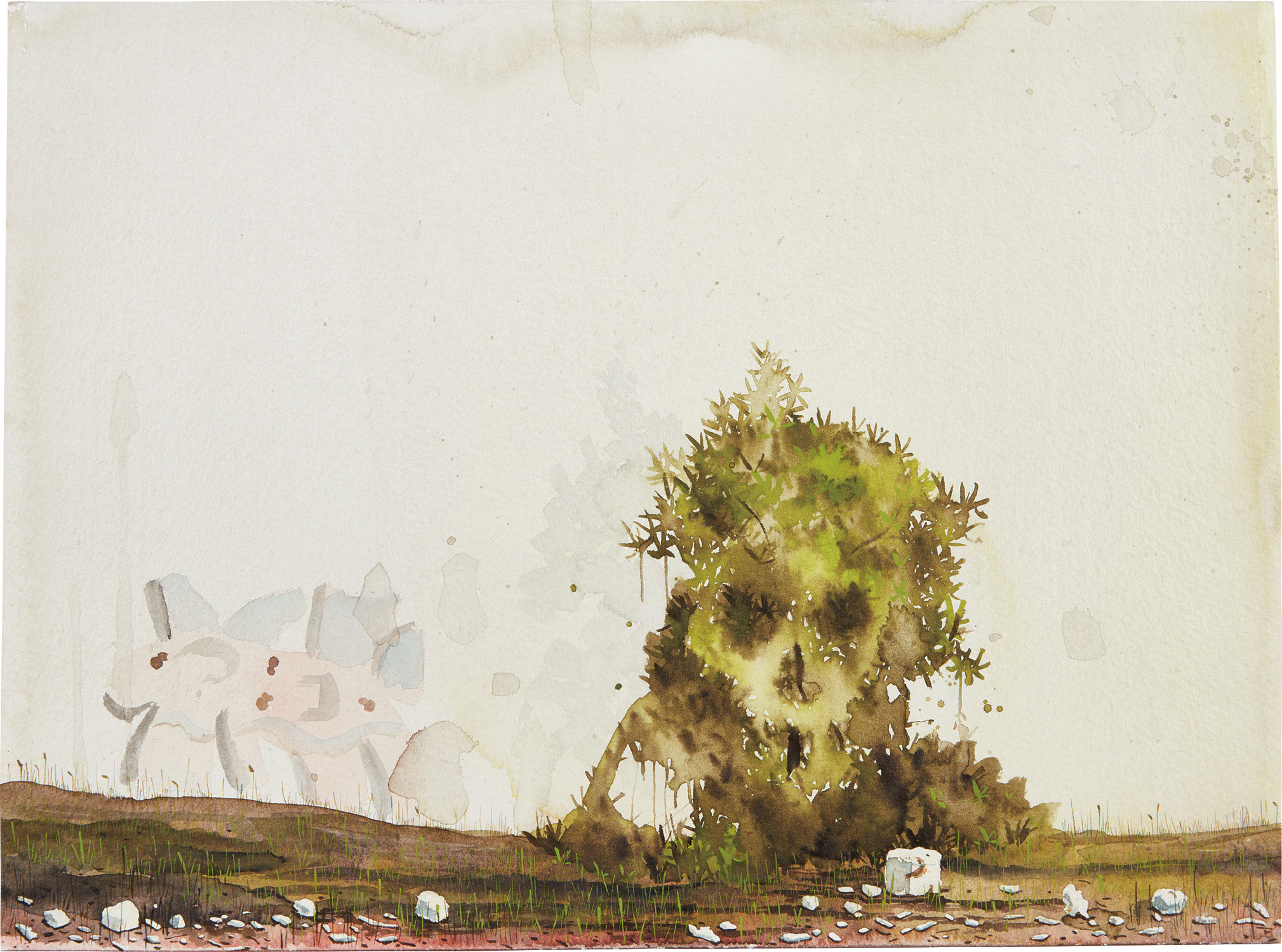
Desolate Freestyle 4, 2003
Cooke was born in 1973, a generation shaped by the enormous cultural shadow of the Young British Artists and the Saatchi era, yet he carved out a position that was always adjacent to that phenomenon rather than subsumed by it. He studied at Nottingham Trent University before completing his postgraduate work at Goldsmiths, College of Art in London, that legendary crucible of conceptual thinking that produced so many defining figures of late twentieth century British art. Where many of his contemporaries moved toward installation, video, and object based work, Cooke made a deliberate and almost perverse commitment to painting, treating the medium not as a retreat into tradition but as a genuinely open and contested space where the most urgent questions about image making could be staged. His early work announced an artist with an unusually sophisticated grasp of painting's history and a willingness to push its conventions toward something uncomfortable and alive.
The 2003 watercolors, including pieces such as Desolate Freestyle 4, show a younger Cooke working through ideas about landscape and entropy with remarkable fluency, the paper surface becoming a site where figures dissolve into ground, where marks accumulate and recede with the logic of weather rather than composition. These works on paper are not studies or preparatory sketches; they are fully resolved propositions about what painting can do when it stops trying to be beautiful and starts trying to be honest. Collectors who have had the foresight to acquire these earlier works possess something genuinely important in understanding the arc of a major career. The large scale oil paintings on linen, many of them backed with sailcloth to give the surface a particular tautness and physical presence, represent the fullest expression of what Cooke has built.
Nigel Cooke
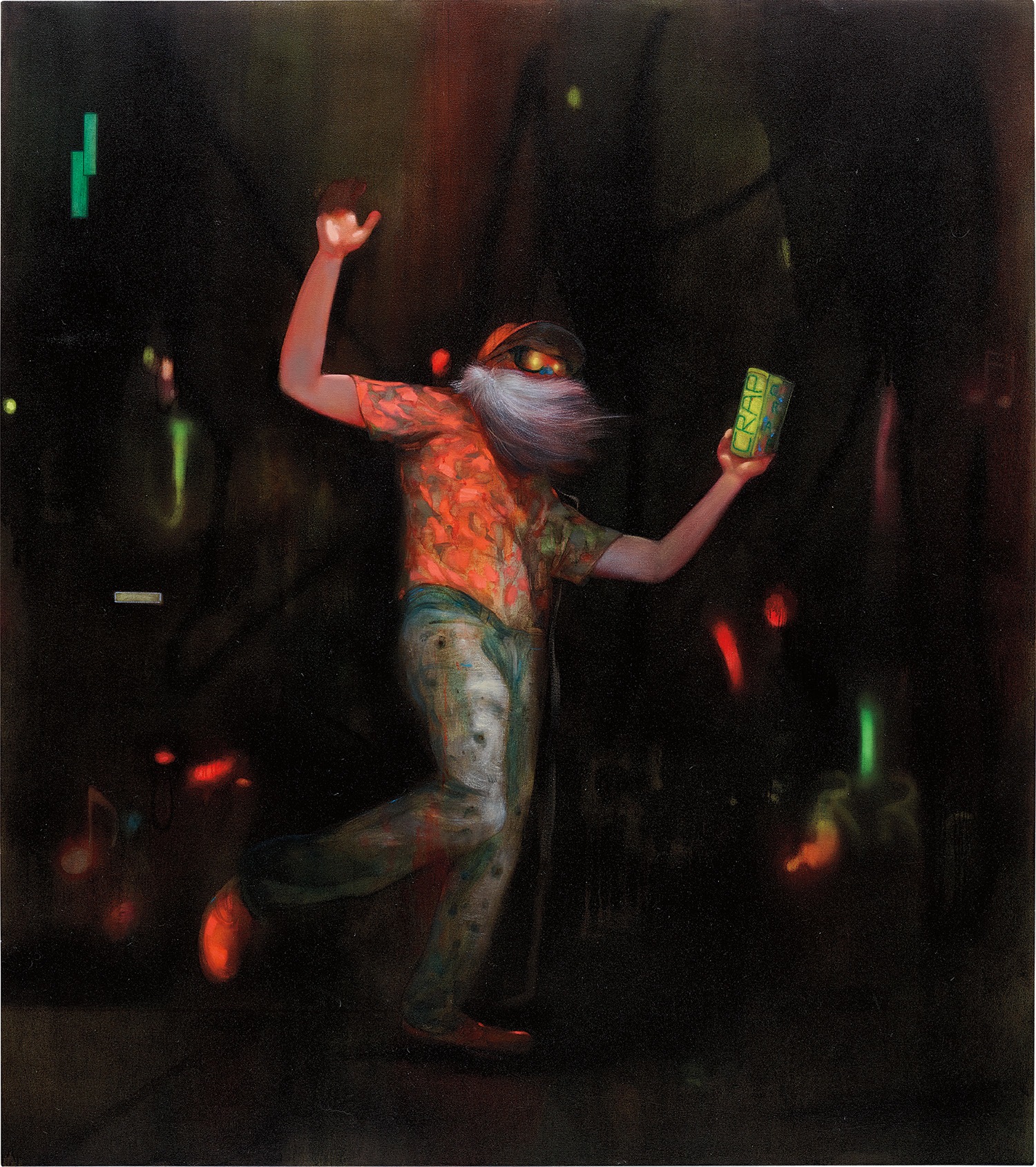
In Da Club - Volume One, 2010
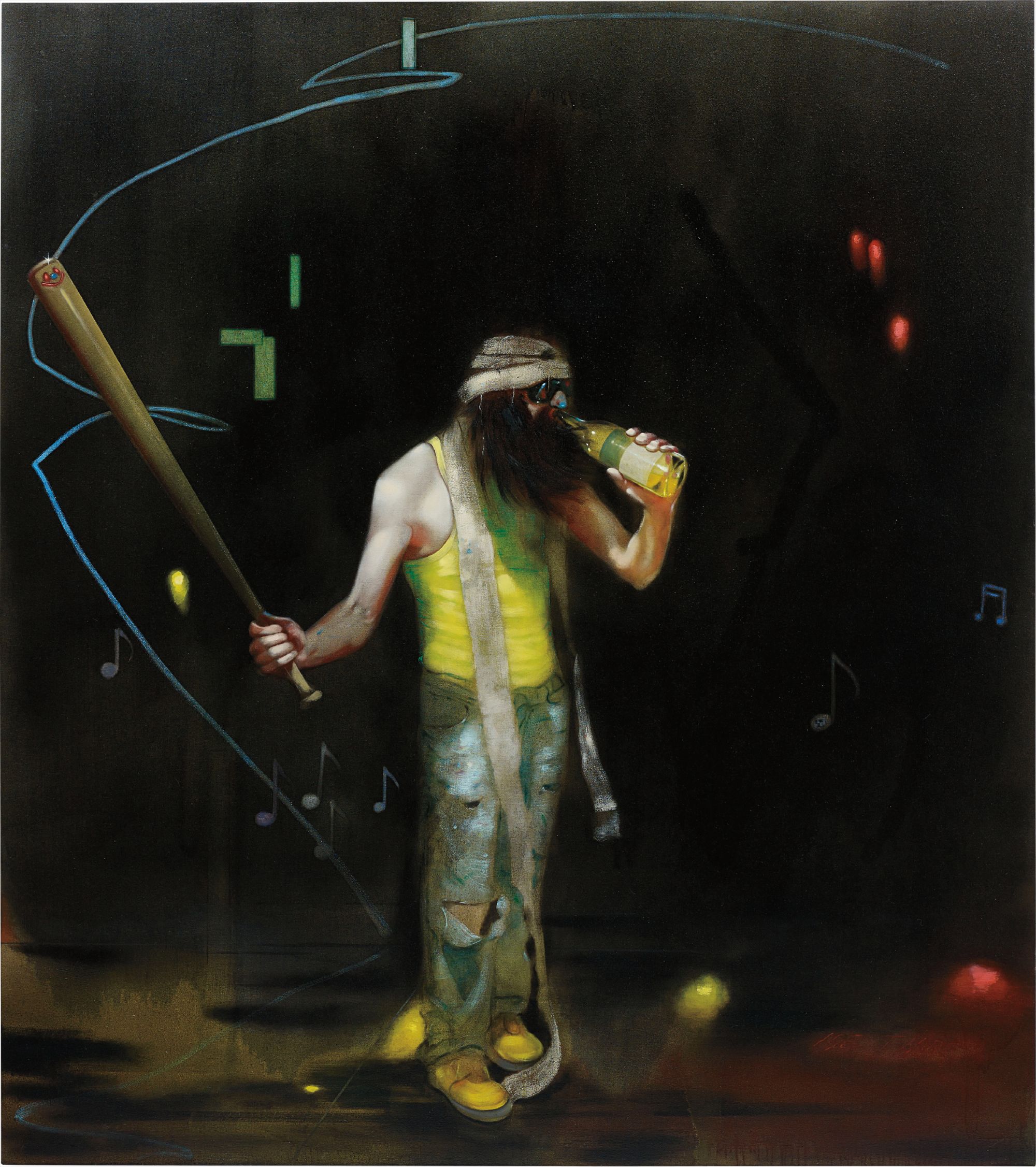
The In Da Club series, realized in 2010 and including works such as In Da Club: The Vision, In Da Club: Volume One, and In Da Club: Me Time, marks a high point in his practice, bringing together all the elements that make his work so distinctive: vast, spatially ambiguous landscapes that seem to have survived some unnamed catastrophe, grotesque and tragicomic figures embedded in lush painterly passages, fragments of text and symbol that arrive like overheard conversation rather than legible statement. The sailcloth backing is not merely practical; it speaks to something in these paintings about endurance, about structures that are built to hold against pressure. These are paintings that seem to have been made under enormous duress and to have survived it magnificently. Siren and Storm with Shattered Tree, also on linen backed with sailcloth, extend this territory further, and the Painter's Head canvases introduce a more intimate register, portraits of an artist figure that carry unmistakable echoes of the self portrait tradition from Rembrandt through Bacon and beyond.
The Reader and the Read, from 2007, sits beautifully within the body of work as a meditation on the act of looking and being looked at, a theme that runs through everything Cooke makes. What is remarkable across all these works is the consistency of ambition alongside a genuine restlessness, a refusal to settle into a signature style that could be reproduced at will. Each painting feels like a problem being solved and a new problem being opened. For collectors, Cooke's work occupies a genuinely compelling position in the current market.
Nigel Cooke
In Da Club - Me Time
He is represented by galleries of serious standing and his work has found homes with collectors across Europe and beyond. The large linen paintings carry significant presence in any collection and hold their own in dialogue with works by contemporaries such as Cecily Brown, Peter Doig, and Neo Rauch, artists who share a commitment to painting as a space where the figurative and the psychological can coexist without resolution. Cooke also invites comparison with earlier figures such as Philip Guston, whose late paintings similarly weaponized cartoon imagery and existential darkness, and with the German painters of the 1980s, Georg Baselitz and A.R.
Penck, whose embrace of expressive distortion helped open the space that Cooke now inhabits. The works on paper remain an accessible and often overlooked entry point, offering the full intelligence of his practice at a scale and price point that rewards the attentive collector. What Cooke has accomplished over a career now spanning more than two decades is the construction of a painterly world that is entirely his own while remaining deeply in conversation with everything that came before it. He has taken the condition of painting at the end of history, that supposedly exhausted medium weighted down by centuries of achievement and decades of theoretical skepticism, and turned it into a subject of inexhaustible fascination.
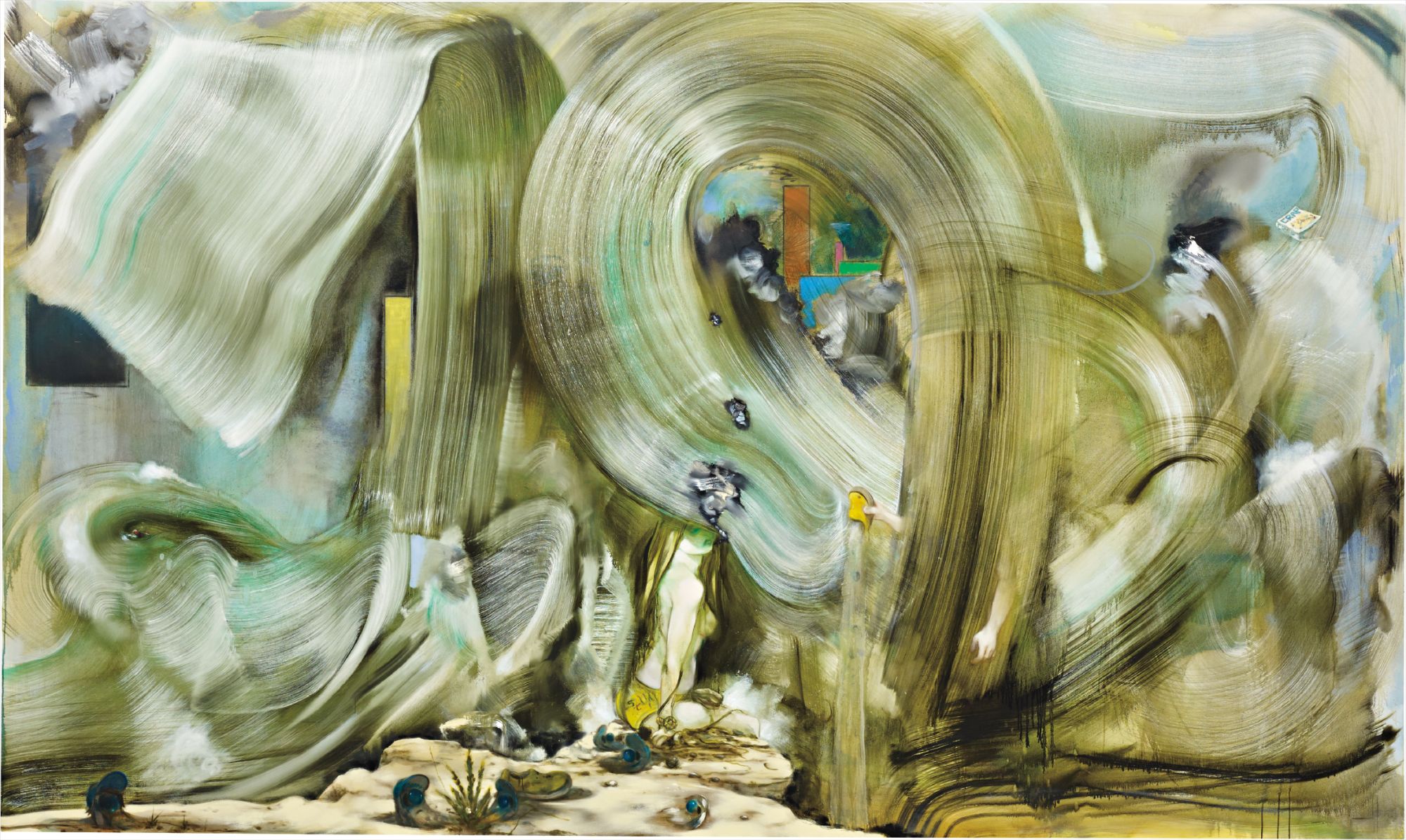
Nigel Cooke
Siren
His paintings do not argue that painting can be saved; they demonstrate, through sheer accumulative force, that painting has always been capable of saving itself. The grotesque figures, the scorched landscapes, the fragments of text and symbol are not signs of despair but of a ferocious ongoing engagement with what it means to make images in the world as it actually is. For any collector who cares about where British painting is and where it is going, Nigel Cooke is not simply a name to know. He is essential.
Explore books about Nigel Cooke