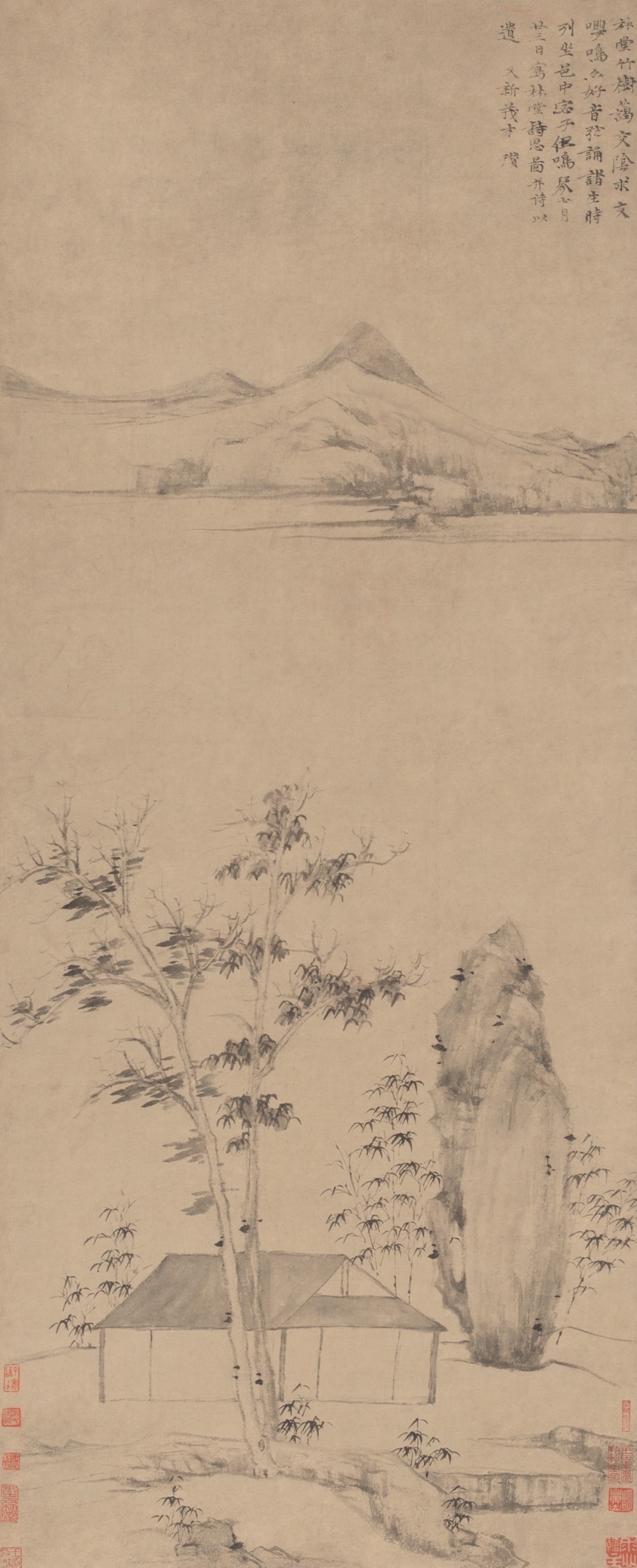
Ni Zan
1
Works
# Ni Zan Ni Zan (1306-1388) was a Chinese painter and calligrapher who emerged during the Yuan Dynasty and became one of the most influential literati artists in East Asian art history. Born into a wealthy merchant family in Jiangsu Province, Ni Zan received an extensive classical education and initially pursued a career as a government official before abandoning public life around 1350 to focus entirely on artistic practice. This withdrawal from society became emblematic of the literati artist ideal during the Yuan period, as many intellectuals retreated from Mongol rule to express their cultural identity through painting and scholarship. His move to live on a houseboat on the Yangtze River became legendary, reinforcing his image as a reclusive master dedicated solely to artistic refinement. Ni Zan's artistic style represents a culmination of literati painting traditions while simultaneously establishing new aesthetic standards that would dominate Chinese art for centuries. His most characteristic works feature spare, elegant compositions with distant mountains rendered in a distinctive angular technique, foregrounds dominated by empty space and water, and delicate brushwork that emphasized the artist's personal expression and cultivation. Notable works include his hanging scrolls and album leaves that typically depict idealized landscapes with minimal figures, prioritizing atmospheric effects and compositional restraint over detailed naturalism. His paintings consistently demonstrated his philosophical interests in Daoism and Buddhism, translating spiritual concepts into visual form through his innovative use of negative space and subtle ink gradations. Ni Zan's influence on subsequent Chinese art history cannot be overstated, as he became a foundational figure for later literati painters and remained deeply studied through the Ming and Qing dynasties. His approach to landscape painting, emphasizing personal sensibility and refined brushwork over technical virtuosity or faithful representation, established paradigms that shaped professional and amateur artistic practice for generations. His legacy extended beyond painting into calligraphy and art criticism, where his writings on aesthetics and artistic philosophy influenced how Chinese intellectuals conceptualized the relationship between art, morality, and personal cultivation. Today, Ni Zan is recognized as one of the Four Great Masters of the Yuan Dynasty and remains central to understanding the development of Chinese literati painting traditions and their lasting impact on East Asian visual culture.
Spotted by
Artists in conversation