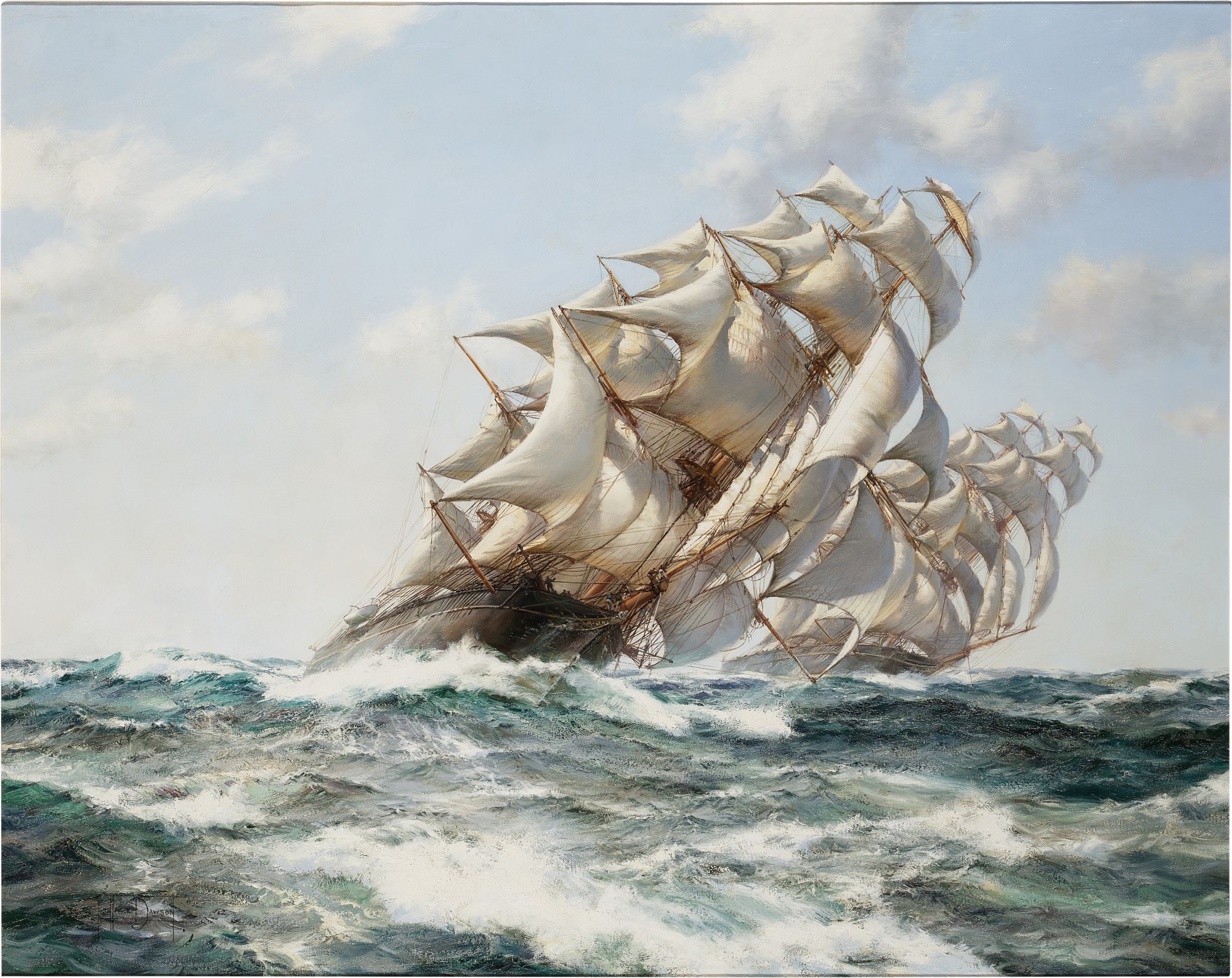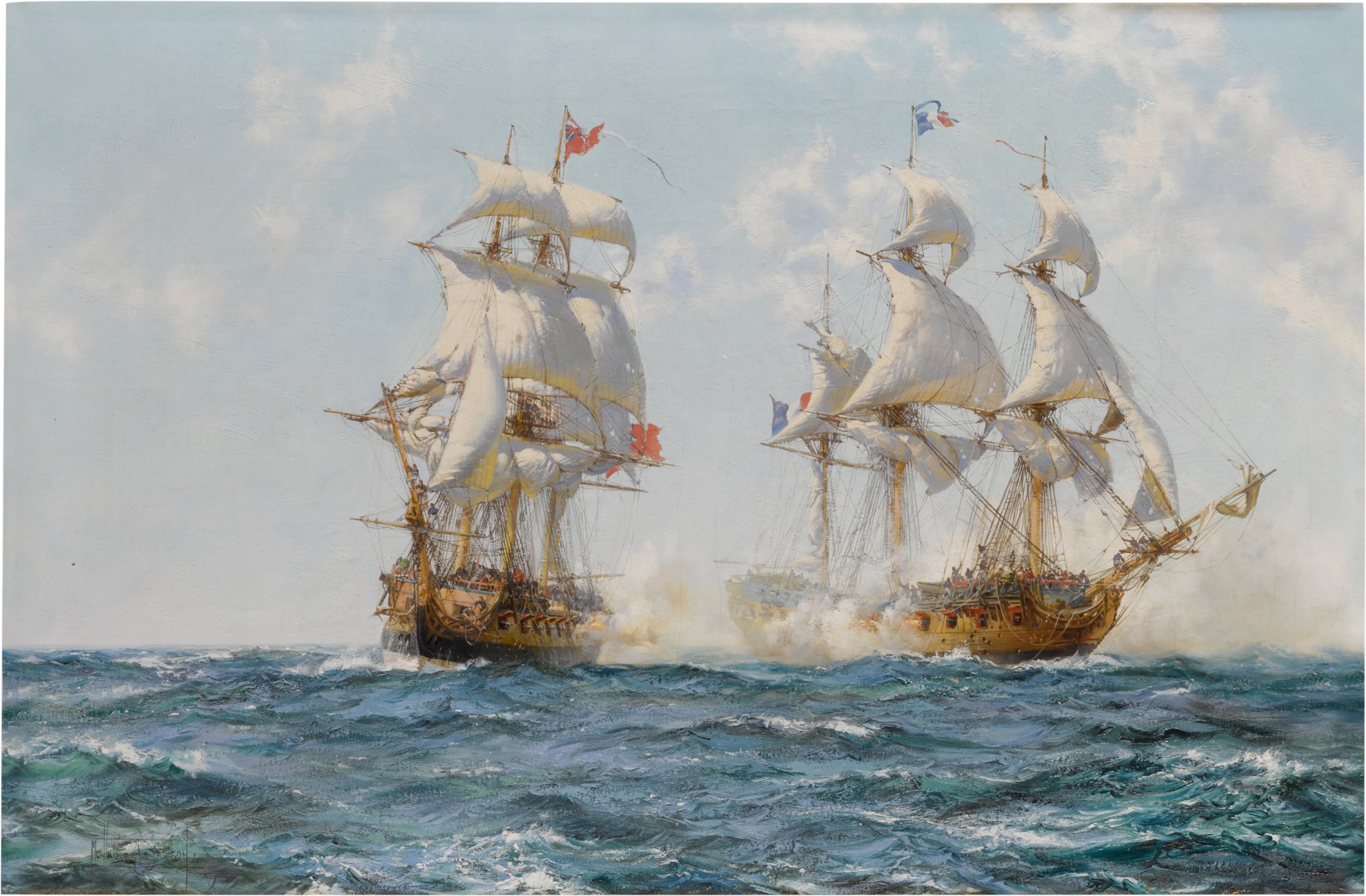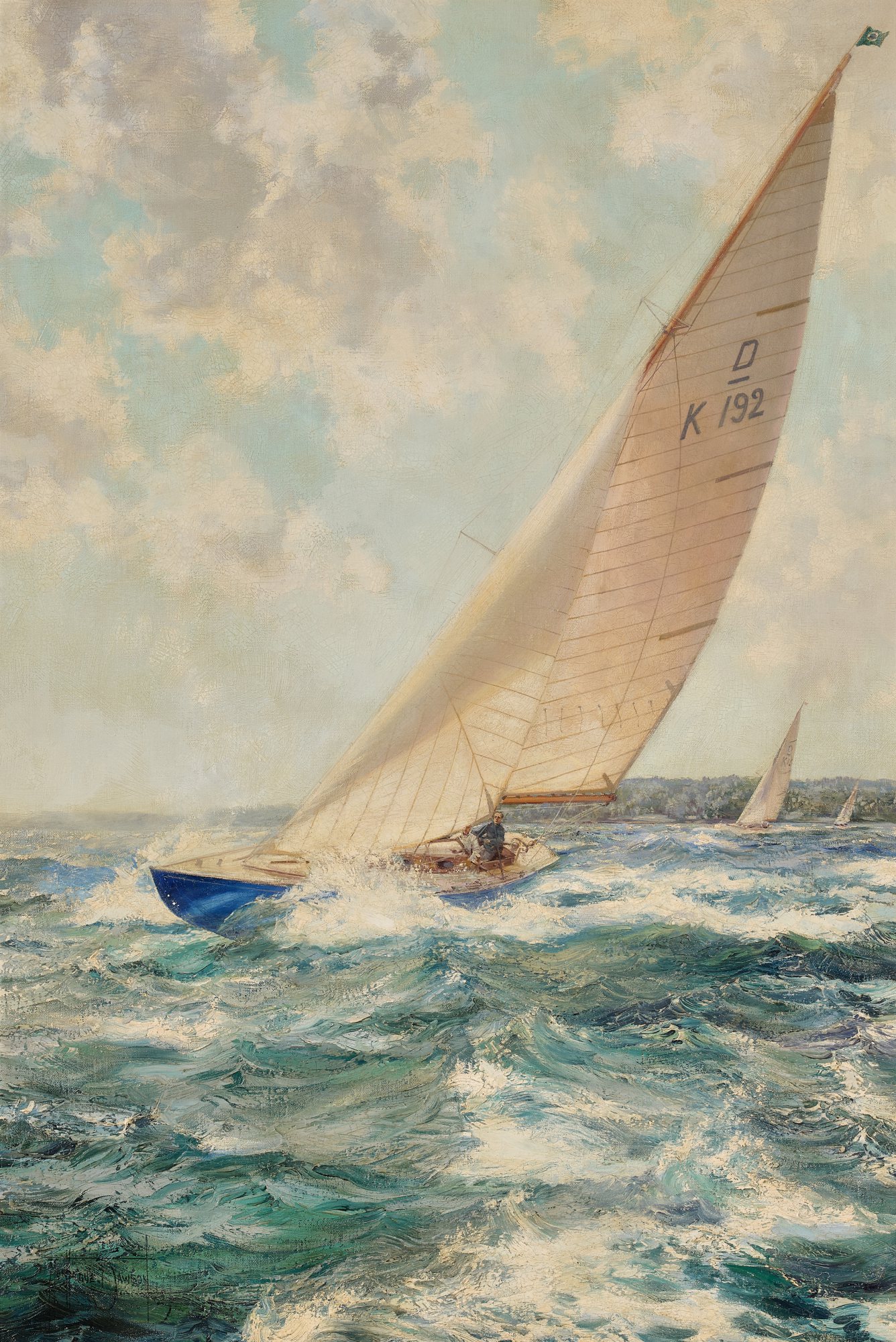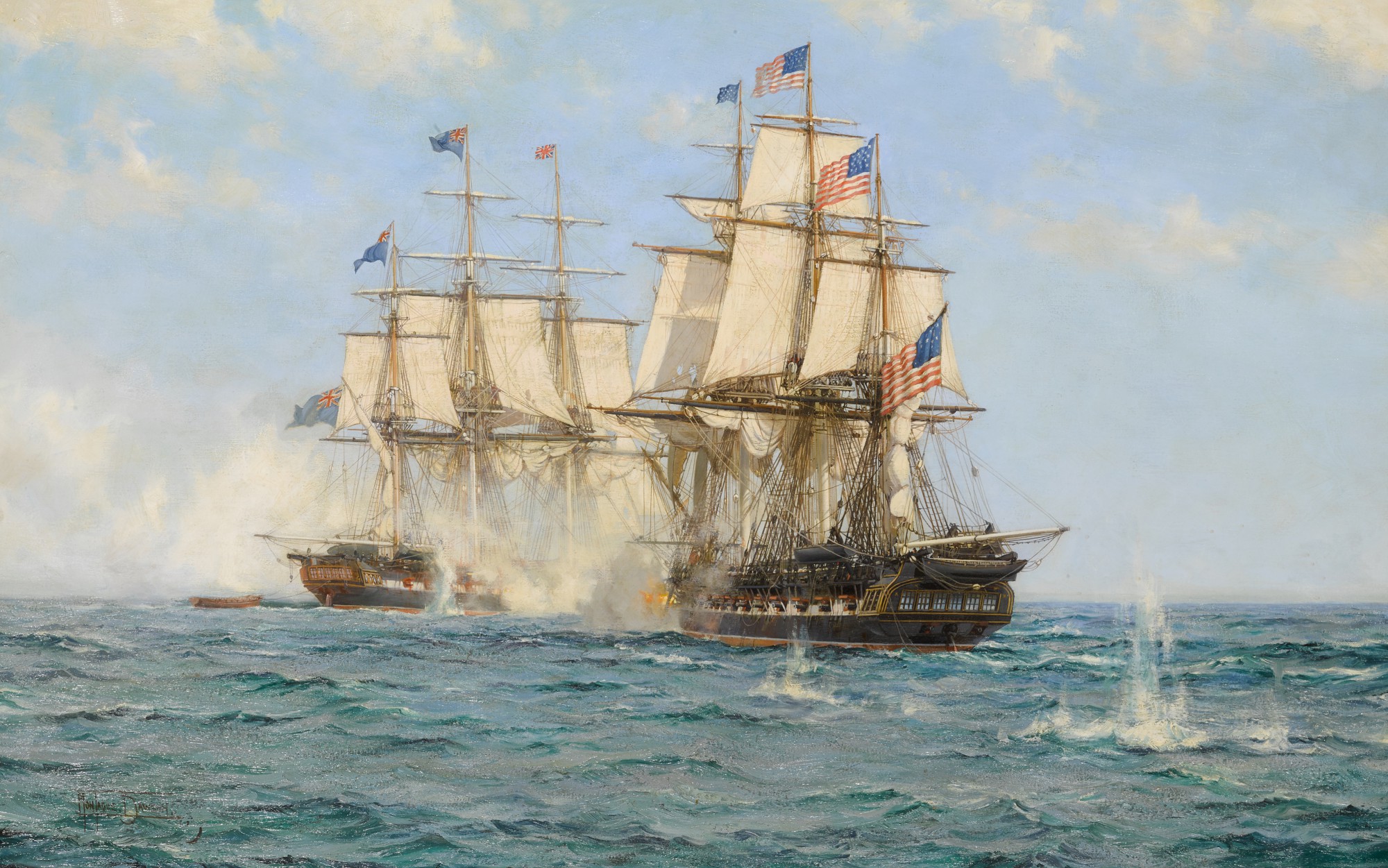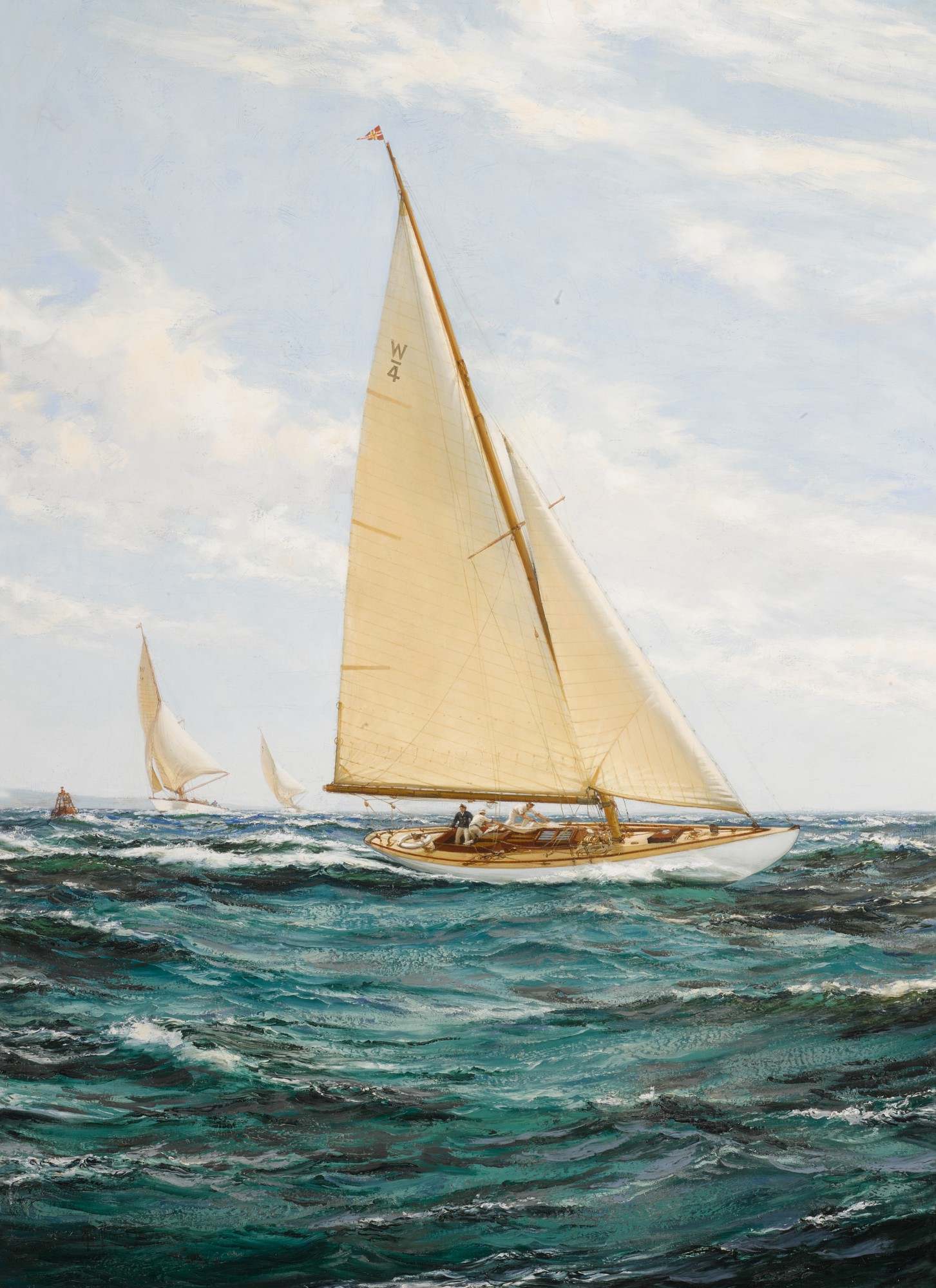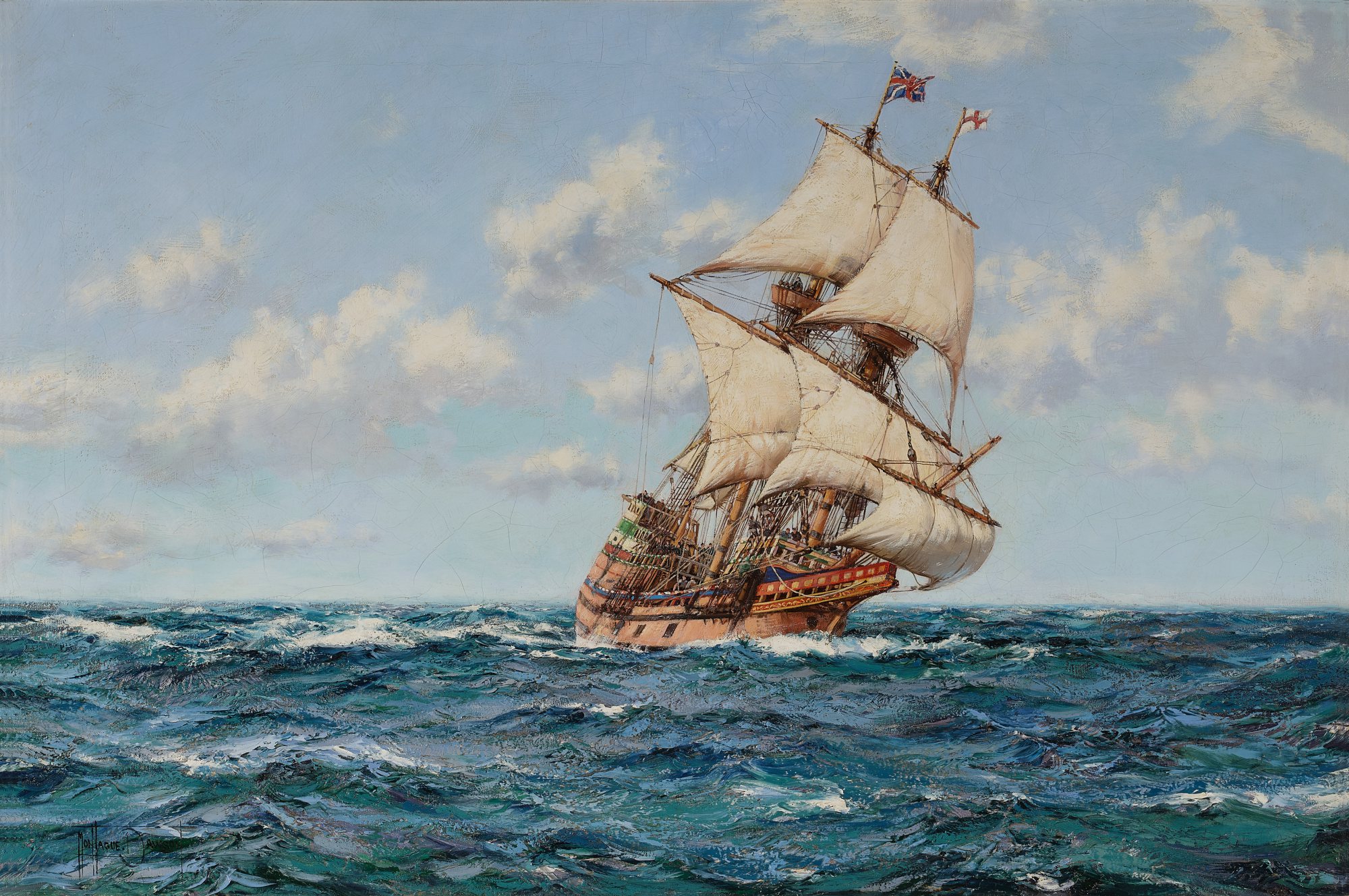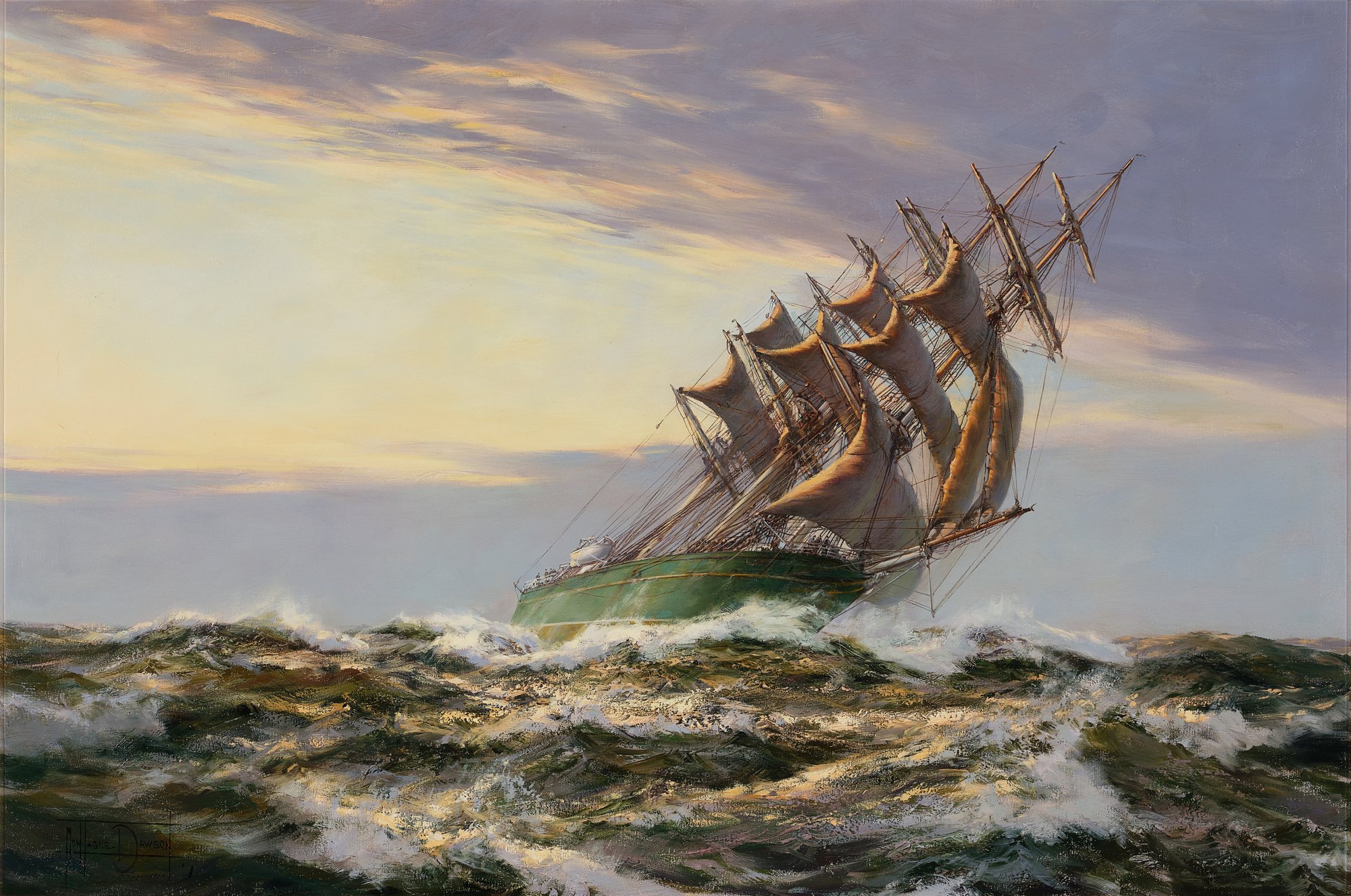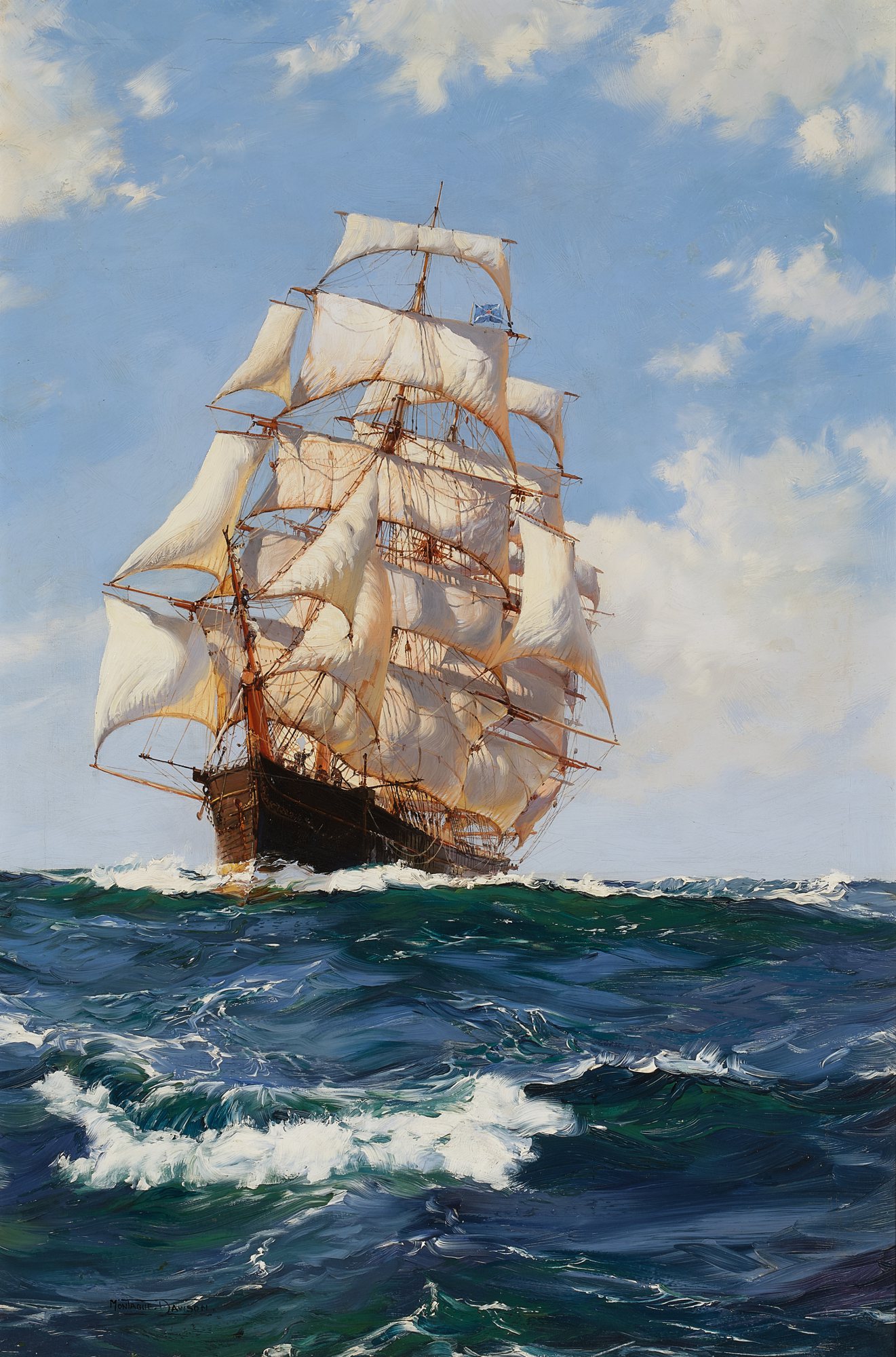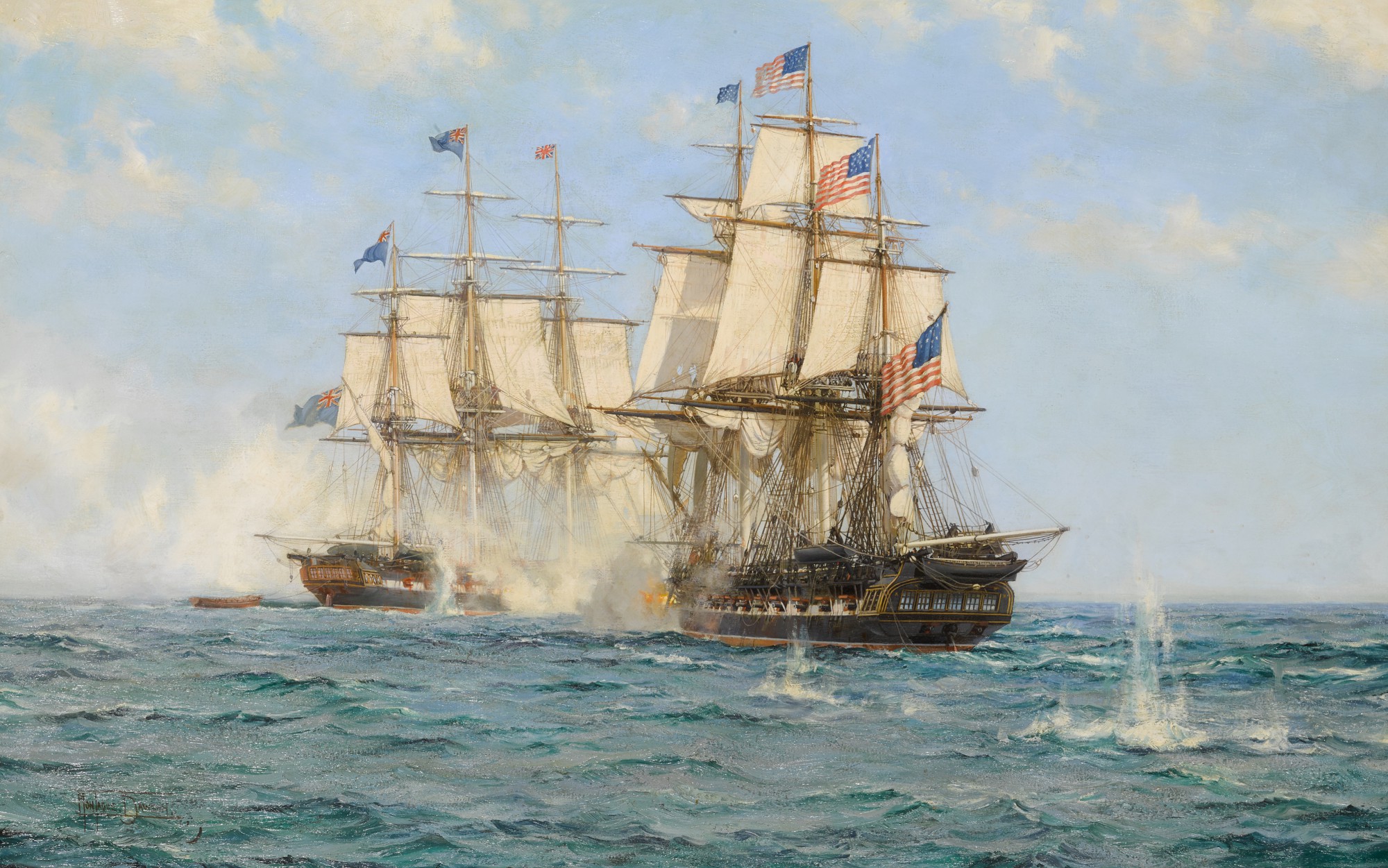
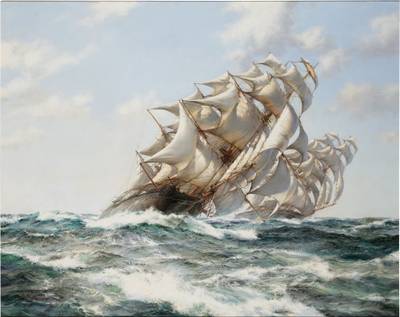
There is a moment, known to anyone who has stood before a Montague Dawson canvas, when the painting stops being paint altogether. The spray seems cold, the rigging seems to sing under tension, and the great hull of a clipper ship tilts into a swell with such conviction that you instinctively reach for something to hold. That quality, at once thrilling and serene, has made Dawson one of the most enduringly beloved maritime painters in the history of British art, and his works continue to command serious attention at auction houses and in the collections of discerning buyers who understand that great marine painting is among the most demanding and technically exacting disciplines an artist can pursue. Montague Dawson was born in 1890 in Chiswick, London, into a family with the sea already in its blood. His grandfather, the marine painter Henry Dawson, had established a precedent for looking at water with an artist's eye, and the young Montague grew up with salt air and nautical lore as natural parts of his imaginative landscape. He trained under the marine artist Charles Napier Hemy, a Royal Academician whose own canvases of Cornish fishing scenes and coastal waters had earned considerable respect, and this apprenticeship gave Dawson a rigorous foundation in the observation of light on moving water, the behavior of canvas under wind, and the precise architecture of working vessels. Dawson's formative years were shaped not only by studio training but by direct experience on the water. During the First World War he served with the Royal Navy, and his time at sea during that conflict gave him an intimate understanding of how ships move, how crews work within them, and how the sea itself shifts its character from hour to hour. This firsthand knowledge is visible throughout his career. Where lesser marine painters sometimes produce convincing scenery surrounding unconvincing vessels, Dawson's ships are always structurally and nautically correct, drawn by someone who understood their subject from the waterline up. The war also brought him early professional visibility: his illustrations appeared in The Sphere magazine, where his ability to render naval action with both drama and accuracy earned him a wide readership. By the 1920s and 1930s Dawson had developed the signature style that would define his reputation for the rest of his long career. He became particularly absorbed by the great clipper ships of the nineteenth century, those extraordinary vessels built for speed on the wool and tea routes between Britain, Australia, and China. Ships such as Thermopylae and Ariel and Taeping, the latter two famous rivals in the legendary tea race of 1866, became recurring subjects, painted and repainted as Dawson explored how they looked in different conditions of light and weather. His treatment of these vessels was never merely documentary. He understood their cultural weight as symbols of a vanished era of human ingenuity and courage, and he painted them with the reverence one might bring to a great historical portrait. Among his most celebrated works, "Ariel and Taeping" captures the famous race of 1866 with extraordinary immediacy, the two clippers running neck and neck under full sail in a manner that makes the competitive tension between them almost unbearable to witness. "The Thermopylae: Evening of Glow" shows the great ship in a more contemplative register, suffused with late light in a way that elevates the subject from record to elegy. "The Engagement between the H.M. S. Shannon and the U.S.S. Chesapeake, 1st June 1813" demonstrates Dawson's equal command of naval combat subjects, where smoke and chaos are rendered with a compositional discipline that keeps the eye moving through the scene without ever losing the thread of the action. Works such as "Happy Days" and "Nearing the Land" show his range across mood and scale, from the festive energy of a pleasure sail to the quiet relief of making harbor after a long passage. Dawson was elected a member of the Royal Society of Marine Artists and also held fellowship of the Royal Society of Arts, honors that reflected both his professional standing and his contribution to the discipline of marine painting as a serious field of artistic endeavor. He was closely associated with Frost and Reed, the distinguished Bristol and London gallery that represented him and helped bring his work to collectors in Britain and across the Atlantic. American collectors in particular developed a deep enthusiasm for Dawson, drawn both to his technical brilliance and to his ability to render the romance of the age of sail in a way that felt genuinely felt rather than merely nostalgic. His painting of Mayflower II leaving Plymouth speaks directly to that transatlantic affection, commemorating the 1957 voyage of the replica Mayflower with a grandeur appropriate to its historical resonance. On the secondary market, Dawson has consistently attracted competitive bidding at major auction houses including Christie's, Sotheby's, and Bonhams, where his oils regularly achieve strong results that reflect both the quality of his output and the loyalty of his collecting base. Collectors looking to acquire his work are well advised to seek out the large format oils, where his command of space and atmosphere is most fully displayed. His treatment of specific celebrated vessels, particularly the celebrated clippers, tends to carry a premium, as does work where the sky and sea are handled with particular complexity. Dawson was prolific, and quality does vary across his output, so working with a knowledgeable dealer or platform remains the most reliable approach to identifying pieces that represent him at his finest. In terms of art historical context, Dawson belongs to a tradition of British marine painting that runs from the Van de Veldes in the seventeenth century through J.M. W. Turner, Thomas Somerscales, and Charles Napier Hemy before arriving at the twentieth century practitioners who kept the genre vital through decades when abstraction dominated critical attention. His American contemporaries in marine painting, figures such as Gordon Grant and Anton Otto Fischer, share his commitment to narrative and technical accuracy, while within Britain his peers in the Royal Society of Marine Artists were engaged in similar acts of witness to a maritime heritage that was rapidly receding from living memory. Dawson occupies a singular position among these artists because of the combination of his draftsmanly precision, his atmospheric sensitivity, and the sheer grandeur of his compositional ambitions. Montague Dawson died in 1973, having spent more than five decades at the height of his profession. His legacy is secure not because the art world has declared it so in the fashionable sense, but because his paintings continue to do something that relatively few paintings manage: they transport the viewer entirely. To collect a Dawson is to acquire a portal to one of the most exhilarating chapters in human history, the age when wooden ships and human courage were the only means of binding the world together across vast and indifferent oceans. That is not a small thing to hang on a wall, and the collectors who recognize it are among the more perceptive custodians of our shared visual inheritance.