Miguel Covarrubias
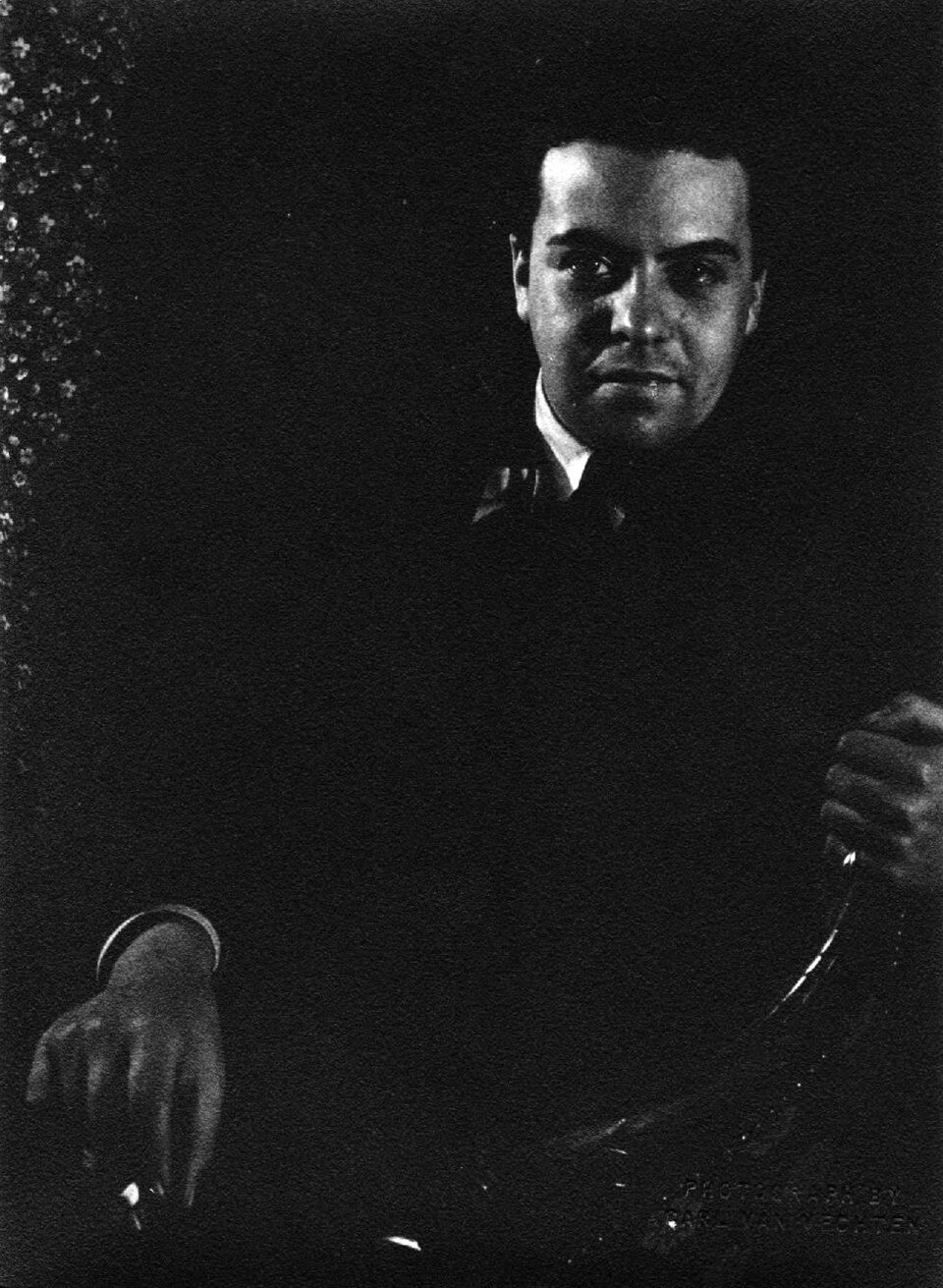
Miguel Covarrubias: A World Observed With Brilliance
Artist Spotlight · The Collection Editorial
There are artists whose curiosity outpaces their medium, who move through the world collecting cultures, images, and ideas the way others collect possessions. Miguel Covarrubias was that rarest of figures: a man who seemed to belong everywhere at once. Today, as institutions from the Library of Congress to the Smithsonian hold his work in permanent collections and auction rooms in New York and Mexico City continue to see strong demand for his gouaches and illustrations, Covarrubias is being reassessed not as a peripheral figure of the Jazz Age but as one of the twentieth century's great visual anthropologists and one of Latin America's most consequential artistic voices. Born in Mexico City in 1904, Covarrubias showed precocious draftsmanship from childhood, absorbing the visual culture of post revolutionary Mexico with the same appetite he would later bring to Harlem and Bali.
Miguel Covarrubias
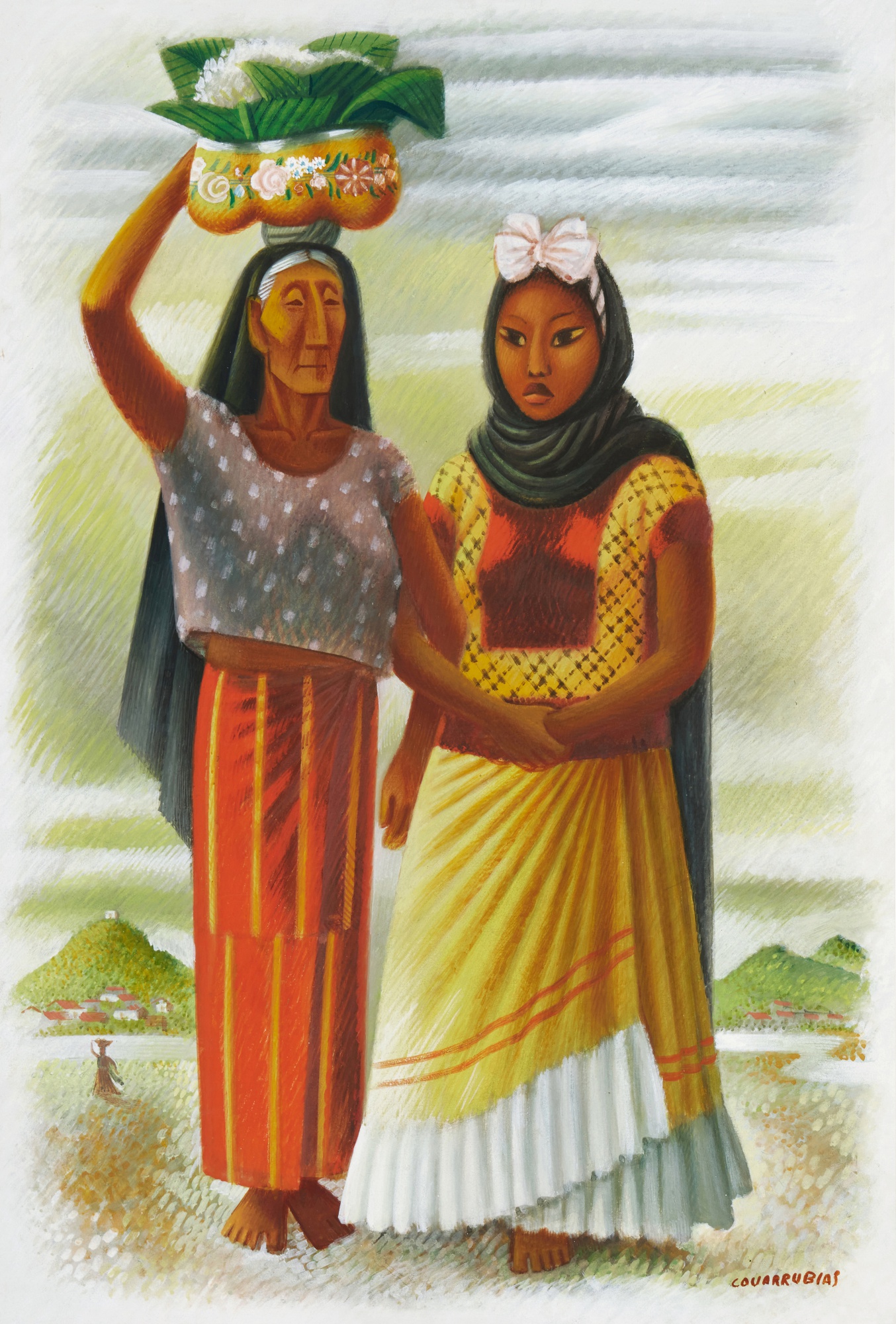
Tehuanas, 1942
By his late teens he was already working as an illustrator, and in 1923, at just nineteen years old, he arrived in New York on a modest grant from the Mexican government. The city received him as though it had been waiting. Within two years he was contributing caricatures to Vanity Fair, whose editor Frank Crowninshield recognized immediately that this young Mexican had a gift not merely for likeness but for psychological revelation. His caricatures of figures including Eugene O'Neill, Noël Coward, and Al Jolson were precise without cruelty, devastating without malice.
The Harlem Renaissance provided Covarrubias with his first great subject beyond portraiture. He became a genuine participant in that cultural flowering, not merely an observer, befriending Langston Hughes, Zora Neale Hurston, and other luminaries of the movement. His 1927 book Negro Drawings, with an introduction by Carl Van Vechten, was a landmark publication that celebrated Black culture with warmth, humor, and genuine admiration at a time when such celebration carried real weight. Works from this period such as Madre y niño, rendered in his characteristic combination of gouache, watercolor, and brush and ink, reveal an artist whose linework carried an almost musical rhythm, capable of distilling a mood or a moment into a few charged strokes.
Miguel Covarrubias
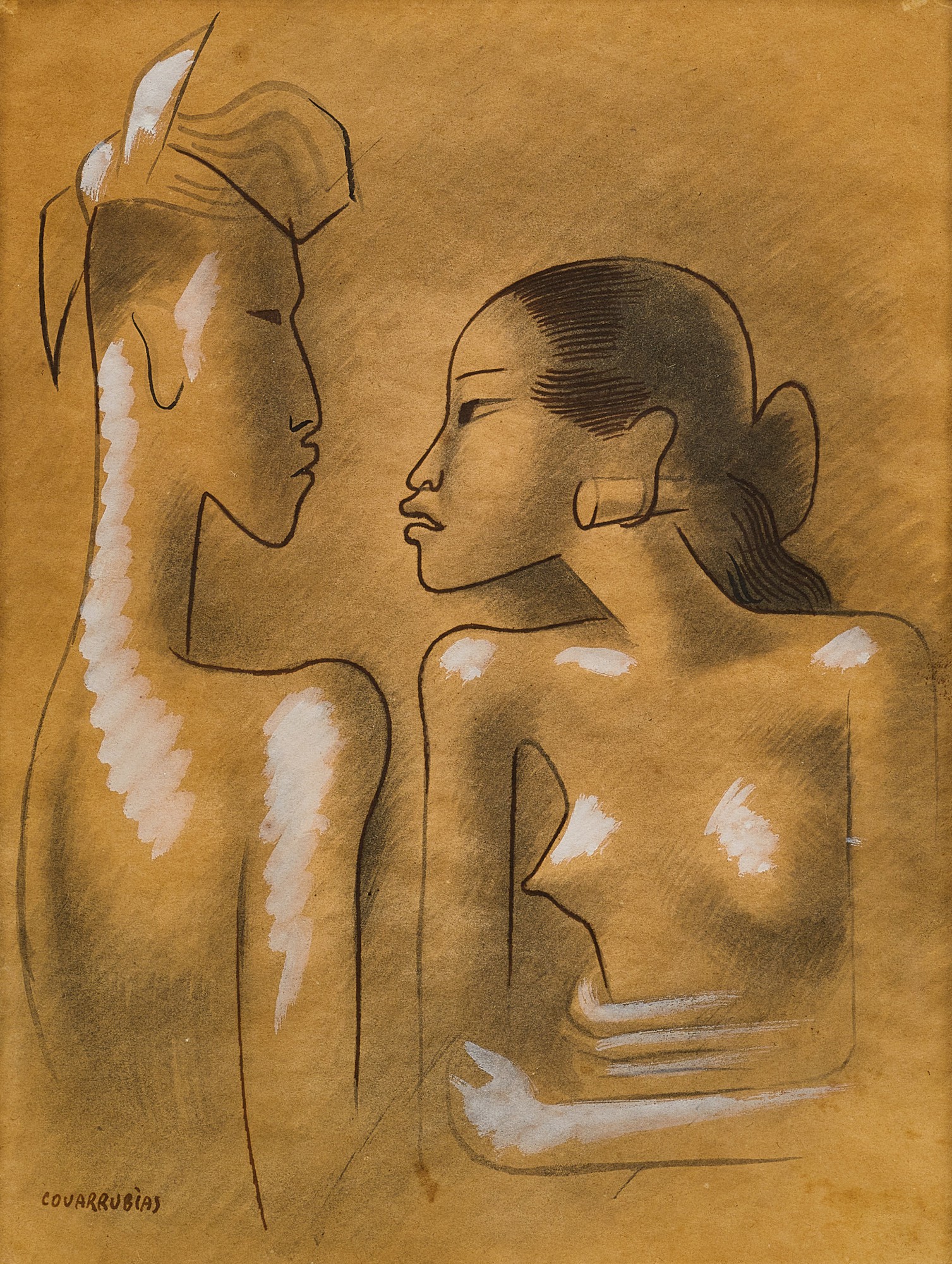
The Conversation 對話
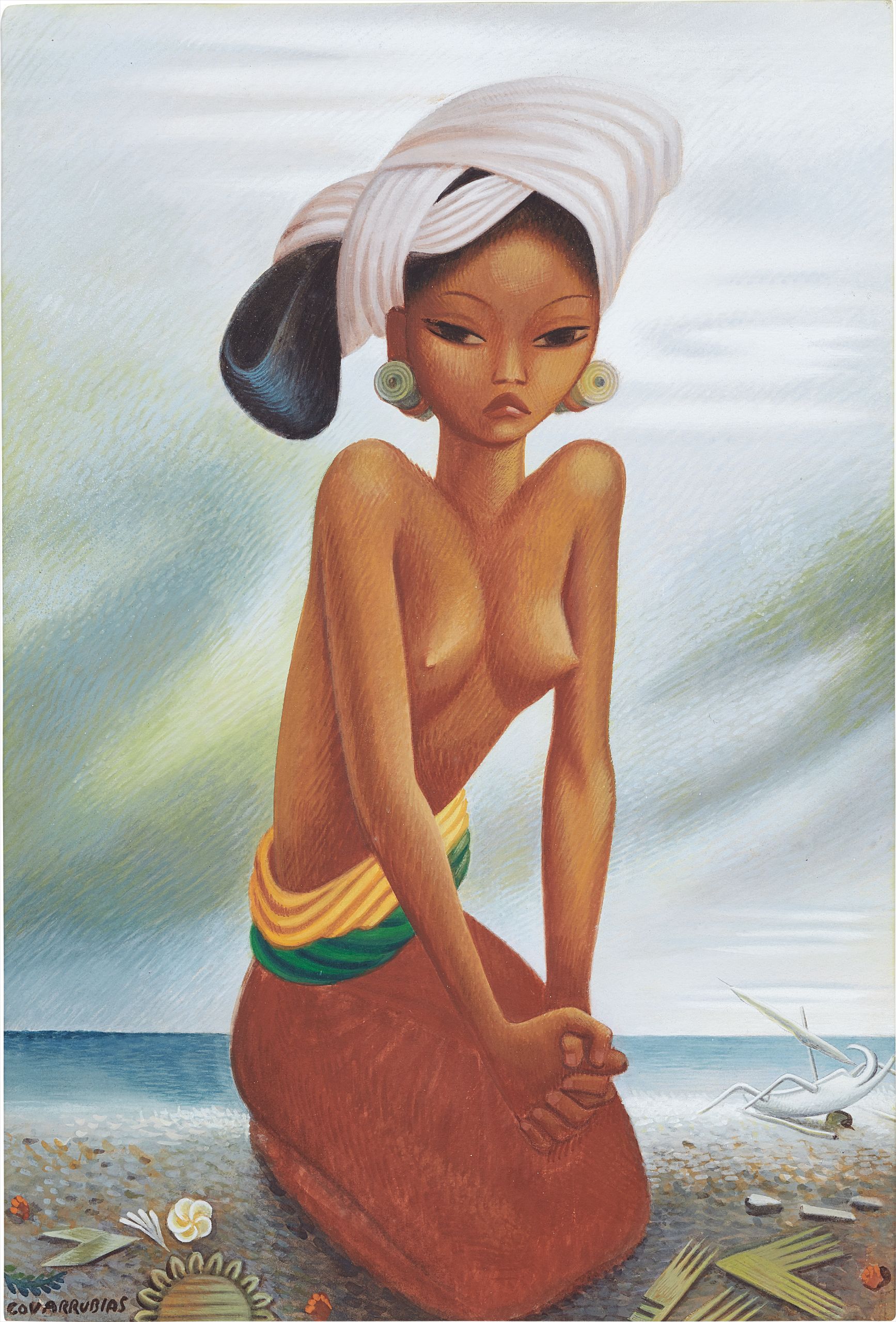
Covarrubias was never condescending; his eye was always that of someone who wanted to understand, not merely depict. His travels to Bali in the early 1930s, undertaken with his wife the dancer and photographer Rosa Rolando, produced another transformative body of work. The island became the subject of his celebrated 1937 book Island of Bali, a rich synthesis of illustration, ethnography, and personal observation that remains in print today and is still considered an authoritative cultural document. His Balinese paintings, including the luminous Balinese Woman from 1934 and the intimate Mujer de Bali from 1930, show Covarrubias at his most formally ambitious, moving away from caricature toward a lush, sensuous depiction of the human form in which modernist simplification meets the specificity of a deeply observed cultural moment.
His line is confident without being cold, decorative without being superficial. These are paintings that reward extended looking. The Tehuantepec region of Oaxaca became another sustained obsession. His 1942 gouache Tehuanas is among the finest examples of his mature style, capturing the dignity and monumentality of Zapotec women in a composition that owes something to Diego Rivera and yet is entirely its own thing.
Miguel Covarrubias
Balinese Woman, 1934
Una tarde en Xochimilco from 1937 shows a similar capacity for rich color and narrative warmth, evoking the canals and floating gardens south of Mexico City with a tenderness that never tips into nostalgia. Throughout all his work, whether a rapid ink sketch of a New York socialite or a fully realized gouache of a Balinese dancer, there is a consistent commitment to the humanity of the subject. Covarrubias never made people into types; he made types into people. From a collecting perspective, Covarrubias presents a genuinely compelling proposition.
His works appear across a range of media and price points, from rapid ink drawings that capture his caricaturist's brio to fully resolved gouaches and watercolors that rival anything produced by his more famous Mexican contemporaries. Collectors drawn to the School of Mexican Modernism, to the art of the Harlem Renaissance, or to the broader Pacific Rim cultural exchanges of the mid twentieth century will find Covarrubias sitting at an extraordinary intersection of all three. His connection to Diego Rivera and Frida Kahlo's circle, his friendships with figures such as Nelson Rockefeller and John Huston, and his long association with New York's most sophisticated editorial culture give his work an unusual biographical richness. Institutional interest from museums in Mexico, the United States, and Europe continues to support his market, and gouaches in strong condition with clear provenance have consistently attracted serious attention at auction.
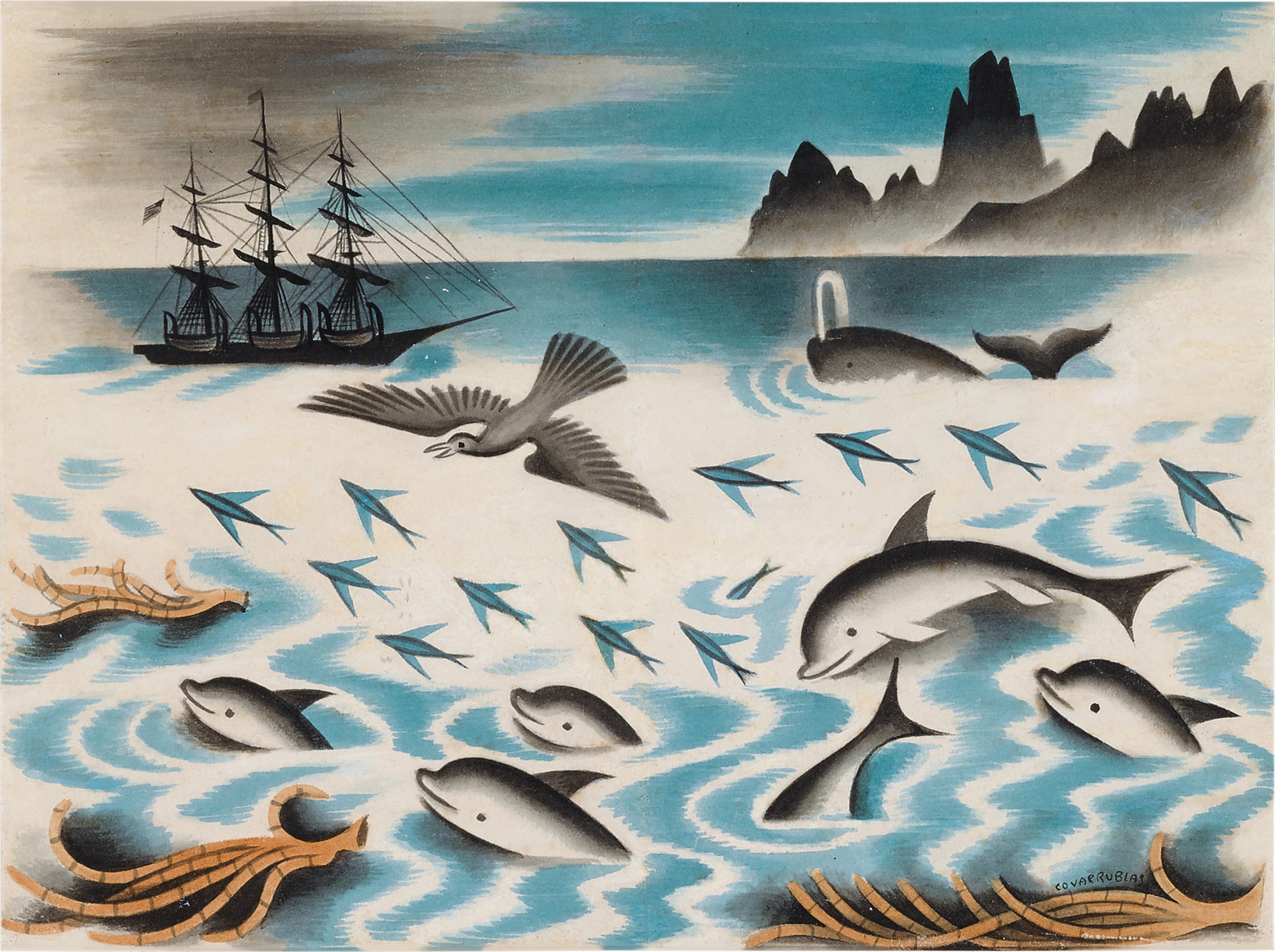
Miguel Covarrubias
Illustration for Herman Melville's Typee: A Peep at Polynesian Life, 1935
In art historical terms, Covarrubias belongs in conversation with a distinguished group of artist travelers and visual anthropologists whose work crosses the boundary between fine art and cultural document. His sensibility has affinities with Paul Gauguin, though Covarrubias brought far greater respect and intellectual rigor to his subjects. His draftsmanship invites comparison with the great caricaturists of the European tradition, and his mural work aligns him with the Mexican muralist movement led by Rivera, José Clemente Orozco, and David Alfaro Siqueiros, though Covarrubias always remained more intimate in scale and spirit. His illustration work, particularly his contributions to The New Yorker and Vanity Fair, stands alongside that of Rea Irvin and Al Hirschfeld as among the most distinctive visual voices of the American interwar period.
Covarrubias died in Mexico City in 1957 at just fifty two, leaving behind a body of work whose full scope is still being appreciated. He was a muralist, a book illustrator, an anthropologist, a museum curator, and a cartographer of human cultures both figurative and literal, having produced a celebrated series of ethnographic maps. What unites all these endeavors is a quality that is harder to teach than technique: genuine curiosity about other people. In an era when we speak constantly about cross cultural dialogue and the ethics of representation, Covarrubias offers not a warning but a model, an artist who traveled widely, listened carefully, and translated what he found into images of lasting beauty and intelligence.
To own a work by Covarrubias is to hold a piece of that intelligence in your hands.
Explore books about Miguel Covarrubias
Miguel Covarrubias
Adriana Williams
Covarrubias
Bernal Díaz del Castillo
The Eagle, the Jaguar, and the Serpent
Miguel Covarrubias
Island of Bali
Miguel Covarrubias
Negro Drawings
Miguel Covarrubias
Mexico South: The Isthmus of Tehuantepec
Miguel Covarrubias