Michel Majerus
Michel Majerus: Painting the Overloaded Present
Artist Spotlight · The Collection Editorial
In the spring of 2004, the Kunstmuseum Stuttgart opened a landmark retrospective dedicated to Michel Majerus, gathering an extraordinary range of his large scale paintings, installations, and collaborative projects. The exhibition confirmed what a generation of curators, collectors, and fellow artists had long understood: that Majerus, who died in a plane crash in Luxembourg in November 2002 at just thirty five years old, had produced one of the most original and prophetic bodies of work in postwar European painting. More than two decades on, his canvases feel not like relics of a particular moment but like live transmissions from the visual culture we still inhabit. The world he painted has only grown louder, faster, and more saturated since he left it.
Michel Majerus
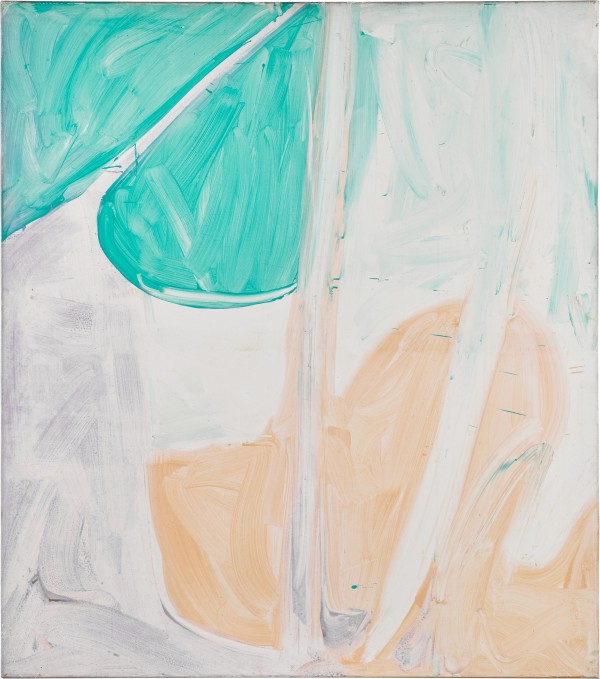
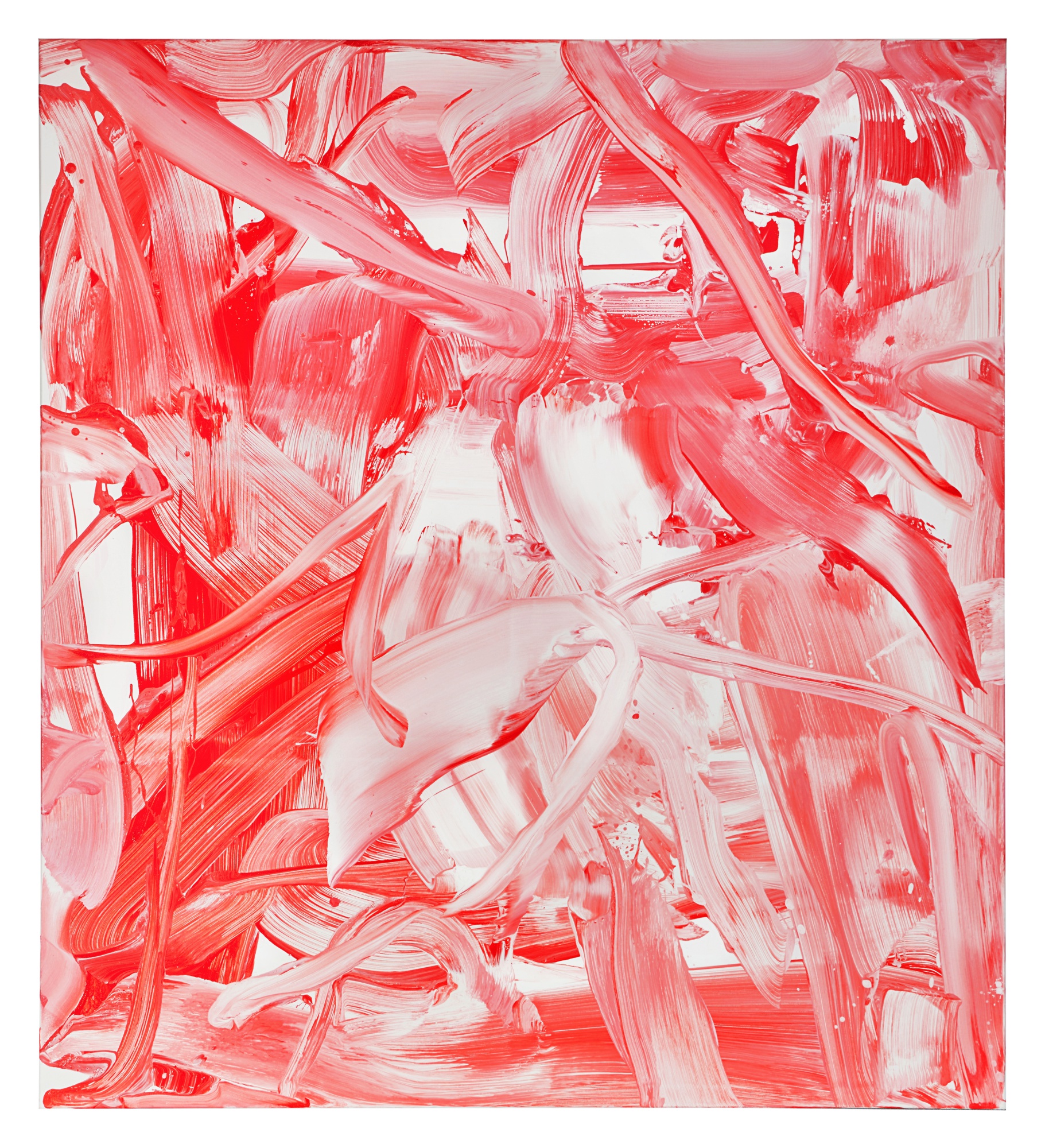
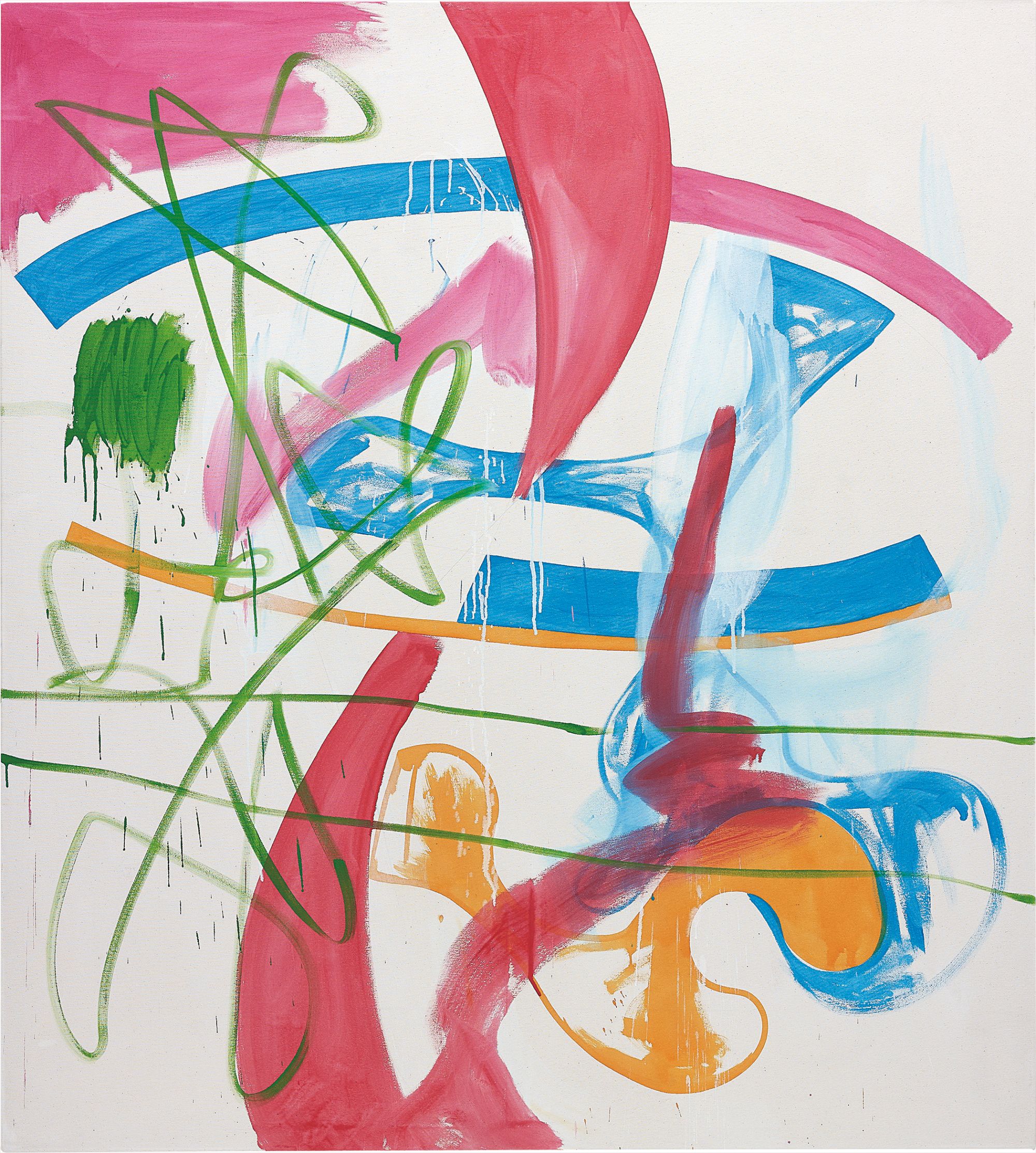
Mom Block Nr. 81, 2000
Michel Majerus was born in 1967 in Esch sur Alzette, Luxembourg, a small industrial city shaped by steel manufacturing and a distinctly mid European mix of cultural influences. Luxembourg's position at the crossroads of French, German, and broader European sensibilities gave Majerus an early fluency in navigating between registers, a skill that would define his entire practice. He moved to Stuttgart to study at the Staatliche Akademie der Bildenden Künste, where he encountered the rigorous traditions of German painting alongside a generation deeply engaged with questions of appropriation, media culture, and the legacy of American art. It was a formative environment that encouraged ambition without prescribing answers.
By the early 1990s, Majerus had settled in Berlin, then in the first extraordinary bloom of its post reunification cultural life. The city was a place where empty warehouses became galleries overnight, where a sense of possibility was almost architectural, and where the conversation between art, music, skateboarding, and graphic culture was completely open. Majerus absorbed all of it. His early works already showed a voracious appetite for sampling, pulling imagery from advertising, video game graphics, cartoon iconography, and the canon of art history with equal enthusiasm and equal irreverence.
Michel Majerus
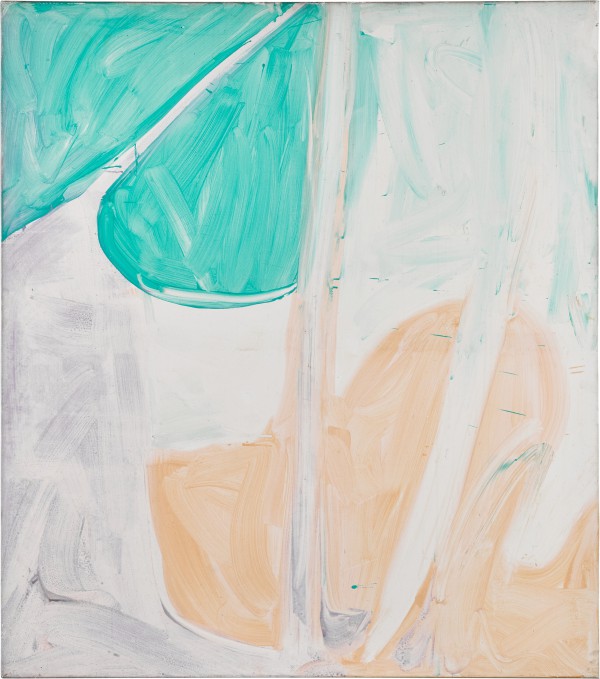
Mom Block 62
He worked with acrylic paint, silkscreen, and lacquer on enormous canvases that refused the intimacy of traditional easel painting and instead demanded to be encountered the way one encounters a billboard or a skate ramp. The development of his signature MoM Block series across the late 1990s represents some of the most intellectually and visually compelling work of that decade. Canvases such as MoM Block Nr. 27, created in 1998, and MoM Block Nr.
57 and MoM Block Nr. 92, both from 1999, demonstrate the full sophistication of his approach. These works arrange fields of color, text fragments, and graphic motifs across their surfaces in compositions that feel simultaneously controlled and chaotic, as though the painting is itself a kind of interface or loading screen. The tension between flatness and depth, between readymade imagery and gestural mark making, places Majerus in a genuine dialogue with both Minimalism and Abstract Expressionism even as he cheerfully refuses the solemnity of either.
Michel Majerus
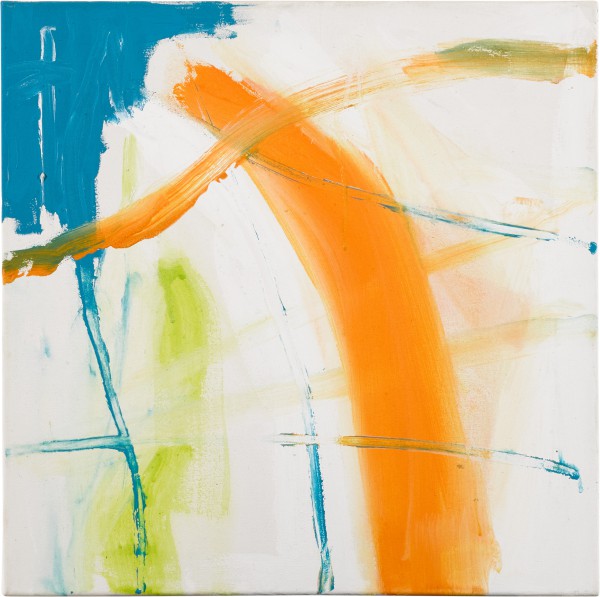
Yellow
By 2000, with works such as Mom Block Nr. 81, that synthesis had reached a new fluency, the surfaces dense with layered meaning yet never labored. What made Majerus so compelling to collectors and institutions was precisely this refusal to resolve the contradictions he staged. He was not simply a Pop artist recycling consumer imagery, nor a Conceptualist critiquing spectacle from a safe theoretical distance.
He painted from inside the flood of images, with genuine pleasure and genuine unease, and the results carry that double charge. His Berlin studio became something of a generational meeting point, and his work was shown at neugerriemschneider in Berlin, the gallery that represented him and that has continued to steward his legacy with exceptional dedication. Exhibitions at major international venues including the 2001 Venice Biennale, where his installation transformed a large space into an immersive environment of painted surfaces and skateable structures, confirmed his international standing while he was still very much in the middle of his career. From a collecting perspective, the MoM Block works on canvas occupy the center of the market for Majerus, and with good reason.
Michel Majerus
MoM Block nr. 27, 1998
The acrylic and the silkscreen and lacquer variants each offer a different entry point into his practice: the acrylic works carry a sense of physical immediacy and painterly incident, while the silkscreen and lacquer canvases foreground his interest in mechanical reproduction and surface finish. Works on cotton, such as Mom Block Nr. 9, have a particular material warmth that distinguishes them within the series. Collectors drawn to the broader conversation around painting and image culture in the 1990s and early 2000s will find in Majerus a figure whose work holds up rigorously in that company.
Prices have reflected growing institutional recognition, and the relatively finite nature of his output, given the brevity of his career, gives serious weight to acquisitions made now. The artists with whom Majerus is most productively compared include Christopher Wool, whose engagement with text and surface shares something of Majerus's graphic sensibility, and Albert Oehlen, whose embrace of digital imagery and visual noise in painting opened doors that Majerus walked through with particular confidence. One might also think of John Currin and Elizabeth Peyton as contemporaries navigating the complex terrain of figuration and cultural reference in the same years, though Majerus's project was more explicitly concerned with the condition of images as such rather than with the figure. In his synthesis of high and low, his willingness to let the painting be contaminated by everything outside it, he anticipates much of what younger painters are still working through today.
The legacy of Michel Majerus is not one of unfinished promise but of remarkable achievement compressed into a short time. His estate, managed with care, has ensured that the work continues to be seen and understood in proper context. The retrospective in Stuttgart, subsequent exhibitions across Europe, and the sustained critical attention his canvases receive all speak to a practice that was fully formed and genuinely radical. To look at a MoM Block canvas in 2024 is to see a painter who understood, before almost anyone else, that the great subject of contemporary painting was the experience of being saturated by images and that the only honest response was not ironic distance but full immersion.
That insight has not dated. It has deepened.
Explore books about Michel Majerus